Aerosol Sunscreen Production: A Complete Step-by-Step Technical Guide for Product Founders
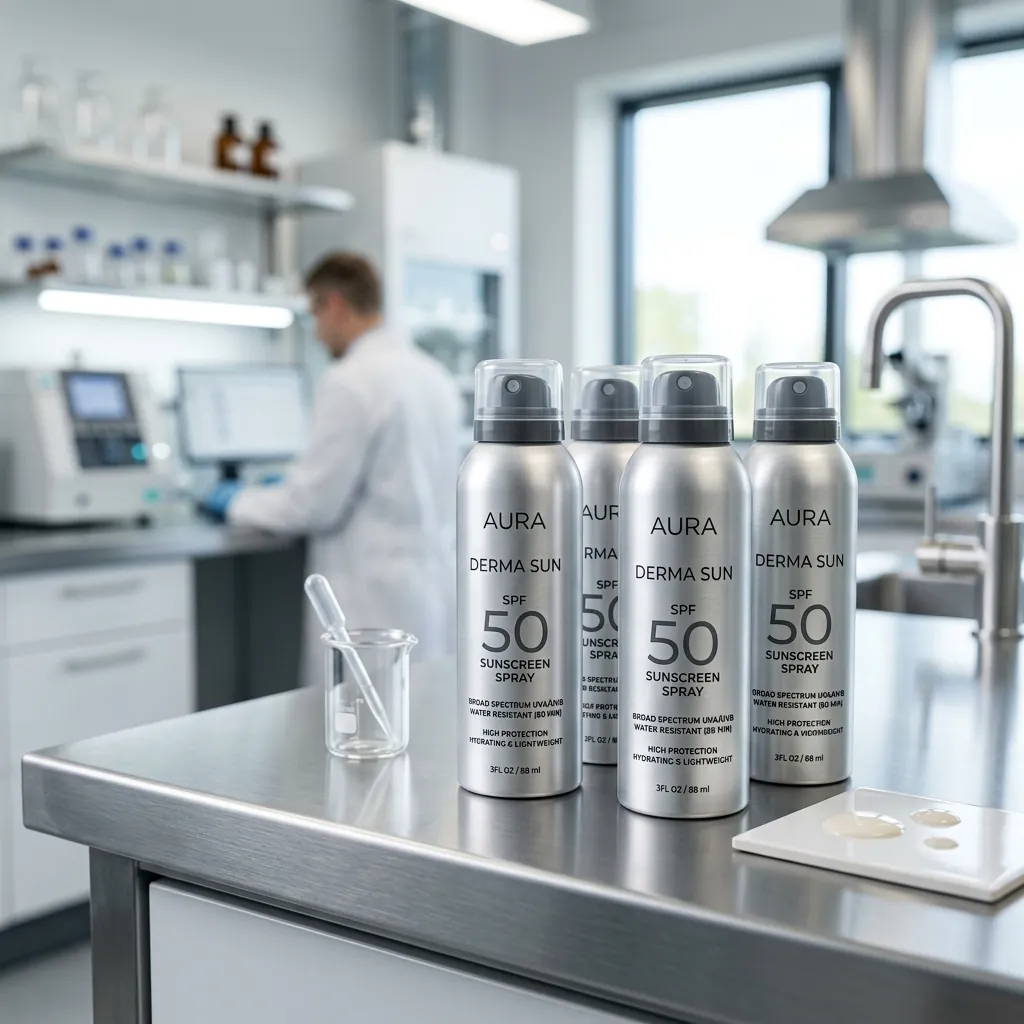
In the highly regulated personal care industry, the launch of an aerosol sunscreen represents a significant business opportunity coupled with strict technical challenges. Founders must manage complex formulation chemistry, pressurized packaging logistics, safety engineering, and strict compliance tests before their product can ever reach retail shelves. This guide provides a detailed, step-by-step technical breakdown of the aerosol sunscreen production lifecycle, helping brand founders navigate component selection, contract filler sourcing, and quality control systems.
Guide Contents
1. Introduction: The Commercial Opportunity in Aerosol Sunscreens
The consumer demand for convenience has driven the rapid expansion of sprayable sunscreens in personal care markets worldwide. Traditional squeeze lotions are increasingly viewed as messy, slow to apply, and difficult to spread evenly on active or wet skin. Aerosol sunscreens solve these consumer friction points by delivering a continuous, hands-free, and cooling mist that provides uniform UV protection in seconds. For startups and entrepreneurs, this format commands premium retail pricing and strong brand loyalty, making it a highly profitable addition to a skincare portfolio.
Market Trends: Why Consumers and Brands Prefer Sprayable Sunscreen
Sun protection products have transitioned from seasonal holiday purchases to daily skincare necessities. Consumer convenience, particularly for parents applying sunscreen to children and outdoor sports enthusiasts, has fueled the continuous spray category. Brands prefer this format because the specialized packaging serves as an effective entry barrier to low-cost competitors, helping to support healthier profit margins and higher average order values (AOV) compared to standard cream bottles.
Target Audience and Consumer Expectations
The target demographic for modern sunscreen sprays includes health-conscious millennials, fitness enthusiasts, and families who demand fast, transparent, and non-greasy applications. In regional markets such as India and across the globe, consumers expect these formulations to be lightweight, sweat-resistant, and visually invisible on diverse skin tones. Meeting these high consumer expectations requires brand founders to bridge the gap between advanced cosmetic chemistry and aerosol packaging engineering.
2. Technical Chemistry: Formulating the Sunscreen Concentrate
Developing the active sunscreen concentrate involves selecting the appropriate combination of UV filters, solvents, and stabilizers to achieve target SPF ratings. The active liquid must remain completely stable, homogeneous, and chemically active under pressure inside the container without causing degradation of the packaging components. Formulators must optimize the skin-feel, ensuring the product spreads easily, dries quickly into a non-sticky protective film, and resists washing off during perspiration or swimming.
Chemical vs. Physical UV Filters in Aerosol Systems
Chemical UV filters are highly preferred in classic aerosol sprays because they dissolve easily in standard cosmetic solvents, forming transparent, single-phase liquid concentrates. Physical inorganic filters, such as Titanium Dioxide and Zinc Oxide, are insoluble metal oxides that must be dispersed as particulate suspensions. In standard aerosol configurations, these heavy mineral particles tend to settle and cluster over time, leading to valve clogging, uneven active ingredient delivery, and white, chalky residue on the skin.
| Filter Classification | Common Technical Active Examples | Aerosol Compatibility Profile | Key Formulation Challenges |
|---|---|---|---|
| Organic (Chemical) | Avobenzone, Octocrylene, Homosalate | Excellent solubility; yields transparent sprays. | Requires photostabilizers to prevent degradation under sunlight. |
| Inorganic (Physical/Mineral) | Zinc Oxide, Titanium Dioxide | Prone to agglomeration and settling in suspension. | Requires high-shear dispersion and anti-settling agents to prevent valve clogging. |
Solvent Systems, Solubilizers, and Emulsifiers for Photostability
The choice of carrier solvent is critical because it dictates both filter solubility and the sensory experience on the skin. Denatured anhydrous ethanol is commonly used because it quickly dissolves organic UV filters and evaporates rapidly upon skin contact, leaving a dry, cool feel. Formulators integrate specific cosmetic esters and solubilizers to maintain filter stability in cold storage, preventing the active ingredients from crystallizing and compromising the product’s protective profile.
Ensuring Water Resistance and Skin-Feel Enhancements
Water resistance is achieved by incorporating specific film-forming polymers that create a hydrophobic barrier when sprayed onto the skin. These polymers must be highly soluble in the solvent system and flexible enough to withstand skin movement without peeling or cracking. Emollients and sensory modifiers are carefully blended to reduce grease and stickiness, producing a smooth, matte finish that consumers find comfortable for daily wear.
3. Aerosol Engineering: Cans, Valves, and Actuators Selection
The selection of the physical packaging components is just as critical to the product's performance as the chemical formulation. An aerosol container acts as a pressurized packaging system where the can, valve assembly, and actuator nozzle work together to release the formulation. Selecting incompatible components can result in slow chemical corrosion, propellant leaks, mechanical valve failures, or poor spray atomization. Product founders must evaluate these engineering components to guarantee structural safety, chemical stability, and a consistent user experience throughout the product's shelf life.
Packaging Materials: Aluminum vs. Tinplate Cans for Sunscreen
Aluminum cans are the industry gold standard for cosmetic and personal care products due to their sleek, seamless appearance and excellent resistance to rusting in humid bathrooms or beach environments. Tinplate cans, constructed from sheets of steel coated with thin layers of tin, are more cost-effective but are prone to external oxidation. Regardless of the metal selected, sunscreens contain active organic compounds that require advanced internal coatings to prevent corrosion and protect the formulation.
Valve Mechanics: Continuous Spray, Bag-on-Valve (BoV), and 360-Degree Delivery
Standard continuous aerosol valves mix the sunscreen concentrate directly with the propellant gas inside the can, spraying them out together. In contrast, Bag-on-Valve (BoV) technology isolates the sunscreen concentrate inside a multi-layered plastic/aluminum bag welded directly to the valve, using compressed air or nitrogen in the surrounding space to squeeze the bag. BoV systems provide 100% product evacuation, allow continuous spraying at any angle (even upside down), and prevent the propellant from mixing with the skin formula.
Actuator Selection for Optimized Particle Size Distribution and Fine Mist
The actuator is the plastic nozzle clicked onto the valve stem that controls the shape, speed, and droplet size of the spray. It contains a miniature swirl chamber that forces the liquid to spin rapidly, causing it to break apart into small, uniform droplets as it exits the orifice. For sunscreen sprays, the actuator must be selected to balance fine atomization with inhalation safety, producing droplets large enough to settle on the skin rather than floating in the air as inhalable mist.
4. Propellant Selection and Gas Dynamics
Propellants provide the thermodynamic pressure required to push the active formulation out of the container and break it into a spray. Founders can choose between liquefied petroleum gases, which maintain a steady pressure during use, or eco-friendly compressed gases, which exhibit a gradual drop in pressure as the can empties. The choice of propellant impacts the flammability rating, formulation solubility, chemical stability, and environmental compliance of the finished consumer product.
Liquefied Petroleum Gas (LPG) vs. Dimethyl Ether (DME) in Sunscreens
Liquefied petroleum gas (LPG) blends are highly popular because they are cost-effective, chemically stable, and insoluble in water, which helps preserve the water-resistant properties of the sunscreen film. Dimethyl ether (DME) is a highly polar liquefied gas that exhibits excellent solvency, allowing it to dissolve both water and organic UV filters directly. However, DME is highly flammable, requires specialized explosion-proof manufacturing lines, and can attack certain rubber gaskets and internal can coatings.
Compressed Gases (Nitrogen, Carbon Dioxide) and Bag-on-Valve Applications
Compressed gases like Nitrogen (N2) and Carbon Dioxide (CO2) are non-flammable, eco-friendly alternatives that are increasingly utilized in modern personal care formulations. In Bag-on-Valve (BoV) packages, compressed nitrogen occupies the space between the bag and the inner can wall, exerting constant pressure without mixing with the sunscreen. Because these gases do not liquefy under pressure, they do not contribute to Volatile Organic Compound (VOC) limits, simplifying global regulatory compliance.
Safety, Flammability, and VOC Regulatory Limits
Sunscreens formulated with high-solvency alcohols and liquefied propellants are classified as highly flammable aerosols, demanding strict manufacturing safeguards and warning labels. Regulatory bodies limit the total percentage of Volatile Organic Compounds (VOCs) permitted in consumer personal care products to control air quality. Brand founders must work closely with experienced packaging engineers to formulate products that meet these regional VOC limits without sacrificing atomization performance.
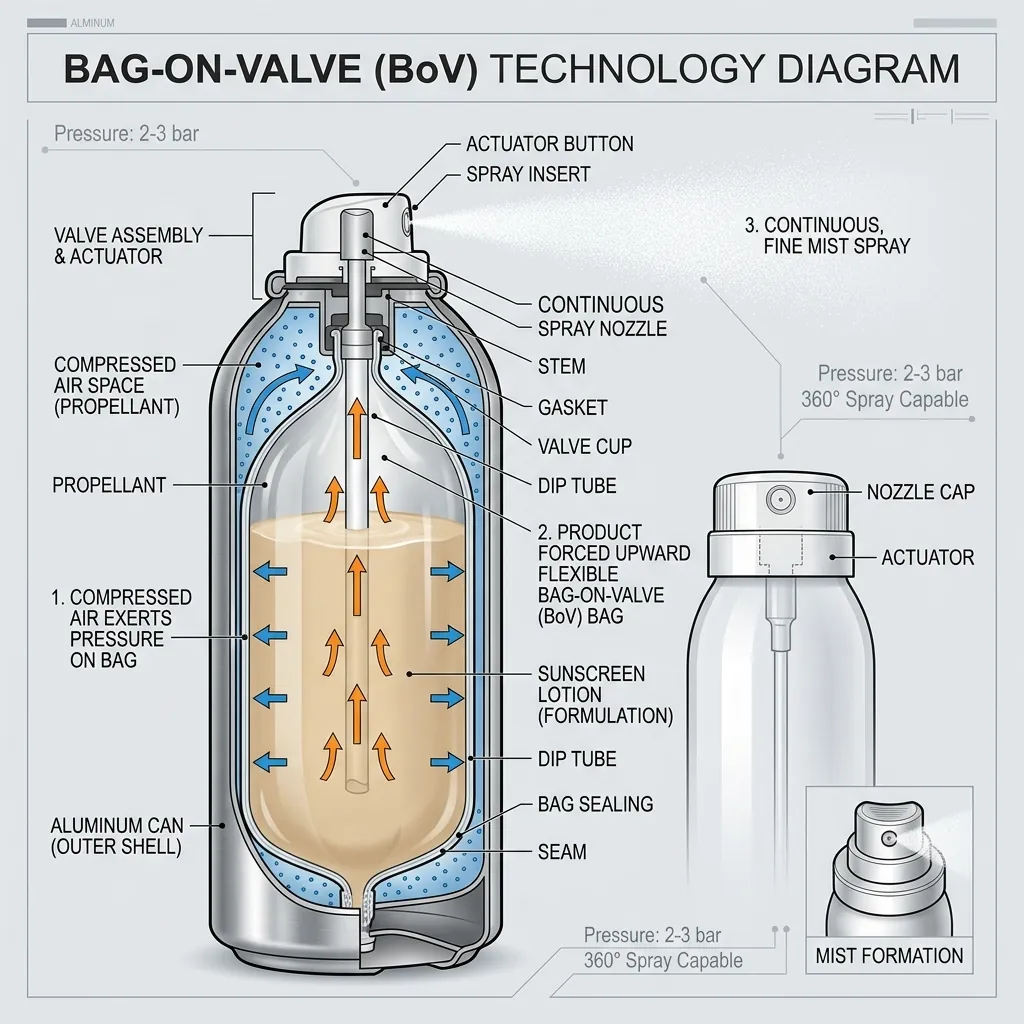 Figure 1: Cross-section of Bag-on-Valve (BoV) packaging, isolating the sunscreen concentrate from the compressed propellant gas.
5. The Manufacturing and Filling Process
Aerosol filling is a highly specialized manufacturing process that requires dedicated, explosion-proof production lines and strict safety protocols to handle pressurized gases. Compounding the liquid concentrate must follow strict Good Manufacturing Practices (GMP) to ensure chemical uniformity, batch-to-batch consistency, and microbial purity. Once the concentrate is blended, the cans are filled and pressurized using specialized volumetric machinery, followed by thorough quality control checks to identify potential leaks.
Compounding and Quality Control of the Concentrate
Compounding begins in stainless steel mixing vessels where UV filters, solvents, emollients, and active ingredients are blended into a uniform solution. This process requires precise temperature controls, as some chemical filters must be gently heated to melt and dissolve completely without thermal degradation. Before proceeding to the filling line, the batch must pass laboratory QC tests verifying correct specific gravity, viscosity, refractive index, and active filter concentrations.
Filling Technologies: Cold Filling vs. Pressure Filling vs. Under-Cup Filling
Cold filling cools both the active concentrate and liquefied propellants to extreme sub-zero temperatures (often below -30°C) before pouring them into the can, followed by crimping the valve; however, this is rarely used for sunscreens due to solvent crystallization risks. Pressure filling inserts the liquid concentrate first, crimps the valve, and then forces the propellant through the valve stem at high pressure. Under-Cup filling raises the valve cup slightly, injects the propellant under vacuum, and instantly crimps the valve in place, offering high production speeds.
Bag-on-Valve (BoV) Filling Walkthrough
For Bag-on-Valve (BoV) products, the filling process is structurally different. First, the empty bag-and-valve assembly is inserted into the can, and pressurized air or nitrogen is injected into the container around the bag. Next, the valve cup is crimped to seal the propellant inside the can. Finally, the sunscreen concentrate is pumped into the bag through the valve stem under high pressure, expanding the bag and sealing the active concentrate completely away from the surrounding propellant.
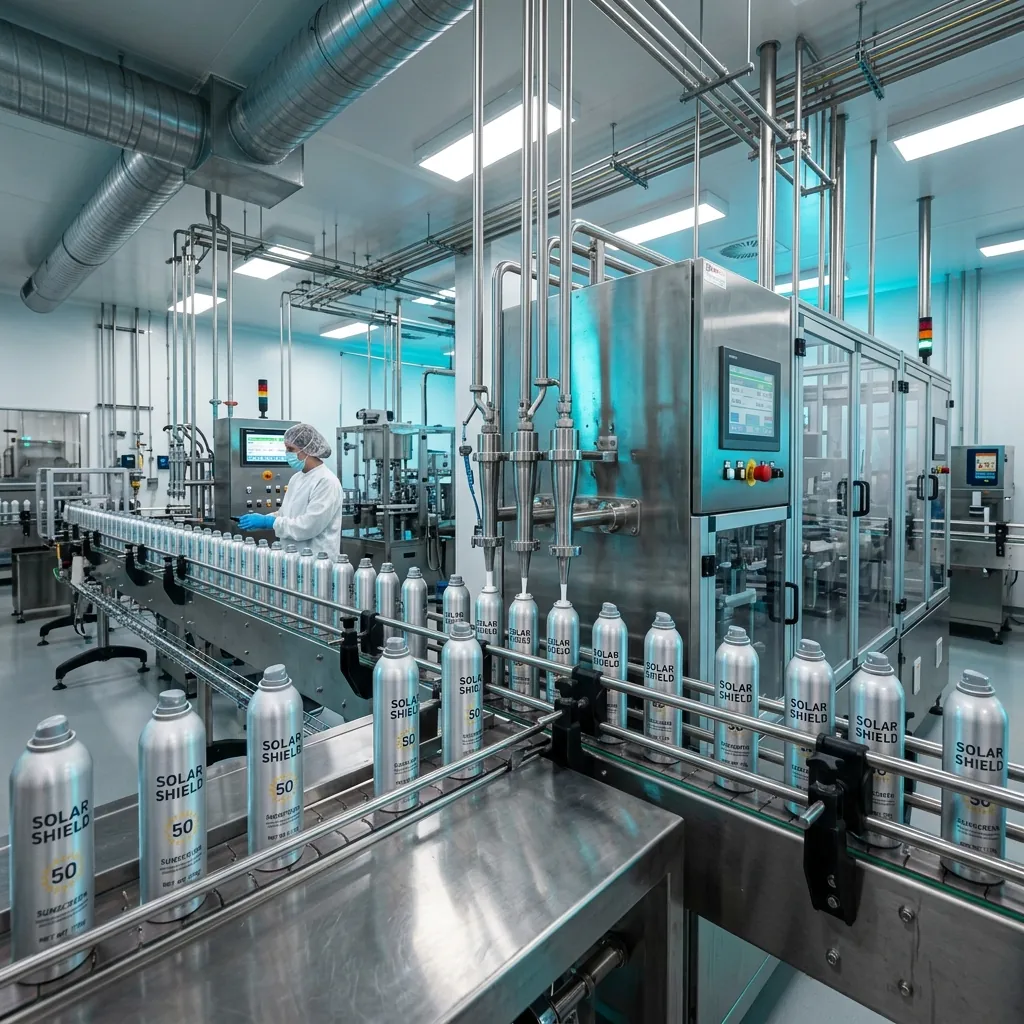 Figure 2: Precision gassing and product filling stations on a high-speed BoV production line.
6. Regulatory Compliance, Testing, and Safety Standards
Launching a sunscreen spray requires extensive clinical and analytical testing to verify its safety, efficacy, and container durability. Because sunscreens are classified as over-the-counter (OTC) drugs in some regions (like the USA) and as cosmetics in others (like Europe and India), compliance is highly dependent on target market rules. Founders must plan and budget for these mandatory testing phases, which directly impact the product launch timeline and marketing claims.
Determining SPF, Broad Spectrum, and Water Resistance
In-vivo SPF testing on human volunteers is required to verify the level of UVB protection, while in-vitro testing measures broad-spectrum UVA protection. For products claiming water resistance, volunteers are tested after specific periods of water immersion (typically 40 or 80 minutes) to confirm the sunscreen film remains protective. All SPF values printed on the final retail label must be supported by certified laboratory reports.
Inhalation Safety and Particle Size Distribution Guidelines
Because aerosol sprays generate airborne droplets, safety agencies require testing to minimize the risk of consumer lung inhalation. The actuator and formulation must be optimized to ensure that the bulk of the spray droplets have a median diameter greater than 30 microns. Droplets smaller than 10 microns are considered respirable and can penetrate deep into the lungs, representing a health hazard that regulators actively monitor during safety assessments.
Corrosion Testing, Shelf-Life Stability, and Compatibility Studies
Accelerated stability studies store the pressurized cans at elevated temperatures (typically 40°C) for 3 to 6 months to simulate a multi-year product shelf life. Chemists routinely open these cans to inspect the metal for microscopic pitting or corrosion and to check the internal plastic components for swelling. If the formula reacts with the metal container, it can result in can leakage, discoloration of the product, or degradation of the active UV filters.
7. Startup Strategy: Launching and Scaling Production
For early-stage product founders, setting up an in-house aerosol filling line is financially impractical due to the massive capital requirements for explosion-proof machinery. Startups rely on specialized Contract Manufacturing Organizations (CMOs) that possess the infrastructure, licenses, and safety systems required for aerosol gassing. Navigating the relationship with a contract manufacturer requires a clear understanding of minimum order volumes, raw material sourcing, and commercial pricing structures.
Choosing the Right Contract Manufacturer (OEM/ODM)
Founders should select contract manufacturers that are FDA-registered, ISO-certified, and possess experience in cosmetic aerosols. It is critical to audit their facility to verify they have active gas safety systems, automated check-weighers, and water-bath testing equipment to check for gas leaks. A reliable contract manufacturing partner can also assist in sourcing valves, cans, and propellants, helping to streamline the supply chain.
Production Cost Analysis, MOQ, and Margin Structuring
Aerosol production has higher minimum order quantities (MOQs) compared to standard lotion filling, with most contract manufacturers requiring runs of 10,000 to 25,000 units. The Bill of Materials (BOM) includes the metal can, internal lining, valve, actuator, overcap, propellant, and the active sunscreen concentrate. Founders must carefully evaluate these costs to structure retail margins that accommodate distributor fees, marketing acquisition costs, and warehousing expenses.
Frequently Asked Questions (FAQ)
Navigating the engineering, chemistry, and regulatory requirements of aerosol sunscreen production often raises complex technical questions for product founders and brand coordinators. To assist in clarifying these parameters, our team has compiled responses to the most frequently asked questions regarding bag-on-valve technology, propellant choices, mineral filter suspensions, corrosion prevention, safety guidelines, and production scaling logistics:
What is the difference between standard aerosol filling and Bag-on-Valve (BoV) for sunscreens?
Standard aerosol filling mixes the active sunscreen formulation directly with the propellant inside the pressurized can, spraying them together. Bag-on-Valve (BoV) system places the formulation inside a multi-layered bag, while compressed air or nitrogen surrounds the bag to squeeze the formulation out, keeping the sunscreen active separate from the propellant gas.
Which propellant is best for a transparent chemical aerosol sunscreen?
Liquefied petroleum gas (LPG) blends or Dimethyl Ether (DME) are commonly used when the sunscreen active concentrate must be dissolved directly in the propellant for a clear spray. However, DME requires careful can lining selection due to its strong solvent characteristics.
Why are physical UV filters like Zinc Oxide difficult to formulate in standard aerosol sprays?
Physical mineral filters are insoluble metal oxides that form particulate suspensions. In a standard aerosol can, these particles tend to settle and agglomerate over time, which frequently clogs the fine channels of continuous valves and actuators, resulting in packaging failure.
Is corrosion testing mandatory for water-based aerosol sunscreens?
Yes, water-based formulations, particularly those containing electrolytes or inorganic salts, represent a highly corrosive environment for tinplate and aluminum cans. Accelerated corrosion stability testing at elevated temperatures (typically 40°C) is mandatory to select appropriate internal epoxy-phenolic linings.
How are flammability concerns managed during sunscreen manufacturing?
Sunscreen formulations containing high concentrations of ethanol or liquefied propellants like LPG are highly flammable. Manufacturing plants must utilize explosion-proof filling rooms with class 1 division 1 ratings, pneumatic valves, active gas detection sensors, and high-velocity ventilation systems.
What are the minimum order quantities (MOQs) for contract filling sunscreen sprays?
Due to the complexity of setting up high-speed aerosol lines and gassing equipment, most reputable contract packaging manufacturers enforce a minimum order quantity (MOQ) of 10,000 to 25,000 units per production run.
Conclusion
Aerosol sunscreen production represents a technically complex but highly rewarding branch of industrial cosmetic and pharmaceutical manufacturing. Successful commercial scale-up is determined by the precise alignment of physical formulation parameters, mechanical gassing controls, packaging compatibility validation, and complete compliance with global safety standards.
For entrepreneurs, investors, and technical managers, working with specialized chemical formulation consultants from day one is the most reliable way to design compliant formulations, validate container materials, select contract packaging lines, and ensure commercial success.
Need Technical Sunscreen Formulation or Aerosol Packaging Services?
Discuss your aerosol sunscreen formulation, bag-on-valve (BoV) transition, scale-up strategy, or regulatory compliance path with Absar Khan and the Global Formulation engineering team.
Email: consulting@globalformulation.com
Phone: +91 9819548320 +91 8169102990
About the Specialist
Absar Khan is the principal consultant and chemical formulation architect at Global Formulation. He possesses cross-disciplinary engineering expertise spanning aerosol gassing systems, pharmaceutical manufacturing, sterile injectables, cosmetics, and green chemical plant setups. Absar leads scientific and engineering advisory teams supporting manufacturers globally in technology selection, GMP layouts, validation frameworks, and regulatory strategies.
LinkedIn Portfolio: Connect with Absar Khan on LinkedIn