Choosing the Right Product Development Consultant
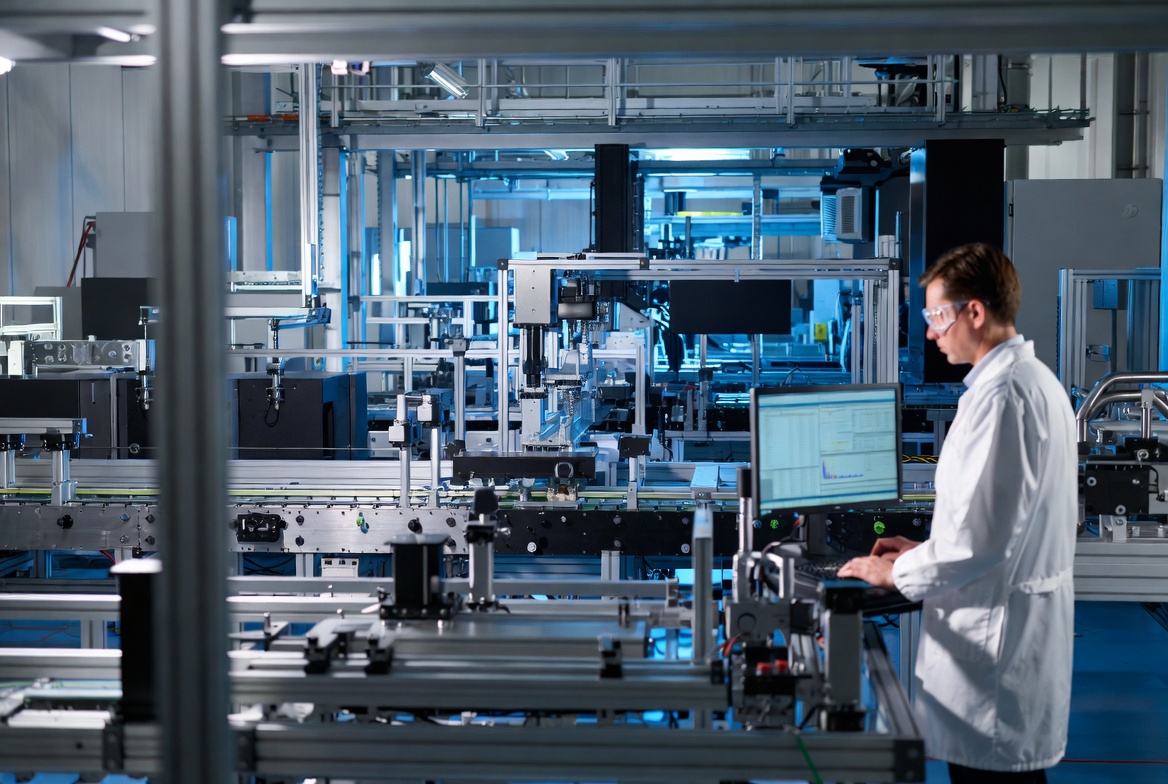
Launching a new product or improving an existing one is a technically complex, capital-intensive, and regulation-driven process. For startups, entrepreneurs, and manufacturers, a product development consultant plays a critical role in converting an idea into a manufacturable, compliant, and market-ready product. Choosing the wrong consultant can result in formulation failure, regulatory rejection, production inefficiencies, or complete commercial loss. This guide provides a factual, step-by-step framework for selecting the right product development consultant based on technical, regulatory, and commercial realities.
What Is a Product Development Consultant?
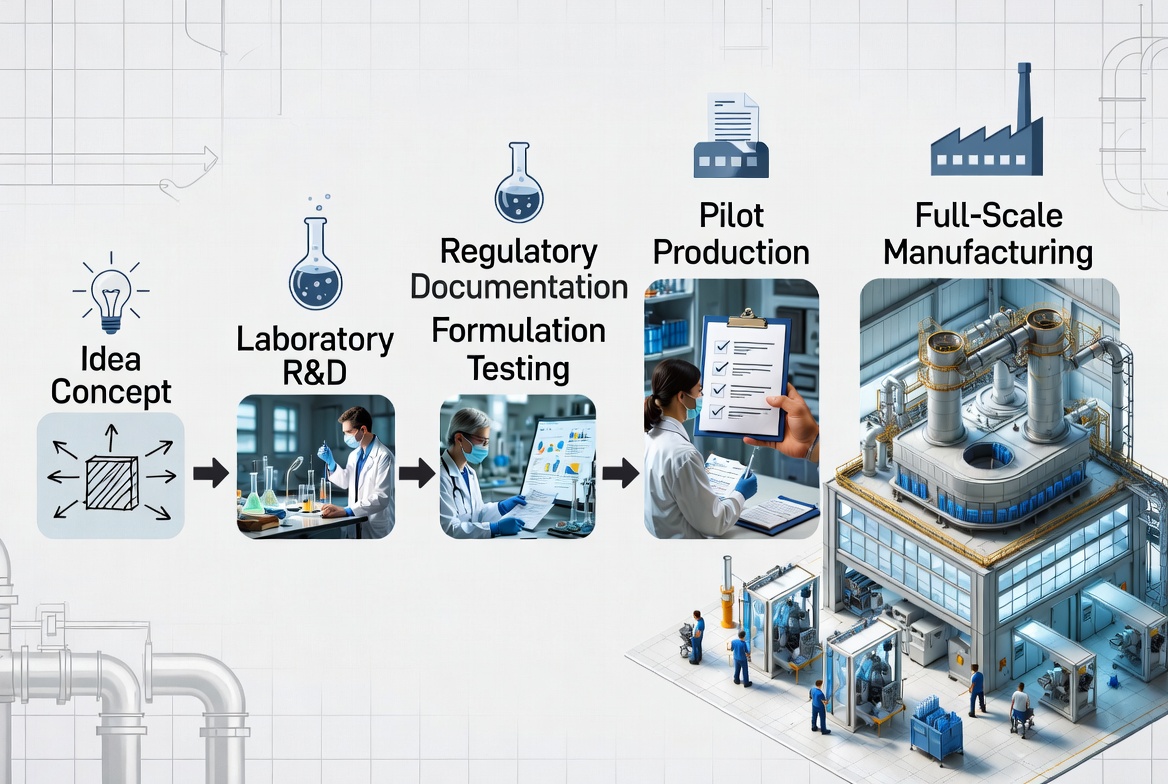
A product development consultant is a highly specialized technical professional or advisory firm providing end-to-end services across the product life cycle. Their primary goal is to guide brands from early-stage concept validation and laboratory R&D through physical prototyping, pilot validation, and full commercial scale-up — the same progression covered in our guide from lab to market. In chemical and specialty manufacturing, these experts combine material science, reaction kinetics, and physical chemistry to create highly stable, high-performance formulations.
Unlike general business or management consultants, product development specialists operate directly within rigorous scientific and technical domains. Their day-to-day work is grounded in engineering physics, molecular rheology, safety standards, and regional regulatory compliance protocols. They translate abstract product ideas into exact bill of materials (BOM), manufacturing instructions, and standard operating procedures (SOP).
To deliver a commercially viable product, a qualified consultant must manage multiple technical sequences, including:
- Technical Specifications Formulation: Translating abstract marketing briefs into exact, quantitative laboratory target parameters.
- Formulation & Prototyping: Compounding raw materials under controlled conditions to develop stable emulsions, suspensions, or solutions.
- Raw Material Audits: Identifying and qualifying reliable bulk raw chemical suppliers and assessing supply-chain safety profiles.
- Physical Chemistry Validation: Conducting physical stability and performance evaluations using viscometers, laser diffraction sizers, and gas chromatography.
- Regulatory Dossier Generation: Organizing safety sheets, toxicological audits, and analytical data required by state licensing boards.
- Manufacturing Scale-up Support: Managing the transfer of lab-scale processes into large-scale pilot mixers and commercial production plants.
When Do You Actually Need a Product Development Consultant?
Engaging a professional development consultant is crucial when a company reaches resource, equipment, or compliance limits that prevent in-house progress. For startups, consultants provide immediate access to advanced laboratory infrastructure and specialized engineering expertise without the heavy capital expenditure of building a private R&D center. For established manufacturers, consultants bring objective problem-solving capabilities to resolve complex quality failures or process bottlenecks.
A manufacturer should seek specialized, external product development support in the following scenarios:
- Lack of Technical R&D Capability: When the brand owner possesses strong commercial networks but lacks the chemistry background to design stable formulations.
- Mandatory Regulatory Pathways: When entering regulated sectors (like cosmetics, aerosols, or crop inputs) that demand complex licensing data.
- Physical Stability Quality Failures: When existing products exhibit separation, syneresis, settling, or rapid active degradation during storage.
- Industrial Scale-Up Obstacles: When a working laboratory recipe fails, solidifies, or undergoes phase separation when scaled to 1,000-liter plant reactors.
- New Export Market Harmonization: When adapting chemical formulations to comply with target country limits, such as REACH or FDA rules.
Firms operating across diverse, chemically complex industries rely on specialized engineering consultants to maintain market competitiveness:
- Specialty & Industrial Chemicals: Designing high-performance lubricants, cleaning compounds, structural adhesives, and protective coatings.
- Aerosols & Gas Dosing: Engineering pressurized dispensing systems, choosing correct propellants, and developing single-phase formulations.
- Cosmetics & Personal Care: Developing skin creams, personal washes, and hair care products complying with global safety standards.
- Pharmaceuticals & Nutraceuticals: Developing oral suspensions, topical creams, and stable active molecule delivery systems.
- Food & Beverage Chemistry: Optimizing shelf-life stability, adjusting nutritional profiles, and formulating natural preservation systems.

Why the Right Consultant Directly Impacts Commercial Success
The technical and chemical accuracy of a product's design determines its performance profile, storage stability, production economics, and legal market compliance. Formulating a chemically complex commercial product requires a precise balance of multiple physical parameters, from surface tension and molecular cohesion to thermal resistance. A qualified consultant ensures these parameters are balanced, protecting the brand owner's capital investment.
The technical accuracy of a product's formulation directly governs:
- Industrial Process Feasibility: Whether the liquid formulation can be continuously pumped, filtered, and filled utilizing standard plant machinery.
- Compliance and Quality Assurance: Whether the chemical product satisfies regional heavy metal limits, microbial counts, and VOC guidelines.
- Long-Term Storage Stability: Whether the physical matrix prevents active ingredient degradation, oxidation, or phase crystallization.
- Repeatable Performance Claims: Whether the product delivers its primary functional value under varying end-user applications.
Conversely, failing to address physical chemistry principles or ignoring regulatory requirements during early-stage development leads to severe commercial consequences:
- Product Recalls: Occurring when emulsions separate or active ingredients degrade, making the product ineffective or hazardous.
- Statutory Closures: Triggered when licensing boards discover non-compliant chemicals, unlisted actives, or toxic impurities.
- Export Refusals: Resulting from inconsistent safety documentation, trace heavy metals, or non-REACH compliant raw materials.
- Brand Damage: Resulting from poor initial performance in user markets, destroying customer loyalty and retail trust.
Types of Product Development Consultants
Product development consulting is highly specialized, requiring domain-specific technical training, laboratory instrumentation, and familiarity with regional regulations. Hiring a consultant without deep expertise in your exact chemical category often leads to technical mismatches and development delays. For example, a specialist in food emulsions will lack the organic chemistry background needed to formulate high-shear industrial epoxies.
The primary technical categories of product development consultancies include:
- Chemical & Formulation Consultants: Specialists in specialty coatings, lubricants, crop protection, adhesives, and industrial detergents.
- Pharmaceutical & API Consultants: Experts in active ingredient synthesis, oral suspensions, validation science, and cleanroom design.
- Cosmetics & Personal Care Consultants: Specialists in oil-in-water emulsions, surfactant science, preservation, and hair care.
- Packaging & Material Engineers: Experts in high-density plastics, barrier films, aerosol valves, and container-product compatibility.
Each technical domain operates under distinct chemical testing protocols and regulatory frameworks:
- Cosmetics and Personal Care: Governed by strict toxicological guidelines, restricting specific preservatives and requiring mandatory dermal testing.
- Industrial Coatings and Paints: Focused on polymer cross-linking kinetics, salt-spray corrosion resistance, and VOC compliance.
- Aerosols and Dosing Systems: Demanding precise pressure calculations, valve sizing, and compatibility assessments with liquefied propellants.
Step-by-Step Process to Choose the Right Consultant
1. Clearly Define Your Product Scope
Before approaching a consulting firm, the brand owner must document a detailed product design brief outlining target properties and constraints. This technical scope enables the consultant to perform initial feasibility reviews and prepare accurate development cost estimates. A vague brief leads to shifting goals, prolonged timelines, and escalating development costs.
A complete product design brief must specify:
- Functional Application: Detailed description of the product's primary use cases and performance benchmarks.
- Target Cost (BOM): The maximum permissible raw material and packaging cost per unit to protect commercial margins.
- Regulatory Boundaries: Specific domestic and export certifications required, such as BIS, FDA, or REACH.
2. Verify Domain-Specific Experience
A consultant must demonstrate direct experience in formulating or engineering your specific product category. General chemical backgrounds are insufficient for navigating the physics of wet bead milling, aerosol gas dosing, or emulsion stability. Plant managers should request case studies of completed formulations that successfully transitioned to commercial production.
Key experience metrics to evaluate include:
- Active Production Lines: Number of developed formulations currently in active commercial production.
- Raw Material Expertise: Deep knowledge of regional supplier networks and the chemical behavior of functional additives.
- Scale-Up Troubleshooting: Demonstrated ability to resolve process bottlenecks like foaming or phase inversion during production trials.
3. Evaluate Technical Capability and Infrastructure
A competent formulation consultant must possess direct access to testing laboratories equipped with advanced analytical instrumentation. Developing commercial products requires continuous physical testing to validate performance and predict long-term shelf life. Working with a consultant who lacks proper testing equipment often results in delayed stability data and undiscovered product defects.
Important technical validation capabilities include:
- Accelerated Stability Kinetics (Arrhenius Shelf-Life Model):
Predicting shelf life under varied thermal conditions by measuring degradation rates.
The reaction rate constant ($k$) scales exponentially with absolute temperature ($T$) according to the **Arrhenius Equation**:
ln(k) = ln(A) - Ea / (R · T)where $A$ is the pre-exponential frequency factor, $E_a$ is the activation energy, $R$ is the universal gas constant (8.314 J/mol·K), and $T$ is the absolute temperature in Kelvin. Accelerated shelf-life aging is modeled using the $Q_10$ temperature acceleration factor:Q10 = (k2 / k1)10 / (T2 - T1)where a standard Q10 = 2 indicates that chemical degradation rates double for every 10°C elevation in temperature. This model allows a 12-month ambient shelf life to be simulated at 40°C in only 3 months.
- Viscometry & Non-Newtonian Rheology:
Measuring flow behavior to ensure the formulation remains stable in the container but flows easily under shear.
Pseudoplastic shear-thinning fluid flow is characterized by the **Power-Law Equation**:
τ = K · γnwhere τ is the shear stress, $K$ is the flow consistency index, γ is the shear rate, and $n$ is the flow behavior index ($n < 1$ for shear-thinning pseudoplastic fluids). This rheological yield point ensures excellent storage stability while maintaining ease of pumpability during packaging operations.
- Colloid Particle Size Distribution:
Utilizing Laser Diffraction particle sizing to guarantee long-term physical stability in suspension concentrates (SC) and emulsions:
D50 < 3 μm & D90 < 7 μmwhere maintaining these tight sizing limits prevents gravitational settling, aggregation, and Ostwald ripening.
4. Assess Regulatory and Compliance Knowledge
Compliance is a core product requirement, not an afterthought. A qualified consultant must understand the regulatory standards of both domestic and export markets, ensuring all raw materials are approved. They must prepare GHS-compliant Safety Data Sheets (SDS), organize toxicological audits, and compile the technical files required by regional licensing committees. Brand owners should independently understand what a complete MSDS, TDS, and COA package looks like, rather than relying solely on the consultant's word that documentation is complete.
Key regulatory standards and reference platforms include:
- Bureau of Indian Standards (BIS): Establishing quality and safety benchmarks for domestic industrial and consumer products (BIS Reference portal).
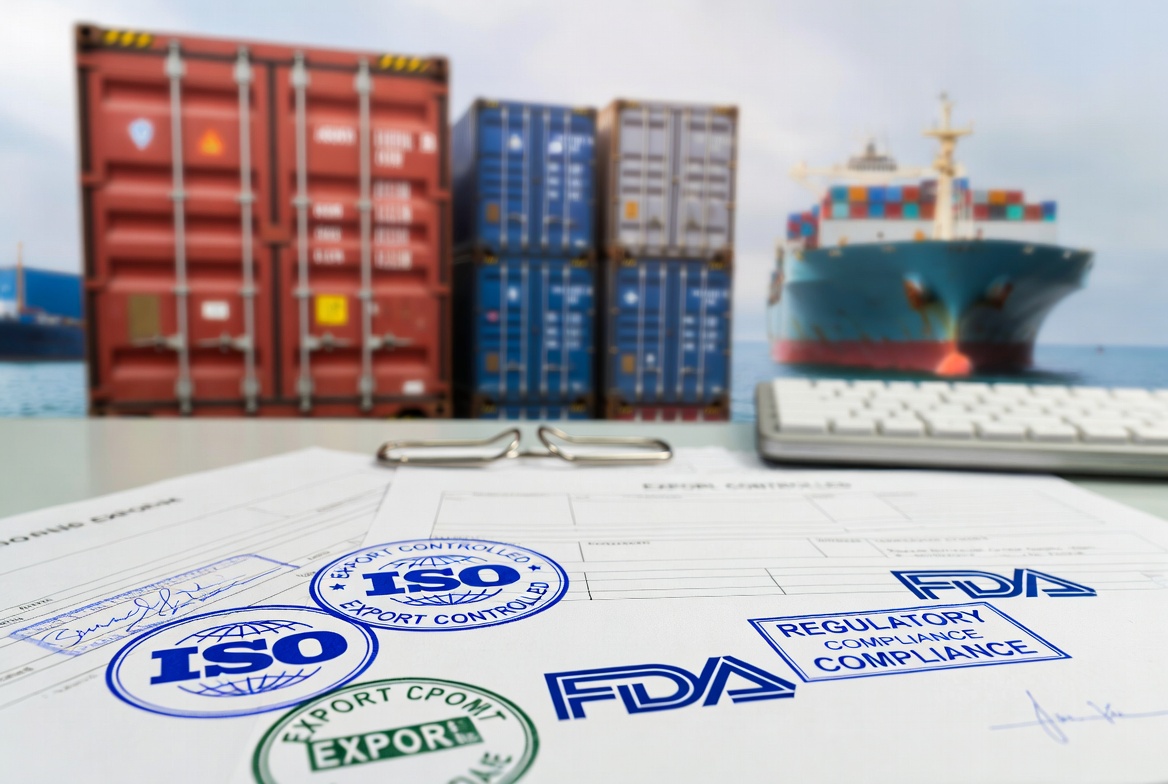
- US Food & Drug Administration (FDA): Regulating cosmetics, pharmaceuticals, and food contact substances in North American markets (US FDA Regulatory database).
- International Standards Organization (ISO): Defining global quality standards for manufacturing, testing, and environmental management (ISO Standards list).
5. Review Documentation and Data Ownership Policies
A professional consultant must clearly define ownership of formulations, patent rights, and technical data before beginning development. The final contract should specify that all intellectual property transfers completely to the client upon full payment. Brand owners must ensure they receive complete technical dossiers, enabling them to manufacture independently at any facility.
Important intellectual property protections include:
- Full IP Ownership: Contractual guarantee that all developed formulations, designs, and patent rights transfer entirely to the client.
- Complete Technical Dossier: Receiving detailed batch manufacturing instructions, raw material specifications, and analytical test methods.
- Independent Production Rights: Retaining the absolute right to manufacture the product at any facility without paying ongoing royalties.
6. Understand Commercial Engagement Models
Consulting firms utilize several billing structures depending on project complexity and the scope of work. Brand owners should evaluate these options to choose the structure that best fits their budget and timelines. Every proposal should include a detailed milestone payment schedule tied to verifiable technical deliverables.
Common commercial engagement models include:
- Fixed Project Fee: A single, comprehensive fee covering all R&D, formulation, and testing milestones defined in the initial scope.
- Hourly or Daily Rates: Billing based on the actual hours spent on laboratory work, plant visits, or regulatory support.
- Milestone-Based Payments: Payments triggered upon reaching specific technical goals, such as lab-prototype signoff or successful pilot trials.
Red Flags That Indicate an Unreliable Consultant
Identifying unreliable consultants during early discussions saves startups and manufacturers from major project delays and financial losses. Unprofessional consultants often rely on marketing promises rather than physical chemical science, and avoid detailed technical commitments. Brand owners must screen candidates carefully and reject those who display clear warning signs.
Critical red flags to watch for in consulting proposals include:
- Refusal to Commit to Deliverables: Avoiding written agreements detailing specific formulations, lab prototypes, or test reports.
- Avoiding Regulatory Responsibility: Refusing to provide safety data sheets or failing to verify if raw materials are globally approved.
- Lack of Laboratory Verification: Offering "ready-made formulations" without providing stability data or analytical validation.
- Refusal to Sign NDA Agreements: Hesitating to sign non-disclosure agreements before reviewing proprietary project details.
Choosing a Consultant in India vs Global Markets
Selecting between an Indian or international development consultant depends on your target market, budget constraints, and the level of regulatory compliance required. India-based consulting firms offer competitive development costs and provide immediate, hands-on support for domestic production plants. However, international consultants are often necessary when navigating complex registration pathways for high-compliance Western markets.
A comparison of regional consulting advantages is summarized below:
| Factor | India-Based Consultancies | Global/International Consultancies |
|---|---|---|
| Cost | Cost-efficient formulation services | Higher fees, reflecting stricter compliance scope |
| On-Site Support | Fast, hands-on support at local plants | Often remote or scheduled site visits |
| Regulatory Strength | Close alignment with Indian BIS and licensing boards | Deeper expertise navigating EPA, EU-REACH, and FDA pathways |
Typical Cost Range of Product Development Consulting
The financial investment required to hire a product development consultant depends on the project's chemical complexity and regulatory demands. Developing simple, water-based formulations requires minimal laboratory time and basic testing. However, engineering complex aerosols, specialty polymers, or active pharmaceutical carriers involves extensive R&D, high-performance viscometry, and long-term stability testing. Once the consultant delivers a bill of materials, brands still need to validate the number against the market — our guide to formulation cost vs market price analysis walks through that pricing exercise in detail.
A technically structured product development budget typically covers:
- Concept & Feasibility Reviews: Verifying chemical feasibility, modeling production costs, and identifying regulatory pathways.
- Laboratory R&D: Conducting raw material screening, performing formulation compounding, and refining physical properties.
- Accelerated Stability Testing: Performing thermal aging, freeze-thaw cycles, and packaging compatibility audits.
- Pilot Plant Scale-Up Support: Managing process transfers, optimizing mixing sequences, and resolving production bottlenecks on-site.
How to Maximize Return on Investment from Your Consultant
Extracting maximum value from a product development consultant requires active partnership, clear communication, and defined technical expectations. Brand owners must provide realistic cost targets and share complete performance requirements from day one. Engaging actively in pilot trials and ensuring a thorough knowledge transfer to the production team prevents expensive manufacturing errors.
Effective strategies to maximize consulting ROI include:
- Provide Detailed Product Briefs: Sharing clear performance targets, packaging requirements, and cost limits from the start.
- Validate Raw Material Channels: Confirming that all recommended ingredients are available in commercial volumes from reliable suppliers.
- Manage the Process Transfer: Ensuring the consultant actively supports the factory team during initial plant production trials.
Common Technical Mistakes Made by Startups and Manufacturers
Startups and manufacturers frequently make critical technical errors during development that lead to quality failures or market rejection. Rushing past stability testing or skipping pilot trials is a common cause of commercial failure. Understanding these common pitfalls lets brand owners implement proper checks and protect their development investment. A wider look at dangerous formulation mistakes across industries shows the same root causes recurring regardless of product category.
Major technical and process mistakes to avoid include:
- Selecting Partners on Price Alone: Prioritizing the lowest bid over domain expertise, leading to unstable formulations or regulatory failures.
- Skipping Pilot Batch Validation: Moving directly from laboratory recipes to full mass production without validating processes in small pilot batches.
- Ignoring Shelf-Life Stability Testing: Rushing to launch without completing accelerated stability testing, risking separation or decay in retail channels.
Real-World Use Scenarios
Startups & Brands
Startups launching new personal care, household chemical, or agricultural formulation brands use development consultants to create high-performance, proprietary formulations. By developing custom, trade-secret recipes under strict NDAs, startups build unique product assets that attract venture capital. Consultants also help them identify reliable contract manufacturing partners through a Manufacturing-as-a-Service (MaaS) model, enabling them to launch without high capital investments.
Established Manufacturers
Established manufacturing plants engage external consultants to resolve quality issues, optimize raw material costs, or upgrade legacy formulations. When a product experiences physical separation or fails performance tests, consultants provide systematic troubleshooting. They also reformulate products to substitute high-cost ingredients with modern, highly efficient raw materials, expanding margins.
Export-Oriented Businesses
Export firms hire specialist consultants to reformulate existing products to satisfy strict international standards like REACH, EPA, or FDA guidelines. This process involves substituting restricted raw materials, generating GHS-compliant SDS, and conducting stability testing to certify product safety under differing transport climates.

Final Technical Checklist Before Hiring a Product Development Consultant
Before signing a consulting agreement, plant managers should run a final verification of the consultant's technical capabilities and legal commitments. This checklist confirms that the consultant possesses the necessary laboratory infrastructure, understands the applicable regulations, and provides complete intellectual property protection.
Technical Verification Checklist
Confirming that the consulting team possesses the required laboratory facilities and hands-on process engineering experience:
- Verify domain-specific expertise in your exact product category. ✅
- Confirm direct access to testing laboratories and stability chambers. ✅
- Ensure the team has practical scale-up and plant troubleshooting experience. ✅
Regulatory & Legal Verification Checklist
Confirming that the consultant understands regulatory requirements and protects your intellectual property:
- Verify the consultant's working knowledge of regional regulatory standards. ✅
- Ensure a binding, mutual Non-Disclosure Agreement (NDA) is signed first. ✅
- Confirm the contract explicitly transfers 100% of IP and formulation rights to you. ✅
Why Product Development Consulting Is a Technical Investment, Not an Expense
Hiring a qualified development consultant is a high-value technical investment that protects your brand from product failures, regulatory fines, and process bottlenecks. While R&D requires upfront capital, it delivers long-term returns by optimizing raw material costs and ensuring high production yields. Professionally developed products command premium prices, build consumer trust, and support sustainable business growth.
A professionally engineered formulation delivers lasting operational value, including:
- Lower Production Risk: Safe, stable, and highly repeatable manufacturing processes that minimize scrap and reject batches.
- Higher Product Yields: Optimized mixing and processing steps that reduce material waste and cycle times.
- Brand Value Protection: High, consistent product performance that builds consumer loyalty and retail confidence.
When You Should Seek Professional Product Development Support Immediately
Manufacturers should contact a development consultant immediately when facing quality issues or planning a highly regulated product launch. Trying to resolve complex phase separation, active degradation, or regulatory objections in-house without specialized analytical equipment often leads to rising costs and delayed resolutions. Partnering with a specialist consultant ensures a fast, technically sound resolution that keeps your business moving forward.
Immediate professional consulting support is critical if:
- New Product Launch: Planning a technically complex product launch in a highly regulated domestic or export market.
- Quality Issues: Experiencing physical separation, precipitation, or active decay in your commercial inventory.
- Regulatory Objections: Facing regulatory show-cause notices or product registration objections from licensing boards.
Frequently Asked Questions (FAQ)
1. What does a product development consultant actually deliver?
A product development consultant delivers technical outputs such as formulations or designs, prototype data, test reports, stability studies, regulatory documents, scale-up guidelines, and manufacturing transfer documentation. These deliverables typically span the full concept-to-commercialization cycle, from initial feasibility review through pilot-batch validation. The final package should include everything a manufacturing team needs to run commercial-scale production without further consultant involvement.
2. How long does product development usually take?
Timelines depend on product complexity, regulatory requirements, and testing needs. Simple formulations may take a few weeks, while regulated or export products can take several months due to mandatory validation and compliance processes. Accelerated stability testing alone, using elevated-temperature aging protocols, commonly adds several weeks to the schedule since shelf-life data must be generated before a formulation can be finalized.
3. Is regulatory compliance handled by the consultant or the manufacturer?
A consultant typically prepares the technical and regulatory documentation. However, final product registration, licensing, and manufacturing permissions legally remain the responsibility of the product owner or manufacturer. This division of responsibility should be stated explicitly in the consulting agreement so both parties understand who submits filings to bodies such as BIS, FDA, or REACH authorities.
4. Who owns the formulation or product design after development?
Ownership depends entirely on the contractual agreement. Reputed consultants transfer full intellectual property rights to the client upon project completion, subject to written agreement. Brand owners should confirm this transfer explicitly covers the complete technical dossier, including raw material specifications and batch manufacturing instructions, not just the finished formula.
5. Is an NDA mandatory before sharing a product idea?
Yes. A non-disclosure agreement is a standard professional requirement before sharing any confidential formulation, design, or commercial data. A binding, mutual NDA protects both the brand owner's product concept and the consultant's proprietary development methods before any technical discussion begins.
6. Can a consultant help with international product certifications?
Yes. Qualified consultants support documentation and testing required for international markets such as FDA, EU, GCC, and other regional regulatory frameworks. This typically includes preparing GHS-compliant safety data sheets and toxicological audits, since export approval depends on documentation matching the target market's specific regulatory format.
7. Can a consultant also guide machinery and factory setup?
Many technical consultants provide scale-up and manufacturing transfer support, including machinery selection, process design, and production workflow optimization. This support extends to resolving process bottlenecks such as foaming or phase inversion that can appear only once a formulation is run at full production volume. Consultants with direct plant experience can usually diagnose these issues faster than a manufacturer working without outside technical input.
8. Is pilot testing mandatory before commercial manufacturing?
Yes. Pilot testing is critical to validate raw materials, processing conditions, batch consistency, and product performance before full-scale production. Skipping this step is one of the most common causes of commercial failure, since a laboratory-scale recipe does not always behave the same way once compounded in a 1,000-liter plant reactor.
Need Professional Product Development Services?
Discuss your custom formulation, laboratory validation, or scale-up engineering project with Global Formulation. Obtain professional GHS-compliant layouts, pilot production support, and robust product formulations.
Email: consulting@globalformulation.com
Phone: +91 9819548320 +91 8169102990
About the Specialist
Absar Khan is the principal consultant and chemical formulation architect at Global Formulation. He possesses cross-disciplinary engineering expertise spanning agrochemical milling lines, aerosol packaging systems, pharmaceutical cleanroom layouts, cosmetics, and green chemical plant setups. Absar leads scientific and engineering advisory teams supporting manufacturers globally in technology selection, GMP layouts, validation frameworks, and regulatory strategies.
LinkedIn Portfolio: Connect with Absar Khan on LinkedIn