7 Expensive Lubricant Formulation Mistakes Every Chemical Entrepreneur Must Avoid
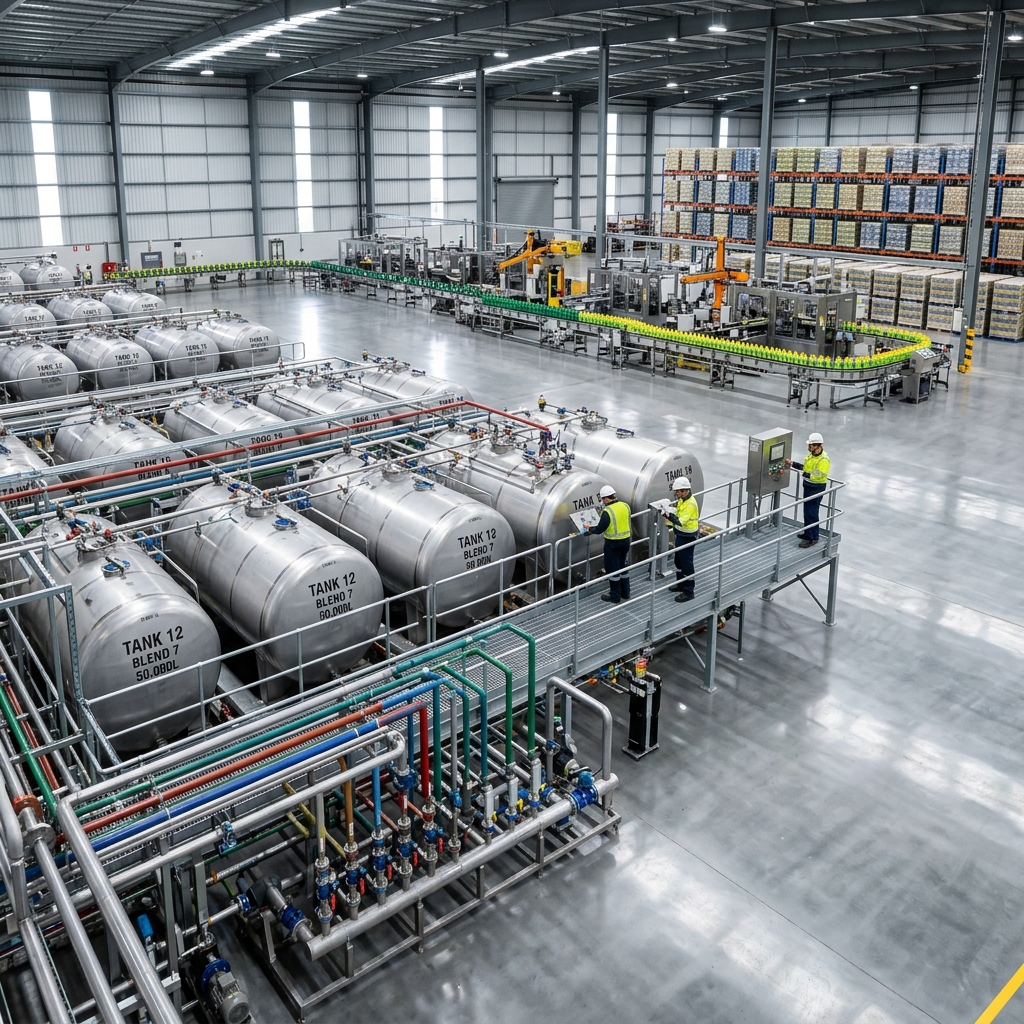
Engineering premium lubricants requires a delicate balance of chemical compatibility, molecular stability, and industrial scalability. For startups and entrepreneurs entering the manufacturing business, even a minor oversight in additive interaction or base oil selection can lead to catastrophic product failure, high-cost recalls, and long-term loss of technical authority. Formulating these advanced fluids is not merely a matter of blending oils, but of masterfully controlling complex chemical systems operating under severe mechanical stress.
Table of Contents
- 1. Additive Fallout and Solubility Challenges
- 2. Viscosity Index Shear Instability
- 3. Base Oil Antagonism and Group Mismatch
- 4. Thermal Oxidation and Anti-oxidant Depletion
- 5. Foaming and Air Entrainment Failures
- 6. Demulsification and Water Separation Errors
- 7. Scale-Up Shearing and Process Inconsistency
- 8. Strategic FAQ and Industrial Guidance
The lubricant manufacturing business is fundamentally a game of molecular precision. While many entrepreneurs focus heavily on the marketing and branding of their finished oils, true industry profits and long-term viability are generated through absolute formulation stability. A lubricant is not merely a physical mixture; it is a highly complex chemical system where base oils and performance additives interact dynamically within a specific thermal and mechanical envelope. When these critical molecular interactions fail, the resulting failures—from sludge formation to metal-on-metal wear—can destroy a manufacturing brand overnight.
Our overarching goal at Global Formulation is to bridge the gap between laboratory concepts and industrial reality. In this technical guide, we dissect the seven most common and expensive formulation failures that plague modern oil blending plants during pilot-scale and commercial production. By understanding these engineering pitfalls, you can protect your chemical manufacturing investment, guarantee product reliability, and establish your brand as a leader in technical authority.
1. Additive Fallout and Solubility Challenges
One of the most frequent technical failures in new lubricant formulations is the phenomenon known as additive fallout. This occurs when the performance additives—such as detergents, dispersants, or anti-wear agents—fail to remain in a stable solution within the base oil. Instead of providing protection, these vital chemicals precipitate out of the mixture, forming a sticky, grainy sediment at the bottom of the container or, worse, inside the machinery's oil passages.
Establishing long-term additive suspension requires chemical engineers to understand the polarity differences between base oil groups and additive packages. Group II and Group III base oils, while possessing superior purity (defined by the API as at least 90% saturates and 0.03% sulfur or less), have significantly lower natural solvency compared to Group I. Consequently, they may require additional "booster" components, such as synthetic esters or heavy-solvency mineral carriers, to hold complex additive packages in suspension.
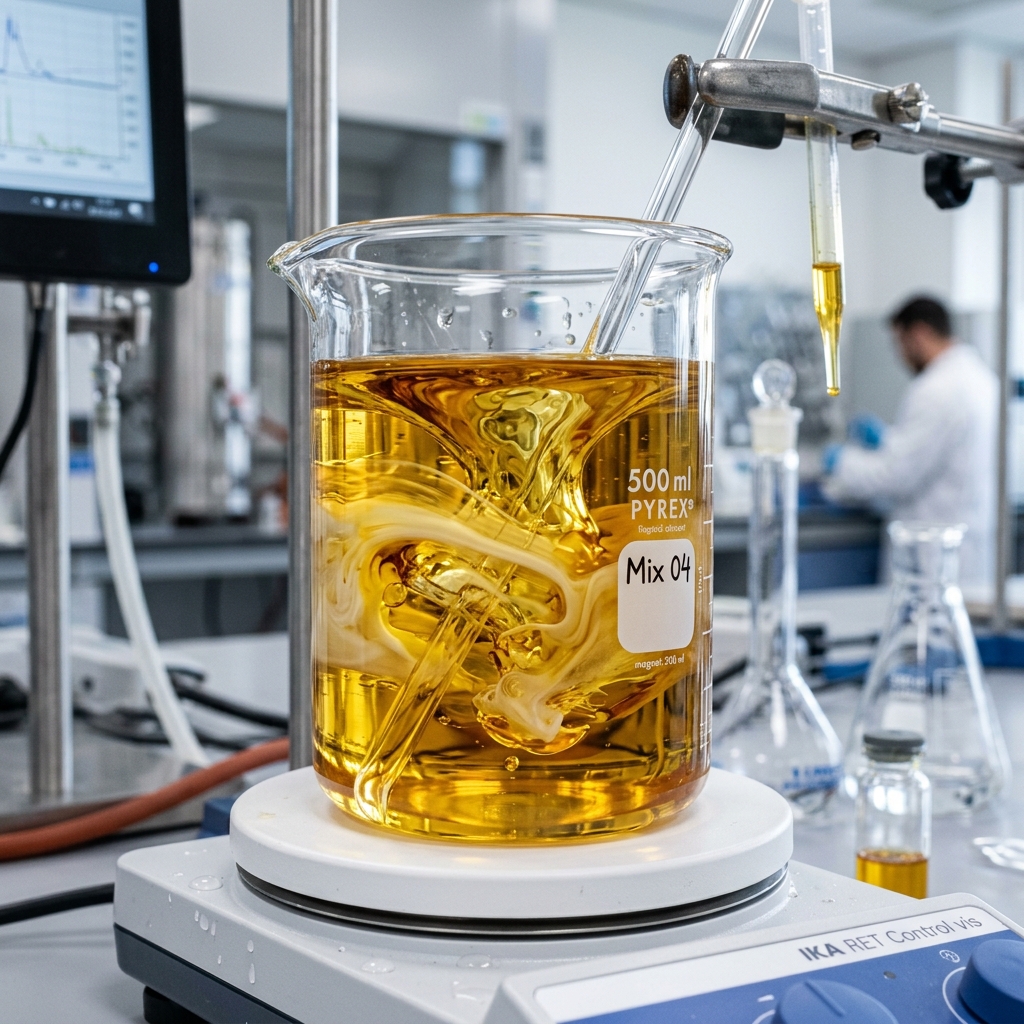
Managing solubility limits is a non-negotiable step in the initial product design phase. If solubility limits are breached, the physical properties of the fluid degrade rapidly, leading to cold-flow blockages and additive starvation at critical friction sites:
- Solvency Limits: Every base oil group possesses a strict saturation threshold for specific chemical structures.
- Temperature Sensitivity: Rapid cooling after blending can shock additives out of solution, causing Cold Fallout.
- Package Incompatibility: Blending additive packages from different suppliers without compatibility testing often leads to chemical antagonism and precipitation.
For more details on selecting the right carriers and preventing precipitation, refer to our comprehensive guide on additives in lubricants.
2. Viscosity Index Shear Instability
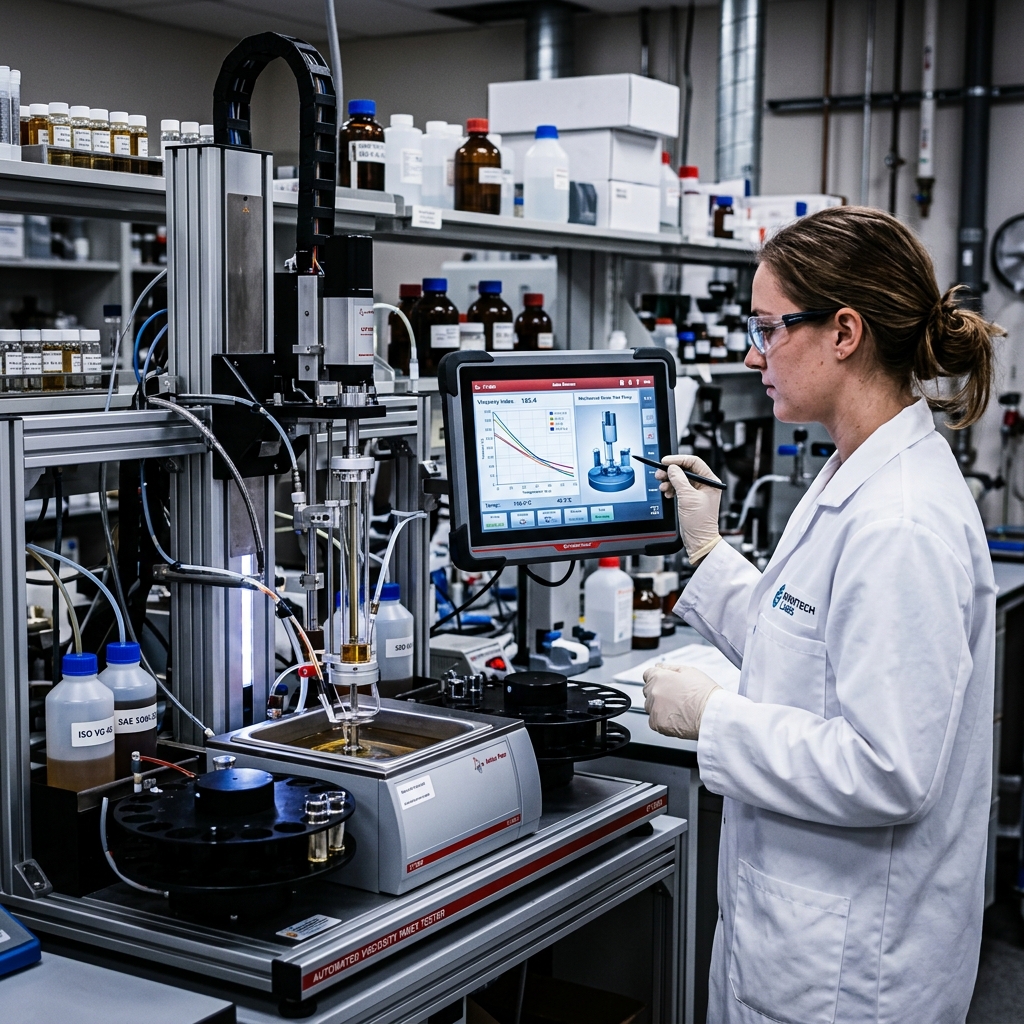
Viscosity index is the single most important property of any lubricant, calculated per ASTM D2270 as a unitless measure of how much a fluid's viscosity changes with temperature. To create multi-grade oils (such as 10W-40), formulators use Viscosity Index Improvers (VII)—large, long-chain polymers that expand and contract with temperature changes. A common mistake among entrepreneurs is selecting low-cost VII polymers that have poor shear stability. Under the high-pressure environment of an engine or gearbox, these polymers are literally "sheared" or chopped into smaller pieces, causing the oil to lose its viscosity permanently.
The permanent loss of viscosity leads to internal leakage, reduced oil film thickness, and eventually, metal-surface contact. This failure is particularly dangerous because it often happens gradually during equipment operation. By the time the user notices the drop in oil pressure, the mechanical damage is already irreversible. For a deeper technical breakdown of polymer chemistry and shear mechanisms, see our dedicated guide to viscosity index improvers in engine oils. Engineering for high industry profits requires using high-SSI polymers that maintain structural integrity throughout the entire service interval.
3. Base Oil Antagonism and Group Mismatch
Modern lubricants are categorized into five distinct groups based on their refining process and chemical composition. A frequent error in the manufacturing business is assuming that a formulation designed for Group I base oils will perform identically when switched to Group III or Group IV (PAO). In reality, the absence of aromatics in highly refined synthetic oils can drastically alter how additives—especially seal swellers and anti-oxidants—function within the system.
This "Group Mismatch" often results in seal shrinkage or hardening, leading to oil leaks and premature component failure. Entrepreneurs must realize that high-purity base oils, while superior in oxidation resistance, offer poor natural lubricity and solvency. Compensating for these deficits requires a precise dosage of co-solvents and friction modifiers that are technical-only and specific to the base oil's molecular profile.
Base Oil Group Properties Comparison
The following table highlights the critical chemical parameters across different base oil groups and their subsequent solvency and compatibility limitations.
To explore the nuances of these base oil classifications and their refining processes further, read our deep dive into lubricant base oil types.
4. Thermal Oxidation and Anti-oxidant Depletion
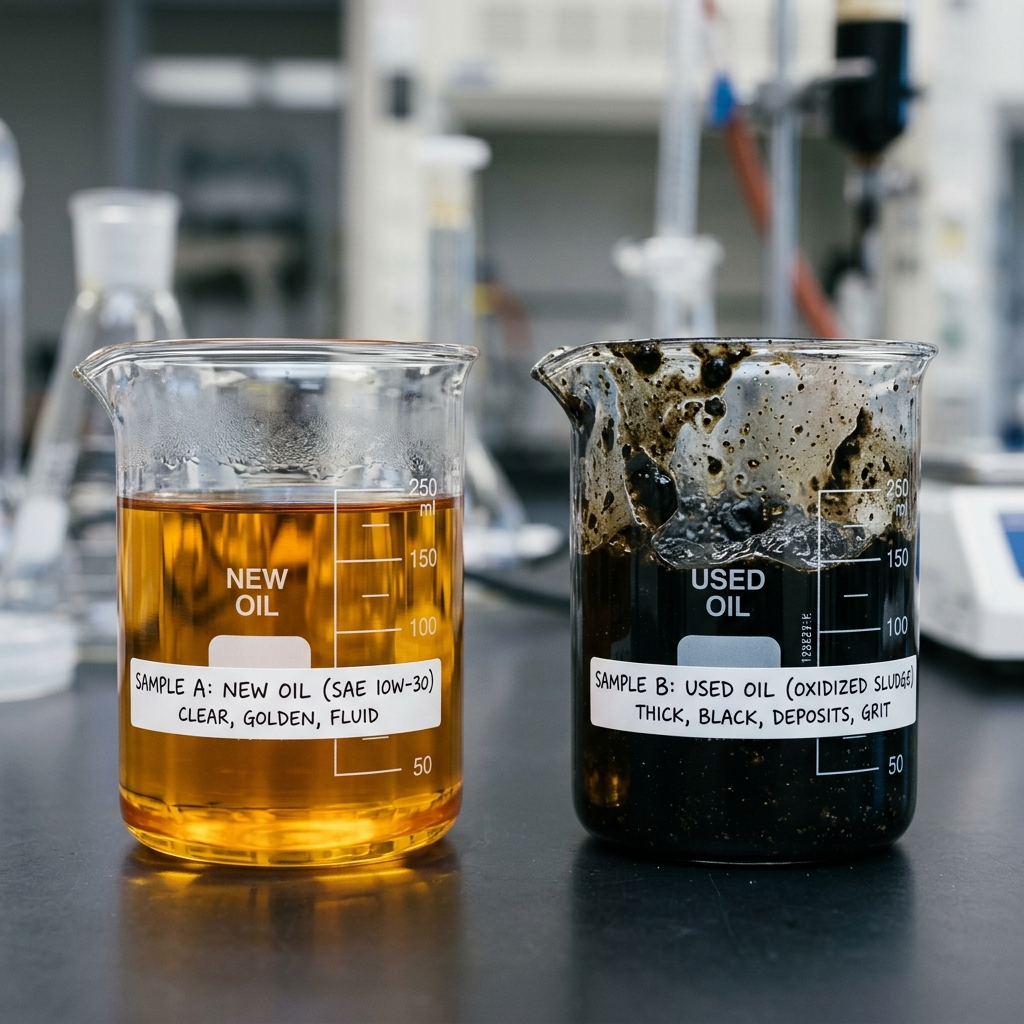
Oxidation is the chemical reaction of oil with oxygen, accelerated by extreme heat and metal catalysts. This process creates organic acids and insoluble resins that eventually thicken the oil into a non-functional sludge. The buildup of these acids is tracked via the Total Acid Number (TAN), measured as the milligrams of potassium hydroxide needed to neutralize the acids in one gram of oil — a rising TAN is the standard early-warning signal that antioxidant depletion is underway. Formulators often fail by either under-dosing anti-oxidants or by choosing the wrong type of anti-oxidant for the operating temperature. A formulation that works at 80°C may fail catastrophically at 120°C if the primary anti-oxidant volatilizes or decomposes.
To achieve high-authority status in the market, your oils must survive extreme drains and high-temperature operating limits. This requires a synergistic approach using both primary antioxidants (radical scavengers like alkylated diphenylamines) and secondary antioxidants (peroxide decomposers like sulfurized phenols or ZDDP). Primary antioxidants neutralize free radicals directly, while secondary antioxidants break down peroxides before they can generate new radicals — without this dual-layer protection, the formulation will have a short induction period, leading to sudden thickening and equipment failure that reflects poorly on your quality control. Field technicians can catch this failure early by learning the warning signs covered in our guide to lubricant oxidation in service.
5. Foaming and Air Entrainment Failures
Lubricants are often used in high-speed splash or pressure systems where air is naturally churned into the liquid. If the formulation cannot release this air quickly, it creates a stable foam. Foam is a poor lubricant; it is compressible, leading to hydraulic failure, and it has low thermal conductivity, leading to overheating. Most entrepreneurs add generic anti-foam agents, but adding too much—or the wrong type—can actually increase air entrainment within the bulk of the oil.
The engineering challenge lies in controlling the surface tension. Antifoams (usually silicone-based or polyacrylates) must be insoluble in the oil to work effectively, yet finely dispersed so they do not settle out during storage. If the droplet size is incorrect, the antifoam will either fail to break the surface bubbles or will disappear from the oil over time, leaving the product unprotected. This is a critical factor in hydraulic oil manufacturing and high-speed gear lubrication, where extreme pressure additives must also remain chemically stable in the presence of the antifoam package rather than competing with it at the metal surface.
- Surface Foam: Bubbles on top of the oil, manageable with standard antifoam.
- Air Entrainment: Microscopic bubbles suspended inside the bulk oil, much harder to treat.
- Dispersancy Overload: Too much detergent or dispersant can act as a surfactant, stabilizing foam.
6. Demulsification and Water Separation Errors
In many industrial applications, lubricants are exposed to water contamination through condensation, steam, or high-pressure wash-downs. A high-quality industrial oil must be demulsifying, meaning it must separate from water rapidly so the water can be drained from the system. Formulation failures occur when the chemistry of the additives—particularly the sulfur and phosphorus-based anti-wear agents—competes with the demulsifiers for the oil-water interface.
If the formulation fails to shed water, a creamy emulsion forms. This emulsion promotes rust, increases compressibility, and creates a breeding ground for bacteria in metalworking fluids or paper machine oils. Achieving the perfect water separation score in ASTM tests requires a precise titration of demulsifier types that are technical-only and tailored to the specific additive package used. Mistakes here are often found in gear oil formulations.
7. Scale-Up Shearing and Process Inconsistency
The final and perhaps most frustrating mistake happens during the transition from the laboratory to the factory floor. A formulation that is perfectly stable in a 1-liter beaker can fail when blended in a 20,000-liter tank. This is often due to Scale-Up Shearing. The high-shear mixers used in large blending vats can prematurely degrade additives or cause localized overheating that alters the chemical structure of the oil.
Consistency is key to industry profits. If your process engineering—heating rates, mixing speeds, and addition sequences—is not strictly controlled, every batch will have slightly different properties. These inconsistencies lead to customer complaints and technical disputes. Professional consultants often emphasize the need for Step-Wise Blending protocols to ensure that each component is fully integrated before the next is introduced.
Frequently Asked Questions
1. Why did my additive package precipitate after three months of storage?
This is likely due to "Cold Fallout" or solubility saturation. Most high-performance additive packages require co-solvents (like esters or high-solvency Group I oils) when formulated with Group III base oils to maintain long-term suspension.
2. What is the difference between Temporary and Permanent Viscosity Loss?
Temporary loss happens when polymer chains align under stress but return to normal when the stress stops. Permanent loss occurs when the polymers are physically broken ("sheared") and cannot recover.
3. Can I mix Group I and Group IV base oils in the same formulation?
Yes, and it is often a strategic choice. Group I oils provide the solvency that Group IV (PAO) lacks, creating a more stable environment for additives while maintaining synthetic performance.
4. How does oxidation affect the Total Acid Number (TAN)?
As oil oxidizes, it produces organic acids. A rising TAN is the primary indicator that the anti-oxidant package is depleted and the oil needs to be changed before sludge forms.
5. Why is silicone antifoam sometimes hated by industrials?
While effective at killing surface foam, silicone can hinder air release (air entrainment) and may affect downstream processes like painting or coating if the lubricant leaks onto surfaces.
6. How do I verify the technical accuracy of my new batch?
Implementing a rigid "Certificate of Analysis" (CoA) process, including tests for Viscosity, Flash Point, TAN, and elemental analysis (ICP), is mandatory for establishing technical authority.
Need Technical Lubricant Formulation & Blending Engineering Support?
Discuss your additive solubility limits, viscosity index shear stability index (SSI), thermal-oxidative stability, and scale-up blending protocols with industrial specialist Absar Khan.
Email: consulting@globalformulation.com
Phone: +91 9819548320 +91 8169102990
About the Specialist
Absar Khan is a senior industrial consultant with cross-disciplinary expertise spanning pharmaceutical manufacturing, cosmetics and personal care, home and institutional care chemicals, aerosols, lubricants, and advanced process engineering. His work integrates multiple scientific and engineering domains, including formulation chemistry, GMP facility design, validation science, quality systems, regulatory compliance, and large-scale manufacturing optimization.
LinkedIn Portfolio: Connect with Absar Khan on LinkedIn