Gear Oil Manufacturing: From Concept to Performance
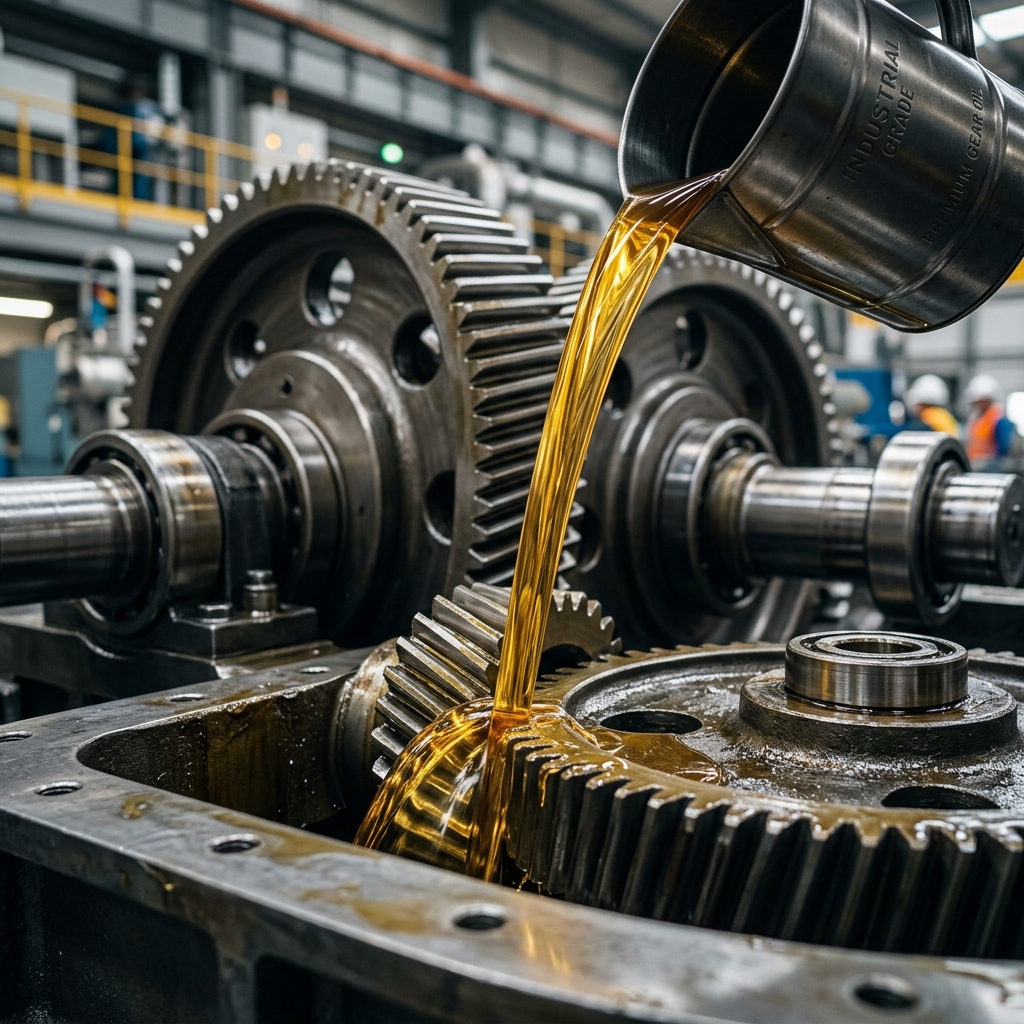
Gear oils represent the chemical vanguard in mechanical engineering, providing the essential separation of metallic surfaces in high-load, high-torque environments, a specialized branch of the broader industrial lubricants field. In applications ranging from compact automotive differentials to massive industrial planetary gearsets, the lubricant must act as a cooling medium, an anti-corrosion barrier, and an extreme-pressure shield simultaneously. Developing these sophisticated fluids requires more than just mixing; it demands a deep technical mastery of fluid rheology and additive synergy.
For entrepreneurs and students entering the specialty chemical space, understanding the roadmap from additive chemistry to commercial scale-up is critical. This guide provides a senior-level perspective on the technical process of gear oil manufacturing, addressing the critical challenges of thermal stability, mechanical shear, and global performance standards that define technical success in the lubricant industry.
Table of Contents
- 1. The Chemical Foundation: Strategic Base Oil Selection
- 2. Additive Chemistry: The Synergy of Extreme Pressure Protection
- 3. Navigating Global Performance Standards: API and SAE
- 4. Industrial Blending: The Roadmap to Commercial Scale-up
- 5. Quality Benchmarks: Validating Operational Integrity
- 6. Frequently Asked Questions (FAQ)
- 7. Related Technical Guidelines and Resources
1. The Chemical Foundation: Strategic Base Oil Selection
The performance profile of a gear oil is fundamentally dictated by its base oil, which constitutes between 70% and 90% of the finished formulation. In modern industrial consultancy, the selection process focuses on API Group classifications, moving away from traditional solvent-refined stocks toward high-purity hydrocracked and synthetic alternatives. These advanced bases provide the thermal ceiling necessary for high-power-density machinery that operates at elevated temperatures for extended service periods.
While Group II hydrotreated oils are now the standard for general-purpose industrial lubrication, high-torque applications increasingly demand Group III severely hydrocracked or Group IV Polyalphaolefin (PAO) bases, the same base stock categories compared in detail in our synthetic vs mineral base oils guide. These stocks offer superior oxidative stability and a high Viscosity Index, preventing the fluid from thinning excessively at high temperatures or thickening dangerously in cold starts, thereby ensuring a stable lubricating film always exists.
- Group I (Solvent Refined): Historically the baseline, but now limited to less demanding industrial systems due to higher sulfur content and lower oxidative resistance.
- Group II (Hydrotreated): The modern industry workhorse, providing exceptional purity and significant gains in thermal stability over traditional mineral oils.
- Group III (Severely Hydrocracked): Provides synthetic-like performance in terms of Viscosity Index and stability, often used as a cost-effective alternative for high-performance multi-grade gear sets.
- Group IV (Synthetic PAOs): The premier choice for extreme-duty applications, offering the lowest pour points and the highest resistance to thermal degradation under severe mechanical shear.
2. Additive Chemistry: The Synergy of Extreme Pressure Protection
The true engineering value of a gear oil lies in its additive package, where complex chemical interactions provide surface protection that base oils cannot sustain alone. In high-torque environments, the elastohydrodynamic film can often become too thin to prevent metal-to-metal contact, necessitating a secondary chemical barrier. This is achieved through the integration of Extreme Pressure (EP) additives and Anti-Wear (AW) chemistries that remain inert at standard conditions but activate precisely when the flash temperature of a contact point rises.
The most critical interaction in gear oil formulation is the synergy between sulfur and phosphorus compounds, following the same additive-package logic detailed in our lubricant additives guide. Sulfur acts as a robust anti-welding agent by forming a sacrificial iron-sulfide film on gear teeth under extreme pressure, while phosphorus optimizes the reactivity and provides anti-wear properties that reduce long-term surface fatigue. Balancing these components is the core challenge for any industrial formulator, especially when considering component compatibility with non-ferrous materials.
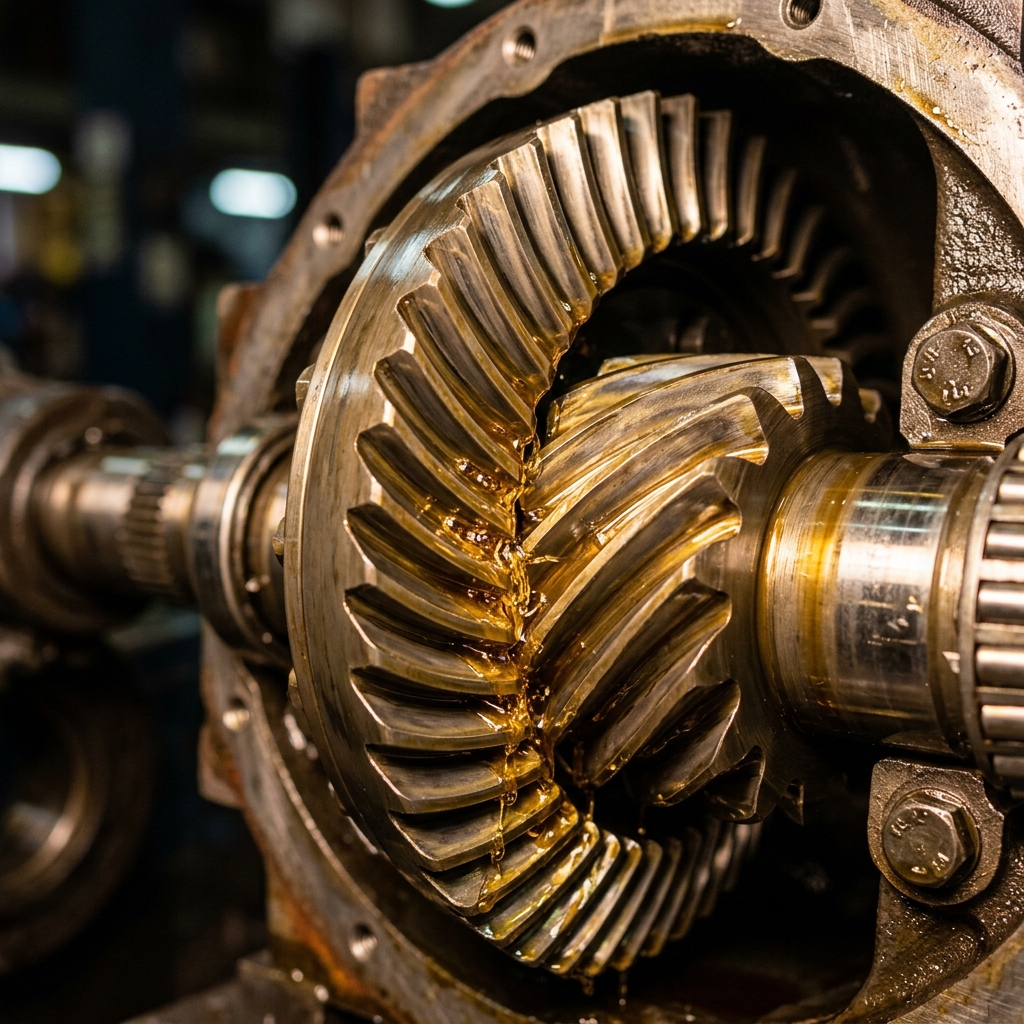
- EP sulfur-phosphorus packages: Formed through carefully balanced reactions that create protective sacrificial layers only at high-temperature contact points.
- Friction Modifiers: Specifically engineered to reduce parasitic energy loss and optimize the coefficient of friction within the sliding zones of the gear mesh.
- Viscosity Index Improvers (VII): High-molecular-weight polymers that expand as temperature increases, effectively reducing the rate at which the oil thins.
- Metal Deactivators: Critical for formulations intended for systems containing "yellow metals" (brass/bronze), preventing chemical attack by the active sulfur.
3. Navigating Global Performance Standards: API and SAE
Technical compliance in gear oil manufacturing is governed primarily by the American Petroleum Institute (API) and the Society of Automotive Engineers (SAE). For a startup or an established manufacturer, meeting these benchmarks is not optional; it is the passport to market acceptance and mechanical validation. The distinction between API GL-4 and GL-5 gear oil ratings, for instance, is a matter of additive concentration and surface reactivity designed for very different mechanical architectures.
While GL-5 gear oils contain high concentrations of EP additives suited for the intense sliding pressures of hypoid gear axles, they can be detrimental to manual transmissions. The high active sulfur can be corrosive to bronze synchronizers, leading to poor shift quality and premature component failure — a compatibility issue conceptually similar to the wet-clutch friction requirements discussed in our motorcycle vs car engine oil guide. Understanding these nuances allows formulators to create specialty "MT-1" or "synchro-safe" oils that balance protection with component longevity across global regional focuses.
Gear Oil Classifications & Standards
The table below reviews the dominant industrial specifications, outlining their load characteristics and specialized chemical demands.
4. Industrial Blending: The Roadmap to Commercial Scale-up
Moving from a laboratory formulation to a high-volume manufacturing environment is a critical phase known as technology transfer, following the same staged progression covered in our lab-to-market scale-up guide. In the gear oil industry, this requires a precision blending plant equipped with high-shear homogenization and accurate temperature control systems. Maintaining a specific temperature range—typically between 45°C and 60°C—is essential to ensuring the additive package fully dissolves and remains stable within the base oil without risking thermal degradation of the more sensitive polymers, using blending logic comparable to the process outlined in our hydraulic oil manufacturing guide.
The manufacturing process must also incorporate multi-stage filtration to achieve the stringent ISO cleanliness codes required by modern industrial equipment. Particulate contamination can act as an abrasive in high-torque gear contact zones, leading to accelerated wear and premature failure. For consultants, establishing a robust Quality Management System (QMS) that tracks batch consistency through every step is as important as the formulation itself.
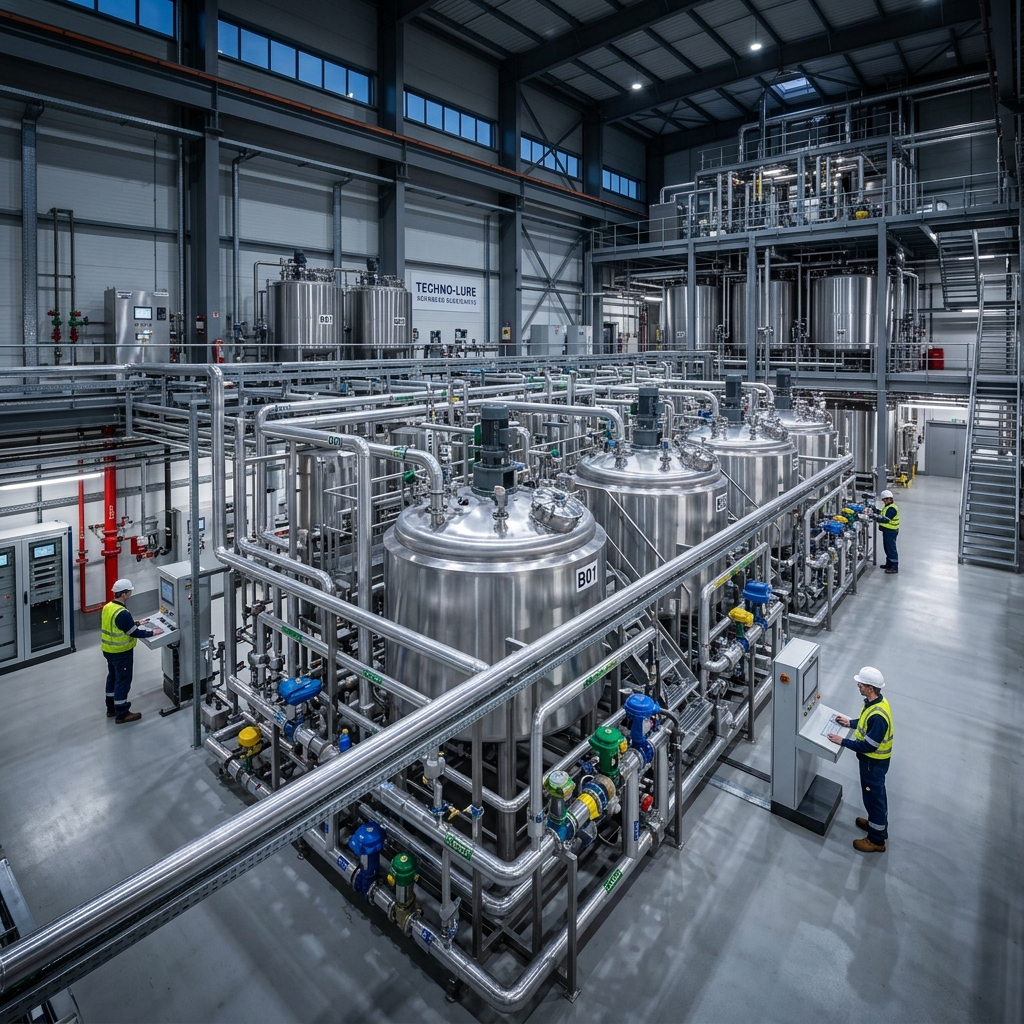
- Phase 1: Base Oil Charging: Loading the specific ratio of base stocks into the blending vessel under controlled agitation.
- Phase 2: Heating and Polymer Addition: Raising the temperature to facilitate the dissolution of Viscosity Index improvers and pour point depressants.
- Phase 3: Additive Homogenization: Introducing the EP/AW packages and ensuring a completely stable, single-phase solution through high-shear mixing.
- Phase 4: Polishing Filtration: Passing the finished fluid through 5- or 10-micron filters to remove microscopic manufacturing debris.
5. Quality Benchmarks: Validating Operational Integrity
A high-performance gear oil is defined not only by its formula but by its ability to maintain technical specifications across every produced batch. Quality Assurance (QA) in a lubricant laboratory involves a battery of standardized ASTM tests that simulate the stresses of real-world operation. These benchmarks provide the empirical data necessary for ranking, authority validation, and customer trust in high-stakes industrial environments where failure is not an option.
Beyond basic kinematic viscosity at 40°C and 100°C, a senior industrial consultant looks for multi-dimensional data such as the Copper Strip Corrosion test (ASTM D130) and the 4-Ball Extreme Pressure test. These results confirm that the EP additives will activate exactly when needed without prematurely attacking component metals during standard operation, ensuring a predictive and safe maintenance cycle for the end-user.
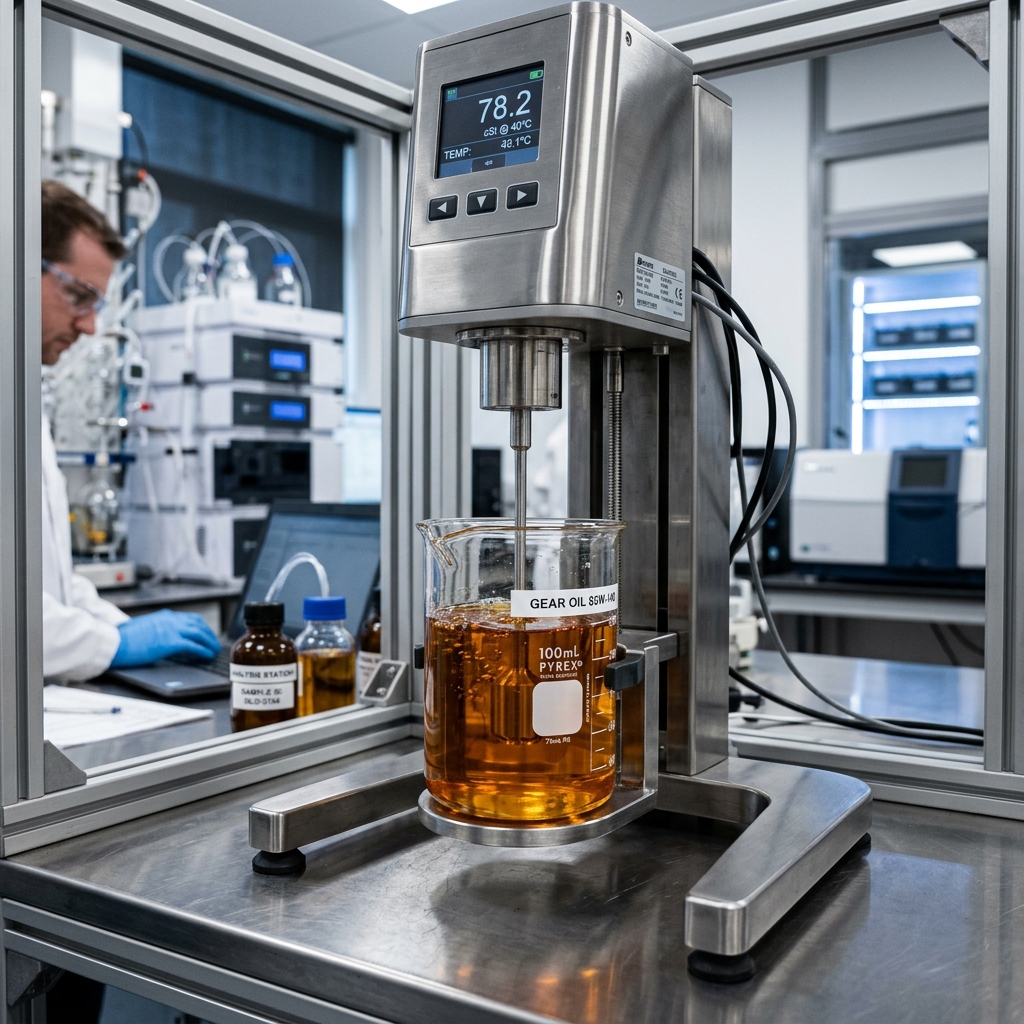
- Flash Point (ASTM D92): Assessing the stability and safety of the oil under extreme heat conditions.
- Pour Point (ASTM D97): Determining the lowest temperature at which the lubricant remains pumpable for cold-start protection.
- Foam Stability (ASTM D892): Confirming the oil will not entrap air under high-speed agitation, which would compromise the lubricant film.
- Demulsibility (ASTM D1401): Measuring the oil's ability to separate from water, a critical factor for gearboxes operating in humid or wash-down environments.
Frequently Asked Questions
Why is API GL-5 not always backwards compatible with GL-4?
It's a common misconception that "higher" numbers mean better. GL-5 contains nearly twice the concentration of EP additives which, while protecting hypoid gears, can chemically attack (corrode) the yellow metals used in manual transmission synchronizers. Always use the specified rating for your equipment.
What is the significance of the "active sulfur" odor in gear oils?
The distinct pungent smell is characteristic of the extreme-pressure additive package. It indicates the presence of sulfur-based compounds that are designed to react with iron surfaces under high load to prevent gear scuffing and welding.
Can synthetic gear oils extend the interval between oil changes?
Yes, synthetic Group IV (PAO) gear oils have significantly higher oxidative stability than mineral oils. This means they resist thickening and sludge formation over time, allowing for longer service intervals without sacrificing mechanical protection.
How does mechanical shear affect gear oil viscosity?
High-torque gear teeth act like a "pair of scissors" on polymer additives. Lower-quality Viscosity Index improvers can break down (shear), causing the oil to thin out permanently and lose its protective film. Quality formulations use "shear-stable" polymers to prevent this.
Why is DIN 51517-3 used instead of API GL ratings for industrial gearboxes?
API GL ratings were developed primarily for automotive axle and transmission applications, while DIN 51517-3 (CLP) specifically addresses the oxidation stability, demulsibility, and foam control requirements of stationary industrial gearboxes that run continuously for years without a drain interval. Industrial gear manufacturers in Europe and Asia commonly specify DIN 51517-3 because it better reflects the long, continuous duty cycles of enclosed industrial gear drives.
What role does the base oil play if additives provide the extreme-pressure protection?
The base oil forms the primary hydrodynamic and elastohydrodynamic lubricating film that separates gear tooth surfaces during normal operation, and it determines the fluid's viscosity-temperature behavior, oxidative stability, and low-temperature pumpability. EP additives only activate as a secondary chemical barrier when the film becomes too thin under extreme load, so a poor-quality base oil will compromise performance even with a well-designed additive package.
Need Technical Lubricant Formulation & Blending Engineering Support?
Discuss your additive solubility limits, viscosity index shear stability index (SSI), thermal-oxidative stability, and scale-up blending protocols with industrial specialist Absar Khan.
Email: consulting@globalformulation.com
Phone: +91 9819548320 +91 8169102990
About the Specialist
Absar Khan is a senior industrial consultant with cross-disciplinary expertise spanning pharmaceutical manufacturing, cosmetics and personal care, home and institutional care chemicals, aerosols, lubricants, and advanced process engineering. His work integrates multiple scientific and engineering domains, including formulation chemistry, GMP facility design, validation science, quality systems, regulatory compliance, and large-scale manufacturing optimization.
LinkedIn Portfolio: Connect with Absar Khan on LinkedIn