Understanding MSDS, TDS & COA for Chemical Products
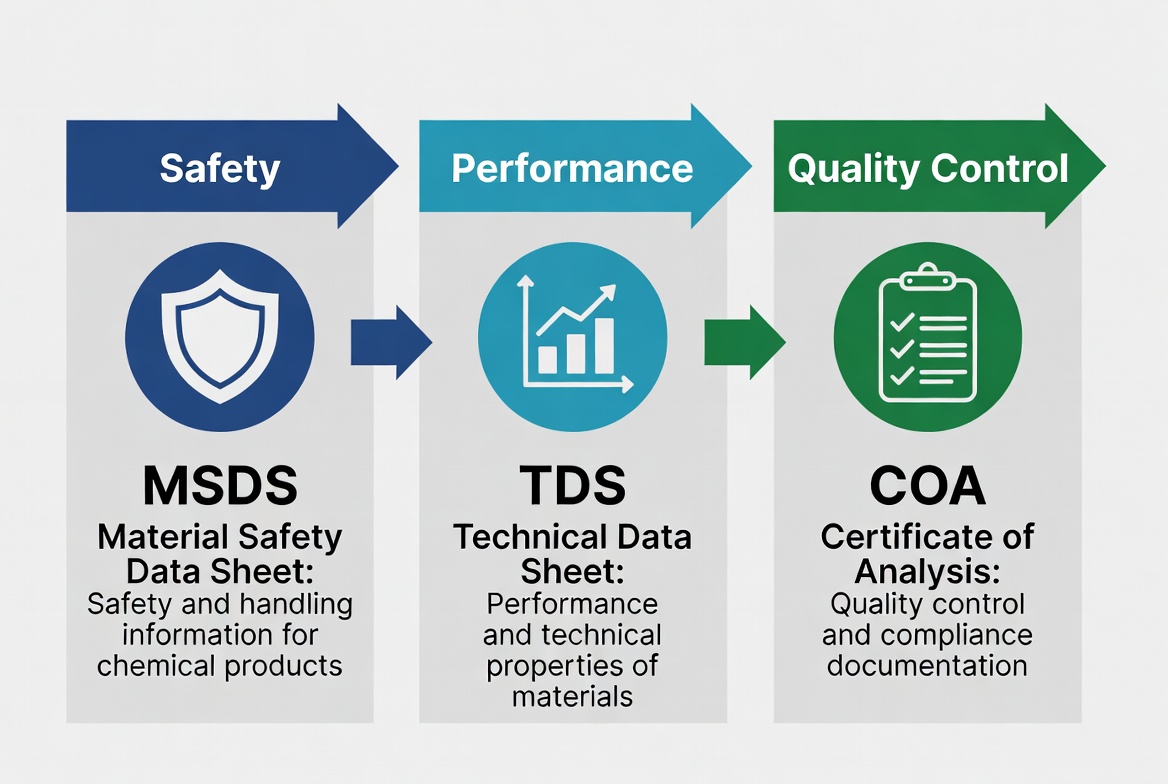
In the chemical manufacturing and specialty chemical blending sectors, launching a high-performance formulation is only half the battle. To successfully market, transport, store, and export chemical products, businesses must back their products with a robust compliance and documentation suite. MSDS, TDS, and COA represent three distinct layers of verification, covering safety, technical performance, and batch quality. Together, they are absolutely essential for qualifying as an approved supplier and entering global industrial supply chains.
1. Introduction – Why Chemical Documentation Matters in Today’s Market
In today's highly regulated market, product performance alone is no longer enough to win corporate contracts or clear customs checks. Proper technical documentation serves as the legal and operational interface between chemical manufacturers, transporters, commercial warehouses, emergency response teams, and B2B buyers.
Failing to provide professional, technically accurate documentation creates severe bottlenecks for chemical startups. Without verified paperwork, logistics companies will reject consignments as undeclared dangerous goods, factory inspectors can issue compliance fines, and corporate procurement departments will disqualify product samples.
To protect operations and build commercial trust, a manufacturer's documentation must cover three essential parameters:
- Safe Operations & Handling Compliance: Guiding transport, storage, and factory teams on safety risks and emergency procedures.
- Technical Performance Parameters: Clearly defining standard physical properties, application rates, and curing guidelines.
- Batch Verification & Traceability: Providing lot-specific testing details that verify batch-wise quality and compliance.
2. What is an MSDS (Material Safety Data Sheet)?
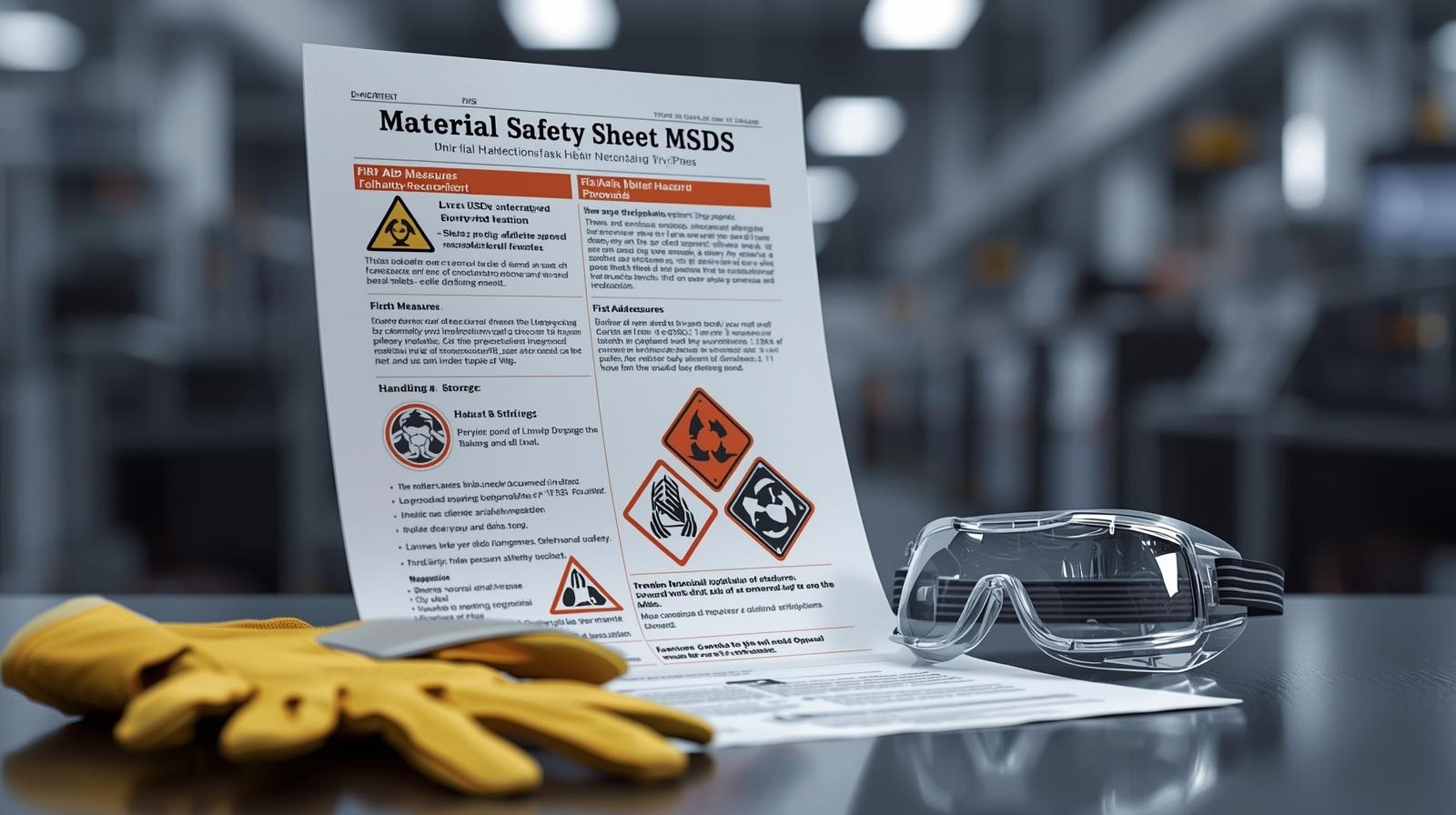
An MSDS (Material Safety Data Sheet)—now standardized as the 16-section SDS (Safety Data Sheet) under international GHS frameworks—is a legally mandated document. It details the chemical composition, physical hazards, human health risks, storage rules, and emergency measures of a product.
Determining a product's GHS safety classification relies on toxicological indices like the **Acute Toxicity Estimate (ATE)**. For pure substances, this is based on the **LD50 / LC50 Toxicological Ratio**:
For multi-component mixtures like industrial cleaners, coatings, or aerosols, the GHS mandates calculating the **Mixture Acute Toxicity Estimate (ATEmix) Equation**:
GHS guidelines require the SDS to be organized into 16 standardized sections, covering all safety and handling aspects:
3. What is a TDS (Technical Data Sheet)?
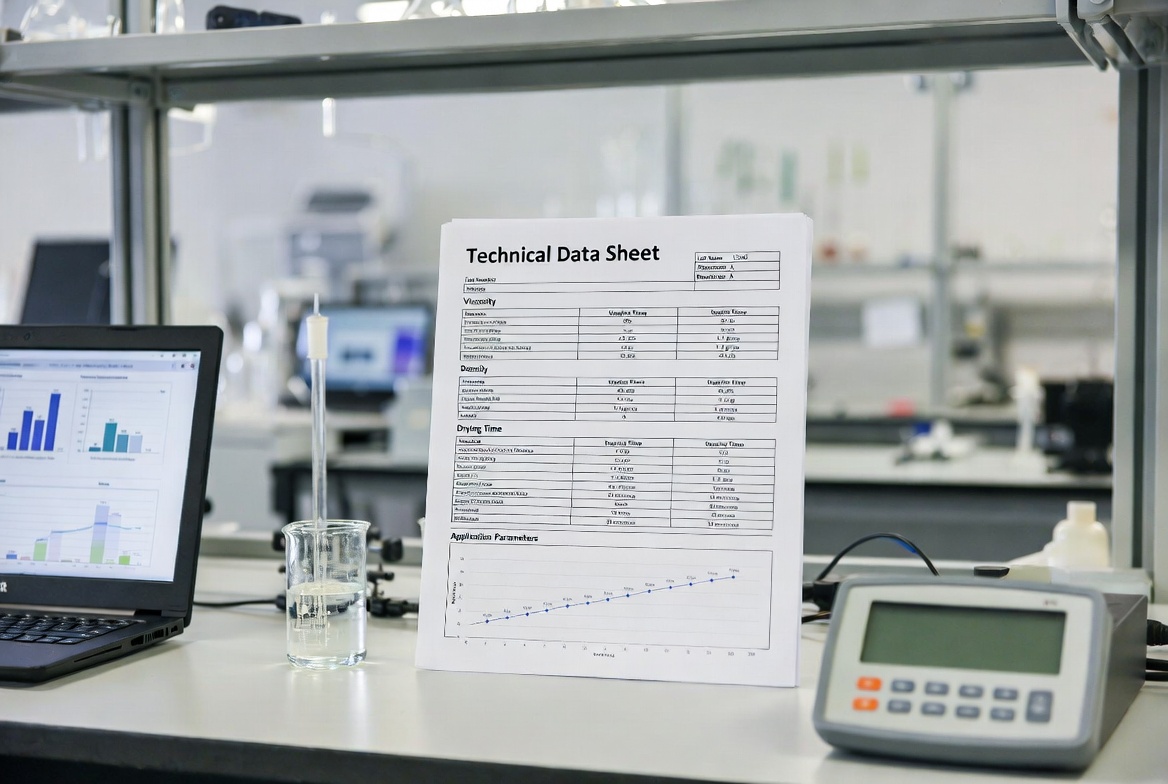
A TDS (Technical Data Sheet) provides comprehensive performance, physical properties, and application data of a product. Unlike MSDS, a TDS is not a legal safety document, but serves as a key commercial reference for customer selection, application design, and technical marketing.
The TDS acts as the technical agreement between a chemical supplier's R&D team and the buyer's application engineers. It defines the optimal conditions under which the product will deliver its intended performance, preventing common issues caused by incorrect application.
A standard Technical Data Sheet details several key performance and application parameters:
- Physical Appearance: Listing the visual state, color, odor, and homogeneity of the product.
- Fundamental Properties: Defining standard physical metrics like density, viscosity, solids content, and pH limits.
- Application Guidelines: Explaining recommended techniques (e.g., spraying pressure, nozzle sizing, dilution ratios).
- Curing & Drying Parameters: Outlining the temperature, relative humidity, and times required for optimal curing.
- Substrate Compatibility: Detailing recommended metals, plastics, or concrete surfaces for application.
4. What is a COA (Certificate of Analysis)?
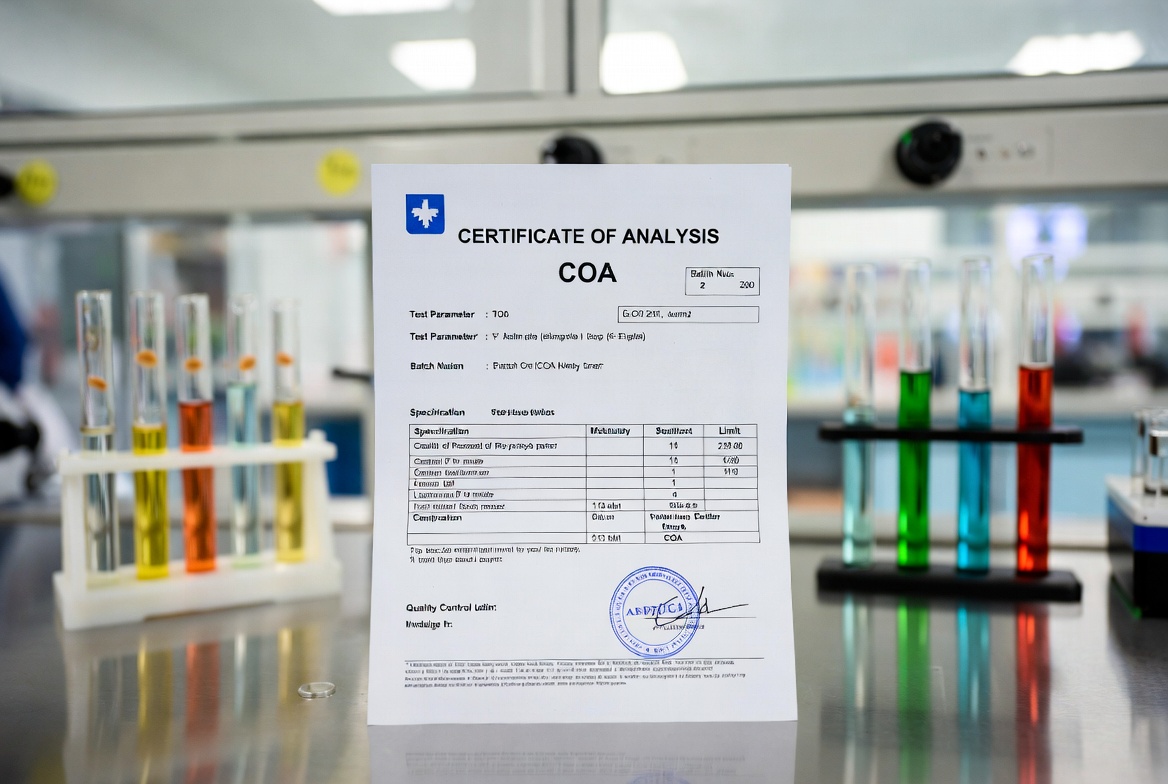
A COA (Certificate of Analysis) is a batch-specific quality document issued by quality control (QC) labs to confirm that a particular production lot meets all physical, chemical, and quality specifications defined in the TDS.
To ensure consistent batch-to-batch quality, QC labs measure the **Process Capability Index (Cpk) Equation**:
Unlike product-level documents like MSDS or TDS, a COA is generated for every individual production lot. This batch-specific focus provides essential advantages for manufacturing quality control:
5. MSDS vs TDS vs COA – Core Differences Explained
While MSDS, TDS, and COA all describe the same chemical product, they serve different operational purposes. Startups must understand these differences to avoid submitting incorrect files during buyer evaluations.
These three documents cover different aspects of the chemical supply chain: safety, performance, and quality control:
| Parameter | MSDS / SDS | TDS | COA |
|---|---|---|---|
| Primary Purpose | Safety, handling, and regulatory compliance | Performance, properties, and application data | Verifying quality of a specific batch |
| Document Nature | Legal safety document | Technical and marketing document | Quality certificate and verification |
| Mandatory Status | Mandatory by transport and environmental laws | Not legal, but essential for commercial sales | Mandatory for industrial and B2B orders |
| Batch-Specific | No (applies to the product formulation) | No (applies to the product range) | Yes (unique for every production batch) |
6. Importance of MSDS, TDS & COA for Startups & Small Manufacturers
For startups and small-scale chemical manufacturers, providing professional, standardized documentation is key to building credibility. It helps smaller units show they meet the same rigorous quality and safety standards as large, multinational brands.
High-quality technical documentation provides multiple business and commercial benefits:
- Faster Vendor Approval: Speeding up evaluations with procurement and technical approval committees.
- Tender Access Eligibility: Qualifying to bid on government, PSU, and large corporate chemical tenders.
- Smoother Export Approvals: Preventing customs delays at international ports by meeting global compliance rules.
- Lower Liability Risks: Protecting the brand with legally compliant MSDS safety warnings in case of handling accidents.
7. Common Mistakes Found in Chemical Documentation
Startups and small manufacturers frequently face rejections during vendor registration due to errors in their technical documentation. A common mistake is using generic, copy-pasted files found on the internet rather than formulation-specific documents. This is one instance of a broader pattern covered in our guide to dangerous formulation mistakes that put entire product launches at risk.
Copying chemical documentation presents serious operational and compliance risks:
- Copied Internet Documents: Submitting MSDS files with incorrect supplier names, chemical structures, or CAS numbers.
- TDS/Formulation Mismatches: Listing impossible technical values that do not match the product's actual performance.
- Unverified Certificates of Analysis: Issuing COAs without batch numbers, tested parameters, or standardized test methods.
- Outdated Formats: Using legacy 8-section MSDS formats instead of the modern 16-section GHS Safety Data Sheets.
8. How to Prepare MSDS, TDS & COA Professionally
Developing reliable chemical documentation requires a systematic technical approach based on verified raw material data, laboratory testing, and international compliance databases.
This documentation is built on data collected from several reliable sources:
- Supplier Data Audits: Collecting and verifying raw material MSDSs, TDSs, and COAs from chemical suppliers.
- Laboratory Test Records: Running internal physical and chemical tests (e.g., density, pH, solids content, viscosity) at the same stage covered in our lab-to-market scale-up guide.
- Stability Trials: Conducting accelerated heat and cold testing to verify storage and shelf-life limits.
- HSE Regulatory Databases: Using GHS hazard databases to identify correct hazard symbols and phrases.
9. Regulatory Standards Governing These Documents
Chemical documentation must comply with specific national and international regulations, depending on where the products are manufactured, transported, and sold.
Key regulatory bodies and frameworks govern this space globally:
- Factories Act & MSIHC Rules (India): Enforcing mandatory chemical exposure and handling safety controls in industrial plants.
- GHS UN Guidelines: Standardizing chemical hazard classifications, symbols, and safety phrasing worldwide.
- REACH (European Union): Requiring complete safety and regulatory validation for chemical imports.
- OSHA Standards (United States): Mandating 16-section Safety Data Sheets to protect workers handling industrial chemicals.
10. When Do You Need All Three Documents Together?
In B2B chemical supply chains, buyers frequently require MSDS, TDS, and COA to be submitted together. This package provides transport, engineering, and quality teams with all the information they need to approve a product.
These documents are simultaneously required in multiple commercial scenarios:
- Contract and Toll Blending: Setting up contract manufacturing for third-party brands.
- Hazardous Product Logistics: Shipping and warehousing aerosols, flammable solvents, or corrosive liquids.
- B2B Technical Evaluations: Submitting product samples for evaluation by corporate engineering and quality teams.
- Global Export Shipments: Clearing international port controls and customs requirements.
11. VOCs, Pollution & the Role of Green Chemistry
Volatile Organic Compounds (VOCs) are carbon-based chemicals that readily evaporate at room temperature. They are a major source of air pollution, smog formation, and health risks in coatings, adhesives, and industrial cleaners.
Reducing VOCs is a core focus of green chemistry. This is achieved by formulating water-based degreasers, solvent-free paints, and high-solids coatings that protect both workers and the environment.
For a deeper technical understanding of sustainable chemical product development, explore:
👉 Green Chemistry Revolution and Sustainable Formulations
👉 Volatile Organic Compounds and Environmental Regulations
12. How Proper Documentation Helps in Branding, SEO & Sales
Proper documentation is more than just a compliance requirement—it is a powerful tool for Technical SEO, branding, and conversion. Making product-specific MSDSs and TDSs available online builds buyer trust and improves search engine visibility.
Providing easy access to technical documents delivers multiple business advantages:
- Higher Search Rankings: Capturing high-intent organic traffic from buyers searching for specific chemical data.
- Faster Sales Cycles: Reducing back-and-forth technical queries from corporate buyers.
- Stronger Brand Authority: Positioning the company as a transparent, high-quality manufacturer.
13. Do You Need Expert Help for Chemical Documentation?
Startups and small manufacturers often benefit from professional HSE and chemical consulting support. Expert assistance is particularly valuable when developing compliant documentation for exports, corporate tenders, or safety audits. Our guide on choosing the right product development consultant covers what to verify before engaging this kind of support.
Professional consultants help ensure that:
- GHS-Compliant Layouts: Producing documentation that meets all international safety and regulatory standards.
- Formulation Alignment: Guaranteeing that safety hazards and physical data match the product's actual recipe.
- Reduced Audit Risks: Minimizing compliance issues during OSHA, REACH, or factory inspections.
Frequently Asked Questions (FAQ)
1. Is MSDS mandatory for chemical products in India?
Yes. MSDS is mandatory under Indian hazardous chemical rules and the Factory Act wherever chemicals are manufactured, stored or handled. It is also required by transporters, warehouses and many institutional buyers for safety and compliance.
2. Can a TDS replace an MSDS for chemical products?
No. A TDS cannot replace an MSDS. TDS focuses on technical performance and application data, while MSDS is a legal safety document that covers hazards, emergency response and regulatory information.
3. Is a COA required for every batch of production?
Yes. A Certificate of Analysis is normally generated for every individual batch, especially in B2B, export, pharma, food-contact, automotive and regulated applications. It verifies that the batch meets agreed specifications.
4. Who can legally prepare an MSDS for a chemical product?
An MSDS should be prepared by a qualified chemical professional or a certified documentation service using GHS-compliant regulatory data. The manufacturer is ultimately responsible for the accuracy and completeness of the MSDS. Reliable documentation typically draws on verified supplier data, internal laboratory testing, and recognized hazard databases rather than generic templates, since copied or outdated formats are a common cause of vendor rejection during buyer evaluations.
5. How is the Acute Toxicity Estimate calculated for a multi-component mixture?
For mixtures like industrial cleaners, coatings, or aerosols, GHS requires calculating ATEmix = 100 / ∑(Ci / ATEi), where Ci is the weight percentage of each ingredient and ATEi is that ingredient's individual acute toxicity estimate. This mixture-level value, not the toxicity of any single ingredient, determines the classification that appears in Section 3 of the finished product's SDS. A mixture with a lower calculated ATE value is considered more acutely toxic and may trigger stricter hazard labeling and handling requirements on the finished SDS.
6. How does a Cpk value on a Certificate of Analysis indicate batch quality?
Cpk compares how far the batch mean sits from the Upper and Lower Specification Limits (USL/LSL) relative to the process standard deviation. A Cpk of 1.33 or higher indicates the manufacturing process reliably stays within specification, while a low or negative Cpk signals a batch running close to, or outside, the limits defined in the Technical Data Sheet, even if that specific batch's COA still passed. This is why a manufacturer's own internal Cpk tracking across multiple batches is often a more reliable long-term quality indicator than any single batch's COA result.
Need Professional Chemical Documentation & Compliance Templates?
Discuss your MSDS safety criteria, Technical Data Sheet formulations, or batch quality Certificate of Analysis (COA) indices with Global Formulation. Obtain professionally formatted, GHS-compliant, audit-ready chemical templates.
Email: consulting@globalformulation.com
Phone: +91 9819548320 +91 8169102990
About the Specialist
Absar Khan is the principal consultant and chemical formulation architect at Global Formulation. He possesses cross-disciplinary engineering expertise spanning agrochemical milling lines, aerosol packaging systems, pharmaceutical cleanroom layouts, cosmetics, and green chemical plant setups. Absar leads scientific and engineering advisory teams supporting manufacturers globally in technology selection, GMP layouts, validation frameworks, and regulatory strategies.
LinkedIn Portfolio: Connect with Absar Khan on LinkedIn