Anhydrous Cosmetic Formulation: Balms & Waterless Beauty
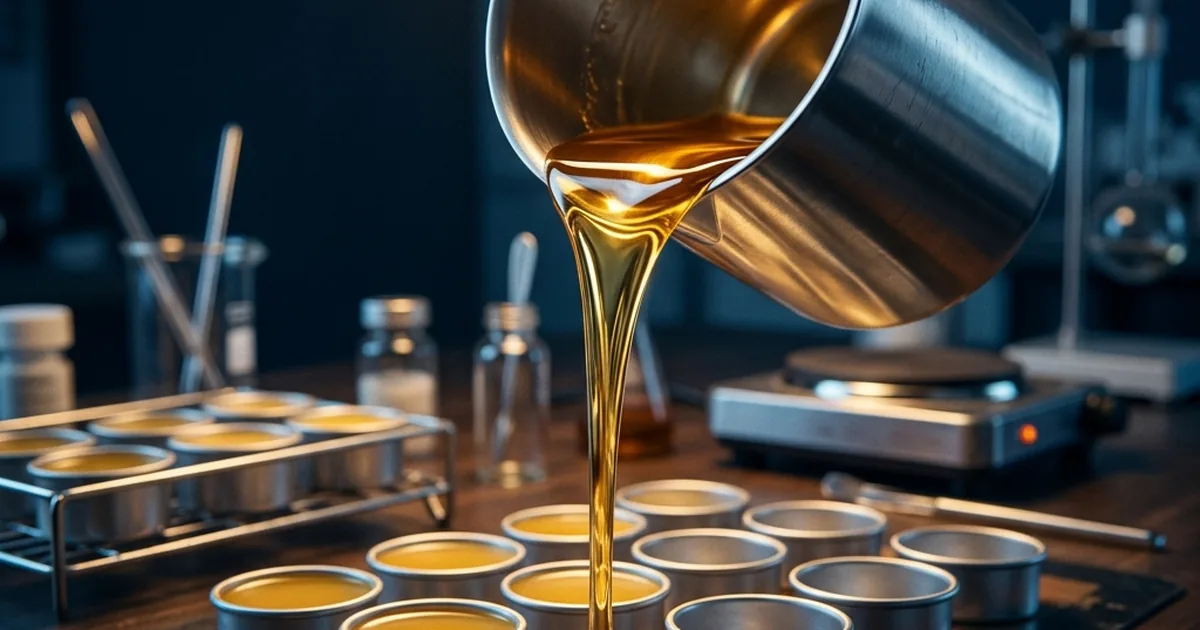
Most new cosmetic brands default to lotions and creams because that's what the market is saturated with — and then discover too late how difficult stable emulsion formulation actually is to get right. Anhydrous cosmetic formulation offers a genuinely different path: balms, sticks, and solid beauty products built entirely from oils, butters, and waxes, with no water phase to stabilize or preserve against microbial growth in the same way. This guide explains what actually makes a formulation anhydrous rather than just "oil-based," how wax and butter selection determines a stick or balm's melting point and texture, why preservation strategy changes fundamentally without free water present, and the stability testing that separates a shelf-stable product from one that bleeds oil or develops surface bloom after shipping. It's written for entrepreneurs and formulators evaluating waterless product lines within cosmetics and personal care manufacturing.
What Makes a Formulation Truly Anhydrous
Anhydrous means genuinely free of water, not just "feels different from a lotion" — and that distinction changes the entire formulation approach from the ground up. Understanding what actually qualifies as anhydrous is the foundation every other formulation decision in this category builds on.
An anhydrous formulation is built from oils, butters, waxes, and other lipophilic or inherently water-free ingredients as its entire structural base, with no free water phase present in the finished product. This is a meaningfully different engineering problem than an emulsion, because the product's physical structure comes from crystallization and melting-point behavior among wax and butter components, not from stabilizing an oil-in-water or water-in-oil system. A well-formulated anhydrous product can still deliver a rich, even lotion-like sensory experience despite containing no water at all, since that experience is engineered through fatty ingredient selection and blend ratio rather than water content.
Once a formulator internalizes that anhydrous products are structured through wax crystallization rather than emulsion stability, the next logical question becomes which specific waxes and butters actually deliver the performance a given product needs.
Selecting Waxes and Butters for Structure
Every anhydrous product's texture, melting behavior, and stability trace back to one core decision: which waxes and butters go into the base, and in what ratio. This is the single most consequential formulation choice in the entire category, because it determines whether the finished product holds its shape on a warm day or melts into a puddle.
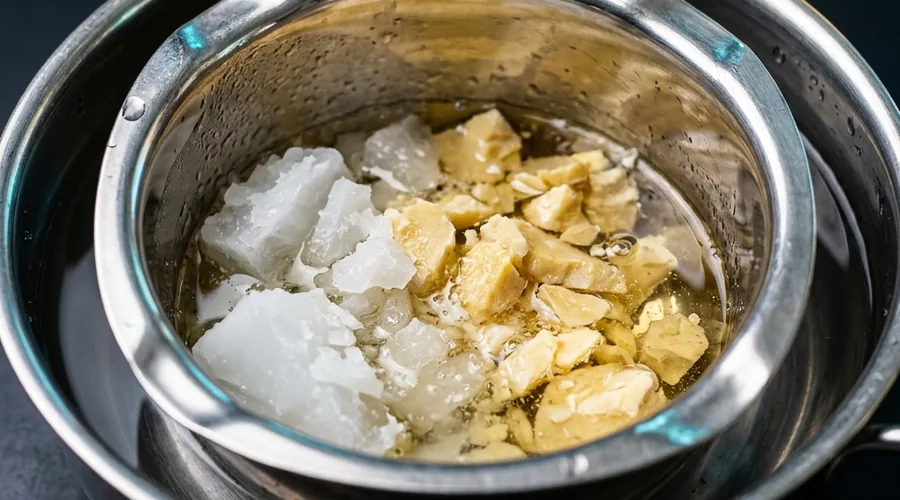
Structuring waxes such as beeswax, carnauba, and candelilla sit at the firm end of the spectrum, providing the melting-point elevation and crystalline hardness that lets a lip balm or deodorant stick hold its molded shape. Butters like shea, cocoa, and mango butter contribute richness, emolliency, and a lower melting point, while carrier oils remain liquid at room temperature and soften the overall blend. Formulators build the finished product by balancing these three ingredient classes against each other rather than relying on any single ingredient to do all the structural work.
- Structuring waxes — Beeswax, carnauba, candelilla; provide hardness and melting-point elevation
- Butters — Shea, cocoa, mango; contribute emolliency and moderate melting point
- Carrier oils — Liquid at room temperature; soften the blend and improve spreadability
- Melting-point target — Selected specifically against the product's intended use temperature range and packaging format
Getting this ratio right on paper is only half the job, though, because the same blend that structures the product also determines how it needs to be preserved — or in many cases, whether it needs a full preservative system at all.
Preservation Without Free Water
Removing water from a formulation doesn't just change texture — it fundamentally changes the microbial risk profile, and formulators who don't adjust their preservation thinking accordingly either over-preserve unnecessarily or leave a real contamination gap. Understanding why water matters so much to microbial growth explains the entire logic behind anhydrous preservation strategy.
Water is the medium the overwhelming majority of cosmetic-relevant microorganisms require to grow and reproduce, so a formulation with no free water available removes the environment those organisms need to establish themselves. This is precisely why anhydrous products generally carry a lighter preservation burden than water-based emulsions and why formulators often have more latitude in preservative selection. That said, anhydrous doesn't mean risk-free: water introduced during actual use — a wet finger dipped into a balm jar, or moisture migrating in from humid storage — can create localized microbial growth risk that a formulator has to account for based on the product's real packaging and use pattern, a principle documented in FDA cosmetic safety guidance.
With structure and preservation strategy both accounted for, the remaining formulation lever is texture — and that's where wax-to-oil ratio becomes a precise, testable engineering variable rather than a matter of trial and error.
Engineering Texture: Hard Stick to Soft Balm
The difference between a lip balm that glides smoothly and one that drags or feels waxy comes down to a formulation variable a skilled chemist can dial in precisely: the ratio and combination of structuring wax against softer emollient oils and butters. This is where anhydrous formulation moves from art to genuine applied materials science.
A higher proportion of a hard, high-melting-point wax such as beeswax or carnauba raises the overall melting point and firmness of the blend, producing a stick that holds its molded shape reliably and glides with more resistance against the skin. A higher oil-to-wax ratio softens the finished product and can shift its character toward a balm consistency that spreads more readily and feels less structured. Getting this balance right requires validating against realistic thermal stress, not just lab-controlled room temperature, since a formulation engineered only for a climate-controlled testing environment can soften unacceptably inside a hot car or a warm retail display.
| Format Target | Wax-to-Oil Ratio Direction | Typical Use Case |
|---|---|---|
| Firm stick | Higher wax proportion, higher melting point | Lip balm sticks, deodorant sticks, solid perfume |
| Soft balm | Higher oil/butter proportion, lower melting point | Jar-packaged multi-purpose balms, cuticle balms |
| Whipped/aerated texture | Moderate wax content, mechanically whipped | Body butters, whipped balms |
Texture engineering only proves itself once a formulation has been tested against the actual thermal and handling conditions it will face after leaving the lab — which is exactly the discipline the next stage of development has to enforce before a product is ready to ship.
Stability Testing for Anhydrous Products
Anhydrous products fail in different ways than water-based emulsions do, and testing that only checks for the failure modes emulsions are prone to will miss the specific problems this category actually faces. Recognizing those distinct failure modes is what separates thorough stability testing from a checklist copied from an unrelated product type.
- Thermal cycling — Repeatedly moving samples between cold and warm or hot conditions to reveal whether a stick will soften, sweat oil to the surface, or lose its molded shape under realistic shipping and storage stress
- Bloom testing — Checking for the dulling, white crystalline surface layer that can develop on wax-heavy products weeks after manufacture, even when the product looked flawless on day one
- Extended storage stability — Room-temperature and accelerated-aging testing over weeks to months to confirm the wax-oil structure doesn't slowly recrystallize into a different texture after reaching the customer
- Real-use contamination risk assessment — Testing under conditions that reflect actual consumer handling, not just sealed sample storage
Skipping this testing is the single most common reason a promising anhydrous formulation performs beautifully in the lab and then disappoints once it's shipped, stored on a warehouse shelf in summer, or handled the way real customers actually use it — a lesson that applies directly to any brand's broader cosmetic stability engineering practice regardless of formulation type.
Waterless Beauty as a Product Strategy
Beyond the formulation chemistry, anhydrous and waterless products carry a genuine business case that's shaping how brands position entire product lines. Understanding that case helps a manufacturer decide whether waterless beauty is a formulation choice worth building a brand identity around, not just a technical curiosity.

The sustainability case rests on genuinely quantifiable factors: removing water reduces per-unit product weight and shipping volume, lowering transportation carbon footprint at scale, while eliminating water as a raw material reduces sourcing and treatment burden in water-stressed production regions. Anhydrous and solid formats also pair naturally with reduced or plastic-free packaging, since a solid stick or balm doesn't require the same liquid-containment packaging a lotion does — though that benefit depends entirely on the specific packaging choices a brand actually makes rather than being automatic. Anhydrous formulation is also one of the more accessible entry points into cosmetic manufacturing for a new brand, since the process — melting and blending waxes, butters, and oils, then pouring into molds — requires simpler equipment and a shorter development cycle than a stable water-based emulsion typically demands, and pairs well with the credentialing many indie brands pursue through natural and organic cosmetic certification.
Frequently Asked Questions
What actually qualifies a cosmetic product as anhydrous?
An anhydrous formulation contains no or effectively no free water in its finished composition, built instead from oils, butters, waxes, and other lipophilic or water-free ingredients as the entire structural base. This isn't simply a marketing distinction — it changes the formulation chemistry fundamentally, since the physical structure of an anhydrous product comes from crystallization and melting-point behavior among its wax and butter components rather than from an emulsion of oil and water phases.
A product can still feel rich or even glide like a lotion while being fully anhydrous, because the sensory experience is engineered through fatty ingredient selection and blend ratio rather than water content.
Why do anhydrous products generally need less preservative than water-based formulations?
Water is the medium the vast majority of cosmetic-relevant microorganisms require to grow and reproduce, so a formulation with no free water available removes the environment those organisms need to establish themselves in the first place. This doesn't mean anhydrous products are automatically preservative-free or contamination-proof — any water introduced during use, such as from a wet finger dipped into a balm jar, or moisture that migrates in from humid storage conditions, can create localized microbial growth risk.
Anhydrous formulations still commonly include a preservative system or antioxidant protection appropriate to their actual water-activity risk and packaging format, but the preservation burden is generally lighter and the formulator has more latitude in preservative selection than in a water-based emulsion.
How does a formulator actually control whether a stick or balm feels hard, soft, or glides smoothly?
Texture in an anhydrous stick or balm comes down almost entirely to the melting point and crystal structure of the wax and butter blend, and formulators manipulate texture by adjusting the ratio and combination of high-melting-point structuring waxes against lower-melting-point emollient oils and butters. A higher proportion of a hard wax such as beeswax or carnauba raises the overall melting point and firmness, producing a stick that holds its shape and glides with more resistance, while a higher oil-to-wax ratio softens the product and can shift it toward a balm consistency that spreads more readily.
Getting this balance right also has to account for real-world storage temperature swings, since a formulation that performs well in a climate-controlled lab can still soften unacceptably in a hot car or a tropical retail environment if the wax-to-oil ratio wasn't validated against realistic thermal stress.
Is waterless beauty actually more sustainable, or is that mostly a marketing claim?
The sustainability case for waterless and anhydrous formulations rests on a few genuinely quantifiable factors rather than a vague environmental claim: removing water reduces per-unit product weight and shipping volume, which lowers transportation carbon footprint at scale, and eliminating water as a raw material reduces a manufacturer's water sourcing and treatment burden in water-stressed production regions. Anhydrous and solid-format products also frequently pair naturally with reduced or plastic-free packaging, since a solid stick or balm doesn't require the same liquid-containment packaging a lotion does.
That said, the sustainability benefit depends heavily on the specific formulation and packaging choices made — a poorly designed anhydrous product in excessive packaging captures none of these advantages, so the sustainability case has to be evaluated product by product rather than assumed from the anhydrous format alone.
What are the most common formulation mistakes brands make when developing their first anhydrous product?
The most frequent mistake is underestimating how much real-world temperature variation a finished product will actually experience between manufacturing, shipping, warehouse storage, and end-use, and formulating a wax-to-oil ratio that only performs well under stable lab conditions. A closely related mistake is skipping graining and bloom testing, which can cause a visually unattractive dulling or white surface crystallization on chocolate-like or wax-heavy products weeks after they looked perfect on the day of manufacture.
Formulators new to anhydrous work also sometimes assume water-based preservation rules apply directly, either over-preserving unnecessarily or under-protecting a product that will realistically encounter moisture contact during consumer use, when the correct approach is assessing the specific water-activity risk of the actual use case rather than applying a generic assumption in either direction.
How is anhydrous product stability actually verified before it goes to market?
Stability testing for anhydrous products focuses on the specific failure modes these formulations are prone to, which differ meaningfully from the phase-separation risks water-based emulsions face. Thermal cycling tests — repeatedly moving samples between cold and warm or hot conditions — reveal whether a stick will soften, sweat oil to the surface, or develop bloom (a dulling white crystalline surface layer) under realistic shipping and storage stress.
Extended room-temperature and accelerated-aging storage over weeks to months confirms the wax-oil structure remains stable and doesn't undergo slow recrystallization that changes texture after the product has already reached a customer, and this testing should be run before any shelf-life or performance claim is finalized.
Is anhydrous formulation a realistic starting category for a new indie beauty brand?
Anhydrous products are genuinely one of the more accessible entry points into cosmetic manufacturing for a new brand, because the formulation process — melting and blending waxes, butters, and oils, then pouring into molds or containers — requires simpler equipment and a shorter development cycle than a stable water-based emulsion typically demands. That accessibility doesn't mean the formulation chemistry can be treated casually, since wax selection, melting-point engineering, and thermal-stability testing still require real technical understanding to get a product that performs consistently across real-world conditions rather than only in a controlled lab environment.
A new brand entering this category benefits substantially from formulation consultant support during the initial wax-oil ratio development and stability testing phase, since getting this foundation wrong is the most common reason a promising anhydrous product underperforms once it reaches actual customers.
Developing an Anhydrous or Waterless Beauty Line?
Global Formulation provides cosmetic formulation consultancy — wax and butter blend engineering, stability testing programme design, and manufacturing scale-up support.
Talk to Our Formulation Team