Anti-Pollution Skincare Formulation: Antioxidant Guide
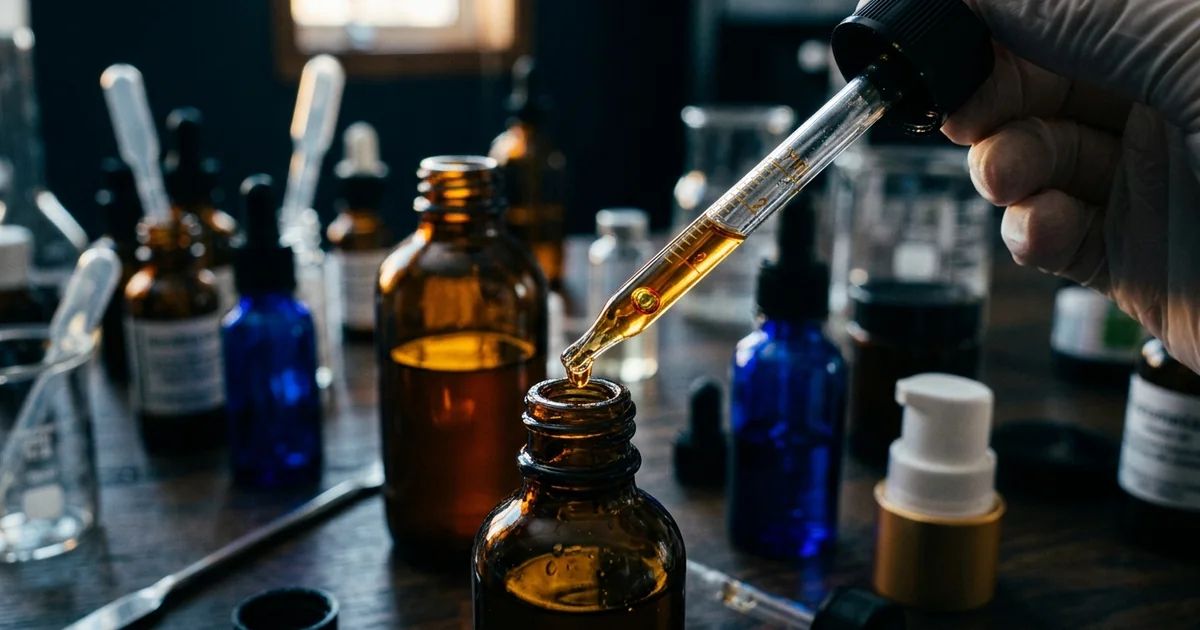
A brand launches a "pollution defence" serum, sends it out to a consumer panel, and three months later the complaints come back: the serum has gone amber, and testers report stinging on application. The antioxidants that were the entire point of the product have oxidised inside the bottle, and the formulation is now doing the opposite of what the label promises. Anti-pollution skincare formulation is one of the fastest-growing claim areas in personal care, and it is also one of the easiest to get wrong, because the actives that counter environmental damage are by their nature the most chemically fragile ingredients in the formulator's toolkit. This guide covers how airborne pollution damages skin at the molecular level, which antioxidant and barrier strategies genuinely counter it, how to keep those actives alive through a two- or three-year shelf life, and how an anti-pollution claim is actually substantiated. It reflects the pattern we see repeatedly in cosmetics and personal care development work, where an active that looks impressive on the ingredient list but dies in the jar is the most common reason a launch slips.
What Air Pollution Actually Does to Skin
Before choosing actives, a formulator needs a clear picture of the damage they are meant to counter, because "pollution" is not one thing. The airborne stressors that reach facial skin in a city are a mix of solid particles and reactive gases, and they injure skin through different routes. Particulate matter classified by size as PM10 and the finer PM2.5 settles onto the skin and into its furrows and follicles, carrying adsorbed polycyclic aromatic hydrocarbons and transition metals. Ozone and nitrogen dioxide are gases that act at the skin surface. Cigarette smoke combines both. What unites them is that they all end up generating reactive oxygen species and depleting the skin's own antioxidant reserves.
| Pollutant | Physical nature | Primary route of skin damage |
|---|---|---|
| PM2.5 / PM10 particulates | Solid particles with adsorbed chemicals | Surface deposition, follicular penetration, barrier disruption, metal-catalysed oxidation |
| Polycyclic aromatic hydrocarbons (PAHs) | Organic molecules carried on particles | Activate the aryl hydrocarbon receptor, inducing CYP1A1, oxidative stress and inflammation |
| Ozone (O₃) | Reactive gas | Does not penetrate; oxidises stratum corneum surface lipids, especially squalene |
| Nitrogen dioxide (NO₂) | Reactive gas | Oxidative stress; epidemiologically linked to pigment spots |
Two mechanisms deserve particular attention because they drive most anti-pollution active selection. First, ozone never enters living skin; instead it reacts with unsaturated lipids in the outermost stratum corneum. Squalene, roughly a tenth of the skin's surface lipid, is the most ozone-reactive component, and controlled exposure studies show ozone depletes stratum corneum vitamin E and raises malondialdehyde, a lipid-peroxidation marker, in a dose-dependent way, with vitamin E loss detectable at far lower doses than lipid damage. Second, the PAHs riding on fine particles are ligands for the aryl hydrocarbon receptor, a transcription factor that, once activated, induces detoxification enzymes such as CYP1A1, generates further reactive oxygen species, and pushes inflammatory and pigment-producing pathways.
The visible consequences are documented in population studies: long-term exposure to traffic-related particulates is associated with more facial lentigines and deeper wrinkles. That gives the formulator a concrete target — protect the surface lipids, replenish the depleted antioxidants, and calm the receptor-driven inflammation.
The Antioxidant Strategy: Replacing What Pollution Depletes
The core logic of an anti-pollution formulation is replacement. Pollution burns through the skin's endogenous antioxidants — vitamin E and C in the surface lipids, glutathione and ubiquinone deeper down — so a topical product works by topping up that reserve before the oxidative hit arrives. The single most important formulation principle here is that a blend of antioxidants outperforms any one of them at high dose, because antioxidants operate as a regenerating network rather than as independent scavengers. This is the same reasoning behind the widely used vitamin C, vitamin E and ferulic acid backbone discussed in our guide to vitamin C serum stability.
A practical antioxidant palette for urban skincare draws from several complementary classes:
- Vitamin C (L-ascorbic acid and derivatives) — water-phase radical scavenger and the classic pollution-defence active; free acid is most active but least stable, so derivatives like sodium ascorbyl phosphate or tetrahexyldecyl ascorbate are used where stability matters more
- Vitamin E (tocopherol) — lipid-phase antioxidant that sits where ozone attacks; regenerated by vitamin C, which is why the two are almost always paired
- Ferulic acid — a plant phenolic that stabilises both vitamins and, in the well-known combination, roughly doubled their measured photoprotection
- Niacinamide — quenches reactive species, supports NADPH-dependent antioxidant recycling, and directly strengthens the barrier that particulates exploit
- Plant polyphenols — green tea catechins, resveratrol, and pine bark extract, each a broad free radical scavenger with additional anti-inflammatory activity against aryl hydrocarbon receptor signalling
Selecting the actives is the visible part of the job. Keeping them intact from the mixing tank to the consumer's bathroom shelf is the part that decides whether the product works, and it starts with the skin barrier itself.
Beyond Antioxidants: Barrier Support and Film Formers
Antioxidants handle the oxidative chemistry, but a complete anti-pollution product also addresses the physical side of the problem: particles adhering to skin and exploiting a weakened barrier. A robust stratum corneum with intact lamellar lipids is itself a defence, because it limits how far particulate-bound chemicals can penetrate and reduces the transepidermal water loss that pollution exposure aggravates. This is where PM2.5 skin barrier protection becomes a formulation objective in its own right, not just a marketing phrase.
- Barrier lipids and niacinamide — ceramides, cholesterol and free fatty acids in a physiological ratio, supported by niacinamide's stimulation of barrier lipid synthesis, reinforce the layer particulates try to breach
- Chelating agents — EDTA or plant-derived phytic acid sequester the iron and copper ions carried on particles, shutting down the Fenton-type reactions that turn trace metal into a continuous reactive oxygen species source
- Film formers — a thin, breathable polymer or silicone-elastomer film can lower particle adhesion and improve rinse-off at cleansing, though it does nothing against gaseous ozone or nitrogen dioxide
Film formers are the most over-claimed element of the category. A film that genuinely reduces particle deposition and washes off cleanly has value; one that is not cosmetically elegant or does not fully remove simply traps particles against the skin all day. The honest position is that the antioxidant and barrier chemistry does most of the protective work, and a film former is a supporting player at best. That distinction matters even more once the product has to survive two years on a shelf.
The Stability Challenge: Antioxidants Oxidise in the Jar
The defining paradox of anti-pollution formulation is that the best free radical scavengers are, by definition, the molecules most eager to react with oxygen — including the oxygen dissolved in the product and sitting in the bottle headspace. Antioxidant blend skincare stability is therefore the make-or-break technical problem, and it has to be solved on several fronts at once. Free L-ascorbic acid is the hardest case: it needs a low pH environment to slow its oxidation, generally in the acidic range where the molecule is protonated and least reactive, which in turn constrains what else can be in the formula. The same fragility affects other headline actives — the challenge of keeping retinol stable against oxidation follows an almost identical playbook.
| Stabilisation approach | How it works | Trade-off |
|---|---|---|
| Low pH (for ascorbic acid) | Keeps the molecule protonated and slow to oxidise | Limits compatible actives; can raise irritation potential |
| Vitamin C derivatives | More oxidation-resistant pro-forms that convert in skin | Lower or slower activity than the free acid; conversion not always efficient |
| Chelating agents | Sequester pro-oxidant metal ions in the formula and on skin | Minimal; standard inclusion in antioxidant systems |
| Encapsulation | Physically isolates the active from water and oxygen until use | Adds cost and process complexity; release must be verified |
| Airless, opaque packaging with low headspace | Removes light and limits oxygen contact over the use period | Higher pack cost; incompatible with jars and clear bottles |
The most reliable route for a genuinely potent antioxidant product is a low-water or anhydrous serum in airless packaging, with a chelator, a compatible secondary antioxidant to protect the primary one, and a derivative rather than free acid wherever the target consumer prioritises a stable, non-irritating product over maximum potency. Get the stability plan right on paper before the first bench batch, because retrofitting it after a failed stability study usually means reformulating.
Testing and Substantiating an Anti-Pollution Claim
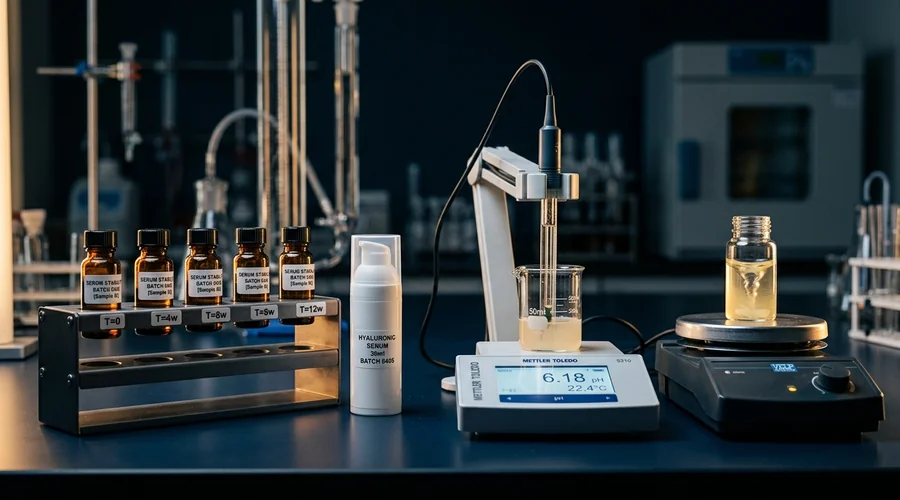
There is no regulated test method or defined product category for "anti-pollution," so the burden falls on the brand to build a defensible substantiation package. Regulators in major markets expect any claim to be supported by adequate and reliable evidence, and a vague "protects against pollution" line with nothing behind it is exactly the kind of statement that draws greenwashing scrutiny. The industry has converged on a set of in vitro, ex vivo and clinical methods that, used together, support a specific and measured claim rather than a sweeping one.
- Pollution surrogate exposure — cultured keratinocytes or ex vivo skin explants are exposed to cigarette smoke, diesel exhaust particulate or standardised urban dust, with and without the product
- Oxidative and lipid markers — malondialdehyde and squalene monohydroperoxide for lipid peroxidation, protein carbonyls for protein oxidation, and intracellular reactive oxygen species measured with a fluorescent probe
- Pathway readouts — CYP1A1 expression as a marker of aryl hydrocarbon receptor activation, glutathione depletion, and pro-inflammatory cytokine release
- Particle adhesion imaging — quantifying deposited particles on skin or a skin model before and after cleansing to support a film-former claim
- In-use clinical studies — panels in high-pollution cities assessing barrier function, sebum oxidation and clinical grading over weeks of real exposure
The claim that survives legal review is the narrow one: "shown to reduce pollution-induced lipid peroxidation in an ex vivo model," not "shields skin from pollution." Match the wording to the method, and the substantiation file writes itself.
Building an Anti-Pollution Product: A Practical Framework
Pulling the previous sections together, an anti-pollution development brief is best worked through as a sequence of decisions, each one narrowing the next. The mistake that produces the amber serum on the returns shelf is starting from a hero active and hoping the formula holds together around it. Starting instead from the target consumer and the claim keeps the actives, the format and the packaging aligned.
- Define the stressor and the consumer — a product for an ozone-heavy climate leans on surface lipid antioxidants; one for a particulate-heavy megacity adds barrier support and cleansing performance
- Choose a network, not a hero — a small blend of complementary antioxidants across the water and oil phases, anchored by a barrier active such as niacinamide
- Pick the format the actives can survive in — a low-water serum for maximum potency with free acids, a robust emulsion with derivatives for a gentler daily product
- Design the stability system first — pH, chelation, a protective secondary antioxidant, and airless opaque packaging specified before the first batch
- Write the claim to match a planned test — decide the substantiation method and the exact claim wording together, not after the formula is locked
Work in that order and the formulation, the shelf life and the marketing claim all reinforce each other. Skip a step, and the product either fails its stability study, cannot back its claim, or reaches the consumer already oxidised — the three ways an anti-pollution launch goes wrong, and all of them avoidable at the brief stage.
Frequently Asked Questions
Does air pollution really damage skin, or is anti-pollution skincare just marketing?
The underlying skin biology is well established in peer-reviewed research, even though the product category itself is unregulated. Epidemiological studies have linked long-term exposure to traffic-related particulate matter with more facial pigment spots and deeper wrinkles, and laboratory work shows that ozone depletes the skin's surface vitamin E and drives lipid peroxidation while particle-bound polycyclic aromatic hydrocarbons activate the aryl hydrocarbon receptor and trigger oxidative and inflammatory signalling.
What is marketing is the specific promise on a given pack: the science supports antioxidant and barrier strategies in general, not every claim made for every product.
Which antioxidants are most useful in an anti-pollution formulation?
The most evidence-backed approach is a blend rather than a single hero molecule, because pollution depletes several of the skin's own antioxidants at once and because antioxidants regenerate each other. A common backbone pairs vitamin C with vitamin E and ferulic acid, since ferulic acid improves the stability of both vitamins and the combination roughly doubles their measured photoprotection.
Niacinamide, plant polyphenols such as green tea catechins and pine bark extract, and carotenoids are frequent additions, each contributing a different radical-quenching profile and, in niacinamide's case, direct barrier support.
Why does my vitamin C serum turn yellow or brown?
That colour change is L-ascorbic acid oxidising, first to dehydroascorbic acid and then to darker degradation products. Once it has progressed, the molecule has not just lost its antioxidant activity, it has become a mild pro-oxidant, so a discoloured serum is working against the formulation's purpose.
Oxidation is driven by exposure to air, light, heat, high pH and trace metal ions, which is why stable vitamin C products are formulated at low pH, chelated, and packaged in opaque containers with minimal headspace or an airless pump.
How is ozone different from particulate matter in how it affects skin?
Ozone is a gas that does not penetrate living skin, so its damage happens entirely at the surface: it reacts with unsaturated lipids in the outermost stratum corneum, especially squalene, generating reactive breakdown products and depleting the surface pool of vitamins E and C.
Particulate matter is solid, and fine particles carry adsorbed chemicals such as polycyclic aromatic hydrocarbons and transition metals that can settle into skin furrows and hair follicles, penetrate a compromised barrier, and activate receptor-driven oxidative and inflammatory pathways. A formulation aimed at ozone leans on surface-active lipid antioxidants, while one aimed at particulates also needs barrier support and efficient cleansing.
Do anti-pollution products need a film former to physically block particles?
A film former is optional and does a limited, specific job: a thin breathable polymer or silicone-elastomer film on the skin can reduce how strongly particles adhere and make them easier to remove at cleansing, but it does not stop gaseous pollutants like ozone or nitrogen dioxide.
Most of the protective work in a well-built anti-pollution product comes from the antioxidant and barrier chemistry, not from a physical shield. If a film former is used, it has to be cosmetically elegant and genuinely wash-off, or it simply traps particles against the skin.
How do you actually prove an anti-pollution claim?
There is no single regulated test, so brands assemble a package of methods. The common approach exposes cultured skin cells or ex vivo skin explants to a pollution surrogate such as cigarette smoke, diesel exhaust particulate or standardised urban dust, with and without the product, then measures oxidative and inflammatory markers: malondialdehyde and squalene hydroperoxides for lipid peroxidation, carbonylated proteins, intracellular reactive oxygen species, glutathione levels, and CYP1A1 induction as a readout of aryl hydrocarbon receptor activation.
Particle-adhesion imaging before and after cleansing supports a film-former claim, and clinical studies in high-pollution cities provide in-use evidence.
Can antioxidant actives be added to a moisturiser, or do they need a dedicated serum?
They can go in either, but the format changes what is realistic. A low-pH, low-water anhydrous or serum format is the easiest environment to keep free L-ascorbic acid and other sensitive antioxidants stable, which is why the strongest antioxidant products are usually serums.
In a conventional emulsion moisturiser the pH, water content and emulsifier system make free ascorbic acid hard to stabilise, so formulators typically switch to more robust derivatives such as ascorbyl glucoside, sodium ascorbyl phosphate or tetrahexyldecyl ascorbate, and to tocopherol rather than any free-radical-sensitive tocotrienol blend.
Developing an Antioxidant or Anti-Pollution Product?
Global Formulation provides cosmetic formulation consultancy — active selection, antioxidant stabilisation, packaging compatibility, and claim substantiation strategy from concept to launch.
Talk to Our Formulation Team