EV Battery Pack Adhesives: Thermal Gap Fillers & Bonding
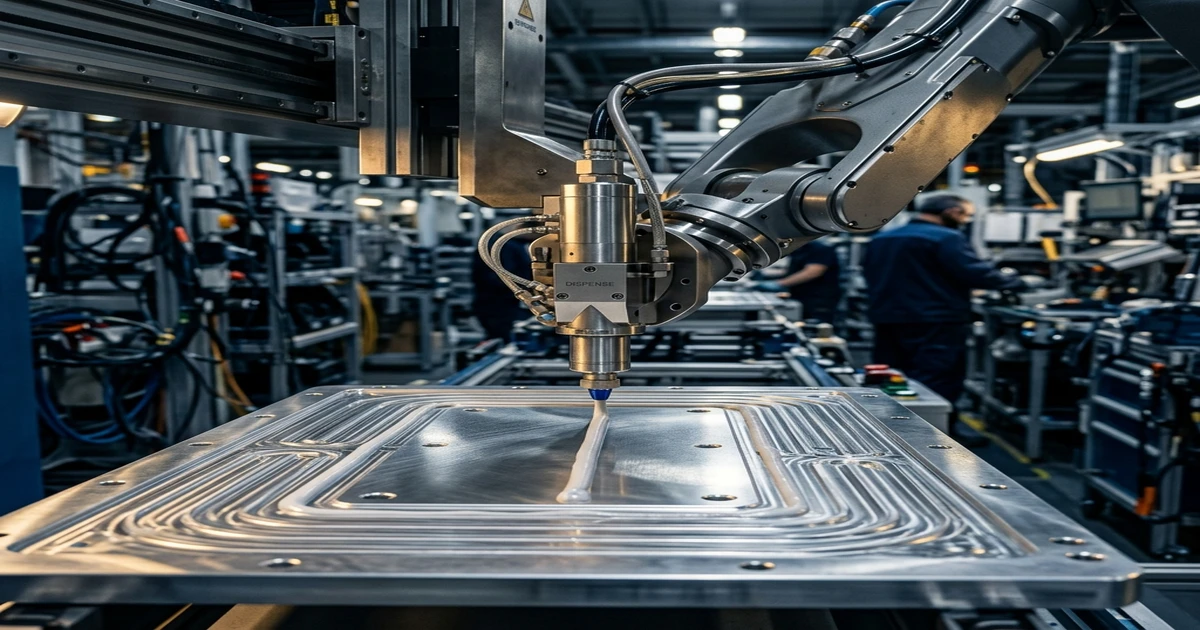
An EV battery pack is held together, cooled, and crash-protected by materials most drivers will never see: adhesives. Every pack that leaves a production line depends on EV battery pack adhesive and thermal gap filler technology to carry heat out of the cells, bond modules to structure, and keep high voltage electrically isolated from grounded metal. Get these materials wrong and the consequences scale brutally — thermal gradients that age cells unevenly, bonds that fail under road vibration, or a pack that cannot be manufactured at line rate. This guide explains the chemistry of thermal gap fillers, the ceramic fillers that make them conduct heat, the structural adhesives enabling cell-to-pack designs, and the processing realities of dispensing both at volume. It is written for engineers and entrepreneurs entering the fastest-growing segment of the adhesives and sealants industry.
Why Adhesives Now Define EV Battery Pack Design
A battery pack sets three demands that pull against each other: heat must leave the cells, high voltage must stay isolated, and the whole assembly must survive crash loads and a decade of vibration. Mechanical fasteners handle structure but do nothing for heat or isolation; metal-to-metal contact conducts heat but conducts electricity too. Adhesive materials are the only class that can be engineered to do all three jobs at once — conduct heat, insulate electrically, and carry structural load. That triple duty is why adhesive and gap filler volume per vehicle has grown with every generation of EV platform.
The materials split into two functional families that this article treats in turn. Thermal interface materials — gap fillers foremost among them — exist to move heat from cell surfaces into cooling plates. Structural adhesives exist to bond cells, modules, and trays into a stiff, crashworthy whole. The families overlap in modern designs, and the most demanding specifications now ask one material to serve both roles simultaneously.
Understanding the thermal family first makes the structural story easier, because heat is the constraint that shapes everything else in a pack.
Thermal Gap Fillers: Moving Heat Out of the Cells
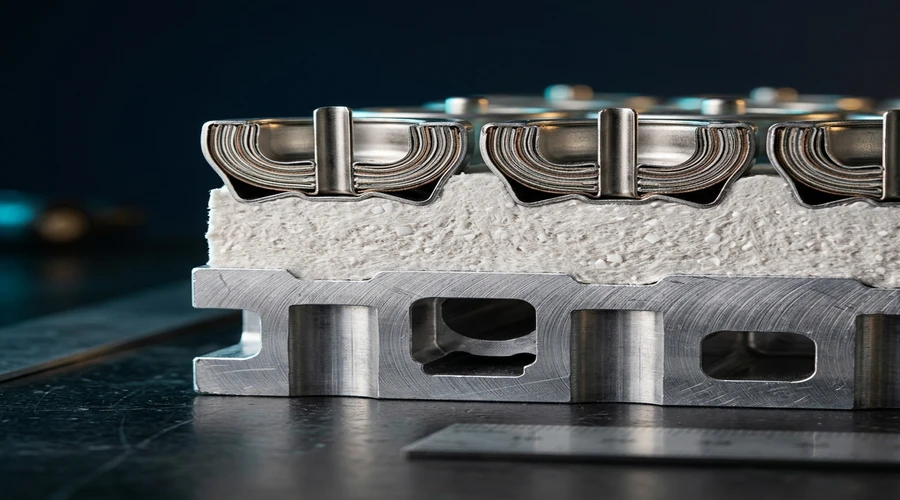
Air is one of the worst heat conductors commonly encountered in engineering, and every unfilled micro-gap between a cell and its cooling plate is an air-filled thermal barrier. A thermal interface material exists to displace that air with something that conducts heat far better, while conforming to surfaces that are never perfectly flat. In an EV pack the problem is magnified by tolerance stack-up: hundreds of cells of slightly varying height meet a cooling plate with its own flatness deviation, so the real gap varies point to point across the assembly. Dispensable gap fillers solve this by arriving as a liquid — flowing to fill whatever gap exists locally, then curing into a soft, thermally conductive elastomer.
Base polymer choice determines the mechanical personality of the cured layer. Addition-cure silicones, crosslinked by platinum-catalyzed hydrosilylation, stay soft and elastic from roughly −40 °C to well above 150 °C, absorbing vibration and the expansion mismatch between aluminum and cell casings. Polyurethane and acrylic systems provide silicone-free alternatives — chosen where volatile siloxane contamination of electrical contacts is a concern — trading some temperature range for cleaner electrical environments and often stronger adhesion.
The polymer, however, is only the carrier. Unfilled polymers conduct heat poorly — the actual conduction is delivered by what formulators pack into them.
Filler Chemistry: Thermal Conductivity Without Losing Dielectric Safety
An unfilled elastomer conducts heat at roughly 0.2 W/m·K — barely better than the air it replaces. Commercial gap fillers reach the 1–3 W/m·K range, with premium grades higher still, by loading the polymer with ceramic particles until filler dominates the volume. The catch is that this same layer sits between live cells and grounded aluminum, so the filler must conduct heat while refusing to conduct electricity. That single constraint eliminates entire filler families and defines the short list every formulator works from.
| Filler | Thermal Role | Electrical Behaviour | Practical Considerations |
|---|---|---|---|
| Alumina (Al₂O₃) | Workhorse conductivity at high loading | Insulating | Hard and abrasive — wears pumps and dispensing equipment |
| Aluminum trihydroxide (ATH) | Modest conductivity | Insulating | Doubles as flame retardant via endothermic water release |
| Boron nitride (hexagonal) | Very high, platelet in-plane conductivity | Insulating | Premium cost; platelet orientation affects performance |
| Zinc oxide | Moderate conductivity | Insulating | Common in softer pads and pastes |
| Graphite / carbon | Excellent conductivity | Conductive — excluded | Unusable where cell-to-ground isolation is required |
Real formulations blend filler grades and particle sizes so small particles pack between large ones, raising conductivity while keeping the paste dispensable. Hexagonal boron nitride illustrates the cost ceiling of the trade: outstanding conductivity and clean dielectric behaviour, priced accordingly. Filler strategy is where thermal targets are won — but the finished material still has to hold the pack together, which brings the structural family into view.
Structural Bonding: From Module Assembly to Cell-to-Pack
Conventional packs group cells into modules secured with mechanical hardware, and adhesives there play a positioning and damping role. Cell-to-pack and cell-to-chassis architectures change the job completely: the module layer disappears, cells bond directly to cooling structure or the vehicle floor, and the adhesive becomes engineered structure — contributing torsional stiffness and managing crash loads that fasteners once carried. The chemistry follows the load: toughened epoxies and two-component polyurethanes dominate, selected through the same strength-versus-flexibility logic covered in our structural adhesives decision guide.
EV battery module bonding chemistry differs from generic structural bonding in three specific demands:
- Fatigue under vibration — the bond must survive years of continuous road-input loading, not just a one-time strength test
- Low-temperature toughness — crash performance must hold at winter temperatures where rigid adhesives embrittle, which is why core-shell toughened epoxy systems are specified
- Thermal-path compatibility — where a structural bond also sits in the heat path, thermally conductive structural adhesives merge both property sets in one material
The direction of travel is unmistakable: fewer fasteners, more bonded area, and adhesives specified as structural components with the same rigour as the metals they join. Every one of those bonded joints, though, has to be applied by a machine in seconds — and that is where many otherwise excellent formulations fail.
Dispensing and Curing at Line Rate
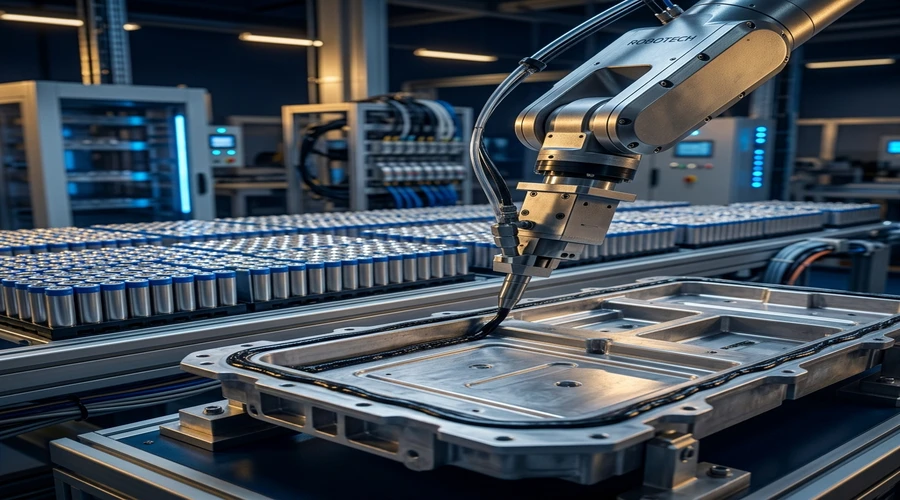
A gap filler that performs beautifully in the lab but cannot be pumped, metered, and applied inside a vehicle takt time is not a product — it is a prototype. High filler loadings make these materials dense, viscous, and abrasive, and alumina in particular wears pumps, static mixers, and needles fast enough that equipment wear becomes a real cost line. Two-component systems must be metered at precise ratios and applied in programmed bead patterns matched to each assembly's gap map. Cure chemistry then has to fit the line: fast enough that downstream stations are not waiting, slow enough that dispensed material stays workable through placement.
- Addition-cure silicones — platinum-catalyzed, heat-acceleratable cure with no volatile by-products; sensitive to catalyst poisoning from sulfur and amine contamination
- Two-component polyurethanes — room-temperature cure with heat acceleration; strong adhesion to metals and coated surfaces
- Toughened epoxies — heat-cured or two-component; the strength benchmark for structural joints, with light-cure variants confined to small, accessible joints as used in UV-cure electronics adhesives
Processing decides whether the chemistry ever reaches the road. What decides whether it stays there for fifteen years is the qualification regime — and the serviceability question the industry is still arguing about.
Qualification, Safety Standards and the Serviceability Question
Battery adhesives are qualified across four property families at once, because a pack cannot trade one for another. Thermal resistance through the real bond line is referenced to ASTM D5470; mechanical strength and fatigue use lap-shear methods such as ASTM D1002 plus vibration protocols; dielectric integrity is proven by breakdown testing to ASTM D149 or IEC 60243; and flammability is classified under UL 94, which battery materials are routinely specified against. Environmental aging — thermal cycling, humidity, thermal shock — then confirms every property survives together over time. This parallels the systems thinking behind EV thermal-management fluids, where materials are qualified as part of the cooling system rather than in isolation.
The unresolved tension is serviceability. A structurally bonded cell cannot be swapped like a bolted module, which shapes repair economics, insurance write-off decisions, and end-of-life recycling where cells must come back out of the structure. Current practice manages the tension by design — keeping the sacrificial thermal interface separate from permanent structural joints so cooling-side rework stays possible — while materials research pursues adhesives that can be debonded on demand.
The decision framework for anyone specifying these materials is direct. Separate the thermal job from the structural job first, and only merge them when the design genuinely requires one material to do both. Select the base polymer for the electrical and temperature environment, the filler package for the conductivity-versus-cost target, and validate with the dispensing equipment from day one. Then decide the serviceability position deliberately — because the adhesive strategy chosen at the drawing board locks in the pack's repair model for its entire life.
Frequently Asked Questions
What is a thermal gap filler and how is it different from a thermal pad?
Both are thermal interface materials, but they arrive at the joint in opposite states. A thermal gap pad is a pre-cured, die-cut sheet that must be compressed between the cell and the cooling surface, which means it exerts a clamping force on the components and can only conform to gap variation within its compression range. A gap filler is dispensed as a liquid or paste that flows into whatever gap actually exists — including the tolerance stack-up between hundreds of cells and an imperfectly flat cooling plate — and then cures in place.
Because the liquid conforms before curing, it fills the joint with near-zero assembly force, which is why form-in-place gap fillers dominate high-volume EV battery pack production.
Why do EV battery gap fillers use silicone chemistry so often?
Addition-cure silicones, crosslinked through platinum-catalyzed hydrosilylation, hold their soft, low-modulus character across roughly −40 to well above 150 °C — the full temperature envelope a battery pack experiences. That persistent softness matters because the gap filler must absorb vibration and the expansion mismatch between aluminum cooling plates and cell casings for the vehicle's whole life without cracking or pulling away. Silicones also accept very high ceramic filler loadings while remaining dispensable, which is how the thermal conductivity target is reached.
Their known drawback is the release of volatile siloxanes that can contaminate electrical contacts, and silicone-free polyurethane and acrylic gap fillers exist precisely for applications where that risk is unacceptable.
Can a thermally conductive adhesive also be electrically insulating?
Yes — and in a battery pack it must be, because the same material that moves heat sits directly between live cells and a grounded aluminum cooling structure. The solution lies in filler selection: ceramic fillers such as alumina, aluminum trihydroxide, boron nitride, and zinc oxide conduct heat through lattice vibrations while remaining electrical insulators. Carbon-based fillers like graphite conduct heat extremely well but conduct electricity too, which excludes them from cell-adjacent positions.
Finished formulations are qualified with dielectric breakdown testing to standards such as ASTM D149 or IEC 60243, alongside their thermal performance testing — a gap filler passes as a system, not on conductivity alone.
What role do structural adhesives play in cell-to-pack battery designs?
In a conventional pack, cells are grouped into modules held by mechanical hardware, and adhesives play a supporting role. Cell-to-pack and cell-to-chassis architectures delete the module layer: cells bond directly to the cooling structure or the vehicle floor, and the adhesive becomes a load-bearing structural element that contributes to torsional stiffness and crash-load management. This shifts the adhesive's job description from "hold components in position" to "perform as engineered structure", demanding toughened epoxy or two-component polyurethane chemistries with validated lap-shear strength, fatigue resistance, and controlled failure behaviour.
The payoff is significant — fewer parts, less mass, more cells in the same envelope — which is why the industry keeps moving in this direction.
Why is dispensing highly filled gap fillers a manufacturing challenge?
To reach useful thermal conductivity, gap fillers carry ceramic filler loadings high enough to fundamentally change how the material flows — the paste becomes dense, viscous, and abrasive. Alumina, the workhorse filler, is hard enough to wear out pumps, static mixers, and dispensing needles, making equipment wear a genuine cost line in high-volume production. The material must also be metered as a two-component system at a precise ratio, applied in beads or patterns matched to the gap map of each assembly, and complete its work within the takt time of an automated line.
Formulators manage this with filler particle-size distributions engineered for packing and flow, but dispensing equipment selection remains as important as the chemistry itself.
How are EV battery adhesives and gap fillers tested and qualified?
Qualification spans four property families. Thermal performance is measured as thermal resistance through the actual bond line, with ASTM D5470 the reference method for thermal interface materials. Mechanical performance uses lap-shear testing to methods like ASTM D1002 plus fatigue and vibration protocols, because a battery bond must survive years of road loading, not just a single pull. Electrical safety relies on dielectric breakdown and volume resistivity testing, and flammability is assessed under UL 94 classifications that battery materials are routinely specified against.
Beyond these, packs undergo environmental aging — thermal cycling, humidity, and thermal shock — since the adhesive must hold every property simultaneously after years of service, not merely on the day it cures.
Do structural battery adhesives make packs impossible to repair?
They make repair substantially harder, and this is a genuine, openly debated tension in EV engineering rather than a solved problem. A cell bonded structurally into a pack cannot be swapped the way a bolted module can, which affects repair economics, insurance decisions on damaged vehicles, and end-of-life recycling where cells must be separated from structure. The industry response runs on two tracks: designing serviceability into the pack — separating the sacrificial thermal interface from permanent structural joints so cooling-side rework stays possible — and materials research into adhesives that can be debonded on demand.
Anyone specifying a bonding strategy today should weigh assembly efficiency against serviceability deliberately, because the adhesive choice locks in the repair model for the vehicle's lifetime.
Developing Adhesives for E-Mobility?
Global Formulation provides adhesive and sealant consultancy — thermal interface material design, filler package engineering, structural bonding strategy, and qualification planning.
Talk to Our Formulation Team