Biologics Formulation: Protein Stability Challenges and Mitigation Strategies
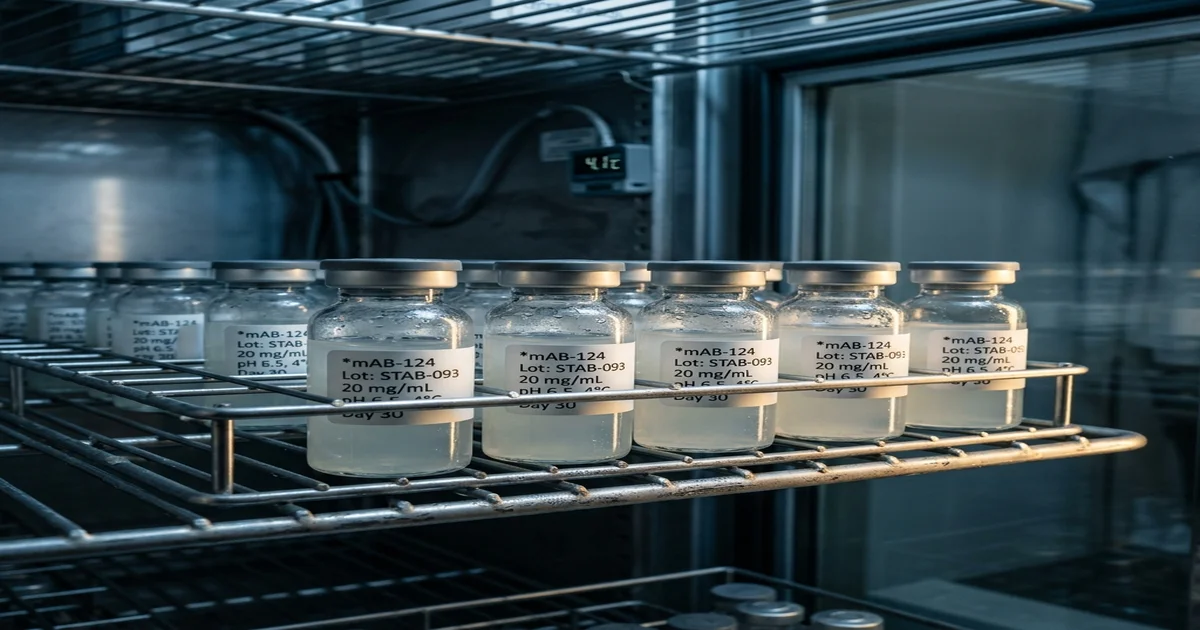
A biopharmaceutical team that has just secured a promising monoclonal antibody or recombinant protein candidate quickly discovers that the hardest part of development is not the biology — it is keeping the molecule intact long enough to reach a patient. Unlike small-molecule drugs, whose stability depends mainly on avoiding a handful of well-understood chemical reactions, proteins carry a fragile three-dimensional fold that can unravel under heat, agitation, freezing, or simple contact with a container wall, and a formulation that looks stable in early studies can still fail real-time stability testing months later. The stakes are high: a stability failure discovered after clinical batches have been manufactured can force a costly reformulation and delay a program by a year or more. This article walks through the core mechanisms behind protein aggregation and degradation, the excipient and process strategies formulators use to control them, and the analytical framework needed to prove a biologic will remain stable and safe across its labeled shelf life. Global Formulation has supported biologics formulation programs across antibody and recombinant protein modalities, and the framework below reflects the sequence in which these decisions are typically made and validated in practice.
Why Biologics Formulation Protein Stability Demands a Different Discipline
Biologics formulation protein stability work differs fundamentally from small-molecule formulation because proteins carry two separate vulnerabilities that must be controlled simultaneously: chemical stability of the amino acid backbone and side chains, and physical stability of the folded three-dimensional conformation. A small-molecule API either remains chemically intact or degrades through reactions like hydrolysis or oxidation that are relatively easy to characterize and predict from pH and temperature alone. A protein, by contrast, is held in its functional shape by comparatively weak non-covalent forces — hydrogen bonds, hydrophobic interactions, and van der Waals forces — that are easily disrupted by heat, mechanical agitation, freeze-thaw cycling, or prolonged exposure to interfaces such as the air-water boundary in a partially filled vial.
| Stability Dimension | Small-Molecule Drug | Protein Biologic |
|---|---|---|
| Structural stability requirement | Covalent structure only | Covalent structure plus folded 3D conformation |
| Sensitivity to agitation/shear | Generally negligible | Can directly trigger aggregation |
| Freeze-thaw sensitivity | Rarely a factor | Can denature protein at ice-water interface |
| Primary analytical stability tools | HPLC for chemical purity | SEC, DLS, sub-visible particle counting, DSC, CD |
| Immunogenicity risk from instability | Low | Aggregates can trigger immune response |
This dual vulnerability is why pharmaceutical and healthcare companies developing biologics build out a much broader stabilizing excipient toolkit and analytical characterization program than a comparable small-molecule project would require. The ICH Q5C guideline on stability testing of biotechnological products reflects this reality by requiring a distinct testing framework from the one applied to conventional pharmaceuticals. The sections that follow build outward from the two dominant instability pathways — aggregation and chemical degradation — through the excipient strategies and analytical tools used to control and detect them.
Protein Aggregation: The Dominant Physical Instability Pathway
Aggregation is the single most consequential physical instability pathway in biologics formulation, because aggregates can range from soluble oligomers invisible to the naked eye through sub-visible and visible particles, and because aggregates — particularly those with altered surface structure — carry a documented risk of triggering an unwanted immune response in patients. Aggregation nucleates when protein molecules partially unfold enough to expose hydrophobic residues normally buried in the native structure, allowing those exposed surfaces to associate with hydrophobic patches on other protein molecules rather than water.
- Interfacial stress — protein molecules migrate to air-water or container-surface interfaces during agitation, shipping, or pumping, partially unfold in that amphipathic environment, and nucleate aggregates that propagate into the bulk solution.
- Freeze-thaw stress — ice crystal formation concentrates protein and excipients in the residual unfrozen liquid phase and creates a large ice-water interface where proteins can denature, particularly across repeated freeze-thaw cycles.
- Thermal stress — elevated temperature accelerates unfolding kinetics directly, which is why accelerated stability studies at elevated temperature are used to predict long-term aggregation risk.
- Colloidal instability — insufficient electrostatic or steric repulsion between native, correctly folded protein molecules allows self-association even without any detectable unfolding, particularly at high protein concentrations common in subcutaneous formulations.
Because aggregation can originate from several independent stress pathways, no single formulation intervention eliminates the risk entirely — buffer, surfactant, and stabilizing excipient choices must each address a different piece of the puzzle, which is the subject of the next two sections. Colloidal stability and conformational stability are related but distinct properties, and a molecule can be strong on one axis while remaining vulnerable on the other.
Chemical Degradation Mechanisms: Deamidation, Oxidation, and Fragmentation
Alongside physical instability, proteins are susceptible to chemical modifications of their amino acid side chains that can alter potency, safety, or both, even when the overall folded structure remains intact. These reactions proceed at rates governed by formulation pH, temperature, buffer species, and the specific sequence context surrounding the vulnerable residue, which is why the same degradation pathway can be a major concern for one protein and a negligible one for another with a different sequence.

Common Chemical Degradation Pathways
- Deamidation — asparagine and, less commonly, glutamine residues convert to aspartate or isoaspartate, altering charge and sometimes potency; strongly pH- and sequence-context-dependent.
- Oxidation — methionine and tryptophan residues are particularly susceptible to oxidation from trace metal catalysis, light exposure, or residual oxygen in the formulation.
- Fragmentation — hydrolysis of the peptide backbone, often at specific susceptible sequence motifs, generates lower-molecular-weight species detectable by SEC or capillary electrophoresis.
- Disulfide scrambling — incorrect pairing or reduction of disulfide bonds, particularly relevant for multi-chain proteins like monoclonal antibodies, can alter both stability and function.
Forced-degradation studies conducted early in development — exposing the molecule to heat, light, oxidative stress, and pH extremes — identify which of these pathways dominates for a given protein, and that information directly shapes buffer selection, the inclusion of chelating agents or antioxidants, and packaging choices such as amber glass or nitrogen headspace. Once the dominant chemical degradation pathway is known, the excipient system can be designed specifically to suppress it rather than applying a generic stabilization strategy.
Stabilizing Excipients, Buffers, and Surfactants
A protein formulation's excipient system is built from several functional classes working together, each addressing a different piece of the stability problem identified through forced-degradation and stress studies. No single excipient protects against every degradation pathway, so formulators combine classes deliberately rather than relying on precedent from an unrelated approved product.
| Excipient Class | Function | Common Examples |
|---|---|---|
| Buffer system | Maintains target pH, resists drift from CO2 or dilution | Histidine, citrate, phosphate, acetate |
| Stabilizing sugars | Preferential exclusion — favors native folded state | Sucrose, trehalose |
| Non-ionic surfactants | Outcompete protein for interfacial adsorption | Polysorbate 20, polysorbate 80, poloxamer 188 |
| Amino acid stabilizers | Aggregation suppression, oxidation scavenging | Arginine, methionine, proline |
| Chelating agents | Sequester trace metals that catalyze oxidation | EDTA, DTPA |
Buffer selection interacts directly with the sterilization and delivery route strategy discussed in Global Formulation's guide to parenteral formulation development, since biologics are administered almost exclusively by injection and inherit the same tonicity, pH-compatibility, and container-closure constraints that apply to any injectable product. Histidine, citrate, and phosphate are the most common buffer choices for antibody formulations, each selected for buffering capacity in the target pH range and compatibility with the specific molecule, since some buffer ions can directly catalyze degradation for certain proteins.
Surfactants deserve particular attention because they solve one stability problem while introducing another: polysorbates protect against interfacial aggregation but are themselves prone to oxidative and hydrolytic degradation over the product's shelf life, generating free fatty acids that must be monitored as a distinct stability-indicating attribute. Getting the excipient system right for storage as a liquid is only half the challenge — many biologics cannot remain stable as a liquid at all and must be converted to a dried solid state instead.
Lyophilization as a Stability Strategy for Unstable Biologics
When a protein cannot achieve an acceptable shelf life as a liquid formulation even after buffer and excipient optimization, lyophilization offers a path to long-term stability by removing the water that most degradation pathways require to proceed. Freeze-drying converts the formulation into a dry, porous cake that can be reconstituted with diluent immediately before administration, and a properly developed cycle can extend shelf life from months to several years compared to the liquid form of the same molecule.
- Freezing — the formulation is frozen, which itself creates a large ice-water interface capable of denaturing protein unless a cryoprotectant is present to buffer against this stress.
- Primary drying (sublimation) — ice is removed under vacuum at a temperature kept below the formulation's collapse temperature to preserve cake structure.
- Secondary drying — residual bound water is removed to a validated target moisture level, since excess residual moisture continues to drive degradation during storage.
The lyoprotectant — typically a disaccharide such as sucrose or trehalose — is the excipient doing the most stabilizing work during this process, forming hydrogen bonds with the protein surface in place of the water molecules lost during drying, a mechanism known as water replacement theory. A cycle developed for one formulation rarely transfers directly to another, since collapse temperature, cake appearance, and residual moisture behavior are all specific to the exact excipient combination and protein concentration being processed, which is why cycle development is treated as its own formulation workstream rather than a standard downstream step. Whether stored as a liquid or a lyophilized cake, every stability claim ultimately has to be demonstrated, not assumed — which is where analytical characterization takes over.
Analytical Characterization: Proving Stability, Not Assuming It
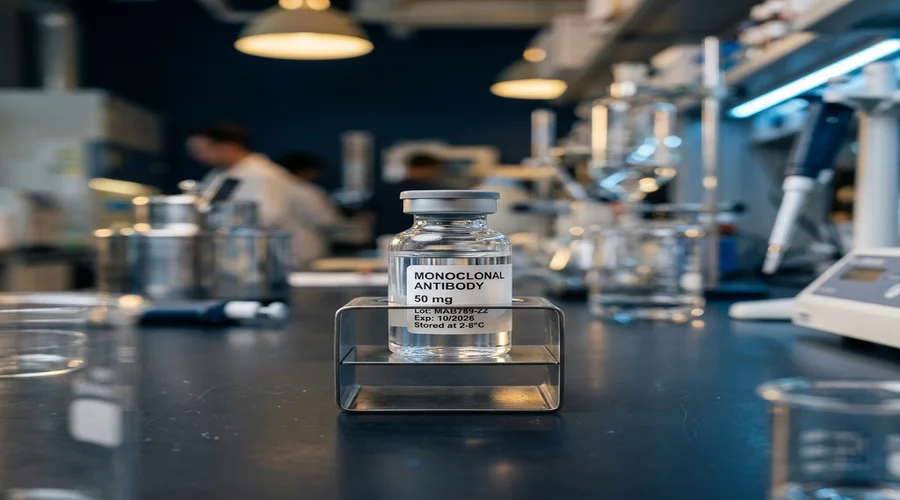
No single analytical technique captures the full size range or degradation type a biologic can experience, so a defensible stability program relies on an orthogonal panel of methods rather than any one result taken in isolation. Regulatory reviewers expect to see this orthogonality explicitly justified, since a molecule that appears stable by one method alone can still be masking a degradation pathway that method is simply blind to.
- Size-exclusion chromatography (SEC) — the primary method for soluble aggregates in the low-molecular-weight-oligomer range, though it can under-report larger aggregates lost to filtration or column adsorption.
- Dynamic light scattering (DLS) and analytical ultracentrifugation — extend detection into larger soluble aggregates as orthogonal confirmation of SEC findings.
- Sub-visible particle counting — light obscuration and flow imaging microscopy per USP <787> and <788> quantify particles in the 2–100 micron range.
- Differential scanning calorimetry (DSC) and circular dichroism (CD) — measure conformational (thermal) stability and secondary/tertiary structure directly, independent of aggregation state.
Real-time and accelerated stability studies, run in parallel across this analytical panel and structured according to ICH Q5C, generate the data package that ultimately supports the shelf-life claim in a regulatory filing. Building this program correctly from early development avoids the common and costly failure mode of discovering a blind analytical spot only after a formulation has already been locked for clinical manufacturing — which brings the discussion to how these technical decisions connect to the broader regulatory and development strategy.
Regulatory and Development Considerations for Biologics Formulation
Biologics formulation decisions do not exist in isolation from the regulatory dossier — every buffer, excipient, and lyophilization cycle choice must be justified with data in the Chemistry, Manufacturing, and Controls (CMC) section of a BLA or MAA filing, and reviewers scrutinize the orthogonal stability package described above as closely as the formulation itself. Because reformulating a biologic after clinical batches have been manufactured is both expensive and slow, most successful programs lock these decisions early, backed by forced-degradation and accelerated stability data generated well before pivotal manufacturing.
| Regulatory Document | Jurisdiction | Relevance to Biologics Formulation |
|---|---|---|
| ICH Q5C — Stability of Biotechnological Products | Global (FDA, EMA, PMDA) | Stability testing framework specific to biologics |
| ICH Q8(R2) — Pharmaceutical Development | Global (FDA, EMA, PMDA) | Quality by Design framework applied to formulation development |
| USP <787> / <788> Particulate Matter | USA (compendial) | Sub-visible particle count methodology and limits |
| FDA Guidance — Immunogenicity Assessment for Therapeutic Protein Products | USA | Links aggregate content to immunogenicity risk assessment |
Because these interdependencies are established so early and are costly to unwind later, biologics development teams frequently engage a formulation consultant during pre-formulation rather than after a clinical batch has already been manufactured under a locked formulation. This mirrors the same excipient-selection discipline covered in Global Formulation's guide to excipient selection for oral solid dosage forms, since many stabilizer classes span both liquid and solid dosage forms, and it extends directly into the lyophilization cycle-development principles discussed in the companion article on pharmaceutical lyophilization fundamentals. Treating aggregation control, chemical degradation, excipient selection, and analytical strategy as one interconnected system — rather than independent checkboxes — is what separates a biologic that clears stability testing from one that stalls in development.
Frequently Asked Questions
What is the difference between protein aggregation and protein denaturation?
Denaturation refers to the loss of a protein's native secondary and tertiary structure — the folded conformation unravels, exposing hydrophobic residues that are normally buried in the protein core, without necessarily involving more than one protein molecule. Aggregation is a distinct, though often downstream, event in which multiple protein molecules — whether partially unfolded, fully denatured, or even natively folded — associate into soluble oligomers, sub-visible particles, or visible precipitates. A protein can denature without aggregating if the unfolded state is diluted enough or stabilized against self-association, and conversely native-state aggregation can occur without any detectable denaturation, driven instead by colloidal instability or interfacial stress. Formulation scientists track both pathways separately because the analytical methods and mitigation strategies differ: denaturation is monitored by techniques like differential scanning calorimetry and circular dichroism, while aggregation is tracked by size-exclusion chromatography, dynamic light scattering, and sub-visible particle counting.
Why are proteins so much harder to stabilize than small-molecule drugs?
Small-molecule drugs have a fixed covalent structure that either remains intact or degrades through well-characterized chemical reactions such as hydrolysis or oxidation, and their stability can typically be predicted and controlled through pH, temperature, and packaging choices alone. Proteins carry an additional, more fragile layer of stability: their three-dimensional folded conformation, held together by comparatively weak non-covalent forces including hydrogen bonds, hydrophobic interactions, and van der Waals forces, all of which are easily disrupted by heat, agitation, freeze-thaw cycling, or interfacial stress at container surfaces. A protein must simultaneously resist chemical degradation of its amino acid side chains — deamidation, oxidation, and fragmentation — and physical instability of its folded structure, and losing either battle can compromise both efficacy and immunogenicity risk. This dual vulnerability is why biologics formulation demands orthogonal analytical characterization and a much larger stabilizing excipient toolkit than small-molecule formulation typically requires.
What role do surfactants like polysorbate play in protein formulation, and why are they sometimes a liability?
Non-ionic surfactants, most commonly polysorbate 20 and polysorbate 80, are included in protein formulations specifically to outcompete the protein molecule for adsorption at air-water, container-surface, and ice-water interfaces, since interfacial adsorption and the shear stress that accompanies it are major drivers of aggregation during agitation, pumping, and freeze-thaw handling. Without a surfactant, protein molecules preferentially migrate to these interfaces, partially unfold due to the amphipathic environment, and nucleate aggregates that can propagate through the bulk solution. The trade-off is that polysorbates are chemically unstable themselves — they degrade over time through both oxidative and hydrolytic (esterase-mediated) pathways, generating free fatty acids that can visibly precipitate or, in some cases, catalyze oxidation of the protein they were meant to protect. Formulators must therefore select polysorbate grade and concentration carefully, monitor for degradation products across the shelf life, and increasingly evaluate alternative surfactants such as poloxamer 188 for products where polysorbate degradation has proven problematic.
How does lyophilization help stabilize biologics, and what can go wrong during the process?
Lyophilization removes water from a protein formulation through freezing followed by sublimation under vacuum, and because most chemical and physical degradation pathways require mobile water to proceed, a properly formulated and processed lyophilized cake can extend a biologic's shelf life from months to years. The protection depends heavily on including a lyoprotectant — typically a disaccharide such as sucrose or trehalose — that forms hydrogen bonds with the protein surface in place of water molecules lost during drying, preserving the native conformation through what is known as the water replacement mechanism. Failure modes are specific to the freeze-drying process itself: freezing itself can denature proteins at the ice-water interface unless a cryoprotectant is also present, the drying cycle must stay below the formulation's collapse temperature or the cake structure fails, and residual moisture left after drying can continue to drive degradation during storage if it exceeds validated limits. Getting a lyophilization cycle right requires cycle development studies specific to each formulation, since a cycle borrowed from another product frequently causes cake collapse or incomplete protection.
What analytical methods are used to detect protein aggregation before it becomes a clinical or regulatory problem?
No single analytical method captures the full size range over which protein aggregates can form, so regulatory guidance and industry practice both call for an orthogonal panel of techniques covering soluble oligomers through visible particulates. Size-exclusion chromatography (SEC) is the workhorse method for soluble aggregates in the low-molecular-weight-oligomer range, though it can under-report larger aggregates that are filtered out or adsorb to the column. Dynamic light scattering (DLS) and analytical ultracentrifugation extend detection into larger soluble aggregates and provide orthogonal confirmation of SEC results. Sub-visible particle counting, typically by light obscuration or flow imaging microscopy per USP <787> and <788>, quantifies particles in the 2-100 micron range that neither SEC nor DLS reliably capture, while visible particle inspection covers anything larger. Because each method has blind spots specific to a particular size range, a comprehensive aggregation control strategy always combines several of these techniques rather than relying on any one result as sufficient evidence of stability.
How does formulation pH affect monoclonal antibody stability, and how is the optimal pH determined?
Formulation pH influences both the chemical degradation rate of susceptible amino acid residues — asparagine deamidation and methionine oxidation are particularly pH-sensitive — and the colloidal stability of the antibody, since pH determines the net surface charge and therefore the electrostatic repulsion between protein molecules that resists aggregation. Most monoclonal antibodies have a pH stability optimum somewhere between pH 5 and 6.5, though this varies molecule to molecule based on the specific sequence and charge distribution of each antibody's variable region. The optimal pH is not calculated from first principles but determined empirically through forced-degradation and accelerated stability studies across a pH range, monitoring aggregation, fragmentation, and charge-variant formation at each condition, then selecting the pH that minimizes the dominant degradation pathway for that specific molecule while remaining compatible with the intended buffer system and route of administration.
Why do companies developing biologics engage a specialized formulation consultant rather than relying on general pharmaceutical formulation expertise?
Biologics formulation draws on a distinct scientific discipline from small-molecule pharmaceutical formulation — protein biophysics, colloidal stability theory, and freeze-drying cycle science are not typically covered in the same depth within general pharmaceutical formulation training, and mistakes in this domain carry a higher cost because reformulating a biologic after clinical batches have been manufactured is both expensive and time-consuming. A specialized consultant brings pattern-matched experience across degradation pathways, excipient interactions, and analytical method selection that helps development teams avoid formulation choices that appear reasonable on paper but fail forced-degradation testing, real-time stability studies, or regulatory review later in development. Engaging this expertise during pre-formulation and early candidate selection, rather than after a formulation has already been locked for clinical manufacturing, is consistently the more capital-efficient path for companies without deep in-house biologics formulation experience.
Need Expert Biologics Formulation Support?
From protein stability risk assessment and excipient screening to lyophilization cycle development and CMC-ready analytical strategy — Global Formulation provides hands-on biopharmaceutical product development services for biologics programs.
Discuss Your Project