Butyl Rubber Sealant Glazing: Primary Seal Chemistry for Insulated Glass Units
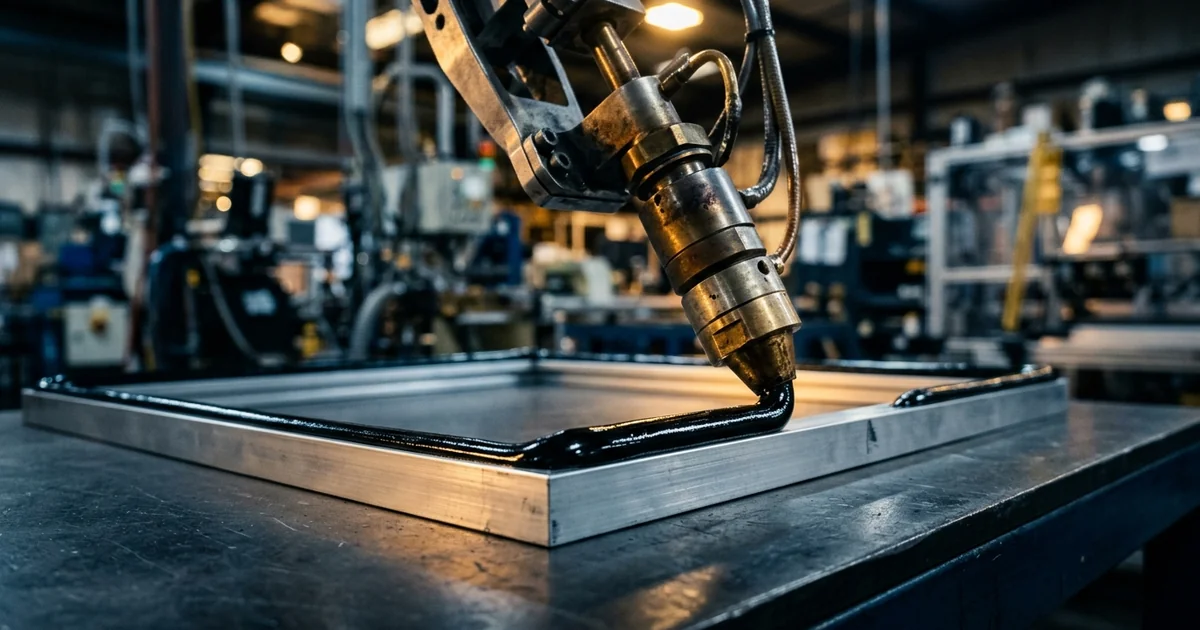
A double-glazed window that fogs between the panes within a few years of installation is one of the most common warranty claims a glazing manufacturer faces. In nearly every case the cause traces back to a failed primary seal rather than a defective pane of glass, and the whole unit has to be replaced rather than resealed. That kind of failure is costly, and it damages a fabricator's reputation with installers who remember which supplier's units clouded first. Butyl rubber sealant glazing systems exist specifically to prevent this outcome, because butyl's molecular structure gives it a moisture-vapor barrier that few competing sealant chemistries can match. That barrier property is why butyl remains the default primary seal inside insulated glass units, decades after silicone and polyurethane sealants became widely available. This guide explains why butyl's polymer chemistry produces such low permeability, how the dual-seal system used in insulated glass units divides barrier and structural duties between two different sealants, where non-curing butyl tape fits as a glazing compound, and where butyl's mechanical limits mean it cannot be used alone. It reflects the sealant formulation and specification work we carry out across our adhesives and sealants consulting practice.
Why Butyl Rubber Sealant Glazing Chemistry Blocks Moisture Vapor
Butyl rubber is a copolymer of isobutylene with a small fraction of isoprene, built almost entirely from a saturated, tightly packed hydrocarbon backbone. Each isobutylene unit carries two methyl side groups, and those groups pack together so densely that the polymer chains leave very little free volume for gas or water-vapor molecules to diffuse through. As the technical background on butyl rubber confirms, this restricted-diffusion structure gives the polymer one of the lowest gas- and moisture-vapor permeabilities of any common elastomer — the same property that made it the standard choice for tire inner tubes and pharmaceutical vial stoppers long before it became a glazing material. Every performance claim made about butyl sealants traces back to this single molecular mechanism.
Three consequences follow directly from that restricted diffusion, and together they explain why the material has held its position in glazing for decades:
- Lowest common moisture-vapor transmission rate — among widely used sealant elastomers, butyl allows markedly less water vapor to pass through a given thickness than silicone, polysulfide, or polyurethane
- Equally low gas permeability — the same restricted diffusion slows the argon or krypton gas fills used to improve insulated glass thermal performance from leaking out over time
- Chemical inertness — the saturated backbone resists attack from most common atmospheric pollutants and cleaning chemicals that degrade less saturated elastomers over time
These properties make butyl the obvious material wherever a sealed cavity must stay dry and gas-tight for decades. Low permeability alone does not make a complete glazing system, though — that requires pairing butyl with a second, structurally different sealant.
The Dual-Seal IGU System: Butyl Primary Seal and Structural Secondary Sealant
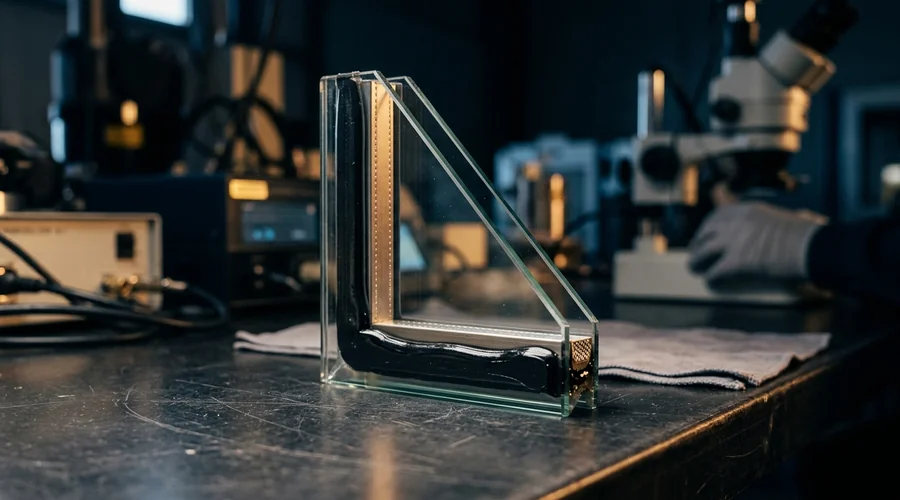
An insulated glass unit is built from two or more panes separated by a spacer bar, with the sealed cavity between them protected at the edge by two different sealants working together. This dual-seal architecture exists because no single sealant chemistry combines butyl's exceptional vapor barrier with the mechanical strength and elastic movement capability an exterior glazing joint needs over its service life. The primary seal — almost always a hot-melt butyl compound — is applied directly between the glass and the spacer bar, forming the actual moisture and gas barrier. The secondary seal, applied around the outer perimeter over the spacer and primary seal, carries the structural and weathering load instead.
| Seal Position | Typical Chemistry | Primary Function | Movement / Structural Role |
|---|---|---|---|
| Primary seal (glass-to-spacer) | Hot-melt butyl compound | Moisture-vapor and gas barrier | Minimal — not designed to carry structural load |
| Secondary seal (outer perimeter) | Silicone, polysulfide, or polyurethane | Structural bond and weather seal | Carries wind load, thermal movement, and long-term joint stress |
Most spacer bars also carry a desiccant, typically a molecular sieve, that continuously absorbs the trace moisture present at manufacture and any that migrates past the primary seal over time. Insulating-glass durability testing exists precisely because a slowly degrading primary seal eventually overwhelms the desiccant's capacity, as covered further in the general technical background on insulated glazing. Once that overload happens, the unit fogs permanently.
Butyl Tape and Glazing Tape: Non-Curing, Pressure-Sensitive Chemistry
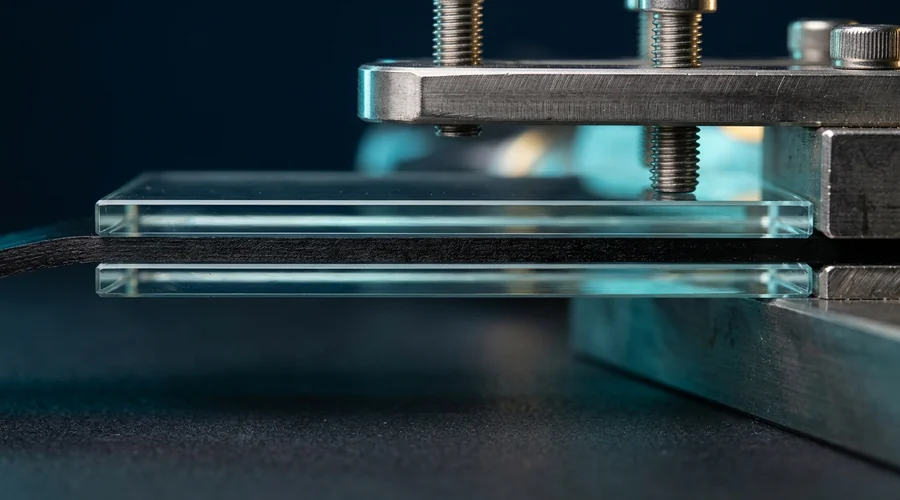
Not every butyl application in glazing is a hot-melt bead applied on an automated IGU line. Butyl tape — a pre-formed ribbon supplied on a release liner — is compounded to remain permanently soft and tacky rather than curing to a fixed, cross-linked rubber. That distinction matters: the vulcanized butyl rubber used in tire inner liners is deliberately cross-linked with sulfur or resin systems for durability under flexing, while glazing-grade butyl compounds are left uncured on purpose so the material stays plastic and self-adhering indefinitely. Because it never cures, butyl tape needs no mixing, no pot-life management, and no cure-time window before the glazing can be handled.
- Window and door glazing bedding — placed in the sash or frame rebate beneath the glass to cushion it and form an air- and water-resistant bedding seal
- Spacer bar sealing on the IGU line — the same hot-melt butyl chemistry extruded directly onto the spacer as the primary seal described above
- General weatherproofing tape — sold as a standalone product for roof flashing, gutter joints, and recreational-vehicle window and seam sealing, applications that rely on the same non-curing tack and moisture-barrier property
Because butyl tape never fully cures, it conforms to minor surface irregularities and stays sealed under light, ongoing movement. That same lack of cure is also the source of its biggest formulation trade-off, one that shows up once the compound has to be manufactured and applied at scale.
Compounding and Hot-Melt Processing of Glazing-Grade Butyl
A raw butyl polymer is far too soft and cohesive on its own to sell as a usable sealant, so commercial glazing-grade butyl is always a compounded mastic rather than the neat polymer. Formulators build the compound around three functional additive classes on top of the base polymer, each addressing a specific processing or performance requirement rather than being optional. Getting the balance between these classes right determines whether the finished compound extrudes cleanly on an automated line, holds its shape on the spacer bar, and stays tacky in service for the life of the unit.
- Reinforcing fillers — carbon black or fine calcium carbonate builds body into the compound and controls its rheology during extrusion, without which the material would flow before it could set
- Plasticizing oils — low-molecular-weight polybutene oils lower the compound's viscosity for processing and keep the finished bead permanently soft and conformable rather than stiffening over time
- Tackifying resins — hydrocarbon resins raise the compound's surface tack so it bonds instantly to glass and metal without a separate primer or adhesion promoter
On an automated insulated-glass line, the compounded butyl is heated in a jacketed extruder until it flows freely enough to be applied as a continuous, uniform bead onto the moving spacer bar, then cools and sets as soon as the glass is pressed into place. Because the compound never chemically cures, the same heating-and-cooling cycle can be repeated if material has to be reworked or trimmed — a genuine manufacturing advantage over a moisture-cure or two-part sealant that cannot be reheated once it sets.
That processing flexibility is a real strength on the factory floor, but it is inseparable from the same non-curing chemistry that limits what butyl can be asked to do once the unit leaves the plant.
Where Butyl Cannot Stand Alone: Elastic Recovery, Creep and Exposure
Because glazing-grade butyl never cross-links into a true elastomer, it behaves more like a viscoelastic mastic than a rubber once a joint is put under sustained stress. A cured silicone or polysulfide sealant develops a genuine three-dimensional network that stretches and largely returns to its original shape; uncured butyl instead flows slowly and permanently under continuous load, a behavior generally described as cold flow or creep. That difference is the real reason butyl stays confined to the primary seal position inside an IGU rather than being trusted as the unit's only sealant.
- Low elastic recovery — butyl does not rebound reliably after repeated joint movement, so it cannot absorb the thermal expansion and wind-load cycling an exterior joint experiences over decades
- Cold flow under sustained load — a butyl bead carrying continuous structural stress will slowly deform and thin rather than holding its shape indefinitely
- Permanently tacky surface — left exposed, an uncured butyl bead collects airborne dirt and dust rather than weathering to a clean, stable surface
- Shorter exposed service life — general sealant-selection guidance in construction places exposed butyl compounds well behind silicone or polysulfide for long-term weathering durability
| Sealant | Cure Mechanism | Elastic Recovery | Typical Exterior Role |
|---|---|---|---|
| Butyl | Non-curing — sets thermoplastically on cooling | Low — creeps under sustained load | Concealed primary seal or bedding only |
| Silicone | Moisture-cure elastomer | High — excellent long-term rebound | Structural secondary seal, exposed weather seal |
| Polysulfide | Chemical-cure elastomer | Moderate to high | Structural secondary seal in IGU manufacture |
None of these limitations make butyl a weak material — they simply define its job description precisely. That precision is exactly what testing standards and market-entry requirements are built to enforce.
Standards, Testing and Bringing a Butyl Glazing Product to Market
Insulated glass units carry warranty obligations that can run for a decade or longer, so the sealant systems inside them are tested to standards built to catch slow, multi-year failure modes rather than day-one performance. In North America, ASTM E2188 evaluates fog resistance under accelerated weathering, while ASTM E2190 sets the broader specification an IGU assembly must meet. In Europe, the EN 1279 series covers the equivalent durability, gas-leakage, and moisture-penetration testing for insulated glass units. A manufacturer developing a new butyl compound, or a fabricator qualifying a new supplier, has to work through these standards before the product can be specified into commercial glazing projects.
- Define the seal's role precisely — decide whether the product is a primary IGU seal, a bedding or glazing tape, or a general-purpose weatherproofing tape, since the compounding targets differ
- Match viscosity and tack to the application method — hot-melt extrusion for automated IGU lines requires a different rheological profile than a hand-applied tape roll
- Pair the primary seal with a qualified secondary sealant — test the butyl compound alongside the specific silicone, polysulfide, or polyurethane it will be paired with, since seal compatibility is assembly-specific
- Run accelerated weathering and fog-resistance testing early — ASTM E2188/E2190 or EN 1279 testing takes real calendar time and should start well before the compound is finalized
- Confirm desiccant compatibility — validate that the chosen molecular sieve and spacer system absorb residual moisture at the rate the finished seal actually allows through
- Document the concealed-use specification clearly — state explicitly in technical literature that the product is not rated for exposed exterior use, so fabricators do not misapply it
The commercial opportunity in glazing-grade butyl is narrower than it looks from outside, and that narrowness is the point. A compound that nails vapor-barrier performance, processes cleanly on a hot-melt line, and is honestly specified as a concealed primary seal will find a permanent home inside the insulated glass units that fabricators rely on every day. A compound marketed as a do-it-all exterior sealant will fail expensively, in ways that come back to the manufacturer years after the sale.
Frequently Asked Questions
Why is butyl rubber used as the primary seal in insulated glass units?
Butyl rubber is a copolymer built almost entirely from a saturated, tightly packed hydrocarbon backbone, and the methyl side groups on that backbone pack together so densely that there is very little free volume for gas or moisture-vapor molecules to diffuse through. That gives butyl one of the lowest gas- and moisture-vapor permeabilities of any common elastomer, which is exactly what an insulated glass unit needs at the glass-to-spacer joint to keep the sealed cavity dry and, where used, to hold an argon or krypton gas fill in place.
No other widely available sealant chemistry matches butyl's combination of low permeability and instant tack without curing, which is why it has remained the standard primary seal for decades even as secondary sealant chemistry has evolved.
What is the difference between the butyl primary seal and the secondary sealant in an IGU?
They are applied in different positions and do different jobs. The primary seal is a hot-melt butyl compound applied directly between the glass and the spacer bar, and its only job is forming the moisture-vapor and gas barrier for the sealed cavity.
The secondary seal is applied around the outer perimeter, over the spacer and primary seal, using a cured elastomeric chemistry such as silicone, polysulfide, or polyurethane, and it carries the structural bond and the long-term weathering and movement load the joint experiences in service. Butyl alone could not survive as the sole seal because it never cures into a true elastomer, so it has no reliable elastic recovery under repeated joint movement.
Can butyl rubber sealant be used as the only sealant on a window or glazing joint?
No, and specifying it that way is one of the more common mistakes made by teams new to glazing chemistry. Because glazing-grade butyl is deliberately left uncured, it behaves as a viscoelastic mastic rather than a true rubber, and under sustained structural stress it slowly deforms and thins in a behavior known as cold flow or creep.
An exterior glazing joint has to absorb years of thermal expansion, wind load, and building movement, and only a cured, elastic sealant such as silicone or polysulfide can do that reliably, which is why butyl is always paired with a structural secondary sealant rather than used on its own.
What is butyl tape and how is it different from cured butyl rubber?
Butyl tape is a pre-formed ribbon of butyl compound supplied on a release liner, compounded to stay permanently soft and tacky rather than curing to a fixed, cross-linked rubber. That is a deliberate formulation choice: the vulcanized butyl rubber used in products like tire inner liners is cross-linked with sulfur or resin systems specifically for durability under repeated flexing, while glazing-grade butyl tape is left uncured so it stays plastic and self-adhering indefinitely.
Because it never cures, butyl tape needs no mixing, no pot-life management, and no cure-time window, and it is used as window and door glazing bedding, as the primary IGU spacer seal in hot-melt form, and as general-purpose weatherproofing tape for roofing and recreational-vehicle sealing.
Why does an insulated glass unit fog up between the panes?
Fogging is a seal failure, not a desiccant failure on its own. The spacer bar inside an IGU carries a desiccant, typically a molecular sieve, that continuously absorbs the trace moisture present at manufacture and any that slowly migrates past the primary seal over the unit's life.
That desiccant has a finite absorption capacity, and once a degrading or poorly bonded primary butyl seal lets in more moisture than the desiccant can hold, the excess condenses on the inside of the glass and the unit fogs permanently. This is why accelerated fog-resistance testing on the seal system, rather than testing the desiccant in isolation, is the standard way the industry evaluates long-term IGU durability.
What standards test the durability of insulated glass unit seals?
In North America, ASTM E2188 evaluates fog resistance under accelerated weathering conditions, and ASTM E2190 sets the broader performance specification an insulated glass unit assembly has to meet. In Europe, the EN 1279 series covers the equivalent durability, gas-leakage, and moisture-penetration testing for insulated glass units sold across the EU market.
These standards exist because seal failure is a slow, multi-year process rather than a day-one defect, so the test methods are built around accelerated aging cycles that compress years of thermal and humidity cycling into weeks of laboratory testing. A manufacturer developing a new butyl compound, or a fabricator qualifying a new supplier, needs to work through the relevant standard before the product can be specified into commercial glazing projects.
Is butyl rubber sealant suitable for exposed exterior use?
Generally no, and manufacturers specify it as a concealed or bedding component rather than an exposed finish sealant for good reason. Because butyl never cures, its surface stays permanently tacky, which means an exposed bead collects airborne dirt and dust instead of weathering to a clean, stable finish the way a cured silicone or polysulfide sealant does.
General construction sealant-selection guidance also places exposed butyl compounds well behind cured elastomeric sealants for long-term weathering durability, so butyl is normally kept inside the IGU cavity, under a glazing bead, or behind a cap, with a cured sealant handling any joint that will remain visible and weather-exposed.
Developing a Glazing or IGU Sealant System?
Global Formulation provides sealant and adhesive consultancy — butyl and secondary sealant compounding, hot-melt processing setup, and standards testing strategy for insulated glass and window glazing systems.
Talk to Our Formulation Team