Processchemistrythat
scaleswithoutcompromise
We design, optimise, and de-risk chemical manufacturing processes — from reactor selection and reaction kinetics through thermal safety analysis and mass balances to full engineering packages ready for plant construction.
Fromlabchemistry
toindustrialprocess
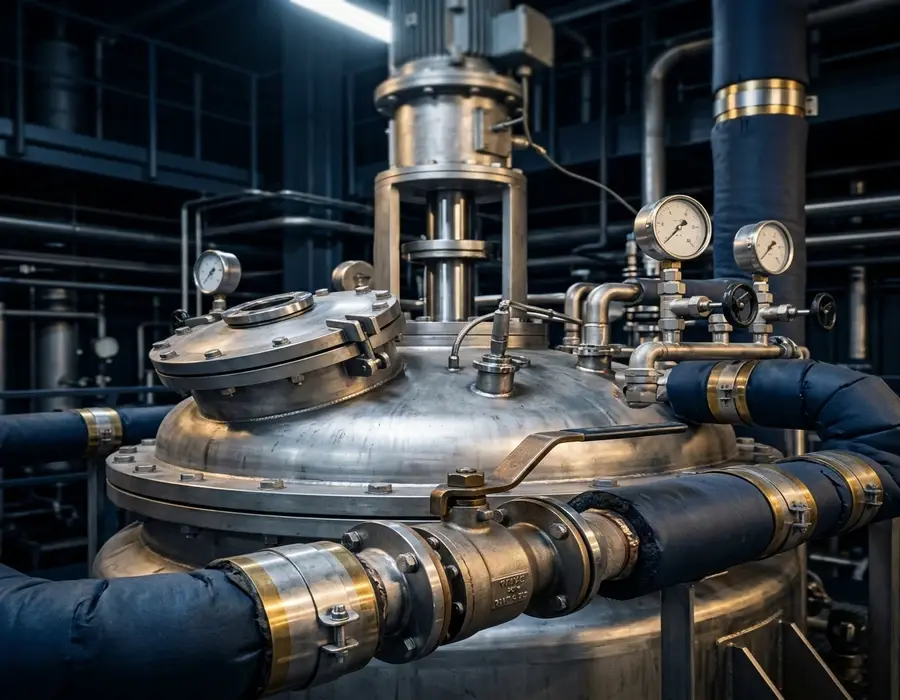
Chemical reaction engineering is the discipline that connects laboratory chemistry to production-scale manufacturing. A reaction that performs cleanly in a 250 mL flask — controlled temperature, rapid mixing, small heat load — behaves differently at 5,000 litres, where surface-to-volume ratios collapse, mixing times lengthen, and heat removal becomes the rate-limiting engineering problem. Ignoring these realities during scale-up is the single most common cause of yield loss, product quality failures, and process safety incidents at the pilot and commercial stage.
Our work begins at the chemistry level — understanding reaction kinetics, selectivity, and the effect of concentration, temperature, and mixing on conversion — and builds up through heat and mass balances, reactor geometry, safety analysis, and instrumentation design to a complete engineering package that a plant team can build, commission, and operate confidently.
- Reactor design and selection for batch, semi-batch, and continuous processes
- Reaction kinetics, mass and energy balances for every unit operation
- Thermal hazard and process safety analysis before scale-up begins
- Full engineering packages ready for procurement and plant construction
Engineeringrigour
ateveryscale.
Our process engineering capability spans the full range of unit operations encountered in fine chemical, specialty chemical, and industrial chemical manufacturing — from kinetic modelling through safety analysis to plant instrumentation design. We work across batch, semi-batch, and continuous process configurations, and across all scales from pilot plant through multi-tonne commercial production.
- Reactor design — batch, semi-batch, CSTR, and plug flow configurations
- Reaction kinetics modelling and conversion yield optimisation
- Heat and mass balances for all unit operations at production scale
- Thermal runaway analysis — TMRad, MTSR, and adiabatic temperature rise
- HAZOP and process safety review for new and modified processes
- Relief device sizing per DIERS / API 520 / 521 methodology
- Solvent recovery, distillation column, and separation system design
- Mass transfer operations: extraction, absorption, and stripping
- Process instrumentation and control loop specification
- Scale-up discrepancy diagnosis and corrective process engineering
Ourprocessengineeringapproach
Four phases that take a chemistry concept through to a fully engineered, safety-validated process ready for plant commissioning.
Process Feasibility
Map the chemistry, identify the critical parameters — conversion, selectivity, heat release, hazardous intermediates — and assess scale-up risk before any engineering resource is committed.
Process Design
Develop the reactor configuration, operating window, heat and mass balances, utility requirements, and equipment specifications for the target production scale.
Safety Analysis
Thermal hazard assessment, HAZOP study, and relief device sizing — completed before construction or commissioning so hazards are designed out, not managed around.
Engineering Package
Complete process design documentation: PFDs, mass balances, equipment datasheets, operating procedures, and scale-up parameter ranges — ready for procurement and plant build.
Whatwe
engineer
Across reaction types, unit operations, and process configurations — from routine batch chemistry to hazardous high-pressure synthesis.
Batch & Semi-Batch Reactors
Versatile, capital-efficient configurations suited to multi-product fine chemical and specialty chemical manufacture.
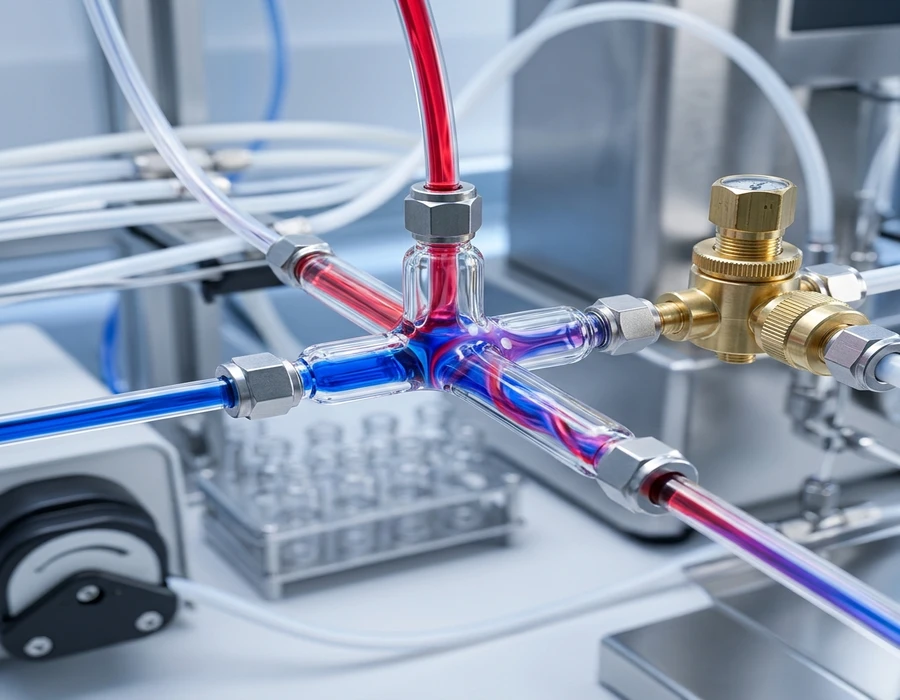
Continuous Flow Chemistry
Higher selectivity, precise residence time control, and safer handling of hazardous intermediates at reduced reaction inventory.
Exothermic Reaction Management
Calorimetric testing, cooling system design, and thermal runaway prevention for energetically demanding synthesis steps.
Distillation & Separation
Column design, reflux optimisation, azeotrope handling, and solvent recovery for product purification and waste stream reduction.
Polymerisation Engineering
Bulk, solution, suspension, and emulsion polymerisation with molecular weight distribution and conversion yield control.
Crystallisation & Precipitation
Nucleation control, particle size distribution management, washing protocol design, and filtration optimisation.
Gas–Liquid Operations
Absorption, stripping, and reactive gas handling with mass transfer coefficient modelling and sparger or column design.
High-Pressure Chemistry
Hydrogenation, carbonylation, and supercritical process design with pressure vessel safety analysis and relief sizing.
Hazardous Chemistry
Nitration, phosgenation, and peroxide chemistry handled with inherent safety engineering and full HAZOP documentation.
Acompleteengineering
packageforyourplantteam
Process engineering has one output that matters: a document set that enables a plant team to build, commission, and operate the process safely and to specification — without calling us for clarification. Every deliverable is written to that standard: precise, traceable, and grounded in the equipment and utility reality of your site.
- Process flow diagrams (PFDs) and piping & instrumentation diagrams (P&IDs)
- Mass and energy balances for all unit operations at the target production scale
- Reactor design specification — vessel geometry, materials of construction, agitator configuration
- Thermal hazard assessment report — TMRad, MTSR, adiabatic temperature rise, onset data
- HAZOP study report with identified hazards, safeguards, and recommended mitigations
- Relief device sizing calculations per applicable standards (DIERS / API 520 / 521)
- Scale-up operating procedure with critical parameter ranges and alarm setpoints
- Equipment and instrumentation datasheets for procurement and vendor engagement
Bringusyour
processchallenge.
Whether you're designing a process from scratch, troubleshooting a scale-up failure, or preparing a safety analysis for a regulatory submission — we can help.
Need a call first? Book a consultation →