How to Hire a Construction Chemicals Formulation Consultant

A concrete repair contractor specifies an admixture off a technical data sheet, batches it into a live pour, and only learns weeks later that the sealant on the adjacent joint never met its rated movement capability — the failure surfaces after the joint is already installed, not before. Construction chemical formulations carry consequences at a scale that dwarfs the original development cost: a waterproofing membrane that fails prematurely, an admixture that compromises workability on a live pour, or a sealant that doesn't survive its service life all translate into rework, liability, and lost contracts. Choosing the right construction chemicals formulation consultant is what separates a product that clears ASTM, ISO, and EN compliance testing from one that fails on the jobsite. This guide explains what a formulation consultant actually does, how to vet category-specific expertise, and how engagement and pricing models really work. It also covers who ends up owning the resulting mix design, and the red flags that should end a conversation early. The evaluation criteria reflect what Global Formulation sees working — and failing — across admixture, sealant, and waterproofing product development engagements with manufacturers and building-materials startups alike.
What a Construction Chemicals Formulation Consultant Actually Does
A construction chemicals formulation consultant converts a performance brief into a documented, standards-compliant, production-ready mix design — and that documentation step is where manufacturers most often underestimate the job. Formulating an admixture, sealant, or waterproofing system is not just blending raw materials until a bench sample performs well; it means designing a chemistry that survives compressive testing, movement-capability cycling, moisture exposure, and years of in-service loading. The consultant also carries the technical burden of raw-material compliance and the documentation package a manufacturer rarely holds in-house before launch. Judging any candidate starts with understanding this full scope, because a hire who covers only part of it leaves you paying twice.
- Custom mix-design development — designing the raw-material system for your brief: polymer or cementitious base chemistry, additive package, cure mechanism, and rheology working as one system
- Standards compliance and test protocol design — defining the lab and field trial protocols that validate a formulation against the relevant ASTM, ISO, or EN standard before any production commitment
- Regulatory and documentation support — confirming raw-material compliance and building the technical data sheet and safety data sheet behind the finished product
- Manufacturing handoff — translating the bench formulation into a process a plant can run: batching sequence, mixing parameters, and quality-control specifications
Scope, in other words, runs from raw-material chemistry to the batching-plant floor — which raises the first structural question: do you need an independent consultant at all, or a different development route entirely?
Consultant, Contract Manufacturer, or Private-Label Supplier?
Manufacturers reach a finished construction chemical formulation through one of three routes, and each trades cost, speed, and ownership differently. Outsourcing construction chemical R&D to an independent consultant maximizes differentiation and portability at the highest development cost. A contract formulation partner in the construction industry with an in-house lab bundles development into production, often at a lower separate charge, but the plant typically keeps the mix design. An OEM or private-label chemical supplier offers ready-made, already-tested admixtures or sealants you simply rebrand — the fastest route to market and the least differentiated.
| Route | How development works | Formula ownership | Best fit |
|---|---|---|---|
| Independent formulation consultant | Custom development against your brief; the consultant works for the manufacturer | Negotiable — full buyout is common | Flagship products where differentiation and portability matter |
| Contract formulation partner's in-house lab | Plant lab adapts its existing raw-material stock and equipment to your brief | Usually retained by the manufacturer | Manufacturers prioritizing speed and bundled cost over ownership |
| Private-label / OEM chemical supplier | Pre-developed, already-tested stock formulations offered for rebranding | Supplier owns; the same base is sold to others | Fast market entry with minimal upfront investment |
None of these routes requires owning production capacity — the model of launching on outsourced formulation and toll manufacturing is mapped out in our guide to manufacturing without a factory. Route choice also determines how much scrutiny an individual consultant deserves: if you take the custom route, vetting that person becomes the highest-leverage work you do before committing budget.
How to Hire a Formulation Consultant: Vetting Credentials and Category Fit
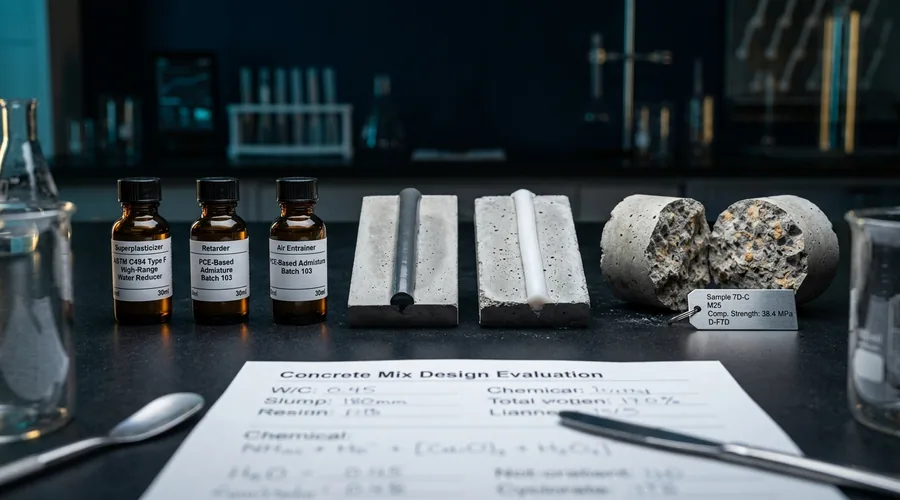
Most manufacturers researching how to hire a formulation consultant start with general chemistry credentials, but construction chemical competence is category-specific in a way a CV rarely captures. An excellent concrete admixture formulator can be the wrong hire for polyurethane sealants, cementitious waterproofing, or epoxy repair mortars, because each category draws on a different chemistry and a different set of test standards. The vetting question is not "is this person a good chemist" but "has this person repeatedly shipped compliant, field-proven products in my exact category." Everything else on the checklist supports that central judgment.
- Category track record — commercially launched, field-proven products in your category (admixtures, sealants, waterproofing, or repair mortars), verifiable through references
- Standards fluency — working familiarity with the classification and test standards your category is judged against, such as the admixture types defined for plasticizers and superplasticizers, or the movement-capability testing behind ASTM C920 and ISO 11600 for sealants
- Trial-batch and pilot-testing discipline — a stated, repeatable protocol for scaling a bench formulation through trial batches and field or jobsite trials before any production commitment
- Raw-material compliance awareness — fluency with REACH registration status for key raw materials, and, for polyurethane or epoxy systems, the handling obligations that come with isocyanate exposure or epoxy-resin sensitization
- Documentation quality — ask for a specimen deliverable pack: formulation report, technical data sheet, and quality-control specification
Once category fit is established, the conversation turns to money — and the structure of the deal matters as much as the number on the quote.
Engagement Models, Pricing, and Timelines
Consultants price the same formulation work in very different shapes, and the shape changes your risk more than the headline figure does. A defined single-product brief suits a fixed-fee engagement, while an evolving product-line pipeline is better served by retainer-based construction chemical product development services. Quotes only become comparable when you list what each one actually includes — trial-batch rounds, field trials, standards testing, and documentation. Two quotes that look far apart often converge once the exclusions are priced in.
- Flat fee per formula — a fixed price for a defined deliverable; predictable, but trial-batch rounds beyond the included number are billed separately
- Hourly or day rate — flexible for exploratory work and troubleshooting; open-ended cost if the brief is vague
- Monthly retainer — ongoing R&D capacity across a product pipeline; efficient for manufacturers developing several formulations in sequence
- Milestone-based — payments tied to defined stages such as an approved trial batch or a standards-compliant field trial; aligns incentives on longer projects
- Royalty or technology-transfer license — a lower upfront fee traded for a per-unit or per-ton payment, or continued consultant ownership of the mix design
Timeline expectations deserve the same discipline: briefing, raw-material screening, several trial-batch rounds, and weeks of standards and field testing sit between signature and a production-ready formulation. Payment structure settles how the work is bought — the next question is who owns what it produces.
Intellectual Property and Mix-Design Ownership
Mix-design ownership is the clause that determines whether your development spend builds a manufacturing asset or a dependency. In construction chemicals, finished formulations are typically protected as trade secrets rather than patents, though the underlying synthesis route for a raw material like a polycarboxylate ether superplasticizer can itself be patented by its producer. A manufacturer that owns its mix design outright can switch raw-material suppliers, renegotiate pricing from strength, and reformulate freely. A manufacturer that doesn't is structurally tied to whoever holds the master formulation, whatever the quality of the relationship today.
- Full buyout — the manufacturer receives the complete quantitative formulation and full documentation; the strongest position, and usually the most expensive
- License or technology transfer — the consultant retains the master formulation and the manufacturer pays for the right to produce it; lower entry cost, permanent dependency
- Plant-retained — common when a contract formulation partner develops at low or no separate charge; the manufacturer may negotiate exclusivity, but cannot take the formulation elsewhere
- Confidentiality first — a mutual NDA should precede any detailed brief disclosure, especially where jobsite performance data or proprietary substrate information is involved
Ownership terms are also where dubious operators reveal themselves first, which makes them a natural bridge into the warning signs worth screening for.
Red Flags and Questions to Ask Before Signing
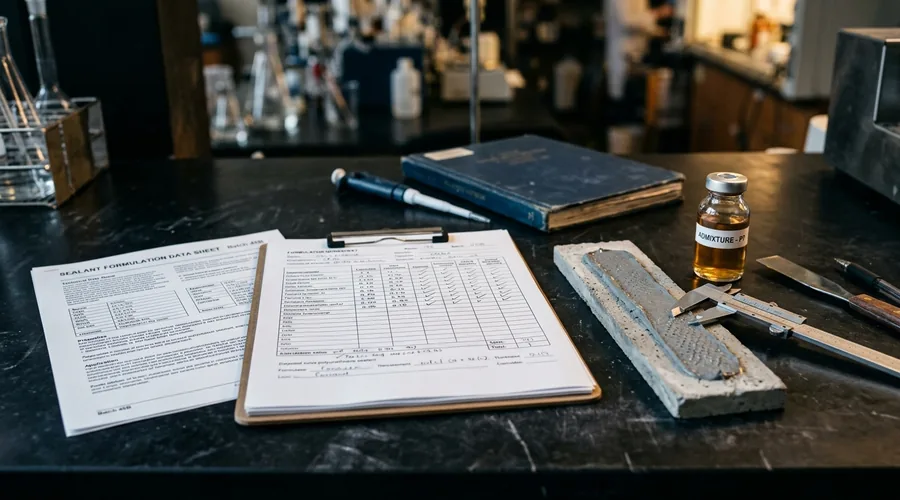
Most bad engagements announce themselves in the first two conversations, if you know what to listen for. The pattern behind nearly every warning sign is the same: promises made before the technical work that would justify them. Formulating against a compliance standard is an iterative discipline with genuine unknowns, and a professional communicates that honestly rather than selling certainty. Treat the sales conversation as a preview of how the working relationship will handle a failed trial batch.
- Guaranteed compliance upfront — promising a formulation will pass ASTM, ISO, or EN testing before reading your brief or reviewing your substrate and application conditions
- Silence on ownership — deflecting or improvising when asked who owns the mix design and what documentation you receive
- No trial-batch or field-trial protocol — treating jobsite or field testing as optional, or quoting timelines too short to contain it
- Instant "clones" — offering to copy a competitor's admixture or sealant from its technical data sheet alone; a TDS carries performance claims, not quantitative formulation or process information, so the claim itself is the red flag
- No relevant references — an inability to connect you with any manufacturer of your size that has launched a compliant product in your category
Put the same points to work positively as questions: who owns the mix design and at what price, what does the deliverable pack contain, how many trial-batch rounds are included, what does the standards testing protocol cover, and which of my target categories have you formulated for. A consultant who answers those five cleanly has already cleared most of the field, and you are ready to look at how the actual engagement unfolds.
From Brief to Launch: Working With Your Consultant
A well-run development engagement follows a recognizable arc, and knowing it in advance lets you hold your consultant to it. Each stage produces a concrete artifact — a brief, an approved trial batch, a standards-compliance report, a documentation pack — and vague stage boundaries are where projects silently stall. The manufacturer's job is to make decisions quickly at each gate; the consultant's job is to make each gate unambiguous. Momentum in formulation projects is a management outcome, not a chemistry one.
- Brief and benchmarking — define application, substrate, target standard, service environment, and any certification targets; supply competitor technical data sheets for performance reference
- Trial-batch rounds — iterate on raw-material ratios, cure behavior, and workability against the brief, with structured lab feedback at each round
- Standards and field testing — validate the leading candidate against the relevant ASTM, ISO, or EN protocol, followed by a field or jobsite trial under real application conditions
- Documentation — compile the formulation report, technical data sheet, safety data sheet, and any certificate of compliance your target market requires
- Scale-up and production — transfer to a contract formulation partner or your own plant operating under an ISO 9001 quality management system, with pilot batches confirming the bench formulation behaves at production scale
The decision framework, condensed: choose your route first, vet for category-specific evidence, buy deliverables rather than promises, and never leave mix-design ownership implicit. The same logic applies well beyond construction chemicals — our guide to choosing the right product consultant generalizes it across chemical product categories, and our construction chemicals practice page shows how Global Formulation structures these engagements end to end.
Frequently Asked Questions
What does a construction chemicals formulation consultant do that a contract manufacturer's in-house lab doesn't?
An independent construction chemicals formulation consultant works for you, not for a plant, which changes the incentives behind every technical recommendation. A contract formulation partner's in-house lab typically develops mix designs engineered around the raw materials, mixing equipment, and minimum batch volumes that suit that plant, and the resulting formulation usually stays the manufacturer's property.
An independent consultant designs the formulation around your brief, documents it fully, and hands you something you can take to any competent plant. That portability is the core commercial difference between the two routes.
How are construction chemicals formulation consultants typically paid?
The most common structures are a flat fee per finished formulation, hourly or day-rate billing for open-ended development, monthly retainers for ongoing R&D support, and milestone-based agreements tied to deliverables like a standards-compliant trial batch. Some consultants also offer royalty or technology-transfer arrangements where the upfront fee is lower but the manufacturer pays per unit or per ton produced.
No single model is inherently better — the right choice depends on how defined your project is and how much trial-batch iteration you expect. What matters most is that the quote states exactly which deliverables, trial-batch rounds, and testing are included.
Who owns the mix design when a consultant develops it?
Ownership is whatever the contract says, which is why the question must be settled in writing before development starts. In a full buyout engagement, the manufacturer pays for development and receives the complete quantitative formulation, giving it freedom to change raw-material suppliers or reformulate later. In license-style arrangements the consultant retains the master formulation and the manufacturer buys the right to produce it, which lowers upfront cost but creates long-term dependency.
If a contract is silent on ownership, the developer generally keeps the intellectual property — never assume that paying for development means owning the result.
How long does custom construction chemical formulation development take?
A realistic custom development runs through briefing, raw-material screening, several trial-batch rounds, and then standards and field testing before a formulation is production-ready. Trial-batch iteration alone commonly takes multiple rounds, because workability, cure behavior, and cost feedback each trigger rework.
Standards testing is the fixed cost in the schedule: movement-capability, adhesion, or compressive-strength protocols run over defined cycling and curing periods, and no credible consultant will sign off a formulation without that data. Manufacturers who plan launch dates before development starts almost always underestimate this testing window.
Is private-label sourcing better than custom formulation for a first product launch?
Private-label sourcing is faster and cheaper because the formulation already exists, is already standards-tested, and is already running on the supplier's batching lines — you are essentially rebranding a proven product. The trade-off is differentiation and control: the same base formulation is usually available to your competitors, and you cannot own or move it.
Custom formulation costs more and takes longer but produces a product and mix design that belong to your business. Many manufacturers launch on a private-label admixture or sealant line to validate demand, then commission custom formulations once volume justifies the investment.
What qualifications should a construction chemicals formulation consultant have?
Formal training in chemistry, materials science, or a related discipline matters less than a demonstrable track record in your specific category, because formulation skill in construction chemicals is deeply category-specific. Look for evidence of commercially launched, field-proven products in your format, familiarity with the ASTM, ISO, or EN standards that govern your target markets, and a documented approach to trial-batch and field-testing protocols.
Membership in professional bodies such as ACI or RILEM signals engagement with the field but is not a substitute for relevant launches. References from manufacturers of your size are worth more than an impressive client list.
What should I prepare before approaching a formulation consultant?
A useful brief covers the application, substrate, target standard, and service environment — temperature range, moisture exposure, and UV exposure — plus your realistic budget and timeline. Competitor technical data sheets and any prior test failures are especially valuable because performance targets are hard to communicate in words alone.
The tighter the brief, the fewer trial-batch rounds you pay for. Arriving with a clear brief also changes how seriously an experienced consultant takes the project, since vague briefs are the most reliable predictor of a difficult engagement.
Do I still need a consultant if my raw-material supplier offers free formulation support?
Free in-house development from a raw-material supplier can be a genuinely good deal, but you should understand what you are trading for it: the supplier's formulation team optimizes around its own product line rather than your brief, and the resulting mix design may not be portable if you switch suppliers later. That arrangement can lock your product to that supplier's raw materials — if pricing rises or a product is discontinued, reformulating from scratch becomes urgent rather than planned.
An independent consultant paired with your chosen suppliers keeps formulation loyalty and raw-material sourcing separate. For a flagship product central to your business, mix-design ownership is usually worth paying for.
Developing a Construction Chemical Product?
Global Formulation provides construction chemicals formulation consultancy — custom mix-design development, standards and field-testing support, and manufacturing handoff for building-materials startups and established manufacturers.
Talk to Our Formulation Team