Concentrated Cleaning Chemical Dilution Systems for Institutional Use
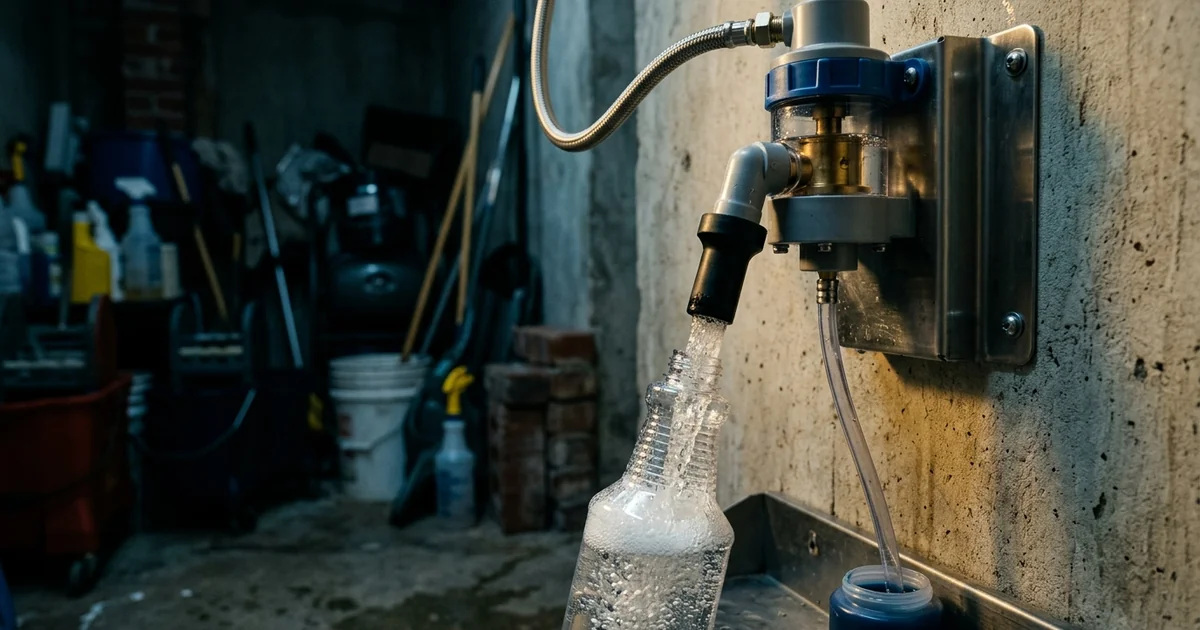
A janitorial team fills a mop bucket by eye, glugs in what looks about right, and moves on. Multiply that across a hundred buckets a week and the arithmetic gets ugly: some floors get double the chemical they need, some get half, and nobody can say which. A cleaning chemical dilution system exists to end that guesswork. It pairs a small container of concentrate with a dispenser that meters it into water at a fixed ratio. The bottle, bucket, or auto-scrubber then leaves the closet at exactly the strength the formula was tested at. For a facility running dozens of staff and several buildings, the gap between controlled dosing and free-pour runs to tens of thousands of dollars a year, plus the safety exposure of workers handling neat chemical. This guide explains how proportioning dispensers work, how a concentrate has to be formulated differently from a ready-to-use product, where the cost savings actually come from, and what breaks these systems in real buildings. It is written for the manufacturers and facility operators we support across the household and industrial cleaners market.
Why Institutional Cleaning Runs on Concentrates and On-Site Dilution
The institutional cleaning market looks nothing like the retail shelf. A supermarket cleaner is sold ready to use because the buyer wants convenience and uses one bottle a month. A hospital, a school district, or a contract cleaner buys chemistry by the drum and applies it across acres of floor. Freight, storage, worker safety, consistency, and waste all push the same way: toward a concentrate diluted at the point of use. The concentrate is the product; the water is added where the work happens. That single shift changes how the chemistry is designed, how it is packaged, and how it is dispensed.
The reasons institutions standardise on dilutables are concrete and stack up quickly:
- Freight and storage — a concentrate that dilutes 1:64 means one shipped litre becomes 64 litres of finished cleaner, so trucks, pallets, and warehouse racks carry a fraction of the water they would otherwise move
- Dose consistency — a dispenser set to one ratio gives every worker the same strength, removing the variation between a heavy pour and a light one
- Worker safety — staff fill from a closed dispenser instead of decanting corrosive or irritant concentrate by hand, and the concentrate itself stays in spill-resistant packaging
- Cost control — controlled dosing eliminates the routine over-use that inflates chemical spend on free-poured product
- Procurement and audit — one concentrate feeding several dilutions simplifies the product list, and a fixed use-dilution is an auditable number for green-cleaning programmes
None of this works if the dilution is approximate. The value of the whole approach rests on the dispenser delivering the ratio it claims, which is a hardware problem worth understanding before the chemistry.

How Proportioning Dispensers Meter and Mix
Every dilution dispenser answers the same question: how do you add a small, repeatable amount of concentrate to a large, variable amount of water without a person measuring anything? The dominant answer is the venturi eductor, a piece of plumbing with no moving parts that uses the water itself to pull the concentrate. Understanding its one weakness — sensitivity to water pressure — explains most of the field failures covered later, and explains why more expensive dispensers add mechanical metering on top.
The main dispensing technologies, in rough order of cost and control:
- Venturi eductor — water flows through a narrowed throat, speeds up, and drops in pressure; that suction draws concentrate up a pick-up tube fitted with a colour-coded metering tip that sets the ratio. Simple, cheap, and self-powered, but the ratio drifts if line pressure moves outside the design window
- Water-driven proportioning pump — a piston or diaphragm pump powered by the water flow injects a fixed volume of concentrate per volume of water, holding the ratio across a wide pressure range
- Electronic peristaltic dosing — a metered water sensor triggers a peristaltic pump that delivers concentrate to a programmed ratio, with the tightest control and the ability to log dispensing data
- Closed-loop dilution stations — a wall cabinet combining any of the above with locked concentrate connections and separate outlets for bottle-fill (low flow) and bucket or auto-scrubber fill (high flow)
On a venturi unit, the metering tip is the whole adjustment: a larger tip lets concentrate through faster and makes a stronger solution, a smaller tip makes a weaker one. Suppliers publish a tip-to-ratio chart for each concentrate. Industry guidance from the Lafferty venturi proportioning primer makes the key point: the eductor only reaches its rated performance within a specific inlet-pressure band. Trade coverage in Sanitary Maintenance on dilution accuracy puts that band around roughly 40 PSI, with solutions leaning out as pressure climbs above it. Get the hardware and the water supply right and the dispenser becomes reliable. The harder problem is a concentrate that stays stable at the strength it ships.
Formulating the Concentrate: Not a Ready-to-Use Product With Less Water
The most expensive mistake in this category is assuming a concentrate is just a ready-to-use formula scaled up. It is not. Squeezing the same actives into a fraction of the water changes the physical chemistry. Surfactants that were comfortably in solution can associate into gels or liquid crystals. Sparingly soluble builders and salts can crystallise out, and dyes, fragrances, and preservatives can salt out of a crowded matrix. A concentrate has to be designed and stability-tested at full strength, then re-checked at the in-use dilution, because both ends of the range have to hold.
The formulation constraints that are specific to a dilutable concentrate:
- High-strength solubility — the surfactant system needs hydrotropes or a co-solvent structure so it stays a clear, pourable single phase at full concentration, not a gel that will not restart through a pick-up tube
- Dilution-water tolerance — the diluted solution has to stay clear and effective in hard water, so sequestrants and builders are sized for the worst realistic water the dispenser will draw
- Freeze-thaw stability — small containers chill fast in transit and storage, and the concentrate must recover to a homogeneous liquid after freezing rather than dropping a permanent layer
- Preservation of the concentrate and the dilution — the preservative system must protect a low-water concentrate and still be effective, and legal, once diluted many-fold
- Viscosity for metering — the concentrate viscosity has to sit in the range the dispenser's pick-up tube and tip were rated for, or the delivered ratio shifts
- Material compatibility — the concentrate contacts dispenser tubing, seals, and the shipping container for months, so packaging and storage compatibility is part of the spec, not an afterthought
Surfactant choice sits at the centre of all of this. The trade-offs are the same ones covered in our surfactant selection guide for cleaning formulations: solubility, hard-water performance, and foam profile all have to work at two very different concentrations at once. A concentrate that passes stability at full strength but goes hazy at use-dilution has failed; so has one that cleans at use-dilution but separates in the drum.
The Economics: Where Concentrate Savings Actually Come From
Facility managers are often sceptical that "just adding water on site" saves real money, and the scepticism is healthy. The savings are not in the chemistry — a litre of surfactant costs what it costs whether it ships wet or concentrated. They are in everything around the chemistry: transport, packaging, storage, and the waste that controlled dosing prevents. Understanding which line items move helps a manufacturer price a concentrate range and helps a buyer build the business case.
The cost drivers that shift when a facility moves to dilutable concentrates:
| Cost area | Ready-to-use | Concentrate + dispenser |
|---|---|---|
| Freight per litre of finished cleaner | Full — you ship mostly water | A fraction — water is added on site |
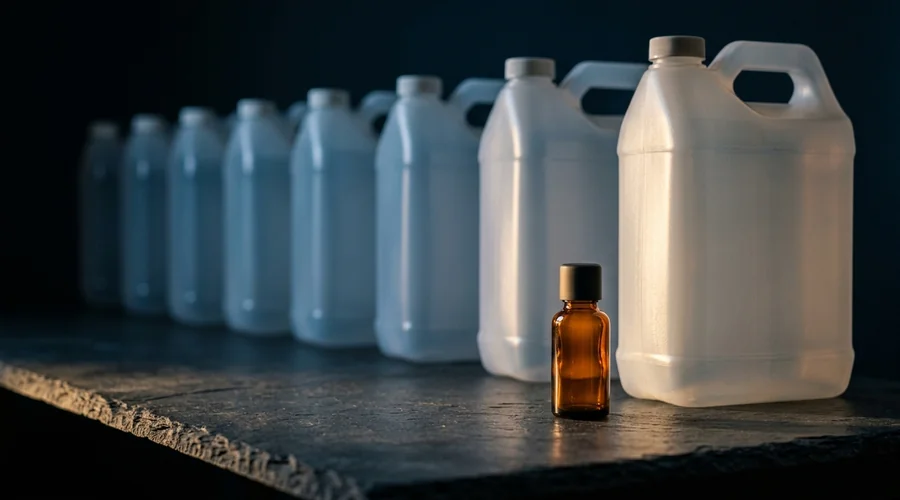
| Packaging per litre of finished cleaner | One large container per few litres | One small container per tens of litres |
| Warehouse and closet space | High — bulky stock | Low — compact concentrate |
| Chemical over-use | Common with free-pour | Removed by fixed-ratio dosing |
| Empty-container disposal | High volume of plastic waste | Sharply reduced |
| Up-front hardware and training | None | One-time dispenser and staff-training cost |
The one column that runs against concentrates is the last one: dispensers, installation, and training are a real up-front cost, and in a very small operation with low chemical volume they may not pay back quickly. In a school district, hospital system, or contract-cleaning business with steady volume across many sites, the freight and over-use savings recover that cost fast and then keep compounding. This is the same buy-the-platform logic behind setting up any liquid cleaning product manufacturing operation: the fixed cost is front-loaded, the per-unit saving is permanent.
What Goes Wrong: Failure Modes in Real Buildings
A dilution system that works perfectly on the bench can under-perform in a building for reasons that have nothing to do with the formula. The dispenser depends on a water supply the facility controls, a consumable the staff have to refill, and a procedure the staff have to follow. Each of those is a place the delivered dilution can drift away from the label value without anyone noticing until floors look dull or a disinfectant audit fails.
The failures that recur across sites, and what causes each:
- Water pressure out of range — venturi units are typically built around roughly 40 PSI; above that the water flow rises while chemical draw stays flat and the solution leans out, and below the rated range the unit may not draw concentrate at all
- Wrong or clogged metering tip — a tip swapped during cleaning, or partially blocked by scale or debris, shifts the ratio silently
- Air in the pick-up line — a cracked, kinked, or loose feed tube pulls air instead of concentrate, so the solution runs weak or empty
- Empty concentrate container — nobody swapped the bottle, and staff keep filling with near-plain water
- Dispenser bypass — a worker who thinks the machine is too slow pours concentrate straight into a bucket, defeating every control at once
- Wrong concentrate loaded — a neutral cleaner in the port that should hold a disinfectant, common where connections are not keyed
Most of these are invisible without a check on the finished solution. A quick titration with a supplier kit, a handheld refractometer reading, or a conductivity check against the expected value will catch a dispenser that has drifted. The parallel is our advice on floor cleaner dilution control: the label use-dilution is only real if the equipment is verified against it on a schedule.
Building a Cleaning Chemical Dilution System That Holds Up
The endpoint of this topic is not a single product or a single dispenser but a programme: the right concentrate range, matched hardware, a verification routine, and staff who understand why the machine exists. A manufacturer selling into institutional accounts has to deliver all four, because a great concentrate behind a badly specified dispenser and untrained staff will still generate complaints. A facility buyer has to demand all four for the same reason.
A decision framework for putting a programme together:
- Map the water first — measure inlet pressure and hardness at each site, because both decide which dispenser technology is viable and how the concentrate must be buffered and sequestered
- Match dispenser to duty — a plain venturi is fine where pressure is stable and controlled; specify a pressure-compensating pump or electronic dosing where pressure varies or the dilution is safety-critical
- Key the connections — physically different couplings for each concentrate stop the wrong-product error before it happens
- Set a verification schedule — decide the interval and method for checking delivered dilution, and log it so drift shows as a trend
- Train to the "why" — staff who understand that over-pour costs money and under-dose fails hygiene are far less likely to bypass the dispenser
- Align with the ecolabel — if the account needs a green-cleaning certification, confirm the concentrate packaging and closed-dispensing requirements up front
Certification is worth a closer look because it can make dilution control mandatory rather than optional. The EPA Safer Choice standard sets criteria for when a closed dilution control system is required. It also requires concentrated products to be in spill-resistant packaging that blocks access to the undiluted chemical, and requires the product to clean effectively at the most diluted manufacturer-recommended ratio. That last point ties the whole programme together. The use-dilution has to be a real, tested number, the concentrate has to be formulated to perform there, and the dispenser has to actually deliver it. Get those three aligned and a dilution system does exactly what it promises — the same correct clean, every bucket, at the lowest total cost.
Frequently Asked Questions
What is a cleaning chemical dilution system?
A cleaning chemical dilution system is the combination of a concentrated cleaner and the hardware that mixes it with water to a fixed ratio at the point of use. The concentrate ships in a small container, and a wall-mounted or portable dispenser draws a metered amount of it into a moving water stream, filling a spray bottle, bucket, or auto-scrubber with ready-to-use solution.
The two halves are designed together: the concentrate is formulated to stay stable and pourable at high strength, and the dispenser is set to deliver the exact use-dilution the formula was tested at. The goal is to give every worker the same correct strength every time, without anyone handling neat chemical or guessing at a pour.
How does a proportioning dispenser actually meter the concentrate?
The most common design is a venturi eductor. Water flowing through a narrowed throat speeds up and drops in pressure, and that low-pressure zone pulls concentrate up a pick-up tube and into the stream. A small colour-coded metering tip in the tube fixes how fast concentrate can enter, which sets the dilution ratio.
A larger tip lets more concentrate through and makes a stronger solution; a smaller tip makes a weaker one. Higher-end units add a mechanical or electronic water meter and a peristaltic or piston pump so the ratio holds even when line pressure changes, which a plain venturi cannot do.
Why do concentrates save money if you are just adding water on site?
The saving is real and comes from several places at once. A concentrate that dilutes 1:64 ships one truck where ready-to-use would need dozens, so freight and warehouse space per litre of finished cleaner collapse. Packaging drops the same way, because one small bottle replaces many large ones, and the empties that go to waste shrink with it.
Controlled dosing removes the routine over-pour that wastes ready-to-use product, so real consumption falls even before price is considered. Against those savings you carry the one-time cost of the dispensers and the training to use them, which is why concentrates pay off fastest in larger operations with steady volume.
Does a concentrate need a different formulation from a ready-to-use cleaner?
Yes, and treating it as a ready-to-use formula with less water is the classic mistake. At high active strength, surfactant systems can gel, cloud, or drop a layer that will not redisperse, and preservatives, dyes, and fragrances that are fine when dilute can salt out or destabilise the concentrate.
The formula has to be built and stability-tested at concentrate strength and then checked again at the in-use dilution, because a blend that looks perfect in the bottle can go hazy or lose performance once the dispenser has cut it with hard water. Freeze-thaw behaviour matters too, since concentrates are shipped and stored in small volumes that chill quickly.
What goes wrong most often with dilution systems in the field?
Water pressure outside the dispenser's design window is the most common problem. Venturi proportioners are typically designed around roughly 40 PSI, and above that the water flow rises while the chemical draw stays flat, so the solution leans out and under-doses. Below the specified range the unit may not draw concentrate at all.
The other frequent failures are a clogged or wrong-size metering tip, a cracked or kinked pick-up tube pulling air, an empty concentrate container that nobody swapped, and staff bypassing the dispenser to pour concentrate straight into a bucket. Periodic verification of the delivered dilution with a titration kit or refractometer catches most of these before they affect results.
How is the dilution ratio verified after installation?
You measure the finished solution, not the settings. A simple check is to dispense a known volume and weigh it or measure a property that tracks concentration, such as conductivity, refractive index on a handheld refractometer, or the result of a supplier-provided titration kit for acid or alkaline actives.
Compare that against the value the concentrate should produce at its rated ratio. If it is off, check line pressure first, then the metering tip and pick-up tube, then whether the right concentrate is loaded. Many facilities log this check on a schedule so drift is caught as a trend rather than as a failed audit.
Are dilution control systems required for any cleaning certifications?
Some ecolabels build them in. The EPA Safer Choice standard includes criteria for when a closed dilution control system is required and sets performance and safety requirements for that system, and it requires concentrated products to be in spill-resistant packaging that prevents access to the undiluted chemical.
It also requires the product to clean effectively at the most diluted manufacturer-recommended ratio, which is why the use-dilution has to be a tested, real number rather than a marketing figure. Green Seal and other institutional purchasing programmes take a similar line, favouring concentrates dispensed through controlled equipment.
Developing a Concentrate or Dilution Range?
Global Formulation provides cleaning product consultancy — dilutable concentrate formulation, two-point stability programmes, hard-water and freeze-thaw robustness, and dispenser compatibility for institutional and janitorial ranges.
Talk to Our Formulation Team