Controlled Release Fertilizer Coating: Polymer vs Sulphur
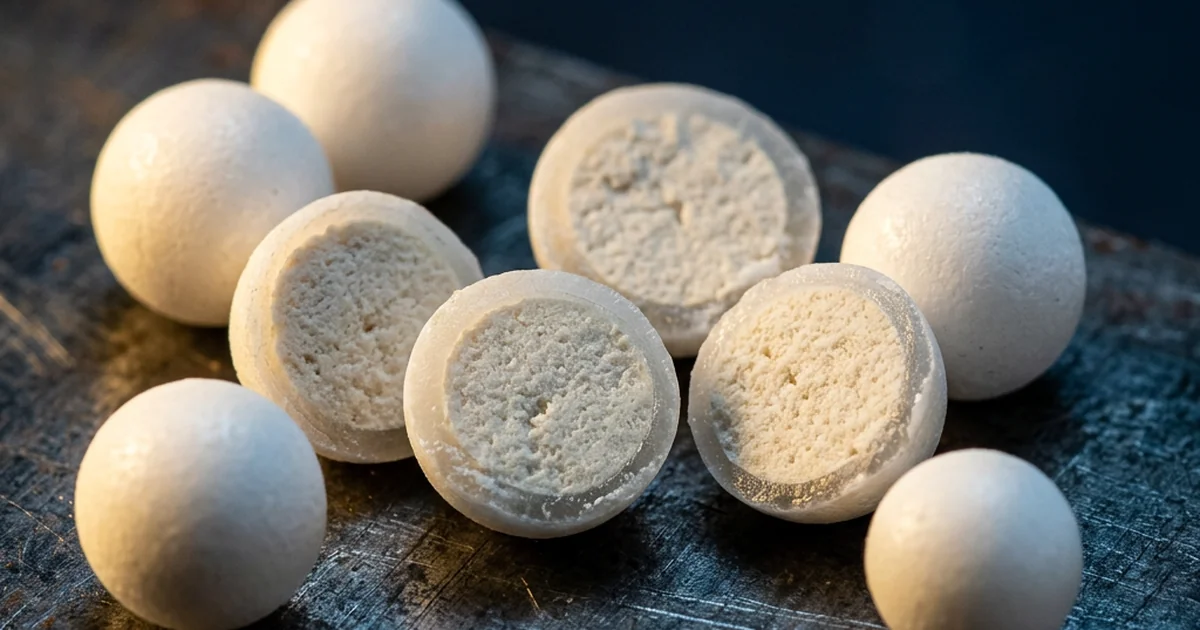
A conventional fertilizer dissolves quickly, but a crop takes up nutrients over weeks or months. The gap is lost to leaching, volatilisation and runoff, which costs money and harms water. A controlled release fertilizer closes the gap by wrapping each granule in a barrier that meters nutrient out over a stated time at a stated temperature. This guide explains how sulphur and polymer barriers work, how waterborne coatings are built, how release is tested and what field studies show. It also covers where the EU rules on coating polymers now stand. It draws on the IFA methods review, open-access coating studies and the Fertilising Products Regulation, with formulation support from Global Formulation.
Controlled Release Fertilizer Basics: Slow, Controlled and Stabilised
The terms slow-release, controlled-release and stabilised describe different technologies, and mixing them up leads to wrong specifications. The IFA review of analytical methods identifies four systems: stabilising agents, nutrient sources that must degrade, less soluble nutrient sources and coated fertilizers where the coating governs release. It borrows its definitions from the ISO vocabulary for fertilizers. This guide covers the coated family, which is where formulation skill matters most.
| Class | What Controls Release | Examples |
|---|---|---|
| Stabilised fertilizer | A chemical agent slows or suppresses the soil conversion of the nutrient | Urease and nitrification inhibitors added to urea or ammonium |
| Slow-release fertilizer | Hydrolysis, biodegradation or limited solubility spreads the available nutrient over time | Urea-formaldehyde, isobutylidene diurea, crotonylidene diurea |
| Controlled-release fertilizer | A coating meets a stated release rate and release time at a specified temperature | Polymer-coated and sulphur-coated urea |
The IFA review does not consider plain urea slow-release even though it must hydrolyse in soil, because urea hydrolyses quickly and part of the ammonia can volatilise. Slow-release urea condensates depend on microbial and hydrolytic breakdown, and their particle size and oligomer distribution set the pace. Coated products behave differently, since the coating is the control element. The next section explains how that control works.
How a Coated Fertilizer Releases Nutrients: Diffusion and Imperfections
A coated granule releases nutrient by letting water in and a concentrated solution out, not by opening a valve. Water permeates the barrier and dissolves part of the core, and the concentrated solution then diffuses out through the coating. The IFA review describes this for sulphur-coated urea, where the primary release route is permeation through imperfections in the sulphur layer followed by diffusion of concentrated urea solution.
- Sulphur coating — release depends on imperfections in the layer, and biological degradation of the sulphur can raise release at a later stage.
- Polymer coating — the coating acts as an inert material whose physical state the environment does not change, according to the same review.
- Temperature — higher temperature gives faster release from polymer coatings, so longevity must always be quoted at a temperature.
- Water — an excess of water does not change release from the coated granule, according to the same review.
- Longevity — generally the time to release 75 to 80 percent of a nutrient at a stated temperature.
Product ranges follow from this. Polymer-coated products use very thin layers, with coating thicknesses around 50 micrometres common, to meter nutrients over periods from about three weeks to about two years. Laboratory release at constant temperature is used to predict field performance. The sulphur family came first, and it shows why seal quality dominates.
Sulphur Coated Urea: A Cheap Barrier With an Imperfect Seal
Sulphur-coated urea was developed by the Tennessee Valley Authority from the 1960s because sulphur is a low-cost coating material that, once oxidised, also serves as a secondary nutrient. The weakness is the seal. Sulphur does not coat a urea granule perfectly, so the layer carries imperfections that set the release rate. Polymer-coated sulphur-coated urea was developed to seal those imperfections and to give tighter control.
- Wettability and adhesion — a 2025 paper notes that sulphur adheres poorly to the core and needs conditioning materials to improve sealing, which adds cost.
- Biological degradation — the sulphur layer can degrade biologically, which is harder to harmonise and test under controlled conditions.
- Initial release — testing for sulphur-coated products therefore focuses on initial release, which matters for quality and plant safety.
- Test method — the IFA review describes 20 g of product held in water at 38 °C for 24 hours and seven days. Release is found by total nitrogen or refractive index.
- Field translation — the review adds that there is no easy way to convert that laboratory result into field performance.
The sulphur route stays attractive where sulphur is a needed nutrient and cost matters. Where tighter and more predictable release is needed, the industry moved to polymers, which are the subject of the next section.
Polymer Coated Urea: Solvent, Reactive and Waterborne Routes
Polymer coatings offer a thin, continuous membrane that microorganisms attack less readily than sulphur. The IFA review dates the first polymer-coated products to the mid-1960s. A 2024 review of encapsulated fertilizers lists polyurethane, polysulfone, polyacrylonitrile, cellulose acetate, polyolefin and polyvinyl chloride among the common membrane polymers. The application route matters as much as the polymer.
| Route | How the Film Forms | Main Constraint |
|---|---|---|
| Solvent-borne polymer | Polymer dissolved in organic solvent, sprayed and dried | A 2025 paper says it depends on costly volatile organic solvents that harm the environment |
| Reactive polyurethane | Isocyanate and polyol components react to form a polyurethane membrane | Polyurethane is among the fertilizer membrane polymers listed in the 2024 review, with bio-based polyols under study |
| Waterborne latex | Water evaporates and particles fuse into a film, as in a latex paint | Needs a suitable glass transition and drying conditions in the coating bed |
The 2024 review also reports that increasing coating thickness and polymer concentration reduced the porosity of the coating in a study of polyacrylonitrile, polysulfone and cellulose acetate on NPK granules. Polysulfone gave the lowest release and cellulose acetate the highest, which the authors link to porosity and hydrophobicity. That result shows the two levers a formulator has: the polymer and the thickness. Research focus is shifting to waterborne systems, and the next section looks at how they are made.
Waterborne Coating in a Wurster Bed: Tg, Crosslinking and Post-Treatment
A waterborne latex coats a fertilizer in the same way it coats a wall: water leaves and particles fuse. The difference is that the substrate is a fluidised bed of hot granules and the film must be tight enough to meter nutrients for weeks. A Scientific Reports study notes that the Wurster fluidised bed is preferred over the pan, rotary drum and conventional fluidised bed because it gives rapidly drying coatings of uniform thickness. It also counts more than 20 operating parameters, including spray rate, fluidisation air velocity, atomising gas flow and gas temperature.
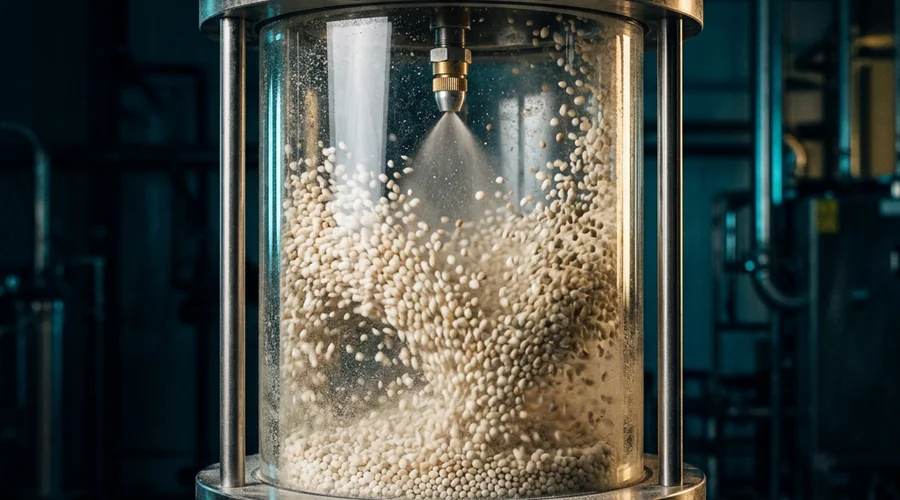
- Glass transition — a 2025 Polymers paper reports that a glass transition near 15 °C suits coating. A lower value promotes agglomeration among granules, and an overly high value gives a brittle membrane that resists cross-linking.
- Hard and soft monomers — the intermediate hard-to-soft ratio gave the lowest swelling and the slowest release of the three latexes tested.
- Cross-linking — adding a cross-linker cut swelling in the model films, which supports a tighter membrane.
- Slow release in the lab — the best latex held cumulative nitrogen release below 60 percent after 11 days in water at 40 °C.
Thermal post-treatment after coating also changes the release curve. The Scientific Reports study held a waterborne polyacrylate coating at three temperatures after the Wurster step and followed release in water at 25 °C. The table summarises what it found.
| Post-Treatment | Release Curve | Time to 80 Percent Release |
|---|---|---|
| 30 °C | Inverse "L": fast start | About 3 days, unchanged by longer treatment |
| 60 °C, 2 to 12 hours | "S" curve | About 7 to 10 days, rising with time; 24 hours added nothing |
| 80 °C, 2 to 4 hours | "S" curve | About 12 days |
| 80 °C, 8 to 24 hours | "S" curve | About 15 days |
The authors attribute the slower release to a more compact, smoother membrane and to more complete cross-linking. These are results for one latex and one core, so treat them as a demonstration of the mechanism and not as a recipe. Our post on capsule suspension microencapsulation covers a related shell-and-core approach for active ingredients. Bio-based shells push the same logic toward degradable materials.
Bio-Based and Biodegradable Coatings for Controlled Release
Bio-based coatings aim to keep the metering function while removing the persistent polymer. The 2024 review states that biodegradable polymers are considered more promising because they do not accumulate in soil. It adds that biocompatibility and low toxicity decide whether a polymer can be used, and that most coating materials are petrochemical products. The research it summarises covers several routes.
- Bio-based polyurethane — bio-based liquefied polyurethane and castor-oil polyurethane membranes, in one case with lignin-clay hybrids that build hydrophobic, tortuous diffusion paths.
- Modified plant-oil acrylates — poly-epoxidised soybean oil acrylate systems modified with stearic acid and magnesium hydroxide and cured by UV.
- Waterborne polyacrylate with biochar — referenced as a coating whose membrane was studied for biodegradation.
These are examples from the research literature, and a manufacturer needs commercial-scale release and degradation data before relying on them. For a manufacturer, the practical question is whether a bio-based coating can match the release longevity of a proven polymer and still pass the regulatory biodegradability test described below. Both questions depend on how release is measured.
Release Testing: EN 13266, ISO 18644 and Accelerated Methods
Release testing turns a coating into a number a customer can use, and the IFA review says all methods for polymer-coated products share one principle. A weighed amount of coated product sits in water at a set temperature, typically 25 °C or 30 °C, and release is followed over time. The European method EN 13266, the Japanese official method and a Chinese standard differ little. They place around 10 or 12.5 g of fertilizer in 200 to 500 mL of water and measure the nutrient released.
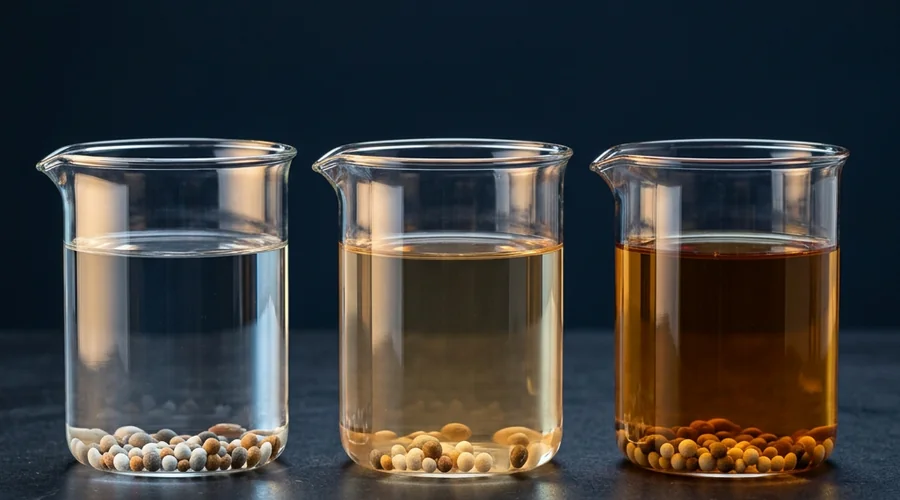
- Release criteria — the 2024 review quotes, at 25 °C, no more than 15 percent released in 24 hours and no more than 75 percent in 28 days. About 75 percent should be released by the declared release time.
- Accelerated testing — because release is sensitive to temperature, raising the temperature shortens the test, and EN 13266 describes an accelerated method.
- Conductivity shortcut — for non-urea coated products, electrical conductivity can stand in for nutrient concentration, though it averages over the nutrients.
- Longevity — set from the time to release 75 to 80 percent of a nutrient at the stated temperature.
- ISO 18644 — an ISO standard for controlled-release fertilizers, listed as a draft in the 2014 IFA review and now published as ISO 18644:2016.
The review concludes that good laboratory methods exist but that field release cannot always be predicted from them. That limit explains why field data matter, and the next section looks at them. A numerical longevity claim is only as good as the temperature and test it quotes.
Field Performance: Nitrogen Use, Emissions and Yield
The case for coated fertilizer rests on nitrogen use efficiency and environmental losses, not always on yield. A 2024 meta-analysis of 76 peer-reviewed studies found that coated urea under field conditions reduced nitrous oxide emissions by 48.67 percent and raised nitrogen use efficiency by 58.72 percent. Crop yields, however, were not significantly higher. The authors conclude that site-specific soil and climate conditions should guide use.
- Soil pH — a significant reduction in nitrous oxide and ammonia losses was evident on soils with pH above 5.5.
- Polymer-coated urea — it reduced methane and nitrous oxide emissions and ammonia losses, at the expense of higher carbon dioxide emissions.
- Rice — it was the only crop that showed reductions in carbon dioxide, methane, nitrous oxide and ammonia losses.
- Mismatch — the application did not correspond with higher yields despite lower emissions and improved efficiency.
For a formulator, the message is to sell nutrient efficiency and loss reduction with data, not to promise a yield bump. Our posts on NPK fertilizer formulation and water soluble fertilizer for fertigation cover the uncoated alternatives that coated products compete with. The environmental side of the coating itself is the next issue.
Microplastics, Biodegradability and the EU Rules
A coated granule leaves a shell behind, and the shell is a polymer. Studies in Japanese paddy fields, where polymer-coated fertilizer is widely used, show where those shells go. A 2025 study at 38 sites found that 61 to 100 percent of microcapsule runoff during the irrigation period occurred between puddling and rice transplanting. It estimated total accumulation on Japanese agricultural land at 75,623 t.
- Coastal fate — a 2026 beach survey identified the fertilizer-derived microplastics as polyethylene and polyurethane, and beaches directly connected to paddy drainage retained 27.9 percent of the applied amount.
- EU purpose limit — under the Fertilising Products Regulation, polymers other than nutrient polymers can be used only for defined purposes. One purpose is to control water penetration and thus nutrient release, and such a polymer is called a coating agent.
- Original deadline — the original CMC 9 text required these polymers to meet biodegradability criteria from 16 July 2026 and barred them if no criteria existed.
- Delegated criteria — compliance summaries report that Delegated Regulation (EU) 2024/2770 set the criteria, with application from 17 October 2028.
The legal text is Regulation (EU) 2019/1009, available on EUR-Lex, and the compliance tracker used here is a third-party summary. Fertilizers Europe states that controlled-release fertilizers are outside the REACH microplastics restriction because the Fertilising Products Regulation covers them. Regulation therefore shapes the coating chemistry as much as release does.
Choosing a Coating System: A Decision Sequence
A coating decision balances release duration, cost, regulation and process. Start with the release target, because it fixes the barrier thickness and chemistry. Then check the process route, the test method and the legal status of the polymer. The sequence below turns the earlier sections into a repeatable screen.
- State the release target — nutrient, duration and the temperature at which longevity is quoted.
- Choose the barrier — sulphur for cost and sulphur value, polymer for tighter control, bio-based where degradability is the priority.
- Pick the application route — solvent-borne, reactive or waterborne, weighing solvent emissions and film formation.
- Tune the film — glass transition, cross-linking and thermal post-treatment in the coating bed.
- Test release — EN 13266 or ISO 18644 at the declared temperature, plus an accelerated method for screening.
- Check the regulation — the coating-agent rules in the EU Fertilising Products Regulation and any national requirement.
- Plan the evidence — nutrient efficiency and loss data from field trials in the target soil and climate.
The sequence produces a shortlist, not a recipe. Pilot coating on the real granule then settles the choice.
Working With an Agrochemical Formulation Consultant
Controlled-release products combine polymer science, coating engineering, agronomy and regulation, so a project spans several disciplines at once. An agrochemical formulation consultant joins those strands into one plan. The aim is a coated product whose release curve is repeatable and whose polymer passes the regulatory test. Agrochemical product development services then carry the plan into pilot coating and production.
- Barrier selection — sulphur, polymer or bio-based coatings matched to the release target and market.
- Coating process development — spray, drying and post-treatment parameters set on a pilot bed.
- Release programme — standard and accelerated tests planned against EN 13266 or ISO 18644.
- Regulatory mapping — coating-agent rules, biodegradability evidence and labelling for each market.
- Field evidence — trial design that measures nitrogen use efficiency and losses.
- Scale-up and transfer — handover to a contract formulation agrochemical manufacturer with defined specifications.
The full range of services sits under agro chemicals, and our guides to starting a liquid fertilizer manufacturing unit and agrochemical manufacturing cover equipment and economics. Before approaching a consultant, collect your target crops, soil and climate range, and release duration. Those three inputs decide which coating system is realistic.
Frequently Asked Questions
What is a controlled release fertilizer?
A controlled release fertilizer is one in which nutrient release is controlled, meeting a stated release rate and a stated release time at a specified temperature. The ISO vocabulary used by the IFA describes it as a fertilizer coated with a polymeric coating.
It differs from a slow-release fertilizer, which spreads nutrient availability through hydrolysis, biodegradation or limited solubility. Stabilised fertilizers are a third class, where an agent slows the soil conversion of the nutrient.
How does a coated fertilizer release nutrients?
Water permeates the coating and dissolves part of the core, and the concentrated solution then diffuses out. For sulphur-coated urea, the IFA review describes permeation through imperfections in the sulphur layer followed by diffusion of concentrated urea solution.
For polymer coatings, release depends on temperature and water availability, and an excess of water does not change it. Longevity is generally the time to release 75 to 80 percent of a nutrient at a stated temperature.
What is the difference between sulphur coated urea and polymer coated urea?
Sulphur-coated urea was developed by the Tennessee Valley Authority from the 1960s and uses a low-cost coating that also supplies sulphur after oxidation. Its release depends on imperfections in the sulphur layer, and the layer can degrade biologically.
Polymer coatings appeared in the mid-1960s and use very thin layers, with coating thicknesses around 50 micrometres common. They give tighter control, and release periods range from about three weeks to about two years.
Why does temperature matter for controlled release fertilizer?
Release from polymer-coated products is sensitive to temperature, and higher temperatures give faster release. A longevity figure is therefore meaningless unless it states the temperature at which it was measured.
The same sensitivity allows accelerated testing, because raising the temperature shortens the test. EN 13266 describes such an accelerated method.
How is controlled release measured in the laboratory?
For polymer-coated products, a weighed sample sits in water at a set temperature, typically 25 °C or 30 °C, and release is followed over time. The European EN 13266 method, the Japanese official method and a Chinese standard place around 10 or 12.5 g of fertilizer in 200 to 500 mL of water.
Sulphur-coated urea is tested with 20 g of product in water at 38 °C for 24 hours and seven days. The IFA review notes that laboratory results do not convert easily into field performance.
Do coated fertilizers increase crop yield?
Not reliably. A 2024 meta-analysis of 76 studies found that coated urea reduced nitrous oxide emissions by 48.67 percent and raised nitrogen use efficiency by 58.72 percent. Crop yields were not significantly higher.
The authors conclude that soil and climate conditions should guide use. Sell the efficiency and loss reduction with data rather than promising a yield increase.
What do EU rules say about coating polymers in fertilizers?
Under Regulation (EU) 2019/1009, polymers other than nutrient polymers can be used only for defined purposes, including controlling water penetration and nutrient release as a coating agent. The original text required these polymers to meet biodegradability criteria from 16 July 2026.
Compliance summaries report that Delegated Regulation (EU) 2024/2770 set the criteria, with application from 17 October 2028. The Official Journal text was not available for this guide, so confirm the date, the test and any transition with the legal text.
How can an agrochemical formulation consultant help with a coated fertilizer?
A consultant helps select the barrier, set the coating process parameters on a pilot bed and plan standard and accelerated release tests. They also map the coating-agent rules and the biodegradability evidence for each market.
Agrochemical product development services then cover pilot coating, field evidence design and transfer to a contract formulation agrochemical manufacturer.
Developing a Coated Fertilizer or Fixing a Release Curve?
Global Formulation supports agrochemical and fertilizer makers with barrier selection, coating process development, release testing and transfer to a contract manufacturing partner.
Talk to Our Formulation Team