Cool Roof Coating Chemistry: Reflective Pigments & Energy Savings
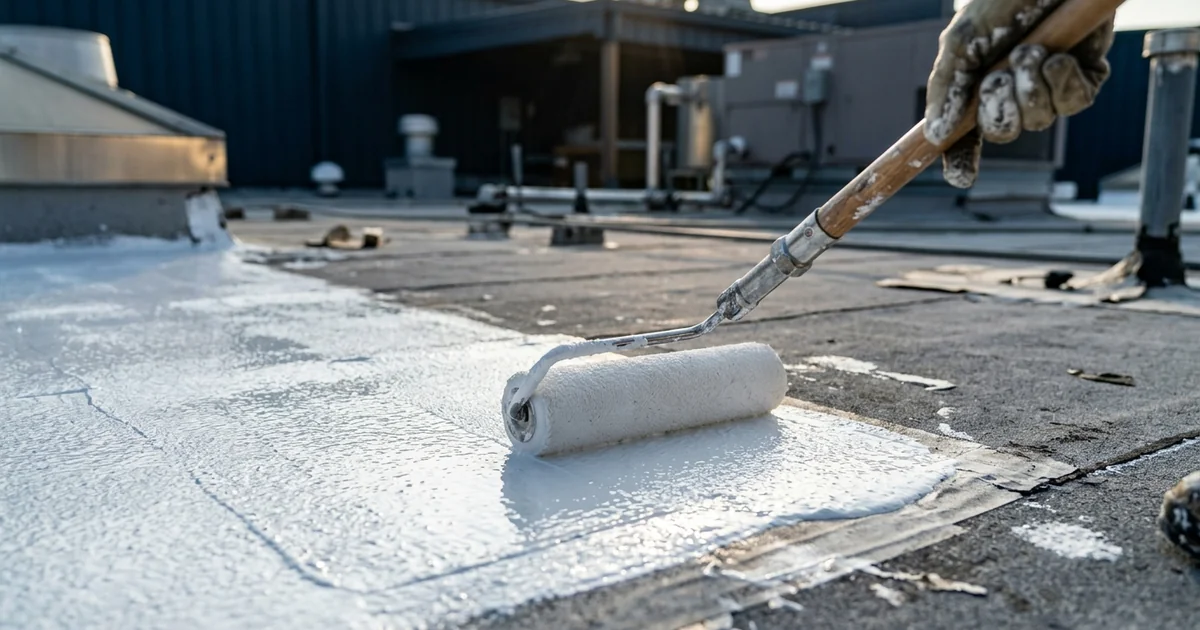
A dark, unprotected commercial roof can reach surface temperatures of 150-190°F under summer sun, and that heat does not stay on the roof. It conducts straight through the membrane into the building envelope, driving cooling loads up and shortening the service life of the roofing material itself. Cool roof coating chemistry exists to break that cycle, and getting it right is a genuine materials-science problem, not just a matter of choosing a light color. This guide explains how titanium dioxide and infrared-reflective pigment systems actually work, why binder selection matters as much as pigment choice, how solar reflectance index and total solar reflectance are measured and rated, and what causes a coating's reflectance to fade in the field. It draws on the same formulation discipline we apply across our paints and coatings consulting work, written for engineers and entrepreneurs specifying or manufacturing reflective roof systems rather than academics studying optics in isolation.
Why Roof Surface Temperature Is a Chemistry Problem
Sunlight reaching a roof surface splits roughly into three bands: ultraviolet, visible light, and near-infrared, and the near-infrared band alone carries close to half of the sun's total energy despite being invisible to the human eye. A conventional dark roof coating absorbs most of that energy across all three bands and converts it to heat, which is why color alone is an incomplete predictor of how hot a roof gets. A coating's actual thermal performance depends on how much total solar energy it reflects versus absorbs, and separately, how efficiently it releases whatever energy it does absorb back into the atmosphere.
- Solar reflectance — the fraction of total incoming solar energy (UV, visible, and near-infrared combined) a surface reflects rather than absorbs
- Thermal emittance — how efficiently a surface radiates absorbed heat back outward rather than retaining it
- Membrane life — lower surface temperatures reduce the thermal cycling stress that drives membrane cracking and seam failure
- Urban heat island effect — reflective roofing at scale measurably lowers ambient city temperatures, which is why many municipal codes now mandate minimum roof reflectance
Every property covered in the rest of this guide — pigment selection, binder chemistry, and the reflectance ratings themselves — exists to control those two variables. That is the lens to apply when evaluating any cool roof coating claim.
Reflective Pigment Chemistry: TiO2 and Infrared-Reflective Systems
Titanium dioxide (TiO2) is the workhorse white pigment behind most high-reflectance roof coatings, prized for its exceptionally high refractive index, which scatters visible light efficiently and gives conventional white coatings their strong solar reflectance. Rutile-grade TiO2, the more thermally stable of the two common crystal forms, is the standard choice for exterior durability because it resists the chalking and UV-driven degradation that anatase-grade TiO2 is more prone to over years of outdoor exposure. Particle size and dispersion quality both matter here — poorly dispersed TiO2 scatters light less efficiently and delivers lower reflectance than the same pigment loading properly dispersed through the binder.
Not every reflective roof needs to be white. Infrared-reflective pigment technology, built around complex inorganic pigments and specialized iron oxide or mixed-metal-oxide chemistries, allows a coating to absorb visible light — appearing as a standard architectural color — while still reflecting a substantial share of near-infrared energy. This works because a pigment's visible-light absorption and its near-infrared reflectance are governed by largely separate parts of its optical response, so formulators can tune a pigment package to look dark or colored to the eye while still rejecting the invisible energy that actually drives roof heating.
Pigment selection sets the reflectance ceiling a coating can reach, but the binder resin carrying that pigment determines whether the coating holds onto that reflectance — and survives the roof — for years rather than months.
Binder Systems: Acrylic vs Silicone Elastomerics
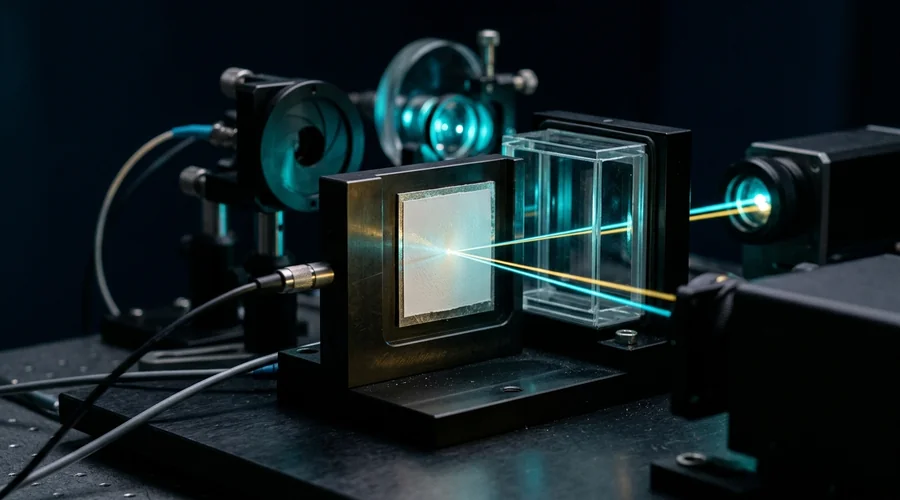
The binder resin is what turns loose pigment into a continuous, weatherproof film, and the two dominant chemistries in this category — acrylic and silicone elastomerics — trade off differently against roof slope, ponding water, and cost. Both are formulated as elastomeric systems specifically because roofing membranes expand and contract significantly across daily and seasonal temperature swings, and a rigid, non-elastic coating would crack under that movement long before its reflectance ever degraded.
Acrylic elastomeric coatings are water-based emulsion systems that cure through water evaporation and polymer particle coalescence into a continuous film. They offer solid UV stability, good reflectance retention, and lower material cost, which makes them the dominant choice across sloped and moderately draining roofs where standing water is not a persistent condition. Silicone coatings use a fundamentally different backbone chemistry — a siloxane structure that does not hydrolyze the way an acrylic ester linkage can under sustained water contact — which gives silicone systems markedly better resistance to ponding water and long-term hydrolysis on low-slope and flat roofs where rainwater can sit for days.
Neither binder chemistry is universally correct — the roof's slope, drainage, and ponding history should drive that decision before pigment package or color ever enters the conversation. Once a binder and pigment package are chosen, the coating's actual performance still has to be proven through standardized measurement.
How TSR and SRI Are Actually Measured
Total solar reflectance (TSR) and Solar Reflectance Index (SRI) are not marketing terms — they are standardized, testable values defined by ASTM methods, and understanding how they are measured explains why two coatings that look identical in color can carry very different ratings. TSR is measured using a solar spectrum reflectometer or spectrophotometer under ASTM C1549 or ASTM E903, producing a single value from 0 to 1 that represents the fraction of total solar energy across the UV, visible, and near-infrared bands that the surface reflects.
Solar Reflectance Index, defined under ASTM E1980, combines both reflectance and thermal emittance into one composite score scaled so that standard black sits at 0 and standard white sits at 100. Because SRI folds in emittance as well as reflectance, it is the more complete performance indicator, and it is the metric most cool roof building codes, California Title 24, and green building rating systems like LEED actually reference in their compliance thresholds rather than reflectance alone.
| Metric | What It Measures | Test Standard | Typical Compliance Use |
|---|---|---|---|
| Solar Reflectance (TSR) | Fraction of total solar energy reflected (0-1 scale) | ASTM C1549 / ASTM E903 | ENERGY STAR minimums, product datasheets |
| Thermal Emittance | Efficiency of releasing absorbed heat as infrared radiation | ASTM C1371 | Combined with reflectance for SRI calculation |
| Solar Reflectance Index (SRI) | Composite score combining reflectance and emittance (0-100+ scale) | ASTM E1980 | Building codes, LEED, Title 24 compliance |
A coating's initial rating tells a specifier what it can achieve fresh out of the can — it does not guarantee what the roof will actually deliver three summers later, which is exactly the gap the next section addresses.
Why Reflectance Fades — and How Formulation Slows It
Every cool roof coating loses some reflectance over time in the field, and understanding why separates a coating that is genuinely underperforming from one that is aging as expected. Reflectance loss comes from three main mechanisms working simultaneously: surface soiling from airborne dirt and particulates settling into the film's microtexture, chalk formation as UV radiation slowly degrades the binder resin at the surface, and biological growth such as algae or lichen colonizing a damp, nutrient-rich film surface over years of exposure.
- Surface soiling — airborne dirt embeds in film microtexture; slowed by smoother, harder-curing binder formulations
- Binder chalking — UV degrades resin at the surface, releasing loose pigment particles that scatter light differently; slowed by UV-stabilized binder packages
- Biological growth — algae and lichen colonize damp film surfaces; addressed with algicide/fungicide additive packages in the coating formulation
- Pigment loading and dispersion quality — under-pigmented or poorly dispersed films lose hiding power and reflectance faster as the film weathers
This is precisely why credible cool roof rating programs, including ENERGY STAR and the Cool Roof Rating Council, require both an initial reflectance value and a three-year-aged reflectance value measured on field-exposed samples, rather than certifying a product on its out-of-can performance alone. A coating with a modest initial rating but strong aged-reflectance retention will often outperform a higher-initial-rating coating with poor durability, over the roof's actual service life.
Application Practice and Qualification Standards
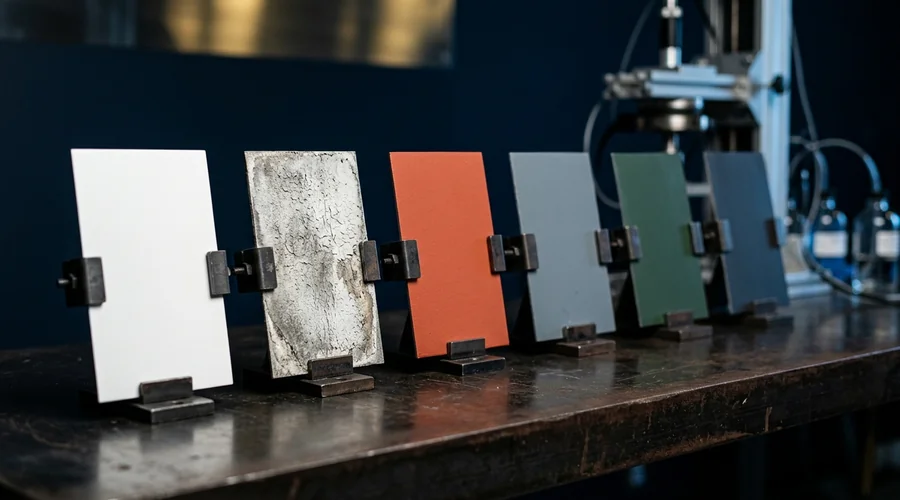
A correctly formulated cool roof coating can still underperform badly if it is applied over a poorly prepared substrate, which makes application practice as important to final performance as the chemistry itself. Surface preparation — cleaning the membrane of dirt, oils, and biological growth, priming any bare metal to prevent flash rusting under the coating film, and confirming the substrate is fully dry before application — resolves the majority of field adhesion failures reported across roof coating projects. Dry film thickness matters just as much: an under-applied coating will not reach its rated reflectance or its warrantied service life, regardless of how well-formulated the product is.
Compatibility between the coating and the existing membrane, whether single-ply, modified bitumen, metal, or built-up roofing, has to be confirmed before specification, since not every elastomeric chemistry bonds equally well to every substrate. This same materials-compatibility discipline runs through other reflective and protective coating categories — the surface-prep principles overlap closely with what we cover in our guide to heat-resistant silicone coatings, and the underlying corrosion-protection logic parallels our guide to anti-corrosion coating systems, where substrate preparation is likewise the single biggest determinant of field performance.
Getting application right converts a coating's laboratory-rated reflectance into real, measurable rooftop performance — the gap between the two is almost always a process failure, not a formulation failure.
Frequently Asked Questions
What makes a coating a "cool roof" coating?
A cool roof coating is formulated to reflect a high proportion of incoming solar radiation, including the near-infrared band that carries roughly half of the sun's energy but is invisible to the eye, rather than absorbing it as heat. That performance is quantified through two standardized metrics: solar reflectance, the fraction of total solar energy reflected, and thermal emittance, how efficiently the surface releases absorbed heat back into the atmosphere.
A roof coating typically needs an initial solar reflectance of at least 0.65 and thermal emittance of at least 0.75 to qualify under ENERGY STAR and most cool roof rating programs, though specific thresholds vary by program and roof slope.
What is the difference between TSR and SRI for roof coatings?
Total solar reflectance (TSR) is a single measured value describing what fraction of incoming solar energy across the full spectrum a surface reflects, expressed from 0 to 1. Solar Reflectance Index (SRI), defined in ASTM E1980, combines both solar reflectance and thermal emittance into one composite number scaled so standard black is 0 and standard white is 100, which makes it possible to compare wildly different coating chemistries on a single scale.
SRI is the metric most cool roof codes and green building rating systems actually reference, because two coatings with identical reflectance can still perform differently if their emittance differs.
Why do some cool roof coatings stay reflective longer than others?
Reflectance loss over time is driven primarily by surface soiling, chalk formation from binder UV degradation, and biological growth like algae or lichen, all of which reduce the coating's ability to bounce solar energy back before it converts to heat. Coatings built on higher-quality acrylic or silicone binders with good UV and dirt-pickup resistance retain more of their initial reflectance after three years of field exposure than lower-cost binder systems.
That is why cool roof rating programs require both initial and three-year-aged reflectance data rather than certifying on initial performance alone.
Can cool roof coatings be tinted colors other than white?
Yes. Infrared-reflective pigment technology allows a coating to absorb visible light and therefore appear as a standard color while still reflecting most of the near-infrared radiation that drives roof surface heating, since infrared reflectance and visible color are governed by largely separate parts of the pigment's optical response.
These "cool color" formulations cannot match the total solar reflectance of a bright white coating because they still absorb a meaningful share of visible-band energy, but they deliver a substantial reflectance improvement over conventional dark pigments of the same shade, which matters for architectural specifications where white is not acceptable.
What is the difference between acrylic and silicone cool roof coatings?
Acrylic elastomeric coatings are water-based, cure by evaporation and coalescence, and offer good UV stability and reflectance retention at a lower material cost, making them the dominant choice for sloped and moderately ponding roof conditions. Silicone coatings resist ponding water and hydrolysis far better than acrylics because their backbone does not hydrolyze the way an acrylic ester linkage can, which makes them the preferred chemistry for low-slope and flat roofs where water can sit for extended periods after rain.
Silicone coatings do pick up dirt more readily than acrylics in some field studies, so the choice usually comes down to roof slope and drainage rather than reflectance alone.
How much energy can a cool roof coating actually save?
The Department of Energy's Oak Ridge National Laboratory and related field studies have documented cooling energy reductions in the range of 10-30% for buildings in hot climates after a cool roof retrofit, with the exact figure depending heavily on climate zone, existing roof color and insulation level, and building use pattern.
Buildings in already well-insulated, temperate, or cold-dominated climates see smaller savings and may even see a modest winter heating penalty, which is why energy modeling tools like the DOE's Cool Roof Calculator are used to evaluate a specific building and climate rather than applying a single blanket savings figure.
Do cool roof coatings work on any existing roof substrate?
Most elastomeric cool roof coatings are formulated for application over single-ply membranes, modified bitumen, metal, and properly prepared built-up roofing, but substrate compatibility has to be verified before specification because adhesion failure is one of the most common field problems in roof coating projects.
Surface preparation, including cleaning, priming bare metal to prevent flash rusting, and confirming the substrate is fully dry, has a bigger influence on long-term coating performance than the coating chemistry itself, since even a correctly formulated coating will fail prematurely over a poorly prepared substrate.
Developing or Sourcing Reflective Roof Coatings?
Global Formulation provides paints and coatings consultancy — pigment package selection, binder chemistry, and reflectance qualification support for cool roof coating manufacturers.
Talk to Our Formulation Team