Cosmetic Preservative Systems: Paraben Alternatives Compared
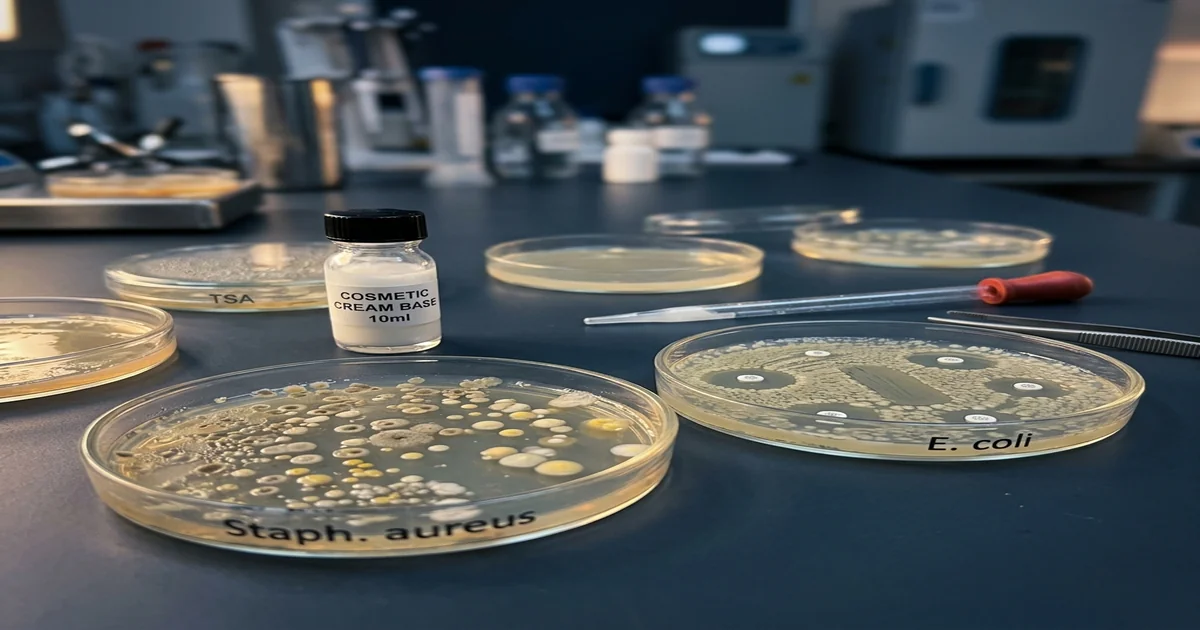
A brand's "clean beauty" moisturiser sails through internal QC, launches, and then comes back from a retail partner three months later with visible mould growth in half the returned units. The formulator did nothing obviously wrong — the emulsion was stable, the pH was on spec — but the cosmetic preservative system they chose to satisfy a paraben-free marketing claim simply was not strong enough for the product's actual contamination risk. This scenario plays out more often than most brands admit, because preservative selection sits at the uncomfortable intersection of consumer marketing pressure and hard microbiology, and getting it wrong is not a cosmetic defect — it is a safety failure. This article walks through why parabens became controversial, what the real alternative classes are and how they actually perform, and how broad-spectrum efficacy is verified through challenge testing rather than assumed from an ingredient list. Global Formulation's cosmetic formulation consultancy has guided brands through exactly this paraben-free reformulation process, balancing marketing positioning against the non-negotiable requirement that a finished product must pass a validated challenge test before it ships.
Why Cosmetic Preservation Is a Safety Requirement, Not an Option
Every water-containing cosmetic formulation is a potential growth medium for microorganisms, and an unpreserved or under-preserved product is not a hypothetical risk — it is a predictable outcome once the product leaves a controlled manufacturing environment. Consumers open jars with unwashed hands, leave caps off in humid bathrooms, and store products for months past the point a lab would consider them fresh, and the preservative system is the only thing standing between that real-world handling and microbial contamination that can cause skin infections, eye infections, or systemic illness in vulnerable users. Regulators treat this as a core safety obligation rather than a formulation preference, which is why frameworks like EU Cosmetics Regulation (EC) No 1223/2009 require a documented microbiological safety assessment and preservative efficacy data as part of every product's safety file.
- Contamination risk sources — raw material bioburden, manufacturing environment, and in-use consumer handling.
- Organism categories requiring coverage — Gram-positive bacteria, Gram-negative bacteria, yeasts, and moulds.
- Regulatory expectation — a validated challenge test result, not a supplier claim, must support the preservative system.
- Consequence of failure — product recalls, adverse event reports, and in serious cases, documented consumer harm.
Understanding preservation as a safety system rather than a formulation afterthought reframes the entire paraben-alternatives conversation — the question is never simply "is this ingredient popular with consumers," but "does this system reliably protect the finished product." That framing is exactly why the shift away from parabens deserves closer scrutiny than the marketing narrative usually provides.
The Paraben Question: Regulation vs Perception
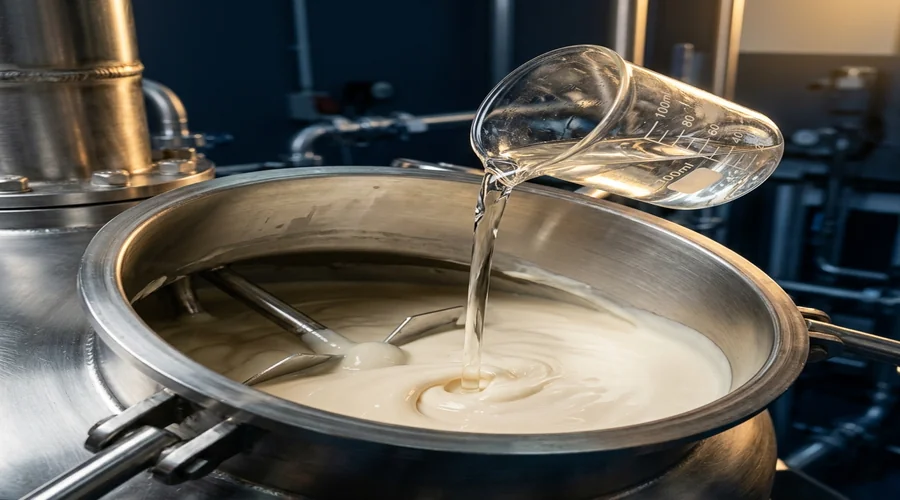
Parabens — methylparaben, ethylparaben, propylparaben, and butylparaben among them — remain some of the most extensively studied and effective broad-spectrum preservatives available to formulators, which makes their fall from favour a useful case study in how consumer perception can outpace the underlying science. EU Regulation (EC) No 1223/2009 restricted a handful of longer-chain parabens and capped concentrations for the most common short-chain variants, but it did not ban methylparaben or ethylparaben outright, reflecting a regulatory judgment that these specific molecules remain acceptable at controlled concentrations. Public concern, driven substantially by early 2000s studies linking parabens to endocrine activity in laboratory settings, created sustained consumer demand for paraben-free products well beyond what the regulatory restrictions themselves required.
| Paraben | EU Regulatory Status | Formulator Notes |
|---|---|---|
| Methylparaben | Permitted, concentration-capped | Broad-spectrum, well-characterised, low sensitisation rate |
| Ethylparaben | Permitted, concentration-capped | Similar profile to methylparaben |
| Propylparaben / Butylparaben | Permitted, combined-use cap applies | Often paired with methylparaben for spectrum coverage |
| Isopropyl-, isobutyl-, phenyl-, benzyl-, pentylparaben | Restricted / not permitted | Largely phased out of EU formulations |
The practical lesson for formulators is that "paraben-free" is a brand positioning decision, not a mandatory safety upgrade — but once a brand commits to that positioning, the replacement system has to work at least as well as the parabens it displaces, which raises the real technical question of what those alternatives actually are.
Paraben Alternative Classes and How They Actually Perform
Formulators reaching for paraben alternatives are choosing among several distinct chemical classes, each with its own spectrum of activity, pH sensitivity, and regulatory concentration limits, and none of them is a true drop-in replacement for the broad, well-balanced activity parabens provide. Phenoxyethanol has become the most common single substitute, offering solid activity against bacteria and reasonable yeast coverage, but it typically needs a co-preservative to shore up mould protection at cosmetically acceptable use levels. Organic acids such as benzoic acid, sorbic acid, and dehydroacetic acid provide useful antimicrobial activity but depend heavily on formulation pH, since only their un-ionised form is antimicrobially active — a constraint that becomes a serious limitation in near-neutral pH products.
- Phenoxyethanol — broad bacterial and moderate fungal activity; commonly paired with a co-preservative for full-spectrum coverage.
- Organic acids (benzoic, sorbic, dehydroacetic) — pH-dependent activity; effective mainly below pH 5–6.
- Alcohols (benzyl alcohol, ethylhexylglycerin) — moderate standalone activity; often used as boosters within a blend.
- Multifunctional/plant-derived actives — variable, generally weaker standalone efficacy; require rigorous challenge-test validation, not marketing claims, before relying on them as a primary system.
No single alternative from this list reliably replicates a paraben blend's balanced spectrum on its own, which is the central technical reality that marketing-led reformulation briefs often gloss over. That gap is exactly why the next question — how to actually design for broad-spectrum coverage rather than relying on one ingredient — determines whether a paraben-free reformulation succeeds or quietly underperforms.
Designing for Broad-Spectrum Coverage
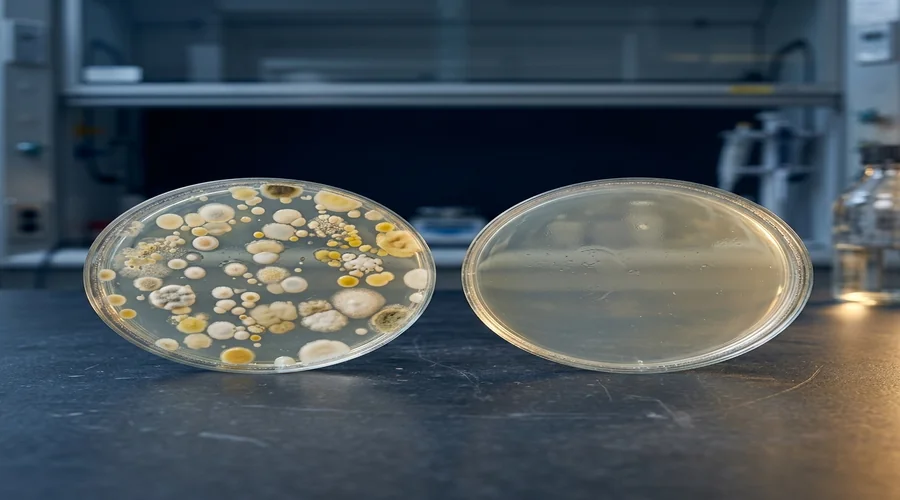
Broad-spectrum preservation is achieved through deliberate combination chemistry, not through finding one exceptionally powerful ingredient, because bacteria, yeasts, and moulds respond to fundamentally different antimicrobial mechanisms. A well-designed system typically pairs an ingredient with strong antibacterial activity against a second ingredient with strong antifungal activity, then adds a chelating agent such as EDTA or sodium phytate to weaken microbial cell membranes and improve the primary actives' penetration. This layered-mechanism approach is standard practice across the industry precisely because it closes the gaps that any single preservative class leaves open, and it is described in general terms in resources like the National Center for Biotechnology Information's microbiology literature on antimicrobial combination strategies.
| System Component | Role | Typical Function |
|---|---|---|
| Primary antibacterial | Gram-positive and Gram-negative coverage | Phenoxyethanol, benzyl alcohol |
| Primary antifungal | Yeast and mould coverage | Sorbic acid, dehydroacetic acid derivatives |
| Chelating agent | Membrane permeabiliser, booster | Disodium EDTA, sodium phytate |
| Multifunctional booster | Supplements spectrum gaps | Ethylhexylglycerin, caprylyl glycol |
Reading a preservative blend's technical data sheet in isolation tells a formulator only part of the story — the combination has to be tested inside the actual finished formulation, since interactions with surfactants, emulsifiers, and actives can meaningfully change real-world performance. That gap between supplier data and finished-product reality is exactly what preservative efficacy challenge testing exists to close.
Preservative Efficacy Challenge Testing: Proving the System Works
A preservative efficacy challenge test is the only reliable way to confirm that a specific formulation, at its specific pH and in its specific packaging, actually delivers the antimicrobial performance its ingredient list suggests on paper. The standard protocol, harmonised internationally under ISO 11930, inoculates the finished product with defined concentrations of representative bacteria, yeast, and mould strains, then tracks the log reduction in viable organisms at set intervals — commonly days 2, 7, 14, and 28 — against pass/fail criteria specific to each organism category. A formulation that fails to hit the required log-reduction targets at any checkpoint has not demonstrated adequate preservation, regardless of how well-regarded the individual preservative ingredients are reputed to be.
- Inoculation — the finished product is spiked with standardised microbial challenge strains at a defined concentration.
- Interval sampling — viable organism counts are measured at fixed time points, typically through 28 days.
- Log-reduction assessment — results are compared against ISO 11930 or USP <51> pass/fail criteria per organism class.
- Pass/fail determination — any organism category missing its required reduction target constitutes a formulation failure.
A passing challenge test is the closest thing the industry has to objective proof that a preservative system works in that exact product — and it is also the point at which a marketing team's paraben-free ambitions meet the hard limits of formulation chemistry. Even a passing result, though, can be undone by variables in the surrounding formulation that have nothing to do with the preservative blend itself.
Formulation Variables That Change Preservative Performance
Preservative efficacy is never purely a function of the preservative blend's concentration — pH, water activity, raw material bioburden, and packaging format all interact with the preservative system in ways that can push a marginal formula from passing to failing. Organic acid preservatives lose meaningful activity as pH rises past their effective range, natural extracts and clays can carry contaminating bioburden into a batch or bind and inactivate a portion of the preservative, and jar packaging exposes a product to repeated finger contact that an airless pump never sees. Formulators building a preservative-free or reduced-preservative narrative around packaging innovation, such as airless dispensing, still need challenge-test data specific to that packaging, since regulators and retail partners will not accept a packaging claim as a substitute for microbiological evidence.
- pH — determines the active, un-ionised fraction of organic acid preservatives available to inhibit microorganisms.
- Water activity — low-water formulations reduce microbial growth potential but rarely eliminate it entirely.
- Raw material bioburden — natural extracts, botanicals, and clays can introduce contamination before preservation even begins.
- Packaging format — jars carry materially higher in-use contamination risk than airless pumps or pump-dispensed bottles.
Treating the preservative blend as one variable among several — rather than the entire solution — is what separates a formulation that reliably passes challenge testing from one that passes once under ideal lab conditions and then fails in the field. Brands developing paraben-free lines through our cosmetics and personal care formulation services get this full-system view built into the reformulation process from the start, rather than discovering packaging or pH conflicts after a failed retail-partner audit.
Frequently Asked Questions
Why did parabens fall out of favour in cosmetic formulation?
What makes a cosmetic preservative system 'broad-spectrum'?
What is a preservative efficacy challenge test and why is it required?
Are paraben alternatives as effective as parabens?
Do anhydrous or water-free cosmetic products need preservatives?
How does formulation pH affect preservative performance?
What causes a cosmetic product to fail a preservative challenge test after passing initial screening?
Need Expert Formulation Support?
Our cosmetic formulation consultancy helps brands design, blend, and challenge-test paraben-free preservative systems that hold up under real-world contamination risk — not just lab conditions.
Get a Free ConsultationPlanning a cosmetics manufacturing plant?
Each Standard Project Report is a feasibility and financial study for setting up the plant in India — market analysis with cited sources, the process at unit-operation level, 1–3 independently costed investment configurations, plant & machinery, the full statutory roadmap, and a 5-year financial model. No formulations.