Decorative Concrete Sealers: Acrylic, Polyurethane, Epoxy
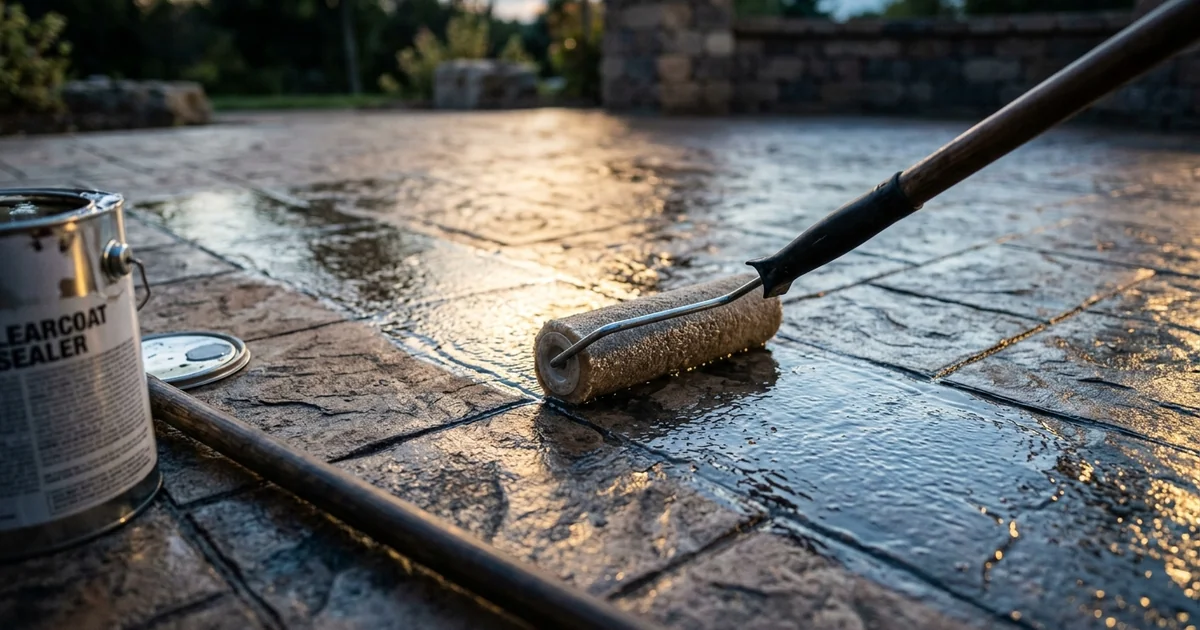
A stamped and stained concrete patio can cost several times more than a plain broom-finished slab, and the sealer is the only layer standing between that investment and the sun, foot traffic, and standing water. Pick the wrong film chemistry for the exposure and the failure isn't cosmetic — a decorative concrete sealer that traps vapor pressure blisters and delaminates, and one built on the wrong isocyanate backbone yellows across an entire driveway within a season. Contractors and manufacturers rarely fail because they chose a bad-quality product; they fail because they chose the wrong resin class for the substrate and the exposure it faces. This guide works through what acrylic, polyurethane, and epoxy sealers actually are at the polymer level, why moisture vapor transmission decides more of the outcome than gloss or hardness specs do, and how the layered systems that dominate professional decorative flooring actually combine these three chemistries rather than picking just one.
Why the Wrong Sealer Undermines a Decorative Concrete Investment
Sealer failure on decorative concrete rarely looks like simple wear — it looks like a specific, diagnosable chemical mismatch between the film and the slab beneath it. A film that is too hard and too impermeable for a vapor-emitting slab doesn't wear out gracefully; it blisters. A film built on the wrong isocyanate doesn't just dull over time; it turns visibly amber. Because decorative finishes carry a real labor premium over plain concrete, a sealer failure is rarely a quick touch-up — it's often a strip-and-reseal that costs more than the original sealing job.
- White blushing or haze — moisture vapor trapped beneath a low-permeability film condenses and scatters light, producing a milky white patch under an otherwise clear coating
- Delamination — loss of adhesion from either insufficient surface profile or vapor pressure exceeding the bond strength of the film
- UV yellowing and chalking — an aromatic or UV-reactive resin degrading under sunlight, most visible on light-colored or clear sealer applications
- Abrasion wear-through — a film too soft for the traffic level, exposing bare or dull concrete along walking paths well before the rest of the surface has worn
Every one of these failure modes traces back to a resin-chemistry decision made before the first coat was ever applied — which is exactly why the choice between acrylic, polyurethane, and epoxy deserves more scrutiny than it usually gets.
Acrylic Sealers: Chemistry, Breathability, and Where They Belong
Acrylic sealers are built from thermoplastic acrylic polymer resins — typically methyl methacrylate and ethyl methacrylate copolymers — either dissolved in a solvent carrier or dispersed in water as an emulsion. Because the resin doesn't cross-link into a rigid thermoset network the way polyurethane and epoxy do, the resulting film stays relatively soft and, critically, remains permeable to water vapor. That single property is what makes acrylic the default choice for exterior slabs poured directly on grade without a vapor barrier beneath them, since those slabs transmit moisture vapor upward continuously regardless of season.
- Solvent-based acrylic — higher gloss and a deeper "wet look" color enhancement, faster dry time, but higher VOC content and a greater tendency to amber subtly over multi-year exposure
- Water-based acrylic — lower VOC content, generally better long-term UV stability than solvent-based grades, at the cost of somewhat lower gloss and film hardness
- Reapplication interval — the softest and least abrasion-resistant of the three chemistries, typically requiring recoating every one to three years under active exterior traffic
Regulatory pressure has pushed the acrylic category toward reformulation more than any other decorative sealer class. Solvent-based acrylics fall squarely under national architectural coating VOC limits such as the EPA's national VOC emission standards for architectural coatings, which has driven sustained development of water-based acrylic dispersions and acrylic-urethane hybrid blends that partially close the durability gap with true polyurethane.
That same permeability, though, is exactly what polyurethane and epoxy give up in exchange for hardness and chemical resistance — and that trade-off is where the next two chemistries start to diverge sharply from acrylic.
Polyurethane Topcoats: Aliphatic vs Aromatic and UV Stability
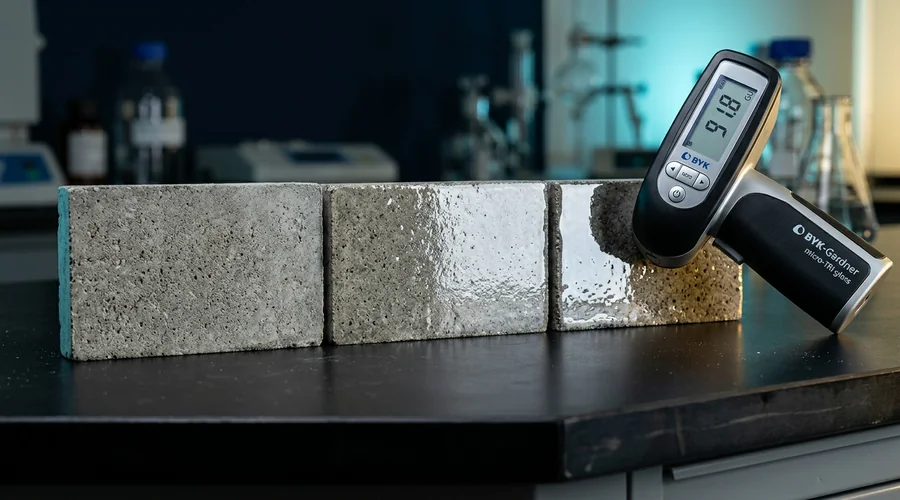
Polyurethane sealers cross-link into a genuinely harder, more abrasion- and scratch-resistant film than acrylic, and their performance splits sharply along a single structural line: whether the isocyanate used to build the polymer is aliphatic or aromatic. Aromatic isocyanates carry benzene-ring structures that absorb UV energy and convert into yellow chromophores under sunlight, which is why aromatic polyurethane is restricted to interior use regardless of how well it's applied. Aliphatic isocyanates lack that UV-reactive ring, so aliphatic polyurethane holds its clarity and gloss under years of direct sun exposure — the correct default for any exterior decorative concrete project.
- Aliphatic PU — UV-stable, higher cost, the standard choice for exterior decorative concrete topcoats requiring long-term clarity
- Aromatic PU — lower cost, yellows and chalks under UV exposure, appropriate only for interior floors and basecoats hidden beneath a UV-stable topcoat
- Cure chemistry — available as single-component moisture-cure or two-component catalyzed systems, with water-based aliphatic PU dispersions emerging as a lower-VOC alternative to solvent-based grades
Manufacturers validate UV and gloss-retention claims through accelerated weathering methods published by ASTM International, rather than relying on unverified marketing claims — a QUV or xenon-arc weathering chamber compresses years of sun exposure into weeks of controlled testing. Flexibility matters just as much as hardness here, since a slab's control joints and thermal expansion put the film under continuous mechanical strain that a too-brittle coating cannot absorb without cracking.
Polyurethane closes the UV-stability gap that acrylic and aromatic resins leave open, but its moisture sensitivity during cure and higher material cost mean it's specified deliberately, not defaulted to — much like the trade-offs that define the next chemistry in the lineup.
Epoxy Topcoats: Maximum Durability, Minimum UV Tolerance
Two-part epoxy resin and hardener systems cross-link into the hardest and most chemically resistant film of the three chemistries covered here, with genuinely superior resistance to oils, chemical spills, and hot tire pick-up compared with acrylic or polyurethane. That performance comes from a densely cross-linked thermoset network, typically built on a bisphenol-A epoxy backbone — a structure that happens to be strongly UV-reactive, which is also epoxy's single disqualifying weakness outdoors.
- Chalking and yellowing — unprotected epoxy resin degrades visibly under direct sunlight within a relatively short outdoor exposure window, regardless of application quality
- Near-zero vapor permeability — epoxy traps moisture vapor more completely than either acrylic or standard polyurethane, making substrate moisture testing mandatory before application
- Best-fit applications — interior polished and stained concrete floors, garage floor systems, decorative flake and broadcast floors inside a controlled environment
Pre-installation moisture verification is standardized rather than a matter of judgment. ASTM D4541 confirms pull-off adhesion strength of the prepared substrate, while calcium chloride and in-situ relative humidity testing — covered in more detail below — confirm the slab's vapor emission rate falls within the resin manufacturer's tolerance before a drop of epoxy goes down. Similar surface-preparation discipline applies to the two-part systems covered in our two-pack epoxy flooring systems guide.
Epoxy's outdoor UV weakness and moisture intolerance are exactly why the industry almost never uses it alone as a final decorative topcoat outdoors — but paired correctly with a UV-stable layer above it, those same strengths become the foundation of the systems that dominate professional decorative flooring today.
Moisture Vapor Transmission: The Failure Mode Coating Selection Must Respect
Concrete is a porous material, and any slab poured without an effective below-slab vapor barrier continuously transmits water vapor upward from the soil beneath it, regardless of how dry the surface feels to the touch. That ongoing vapor flow is the single largest factor governing which film chemistries can safely be used on a given slab — more decisive, in practice, than gloss preference or budget.
The failure mechanism is mechanical, not cosmetic. Vapor rising through the slab hits the underside of a low-permeability film and has nowhere to go; pressure builds at the bond line until it exceeds the adhesive strength holding the coating to the concrete, producing blistering, white osmotic haze, or outright delamination — sometimes months after what looked like a clean, successful installation.
| Sealer chemistry | Vapor permeability | Typical outdoor UV stability | Relative film hardness |
|---|---|---|---|
| Acrylic (solvent or water-based) | High — breathable | Good (water-based); fair (solvent-based) | Low (softest of the three) |
| Polyurethane — aliphatic | Low | Excellent | High |
| Polyurethane — aromatic | Low | Poor (yellows, interior only) | High |
| Epoxy (standard decorative) | Very low — near impermeable | Poor (chalks, interior only) | Highest |
Polyurethane's polymer chemistry and epoxy's dense cross-linking both work against vapor permeability by the same underlying mechanism — a tighter polymer network that resists chemicals and abrasion also resists water vapor. Two established test methods verify a slab's vapor condition before either chemistry is specified: the calcium chloride moisture vapor emission test and an in-situ relative humidity probe test, both drilled or applied directly into the slab rather than relying on a surface moisture meter alone. A specialty subclass of moisture-mitigating epoxy primers exists specifically to tolerate elevated vapor emission where a standard epoxy would fail, though even these have documented tolerance limits rather than unlimited capacity.
Getting the vapor question right before the aesthetic decision is the single technical fact that most reliably predicts whether a decorative sealer installation survives its first year — which is exactly why professional systems build vapor management into the coating stack itself rather than hoping a single product resolves it.
Layered Systems and Selecting the Right Sealer for the Application
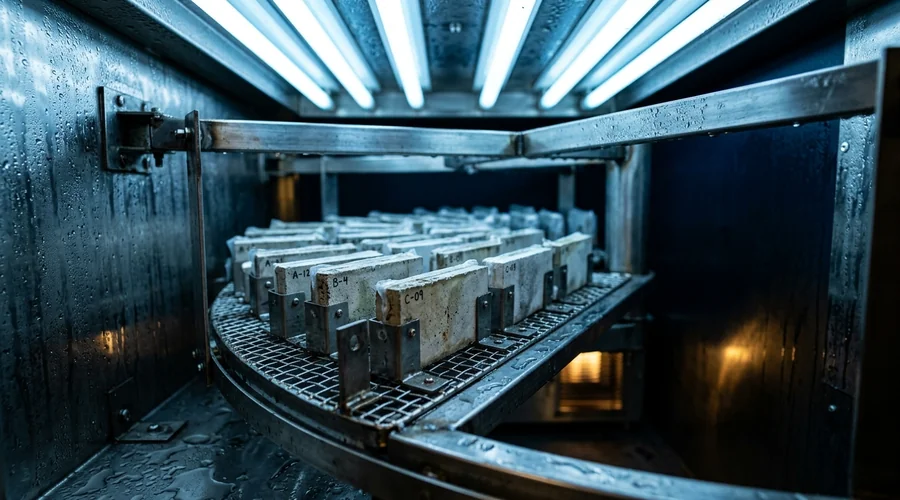
Professional decorative concrete floor systems, especially high-traffic interior and garage floors, rarely rely on a single sealer chemistry. The dominant modern build is a hybrid stack: an epoxy primer or basecoat for adhesion, build thickness, and — in moisture-tolerant grades — some vapor management, topped with an aliphatic polyurethane or a fast-curing polyaspartic topcoat that supplies the UV stability, abrasion resistance, and scratch resistance epoxy alone cannot provide outdoors. Polyaspartic coatings are a fast-cure subclass of aliphatic polyurea, built by reacting an aliphatic isocyanate with an aspartic ester resin rather than a conventional polyol, and their rapid cure lets floors return to light service in hours rather than the day or more a standard two-component polyurethane needs.
- Test moisture vapor emission first — before any chemistry is chosen, since the result rules out entire categories of topcoat regardless of aesthetic preference
- Confirm indoor vs outdoor UV exposure — this alone eliminates aromatic polyurethane and straight epoxy as final topcoats for any exterior application
- Match chemical and abrasion resistance to actual use — a light-traffic patio doesn't need epoxy-grade chemical resistance; a garage floor exposed to oil and hot tires usually does
- Verify surface profile through mechanical preparation — diamond grinding or shot blasting to the profile the chosen primer or sealer manufacturer specifies, confirmed with pull-off adhesion testing
- Reserve single-chemistry sealers for proportionate use cases — a light-traffic exterior stamped patio is well served by acrylic alone; a commercial exterior walkway typically needs aliphatic polyurethane or a polyurethane-over-epoxy build; an interior showroom floor can justify a full epoxy-polyaspartic system
Surface preparation and substrate condition drive nearly as much of the final result as resin selection itself — the same discipline covered in our guide to concrete curing compound chemistry and application, since a slab's curing history affects the surface profile and porosity that any later sealer or coating system must bond to. For manufacturers and contractors building or reformulating a decorative sealer line, our construction chemicals practice page and our guide to choosing a construction chemicals formulation consultant cover how Global Formulation supports resin selection, VOC-compliant reformulation, and scale-up from lab batch to production volume.
Frequently Asked Questions
What's the real difference between acrylic, polyurethane, and epoxy concrete sealers?
They differ primarily in film hardness, vapor permeability, and UV stability rather than just quality tier. Acrylic forms a thin, moisture-vapor-permeable film that's the softest of the three and needs the most frequent recoating, but it's the only one of the three that tolerates continuous vapor transmission from an unvented slab without blistering.
Polyurethane, particularly aliphatic grades, forms a harder, more abrasion-resistant film with genuine UV stability but is close to vapor-impermeable and moisture-sensitive during cure. Epoxy is the hardest and most chemical-resistant film of all three, but it's also the least vapor-permeable and reacts to UV exposure by chalking and yellowing, which restricts straight epoxy topcoats to interior use in almost all cases.
Why do some polyurethane sealers turn yellow while others don't?
It comes down to the isocyanate backbone used to build the polymer. Aromatic isocyanates, common in lower-cost polyurethanes, contain benzene-ring structures that absorb UV energy and undergo a chemical change that produces yellow chromophores, and this happens even indoors under prolonged light exposure, just faster outdoors.
Aliphatic isocyanates don't carry that same UV-reactive ring structure, so aliphatic polyurethane resists yellowing and chalking under prolonged UV exposure, which is why it, not aromatic PU, is the correct choice for exterior decorative concrete. The trade-off is cost — aliphatic isocyanate resins cost meaningfully more than aromatic ones, which is why aromatic PU still shows up in interior-only products.
Can epoxy sealers be used outdoors on a patio or driveway?
Not as a standalone final topcoat. Straight epoxy resin is UV-reactive and will chalk and yellow within a relatively short outdoor exposure window regardless of how well it was applied.
Epoxy remains useful outdoors only when it's used as a primer or basecoat layer, protected by a UV-stable aliphatic polyurethane or polyaspartic topcoat above it. That layered approach captures epoxy's adhesion and build strength without exposing its UV-reactive resin to sunlight, and a straight epoxy sealer marketed for outdoor decorative concrete should be treated as a red flag rather than a shortcut.
How do I know if my concrete slab has too much moisture vapor for a topcoat?
The accepted pre-installation checks are ASTM F1869, the calcium chloride moisture vapor emission test, and ASTM F2170, an in-situ relative humidity probe test drilled into the slab. Both are standardized methods rather than visual judgment calls, and most coating manufacturers publish maximum acceptable readings for each of their specific products because tolerance varies by resin chemistry.
A slab that reads high on either test isn't necessarily unsealable — it usually means switching to a vapor-permeable acrylic system, installing a below-slab vapor barrier if the project allows it, or specifying a moisture-mitigating epoxy primer engineered specifically to tolerate elevated vapor emission.
Why do decorative concrete sealers need to be reapplied, and how often?
Every sealer film wears from UV exposure, foot and vehicle traffic, and weathering, and the reapplication interval tracks directly with how hard and UV-stable that film chemistry is. Acrylic sealers, being the softest and least UV-resistant of the common options, typically need recoating every one to three years on an actively used exterior surface.
Aliphatic polyurethane and epoxy-polyurethane layered systems are considerably harder and more UV-stable, commonly extending the interval to several years under similar traffic. Actual timing always depends on sun exposure, traffic volume, and exposure to deicing salts or standing water, so manufacturer maintenance guidance for the specific product should set the real schedule.
What is a polyaspartic topcoat and how does it compare to polyurethane?
Polyaspartic coatings are a fast-curing subclass of aliphatic polyurea, formed by reacting an aliphatic isocyanate with an aspartic ester resin instead of a conventional polyol. Because the reaction is engineered to be much faster than standard polyurethane, polyaspartic topcoats can often be applied and returned to light service within hours rather than the day or more that a standard two-component polyurethane needs.
They share polyurethane's aliphatic UV stability and hardness, which is why they've become a common topcoat choice over epoxy basecoats on decorative and garage floor systems where fast turnaround matters. The faster cure window does demand tighter application control, since there's less working time to correct application errors before the film sets.
Do I need a primer before applying a polyurethane or epoxy sealer to decorative concrete?
In most cases, yes. A primer or basecoat improves adhesion to the concrete substrate and can help manage minor vapor emission that a topcoat alone would trap. Concrete surface preparation matters just as much as the primer choice — mechanical profiling by diamond grinding or shot blasting to open the pore structure and remove laitance is standard practice before either primer or single-coat sealer application.
Pull-off adhesion testing is the accepted way to confirm the prepared surface meets the resin manufacturer's minimum bond-strength requirement. Skipping surface preparation is one of the most common causes of early sealer delamination, regardless of which resin chemistry was chosen.
Formulating or Scaling a Concrete Sealer Product?
Global Formulation provides decorative concrete sealer formulation and product development consultancy — resin selection, VOC-compliant reformulation, moisture-tolerance testing strategy, and scale-up from lab batch to plant production.
Talk to Our Formulation Team