Epoxy Adhesive Toughening: Core-Shell Rubber Chemistry
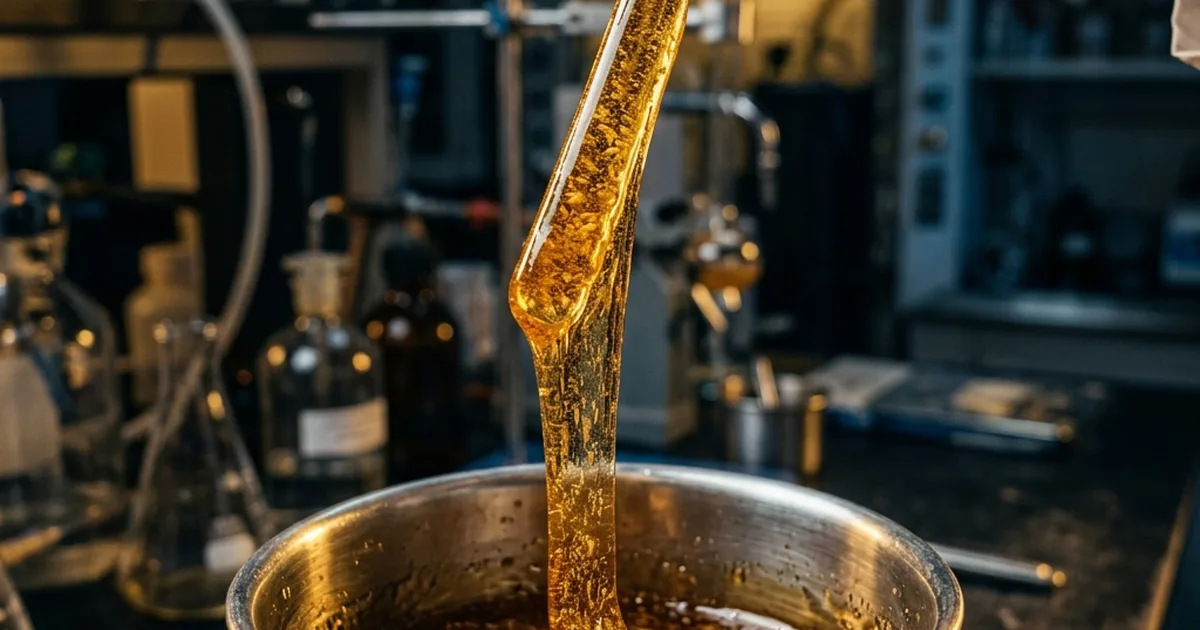
A structural epoxy bond can pass every static lap-shear test on the data sheet and still shatter the first time the assembly takes a real-world impact — a dropped panel, a crash pulse, a sudden thermal shock. That gap between laboratory strength and field durability is exactly why epoxy adhesive toughening exists as its own formulation discipline. Modern toughened structural adhesives solve this problem primarily through core-shell rubber particles: pre-engineered micro-particles with a soft rubber core and a rigid compatible shell, dispersed through the epoxy matrix to absorb impact energy that would otherwise propagate a crack straight through the bondline. This guide walks through why unmodified epoxy fails this way, exactly how core-shell particles interrupt crack propagation at the microscopic level, how they compare to older liquid-rubber toughening approaches, and the trade-offs a formulator has to manage to get impact resistance without sacrificing the properties that made epoxy the right choice in the first place. It's written for engineers and manufacturers evaluating structural epoxy adhesives for applications where the bondline will see more than steady, predictable loading.
Why Cured Epoxy Is Inherently Brittle
Epoxy earns its reputation for strength from a densely crosslinked polymer network formed during cure, but that same crosslink density is the direct cause of its biggest weakness. A material engineered to resist deformation under steady load has, by the same token, very little capacity to deform plastically and absorb energy when a crack starts to grow — and once a crack does start, the glassy matrix offers almost nothing to slow it down.
This distinction between strength and fracture toughness matters enormously in practice. A tensile or lap-shear strength number describes how much steady, well-distributed load a bond can carry before failing; fracture toughness describes how much energy is required to propagate an existing crack, flaw, or void once one has already formed. Nearly every real bondline contains microscopic flaws from cure shrinkage, entrapped air, or substrate surface irregularities, so fracture toughness — not static strength — is usually what determines whether a joint survives an actual impact event.
Understanding that brittleness is a structural consequence of crosslink density — not a formulation defect — explains why toughening can't simply mean "using less crosslinker." It means engineering a second phase into the matrix whose entire job is to interrupt the crack once the epoxy itself has already failed to stop it.
How Core-Shell Particles Interrupt Crack Growth
Core-shell rubber tougheners work by giving a propagating crack something soft to hit. Each particle consists of a rubbery core — commonly a polybutadiene or similar elastomer — surrounded by a rigid, chemically compatible shell, typically a methyl methacrylate copolymer, engineered to bond well with the surrounding epoxy matrix while keeping the particle discrete and evenly dispersed rather than dissolving into the resin.
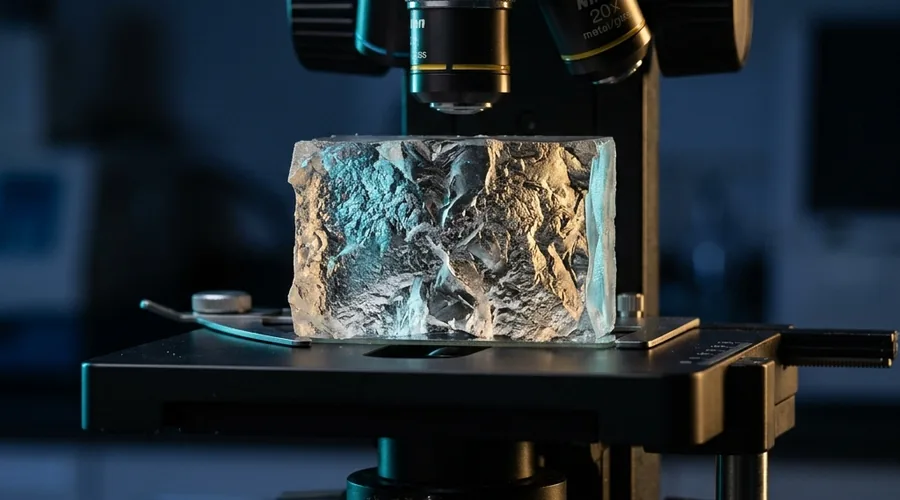
When a crack tip reaches a particle, several energy-absorbing mechanisms activate at once rather than one alone. The rubber core deforms and cavitates — forming microscopic voids that relieve the surrounding stress concentration — while the crack itself is deflected away from a straight path, forced to travel around the particle rather than through it. This combination of cavitation and crack deflection is what materials scientists document as the dominant toughening mechanism in rubber-modified epoxy systems, a body of work with roots in decades of published polymer fracture mechanics research.
- Particle cavitation — The soft rubber core forms microvoids under stress, relieving the concentrated stress field at the crack tip
- Crack path deflection — The crack is forced around each particle rather than propagating in a straight line, increasing the total fracture surface area and energy consumed
- Shear-band formation — Localized plastic deformation zones can develop in the epoxy matrix immediately surrounding a cavitated particle
Multiply these mechanisms across the millions of particles distributed through a bondline and the measurable result is a fracture toughness increase that can run several times higher than the unmodified resin — the specific number a formulator uses to compare toughener systems and loading levels against each other.
Core-Shell Particles vs. Liquid Reactive Rubber
Core-shell technology didn't invent epoxy toughening — it solved a control problem in an older approach. Liquid reactive rubbers, most commonly carboxyl-terminated butadiene acrylonitrile, have been used to toughen epoxy for decades and remain in use today, but they achieve their toughening morphology through an entirely different route that leaves formulators with far less control over the outcome.
A liquid rubber is initially miscible with the uncured epoxy resin, and it only phase-separates into discrete rubber-rich domains as curing proceeds and the growing epoxy network rejects the incompatible rubber phase. The size, distribution, and morphology of the resulting domains depend heavily on cure temperature, cure rate, and the specific resin chemistry involved, which means the same liquid-rubber formulation can produce meaningfully different toughening performance under different cure schedules. Core-shell particles sidestep this variability entirely, since the particle size and core-shell morphology are fixed during the toughener's own manufacturing process, long before it's ever blended into an epoxy formulation.
| Factor | Liquid Reactive Rubber (CTBN) | Core-Shell Rubber Particles |
|---|---|---|
| Toughening morphology | Develops during cure via phase separation | Pre-formed and fixed before formulation |
| Sensitivity to cure conditions | High — cure rate and temperature affect domain size | Low — particle size is set independently of cure schedule |
| Batch-to-batch consistency | Can vary with resin chemistry and process control | Generally more predictable and reproducible |
| Viscosity impact at equal toughening | Can increase resin viscosity significantly | Formulated dispersions often manage viscosity more predictably |
| Typical use case | Long-established, cost-sensitive applications | High-performance structural and crash-durability applications |
Neither approach is obsolete — liquid rubber toughening remains a viable, well-understood option for many general industrial adhesives. But the predictability core-shell particles offer is exactly why they've become the standard choice wherever impact performance has to be engineered precisely and reproduced reliably across production batches, which is a natural lead into where that precision starts costing something elsewhere in the formulation.
Formulation Trade-Offs: Toughness vs. Other Properties
Toughening is never free, and treating it as a pure upside is the most common mistake in early-stage adhesive selection. Every rubber phase added to an epoxy matrix competes for volume with the epoxy itself, and that trade-off shows up measurably in properties formulators care about just as much as impact resistance.
Adding rubber-phase content generally reduces glass transition temperature and elastic modulus to some degree, since the softer rubber domains lower the overall stiffness of the cured network. At higher loading levels, chemical resistance and elevated-temperature strength can also decline measurably relative to the unmodified resin, because the rubber phase itself is typically less resistant to solvents and heat than the epoxy matrix surrounding it. This is documented extensively in the polymer fracture literature and is one reason toughener suppliers publish loading-level guidance rather than a single universal recommendation.
Because this balance depends on the specific resin system, cure schedule, and particle grade in use, there's no shortcut around testing the actual formulation across its full property set rather than relying on toughener supplier data generated in a different base resin — which is exactly the discipline the next stage of development has to enforce.
Testing and Verifying Toughened Performance
A toughened epoxy formulation isn't proven until its fracture and impact performance has been measured directly, because the mechanisms described above interact in ways that are difficult to predict from particle loading alone. Fracture toughness is quantified using standardized test geometries — commonly the compact tension specimen or the double cantilever beam test — which measure the critical strain energy release rate or stress intensity factor required to propagate a crack, giving a defensible number rather than a qualitative "feels tougher" comparison. These methods align with established mechanical test frameworks referenced in ASTM standards for adhesive and polymer fracture testing.
Impact performance for a bonded structural joint is commonly assessed with wedge impact or T-peel testing, and critically, this testing has to be run across a temperature range rather than at room temperature alone.
- Room-temperature baseline — Establishes fracture toughness and impact resistance under standard laboratory conditions
- Low-temperature testing — Rubber toughening mechanisms lose effectiveness as the material approaches its glass transition, and the rubber phase itself stiffens in the cold, so cold-temperature performance can differ sharply from room-temperature results
- Elevated-temperature testing — Verifies that modulus and chemical resistance trade-offs remain within the application's acceptable range at service temperature
- Aged-sample retesting — Confirms toughening performance holds after realistic thermal or environmental aging, not just on freshly cured samples
Automotive and aerospace structural bonding programs specifically test the low-temperature condition because it's frequently the most demanding real-world impact scenario a joint will ever face, not the room-temperature condition that happens to be most convenient to run in a lab — a discipline that carries directly into how and where toughened epoxy adhesives actually get specified.
Where Toughened Epoxy Adhesives Are Used
Crash-durable automotive structural bonding is the highest-profile application for core-shell toughened epoxy, but it's far from the only one. Anywhere a bondline experiences dynamic loading, thermal cycling, or handling impact rather than pure steady tension, brittleness becomes a real field-failure risk that toughening is formulated to prevent.

- Automotive structural bonding — Crash-durable adhesives supplementing or replacing welds and mechanical fasteners in body-in-white assembly
- Aerospace bonded assemblies — Structural joints subject to vibration, thermal cycling, and impact across a wide service temperature range
- Electronics potting and encapsulation — Protecting components from cracking under thermal expansion mismatch between dissimilar materials
- General industrial and consumer assembly — Lower toughener loadings used specifically to prevent brittle bondline failure during shipping and handling
As with the broader question of cohesive versus adhesive failure modes, a joint's real-world durability depends on more than peak bond strength — it depends on how the adhesive behaves once a flaw or impact event tests its fracture resistance. For manufacturers developing new products in adhesives and sealants, toughening should be evaluated as a standard formulation consideration for any bonded assembly that will see real handling stress, not treated as a specialty feature reserved only for large-scale structural programs.
Frequently Asked Questions
Why does unmodified epoxy need toughening at all if it already bonds so strongly?
Bond strength and fracture resistance are different properties, and a highly crosslinked epoxy network can be strong under slow, steady loading while still being brittle under a sudden impact. The same dense crosslink structure that gives epoxy its high stiffness and chemical resistance leaves the polymer with very little ability to absorb energy plastically, so once a crack initiates at a flaw, void, or stress concentration it can propagate through the glassy matrix with almost no resistance.
In practical terms this means an untoughened epoxy joint can pass every static strength test on the data sheet and still fail catastrophically the first time it experiences a drop, a crash pulse, or a thermal shock, which is exactly the failure mode toughening is formulated to prevent.
What actually happens at the microscopic level when a core-shell particle stops a crack?
A propagating crack in a brittle epoxy matrix carries a concentrated stress field at its tip, and when that tip encounters a dispersed rubber particle, the particle's soft core deforms and absorbs energy that would otherwise go into extending the crack further. This local deformation also triggers stress-whitening cavitation around the particle and can deflect the crack path away from a straight line, forcing it to travel a longer, more energy-consuming route through the matrix instead of a clean fracture plane.
The cumulative effect across millions of particles distributed through the bondline is a dramatic rise in the energy required to propagate a crack to failure, which is what fracture toughness testing actually measures.
Why use a core-shell particle instead of just blending liquid rubber into the epoxy resin?
Liquid reactive rubbers such as carboxyl-terminated butadiene acrylonitrile have to phase-separate out of the epoxy resin during cure to form their own dispersed domains, and that phase separation is sensitive to cure temperature, cure rate, and resin chemistry, which makes particle size and distribution difficult to control precisely from batch to batch.
A core-shell particle arrives pre-formed at a fixed, engineered particle size with a shell chemistry already designed for compatibility with the epoxy resin, so the toughening morphology is locked in before the particle is ever added to the formulation rather than being left to develop unpredictably during cure. This control is what allows formulators to target a specific particle size for a specific toughening mechanism instead of hoping the cure conditions produce it.
Does adding core-shell rubber toughener reduce the epoxy's other performance properties?
Toughening is a genuine trade-off, and formulators need to treat it as one rather than assuming toughness comes free. Adding rubber-phase content typically reduces the glass transition temperature and elastic modulus of the cured system to some degree, and at high loading levels can measurably lower chemical resistance and elevated-temperature strength compared to the unmodified resin.
This is precisely why core-shell technology is preferred over simple flexibilizers in demanding structural applications: the particles are designed to deliver toughening at loading levels low enough that the impact on modulus, glass transition temperature, and chemical resistance stays within an acceptable window for the application, but that window still has to be verified experimentally for every specific formulation and use case rather than assumed from the toughener supplier's general literature.
How is toughened epoxy performance actually measured and verified before it's used in a structural joint?
Fracture toughness is typically quantified using standardized test geometries such as the compact tension or double cantilever beam specimen, which measure the critical strain energy release rate or stress intensity factor required to propagate a crack through the cured adhesive, giving a direct numerical comparison between an untoughened and a toughened formulation.
Impact performance for bonded structural joints is commonly assessed with wedge impact or T-peel testing at both room temperature and low temperature, since rubber toughening mechanisms can lose effectiveness as the material approaches its glass transition and the rubber phase itself stiffens. A formulation intended for automotive or aerospace structural bonding is validated across this temperature range specifically because the low-temperature crash or impact scenario is often the most demanding real-world condition the joint will ever see, not the room-temperature condition most convenient to test.
What particle size range is typically used for core-shell rubber tougheners, and does size matter?
Core-shell rubber tougheners for epoxy systems are generally supplied in the sub-micron to low single-digit micron range, and particle size is a deliberate formulation variable rather than an incidental manufacturing detail. Smaller particles distributed at higher number density tend to be more effective at interacting with and blunting a propagating crack tip across the entire bondline, while larger particles can absorb more energy per individual cavitation event but cover less of the matrix volume at an equivalent weight loading.
Toughener suppliers offer multiple particle size grades specifically so formulators can tune this balance for a given resin system, cure schedule, and target impact performance rather than treating one particle size as universally optimal.
Are core-shell toughened epoxies mainly relevant to automotive and aerospace, or does this matter for smaller manufacturers too?
While crash-durable automotive structural adhesives and aerospace bonding are the highest-profile applications, core-shell toughening is broadly relevant anywhere an epoxy bondline experiences dynamic loading, thermal cycling, or handling impact rather than pure static tension. Electronics potting compounds, general industrial structural bonding, and even consumer product assembly adhesives frequently use lower loadings of core-shell toughener specifically to prevent brittle bondline cracking during shipping, drop events, or thermal expansion mismatch between dissimilar substrates.
A smaller manufacturer evaluating an epoxy adhesive for a bonded assembly that will see any real-world handling stress should treat toughening as a standard formulation consideration, not a specialty feature reserved only for large-scale structural applications.
Developing a Toughened Structural Adhesive?
Global Formulation provides adhesive and sealant consultancy — toughener selection, fracture and impact test programme design, and formulation scale-up support.
Talk to Our Formulation Team