Exterior Emulsion Paint: Weathering, Chalking and Formulation
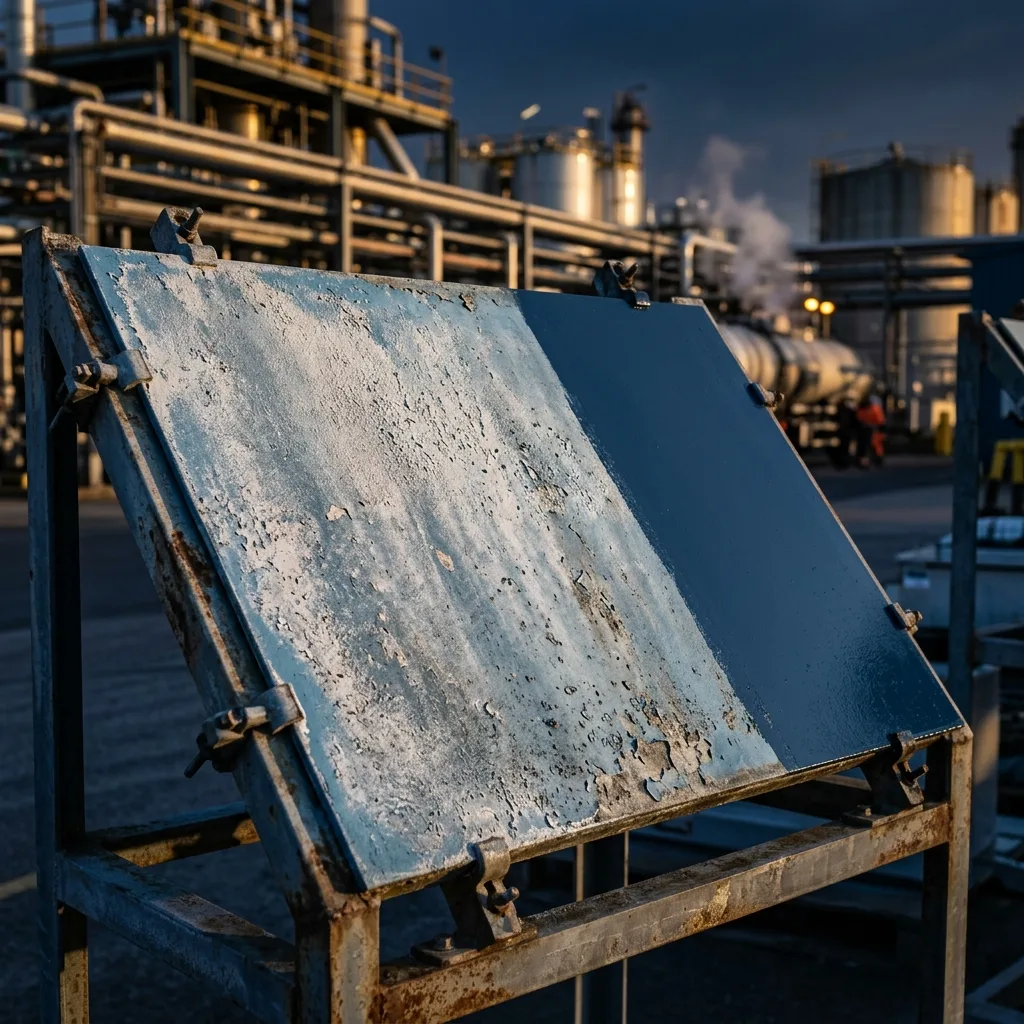
A facade that looked flawless at handover can turn chalky, streaked, and faded within three years — and the manufacturer usually finds out only when the complaint calls start coming in. Exterior emulsion paint formulation carries a distinct technical burden that interior paint never has to face: constant UV exposure, thermal cycling, and moisture attack that will find every weakness in a binder system within a single outdoor season. This guide walks through what actually drives chalking and premature weathering failure, how acrylic binder chemistry determines a coating's real service life, when elastomeric formulations are genuinely necessary versus overkill, and the accelerated testing protocols that let a manufacturer substantiate a durability claim with data rather than hope. Whether you are formulating a new exterior emulsion product or diagnosing field failures in an existing line, these fundamentals give you a working framework for getting exterior durability right the first time.
Understanding Chalking in Exterior Emulsion Paint
Chalking is the single most recognizable sign of exterior paint aging, yet it is frequently misunderstood as pure product failure when in some formulations it is actually a designed and expected behavior. Knowing the difference between controlled, low-rate chalking and destructive premature chalking is the first diagnostic skill anyone working with exterior emulsion paint formulation needs to develop.
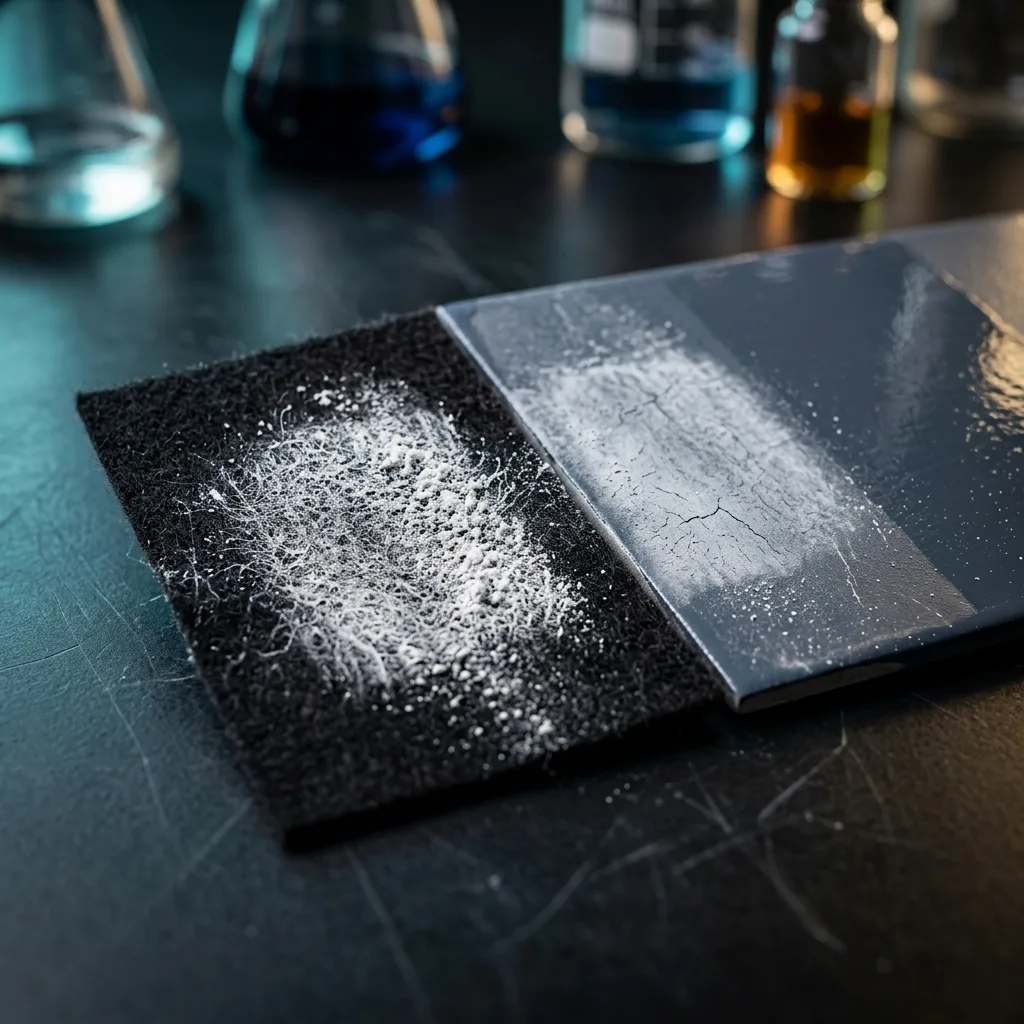
Chalking occurs when ultraviolet radiation breaks down the polymer chains in the binder resin at the paint film's outermost surface, a photodegradation process that gradually erodes the resin and leaves behind a loose, powdery layer of exposed pigment particles. In some exterior formulations, particularly those designed for self-cleaning performance, a slow and controlled rate of chalking is intentional: the eroding surface carries away accumulated dirt, mildew spores, and airborne pollutants along with it, keeping the visible film cleaner over time than a completely inert surface would stay. The problem arises when chalking proceeds far faster than intended, which shows up as a heavy powder residue that transfers visibly to hands or clothing and streaks downward across the facade during rain — a clear sign that the binder is degrading faster than the coating's designed service life allows.
Recognizing chalking as a rate-dependent phenomenon rather than a simple pass-fail defect reframes how a formulator should approach binder selection, which is where the real durability differences between exterior paint products actually originate.
Acrylic Binder Selection for UV Resistance
Binder chemistry is the single largest determinant of how an exterior emulsion paint will perform against sustained UV exposure over its intended service life. Choosing among the major acrylic binder categories requires understanding how each polymer's chemical backbone responds — or fails to respond — to years of solar radiation, since this decision effectively sets the coating's durability ceiling before any other formulation variable comes into play.
- 100% acrylic binders — Built entirely from acrylic monomers, offering the strongest inherent UV stability, flexibility, and hydrolysis resistance; the standard choice for premium exterior products with multi-decade durability claims
- Styrene-acrylic binders — Replace a portion of acrylic monomer with lower-cost styrene, reducing material cost but introducing a backbone group considerably more vulnerable to UV-driven chain scission
- Vinyl-acrylic (VAE) binders — Vinyl acetate-acrylic copolymers positioned for interior or lightly exposed use, generally inadequate for sustained direct exterior weathering
| Binder Type | UV/Weathering Resistance | Typical Use Case |
|---|---|---|
| 100% Acrylic | Excellent | Premium exterior, long service-life claims |
| Styrene-Acrylic | Moderate | Mid-tier exterior, cost-sensitive markets |
| Vinyl-Acrylic (VAE) | Limited | Interior, sheltered or lightly exposed exterior |
Within the broader field of paints and coatings formulation, binder selection for exterior emulsion products is rarely just a cost decision — it is a direct trade against the chalking and fading timeline a manufacturer is willing to stand behind in the market, which becomes especially consequential when a substrate is expected to move or crack over time.
Elastomeric Exterior Paint Systems
Standard acrylic exterior paints are formulated primarily for color, hide, and moderate flexibility, which is sufficient for sound, crack-free substrates but inadequate when a facade is already moving or cracking beneath the coating. Elastomeric formulations solve a fundamentally different problem — bridging existing cracks and accommodating ongoing substrate movement — and recognizing when this specialized chemistry is actually required prevents both premature coating failure and unnecessary overspecification.
Elastomeric exterior paints use acrylic binder systems engineered for substantially higher elongation than standard formulations, applied at a much greater wet film thickness so the dried film can genuinely stretch and recover as the substrate expands and contracts with temperature and moisture cycling. This makes elastomeric coatings well suited to older stucco, masonry with a documented history of hairline cracking, or climates with pronounced thermal cycling, where a standard acrylic film would simply crack along the same fault lines as the substrate beneath it. Comparable durability principles apply broadly across waterborne exterior coating systems, where binder flexibility and film-forming behavior under environmental stress determine long-term crack resistance regardless of the specific product category.
Matching binder flexibility to actual substrate condition, rather than defaulting to the most flexible option available, keeps both formulation cost and application logistics proportional to the real technical requirement — a discipline that carries directly into how pigment systems are selected for weathering performance.
Pigment Loading and Weathering Performance
Titanium dioxide is the pigment workhorse of exterior emulsion paint, but its role in long-term durability is frequently underappreciated relative to its more obvious function in hiding power and color. Understanding titanium dioxide's dual role changes how a formulator should think about pigment loading decisions in any coating intended for multi-year outdoor exposure.
Beyond providing opacity and whiteness, properly dispersed titanium dioxide acts as a physical UV-scattering shield within the paint film, intercepting incoming ultraviolet radiation before it can penetrate deep enough to break down the acrylic binder chains that hold the film together. Adequately loaded and well-dispersed titanium dioxide measurably slows the onset of both chalking and gloss loss compared with an underloaded formulation, even when both products appear identical in color and initial hiding power at the point of sale. This is precisely why underloading titanium dioxide — a common cost-cutting shortcut in budget exterior paint lines — creates a durability shortfall that often goes undetected until well after the sale, when premature chalking or fading begins appearing on painted facades in the field.
- Hiding power function — Determines opacity and color strength at the specified film thickness
- UV-shielding function — Scatters incoming radiation before it reaches and degrades the binder resin
- Dispersion quality — Poorly dispersed titanium dioxide clusters leave gaps in UV protection even at adequate total loading
Treating titanium dioxide loading as a durability-critical variable, not just a color and cost variable, closes one of the most common and least visible gaps between a paint's appearance at sale and its actual field performance years later — a gap that only becomes fully apparent once weathering-related failures start showing up on facades.
Diagnosing Weathering-Related Failures
Not every exterior paint failure is chalking, and confusing one failure mode for another leads to the wrong corrective action entirely. Distinguishing UV-driven surface degradation from moisture-driven adhesion failure is a critical diagnostic skill for anyone responsible for field complaints or product improvement.
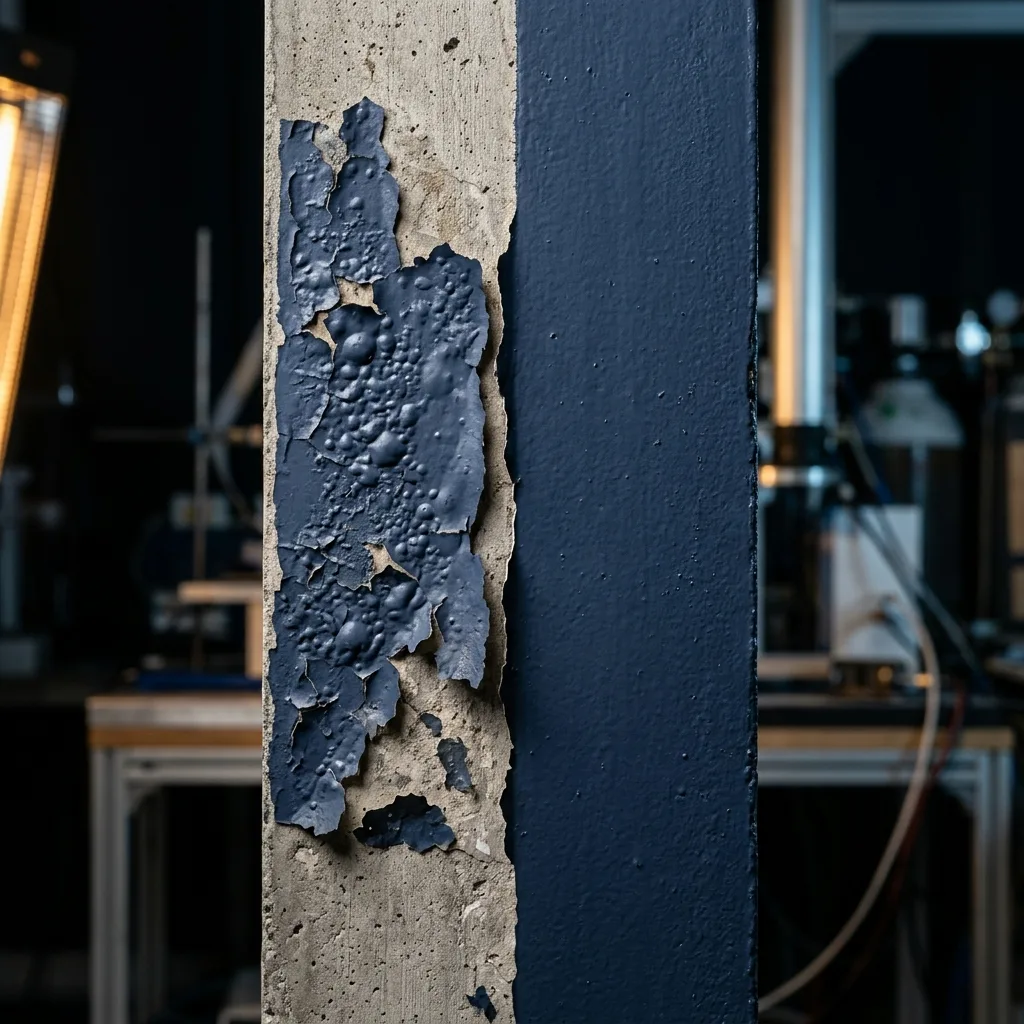
Blistering typically results from moisture vapor trapped behind the paint film — often from substrate moisture intrusion or application over a damp surface — which expands under heat and pushes the film away from the substrate until it ruptures into visible bubbles. Peeling more often traces back to inadequate surface preparation, such as applying new paint directly over a chalky, contaminated, or glossy existing surface without proper cleaning and priming, which prevents the new film from achieving a mechanical or chemical bond strong enough to withstand normal environmental stress. Per EPA guidance on exterior surface preparation, proper substrate cleaning and priming remain foundational steps that no binder formulation can substitute for.
Correctly separating chalking from blistering and peeling during field diagnosis matters because each failure mode demands a completely different fix: chalking points back to binder and pigment formulation choices, while blistering and peeling point to substrate moisture, surface preparation, or primer compatibility — problems no amount of binder reformulation alone will resolve.
Weathering Test Methods and Validation
A durability claim printed on a paint can is only as credible as the testing data standing behind it, which is why accelerated weathering protocols form the backbone of any legitimate exterior emulsion paint development program. Building a testing program around the specific failure modes exterior paint is known to exhibit is what separates an evidence-based durability claim from marketing language.
- QUV/xenon-arc accelerated weathering — Testing per ASTM G154 or ASTM G155 exposes coated panels to controlled UV, heat, and moisture condensation cycles, forecasting years of outdoor exposure within weeks
- Chalking resistance rating — ASTM D4214 quantifies chalking severity on exposed panels against standard photographic references, giving a defensible numerical rating rather than subjective visual judgment
- Gloss retention tracking — Measured at defined exposure intervals to quantify how quickly a film's initial sheen degrades under sustained UV exposure
- Color change (Delta E) measurement — Tracks fading against an unexposed control sample to quantify color stability over the test period
- Real-world exposure racks — Physical test panels left outdoors in representative climates for extended periods, validating what accelerated laboratory testing predicts under genuine environmental conditions
No single test method tells the complete durability story on its own, which is why a manufacturer making a specific service-life claim — a ten- or fifteen-year chalk and fade resistance guarantee, for instance — should be able to produce data across accelerated weathering, chalking rating, gloss retention, and real-world exposure testing rather than relying on any one method in isolation.
Frequently Asked Questions
What causes chalking in exterior emulsion paint, and is it always a defect?
Chalking is the formation of a fine, powdery residue on a paint film's surface caused by UV-driven photodegradation of the binder resin at the film's outermost layer, which releases pigment particles as the surrounding resin breaks down. In controlled, low-grade form, chalking is actually a designed self-cleaning mechanism in some exterior formulations, since the eroding surface layer carries away dirt and mildew with it, keeping the visible film relatively clean over time.
Excessive or premature chalking, however, indicates the binder is degrading faster than intended — usually from insufficient UV-resistant resin content, poor titanium dioxide dispersion, or a binder chemistry unsuited to the climate — and shows up as heavy residue that rubs off on hands or clothing and streaks down the facade during rain. The distinction between designed, low-rate chalking and premature failure comes down to degradation rate, which is why chalking resistance is quantified and tested rather than judged by appearance alone.
How is chalking resistance actually measured and rated?
Chalking resistance is most commonly evaluated using the ASTM D4214 test method, which rates the degree of chalking on a numerical scale by comparing the paint film's chalked surface against a set of standard photographic references after a defined weathering exposure period, either through natural outdoor exposure or accelerated artificial weathering. The test involves pressing black felt or velvet against the exposed paint surface and comparing the amount of pigment transferred to the reference chalk ratings, which range from heavy chalking to no visible chalking at all.
Formulators use this rating system to set measurable, comparable specifications for a product's exterior durability claims rather than relying on subjective visual assessment, and it allows a manufacturer to substantiate a specific service-life claim with defensible test data instead of marketing language alone.
What's the real difference between a 100% acrylic binder and a styrene-acrylic or vinyl-acrylic binder for exterior use?
The core difference lies in how each polymer's molecular structure responds to prolonged UV exposure. Pure acrylic (100% acrylic) binders use only acrylic monomers in the polymer backbone, which gives the resin excellent inherent UV stability, flexibility, and resistance to hydrolysis, making it the preferred choice for premium exterior formulations expected to perform for a decade or more.
Styrene-acrylic binders substitute a portion of the acrylic monomer with lower-cost styrene, which reduces raw material cost but introduces a chemical group in the backbone that is considerably more susceptible to UV-driven chain scission, accelerating chalking and gloss loss under sustained sun exposure. Vinyl-acrylic binders sit at a further cost-performance tier below styrene-acrylic, offering acceptable performance for interior or lightly exposed applications but generally inadequate long-term exterior UV and hydrolysis resistance for direct, sustained weather exposure. The practical takeaway for a manufacturer is that binder selection should be driven by the actual exposure conditions and target service life the product is marketed for, not by upfront raw material cost alone.
When does an exterior paint need to be elastomeric rather than a standard acrylic formulation?
Elastomeric formulations are needed whenever the paint must bridge existing hairline cracks in the substrate or accommodate ongoing substrate movement without cracking itself, which standard acrylic paints — formulated primarily for color, hide, and moderate flexibility — are not designed to do. Elastomeric exterior paints use a specialized acrylic binder system formulated for substantially higher elongation and film thickness, allowing the dried film to stretch and recover as the substrate expands and contracts with temperature and moisture cycling.
This makes elastomeric coatings the appropriate choice for older stucco, masonry with a documented history of hairline cracking, or climates with significant thermal cycling, but it is not a universal upgrade — elastomeric films are applied at a much higher wet film thickness, cost considerably more per unit area, and are unnecessary overkill on sound, crack-free substrates where a standard acrylic exterior paint performs perfectly well.
How much does titanium dioxide loading actually affect exterior paint durability?
Titanium dioxide serves two distinct functions in exterior paint that both bear directly on long-term durability: it provides the opacity and whiteness that determine hiding power, and it acts as a UV-scattering shield that protects the underlying binder resin from photodegradation. Adequate titanium dioxide loading, properly dispersed throughout the film, scatters incoming UV radiation before it can reach and break down the acrylic binder chains at the film's depth, which directly slows the onset of chalking and gloss loss.
Underloading titanium dioxide — a common cost-cutting measure in budget formulations — leaves binder resin more exposed to UV attack even if the paint's initial color and hiding power appear acceptable at application, meaning the durability shortfall often isn't visible until well after the sale, when premature chalking or fading appears in the field. This is why titanium dioxide content is treated as a durability-critical formulation variable, not merely a color and opacity variable, in any exterior paint intended for multi-year outdoor exposure.
Why do some exterior paints fail with peeling or blistering rather than chalking?
Peeling and blistering are adhesion-and-moisture failure modes, distinct from chalking, which is a surface UV-degradation phenomenon — and they typically trace back to substrate moisture, application error, or incompatible prior coatings rather than binder UV resistance. Blistering commonly occurs when moisture vapor trapped behind the paint film, often from substrate moisture intrusion or application over a damp surface, expands under heat and pushes the film away from the substrate, forming visible bubbles that eventually rupture.
Peeling frequently results from inadequate surface preparation — applying paint over a chalky, contaminated, or glossy existing surface without proper cleaning and priming — which prevents the new film from forming a mechanical or chemical bond strong enough to resist normal environmental stress. Distinguishing chalking from peeling and blistering during field diagnosis matters because the corrective action is completely different: chalking calls for reformulation toward better UV-resistant binder and pigment systems, while peeling and blistering point to surface preparation, moisture management, or primer compatibility issues that no binder change alone will fix.
What accelerated weathering tests should a manufacturer run before making a durability claim on a new exterior emulsion paint?
A credible exterior durability claim typically rests on a combination of QUV or xenon-arc accelerated weathering testing per ASTM G154 or ASTM G155, which exposes coated panels to cycles of controlled UV radiation, heat, and moisture condensation to forecast years of real outdoor exposure within weeks of laboratory testing. Alongside accelerated weathering, manufacturers commonly run chalking resistance testing per ASTM D4214 on the same exposed panels, gloss retention measurements at defined exposure intervals, and color change (Delta E) tracking to quantify fading against the unexposed control.
Real-world exposure racks — physical test panels left outdoors in representative climates for extended periods — remain the gold standard for validating what accelerated testing predicts, since no laboratory simulation perfectly replicates the combined effects of UV intensity, humidity cycling, airborne pollutants, and biological growth a facade actually experiences. A manufacturer making a specific service-life claim, such as a ten- or fifteen-year chalk and fade resistance guarantee, should be able to point to test data across all of these methods, not a single accelerated test run in isolation.
Formulating an Exterior Emulsion Paint Product?
Global Formulation provides exterior coatings consultancy, binder and pigment system design, weathering test program design, and durability validation for paint manufacturers worldwide.
Talk to Our Formulation Team