Fragrance Encapsulation and Delivery in Personal Care Products
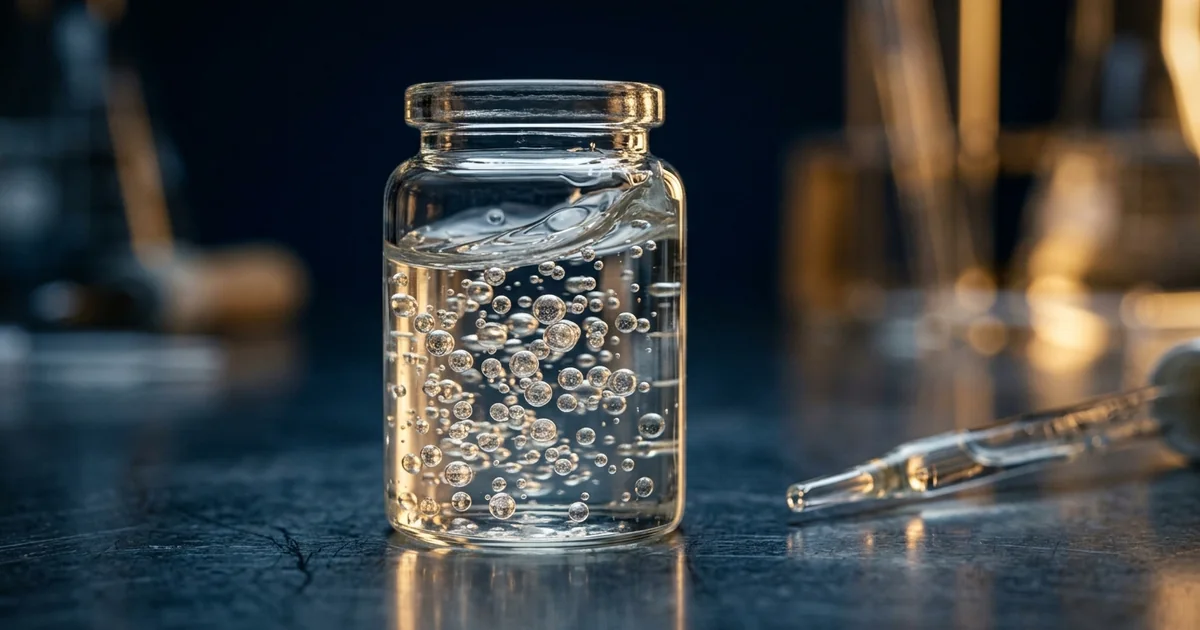
A shampoo smells incredible in the store, noticeably less so by the third wash, and barely at all a month into the bottle — while a competing product on the same shelf still smells fresh on day sixty and delivers a burst of scent every time a towel or a garment washed with it is handled. The difference is rarely the perfume oil itself; it is whether that oil was left free in the formula or protected by fragrance encapsulation technology. Free fragrance begins evaporating the moment it is blended into a water-based product and keeps evaporating through shelf life, application, and rinse-off, while an encapsulated fragrance stays sealed inside a microscopic shell until friction, moisture, or time releases it on cue. This article explains how fragrance microcapsules are built, which wall chemistries dominate the market, what actually triggers them to release scent, and where the formulation and manufacturing challenges lie for a brand considering the technology.
Why Free Fragrance Oil Fades So Fast
Perfume oil is a complex blend of aromatic compounds with a wide range of volatility, and that range is exactly what gives a fragrance its structure of top, middle, and base notes over time. The problem for a personal care formulator is that this same volatility means the most noticeable, attention-grabbing top notes are also the first to escape into the air once the fragrance is exposed, whether in an open bottle on a shelf or spread across skin or fabric after use. Left unprotected, a fragrance blended directly into a formula is fighting evaporation from the moment of manufacture.
- Immediate evaporation — the most volatile top-note molecules begin leaving the product as soon as it is exposed to air, well before the consumer ever opens the bottle.
- Shelf-life scent drift — a product can smell noticeably different, and weaker, at the end of its shelf life than it did at manufacture, purely from ongoing fragrance loss.
- Single-moment delivery — an unencapsulated fragrance delivers essentially all its impact at the moment of application and has little left to offer later, when a fabric is touched or hair is brushed hours after washing.
- Interaction with the base — surfactants, oils, and other actives in the formula can chemically interact with free fragrance oil, altering or degrading the scent profile over time.
Encapsulation exists to break this cycle by physically isolating the fragrance oil from the environment until a deliberate trigger releases it, and the choice of shell material is what determines how well that isolation actually holds up.
Microcapsule Wall Materials
The capsule wall is the single most important design decision in a fragrance encapsulation system, because it has to survive manufacturing shear, storage, and the surfactant and pH environment of the finished product while still being weak enough to break exactly when the brand wants the scent released. Commercial fragrance encapsulation has settled around a small number of wall chemistries, each offering a different balance of mechanical strength, permeability, cost, and regulatory profile. Formulators developing a scent-delivery product often work alongside the broader cosmetics and personal care formulation discipline to choose the right system for the target claim and market.
| Wall chemistry | Formation method | Key strength | Key limitation |
|---|---|---|---|
| Melamine-formaldehyde / aminoplast | In-situ polymerization | Excellent mechanical strength, low fragrance permeability, strong shelf stability | Formaldehyde release concerns; increasingly formaldehyde-scavenged or reformulated |
| Polyurea / polyurethane | Interfacial polymerization | Formaldehyde-free, tunable wall thickness and burst strength | Generally higher raw material cost than aminoplast systems |
| Modified starch / alginate | Complex coacervation or spray drying | Natural-origin positioning, biodegradability claims | Typically weaker wall, shorter fragrance retention |
| Chitosan / cyclodextrin | Complex coacervation or molecular inclusion | Biocompatible, some inherent antimicrobial character (chitosan) | Lower fragrance oil payload capacity per capsule |
Melamine-formaldehyde and polyurea systems dominate mainstream fabric care and personal care applications precisely because their mechanical robustness survives the shear of manufacturing pumps and mixers, while the biopolymer options are chosen more often for marketing and sustainability positioning than for raw performance. Any fragrance formulation, encapsulated or not, still has to clear the same allergen labeling and concentration limits published by the International Fragrance Association, since encapsulation changes how a fragrance is released but not its underlying regulatory status. Once a wall chemistry is chosen, the next question is how that shell is actually built around a droplet of liquid fragrance oil.
How Fragrance Encapsulation Technology Actually Builds a Capsule
Most commercial fragrance microcapsules are made by interfacial polymerization, a process that exploits the boundary between an oil droplet and the surrounding water phase as the exact location where a solid shell needs to form. Understanding this mechanism explains why capsule size, wall thickness, and fragrance payload can all be engineered independently, rather than being fixed properties of a given fragrance oil.
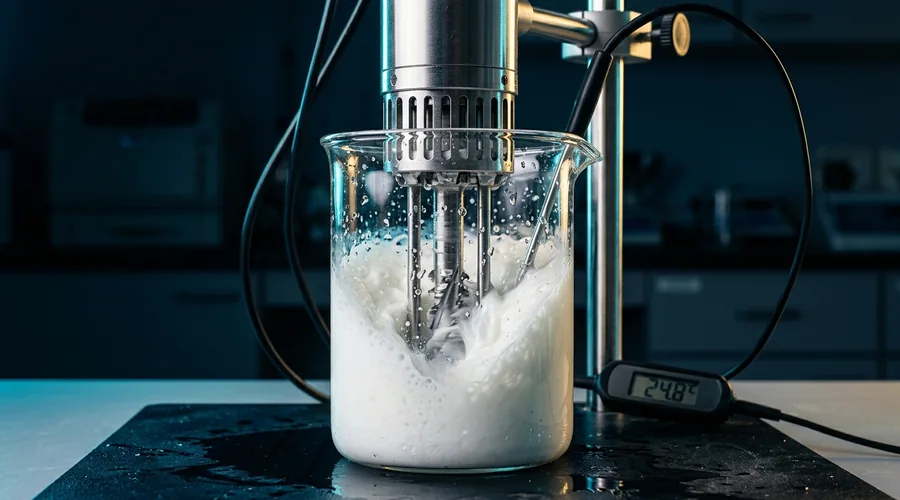
- Emulsification — fragrance oil carrying a dissolved oil-phase monomer is dispersed as fine droplets in a continuous water phase using high-shear mixing.
- Interfacial reaction — a second, water-soluble monomer diffuses to each droplet's surface and reacts with the oil-phase monomer exactly at that interface.
- Shell growth — the polymerization reaction builds a continuous membrane inward from the droplet surface, wrapping the oil core in a solid wall.
- Cure and wash — the reaction is driven to completion under controlled temperature and time, then unreacted monomer and by-products are washed from the capsule slurry.
- Sizing and payload control — droplet size from the emulsification step, combined with monomer ratio and reaction time, sets the final capsule diameter, wall thickness, and how much fragrance oil each capsule carries.
Getting the emulsion and reaction chemistry right produces a batch of intact, appropriately sized capsules — but a capsule that never breaks is as useless as one that breaks too early, which is why release behavior is engineered just as deliberately as the wall itself.
Release Triggers: Getting the Scent Out When It Matters
A fragrance capsule is only valuable if it releases its payload at the right moment, and different personal care applications call for genuinely different release mechanisms. Matching the trigger to the way a consumer actually interacts with the product is as much a part of the formulation brief as the fragrance itself.
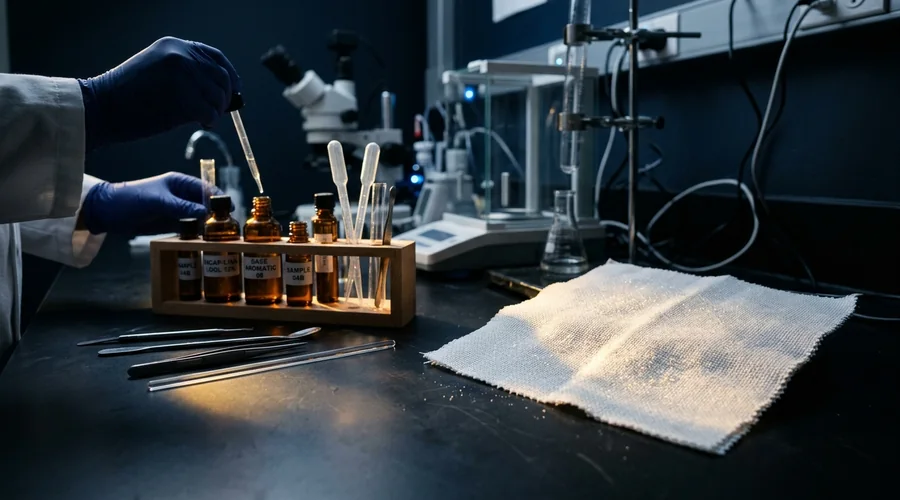
- Friction rupture — the dominant commercial trigger, where the capsule wall is engineered to survive processing and storage but fracture under rubbing, brushing, or towel friction, releasing a scent burst on handling.
- Moisture-triggered release — capsules with a more hydrophilic or swellable wall release fragrance on contact with sweat or humidity, useful in deodorants and body sprays.
- Slow diffusion release — a deliberately semi-permeable wall lets fragrance oil leach out gradually over an extended period without requiring the capsule to rupture at all.
- Combined mechanisms — some products blend capsule types with different triggers and burst strengths to deliver an initial application scent plus a longer-lasting reactivation effect.
Choosing the right trigger only pays off if the capsules survive intact from the reactor to the finished, packaged product, and that survival is where most real-world encapsulation projects run into trouble.
Formulation and Manufacturing Challenges
Incorporating fragrance capsules into a finished shampoo, lotion, or fabric conditioner introduces a set of practical constraints that a fragrance oil alone never presented, because the capsules themselves are physical particles that can be damaged, that can settle, and that can interact with the surrounding formula. Anticipating these issues during development is far cheaper than discovering a batch of prematurely burst capsules after a product has already shipped. The same suspension and sensory considerations show up in related emulsion-based formats such as body lotion and cream formulation, where particulate or phase stability is equally central to the finished feel of the product.
- Shear sensitivity during manufacturing — the same pumping and mixing needed to disperse capsules evenly can rupture them prematurely if shear is not controlled and capsules are not added late in the process.
- Chemical compatibility — the surfactant system, pH, and any active ingredients in the base formula must not chemically attack or dissolve the capsule wall polymer over the product's shelf life.
- Suspension stability — capsules with a density different from the surrounding base can settle or cream during storage, requiring rheology modifiers that hold them in place without impairing normal product flow.
- Payload and dosing — the fragrance house's recommended capsule dosage has to be balanced against cost, target scent intensity, and the specific trigger behavior the brand wants.
A formulation that solves all four of these constraints delivers on the scent-burst promise consistently across the product's full shelf life; a formulation that skips any one of them risks a product that either loses its capsules to premature rupture or never delivers the burst the packaging claims.
Where Fragrance Encapsulation Earns Its Cost
Encapsulation adds real cost and formulation complexity relative to a simple fragrance oil addition, so the decision to use it should be tied to a genuine consumer-facing benefit rather than added as a generic upgrade. Certain product categories have a much clearer return on that investment than others, based on how the consumer physically interacts with the product after the point of application.
- Fabric conditioners and detergents — the category where encapsulation is most established, since fragrance release on handling dry, stored fabric is a signature and heavily marketed benefit.
- Shampoos and conditioners — encapsulated fragrance supports "long-lasting scent" and "smells great all day" claims by releasing on hair handling and friction long after rinsing.
- Body washes and lotions — used in premium fragrance-forward products where a lingering, reactivatable scent is part of the positioning.
- Deodorants and antiperspirants — moisture-triggered capsule systems can release additional fragrance specifically in response to sweat.
A brand weighing encapsulation for a new launch should start from the claim it wants to make, because that claim dictates the release trigger, which in turn dictates the wall chemistry and the entire downstream formulation and stability program.
Frequently Asked Questions
What is fragrance encapsulation and why is it used in personal care products?
Fragrance encapsulation is the process of enclosing liquid perfume oil inside a solid or semi-solid protective shell, typically a few microns in diameter, so the fragrance is released gradually or on a specific trigger rather than evaporating all at once. It is used because free fragrance oil blended directly into a shampoo, lotion, or fabric conditioner loses most of its volatile top notes within minutes of application, and even the more persistent base notes fade within a few hours as they evaporate from the skin or fabric surface.
Encapsulation protects the fragrance oil from evaporation, light, and interaction with other formulation ingredients until the capsule wall is broken by rubbing, friction, or moisture, releasing a burst of scent exactly when the product is used or touched again later.
What materials are used to build a fragrance microcapsule wall?
The two dominant commercial wall chemistries are melamine-formaldehyde and related aminoplast resins, and polyurea or polyurethane shells formed by interfacial polymerization. Melamine-formaldehyde capsules are valued for excellent mechanical strength and low permeability to the fragrance oil, giving strong shelf stability and a satisfying friction-triggered burst, though formaldehyde release concerns have pushed formulators toward alternative or formaldehyde-scavenged versions.
Polyurea and polyurethane systems avoid the formaldehyde question entirely and are now widely used in mainstream personal care and fabric care products. Biopolymer wall materials, including modified starches, alginate, chitosan, and cyclodextrin-based systems, are also used, particularly where a brand wants to make a natural-origin or biodegradability claim, though they generally offer a shorter-lasting or less mechanically robust capsule than the synthetic polymer classes.
How does interfacial polymerization actually build the capsule around the fragrance oil?
Interfacial polymerization starts with an oil-in-water emulsion, where droplets of fragrance oil carrying a dissolved monomer or prepolymer are dispersed in a continuous water phase. A second reactive monomer, dissolved in the water phase, diffuses to the oil-water interface of each droplet and reacts with the oil-phase monomer exactly at that boundary, building a polymer shell that grows inward from the droplet surface.
Because the reaction is confined to the interface, the shell forms as a thin, continuous membrane wrapped around the oil core rather than as bulk polymer suspended separately in the water. Reaction time, temperature, monomer ratio, and emulsion droplet size are all controlled to set the final capsule diameter and wall thickness, which together determine how much fragrance oil payload the capsule carries and how easily it ruptures.
What triggers a fragrance microcapsule to release its scent?
The dominant commercial trigger is mechanical rupture from friction, meaning the capsule wall is designed to be strong enough to survive processing, storage, and washing, but weak enough to fracture when rubbed between fingers, brushed against fabric, or compressed during towel-drying. This is why fragrance-encapsulated fabric softeners and hair conditioners are formulated to deliver a noticeable scent burst specifically when the fabric or hair is handled, long after the product itself was rinsed away.
Other triggers used in specific applications include moisture-triggered release, where capsules designed with a more hydrophilic or swellable wall release fragrance on contact with sweat or humidity, and slow diffusion release, where the wall is deliberately made semi-permeable so fragrance oil leaches out continuously over an extended period rather than requiring rupture at all.
Why does encapsulated fragrance last longer than fragrance blended directly into a formula?
Free fragrance oil blended into a rinse-off or leave-on product is exposed to air, water, and other formulation ingredients from the moment it is manufactured, so its most volatile aromatic compounds, the top notes, begin evaporating immediately and continue doing so through the product's shelf life and after application. Encapsulation solves this by keeping the fragrance oil sealed away from the atmosphere inside an intact capsule wall until that wall is mechanically or chemically triggered to break, at which point the fragrance is released in a concentrated burst rather than having already partially evaporated.
The practical result is a product that smells fresh on the shelf for its full stated shelf life and delivers a noticeable scent burst on use or reactivation, whereas an equivalent unencapsulated formula would have already lost a significant fraction of its top-note character before the consumer ever opens the bottle.
What formulation and stability challenges come with using encapsulated fragrance?
Capsule survival through manufacturing and the finished product's shelf life is the central challenge, because the same shear forces, pumping, and mixing needed to disperse capsules evenly through a viscous base can also rupture them prematurely if process parameters are not controlled. Formulators have to select a capsule size and wall strength matched to the specific process, use low-shear addition steps late in manufacturing, and verify that the surfactant system, pH, and any other actives in the formula do not chemically attack or dissolve the wall polymer over time.
Suspension stability is another concern, since capsules with a density different from the surrounding base can settle or cream during storage, which is managed with rheology modifiers that hold the capsules in place without preventing them from flowing normally when the product is dispensed and used.
When should a personal care brand consider fragrance encapsulation for a new product?
Encapsulation earns its added cost and formulation complexity when long-lasting scent is a genuine part of the product's value proposition, which is most clearly true for fabric conditioners, shampoos and conditioners marketed on hold or freshness claims, and body washes or lotions positioned as premium fragrance experiences. A formulation consultant can help a brand decide whether encapsulation is worth the investment for a given product type, select a capsule chemistry and supplier appropriate to the target claim and regulatory market, and design the process and stability testing program needed to confirm the capsules survive manufacturing and shelf life intact.
This kind of contract formulation and product development support is especially valuable for indie and emerging personal care brands that want a scent-delivery point of difference but do not have in-house microencapsulation expertise.
Adding Long-Lasting Fragrance to Your Product Line?
Global Formulation provides microencapsulated fragrance formulation consulting, long-lasting scent delivery product development services, burst-release fragrance technology support, and scent encapsulation R&D for personal care brands and manufacturers.
Talk to Our Formulation Team