Grout and Tile Adhesive Rheology Control with Cellulose Ethers

A tile adhesive that tests perfectly in the lab can still fail on a hot construction site by mid-afternoon, losing its water into a thirsty substrate before the tiler even finishes the wall. That gap between lab performance and field reality is almost always a rheology problem, and it traces back to one additive class more than any other: the cellulose ether rheology modifier construction chemical formulators rely on to hold water in the paste long enough for bonding to happen. Getting this additive wrong costs manufacturers callbacks, warranty claims, and reputation in a market where tile failures are highly visible and expensive to fix. This article explains how HPMC and related cellulose ethers control water retention, open time, and sag resistance in dry-mix mortars, how to select a grade and dosage for a target application, and what test protocols actually validate performance before a product ships. Readers finishing this guide will have a working framework for diagnosing rheology-driven field failures and specifying cellulose ether systems with confidence rather than guesswork.
Why Tile Adhesive Needs Water Retention
Ordinary Portland cement paste has almost no ability to hold onto its own mix water once it contacts a porous substrate, which creates a fundamental problem for any cement-based tile adhesive or grout applied to masonry, cement board, or another absorbent surface. Understanding this water-loss mechanism is the starting point for understanding why cellulose ethers became a near-universal component of modern dry-mix mortars rather than an optional performance enhancer.
When fresh adhesive is troweled onto a porous substrate, capillary suction pulls water out of the paste almost immediately, and if that water is lost before the cement has hydrated sufficiently at the bond interface, the resulting bond strength suffers — sometimes invisibly, showing up only as premature tile debonding months or years later. A cellulose ether such as hydroxypropyl methylcellulose (HPMC) addresses this by dissolving into the mix water and forming a viscous hydrogel that binds a substantial fraction of that water, releasing it slowly rather than surrendering it instantly to substrate suction. This gives the cement paste enough retained moisture and working time to hydrate properly at the critical tile-to-substrate interface, which is where the actual bond strength that holds a tile in place over decades gets established.
Because water retention underpins bond development at a molecular level, not just surface workability, the specific cellulose ether chemistry a formulator selects has consequences that extend well beyond how the paste feels on a trowel.
HPMC vs HEMC: Selecting the Right Polymer
Not all cellulose ethers behave identically in a cementitious environment, and the choice between the two dominant types used in construction — HPMC and HEMC — shapes water retention, paste cohesion, and trowelability in ways that matter for the final product's field performance. Formulators need to understand these differences rather than treating cellulose ether as an interchangeable commodity ingredient.
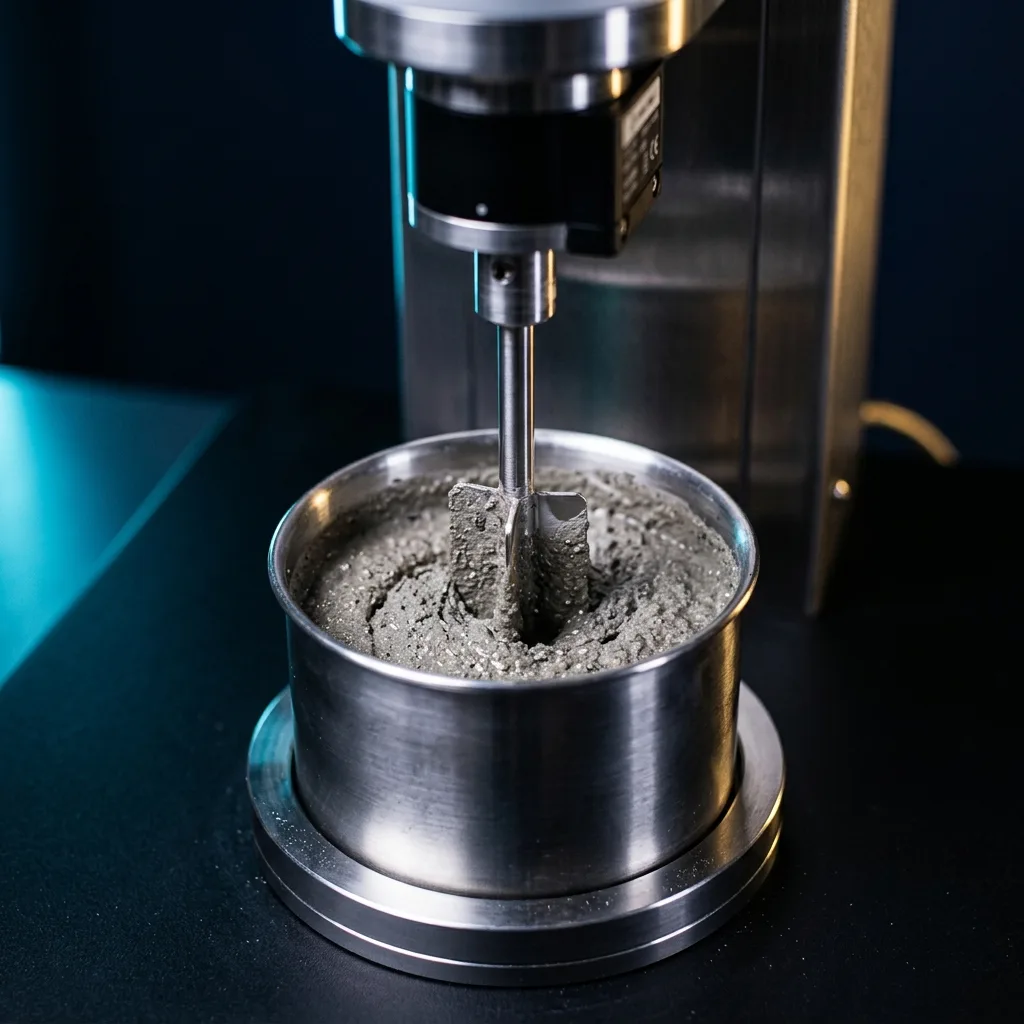
- HPMC (hydroxypropyl methylcellulose) — Generally delivers the strongest water retention and a firmer, more cohesive paste feel; the common default for premium tile adhesives and skim coats
- HEMC (hydroxyethyl methylcellulose) — Offers somewhat better enzymatic stability and can produce smoother trowelability in certain formulations
- Interaction with redispersible polymer powder — Cellulose ether performance shifts depending on the RDP already present in the formulation, so the two additives should be optimized together, not independently
| Property | HPMC | HEMC |
|---|---|---|
| Water retention | Excellent | Good to excellent |
| Paste cohesion | Firm, cohesive | Slightly smoother |
| Typical use case | Premium tile adhesives, skim coats | Standard adhesives, plasters |
Within the broader field of construction chemicals formulation, cellulose ether selection is rarely a standalone decision — it interacts with cement type, filler particle size, and the redispersible polymer system already chosen, which is why the molecular weight grade of the ether matters just as much as the base chemistry type.
Molecular Weight and Viscosity Grade
Alongside base chemistry, molecular weight — expressed practically as the viscosity grade listed on a supplier's technical data sheet — is the other dominant lever formulators pull to tune how a cellulose ether performs in fresh mortar. Getting this variable right determines whether a paste feels workable under the trowel or fights the applicator at every stroke.
Higher molecular weight grades build viscosity more efficiently at a given dosage, which is valuable for improving sag resistance on vertical tile applications where the adhesive needs to hold a heavy tile in place without slumping before it sets. Pushed too far, however, high viscosity makes the paste feel stiff and difficult to spread evenly, working against the tiler rather than for them. Methylcellulose derivatives in the 40,000 to 80,000 mPa·s viscosity range are typical starting points for standard tile adhesive formulations, giving a workable balance between sag resistance and trowelability that most formulators then fine-tune through trial batching.
Balancing viscosity grade against real-world trowel feel is only half the picture, since the same molecular weight decision also governs how long the paste stays workable and tacky once it's spread on the substrate — the property known as open time.
Open Time and Sag Resistance
Open time — how long freshly troweled adhesive remains tacky enough to properly wet and bond a tile pressed into it — is one of the most field-sensitive properties in tile adhesive formulation, since it varies dramatically with site conditions that a formulator cannot fully control. Recognizing what drives open time loss is essential for setting realistic dosage and grade specifications for the climates and substrates a product will actually encounter.
- Evaporation rate — Hot, dry, or windy site conditions pull surface moisture away faster than the cellulose ether can compensate
- Substrate porosity — Highly absorbent substrates such as unsealed lightweight block or dry cement board draw water from below simultaneously with evaporation from above
- Dosage adequacy — Underdosing relative to total formulation water demand leaves insufficient reserve moisture to sustain tackiness through a realistic working window
Sag resistance operates on a related but distinct mechanism: it depends on the paste building yield stress fast enough after troweling to physically support a heavy tile against gravity before any curing has occurred, which is primarily a viscosity and thixotropy function of the cellulose ether and any secondary rheology additives in the system. A formulation optimized purely for open time in mild conditions can still fail on a vertical wall application if its sag resistance was not separately validated, which is why manufacturers targeting hot climates or heavy tile formats typically specify both a higher cellulose ether dosage and a higher-retention grade than a product built for temperate conditions and lighter tiles.
Because open time and sag resistance respond to overlapping but not identical formulation variables, validating both properties independently under realistic conditions is what separates a technical data sheet claim from a product that actually performs on site.
Dosage Optimization and Testing Protocols
Cellulose ether is one of the more expensive raw materials in a dry-mix mortar formulation on a per-kilogram basis, which makes dosage a frequent target for cost reduction — but cutting dosage without proper testing carries real, sometimes invisible, performance risk. Establishing a defensible testing protocol is what allows a formulator to optimize cost without gambling on field failures.
- Water retention testing — Standardized vacuum or filter-paper methods referenced in EN 1015-8 and equivalent regional protocols quantify the percentage of mix water retained under controlled suction
- Open time and adjustability testing — Bench trials that press a standard tile into aged adhesive at timed intervals to determine when adequate transfer and bond strength are lost
- Sag testing — Vertical application trials using a notched trowel and a standard tile weight to quantify slump before set
- Bond strength verification — Pull-off testing after standard cure periods, ideally repeated across the substrates the product is marketed for
| Test | What It Validates | Reference Standard |
|---|---|---|
| Water retention | Cement hydration reserve at bond line | EN 1015-8 |
| Open time | Real-world working window | EN 1346 |
| Bond strength (pull-off) | Final adhesive performance | EN 1348 / ASTM C1583 |
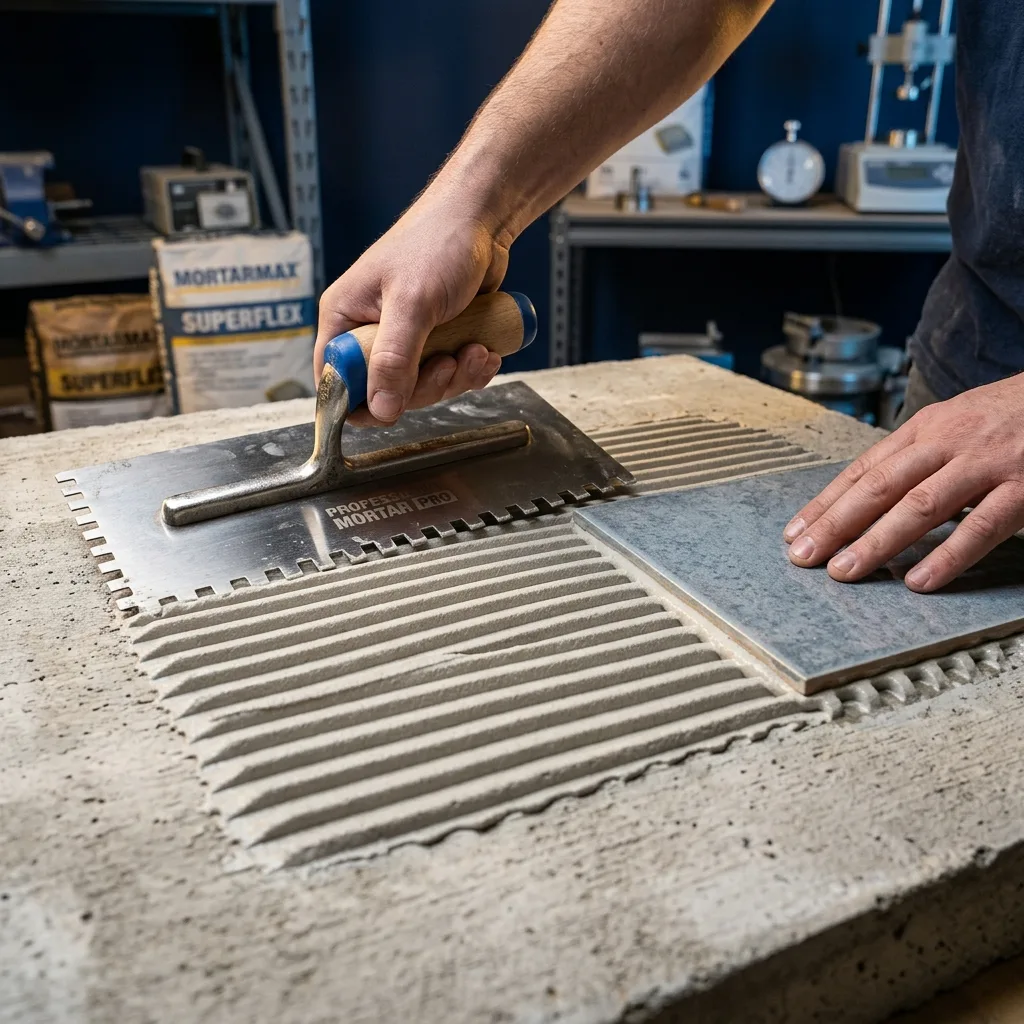
A well-formulated tile adhesive intended for absorbent substrates typically targets water retention values above 95%, and manufacturers who validate dosage decisions against this kind of structured test program — rather than assuming a technical data sheet number will transfer unchanged into their specific formulation — are the ones who avoid expensive field complaints months after a cost-reduction initiative shipped.
Frequently Asked Questions
Why does tile adhesive need a cellulose ether at all — what happens without one?
Without a cellulose ether, a cement-based tile adhesive loses its mix water into the porous substrate and tile back almost immediately after application, since ordinary Portland cement paste has essentially no inherent water-holding capacity of its own. That rapid water loss starves the cement of the moisture it needs for hydration at the bond interface, which directly undermines the adhesive strength that develops between the tile and the substrate.
Cellulose ethers such as HPMC bind a large portion of the mix water in a viscous hydrogel that releases moisture slowly, keeping the paste workable and giving the cement enough time and water to hydrate properly at the critical interface. Beyond water retention, the same polymer also controls sag resistance and open time, which is why cellulose ether selection is treated as a primary formulation decision in dry-mix mortars rather than a minor additive choice.
What's the practical difference between HPMC and HEMC for tile adhesive formulation?
HPMC (hydroxypropyl methylcellulose) and HEMC (hydroxyethyl methylcellulose) are both methylcellulose-based ethers, but they differ in the side-group chemistry substituted onto the cellulose backbone, which changes how each behaves in a cementitious paste. HPMC generally delivers stronger water retention and a firmer, more cohesive paste feel, making it the more common choice in premium tile adhesives and skim coats where bond strength and sag resistance are prioritized.
HEMC tends to offer somewhat better enzymatic stability and can provide smoother trowelability in certain formulations, though the practical performance gap between the two narrows considerably once substitution degree and molecular weight are optimized. Most manufacturers select between them based on a combination of cost, regional raw material availability, and how the polymer performs alongside the redispersible polymer powder already in the formulation, since the two additives interact rather than perform independently.
How does cellulose ether molecular weight affect mortar workability?
Molecular weight, expressed as viscosity grade in the manufacturer's technical data sheet, is one of the two dominant variables — alongside substitution degree — that determines how a cellulose ether performs in a fresh mortar. Higher molecular weight grades build viscosity more efficiently at a given dosage, which improves sag resistance on vertical tile applications and reduces slump, but excessive viscosity can make the paste feel stiff and harder to trowel out smoothly.
Lower molecular weight grades are easier to disperse and produce a smoother, more workable paste at higher dosages, but they contribute less structural viscosity and may require a secondary thickener or higher total dosage to achieve equivalent sag resistance. Formulators typically select a viscosity grade in the 40,000 to 80,000 mPa·s range for standard tile adhesives, balancing trowelability against the vertical sag resistance the application demands, and fine-tune from there based on trial batches under actual application conditions.
What causes a tile adhesive to lose open time faster than expected in the field?
Open time — the window during which freshly troweled adhesive remains tacky enough to properly wet and bond a tile pressed into it — collapses fastest under hot, dry, or windy site conditions where surface evaporation outpaces the cellulose ether's water-retention capacity. Substrate porosity plays an equally large role, since a highly absorbent substrate such as unsealed lightweight block or dry cement board pulls water out of the adhesive film from underneath at the same time evaporation is pulling it from above.
Underdosing the cellulose ether relative to the formulation's total water demand, or selecting a grade with insufficient water retention for the intended climate and substrate combination, leaves the paste with too little reserve moisture to sustain tackiness through the labor-realistic working window. This is why open time claims on a technical data sheet are always tied to specific ambient conditions, and why formulations intended for hot or arid markets typically carry both a higher cellulose ether dosage and a higher-retention grade than a formulation built for temperate conditions.
How is water retention actually measured and specified for a cellulose ether grade?
Water retention is typically measured using a standardized vacuum or filter-paper method in which a fresh mortar sample is placed under controlled suction for a fixed time, and the percentage of mix water retained in the paste — rather than drawn through into the filter medium — is reported as the water retention value. Methods referenced in standards such as EN 1015-8 and equivalent regional test protocols give formulators a comparable, repeatable number to specify against rather than relying on subjective trowel-feel assessments alone.
A well-formulated tile adhesive intended for absorbent substrates typically targets water retention values above 95%, since even a few percentage points of difference can measurably shift open time and bond development on porous substrates. Manufacturers use this test data both to select an appropriate cellulose ether grade during development and to run incoming raw material quality control, since water retention performance can vary between production lots of nominally identical polymer.
Can cellulose ether dosage be reduced to cut formulation cost without hurting performance?
Cellulose ether is a relatively expensive component of a dry-mix mortar on a per-kilogram basis, so it is a frequent target for cost reduction, but underdosing carries real performance risk that is not always visible until the product is in field use. Reducing dosage below the level needed for adequate water retention accelerates moisture loss into the substrate, shortens open time, and can measurably reduce final bond strength — particularly on absorbent or high-suction substrates where the margin for error is already thin.
Some formulators offset a modest dosage reduction by upgrading to a higher-retention or higher-viscosity grade, which can maintain performance at a lower use level, but this substitution needs to be validated through actual water retention and bond strength testing rather than assumed from the technical data sheet alone. The more reliable path to cost optimization is a structured formulation review with trial batching across the substrates and climate conditions the product will actually see in the field, not a blanket dosage cut applied without testing.
Formulating a Tile Adhesive or Grout Product?
Global Formulation provides dry-mix mortar consultancy, cellulose ether and rheology system design, water retention and bond strength validation, and contract formulation support for construction chemical manufacturers worldwide.
Talk to Our Formulation Team