Industrial Floor Coating Systems: Epoxy, Polyurethane, and MMA Comparison
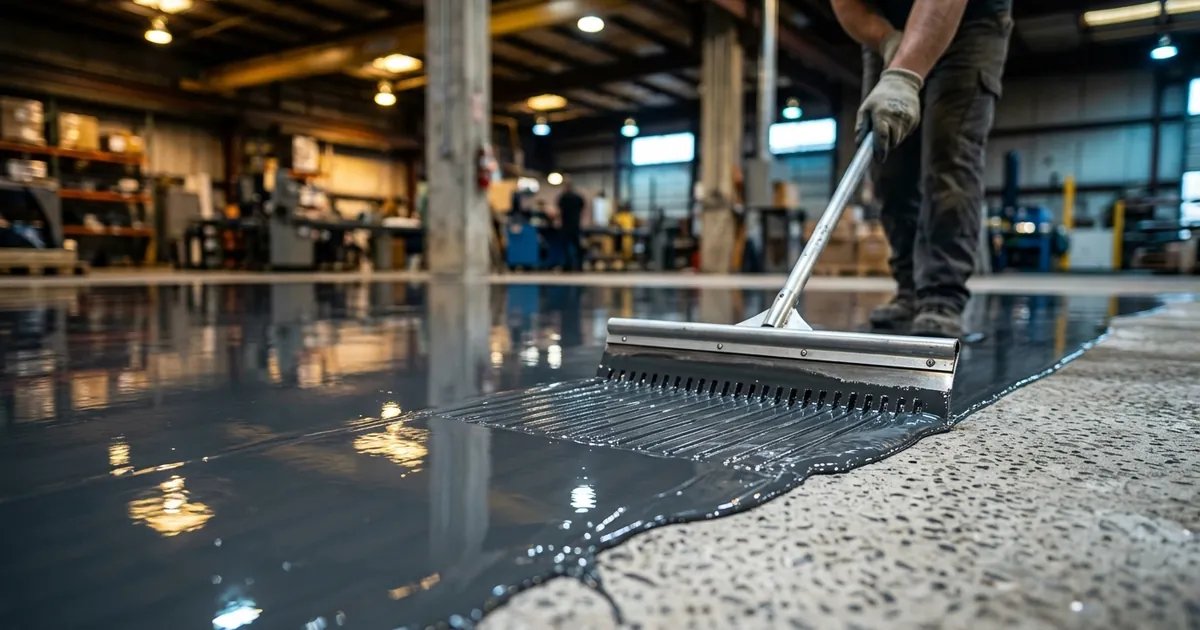
A food processing plant shuts a production line for a floor recoat, budgets three days for the epoxy system to cure, and loses a fourth day when a cold snap slows the reaction further than the data sheet predicted. Three states away, a cold storage facility installs an MMA coating over a weekend and reopens for pallet traffic before Monday's first shift. Both floors will perform well for a decade. The difference was never the concrete — it was which of three chemistries the specifier chose. Industrial floor coating systems built on epoxy, polyurethane, or methyl methacrylate (MMA) resin each cure by a genuinely different reaction, and that reaction chemistry — not marketing language about "industrial-grade" coatings — determines cure time, chemical resistance, temperature tolerance, and total cost of ownership. This article explains how each chemistry actually cures, where each system's real strengths and limits are, and how to match a system to a facility's operating constraints rather than to whichever product a contractor happens to stock. It is written for engineers and facility owners specifying or troubleshooting an industrial floor coating.
Why Industrial Floor Coating Systems Are a System Decision
An industrial floor coating is frequently specified as a single line item — "epoxy floor" — when it is actually a system decision spanning substrate preparation, resin chemistry, film thickness, and topcoat selection. Treating it as an interchangeable commodity is how facilities end up with coatings that fail years early or that cost the business far more in downtime than the coating itself was worth. The three dominant chemistries are not tiers of the same product; they solve different operating problems, and specifying the wrong one for the actual constraints is the single most common and most expensive mistake in industrial flooring.
- Cure chemistry sets the downtime cost — a facility that cannot tolerate multi-day downtime needs a fundamentally different resin chemistry than one installing a floor during a planned shutdown.
- Chemical and thermal exposure narrows the field — aggressive acids, prolonged UV exposure, or repeated freeze-thaw cycling each favor a different chemistry.
- Total lifecycle cost rarely matches installed cost — the cheapest system per square foot is often the most expensive system over a ten-year horizon once downtime and recoat frequency are counted.
- Substrate preparation is chemistry-independent — no resin system compensates for inadequate surface preparation, a point returned to later in this article.
With the framing set, the rest of this article works through each chemistry on its own terms, starting with epoxy — still the most widely specified system and the baseline the other two are usually compared against. Broader construction-chemical formulation context is available in the construction chemicals knowledge base.
Epoxy Flooring: Chemistry and Where It Excels
Epoxy flooring systems cure through an epoxide-amine addition reaction, where an epoxy resin and an amine-based hardener react to form a dense, highly cross-linked thermoset film. That cross-link density is what gives cured epoxy its excellent hardness, abrasion resistance, and broad chemical resistance, and it is also what makes epoxy systems relatively slow to cure and sensitive to application temperature. Epoxy remains the default recommendation for a large share of industrial flooring projects precisely because its chemical resistance and cost profile suit the majority of manufacturing and warehouse environments.
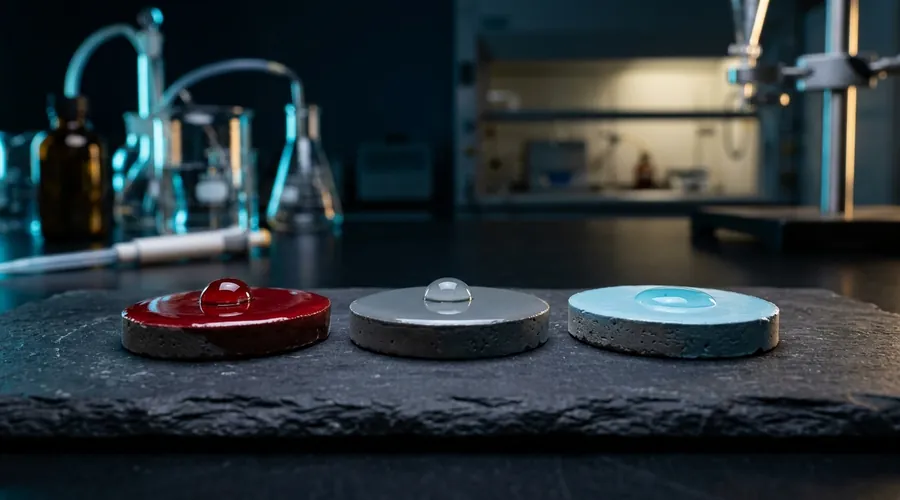
- Standard bisphenol-A epoxy — good general chemical and abrasion resistance, the workhorse choice for warehouses, manufacturing floors, and light-to-moderate chemical exposure.
- Novolac and vinyl ester-modified epoxy — formulated for aggressive chemical exposure, used in secondary containment, battery rooms, and chemical processing areas exposed to concentrated acids and solvents.
- Self-leveling epoxy floor coating technology — lower-viscosity formulations that flow out under their own weight to a flat, seamless finish, widely used where a smooth, hygienic, easily cleaned surface is required.
- Cure time and temperature sensitivity — typical systems need roughly 24 to 72 hours before foot traffic and longer before full chemical resistance and cold ambient temperatures slow the amine cure further.
- UV limitation — standard epoxy chalks and yellows under prolonged UV exposure, which is why it is rarely specified for permanently sunlit outdoor areas without a UV-stable topcoat.
Epoxy's cure-time and UV limitations are exactly what polyurethane and polyaspartic chemistry were developed to address, without giving up chemical resistance entirely.
Polyurethane and Polyaspartic Flooring
Polyurethane floor coatings cure through isocyanate chemistry, reacting an isocyanate component with a polyol or amine to build a flexible, UV-stable polymer film. Compared to standard epoxy, polyurethane generally offers better flexibility, better abrasion and impact resistance in thinner films, and markedly better resistance to UV degradation and thermal cycling, which suits it to areas with sunlight exposure or temperature swings that would stress a rigid epoxy film. Polyaspartic coatings are a specific, fast-curing subclass of polyurethane chemistry that has become popular precisely because it narrows the cure-time gap with epoxy while keeping polyurethane's flexibility and UV stability.
- Standard polyurethane — good flexibility, chemical resistance, and UV stability; commonly used as a topcoat over an epoxy basecoat as well as a standalone system.
- Polyaspartic polyurethane — a faster-curing formulation that can often be recoated or opened to light traffic in hours rather than days, closing much of epoxy's cure-time disadvantage.
- Outdoor and UV-exposed applications — loading docks, ramps, and any floor with sustained sunlight exposure generally favor polyurethane over unprotected epoxy for long-term appearance and film integrity.
- Thermal cycling tolerance — polyurethane's greater flexibility helps it accommodate the expansion and contraction that occurs in temperature-variable environments better than a more rigid epoxy film.
Polyurethane closes much of the gap with epoxy on cure speed and improves on UV performance, but for facilities where hours — not a full workday — separate installation from full return to production, MMA chemistry is the system built specifically for that constraint.
MMA Flooring: Fast Cure, Higher Cost
Methyl methacrylate flooring systems cure by free-radical polymerization, a fundamentally different mechanism from the step-growth reactions that cure epoxy and polyurethane. A peroxide initiator triggers rapid chain-growth polymerization of the methacrylate monomer, and that reaction runs to substantial completion far faster than epoxy's amine cure or polyurethane's isocyanate cure — often within one to two hours rather than the better part of a day. This speed, combined with a cure mechanism that is far less temperature-dependent than the other two chemistries, is MMA flooring's defining commercial advantage.
- Fast return to service — many MMA systems can bear foot and light equipment traffic within one to two hours of application, a fraction of typical epoxy or standard polyurethane cure windows.
- Cold-temperature installation — because the cure is a free-radical reaction rather than a temperature-dependent step-growth reaction, MMA systems can cure usably even at or below freezing, a genuine advantage for cold storage and winter installation work.
- Temperature-cycling durability — good tolerance for repeated freeze-thaw and washdown cycling, suiting cold storage docks and food and beverage processing environments.
- Higher material and labor cost — MMA monomer and peroxide initiator systems cost more than standard epoxy or polyurethane raw materials, and the fast, exothermic cure typically requires smaller batch mixing and tighter application timing, increasing labor intensity.
- Application odor — MMA systems have a distinctive, stronger odor during application than epoxy or polyurethane, which can require additional ventilation planning in occupied or sensitive facilities.
With all three chemistries characterized individually, the practical specification question is how they stack up against each other directly, which is where a side-by-side comparison earns its place.
Head-to-Head Comparison
No single system wins on every axis, which is exactly why three chemistries continue to coexist in the market rather than one displacing the others. The table below summarizes the practical trade-offs a specifier actually weighs, and it should be read alongside the facility-specific constraints — downtime tolerance, chemical exposure, and installation temperature — rather than as a ranking of one system over another.
| Property | Epoxy | Polyurethane / Polyaspartic | MMA |
|---|---|---|---|
| Cure mechanism | Epoxide-amine addition | Isocyanate addition | Free-radical polymerization |
| Typical return-to-traffic | 24–72 hours | Hours (polyaspartic) to ~24 hours (standard) | 1–2 hours |
| Cold-temperature cure | Slows sharply below ~10°C | Moderate sensitivity | Cures usably near or below freezing |
| UV stability | Poor unprotected — chalks/yellows | Good to excellent | Good |
| Chemical resistance | Good to excellent (novolac grades) | Good | Good, broad-spectrum |
| Relative material cost | Lowest | Moderate | Highest |
| Typical best fit | Warehouses, manufacturing, chemical containment | Outdoor/UV-exposed areas, hybrid topcoats | Cold storage, food/beverage, minimal-downtime plants |
Hybrid systems that combine an epoxy basecoat with a polyurethane or polyaspartic topcoat are common precisely because they capture epoxy's cost-efficient bulk build and substrate bonding together with polyurethane's superior wear-layer UV stability and abrasion resistance — as long as the coating manufacturer confirms the two layers are chemically compatible.
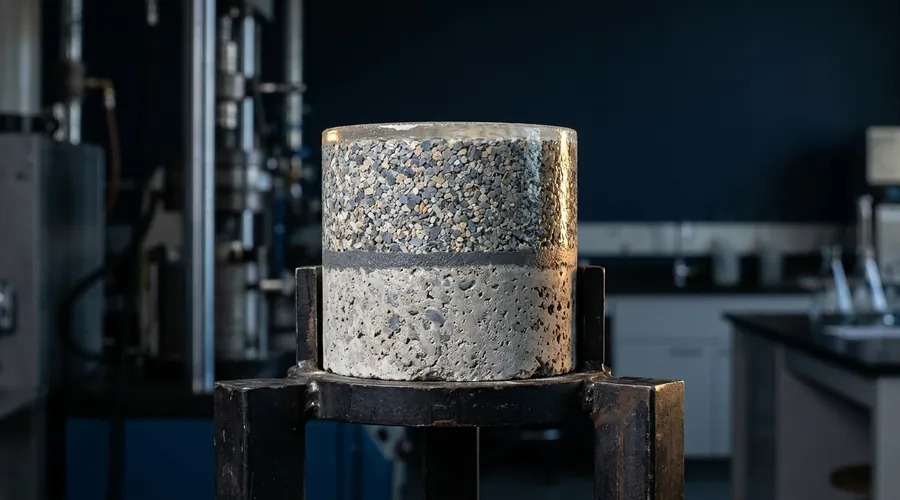
No comparison of resin chemistry matters, however, if the concrete beneath any of these systems was not properly prepared, which is the shared point of failure across all three.
Substrate Preparation: The Shared Failure Point
Every one of these three coating chemistries depends on a properly prepared concrete substrate for both mechanical and chemical bonding, and inadequate preparation — not resin selection — is the most common root cause of field coating failure. A facility can specify the technically correct chemistry for its operating conditions and still see premature delamination or blistering if the underlying concrete was not brought to the coating manufacturer's specification before application.
- Mechanical profiling — shot blasting or diamond grinding opens the concrete surface profile and removes laitance, giving the coating a mechanical key to bond into.
- Moisture vapor testing — confirming the slab's moisture vapor emission rate is within the coating system's specified limit; excess vapor pressure from below is a leading cause of blistering regardless of coating chemistry.
- Contaminant removal — oil, grease, and curing-compound residue must be fully removed, since any of these can prevent proper adhesion no matter how well the resin itself performs.
- Crack and joint assessment — existing cracks and movement joints need evaluation and treatment appropriate to the chosen system's movement-accommodation capability before coating.
Confirming this preparation sequence with the installer — and verifying it against the coating manufacturer's written specification, not a generic standard — is the single highest-leverage quality control step in any of these three systems' installation. With chemistry and preparation both understood, the remaining task is matching them to the facility's actual operating profile.
Choosing a System for a Real Facility
The right system emerges from the facility's operating constraints, not from habit or from whichever product a local contractor stocks. A structured evaluation against the facility's real downtime tolerance, chemical exposure, and installation conditions produces a defensible specification rather than a guess dressed up as an industry-standard choice.
- How much downtime can the facility actually tolerate? — a planned shutdown favors conventional epoxy or polyurethane; a continuously operating plant favors MMA or fast-cure polyaspartic.
- What chemicals, temperatures, and mechanical loads will the floor see daily? — aggressive chemical exposure favors novolac epoxy; UV or thermal cycling favors polyurethane; repeated freeze-thaw favors MMA.
- What conditions will the floor be installed under? — cold-weather or unheated-building installation strongly favors MMA's temperature-independent cure.
- What does the ten-year cost picture look like? — compare installed cost, expected recoat frequency, and cumulative downtime cost, not installed cost per square foot alone.
Working through these questions before the specification is finalized, ideally with a flooring or formulation consultant who can translate operating constraints into a specific system and layer design, is what separates a floor that performs for a decade from one that becomes a recurring maintenance line item. For system design, chemical-resistance testing, or contract manufacturing support on an industrial flooring product, the construction chemicals formulation team can help specify and validate the right layer system for a given facility.
Frequently Asked Questions
What is the main functional difference between epoxy, polyurethane, and MMA floor coatings?
The three systems cure by different chemistry, and that difference drives almost every practical distinction between them. Epoxy systems cure by an epoxide-amine addition reaction that is relatively slow and highly exothermic-sensitive in thick sections, giving excellent chemical and abrasion resistance but real cure-time and cold-temperature limitations.
Polyurethane and polyaspartic systems cure by isocyanate chemistry, generally offering better UV stability and flexibility than epoxy, with faster-curing polyaspartic variants used where rapid return-to-service matters. Methyl methacrylate (MMA) systems cure by a free-radical polymerization that is dramatically faster than either alternative and largely temperature-independent, curing usably even below freezing, at the cost of a stronger odor during application and generally higher material cost. The right choice depends on cure-time constraints, chemical exposure, temperature during installation, and budget, not on any one system being universally best.
Why does cure speed matter so much in industrial flooring projects?
Industrial and commercial facilities lose production revenue for every hour a floor is out of service, and cure speed is often the deciding factor even when two systems have similar technical performance. A standard epoxy system can require 24 to 72 hours before it can bear foot traffic and longer before full chemical resistance develops, which is acceptable for a new-build project but very costly for a working plant that cannot shut down a production line for days.
MMA systems can often be back in service within one to two hours of application because the free-radical cure reaction runs to completion quickly regardless of ambient temperature, which is why they dominate in food and beverage plants, cold storage facilities, and any environment where downtime has a direct revenue cost. Polyaspartic polyurethane formulations were developed specifically to close this gap for epoxy-like applications, curing markedly faster than conventional epoxy while retaining good chemical resistance.
Which flooring system offers the best chemical resistance for harsh industrial environments?
Novolac epoxy and vinyl ester-modified epoxy systems generally offer the broadest and most aggressive chemical resistance of the three families, which is why they remain the default choice for secondary containment, chemical processing areas, and battery rooms exposed to concentrated acids and solvents. Standard bisphenol-A epoxy has good but more moderate resistance, adequate for most manufacturing and warehouse environments without aggressive chemical exposure.
Polyurethane and polyaspartic systems offer good general chemical resistance and notably better resistance to prolonged UV exposure and thermal cycling than epoxy, making them a better fit for outdoor loading docks or areas with sunlight exposure. MMA systems offer good broad-spectrum chemical resistance combined with excellent temperature-cycling tolerance, which suits them to environments like cold storage docks that see repeated freeze-thaw and washdown cycling that can stress a rigid epoxy film over time.
Why do MMA floor coatings cost more than epoxy or polyurethane systems?
The higher material cost of MMA systems reflects both the raw material chemistry and the specialized application requirements. Methyl methacrylate monomer and the peroxide initiator systems used to trigger its free-radical cure are more expensive than standard epoxy resins and hardeners, and MMA's fast, exothermic cure means installers typically work in smaller batches with tighter timing, which increases labor intensity.
The trade-off is almost always an economic one at the project level rather than a pure material cost comparison: a facility that can return to full production one or two hours after installation instead of one to three days often recovers the higher material cost many times over in avoided downtime, which is why MMA sees disproportionate use in continuously operating plants despite its price premium over epoxy or standard polyurethane.
Can these three flooring systems be combined in a single installation?
Yes, and hybrid systems that combine two chemistries in different layers are common in demanding industrial installations. A typical hybrid uses an epoxy or epoxy-mortar base coat for its excellent substrate bonding, self-leveling behavior, and cost efficiency in the bulk of the film thickness, topped with a polyurethane or polyaspartic topcoat for its superior UV stability, abrasion resistance, and gloss retention in the wear layer that actually sees foot and vehicle traffic.
MMA is less commonly layered with the other two because its very fast cure and different bonding chemistry make sequencing more complex, but MMA basecoats are sometimes used specifically where an extremely fast return-to-service is needed for the structural layer, with a compatible topcoat added afterward. Any hybrid system needs the layers confirmed as chemically and mechanically compatible by the coating manufacturer, since an incompatible topcoat can delaminate from an incompatible basecoat regardless of how well each performs individually.
What substrate preparation is required before applying any of these floor coating systems?
All three coating families depend on mechanical and chemical bonding to a properly prepared concrete substrate, and inadequate preparation is the single most common cause of field coating failure regardless of which chemistry is used. The concrete surface typically needs mechanical abrasion by shot blasting or diamond grinding to open the surface profile and remove laitance, followed by moisture testing to confirm the slab's moisture vapor emission rate is within the coating manufacturer's specified limit, since excess moisture vapor pressure from below can cause blistering or delamination regardless of coating chemistry.
Surface contaminants such as oil, grease, or curing compound residue must be fully removed, and any cracks or joints need to be assessed and treated according to the specific system's movement-accommodation capability before the coating is applied. Skipping or under-specifying this preparation step is responsible for a large share of premature industrial floor coating failures in the field.
How should a manufacturer decide which flooring system fits their facility?
The decision should start from the facility's operating constraints rather than from a generic preference for one chemistry. The key questions are how long the facility can tolerate the floor being out of service, what specific chemicals, temperatures, and mechanical loads the floor will actually see in daily operation, whether the installation environment is temperature-controlled or subject to cold or freezing conditions during application, and what the facility's realistic maintenance and recoating budget looks like over a ten-year horizon rather than just the initial installation cost.
A formulation or flooring-system consultant can translate these operational constraints into a specific system recommendation and specification, and engaging that expertise before the floor design is finalized avoids the common and costly mistake of specifying a system based on cost per square foot alone rather than total lifecycle performance.
Specifying or Formulating an Industrial Floor Coating System?
Global Formulation provides industrial flooring formulation consulting, flooring system product development services, and chemical resistant flooring manufacturer support for epoxy, polyurethane, and MMA coating systems.
Talk to Our Formulation Team