Industrial Tank Lining Coatings: Selection & Application Guide
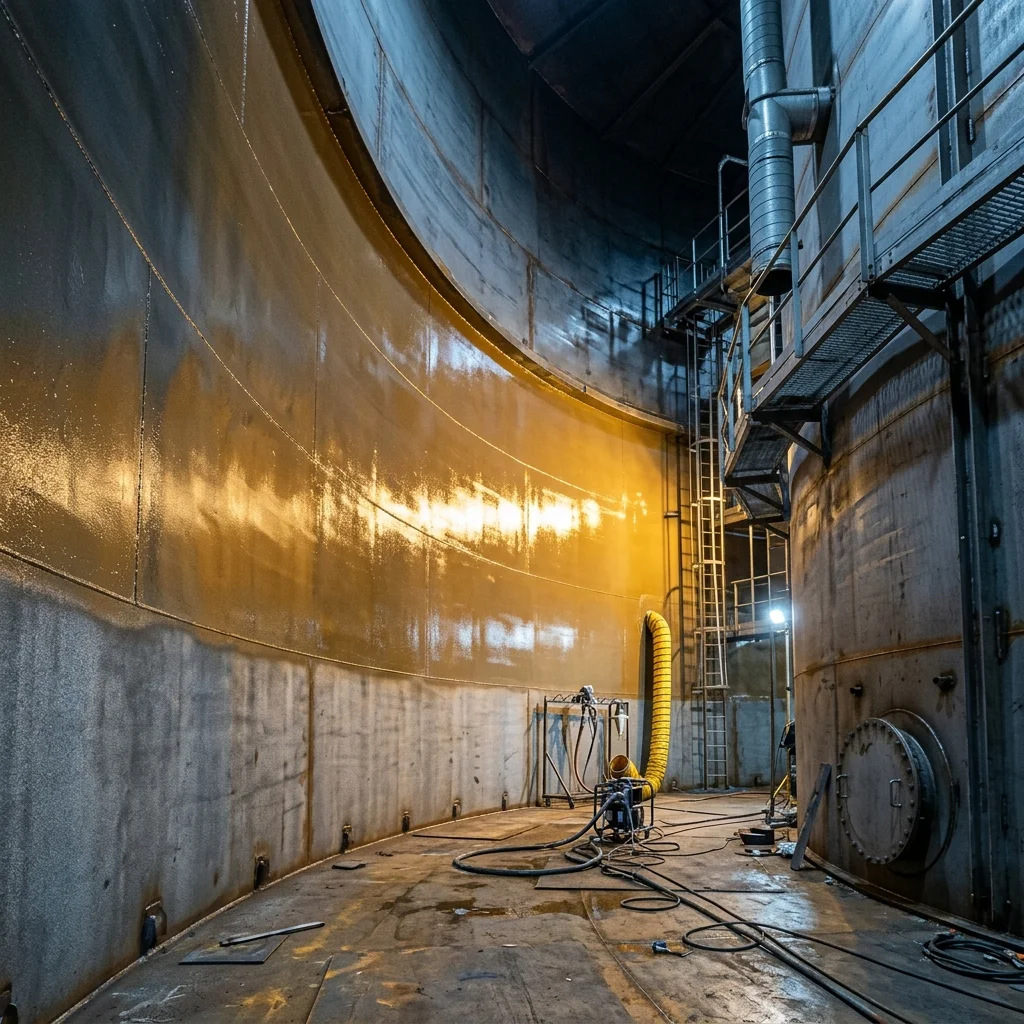
A storage tank that goes into service with the wrong internal lining rarely fails quietly — it fails as an unplanned shutdown, a contaminated batch, or in the worst cases a containment breach that draws regulatory attention. Industrial tank lining coatings exist to prevent exactly this outcome, forming a continuous chemical and physical barrier between the stored medium and the steel or concrete substrate underneath. For plant engineers and tank fabricators, getting the lining selection wrong is not a cosmetic problem the way an exterior paint failure might be — it is a direct threat to asset integrity, product purity, and worker safety. This guide covers how epoxy, novolac epoxy, and glass-flake lining systems differ chemically, how to match a lining to the specific media a tank will hold, and what surface preparation and inspection standards separate a lining that lasts decades from one that blisters within a year. Understanding these fundamentals gives engineers and specifiers the technical grounding to evaluate coating data sheets and applicator proposals with real confidence.
Why Tank Linings Fail Under Continuous Immersion Service
Tank linings operate under a far more demanding exposure regime than almost any other coating application, because the coated surface remains in constant or near-constant contact with the stored liquid rather than drying between exposure events. This sustained contact drives permeation and osmotic pressure through the film continuously, which is the root mechanism behind the two most common tank lining failure modes: blistering and disbondment. Recognizing why immersion service is uniquely punishing is the starting point for understanding every lining specification decision that follows.
Blistering occurs when water or dissolved species permeate through the cured film and accumulate at the substrate interface or within the film itself, creating localized osmotic pressure that eventually lifts the coating from the steel. Disbondment, by contrast, traces back most often to inadequate surface preparation — residual mill scale, oil contamination, or an insufficient surface profile that never allowed the lining to achieve a mechanical and chemical bond strong enough to resist the sustained stress of immersion. Both failure modes are progressive: a small blister or edge of disbondment left unaddressed becomes an entry point for the stored chemical to attack bare steel directly, accelerating corrosion well beyond what the exposed area alone would suggest.
Because both major failure mechanisms trace back to either resin chemistry mismatch or surface preparation shortfalls, the sections that follow address each in turn — starting with how the major lining chemistries differ in their resistance to permeation and chemical attack.
Lining Chemistry: Epoxy, Novolac & Glass-Flake Systems
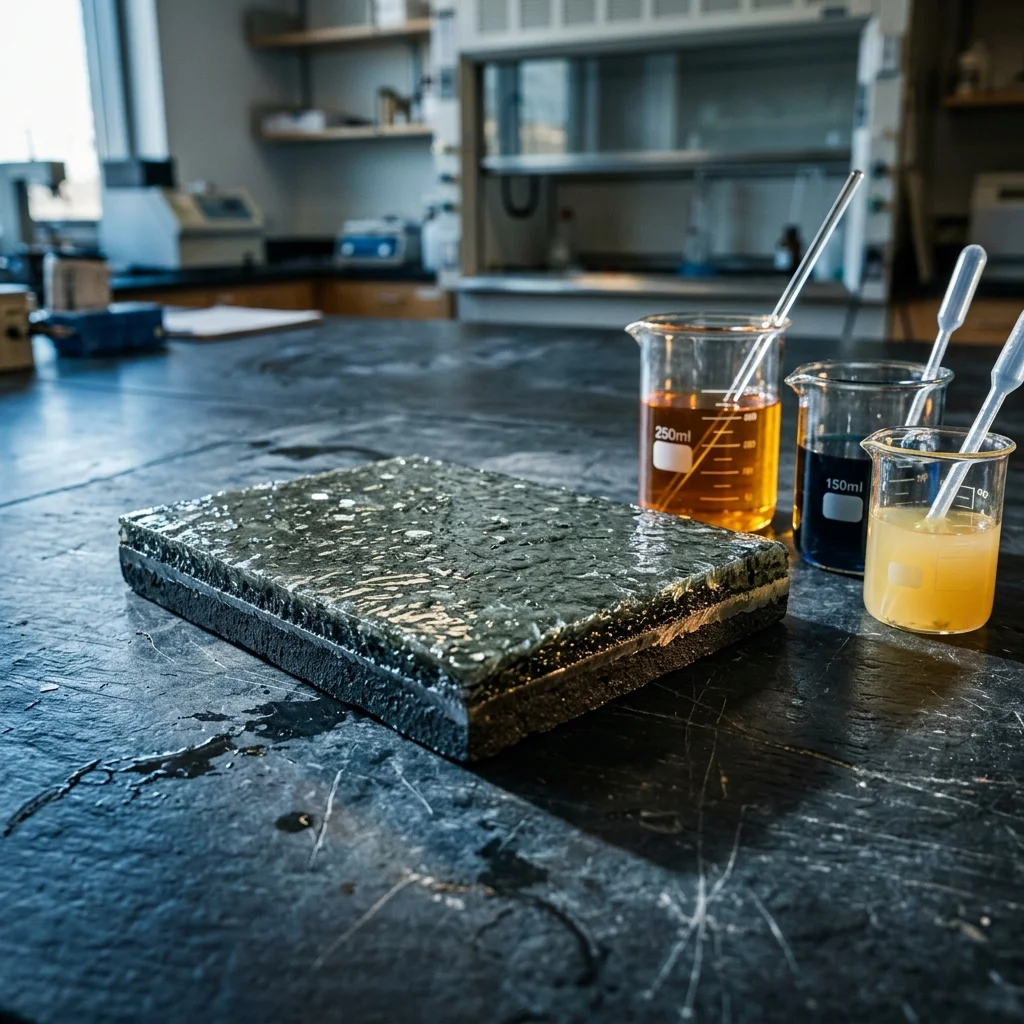
Three resin families dominate industrial tank lining work, and each represents a different balance of chemical resistance, application cost, and service temperature tolerance. Selecting among them starts with understanding how their underlying polymer chemistry drives real-world performance, not just reading a resistance chart in isolation, since two systems can share a resin family and still differ meaningfully in cross-link density and formulation quality.
- Standard bisphenol A epoxy — Two-component amine or polyamide-cured system offering broad resistance to dilute acids, alkalis, salts, and hydrocarbons at moderate service temperatures; the workhorse lining for general chemical storage
- Novolac epoxy — Higher-functionality epoxy resin backbone delivering denser cross-linking after cure, giving superior resistance to concentrated acids, aromatic solvents, and elevated temperatures compared with standard epoxy
- Glass-flake reinforced epoxy or vinyl ester — Platelet-shaped glass flakes embedded in the resin matrix orient parallel to the substrate during application, dramatically extending the physical diffusion path for permeating molecules and improving abrasion resistance
- Vinyl ester lining — Offers strong resistance to oxidizing acids and higher service temperatures than standard epoxy, commonly specified for aggressive chemical process tanks
As covered in our epoxy coatings guide, cross-link density is the single variable most responsible for a cured film's chemical resistance and permeation barrier properties, which is exactly why novolac and standard epoxy systems — despite sharing the same base resin family — perform so differently under identical chemical exposure. Glass-flake systems add a second, independent resistance mechanism on top of resin chemistry: the physical tortuosity of the diffusion path through oriented flakes, which is why glass-flake linings are frequently specified for the most demanding immersion services even when the underlying resin is a familiar epoxy or vinyl ester.
Choosing between these systems purely on cost misses the point — a lining that fails at year three of a fifteen-year design life costs far more in downtime and re-lining labor than the price premium of the correct system would ever have cost upfront, which is exactly what the next section's chemical-service matching framework is designed to prevent.
Matching Lining Chemistry to Stored Media
No single lining chemistry resists every chemical at every concentration and temperature, which is why lining selection must start from the specific stored medium's identity, concentration, and service temperature rather than a generic "epoxy resists chemicals" assumption. Coating manufacturers publish detailed chemical resistance charts precisely because small changes in concentration or temperature can shift a lining from suitable to unsuitable for a given service.
| Stored Medium | Recommended Lining Chemistry | Key Consideration |
|---|---|---|
| Dilute acids, general salts | Standard bisphenol A epoxy | Cost-effective for moderate-severity, ambient-temperature service |
| Concentrated sulfuric or hydrochloric acid | Novolac epoxy or glass-flake novolac | Requires resistance data at the actual concentration and temperature, not general acid resistance claims |
| Aromatic solvents, fuels | Novolac epoxy or specialty solvent-resistant lining | Standard epoxy can soften or lose adhesion under continuous aromatic solvent contact |
| Potable or process water | NSF/ANSI 61-certified epoxy or polyurethane lining | Regulatory certification for contact with drinking water is mandatory, not optional |
| Elevated-temperature process chemicals | Novolac epoxy or vinyl ester, temperature-rated | Verify manufacturer's maximum continuous service temperature for the specific chemical |
Beyond the primary chemical, engineers should also account for secondary exposure: cleaning chemicals used during tank maintenance, occasional off-spec batches, and vapor-phase exposure above the liquid line, all of which can be more aggressive toward the lining than the primary stored product itself. For further guidance on selecting coating systems by service environment, our broader paints and coatings resource covers resin selection principles that extend beyond immersion-specific applications, and general coating durability principles are also detailed in our anti-corrosion coatings guide.
Getting the chemistry match right eliminates the single largest cause of premature lining failure, but chemistry alone cannot compensate for poor surface preparation — the next critical variable in a lining's service life.
Surface Preparation Requirements for Tank Lining Adhesion
Surface preparation is the single factor most correlated with tank lining longevity, and it receives less attention in casual discussion than resin chemistry despite being at least as important to service life. A lining applied over an inadequately prepared substrate can use the correct chemistry for its service and still fail early, because adhesion — not chemical resistance alone — determines whether the lining stays bonded under sustained immersion stress.
Abrasive blast cleaning to a near-white metal finish, commonly specified per SSPC-SP10, removes mill scale, rust, and prior coating residue while creating a controlled anchor profile that the lining mechanically keys into during cure. The anchor profile depth must fall within the coating manufacturer's specified range — typically measured with a profile comparator or replica tape — because a profile that is too shallow limits mechanical adhesion, while an excessively deep or irregular profile can leave peaks inadequately covered by the specified film thickness.
- Abrasive blast cleaning — Removes mill scale, rust, and contamination to the specified cleanliness standard (commonly near-white metal for immersion service)
- Surface profile verification — Confirms anchor pattern depth falls within the lining manufacturer's specified range using a profile comparator or replica tape
- Contamination testing — Soluble salt testing and oil/grease contamination checks, since residual chlorides under a lining are a well-documented cause of osmotic blistering
- Dust and debris removal — Vacuum or blow-down cleaning immediately before coating application to prevent particulate inclusion in the film
Weld seams, edges, and internal fittings deserve particular attention during preparation, since these geometric features are common sites of coating thinning and premature failure if not specifically addressed with stripe coating before the full lining system is applied. Getting surface preparation right is a prerequisite that no amount of additional film thickness or premium resin chemistry can substitute for — which sets up exactly why application method and thickness control form the next critical stage.
Application Method and Film Thickness Control
Applying a tank lining correctly requires controlling both the application method and the resulting dry film thickness within the coating manufacturer's specified range, since deviations in either direction introduce distinct failure risks. Plural-component spray application is standard for large tank interiors because it delivers consistent mixing ratios and film build across large surface areas far more reliably than hand application methods.
- Stripe coating — Edges, welds, and fittings receive a targeted first coat by brush or roller to ensure adequate film build on geometrically difficult areas before full spray application
- Primary coat application — Plural-component spray equipment applies the bulk of the specified film thickness in one or more passes, following the manufacturer's recoat window
- Wet film thickness monitoring — Applicators check wet film thickness during application using a notched gauge to confirm the target dry film build will be achieved
- Cure verification — Full chemical and mechanical cure is confirmed before the tank is returned to service, since immersion before adequate cure can compromise the lining's chemical resistance permanently
Dry film thickness is verified after cure using a calibrated magnetic or eddy-current thickness gauge at a statistically representative number of points across the tank interior, with results compared against the manufacturer's specified range rather than a single minimum threshold. Applying significantly beyond the specified range is not a safety margin — excess film thickness in many two-component systems increases internal cure stress and can promote cracking or reduced flexibility, particularly in thermally cycling service.
Even a correctly applied lining at the right thickness still requires independent verification before the tank enters service, which is where inspection and holiday testing close the loop on quality assurance.
Inspection, Holiday Testing & Quality Verification
A tank lining's protective function depends entirely on maintaining an unbroken barrier across the full internal surface, so inspection protocols are built specifically to catch the kind of microscopic discontinuities that visual inspection alone would miss. This final verification stage is what separates a documented, defensible lining installation from one where failures surface only after the tank is already back in service.
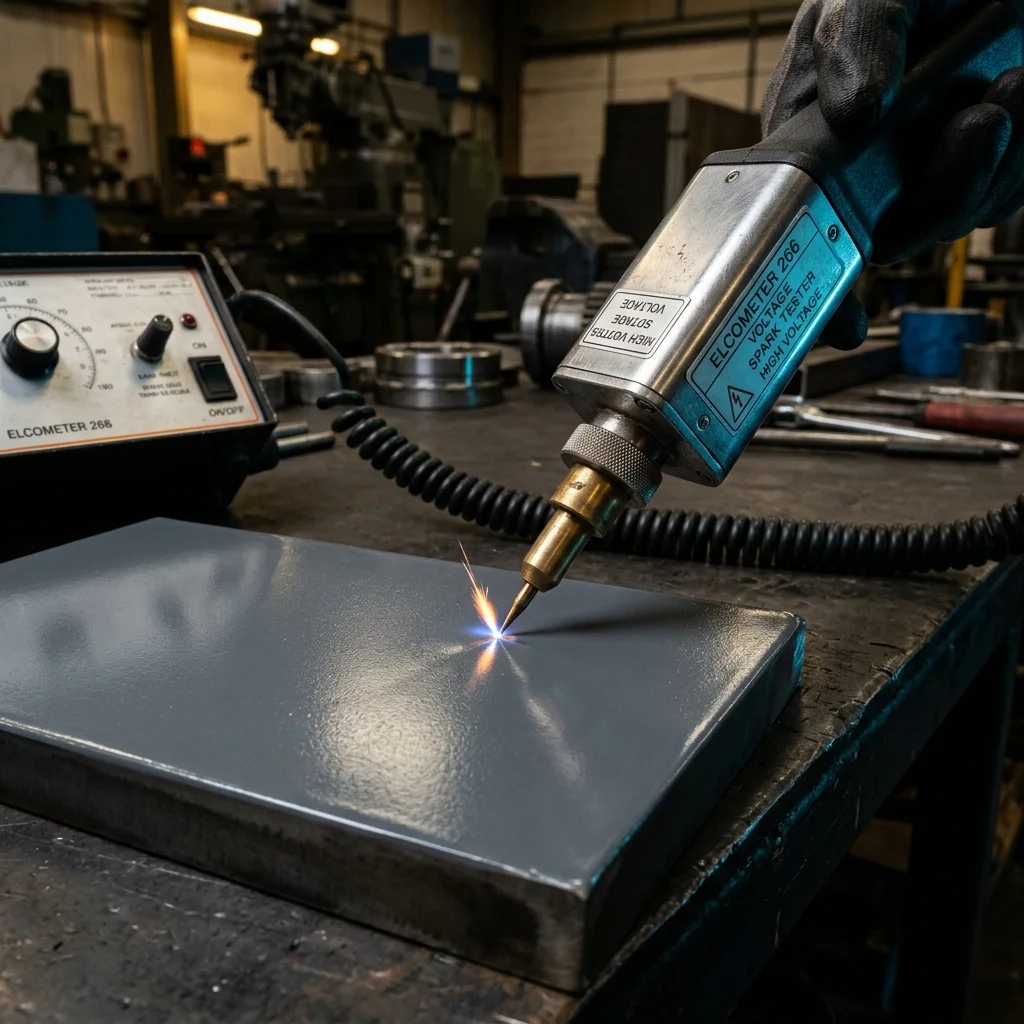
Holiday testing uses either a low-voltage wet sponge tester for thinner films or a high-voltage spark tester for thicker immersion-grade linings, sweeping the coated surface to detect pinholes, voids, and thin spots that create a direct path for the stored chemical to reach bare steel. Any holiday detected during testing is marked, repaired by abrading and recoating the local area, and retested before the tank is accepted. Dry film thickness surveys, adhesion testing on representative test panels, and documented cure-time verification round out a complete quality package, with all results recorded against the project specification for long-term asset records.
A tank lining project that documents surface preparation standards, application film thickness, and holiday test results in full gives the asset owner a defensible record for the lining's expected service life — and gives maintenance teams a clear baseline to compare against during future inspections.
Frequently Asked Questions
What is the difference between a tank lining and a standard protective coating?
A standard protective coating is typically designed for atmospheric or intermittent exposure, where the coated surface dries between wetting events and the coating primarily needs to resist weathering and occasional splash contact. A tank lining, by contrast, must maintain full chemical and physical integrity under continuous or near-continuous immersion in the stored medium, often at elevated temperature, which is a fundamentally more demanding service condition.
Immersion service exposes the lining to constant osmotic and permeation pressure from the stored liquid, so tank linings are formulated with higher cross-link density, lower permeability resins, and thicker film builds than typical atmospheric coatings to resist blistering, softening, and chemical attack over years of continuous contact.
How do I choose between a standard epoxy lining and a novolac epoxy lining?
The choice comes down to the specific chemical and thermal environment inside the tank. Standard bisphenol A epoxy linings perform well against a broad range of dilute acids, alkalis, salts, and general industrial chemicals at moderate temperatures, and they are more cost-effective and easier to apply than novolac systems.
Novolac epoxy linings use a more highly cross-linked, higher-functionality resin backbone that delivers substantially better resistance to concentrated acids, aromatic solvents, and elevated service temperatures, making them the standard choice for aggressive chemical storage such as concentrated sulfuric acid or high-temperature hydrocarbon service. The tradeoff is that novolac systems are typically more brittle, more expensive, and more sensitive to application conditions, so they are reserved for services where standard epoxy chemical resistance data shows a genuine gap.
Why is surface preparation considered more critical for tank linings than for exterior coatings?
Surface preparation determines the lining's adhesion strength, and adhesion is the single factor most responsible for premature tank lining failure under continuous immersion. An exterior coating with marginal adhesion may still perform adequately because it is not subjected to constant osmotic pressure from a liquid medium, but a tank lining with inadequate surface profile or residual contamination will blister, disbond, or undercut corrode far faster once submerged continuously.
Industry specifications such as SSPC-SP10 near-white metal blast cleaning and a controlled anchor profile are treated as non-negotiable minimums for tank lining work specifically because the immersion environment offers no tolerance for the adhesion shortfalls that an atmospheric coating might survive.
What is holiday testing and why is it performed on every tank lining?
Holiday testing, performed with either a low-voltage wet sponge tester for thin films or a high-voltage spark tester for thicker linings, detects pinholes, voids, and discontinuities in the cured lining film that are invisible to the naked eye but provide a direct path for the stored chemical to reach the substrate. Because a tank lining's entire function depends on maintaining a continuous, defect-free barrier across the full internal surface, even a single holiday can initiate localized corrosion or coating undercutting that eventually causes a much larger area of the lining to fail.
Holiday testing is performed as a mandatory quality control step on essentially every industrial tank lining application, with detected holidays repaired and retested before the tank is returned to service.
How thick does a tank lining need to be, and does thicker always mean better protection?
Tank lining thickness is specified by the coating manufacturer's technical data sheet for the intended chemical service and is typically applied in multiple coats to reach a specified dry film thickness range, often measured in hundreds of microns for demanding immersion service. Thicker is not automatically better: a film applied significantly beyond the manufacturer's recommended range can develop excessive internal cure stress, leading to cracking, reduced flexibility, or solvent entrapment in solvent-borne systems, any of which can compromise performance rather than improve it.
The correct approach is to follow the specified dry film thickness range precisely and verify it with a calibrated magnetic or eddy-current gauge at multiple points across the tank, rather than assuming extra coats provide a safety margin.
Can an existing failed tank lining be repaired, or does it need full removal and reapplication?
The answer depends on the extent and root cause of the failure. Isolated holidays, minor mechanical damage, or small blistered areas identified early can often be spot-repaired by abrading back to sound substrate, feathering the surrounding lining edge, and reapplying compatible material in the affected area, provided the original lining is still well-bonded elsewhere.
Widespread blistering, disbondment, or chemical degradation across a significant portion of the tank interior generally indicates a systemic failure — often traced back to inadequate original surface preparation or an incorrect lining selection for the service — and in that scenario, full removal back to bare substrate and complete reapplication is the only reliable long-term solution, since partial repairs over a compromised lining tend to fail again at the repair interface.
What role does temperature play in tank lining selection and performance?
Temperature affects both the chemical resistance and the physical properties of a cured tank lining, and every lining system has a defined maximum continuous service temperature beyond which chemical resistance drops sharply and physical properties like hardness and adhesion begin to degrade. Elevated temperature also accelerates the permeation rate of the stored chemical through the lining film, meaning a lining that performs well at ambient temperature in a given chemical may fail well before its rated service life if the same chemical is stored hot.
Formulators account for this by selecting higher-temperature-rated resin chemistries such as novolac epoxies or, for the most demanding thermal services, vinyl ester or specialty linings, and by requiring temperature-specific chemical resistance data from the coating manufacturer rather than relying on ambient-temperature test results alone.
Specifying a Tank Lining System?
Global Formulation provides industrial coatings consultancy, lining chemistry selection, and application specification support for tank fabricators and plant engineering teams worldwide.
Talk to Our Coatings Team