Laundry Detergent Pods: PVA Film and Formulation Challenges
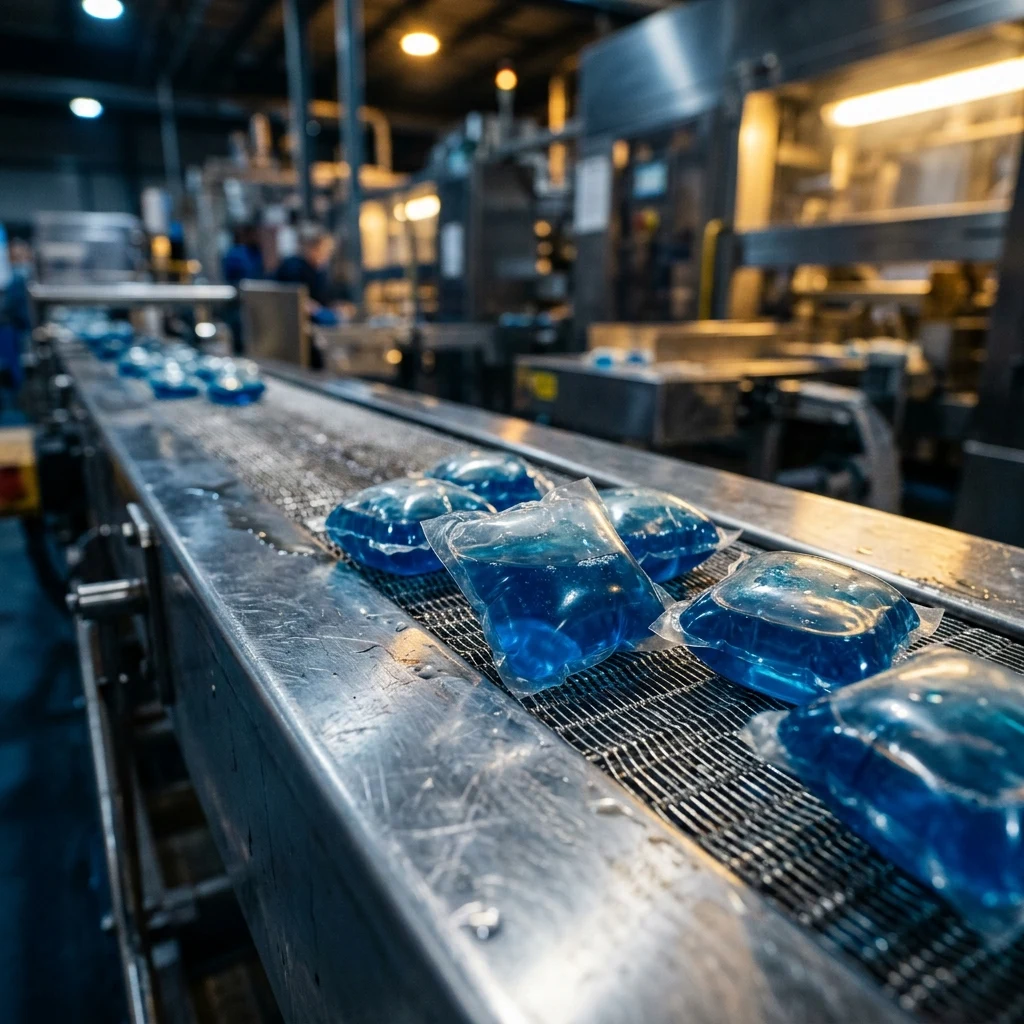
A liquid detergent that leaks in the bottle is a minor annoyance; a pod that leaks in the box is a returned batch and a furious retailer. Laundry detergent pod formulation asks a manufacturer to solve a problem conventional liquid and powder detergents never faced: the packaging itself has to dissolve completely in a washing machine while surviving months of direct contact with a concentrated, chemically active fill during storage. Get the film-fill compatibility wrong and the failure doesn't show up on day one — it shows up as swollen, sticky, or leaking pods on a store shelf weeks later. This guide walks through what polyvinyl alcohol film actually is and why it's specified so precisely, the compatibility chemistry that keeps a concentrated detergent fill from dissolving its own packaging prematurely, the added complexity of multi-chamber designs, and the dissolution and packaging-safety testing a credible product needs before launch. It's written for formulators and entrepreneurs evaluating pods as a product line within household and industrial cleaners manufacturing.
PVA Film: The Technology Behind the Pod
Every detergent pod on the market depends on a single material solving a contradiction that most polymers can't solve at once: staying tough and dry-stable as packaging, then disappearing completely in water within seconds of a wash cycle starting. Understanding why polyvinyl alcohol is almost the only practical answer to that contradiction explains most of the formulation decisions that follow it.
Polyvinyl alcohol, commonly abbreviated PVA, is a synthetic water-soluble polymer produced by hydrolyzing polyvinyl acetate, and its dissolution behavior and dry-state strength can both be tuned by adjusting its degree of hydrolysis and its molecular weight during manufacture. A higher degree of hydrolysis generally increases dry-film strength and moisture resistance but can slow cold-water dissolution, while a lower degree of hydrolysis dissolves faster but sacrifices some mechanical toughness — which is why detergent pod film is sold in specific engineered grades rather than as a generic commodity plastic. This tunability is precisely why PVA displaced earlier water-soluble packaging attempts: it can be formulated toward whichever side of the strength-versus-dissolution trade-off a particular product needs, something few other polymers allow with the same reliability. More technical background on the polymer's chemistry is documented in the established literature on polyvinyl alcohol.
Choosing the right film grade only solves half the problem, because the film also has to survive prolonged contact with whatever concentrated detergent it's holding — which is where fill chemistry becomes just as critical as the film itself.
Detergent Pod Compatibility Chemistry
A water-soluble film sitting in direct contact with a liquid detergent fill for months on a store shelf sounds like an obvious design flaw, and in a naively formulated product it is exactly that. Compatibility between the fill and the film is arguably the single hardest technical problem in pod formulation, because failure here doesn't announce itself immediately — it surfaces slowly, long after the product has already shipped.
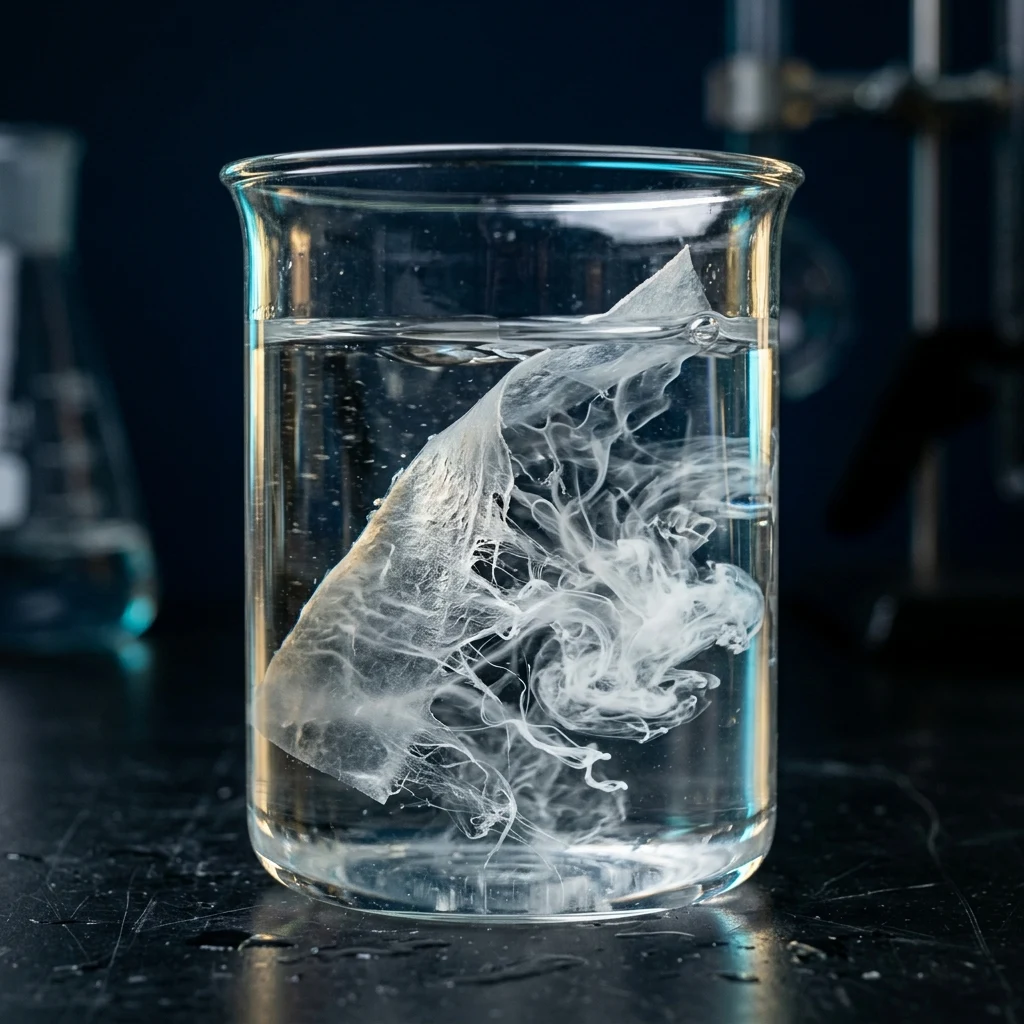
Free water is the primary enemy: any water present in the fill formulation is available to migrate into and begin dissolving the PVA film from the inside, so pod fills are formulated as concentrated liquids or gels with deliberately minimal free water content rather than the more dilute formulations typical of bottled liquid detergent. Surfactant choice matters too, since some anionic surfactants and certain builders are considerably more aggressive toward film integrity over extended contact than others, which is why surfactant selection for cleaning formulations in a pod context has to weigh long-term film compatibility alongside cleaning performance, often favoring nonionic surfactants or carefully vetted anionic components.
- Free water content — Minimized in the fill formulation since any available water actively dissolves the film during storage
- Surfactant system — Selected for long-term film compatibility, not cleaning performance alone; nonionics are frequently favored over aggressive anionics
- Fill viscosity and concentration — Kept high enough to limit free-flowing water activity against the film surface
This compatibility work only reveals its results over time, which is why accelerated storage testing — holding filled pods at elevated temperature and humidity for weeks and tracking film integrity — is a mandatory validation step before any formulation is finalized for production, a discipline that carries over directly when a pod design adds a second or third internal chamber.
Multi-Chamber Pod Design
A single-chamber pod is already a compatibility challenge; a multi-chamber pod multiplies that challenge by however many separate fills it holds, because each chamber typically carries a different active chemistry that would react or degrade if mixed with its neighbor before the wash. Manufacturers add chambers specifically to keep incompatible actives apart, but that design choice adds real manufacturing and formulation complexity in return.
A typical two- or three-chamber design might separate an oxidizing bleach-type component from an enzyme-sensitive base formulation, since bleach chemistry and enzymes are broadly incompatible when mixed in liquid form over any meaningful storage period. Each chamber can require its own film thickness or even a distinct PVA grade tuned to that specific fill's compatibility profile, and the chambers have to be formed, filled, and sealed in careful sequence on purpose-built thermoforming equipment, since a leak between adjacent chambers during manufacturing defeats the entire point of separating them.
| Design Factor | Single-Chamber Pod | Multi-Chamber Pod |
|---|---|---|
| Active compatibility | All actives share one fill; incompatible actives cannot be combined | Incompatible actives (e.g. bleach and enzymes) kept separate until wash |
| Film requirement | Single film grade for the whole pod | May require different film thickness or grade per chamber |
| Manufacturing equipment | Simpler single-fill thermoforming line | Sequential multi-chamber forming, filling, and sealing |
| Dissolution synchronization | Not applicable — one fill releases together | Chambers must dissolve within a similar time window |
| Typical entry barrier | Lower — realistic first product for new entrants | Higher — added compatibility and equipment complexity |
Whether a design uses one chamber or three, none of that engineering means anything if the product doesn't dissolve reliably in the range of real washing machines and water conditions consumers actually use — which is the next test any pod formulation has to clear.
Dissolution Testing and Cold-Wash Performance
A pod that dissolves perfectly in a laboratory beaker of warm water can still leave visible film residue on a load of dark clothing washed cold, and that gap between lab performance and real-world performance is exactly what dissolution testing exists to close. Cold-water washing has become the majority default in many markets for energy-saving reasons, and it gives PVA meaningfully less thermal energy to drive dissolution than the warm-wash conditions older testing protocols assumed.
- Temperature range — Cold, warm, and hot fills tested separately, since dissolution speed drops meaningfully as water temperature falls
- Water volume — Low water-to-load ratios in high-efficiency machines leave less water available to drive film dissolution than older, higher-volume machine designs
- Machine type — Front-loading machines can leave a pod resting against fabric before agitation fully engages, differently from top-loading designs
- Storage aging — Dissolution retested after accelerated aging, since a film that dissolves well when fresh can behave differently after months of ambient humidity exposure
A standard laboratory approach dissolves the pod in a measured water volume and then filters the resulting solution to weigh any undissolved film residue, converting dissolution completeness into a defensible number rather than a subjective visual check. Skipping the aged-sample condition is the most common shortcut that produces a dissolution claim which fails to hold up once the product has spent real time on a store shelf, which is exactly the kind of gap that surfaces in field complaints rather than in development testing.
Solving the chemistry and passing dissolution testing still leaves one more requirement that has shaped this product category as much as any formulation decision: the pod has to be safe around the people who will encounter it in a home.
Packaging Safety Requirements
Detergent pods carry a specific accidental-exposure risk that conventional liquid and powder detergents largely avoid: their compact size, bright color, and soft squeezable texture can visually resemble candy or a toy to a young child, while the concentrated fill inside is considerably more hazardous on contact or ingestion than an equivalent volume of diluted liquid detergent. This risk shaped the product category as directly as any chemistry decision has.
Regulatory attention and voluntary industry standards responded with requirements addressing packaging opacity or coloring intended to reduce resemblance to food, child-resistant closures on the outer container, and film formulations engineered to resist bursting under the bite force and grip strength of a young child while still dissolving normally once inside a washing machine. Per EPA Safer Choice guidance on household product safety, packaging design intended to prevent accidental exposure is now treated as a formulation-stage requirement rather than a downstream packaging afterthought.
Building bite-resistance and container safety into the design alongside dissolution performance — rather than solving each in isolation — is what separates a defensible pod product from one that passes lab dissolution testing but creates real-world safety exposure, and it's a discipline that carries directly into the manufacturing decisions a new entrant has to make.
Manufacturing a Unit-Dose Pod Product
Pods demand a fundamentally different production line than liquid or powder detergent, which is the main reason this category carries a higher barrier to entry than most household cleaning products. A manufacturer evaluating pods as a new product line needs to weigh that barrier honestly against the premium positioning it can support.
- Film sourcing and grade selection — Partnering with an established PVA film supplier early, since film grade and fill formulation have to be developed together rather than sequentially
- Compatibility validation — Running accelerated storage aging on the actual film-fill combination before committing to production tooling
- Thermoforming and filling equipment — Specialized machinery that forms the film pocket, doses the fill, and seals the pod in a continuous, contamination-controlled process
- Dissolution and safety testing — Validating performance across realistic wash conditions and clearing packaging safety requirements before any market launch
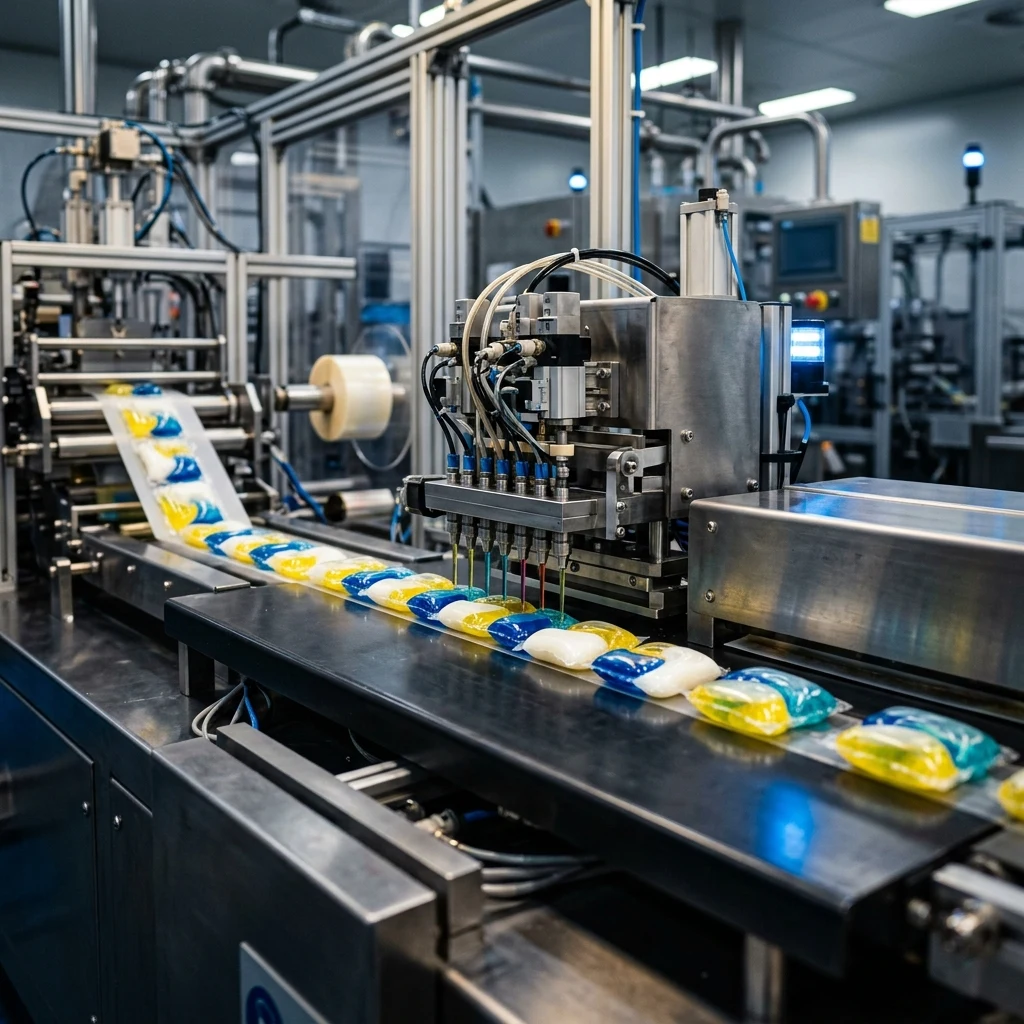
The barrier itself is part of what makes pods commercially attractive to an entrant with the right technical partnerships in place, since it discourages casual competition and supports the premium retail pricing this category has historically commanded relative to liquid and powder alternatives. As with related concentrated-format challenges in detergent formulation under hard water conditions, the realistic entry path for a new manufacturer is starting with a single-chamber design proven on one PVA grade before attempting the added complexity of a multi-chamber product.
Frequently Asked Questions
What is the film on a laundry detergent pod made from, and why that material specifically?
The film is almost universally polyvinyl alcohol, a synthetic polymer that dissolves in water but remains a strong, flexible, water-resistant solid at room humidity when it is dry. That combination is unusual and hard to substitute: most polymers that dissolve readily in water are also too soft or too moisture-sensitive to hold their shape as packaging, while polymers tough enough for packaging typically do not dissolve in water at all.
Polyvinyl alcohol's degree of hydrolysis and molecular weight can be tuned during manufacture to balance dissolution speed against dry-state toughness, which is why detergent pod films are specified as a particular PVA grade rather than generic PVA, and why film suppliers sell multiple grades engineered for slightly different dissolution and strength targets.
Why do some detergent pods fail to dissolve completely, leaving film residue on clothing?
Incomplete dissolution usually traces back to a mismatch between the film's dissolution profile and the actual wash conditions the pod experiences, rather than a defective film. Cold water washing, now the majority default in many markets for energy-saving reasons, gives PVA far less thermal energy to drive dissolution than warm water does, and a film formulated or tested primarily at warm-wash temperatures can leave a visible residue in a genuinely cold cycle.
Low water volume relative to load size, front-loading machines where the pod may briefly sit against fabric before the wash cycle agitates fully, and film damage from being pressed against other pods during transport can all leave dissolution incomplete as well. This is precisely why dissolution testing has to be run across the realistic range of wash temperatures, water volumes, and machine types a product will actually encounter, not just under laboratory-ideal conditions.
Why can't standard liquid detergent surfactants be poured directly into a PVA pod without reformulation?
PVA film is itself a water-soluble polymer, and free water inside the pod fill is exactly what dissolves it from the inside out during storage, long before the pod ever reaches a washing machine. A conventional liquid detergent formulated for a bottle typically carries meaningful free water content and often includes some anionic surfactants and builders that are aggressive toward PVA film integrity over time.
Pod fills are instead formulated as concentrated, low-free-water liquids or gels, frequently built around nonionic surfactants and encapsulated or carefully selected anionic components chosen specifically for long-term film compatibility. Getting this compatibility wrong doesn't show up as an immediate failure — it shows up months later as pods that have gone soft, sticky, or leaked in the package, which is why compatibility is validated with long-duration accelerated storage testing rather than a short formulation trial.
What makes multi-chamber pods more complex to manufacture than single-chamber pods?
A multi-chamber pod keeps two or more incompatible actives apart until the wash cycle, typically separating an oxidizing bleach-type component or an enzyme-sensitive chamber from a surfactant-and-builder base, and each chamber can require a different film thickness or even a different PVA grade tuned to that chamber's specific fill chemistry.
Manufacturing has to form, fill, and seal each chamber in careful sequence on specialized thermoforming equipment, since any leak path between chambers during the manufacturing process defeats the entire reason for the multi-chamber design. The dissolution behavior of each chamber also has to be synchronized closely enough that the actives release into the wash within the same effective window, because a chamber that dissolves meaningfully later than the others delivers a portion of the formulation after the optimal point in the wash cycle has already passed.
How is detergent pod film dissolution actually tested before a product goes to market?
Dissolution testing places pods in water baths or actual washing machines set to the range of conditions consumers realistically use — cold, warm, and hot fills, varying water volumes, and both front-loading and top-loading machine types — and tracks how completely and how quickly the film disintegrates under each condition. A common laboratory method involves dissolving the pod in a measured volume of water and then filtering the resulting solution to quantify any undissolved film residue by weight, giving a numerical dissolution completeness figure rather than a subjective visual judgment.
Testing is typically repeated after the pods have been through accelerated storage aging, because a film that dissolves well when fresh can perform differently after months of exposure to ambient humidity and the fill chemistry it has been in contact with, which is why a dissolution claim on a new product should be backed by aged-sample data, not fresh-sample data alone.
Why has packaging safety become such a central design requirement for detergent pods?
Detergent pods present a specific accidental-ingestion risk to young children because their compact size, bright colors, and soft squeezable texture can visually resemble candy or a toy, and the concentrated formulation inside is considerably more hazardous if ingested or if the fill contacts eyes than an equivalent amount of diluted liquid detergent would be.
This risk profile led directly to dedicated regulatory and voluntary standards addressing packaging design, including opacity or color requirements intended to reduce visual resemblance to food, child-resistant closures on the outer packaging, and film formulations engineered to resist bursting under the bite force and grip strength of a young child while still dissolving normally in a washing machine. Formulators and packaging engineers now treat this bite-resistance and container safety work as a core design requirement running in parallel with dissolution performance, not as an afterthought addressed once the formulation itself is finalized.
Is a laundry pod actually a good entry product for a new detergent manufacturing business?
Pods carry real technical barriers to entry that are considerably higher than a liquid or powder detergent line, including PVA film compatibility validation, specialized thermoforming and filling equipment, and the packaging safety testing regulators expect before market entry, all of which demand more upfront investment and formulation expertise than a conventional liquid product.
That said, the barrier itself is part of the appeal for an entrant with the right technical partnerships, because it keeps out casual competition and supports a premium price point once the compatibility and manufacturing challenges are solved. A realistic entry path usually means partnering with an established PVA film supplier for formulation guidance and starting with a single-chamber design before attempting multi-chamber products, rather than trying to solve every compatibility and equipment challenge simultaneously on a first product launch.
Developing a Unit-Dose Detergent Product?
Global Formulation provides cleaning product consultancy — film-fill compatibility strategy, surfactant system design, dissolution test programme definition, and manufacturing scale-up support.
Talk to Our Formulation Team