Low-Viscosity Engine Oils: The Push to 0W-8 and Beyond

A decade ago, 5W-30 was the default recommendation for most passenger engines; today, several OEMs specify 0W-16 or even 0W-8 as factory fill. That shift is not cosmetic — it reflects a deliberate low viscosity engine oil formulation strategy engineered to cut internal friction and squeeze out incremental fuel economy gains across an entire vehicle fleet. Every fraction of a viscosity grade removed reduces hydrodynamic film thickness somewhere in the engine, which means the additive package and base oil selection have to work harder to keep wear protection intact. This guide explains what the SAE grade numbers actually measure, why HTHS viscosity is the metric that really governs bearing protection, and how formulators balance fuel-economy targets against durability risk when pushing viscosity this low. It's written for engineers and technical buyers evaluating lubricant specifications for modern, downsized powertrains.
SAE Grades and What "0W-8" Actually Means
An SAE viscosity grade like 0W-8 packs two entirely separate pieces of information into one label, and confusing them is one of the most common misunderstandings in lubricant selection. The "W" portion describes cold-temperature behavior, verified under SAE J300 through cold-cranking simulator and mini-rotary viscometer testing, confirming the oil stays crankable and pumpable at low ambient temperatures.
The number after the dash — 8, 16, 20, and so on — describes kinematic viscosity measured at 100°C, representing the oil's thickness once the engine has reached normal operating temperature. A 0W-8 oil therefore behaves like the thinnest cold-flow category at startup and settles into a genuinely low operating-temperature viscosity once warm, which is precisely the combination modern low-friction engine designs are built around.
Understanding this split matters because the post-dash number is the one directly tied to fuel-economy performance — and that's exactly where the industry's real formulation challenge begins.

HTHS Viscosity: The Number That Matters Under Load
The SAE grade's 100°C kinematic viscosity is measured at a relatively gentle shear rate, but the oil inside a loaded engine bearing or piston ring zone experiences far higher shear stress at much higher temperature — conditions the standard kinematic test simply doesn't replicate. High-temperature high-shear (HTHS) viscosity, measured under ASTM D4683 or the equivalent CEC L-36 method at 150°C and high shear rate, is the metric that actually predicts how thick the protective film remains where it matters most.
Two oils sharing the same SAE grade can carry meaningfully different HTHS values depending on their base oil composition and viscosity index improver chemistry, which is why modern OEM specifications increasingly cite a minimum HTHS threshold directly, not just an SAE grade label.
Because HTHS is the parameter that actually protects the bearings, hitting a target HTHS value while still meeting the fuel-economy-driven kinematic viscosity target is the central formulation problem low-viscosity oils have to solve.
Formulating an Ultra-Low-Viscosity Oil
Reaching a stable 0W-8 or 0W-16 specification isn't simply a matter of diluting a conventional oil — it requires deliberate base oil and additive selection engineered around the tight viscosity-temperature and shear-stability targets these grades demand. Base oil quality is the first and most important lever, because it determines how much of the viscosity-building burden has to fall on polymer additives.
- Group III/IV base stocks — Fully or highly synthetic base oils provide the naturally high viscosity index needed to meet cold-cranking and 100°C targets without excessive dependence on viscosity index improver
- Viscosity index improver (VII) selection — Shear-stable polymer chemistry keeps viscosity within grade even after mechanical shearing in the piston ring zone over the oil's service interval
- Friction modifier package — Organomolybdenum and other boundary-lubrication friction modifiers compensate for the reduced hydrodynamic film by improving boundary-layer protection
- Antiwear chemistry calibration — Antiwear additive treat rates are tuned to offset the thinner film's reduced separation between moving metal surfaces
Group I and Group II mineral base oils generally can't hit these tight specifications without impractically high VII loading, which undermines shear stability instead of solving the problem — a tradeoff explored further in our guide to synthetic vs mineral base oils. Once the base oil and additive package are locked in, the real test is whether the fuel-economy gain actually justifies the added formulation complexity.
Fuel Economy Gains and Durability Tradeoffs
Every step down in viscosity grade reduces internal fluid friction across the piston ring pack, valvetrain, and bearings, and OEM dynamometer and vehicle testing consistently confirms measurable — if incremental — fuel economy improvement with each step. The gain is real, but it's a low single-digit percentage per grade step, verified against a specific engine family rather than a fixed number that applies industry-wide.
The tradeoff formulators and OEMs manage is durability risk: a thinner film reduces the safety margin against metal-to-metal contact under high load or in edge-case operating conditions, so lower-viscosity approval always comes bundled with hardware changes — tighter machining tolerances, higher oil pump output at low speed, and piston ring tension recalibrated for a thinner intended film.
This is exactly why viscosity grade approval is never generic — it's validated against one specific engine design, which sets up the next critical question: which oils are actually interchangeable across which engines.
Comparing Common Low-Viscosity Grades
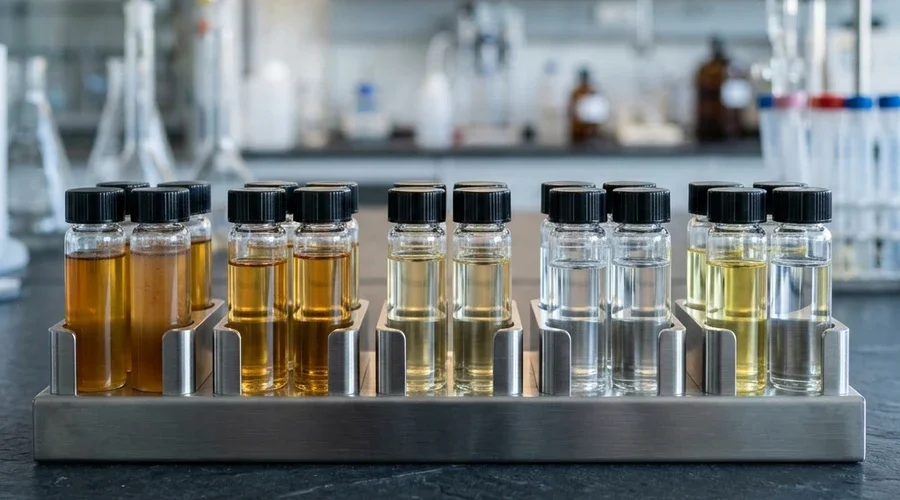
Not all low-viscosity grades occupy the same tier, and the practical differences between 5W-30, 0W-20, 0W-16, and 0W-8 reflect a clear progression in both fuel-economy intent and the hardware sophistication required to run them safely. Comparing them side by side makes the design intent behind each grade easier to interpret.
| Grade | Typical HTHS Range | Primary Use Case |
|---|---|---|
| 5W-30 | ~2.9–3.5 mPa·s | Legacy and mixed-fleet passenger engines |
| 0W-20 | ~2.6–2.9 mPa·s | Widely adopted modern passenger engines |
| 0W-16 | ~2.3–2.6 mPa·s | Fuel-economy-optimized OEM-specific engines |
| 0W-8 | ~1.7–2.0 mPa·s | Hybrid and next-generation low-friction engines, OEM-specific approval only |
The pattern is unambiguous: as grades move lower, the acceptable HTHS window narrows and the engine hardware requirements become more specific, which is precisely why these grades are never treated as interchangeable substitutes for one another.
OEM Approval and Backward Compatibility
The single most important rule in low-viscosity oil selection has nothing to do with the oil itself — it's whether the specific engine was designed and approved for that grade. OEM approval processes exist precisely because bearing clearances, oil pump output, and piston ring tension are calibrated around one target film thickness, and deviating from it changes the engine's actual operating margin.
Using a lower-viscosity oil than specified in an engine not designed for it does not deliver a "free" fuel economy bonus — it removes margin the engine's tolerances were never built to operate without, covered in more depth in our guide to viscosity index improvers and how they interact with base oil selection. The reverse situation — running a heavier oil than specified — doesn't carry the same wear risk but does erase most of the intended fuel-economy benefit.
Following the OEM's specified grade exactly, rather than treating viscosity numbers as a spectrum of acceptable substitutes, is what keeps both the fuel-economy benefit and the durability margin intact simultaneously.
Frequently Asked Questions
What does the "0W" part of a grade like 0W-8 or 0W-16 actually mean?
The "W" rating describes cold-temperature flow behavior under SAE J300 and is measured through cold-cranking simulator viscosity and mini-rotary viscometer pumpability tests, not the oil's viscosity at operating temperature. A 0W rating means the oil meets the lowest cold-temperature viscosity threshold in the standard, guaranteeing it stays pumpable and crankable at very low ambient temperatures.
The second number — 8, 16, 20, and so on — describes the oil's kinematic viscosity at 100°C, which is the operating-temperature viscosity that actually determines the hydrodynamic film thickness protecting the engine once it's running.
Why would an OEM specify 0W-8 instead of the more established 0W-20 or 0W-16?
OEMs specify progressively lower viscosity grades because reducing an oil's high-temperature high-shear (HTHS) viscosity directly cuts internal fluid friction across the piston ring pack, bearings, and valvetrain, and lower friction losses translate measurably into fuel economy or electric-range-adjacent efficiency gains in hybrid powertrains. This push is only viable, however, when the engine hardware itself — bearing clearances, oil pump calibration, piston ring tension — has been co-engineered for the lower film thickness a low-viscosity oil provides.
A 0W-8 oil run in an engine designed around 0W-20 tolerances would not deliver the intended benefit and could compromise durability, which is why grade selection must always follow the OEM's specific approval, never a generic downgrade.
Does a lower HTHS viscosity always mean more engine wear?
Not when the oil and engine are properly matched — OEMs approve ultra-low-viscosity grades only after extensive durability testing confirms the hydrodynamic and boundary-lubrication film the oil provides is adequate for that specific engine's bearing loads, clearances, and operating conditions. The wear risk emerges specifically when a low-HTHS oil is used outside its intended application, such as in an older or more heavily loaded engine not designed around thinner films, or when the additive package's antiwear chemistry is under-formulated relative to the reduced film thickness.
Within an OEM-approved application, low-viscosity oils are not inherently higher-wear; they simply demand tighter formulation discipline from the additive package to compensate for the thinner film.
What base oil types are typically required to formulate a stable 0W-8 or 0W-16 oil?
Ultra-low-viscosity grades are almost always built on API Group III or Group IV (PAO) base stocks, since these fully or highly synthetic base oils offer the naturally high viscosity index needed to meet both the cold-cranking requirement and the tight 100°C viscosity target without excessive reliance on viscosity index improver polymer. Group I and Group II mineral base oils generally lack the inherent viscosity-temperature stability to hit these tight specifications reliably, and would require impractically high VII treat rates that undermine shear stability instead.
The base oil's inherent quality, not just the additive package layered on top of it, is a primary lever formulators use to hit ultra-low-viscosity targets.
How much fuel economy improvement does moving to a lower viscosity grade actually deliver?
Fuel economy gains from viscosity reduction are measurable but incremental — typically in the low single-digit percentage range per viscosity grade step down, verified through standardized dynamometer and vehicle testing protocols rather than a single fixed number that applies universally. The exact gain depends heavily on engine design, operating temperature, and drive cycle, which is why OEMs validate each viscosity grade transition against their specific engine family rather than assuming a generic industry-wide improvement figure.
These gains are real and consistently reproducible in OEM testing, but they are one contributor among several — alongside engine downsizing, turbocharging, and hybridization — in a broader fuel-economy strategy, not a standalone solution.
Can I put a low-viscosity 0W-16 or 0W-8 oil in an older engine that specifies 5W-30?
No — using a viscosity grade outside the OEM's specified range for a given engine is not a safe substitution, regardless of how attractive the fuel-economy claims on the bottle appear. Older engines were designed with bearing clearances, oil pump output, and piston ring tension calibrated around a thicker specified film, and running a much thinner oil than intended can reduce hydrodynamic film thickness below what those wider clearances require, increasing metal-to-metal contact risk under load.
Always follow the viscosity grade printed in the vehicle owner's manual or on the oil filler cap; if in doubt, consult the OEM's approved lubricant list rather than assuming a lower-viscosity, higher-fuel-economy oil is a universal upgrade.
What is HTHS viscosity and why is it considered more meaningful than the SAE grade alone?
High-temperature high-shear (HTHS) viscosity, measured under ASTM D4683 or the equivalent CEC L-36 method at 150°C and a high shear rate representative of a loaded bearing, describes how thick the oil film actually remains under the punishing conditions inside a running engine's bearings and piston ring zone. The SAE grade's 100°C kinematic viscosity number is measured at a much lower shear rate and doesn't capture how an oil's film thickness behaves under real operating shear stress, which is why two oils with the same SAE grade can have meaningfully different HTHS values and different wear protection.
This is why OEM specifications increasingly cite a minimum HTHS value directly, alongside the SAE grade, when approving oils for modern low-viscosity, high-output engines.
Developing a Low-Viscosity Lubricant Formulation?
Global Formulation provides lubricant consultancy — base oil selection, VII and additive package design, and HTHS-targeted formulation strategy.
Talk to Our Formulation Team