Men's Grooming Product Formulation: Beard Oil, Balm & Shaving Chemistry
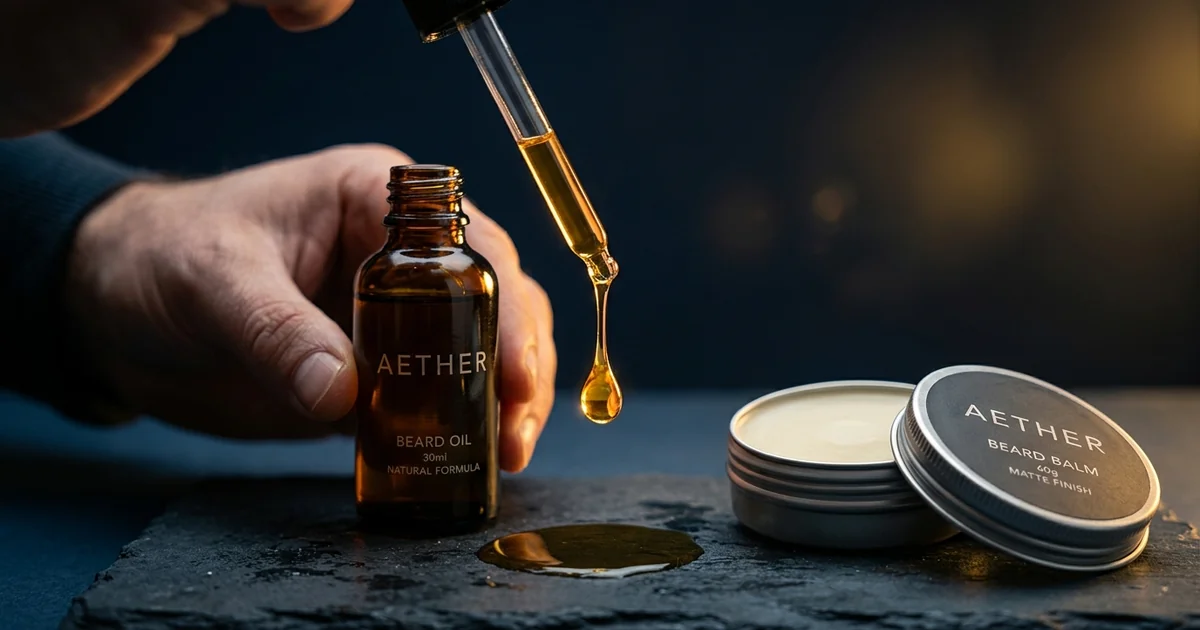
A beard oil that leaves a greasy shine by midday, or a beard balm that turns rock-hard in a cold bathroom, is usually not a bad idea gone wrong. It is a formulation built around women's skincare chemistry and simply relabeled for a male customer. That mismatch is one of the most common mistakes new grooming brands make, and it shows up fast in returns and one-star reviews once a customer's skin and hair behave differently than the formula assumed. Men's grooming product formulation has to start from real physiological differences — coarser facial hair, more active sebaceous glands, and a customer base that actively dislikes visible shine or heavy fragrance. Get those inputs wrong and even a technically competent formula reads as made for someone else. This guide covers the carrier-oil chemistry behind beard oil, the wax-and-butter systems that give beard balm its hold, how lathering and brushless shaving creams work, and why post-shave formulation has moved away from stinging alcohol toward calmer, actives-based balms. It reflects the personal-care formulation work we carry out across our cosmetics and personal care consulting practice.
Why Men's Grooming Product Formulation Is a Distinct Category
Male and female skin are not simply the same substrate marketed differently, and formulating for men without accounting for the differences produces the "products that don't quite fit" long associated with the category. Androgens drive higher sebaceous gland activity in male skin, so the average male complexion runs oilier — and, in the beard area especially, more prone to product buildup — than typical female skin. Male skin is also generally thicker, a difference again linked to androgen exposure, which changes how quickly actives penetrate and how a product's after-feel reads on the face. On top of that, beard hair itself is coarser in diameter than scalp hair, so it resists some of the same conditioning agents that work well in a fine-hair shampoo formula.
Those physiological differences translate directly into formulation priorities that differ from a typical women's skincare or haircare brief:
- Lightweight, fast-absorbing textures — oilier baseline skin and a cultural preference for a matte, no-product finish push formulators toward lower-viscosity oils and quick-absorbing emulsions
- Higher tolerance for active conditioning agents — coarser beard hair needs a stronger lipid film to soften and de-frizz than fine scalp hair requires
- Fragrance profiles skewed woody, citrus, or herbal — a well-established preference pattern in the men's grooming market, distinct from the floral and fruity profiles common in women's personal care
These priorities set the brief for every product category that follows, starting with the one that defines the modern men's grooming aisle: beard oil.
Beard Oil Chemistry: Carrier Oil Blends and Function
Beard oil is, at its chemical core, a blend of carrier oils selected for how well they mimic the skin's own sebum and how they perform on coarse facial hair. Jojoba oil anchors the large majority of formulations for a specific structural reason: it is not a triglyceride oil at all but a liquid wax ester, and its long-chain ester structure closely resembles the composition of human sebum. That similarity lets jojoba spread on skin and hair without the heavier, occlusive after-feel a true triglyceride oil can leave behind. Formulators build the rest of the blend around it, layering in oils chosen for fatty-acid profile, spreadability, and oxidative stability — the same conditioning logic covered in our guide to hair conditioner formulation, applied here to a coarser fiber.
| Carrier Oil | Composition Type | Formulation Role |
|---|---|---|
| Jojoba oil | Liquid wax ester | Sebum-mimicking base; lightweight spreadability |
| Argan oil | Triglyceride, oleic/linoleic-rich | Softening and shine without heavy occlusion |
| Sweet almond oil | Triglyceride | Emollience and slip; well-tolerated base oil |
| Grapeseed oil | Triglyceride, linoleic-rich | Very light, fast-absorbing finish |
Functionally, beard oil does two jobs at once. It lays a thin lipid film along the hair shaft that reduces friction between strands, which is what makes a beard feel softer and look less frizzy. It also moisturizes the skin underneath the beard, which matters because dense facial hair traps the skin beneath it — and dry, flaking skin under a beard, commonly called "beardruff" in the grooming trade, is a direct consequence of that skin losing moisture without the airflow scalp skin gets.
Oil selection solves softness and moisture, but it cannot hold a beard's shape. For that, the category turns to a heavier, wax-based format.
Beard Balm Formulation: Waxes, Butters and Hold
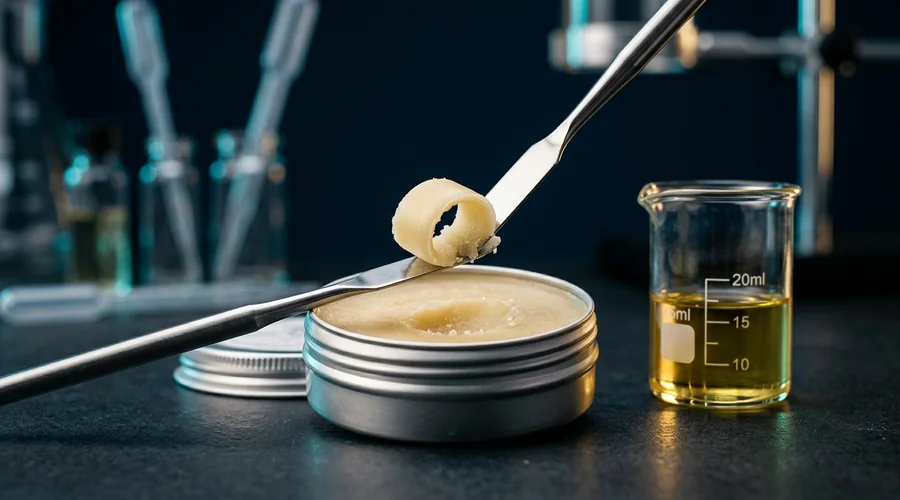
Beard balm occupies the same structural territory as an anhydrous lip balm or stick, built from a wax-and-oil matrix rather than a pourable liquid. Beeswax is the traditional structuring agent, chosen because it sets to a firm but workable solid at room temperature and melts cleanly against skin-surface warmth as a customer works it into their beard. Formulators wanting a plant-based claim substitute candelilla wax, which behaves similarly but sets slightly harder, so the oil-to-wax balance typically needs adjusting when making that swap. Butters such as shea or cocoa butter are layered in alongside the wax to soften the finished texture and add the same emollient benefit as the oils in a standalone beard oil.
The wax content is the real formulation lever in a beard balm, and it controls two properties customers judge the product on directly:
- Hold strength — more wax relative to oil produces a firmer balm that can shape and tame flyaway hairs, closer to a light styling product
- Melting and application feel — too much wax makes a balm hard to scoop and slow to melt against skin; too little and it behaves more like a soft beard oil with no shaping ability at all
Getting that balance right is why beard balm formulation borrows directly from the wax-and-pigment principles used in lip colour formulation, and from the butter-selection logic covered in our guide to body lotion versus body butter formulation — both categories solve the same wax-oil-butter balancing problem for a different end use. A well-tuned balm gives a beard shape and conditioning in one step, but neither oil nor balm addresses the part of male grooming that happens before the beard is even there: the shave itself.
Shaving Cream and Gel Chemistry: Lathering vs Brushless Systems
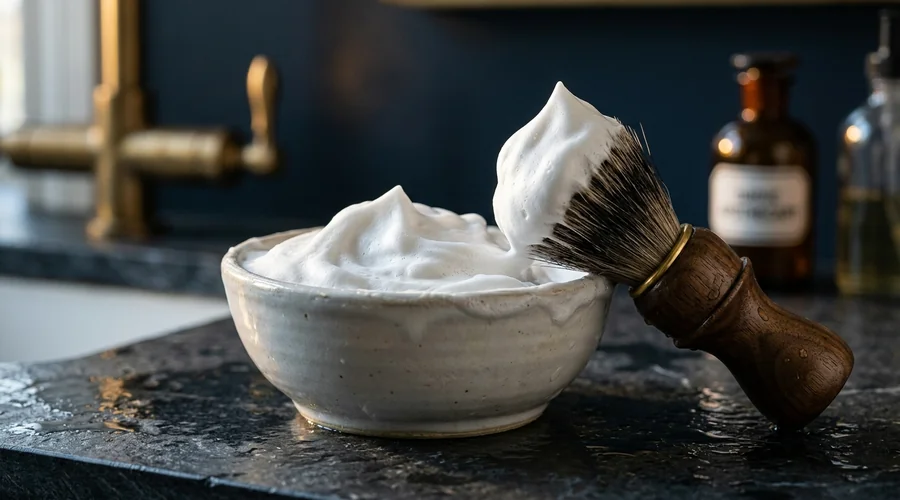
Traditional lathering shaving cream is, chemically, a soap — typically a blend of stearic and palmitic fatty acids saponified with potassium hydroxide or triethanolamine to form a stable, whippable soap base. Whipping that soap with air and water builds a dense lather that does two jobs simultaneously: it lubricates the skin surface so the razor glides with less friction, and it holds water against the whisker long enough for the hair shaft to absorb it. That absorption matters mechanically — water disrupts the hydrogen bonding inside the hair's keratin structure, causing the shaft to swell and soften, which is why a well-hydrated whisker cuts with meaningfully less force than a dry one.
Brushless, or non-lathering, shaving creams solve the same lubrication problem with an entirely different chemistry. Rather than a whipped soap, they rely on emollients, glycerin, and sometimes silicones to build a slick film that lets the blade glide, without generating foam or requiring a shaving brush.
| Shaving Format | Core Chemistry | Lubrication Mechanism | Typical Use Pattern |
|---|---|---|---|
| Lathering shaving soap/cream | Saponified fatty acid soap | Whipped foam traps water against whisker, softening keratin | Traditional wet shave, often with a brush |
| Brushless shaving cream | Emollient/glycerin emulsion | Slick emollient film reduces blade friction directly | Fast, no-brush routine; sensitive-skin positioning |
| Shaving gel | Water-based gel with lubricants | Clear film with high water content for visibility and glide | In-shower shaving, precision trimming |
Both formats solve the same underlying problem — reducing friction and razor drag against skin — but they reach it through different chemistry, which is why a brand's product line usually commits to one system rather than blending the two. Once the shave itself is done, the formulation problem shifts from lubrication to recovery.
Post-Shave Formulation: Balms, Astringents and Skin Recovery
Traditional aftershave is built around denatured alcohol, and its role is genuinely functional rather than purely traditional: alcohol has antiseptic activity that helps guard against infection in the micro-nicks a razor leaves behind, and it produces the tightening, astringent sensation generations of shavers associate with a clean shave. The trade-off is that alcohol also strips the skin's surface lipids, which is exactly the wrong outcome on skin a razor has just mechanically abraded, and it is the direct cause of the sting and dryness alcohol-based aftershaves are known for.
Modern post-shave balm formulation has moved toward addressing the same needs — antisepsis, tightening, calming — without that lipid-stripping trade-off:
- Alcohol-free or low-alcohol bases — reduce the immediate sting and avoid compounding the barrier disruption a shave has already caused
- Witch hazel — a milder plant-derived astringent that delivers the tightening sensation customers expect with less irritation than denatured alcohol
- Allantoin and panthenol (pro-vitamin B5) — established skin-soothing and barrier-support actives that calm visible redness and support recovery after mechanical irritation
- Humectants such as glycerin — replace some of the moisture the shaving process and any lathering surfactant removed from the skin surface
Whichever chemistry a brand chooses for the shave-and-recover routine, none of it survives contact with the market if the formulation ignores how differently men expect a product to feel and perform.
Formulating for Male Skin: Sensory, Stability and Preservation
A technically sound formula still fails commercially if its sensory profile reads as borrowed from a women's line, and sensory expectations are where most new entrants underestimate the category. Male consumers consistently favor fast-absorbing, low-shine finishes over the richer, more visibly moisturizing textures common in women's skincare, which pushes formulators toward lighter oil blends and lower-viscosity emulsions even when the underlying active ingredients are identical. Fragrance follows the same logic — woody, citrus, and herbal notes dominate the category, and a formula built around a floral fragrance house will struggle regardless of how well it performs functionally.
Stability and preservation strategy also diverge by product format within the same grooming line, and getting this wrong is a common early-stage mistake — our guide to cosmetic preservative systems covers the underlying logic in more depth:
- Anhydrous oils and balms — beard oil and beard balm contain no water, so they do not support the microbial growth that drives traditional preservative requirements, but the carrier oils themselves are still vulnerable to oxidative rancidity and benefit from an antioxidant such as tocopherol (vitamin E)
- Water-containing shaving creams and post-shave balms — any formulation with a water phase needs a broad-spectrum preservative system sized to the product's actual use pattern, since bathroom storage is humid and products are frequently touched with wet hands
- Packaging as a stability lever — opaque or amber packaging protects light-sensitive oils and actives, and airless or pump packaging limits both oxygen exposure and repeated finger contact with water-containing formats
A men's grooming line that gets the physiology, the format chemistry, and the sensory brief right is solving three separate formulation problems at once — which is exactly why treating it as skincare in a different bottle is where most first attempts go wrong.
Frequently Asked Questions
What's the difference between beard oil and beard balm?
Beard oil is a pure liquid blend of carrier oils with no wax or butter content, so it has no hold or shaping ability — its job is purely to soften hair and moisturize the skin underneath. Beard balm is built on the same carrier-oil base but adds beeswax or candelilla wax and often a butter like shea or cocoa, which sets the finished product to a firm but workable solid.
That wax content gives balm a light styling hold that oil cannot provide, letting a customer tame flyaway hairs and shape the beard while still getting the same conditioning benefit oil delivers. Most grooming routines actually use both: oil for daily conditioning and balm when shaping or taming is also needed.
Why is jojoba oil commonly used in beard oil formulations?
Jojoba oil is not a triglyceride oil at all — it is technically a liquid wax ester, made of long-chain fatty acid and fatty alcohol esters, and that structure closely resembles the composition of human sebum. Because it is so similar to the skin's own oil, jojoba spreads easily on skin and hair without leaving the heavier, occlusive after-feel that a true triglyceride oil can produce.
It is also comparatively resistant to oxidation, which matters for shelf stability in a product that sits in a bathroom cabinet exposed to warmth and light. Most beard oil formulations use it as the base carrier, then layer in other oils like argan, sweet almond, or grapeseed for shine, softness, or a lighter finish.
What causes "beardruff" and how does beard oil help?
Beardruff is a skin-barrier problem rather than a hair problem. Dense facial hair traps the skin underneath it and reduces the airflow that scalp skin normally gets, and that skin can dry out and flake in a way that looks like dandruff caught in the beard.
Beard oil helps only if it actually reaches the skin surface, not just the hair fibers — a customer who brushes oil through the top of the beard without working it down to the skin will still develop flaking, because the oil never addresses the dry skin causing it. Massaging the oil into the skin at the roots, not just the visible hair, is the technique that actually resolves it.
What's the difference between lathering shaving cream and brushless shaving cream?
Lathering shaving cream is chemically a soap — stearic and palmitic fatty acids saponified with potassium hydroxide or triethanolamine — that is whipped with a brush into a dense foam. That foam traps water against the whisker long enough for the hair shaft to absorb it, and water absorption softens the hair's keratin structure so it cuts with less force.
Brushless shaving creams solve the same lubrication problem differently, using emollients, glycerin, and sometimes silicones to build a slick film that reduces blade friction directly, without generating foam or needing a brush. Both approaches reduce razor drag and irritation, but they reach that result through genuinely different chemistry, which is why most product lines commit to one system rather than blending the two.
Why do traditional aftershaves contain alcohol, and why are alcohol-free post-shave balms becoming more common?
Denatured alcohol in traditional aftershave has a genuine function: it has antiseptic activity that helps guard against infection in the micro-nicks a razor leaves behind, and it produces the tightening sensation many shavers associate with a clean shave. The trade-off is that alcohol also strips the skin's surface lipids, which is the wrong outcome on skin a razor has just mechanically abraded, and that stripping is the direct cause of the sting and dryness alcohol-based aftershaves are known for.
Modern post-shave balm formulation addresses the same needs — antisepsis, tightening, calming — using witch hazel as a milder astringent alongside soothing actives like allantoin and panthenol, without reintroducing the dryness alcohol causes. That shift reflects a broader move in men's skincare formulation trends toward products that support skin recovery rather than just delivering a familiar sensory cue.
Do beard oils and balms need preservatives?
Beard oil and beard balm are anhydrous formulations — they contain no water — and most bacteria and fungi need free water to grow, so these products do not require the broad-spectrum antimicrobial preservative systems that water-based formulas need. That does not mean they need nothing at all: the carrier oils themselves are vulnerable to oxidative rancidity over time, so an antioxidant such as tocopherol (vitamin E) is standard practice to protect shelf life and prevent off-odors developing.
Packaging also plays a real stability role — opaque or amber containers limit light exposure, which slows oxidation in oils that are otherwise chemically stable at room temperature.
What ingredients should a men's grooming line prioritize for skin tolerance?
Male skin runs oilier on average due to androgen-driven sebaceous activity, so heavy, occlusive oils that can trap sebum and contribute to clogged pores under a beard are worth avoiding in favor of lighter, faster-absorbing carriers like jojoba or grapeseed oil. Because shaving is a regular mechanical stress on the skin, soothing actives such as allantoin and panthenol are worth building into post-shave and even daily formulas to support barrier recovery and reduce visible redness.
Fragrance load also matters for tolerance, not just preference — a heavier essential-oil fragrance can irritate skin that is already stressed from frequent shaving, so a lighter, well-tested fragrance concentration serves both the sensory brief and the skin better.
Developing a Men's Grooming Product Line?
Global Formulation provides cosmetics and personal care consultancy — carrier oil and wax system formulation, shaving and post-shave chemistry, and stability strategy for anhydrous grooming products.
Talk to Our Formulation Team