Moisturiser vs Serum: The Real Formulation Differences
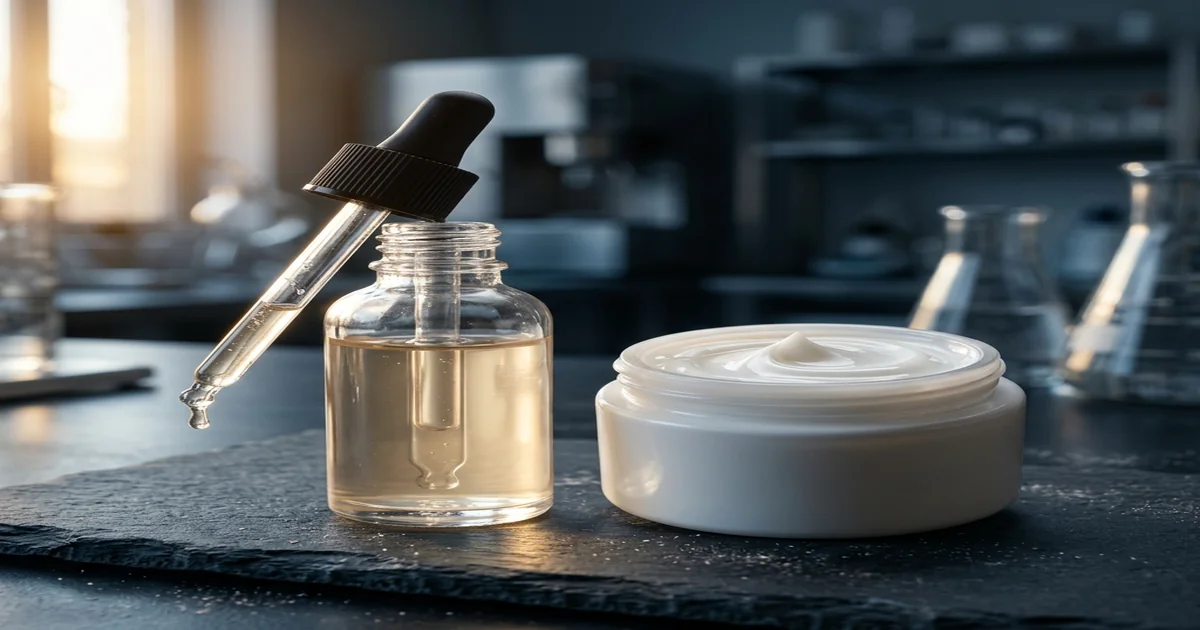
A skincare brand launches a "hydrating serum" and a "hydrating moisturiser" in the same month, both listing hyaluronic acid on the front label — and customers keep asking why they need both. That question lands on the formulator's desk more often than almost any other, because moisturiser vs serum formulation differences are rarely explained in terms customers, or even junior product developers, can act on. The confusion is not marketing spin; it reflects two genuinely different engineering problems that happen to share overlapping ingredient lists. This article breaks down how emulsion structure, active concentration, and delivery vehicle design separate these two product categories, and why a serum's job is fundamentally different from a moisturiser's job even when both bottles claim to hydrate. Global Formulation's cosmetic formulation consultancy works with skincare brands on exactly this kind of product-line differentiation, building serum and moisturiser pairs that perform distinct, complementary roles instead of duplicating each other.
The Core Formulation Difference Between Moisturisers and Serums
Moisturisers and serums are built to solve two different problems, and that difference in purpose drives nearly every formulation decision that follows. A moisturiser's primary function is barrier support — reducing transepidermal water loss and replenishing surface lipids — which requires an emulsion base capable of holding oil and water phases together in a stable, spreadable film. A serum's primary function is active delivery — getting a concentrated dose of one or two functional ingredients into the upper skin layers as efficiently as possible — which favours a lightweight, often water- or gel-based vehicle with little occlusive burden. These are not competing approaches to the same goal; they are different tools built for different jobs.
- Moisturiser — emulsion-based, oil and water phases, engineered for barrier support and hydration retention.
- Serum — water- or gel-based, minimal oil phase, engineered for high active payload and penetration.
- Shared ground — both may contain humectants like glycerin or hyaluronic acid, but at different roles and concentrations.
- Hybrid formats — serum-in-moisturiser or "moisturising serum" products deliberately blur the line for specific marketing positions.
Understanding this split matters well beyond marketing copy — it directly affects claims substantiation, stability testing protocols, and how a brand should sequence its cosmetics and personal care product development roadmap. Once the functional split is clear, the next question is how a moisturiser's emulsion is actually engineered to deliver on its barrier-support role.
Emulsion Structure: How Moisturisers Are Actually Built
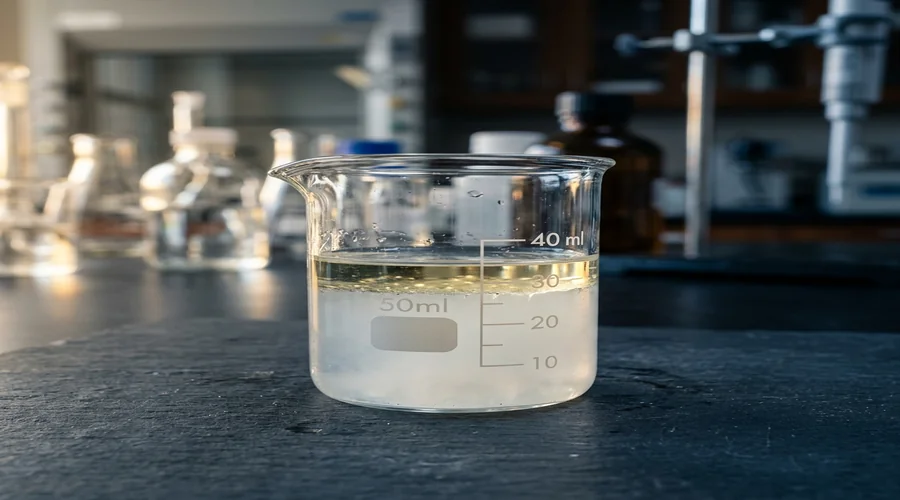
Every conventional moisturiser is, at its chemical core, an emulsion — a thermodynamically unstable mixture of oil and water that only holds together because emulsifiers reduce the interfacial tension between the two phases. The choice between an oil-in-water emulsion, where water is the continuous external phase, and a water-in-oil emulsion, where oil forms the continuous phase, has a direct and predictable effect on texture, spreadability, and occlusive strength. Oil-in-water systems tend to feel lighter and absorb faster, while water-in-oil systems feel richer and typically deliver stronger occlusive performance, which is why night creams and barrier-repair balms lean toward the latter structure more often than daytime lotions do.
| Formulation Element | Function | Typical Ingredient Class |
|---|---|---|
| Emulsifier system | Holds oil and water phases stable | Glyceryl stearate, polysorbates, lecithin |
| Occlusive agents | Forms a surface film to reduce water loss | Petrolatum, dimethicone, plant butters |
| Emollients | Softens and smooths skin surface | Esters, fatty alcohols, squalane |
| Humectants | Draws water to the skin surface | Glycerin, hyaluronic acid, sorbitol |
A well-engineered moisturiser layers these four functions deliberately: humectants pull moisture in, emollients smooth the surface, and occlusives seal the film so that pulled-in moisture does not simply evaporate back out. This layered engineering is exactly what a serum's simpler base cannot replicate, since a serum's formulation priorities point in an entirely different direction — toward maximising active concentration rather than occlusive performance.
Active Concentration: Why Serums Carry More Payload
Serums are formulated around a deliberately minimal base, which is precisely what frees up formulation space for a higher concentration of functional actives than an equivalent moisturiser could stably carry. Where a moisturiser must dedicate a substantial share of its formula to emulsifiers, oil-phase emollients, and stabilisers just to hold the product together, a typical serum base is often little more than water, a gelling or thickening agent, and a solubiliser to keep the active dissolved and evenly distributed. That structural simplicity is the real reason serums can list niacinamide at 5% or a vitamin C derivative at meaningfully higher concentrations than a cream carrying the same ingredient as a secondary claim.
- Water/gel-based vehicle — carbomer, cellulose gum, or similar thickeners provide texture without an oil phase.
- Solubilisers — help water-insoluble or borderline-soluble actives disperse evenly through the base.
- Stabilising systems — chelators and antioxidants protect sensitive actives like vitamin C from degradation.
- Minimal occlusive load — keeps the formula light enough to be layered under a moisturiser without pilling.
This is not simply a case of "more active is better" — concentration must be balanced against irritation potential and the active's own stability profile, since a poorly stabilised high-concentration actives serum can degrade faster or irritate skin more than a well-buffered lower-concentration version. Getting that concentration right is only half the challenge, though; the active also has to actually reach living skin tissue to do anything useful, which is where two of the most common serum actives — hyaluronic acid and niacinamide — illustrate very different delivery stories.
Hyaluronic Acid and Niacinamide: Two Different Delivery Stories
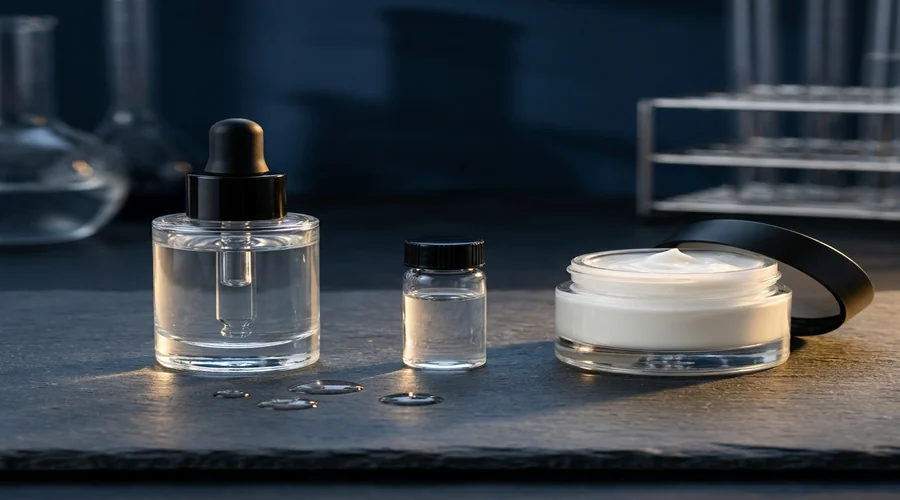
Hyaluronic acid and niacinamide are among the most common serum actives, but they behave in formulation and on skin in genuinely different ways, which is why they illustrate the active-delivery challenge so well. Hyaluronic acid is a humectant — it does not penetrate deeply on its own in its native high-molecular-weight form, but instead draws and holds water at and near the skin surface, which is why its performance depends heavily on ambient humidity and whatever occlusive layer follows it. Niacinamide, by contrast, is a small, water-soluble molecule capable of penetrating into the epidermis more readily, where it has documented effects on barrier lipid synthesis and other cellular processes studied extensively in dermatological research published through sources such as the National Library of Medicine's PubMed database.
- High-molecular-weight hyaluronic acid — sits primarily at the surface, forming a hydrating film.
- Low-molecular-weight hyaluronic acid — smaller fragments capable of somewhat deeper penetration into upper skin layers.
- Niacinamide — small, water-soluble, penetrates into the epidermis more readily at typical formulation concentrations.
- Formulation pH — niacinamide is generally stable across a wide pH range, simplifying its inclusion in serum bases.
Molecular weight, solubility, and formulation pH all interact to determine how much of a labelled active concentration actually reaches functional skin layers rather than simply sitting on the surface or washing off. This is precisely the kind of vehicle-dependent behaviour that separates a well-engineered serum from one that lists an impressive percentage on the box but delivers little of it where it matters, which raises the broader question of what actually governs skin penetration in the first place.
Skin Penetration Mechanics: What Actually Gets Through
The stratum corneum, the skin's outermost layer, exists specifically to keep things out, which makes penetration one of the central engineering challenges in any serum designed to deliver an active below the surface. Molecular size is the first gatekeeper: as a general principle in dermal absorption science, smaller molecules cross the stratum corneum's lipid-rich barrier more readily than large ones, and this size dependency is a well-established concept in transdermal delivery research. Lipophilicity also plays a defining role, since the stratum corneum is structured around lipid bilayers, meaning molecules with at least some oil-solubility typically navigate that barrier more efficiently than highly water-soluble, charged molecules of similar size.
| Penetration Factor | Effect on Delivery |
|---|---|
| Molecular size | Smaller molecules generally cross the stratum corneum more readily |
| Lipophilicity | Moderate oil-solubility generally aids passage through lipid bilayers |
| Concentration gradient | Higher external concentration increases the diffusion driving force |
| Vehicle formulation | Solubilisers and penetration enhancers can improve effective delivery |
Formulators address these constraints with tools like penetration enhancers, optimised pH ranges tuned to an active's ionisation state, and encapsulation technologies that protect an active until it reaches the skin surface, all covered in more general terms in our emulsion science guide for creams and lotions. None of this vehicle engineering matters, though, if the finished product is used incorrectly in a routine — which is why the practical question of how to layer a serum and moisturiser together deserves just as much attention as the underlying chemistry.
Layering and Formulation Strategy for Brand Portfolios
Brands developing both a serum and a moisturiser within the same product line face a strategic formulation decision, not just a marketing one: each product must justify its own place in the routine without simply duplicating the other's function. A common and effective approach positions the serum as the delivery vehicle for one or two hero actives at a meaningful concentration, while the moisturiser is built primarily around barrier support, with any shared active present mainly to reinforce the marketing story rather than to carry the therapeutic load. Skipping this differentiation — putting the same active at similar concentrations in both products — wastes formulation budget and gives the customer no functional reason to buy both.
- Hero active placement — concentrate the primary functional active in the serum, where the vehicle supports delivery.
- Barrier-support focus — build the moisturiser around occlusives and emollients rather than duplicating the serum's active load.
- Claims substantiation — align in-vitro or clinical testing with the specific mechanism each product is actually designed to deliver.
- Stability testing — test serum and moisturiser separately, since oxidation-sensitive actives often behave differently across the two vehicle types.
Getting this differentiation right early in development avoids a portfolio where two flagship products quietly compete with each other for the same claim, and it gives customers — and regulators reviewing product claims — a clear, defensible rationale for why both products exist and why layering them delivers more than either could alone.
Frequently Asked Questions
What is the core formulation difference between a moisturiser and a serum?
Why do serums usually have a higher active ingredient concentration than moisturisers?
Should a serum be applied before or after a moisturiser?
Can a serum replace a moisturiser, or do they always need to be used together?
Why does hyaluronic acid behave differently in a serum versus in a heavy cream?
What determines whether an active ingredient penetrates the skin from a formulation?
Why do some moisturisers feel heavier than others even with similar ingredient lists?
Need Expert Formulation Support?
Our cosmetic formulation consultancy provides end-to-end product development for moisturiser and serum lines — from emulsion and vehicle design to active stabilisation and claims-ready testing.
Get a Free Consultation