Pulmonary Drug Delivery Formulation: Inhaler and Nasal Spray Design

A metered-dose inhaler that meets every release specification in the lab can still under-treat a patient by delivering most of its nominal dose to the back of the throat instead of the lungs. Get pulmonary drug delivery formulation wrong, and the failure rarely shows up on a certificate of analysis — it shows up in a clinical trial that misses its endpoint, or a bioequivalence study that never matches the reference product. Respiratory therapeutics carry outsized commercial risk because so few formulations reach the deep lung intact: asthma, COPD, and a fast-growing pipeline of inhaled biologics all depend on getting a very small number of microns right, batch after batch. This article works through the four major delivery platforms — metered-dose inhalers, dry powder inhalers, nebulizer solutions, and nasal sprays — covering the chemistry, the particle engineering, and the regulatory testing that decides whether a formulation actually reaches its target site. Global Formulation supports pharmaceutical developers and CDMOs through inhalation and nasal product design, and the sequence below reflects the order these decisions typically get made in development.
Why the Respiratory Route Is Formulation's Hardest Delivery Problem
The lung and nasal cavity evolved to keep foreign particles out, which is precisely the barrier a formulation has to work with rather than around. Oral dosage forms have a comparatively forgiving absorption window spanning meters of gut and hours of transit time. Inhaled and nasal products have to hit a target measured in microns and hold it through manufacturing, storage, and patient use, with almost no room for drift before the dose simply lands in the wrong place.
The defenses a formulation has to work around are physical, chemical, and immunological, and they operate on different timescales throughout the respiratory tract.
- Mucociliary clearance — the ciliated epithelium lining the nose and conducting airways sweeps mucus and trapped particles toward the throat on a timescale of minutes, limiting the residence time available for absorption.
- Inertial impaction losses — oversized particles collide with the moist walls of the mouth, throat, and upper airway before ever reaching the target zone, and this single mechanism accounts for the majority of dose loss in a poorly engineered inhaler.
- Alveolar macrophage clearance — particles that do reach the deep lung can still be phagocytosed and cleared by resident immune cells, shortening the effective residence time of a deposited dose.
- Cough and bronchoconstriction reflexes — irritant formulations, extreme pH, or inappropriate tonicity can trigger a protective reflex that expels the dose before it has a chance to act.
Every platform covered in this article is, at its core, a different engineering answer to the same question: how do you get a therapeutic dose past these defenses and onto the right tissue, reliably, from a device a patient operates without supervision? Metered-dose inhalers were the first widely adopted answer, and their propellant chemistry still shapes how the entire category is regulated today.
Metered-Dose Inhalers: Propellant Chemistry and Suspension Design
A pressurized metered-dose inhaler, or pMDI, holds the drug either dissolved or suspended in a liquefied propellant inside a sealed canister, released through a precision metering valve that dispenses an identical volume with every actuation. The propellant itself is an active formulation ingredient, not an inert carrier, because its vapor pressure and polarity directly determine spray force, plume velocity, and the resulting particle size distribution. Chlorofluorocarbon propellants were phased out under the Montreal Protocol because of their ozone-depleting effect, and the industry moved to hydrofluoroalkane propellants such as HFA-134a and HFA-227, a transition that forced most legacy products through a full reformulation rather than a simple substitution.
Whether the drug is dissolved or suspended in that propellant sets the entire formulation strategy that follows.
- Solution MDIs — the drug dissolves fully in the propellant, usually with an ethanol cosolvent, producing a formulation less sensitive to particle size drift but more dependent on cosolvent and leak-rate control over shelf life.
- Suspension MDIs — micronized drug particles are dispersed in propellant with a surfactant such as oleic acid or lecithin, which prevents aggregation and lubricates the metering valve, but the suspension must remain physically stable against creaming and caking between shakes.
- Valve and actuator geometry — the metering chamber volume and the orifice diameter of the actuator nozzle jointly control the atomization energy applied to the formulation, and small dimensional changes here can shift the aerodynamic particle size distribution as much as a change in the formulation itself.
- Spacer and holding chamber compatibility — add-on spacer devices reduce oropharyngeal deposition by letting propellant evaporate and larger droplets settle out before inhalation, and formulations are frequently tested with and without a spacer to characterize both use cases.
Background on the propellant chemistry and valve engineering behind these devices is well documented in general references on the metered-dose inhaler. Suspension and solution MDIs both remain dominant for asthma and COPD therapy, but they share one structural limitation: patients must coordinate actuation with inhalation precisely, which is the constraint that drove development of the breath-actuated dry powder platform.
Dry Powder Inhalers: Carrier-Based Powder Engineering
A dry powder inhaler removes the propellant entirely and relies on the patient's own inspiratory airflow to disperse a powder formulation into a breathable aerosol. That design eliminates propellant chemistry and coordination problems, but it introduces a powder-engineering problem in their place: micronized drug particles in the 1 to 5 micron range are so cohesive that they will not flow or meter reproducibly on their own. Most DPI formulations solve this with ordered mixing, adhering the fine drug particles to the surface of much larger lactose monohydrate carrier particles through van der Waals and electrostatic forces, producing a blend that flows and doses like a coarse powder while still containing individually respirable drug particles.
Getting a DPI blend to detach and disperse efficiently on inhalation, rather than simply falling apart poorly or staying stubbornly stuck to the carrier, depends on several interacting variables.
- Carrier particle size and surface texture — smoother or rougher lactose surfaces change the adhesion force holding drug particles in place, directly setting how much of the dose detaches during inhalation.
- Ternary agents — a small addition of fine lactose or magnesium stearate can occupy high-energy binding sites on the carrier surface, weakening drug-carrier adhesion and improving the fraction of drug that detaches and disperses.
- Moisture control — lactose monohydrate is hygroscopic, and absorbed moisture forms liquid bridges between particles that increase cohesion, reduce flowability, and can trigger caking during storage, so DPI manufacturing typically runs in low-humidity suites.
- Electrostatic charge — the micronization process itself can leave drug particles charged, and uncontrolled charge affects both blend uniformity during manufacturing and dispersion behavior at the point of use.
- Device resistance — passive DPIs rely entirely on the patient's inhalation effort to generate dispersion energy, so the device's internal airflow resistance has to be matched to the formulation and to the target patient population's typical inspiratory flow rate.
The fraction of the metered dose that ends up in the respirable particle size range, known as the fine particle fraction, is the critical quality attribute that ties all of these variables together, and it is measured directly by cascade impactor testing. Further technical background on device and formulation design is available in general references on the dry-powder inhaler.
| Platform | Propellant / Driving Force | Patient Coordination Needed | Key Formulation Sensitivity |
|---|---|---|---|
| Metered-dose inhaler | Liquefied HFA propellant | High — actuation must sync with inhalation | Propellant vapor pressure, surfactant/cosolvent balance |
| Dry powder inhaler | Patient's inspiratory airflow | Low coordination, but needs adequate inspiratory effort | Carrier adhesion force, moisture, electrostatics |
| Nebulizer solution | Jet air, ultrasonic, or vibrating mesh energy | Low — passive tidal breathing over minutes | Tonicity, pH, device-droplet size compatibility |
| Nasal spray | Mechanical pump actuation | Low — single actuation per nostril | Viscosity, droplet size targeting the nasal mucosa |
Each platform trades patient burden against formulation complexity in a different place, which is exactly why device and formulation selection has to happen together at the start of a program rather than being decided after the chemistry is fixed. Liquid formulations sidestep the powder-flow problem entirely, but they introduce a different set of constraints tied to water as a solvent.
Nebulizer Solutions and Nasal Sprays: Aqueous Formulation Constraints
Nebulizers and nasal sprays are both aqueous liquid platforms, but they are formulated to opposite droplet size targets and carry different tolerability constraints, which makes it easy to underestimate how different the two disciplines actually are. A nebulizer converts a solution or suspension into a fine respirable mist using jet, ultrasonic, or vibrating mesh energy, and the choice of device technology is itself a formulation decision, since ultrasonic nebulizers generate localized heating that can degrade heat-sensitive proteins while mesh nebulizers are generally gentler and more compatible with biologics.
Because both platforms put an aqueous formulation directly onto sensitive mucosal or bronchial tissue, tolerability constraints are stricter than for most other dosage forms.
- Tonicity — nebulized and nasal solutions are formulated close to physiological osmolality, since hypotonic or hypertonic solutions can trigger cough, bronchospasm, or nasal irritation on contact with sensitive tissue.
- pH matching — nasal formulations are typically held near the mildly acidic pH of nasal mucosa to avoid stinging and to support mucociliary function, while nebulizer solutions are buffered to minimize airway irritation.
- Preservative selection — benzalkonium chloride and similar preservatives are documented in the clinical literature to provoke bronchospasm when delivered directly to the lower airway, which is why many nebulizer products are packaged as preservative-free single-dose vials rather than multi-dose bottles.
- Viscosity and mucoadhesion — nasal sprays often include a viscosity modifier to slow drainage out of the nasal cavity and extend contact time with the absorptive mucosa before mucociliary clearance removes the dose.
Device selection compounds these constraints rather than sitting apart from them, since the same solution can perform very differently depending on how it is atomized. Whichever platform is chosen, though, the formulation is ultimately being judged against a single physical parameter that determines where in the respiratory tract the dose actually lands.
Particle Size and Aerodynamic Deposition: The Variable Behind Everything
Every design choice covered so far — propellant, carrier, device technology, droplet size — ultimately expresses itself through one measurable property: the aerodynamic particle size distribution of the delivered dose. Aerodynamic diameter describes how a particle actually moves through an airstream, accounting for its density and shape rather than just its physical dimension, which is why it is the parameter both formulators and regulators use to predict where a dose will deposit.
Deposition follows three physical mechanisms that dominate in different size ranges and different regions of the respiratory tract.
| Deposition Region | Typical Particle Size | Dominant Mechanism |
|---|---|---|
| Nasal cavity | Greater than 10 microns | Inertial impaction on nasal turbinates |
| Oropharynx / throat | 5–10 microns | Inertial impaction at airway bends |
| Tracheobronchial airways | 1–5 microns | Gravitational sedimentation |
| Alveolar region | 0.5–3 microns | Sedimentation and Brownian diffusion |
| Largely exhaled | Below 0.5 microns | Diffusion too slow for deposition in the time available |
This distribution is measured directly with cascade impactor testing, using instruments such as the Andersen Cascade Impactor or the Next Generation Impactor, which physically separate an aerosol into size fractions across a series of graded stages so the fine particle fraction can be quantified rather than estimated. A formulation and device combination that cannot demonstrate a consistent, tight distribution around its target size range will show variable clinical performance regardless of how sound the underlying chemistry is. That target itself, however, depends entirely on where in the respiratory tract the drug is actually meant to act — a distinction that becomes central once nasal delivery is being used for something beyond local, topical effect.
Nasal Drug Delivery: Local Action Versus Systemic and Nose-to-Brain Strategy
Nasal formulation strategy splits along a fundamental line: is the nasal cavity the target tissue, or is it simply a convenient, needle-free route into systemic circulation or the central nervous system? Corticosteroid sprays for allergic rhinitis are formulated for local action, where the goal is prolonged mucosal contact and minimal systemic absorption. Peptide hormones such as calcitonin and triptans such as sumatriptan are formulated for the opposite goal — rapid, efficient absorption across the nasal mucosa into the bloodstream, offering a non-invasive alternative to injection for drugs that would otherwise be destroyed by oral first-pass metabolism.
Several formulation levers exist specifically to push absorption toward one of these two outcomes.
- Permeation enhancers — excipients such as chitosan and certain cyclodextrins transiently increase paracellular transport across the nasal epithelium, improving systemic bioavailability for peptides and other poorly permeable molecules.
- Mucoadhesive polymers — carbomers, hydroxypropyl methylcellulose, and similar polymers extend formulation residence time against mucociliary clearance, which typically turns over nasal secretions within roughly 15 to 20 minutes.
- Droplet size targeting — systemic and local nasal products are still formulated to deposit above the nasal cavity's lower size cutoff, avoiding the pulmonary or aspiration risk that comes with producing droplets fine enough to travel further down the airway.
- Olfactory-region targeting — nose-to-brain delivery programs specifically engineer spray geometry and viscosity to reach the olfactory epithelium high in the nasal cavity, which occupies a small fraction of total nasal surface area but provides a direct anatomical route to the brain via the olfactory and trigeminal nerves, bypassing the blood-brain barrier.
Nose-to-brain delivery remains an active pharmaceutical research area precisely because that anatomical shortcut is real, but reaching it reliably in a marketed product is a harder formulation problem than reaching the general nasal mucosa for local or systemic absorption. Whichever strategy a program pursues, the finished formulation still has to clear the same regulatory and testing gates that apply across every inhaled and nasal platform.
Regulatory Framework and In Vitro Testing for Inhaled and Nasal Products
Inhaled and nasal products are tested against a different set of standards than oral or parenteral dosage forms, because the properties that predict clinical performance — spray pattern, plume geometry, and aerodynamic particle size — have no equivalent in a dissolution or assay test. These methods exist specifically because release specifications built for other dosage forms simply do not capture whether an inhaled dose will actually reach its target tissue.
| Standard / Body | Scope | Key Tests Covered |
|---|---|---|
| USP General Chapter <601> | Aerosols, nasal sprays, MDIs, and DPIs | Delivered dose uniformity, spray pattern, plume geometry, aerodynamic particle size distribution |
| Ph. Eur. 2.9.18 | Preparations for inhalation | Fine particle dose, aerodynamic assessment of fine particles |
| FDA combination product guidance | Drug-device combination products | In vitro bioequivalence, human factors / usability studies |
Regulatory scrutiny is compounded for these products because they are legally combination products — a drug and a device evaluated as one inseparable system. Method standards and general chapters for these procedures are maintained by bodies including the United States Pharmacopeia, while overall drug product oversight in the US sits with the FDA's Center for Drug Evaluation and Research. Leachables and extractables studies on propellant-contact and device-contact materials are typically run alongside these performance tests, since valve elastomers and device plastics can both contribute impurities and be degraded by the formulation itself over shelf life. Passing this testing framework in the lab is necessary but not sufficient — the same performance has to survive the transition from development batch to full-scale, validated commercial manufacturing.
Formulation, Device Combination, and Scale-Up Challenges
Scaling an inhaled or nasal product is unusually unforgiving compared with most other dosage forms, because the critical quality attribute is a physical particle size distribution rather than a chemical assay result, and physical properties are far more sensitive to equipment and process differences between a pilot line and a commercial line. A change that looks purely operational — a different homogenizer, a different fill speed, a different humidity setpoint — can move the fine particle fraction enough to affect a regulated performance claim without any ingredient in the formula changing at all.
- Micronization consistency — the jet-milling or spray-drying process that sets initial drug particle size must be tightly controlled and requalified at each scale, since small shifts here propagate directly into the finished aerodynamic particle size distribution.
- Moisture-controlled manufacturing — DPI blending and filling commonly run in low-humidity suites to prevent lactose hydrate transitions and powder caking during the manufacturing window itself.
- Valve and actuator technology transfer — MDI crimping and valve-fitting equipment must reproduce metering chamber tolerances exactly, since dimensional drift here changes both dose uniformity and atomization energy.
- Capsule and blister filling precision — DPI doses are often measured in micrograms, so filling equipment must hold weight uniformity within a narrow tolerance across an entire production run.
- Device-formulation combination testing — because these are combination products, technology transfer has to validate the drug, the device, and their interaction together, not the formulation in isolation.
These constraints are also why inhaled and nasal programs benefit from involving manufacturing and device expertise from the earliest formulation decisions rather than treating scale-up as a downstream handoff. Emulsion and topical semisolid platforms carry their own distinct scale-up profile, covered in our guide to parenteral formulation development, sterility, and tonicity, which shares much of the aseptic and tonicity-control discipline nasal and nebulizer liquids depend on. Excipient and carrier selection for solid dosage forms, including the lactose grades that show up again in DPI blends, is covered in our guide to excipient selection for oral solid dosage forms.
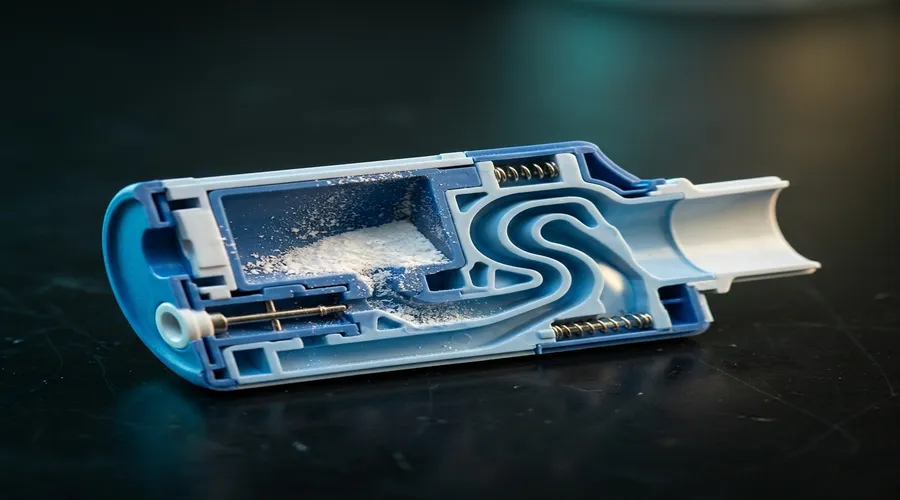

The decision framework across all four platforms reduces to three questions, asked in this order. Which deposition zone does the therapy actually need — nasal, tracheobronchial, or alveolar — and does the chosen device and formulation combination reliably hit that aerodynamic size range? Does the formulation survive the specific chemical or physical stress of its platform, whether that is propellant compatibility, powder moisture sensitivity, or aqueous tonicity and preservative tolerability? And does the manufacturing process reproduce the particle size distribution the clinical program was built on, batch after batch, at commercial scale? Teams that work through those questions early with a formulation consultant avoid the most expensive outcome in this category: a device-formulation combination that performs beautifully in vitro and inconsistently in the patient. That discipline sits within the broader pharmaceutical and healthcare formulation practice Global Formulation supports across dosage forms.
Frequently Asked Questions
What particle size is needed for a drug to reach the deep lung?
Particles need a mass median aerodynamic diameter (MMAD) of roughly 1 to 5 microns to reach the tracheobronchial and alveolar regions in meaningful amounts. Aerodynamic diameter is not the same as physical particle size — it describes how a particle actually behaves in an airstream, accounting for its density and shape, which is why it is the parameter regulators and formulators actually control to. Particles larger than about 5 microns tend to impact in the throat and upper airway through inertial impaction and never reach the lung at all, which is one of the most common causes of poor clinical performance in an otherwise well-formulated inhaler. Particles smaller than roughly 0.5 microns behave almost like a gas and are frequently exhaled before they have time to deposit by sedimentation or diffusion. This narrow window is measured directly using cascade impactor testing, and hitting it consistently, batch after batch, is the central engineering problem in pulmonary drug delivery formulation.
Why can't the same nasal spray formulation just be inhaled through the mouth for lung delivery?
Nasal and pulmonary products are formulated to deliberately different particle or droplet size targets, and swapping the route defeats the purpose of both. A nasal spray is designed to produce droplets typically larger than 10 microns so the dose impacts on the nasal mucosa and stays there, rather than being carried further down the airway. A pulmonary product needs the opposite: an aerodynamic diameter in the 1 to 5 micron range so the dose bypasses the throat and reaches the bronchial tree or alveoli. Using a nasal device orally would deliver oversized droplets that deposit almost entirely in the mouth and throat, and using a pulmonary inhaler nasally would send fine particles straight past the nasal cavity into the lower airway. The device, the actuator, and the formulation are engineered together as one system targeting one deposition zone, which is why these are treated as distinct formulation disciplines rather than interchangeable delivery methods.
Why did metered-dose inhalers switch propellants, and does it affect formulation?
Chlorofluorocarbon propellants such as CFC-11 and CFC-12 were phased out under the Montreal Protocol because of their ozone-depleting effect, and the industry transitioned to hydrofluoroalkane propellants including HFA-134a and HFA-227. This was far more than a simple ingredient swap. HFA propellants have different vapor pressure, polarity, and solvency characteristics than the CFCs they replaced, so surfactants and stabilizers that worked in CFC suspensions frequently failed to suspend or lubricate the valve correctly in HFA systems. Formulators had to requalify or replace surfactant systems, adjust cosolvent levels, and in many cases redesign the metering valve elastomers, since HFA propellants can extract different leachables from rubber components than CFCs did. The transition effectively required most legacy MDI products to be reformulated and revalidated from the ground up rather than simply relabeled.
Why is lactose used as a carrier in dry powder inhalers instead of just micronized drug alone?
Pure micronized drug in the 1 to 5 micron range has extremely poor flow properties on its own — the particles are so small and cohesive that they clump together and resist dispersing into a fine, breathable cloud when the patient inhales. Coarse lactose monohydrate carrier particles solve this by giving the blend enough mass and flowability to meter reproducibly and fill capsules or blisters accurately, a technique known as ordered mixing, where the fine drug particles adhere to the surface of the much larger carrier particles through van der Waals and electrostatic forces. During inhalation, the patient's inspiratory airflow and the turbulence generated inside the device are what detach the drug particles from the carrier surface so they can travel deep into the lung while the heavier lactose largely deposits in the throat and is swallowed. Getting that detachment efficiency right, commonly expressed as the fine particle fraction, is one of the most sensitive and closely guarded aspects of DPI formulation development.
Why are many nebulizer solutions preservative-free single-dose vials instead of multi-dose bottles?
Preservatives that are perfectly acceptable in an eye drop or a nasal spray can provoke bronchospasm and airway irritation when nebulized directly into the lower respiratory tract, because nebulized droplets deliver the preservative deep into sensitive bronchial tissue rather than onto more resilient mucosal surfaces. Benzalkonium chloride is the most extensively documented example, with published clinical literature linking it to paradoxical bronchoconstriction in susceptible patients, particularly those with asthma. Because the consequence of a preservative reaction in the lung is more severe than in most other administration routes, and because nebulizer solutions are typically administered in a clinical or home respiratory-therapy setting where single-use packaging is practical, manufacturers default to preservative-free unit-dose vials wherever the economics and use pattern allow it. Multi-dose nebulizer products still exist, but they require a preservative system specifically demonstrated to be safe by inhalation, which is a materially higher bar than passing a standard antimicrobial effectiveness test.
What makes nose-to-brain drug delivery scientifically plausible?
The olfactory epithelium and the trigeminal nerve both have direct anatomical connections between the nasal cavity and the central nervous system, offering a route that can bypass the blood-brain barrier rather than relying on systemic circulation to cross it. Drug deposited on the olfactory region can travel along olfactory sensory neurons and through the perineural space surrounding the olfactory nerve bundles into the cerebrospinal fluid and brain tissue, and the trigeminal nerve provides a parallel pathway reaching the brainstem. This is an active area of pharmaceutical research, particularly for CNS-active peptides and small molecules that are poorly bioavailable orally or cannot cross the blood-brain barrier systemically. The formulation challenge is substantial: the olfactory region occupies a small fraction of total nasal surface area, high up and toward the back of the nasal cavity, so the spray must be engineered with the droplet size, viscosity, and device geometry needed to actually reach that zone rather than depositing on the much larger, non-olfactory respiratory epithelium at the front of the nose.
Why are generic inhaled products so difficult to get approved compared to generic oral tablets?
A generic oral tablet mainly has to demonstrate that its active ingredient reaches the bloodstream at the same rate and extent as the reference product, which can usually be shown with a standard pharmacokinetic bioequivalence study. An inhaled product is a combination of formulation and device, and the two cannot be evaluated separately, because the same drug in a different device, valve, or actuator geometry can produce a completely different particle size distribution and clinical effect. Regulators therefore require a much broader package: in vitro comparisons of spray pattern, plume geometry, and aerodynamic particle size distribution by cascade impactor across the full dose range, alongside pharmacokinetic and often pharmacodynamic or clinical endpoint studies, plus human factors studies confirming patients use the generic device correctly. Matching all of these simultaneously to a reference product that a generic developer did not design is a substantially harder engineering and regulatory problem than matching a dissolution curve, which is the central reason generic competition in inhaled products has historically lagged behind oral solid dosage forms.
Developing an Inhaled or Nasal Drug Product?
Device-formulation strategy, particle size engineering, aqueous tonicity and preservative selection, and scale-up verification. Global Formulation provides respiratory and nasal product development services and testing partnership from first brief to production batch.
Discuss Your Project