Pharmaceutical Cleaning Validation: Residue Limits and Swab Testing Methods
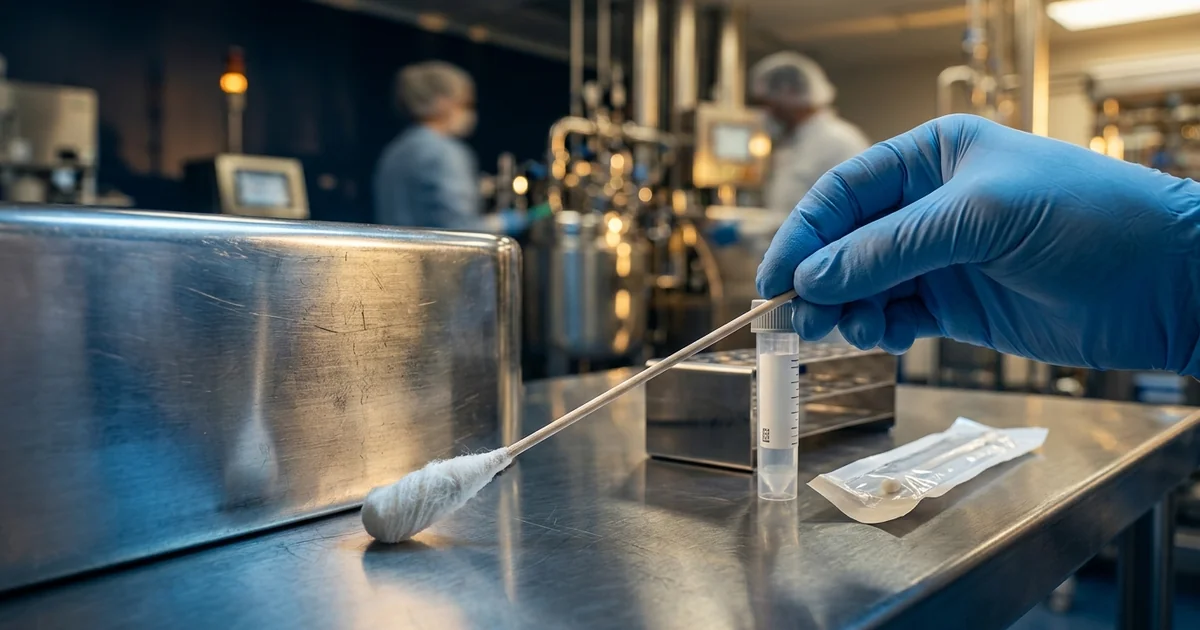
An FDA investigator swabs a mixing vessel between production runs, sends the sample to the lab, and finds a trace of the previous product's active ingredient sitting just above the facility's own acceptance limit. The equipment looked clean. The operator followed the written procedure. But the limit itself had been copied from a sister site's protocol years earlier and never recalculated for this specific product pairing — and that single unjustified number is now a 483 observation with the plant's name on it. Pharmaceutical cleaning validation exists precisely to prevent this scenario: it is the documented, scientifically justified proof that a cleaning procedure removes residue to a level that will not harm the next patient who takes the next batch made on that equipment. This article walks through how acceptance limits are actually calculated, how swab and rinse sampling work, which analytical methods detect what, and where real cleaning validation programs most often break down under inspection. It is written for quality and manufacturing engineers building or auditing a cleaning validation program on shared pharmaceutical equipment.
Why Pharmaceutical Cleaning Validation Is Not Optional
Most pharmaceutical manufacturing facilities run multiple products through the same mixing vessels, tablet presses, and filling lines, which means every changeover carries a real risk of one product's residue ending up in the next. Cleaning validation converts "we cleaned it" from an assumption into documented, repeatable evidence, and regulators treat its absence as a direct threat to patient safety rather than a paperwork gap.
- Cross-contamination is a patient-safety issue, not a housekeeping issue — trace API carryover into an unrelated product can trigger an allergic reaction or therapeutic interference the patient never consented to.
- Regulators inspect it directly — cleaning validation is a standard focus area in FDA, EMA, and PIC/S GMP inspections, and inadequate validation is one of the most frequently cited findings in the industry.
- It underpins shared-equipment economics — validated cleaning is what makes running multiple products on the same line commercially viable instead of requiring dedicated equipment per product.
- Documentation must precede sampling — the acceptance limit and sampling plan must be calculated and approved before a single swab is taken, not derived after the fact to match convenient results.
With the stakes established, the practical starting point for any cleaning validation program is the number every subsequent test is measured against: the residue acceptance limit. Broader context on pharmaceutical manufacturing quality systems is available in the pharmaceutical and healthcare knowledge base.
Calculating Residue Acceptance Limits
An acceptance limit is only meaningful if it is derived from a defensible calculation rather than borrowed from another product or another facility. Three approaches have historically dominated the industry, and each answers a slightly different question about how much residue is actually safe to carry into the next batch.
| Method | Basis | Limitation |
|---|---|---|
| Dose-based (therapeutic dose) | Fraction of the next product's minimum daily dose | Ignores actual toxicological risk profile of the residue compound |
| 10 ppm criterion | Flat 10 parts per million of residue in next product | Arbitrary — not derived from the specific compound's safety data |
| Visual cleanliness | No visible residue on the equipment surface | Often the least sensitive; used as a floor check, not sole criterion |
| Health-based (PDE) | Permitted Daily Exposure from full toxicological evaluation | Requires toxicology expertise and is more resource-intensive to derive |
The most stringent (lowest) limit among the applicable methods is generally adopted as the acceptance criterion, and current best practice — reflected in Permitted Daily Exposure guidance from EMA and the ICH Q3D framework — increasingly favors health-based limits over the older dose-based or flat-ppm approaches precisely because they reflect the compound's actual pharmacological and toxicological risk rather than an arbitrary industry convention.
Once a defensible limit exists, the next question is how residue is actually measured against it, which is where sampling method choice becomes critical.
Swab vs Rinse Sampling
Sampling method choice determines whether a cleaning validation study actually finds the residue that matters, and the two dominant methods — swab and rinse — are complementary rather than interchangeable. Choosing only one, or choosing the wrong one for a given piece of equipment, is a common way a validation study passes on paper while missing a real contamination risk.
- Swab sampling — a solvent-wetted swab physically wipes a defined surface area, which is then extracted and analyzed; its strength is targeting specific hard-to-clean locations like corners, seams, and gaskets that a general rinse would dilute past detection.
- Rinse sampling — the final cleaning-cycle rinse solvent is collected and analyzed directly, covering large or physically inaccessible surfaces such as long transfer lines or fully assembled equipment that a swab cannot reach.
- Combined approach — most validated protocols use both: swabs to pinpoint failure at specific high-risk locations, rinse to confirm overall system cleanliness across everything a swab cannot physically access.
- Sampling location justification — locations must be selected through an actual equipment risk assessment (hardest-to-clean surfaces, low-flow zones, product-contact areas), not chosen for sampling convenience.
Sampling only tells part of the story until the collected sample is actually analyzed, and the analytical method chosen shapes exactly what that result can and cannot tell you.
Analytical Methods: Specific vs Non-Specific
The analytical method used to test a swab or rinse sample determines whether the result identifies a specific compound or simply flags the presence of organic material in general, and that distinction has real consequences for how a result should be interpreted. Choosing the wrong method — or relying on one method alone without understanding its blind spots — is a subtle but serious gap in many validation programs.
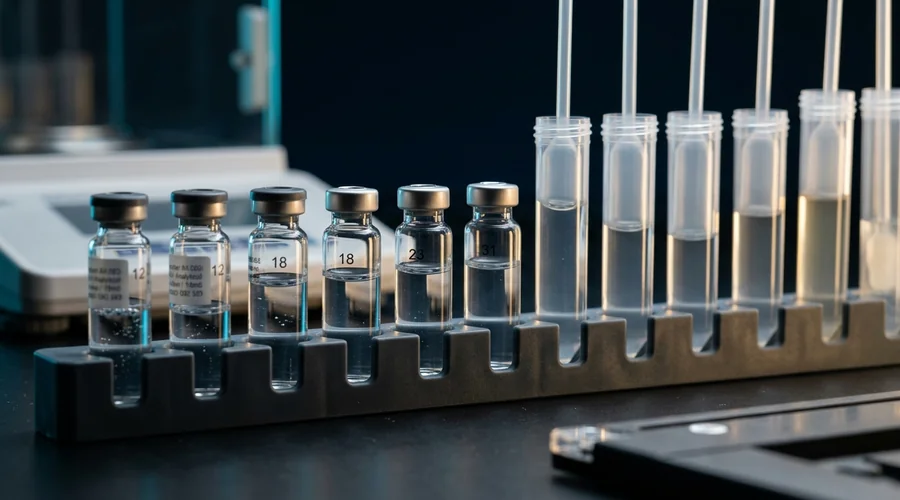
- HPLC (specific method) — quantifies the exact target compound, typically the previous product's active ingredient, with high sensitivity and selectivity even alongside other substances in the sample.
- Total Organic Carbon / TOC (non-specific method) — measures all organic carbon present regardless of source, making it fast and cost-effective as a screening tool but unable to distinguish residual API from cleaning agent residue or any other organic contamination.
- Method pairing strategy — many programs use HPLC to confirm the specific quantitative acceptance limit and TOC as a rapid worst-case or routine screening check between full HPLC studies.
Analytical method selection matters for one specific product at a time, but a facility running dozens of products on shared equipment cannot practically validate every product combination individually — which is exactly the problem worst-case selection is designed to solve.
Worst-Case Product Selection
Worst-case product selection lets a facility validate a cleaning procedure once against the hardest product to clean and have that single study cover every easier product sharing the same equipment train. Getting this selection wrong — choosing a convenient product instead of a genuinely worst-case one — is one of the most consequential and most frequently challenged decisions in a cleaning validation program.
- Solubility — less soluble residues resist removal by aqueous or solvent-based cleaning agents and are inherently harder to clean to a low limit.
- Toxicity and potency — a highly potent or toxic compound produces a lower (more stringent) acceptance limit, making it harder to pass even if it cleans easily.
- Analytical detectability — a compound that is difficult to detect at trace concentration adds analytical risk on top of cleaning difficulty.
- Documented scoring rationale — the selection must be justified with a written risk assessment scoring all products against these factors, not asserted without supporting data.
With residue limits, sampling method, analytical method, and worst-case product all determined, these pieces come together into a single formal protocol that has to be executed and documented in a specific, defensible sequence.
Building and Executing the Validation Protocol
A cleaning validation protocol is the document that ties every prior decision — limits, sampling, analytics, worst-case selection — into an approved, executable study, and the industry has converged on a specific execution standard that regulators expect to see followed.
- Protocol approval before execution — the acceptance criteria, sampling plan, and analytical method are reviewed and approved by quality assurance before any cleaning run is performed under the protocol.
- Three consecutive successful runs — the generally accepted minimum to demonstrate the cleaning procedure is reproducible, not a one-time favorable result.
- Microbial bioburden testing alongside chemical residue — validated cleaning must address both chemical carryover and microbiological contamination, since a chemically clean surface can still carry unacceptable bioburden.
- Ongoing verification — periodic re-testing or trend monitoring after initial validation, particularly following any change to equipment, product, or the cleaning procedure itself, to confirm the validated state persists.
A protocol executed exactly this way is what converts a cleaning procedure from an operator habit into a defensible, inspectable system — which is precisely what an inspector is checking for when a cleaning validation file lands on their desk.
Why Cleaning Validation Programs Fail Inspection
Cleaning validation failures rarely stem from sloppy swabbing technique on the manufacturing floor — they almost always trace back to a decision made on paper, weeks or months before any sample was collected. Recognizing these patterns is the fastest way to audit an existing program before a regulator does it first.
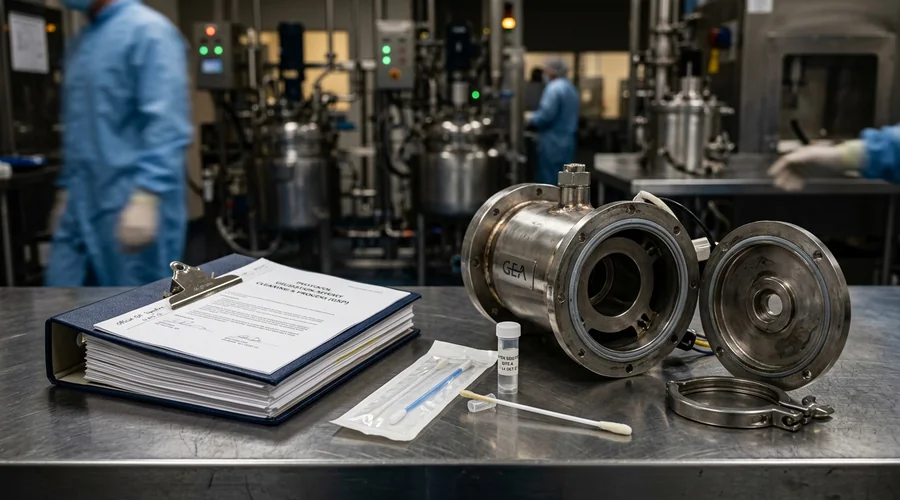
- Unjustified acceptance limits — limits copied from another facility or based on outdated dose-based logic instead of a proper toxicological PDE assessment.
- Poorly justified sampling locations — swab points chosen for convenience rather than identified through an actual hardest-to-clean risk assessment.
- Weak worst-case justification — a worst-case product selection an inspector can show was not genuinely the hardest to clean or most toxicologically significant option available.
- Missing ongoing verification — a technically sound original validation with no evidence of continued monitoring, especially after equipment or formulation changes.
Auditing a program against these four failure patterns before an inspector does is the highest-leverage step a quality team can take, and it is exactly the kind of gap a contract cleaning-validation review or formulation consultant is positioned to catch early.
Frequently Asked Questions
What is pharmaceutical cleaning validation and why is it required?
Pharmaceutical cleaning validation is documented evidence that a cleaning procedure consistently removes product residue, cleaning agent residue, and microbial contamination from shared manufacturing equipment to a level that will not compromise the safety, identity, strength, or purity of the next product made on that equipment. It is required because most pharmaceutical facilities manufacture multiple products on shared equipment, and residue carried over from one batch into the next — whether active ingredient, excipient, or cleaning agent — is a direct patient-safety and product-quality risk.
Regulatory bodies including the FDA and agencies following ICH and PIC/S guidance treat cleaning validation as a mandatory GMP requirement, and its absence or inadequacy is one of the most common findings in pharmaceutical manufacturing inspection citations.
How are residue acceptance limits calculated in cleaning validation?
Acceptance limits are typically set using one or more of three established approaches: a dose-based (therapeutic dose) criterion limiting carryover to a small fraction of the next product's minimum daily dose, a 10 ppm criterion limiting the residue to 10 parts per million in the next product, and a visual cleanliness criterion requiring no visible residue on the equipment surface, with the most stringent (lowest) of the calculated limits typically adopted as the acceptance criterion.
Increasingly, health-based exposure limits such as the Permitted Daily Exposure (PDE), derived from a full toxicological evaluation of the compound as described in EMA and ICH Q3D-aligned guidance, are used instead of or alongside the older dose-based methods because they more accurately reflect a compound's actual safety margin. Whichever method is used, the calculation must be documented and justified in the validation protocol before any sampling data is generated.
What is the difference between swab sampling and rinse sampling in cleaning validation?
Swab sampling involves physically wiping a defined surface area of equipment with a solvent-wetted swab and then extracting and analyzing the swab for residue, and its main advantage is the ability to target the specific locations on a piece of equipment that are hardest to clean — corners, seams, gaskets, and other low-flow areas. Rinse sampling collects the final rinse solvent used in the cleaning cycle and analyzes it directly, which is faster and can assess large or inaccessible surface areas that a swab cannot physically reach, such as the interior of long transfer lines or fully assembled equipment.
Most validated cleaning protocols use both methods together, because swab data pinpoints exactly where a failure occurs on the equipment while rinse data confirms overall system cleanliness across surfaces a swab cannot access.
What analytical methods are used to detect residue in cleaning validation samples?
Specific analytical methods such as high-performance liquid chromatography (HPLC) are used when the target residue is a known active pharmaceutical ingredient at a defined acceptance limit, because HPLC can quantify that exact compound with high sensitivity and selectivity even in the presence of other substances. Total Organic Carbon (TOC) analysis is a non-specific method that measures all organic carbon in a sample regardless of its source, making it faster and cheaper to run but unable to distinguish between residual API, cleaning agent, and any other organic contamination.
Many cleaning validation programs use HPLC for the primary quantitative limit and TOC as a rapid screening or worst-case verification tool, with the specific-versus-non-specific method choice documented and justified for each cleaning procedure being validated.
What is worst-case product selection in cleaning validation, and why does it matter?
Worst-case product selection is the practice of choosing, from all products run on a piece of shared equipment, the one that is hardest to clean and most difficult to detect at low concentration, and validating the cleaning procedure specifically against that product rather than testing every product individually. Selection typically weighs solubility (less soluble residues are harder to remove), toxicity or potency (lower acceptance limits are harder to meet), and the difficulty of analytical detection at trace levels.
This matters because validating against a true worst case means every other, easier-to-clean product on that equipment train is automatically covered by the same validated procedure, which is what makes cleaning validation practical at multi-product manufacturing scale rather than requiring a separate validation study for every single product combination.
How many cleaning validation runs are needed to establish a validated state?
The generally accepted industry practice is three consecutive successful cleaning cycles performed under the validated procedure, each meeting the predetermined acceptance criteria for both chemical residue and microbial bioburden, before the cleaning procedure is considered validated for routine use. Three runs is treated as the minimum needed to demonstrate the procedure is reproducible and not merely the result of a single favorable cleaning event, and any failure within those three runs typically requires an investigation and a restart of the three-run sequence once the root cause is corrected.
After initial validation, ongoing verification — periodic re-testing or trend monitoring of routine cleaning results — is expected to confirm the validated state is maintained over time, particularly after any change to equipment, product, or cleaning procedure.
What causes cleaning validation programs to fail regulatory inspection?
The most common inspection findings involve acceptance limits that are not scientifically justified — either copied from another facility without recalculation or based on outdated dose-based logic instead of a proper toxicological PDE assessment — and sampling plans that do not target genuinely hard-to-clean locations identified through actual equipment risk assessment. A second frequent finding is inadequate justification of the worst-case product selection, where an inspector determines the facility chose a convenient product to validate against rather than the one that is genuinely hardest to clean or most toxicologically significant.
Missing or inconsistent ongoing verification data is a third common gap: a facility that validated its cleaning procedure years ago but cannot show continued monitoring, especially after equipment or formulation changes, will typically receive a citation even if the original validation study was technically sound.
Building or Auditing a Cleaning Validation Program?
Global Formulation provides pharmaceutical cleaning validation consulting, protocol and acceptance-limit design, and equipment cleaning verification partner support for manufacturers and CDMOs preparing for inspection.
Talk to Our Formulation Team