Probiotic & Postbiotic Skincare: Formulating Around Live Culture Claims
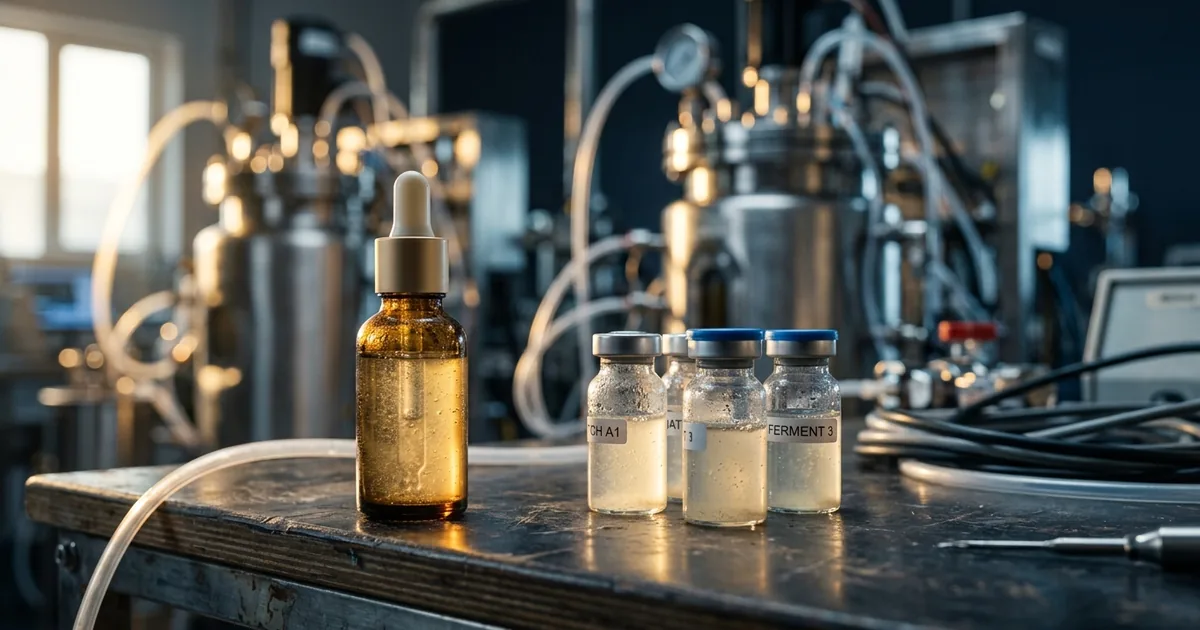
Walk down any skincare aisle and "probiotic" now sits on serums, moisturizers, and cleansers next to retinol and vitamin C — yet genuine probiotic postbiotic skincare formulation is a far narrower discipline than the marketing suggests. Most bottles labeled "probiotic" contain no living organism at all, and that gap between label language and formulation reality is not an accident; it is a direct consequence of how cosmetic preservation chemistry works. Get the distinction wrong and a brand risks a claim it cannot substantiate, or worse, a product that never delivers the biological activity its marketing promises. This guide breaks down what probiotics, prebiotics, and postbiotics actually mean at the formulation level, why live cultures rarely survive a finished product, and how ferment lysates deliver real skin benefit without that viability problem. It draws on the same active-ingredient formulation discipline we bring to cosmetics and personal care consulting work, written for entrepreneurs and product developers who want their microbiome claims to survive a regulator's second look.
Why "Probiotic Skincare" Is Mostly a Formulation Myth
The scientifically accepted definition of a probiotic requires live, viable microorganisms present in sufficient number to confer a benefit — a bar that is straightforward to meet in a refrigerated yogurt and extraordinarily difficult to meet in a leave-on cosmetic emulsion. Cosmetic preservative systems exist for a specific reason: an unpreserved product left open to air, water, and repeated finger contact is a genuine contamination risk over months of shelf life and use. That protective chemistry is fundamentally at odds with keeping any bacterial strain alive, since the same broad-spectrum antimicrobial activity that protects the consumer will also kill the beneficial culture the formula claims to deliver.
Manufacturing adds a second obstacle on top of preservation. Heat processing, high-shear homogenization, and extended shelf storage all reduce viable cell counts well before a jar reaches a retail shelf, even before any preservative gets involved. Formulators who understand this constraint generally do not fight it — they route around it entirely, which is exactly why the ingredient decks of most commercial "probiotic" skincare products contain postbiotics and ferment lysates rather than a single living organism.
Skin Microbiome Science: What These Products Target
Skin hosts a dense, diverse community of resident bacteria, fungi, and other microorganisms collectively known as the skin microbiome, and a balanced version of that community is well documented as supportive of healthy barrier function. Established dermatology research links a favorable balance between commensal species and opportunistic ones to lower susceptibility to irritation and inflammatory skin conditions, which is the scientific premise every microbiome-positioned product is ultimately selling. The goal of probiotic, prebiotic, and postbiotic ingredients alike is to shift that balance in a beneficial direction, even though each category approaches the problem through a completely different mechanism.
- Commensal balance — beneficial resident species compete with and help suppress opportunistic or pathogenic organisms on skin
- Barrier support — a stable microbiome is associated with stronger skin barrier lipid organization and moisture retention
- Surface pH — skin's naturally acidic surface, often called the acid mantle, favors beneficial species and is itself shaped by microbial metabolic activity
Understanding which part of that system a given ingredient actually influences is the key to reading past marketing language and evaluating whether a formulation choice is scientifically coherent, starting with the category doing the most real chemistry: postbiotics.
Postbiotics and Ferment Lysates: The Chemistry That Works
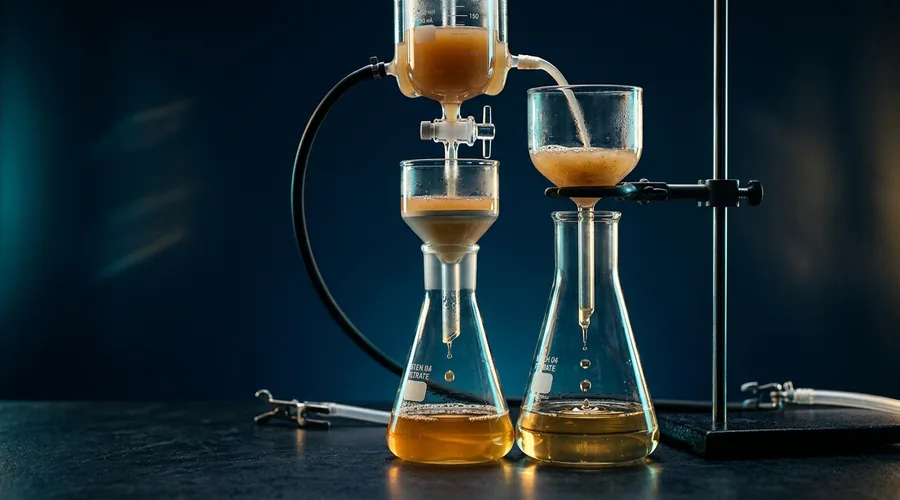
A postbiotic ingredient contains inactivated microbial cells, cell fragments, or the metabolic byproducts those cells produced during fermentation — never a living organism. A ferment lysate or ferment filtrate is the practical form this usually takes: a strain is grown in a controlled fermentation medium, then the cells are broken open or filtered out to recover the peptides, organic acids, and polysaccharides they generated. Because nothing in the finished ingredient needs to stay alive, postbiotics sidestep the entire preservation conflict that makes true probiotic formulation so difficult.
That stability is precisely why ferment lysates have become the dominant active in this ingredient category rather than a workaround of last resort. Short-chain fatty acids, lactic acid, and small peptides recovered from fermentation are documented contributors to skin barrier lipid support and mild pH modulation toward skin's naturally acidic surface, giving postbiotic actives a plausible, chemically grounded mechanism even without any live-culture delivery.
Postbiotics answer the "how do we deliver microbiome activity" question for most finished formats, but they only address organisms already reduced to their chemical byproducts. A second ingredient category takes a different route entirely, working on the resident microbiome without introducing any new organism or fragment at all.
Prebiotics: Feeding the Microbiome Instead of Adding to It
A prebiotic skincare ingredient contains no microorganisms, living or otherwise — it is a substrate, typically a sugar or fiber-derived molecule, formulated to selectively nourish the beneficial bacteria already present on skin. Inulin and specific oligosaccharides are the most common prebiotic actives in cosmetic formulation, chosen because they are metabolized preferentially by favorable commensal species over opportunistic ones, a logic borrowed directly from how dietary prebiotics are understood to function in the gut.
Prebiotics carry a genuine formulation advantage over both probiotics and postbiotics: because the ingredient itself is not biologically derived from a microbial process, it is straightforward to source, standardize, and preserve using conventional cosmetic chemistry. The trade-off is that skin microbiome research remains considerably younger and less clinically mature than gut microbiome research, so ingredient-level substantiation for any specific prebiotic active varies meaningfully by supplier and study quality.
| Category | Contains a Live Organism | Preservation Compatibility | Typical Mechanism |
|---|---|---|---|
| Probiotic | Yes, by definition | Very difficult — conflicts with standard preservatives | Adds beneficial live organisms directly to skin |
| Postbiotic / ferment lysate | No — inactivated cells or byproducts | Compatible with standard systems | Delivers fermentation metabolites (peptides, acids) directly |
| Prebiotic | No — a substrate, not an organism | Compatible with standard systems | Selectively feeds beneficial resident bacteria already on skin |
Placed side by side, the three categories cover three distinct strategies rather than three strengths of the same idea — which is exactly why a brand that actually wants to attempt a genuine live-culture product needs an entirely different formulation approach from any of them.
The One Real Path to Live Cultures
A small category of products does succeed at delivering genuinely live bacteria, and it depends almost entirely on spore-forming strains rather than the vegetative bacterial cells used in food-grade probiotics. Bacillus species are the most common choice because they can form dormant, highly resistant spores that tolerate desiccation, heat, and formulation stress far better than an actively growing cell, remaining inert through processing and storage before rehydrating and reactivating on contact with skin.
Even spore-based formulation is not a drop-in solution. It typically requires an anhydrous or very low-water delivery format, since residual moisture is what triggers premature spore germination, and a preservative strategy engineered specifically around spore compatibility rather than a standard broad-spectrum system. Products built this way with the surfactant systems used in rinse-off formats face an even steeper challenge, which is one reason live-culture claims appear almost exclusively on leave-on serums and creams rather than cleansing or shampoo formulations, where surfactant exposure and rinse-off contact time work against any viable delivery.
Whether a brand pursues that specialist route or sticks with postbiotic and prebiotic chemistry, the label on the finished product carries real regulatory weight — which is where formulation choices and marketing claims either line up or collide.
Claims, Regulation, and Substantiation
Advertising and labeling regulators generally expect a specific ingredient or health claim to be substantiated by what the finished product actually contains, and "probiotic" carries a scientifically accepted meaning tied directly to live, viable organisms — the same definition covered in the broader probiotic literature. A brand formulating with ferment lysates or prebiotic substrates rather than live cultures is on considerably firmer ground labeling the product as postbiotic, ferment-derived, or microbiome-friendly, since those terms accurately describe what the formula contains instead of implying a delivery mechanism it cannot provide.
Preservative system selection is where this regulatory reality meets formulation practice most directly, since the same broad-spectrum preservation chemistry that protects a finished product is also what rules out true live-culture delivery in the first place — a trade-off covered in more depth in our guide to natural preservative systems in cosmetics. Active-ingredient compatibility across the rest of the formula matters just as much, particularly around pH, since many postbiotic and prebiotic actives perform best within the same mildly acidic range that active ingredients like niacinamide require, a stability consideration we detail in our niacinamide formulation stability and pH compatibility guide.
Getting the claim right at the labeling stage is cheaper than defending it after the fact. A formula built honestly around postbiotic or prebiotic chemistry, labeled in language that matches what it actually delivers, holds up to scrutiny in a way an overreaching "probiotic" claim on an inactivated ingredient never will.
Frequently Asked Questions
What's the difference between probiotic, prebiotic, and postbiotic skincare?
A probiotic ingredient, by the accepted scientific definition, must contain live, viable microorganisms in sufficient number to confer a benefit — a bar few finished cosmetic products actually clear. A prebiotic ingredient does not contain any microorganisms at all; it is a substrate, typically a sugar or fiber derivative, formulated to selectively feed the beneficial bacteria already living on skin.
A postbiotic ingredient contains inactivated microbial cells or their metabolic byproducts rather than live organisms, delivering the biological activity of fermentation without the viability problem, which is why postbiotics and ferment lysates dominate the actual ingredient decks of most commercial "microbiome" skincare.
Why can't most skincare products contain live probiotic bacteria?
Cosmetic preservative systems exist specifically to prevent microbial growth in a product, because an unpreserved leave-on emulsion is a genuine contamination and safety risk over its shelf life. That requirement is in direct conflict with keeping a probiotic strain alive and viable, since the same broad-spectrum antimicrobial chemistry that protects the consumer from pathogenic contamination will also kill the beneficial live culture the formula is trying to deliver.
Manufacturing steps like heat processing and homogenization add a second layer of stress that further reduces viable cell counts before the product ever reaches a shelf.
What is a ferment lysate and is it the same as a probiotic?
A ferment lysate or ferment filtrate is produced by growing a microbial strain in a controlled fermentation medium, then breaking open or filtering out the cells to recover the metabolic byproducts they produced — peptides, organic acids, polysaccharides, and other bioactive molecules. It is not the same as a probiotic, because the finished ingredient contains no live, intact organisms by the time it goes into a formula.
That distinction is exactly what makes ferment lysates formulation-friendly: they are chemically stable, compatible with standard preservative systems, and deliver measurable skin-conditioning activity without the viability requirement a true probiotic claim demands.
Can any skincare product actually contain live bacteria?
Yes, but only through specific formulation workarounds built around spore-forming strains, most commonly Bacillus species that survive as dormant, highly resistant spores rather than vegetative cells during processing and storage. Spores tolerate desiccation, heat, and formulation stress far better than actively growing bacteria, and are formulated to remain dormant in the finished product before rehydrating and reactivating on skin contact.
Even then, the product typically needs an anhydrous or low-water delivery format and a preservative strategy specifically designed around spore compatibility, which is a substantially more complex formulation project than a standard emulsion.
Are prebiotic skincare ingredients backed by real science?
The underlying concept is scientifically grounded: a healthy, balanced skin microbiome is associated with stronger barrier function and lower susceptibility to inflammatory skin conditions, and selectively feeding beneficial resident species is a coherent strategy for supporting that balance. Prebiotic substrates such as inulin and specific oligosaccharides are formulated on the premise that they favor commensal species over pathogenic ones, similar in logic to how dietary prebiotics are understood to work in the gut.
The formulation challenge is that skin microbiome research is younger and less clinically mature than gut microbiome research, so ingredient-level substantiation varies significantly by supplier and specific active.
Is it misleading to call a product "probiotic" if it doesn't contain live bacteria?
It is a real regulatory and reputational risk. Advertising regulators generally expect a specific ingredient or health claim to be substantiated by what the finished product actually contains and delivers, and a "probiotic" claim carries a scientifically accepted meaning tied to live, viable organisms.
A brand using ferment lysates or postbiotics rather than live cultures is on much firmer ground labeling the product as postbiotic, ferment-derived, or microbiome-friendly, since those terms accurately describe an inactivated-ingredient chemistry rather than implying a live-culture delivery the formula cannot actually provide.
What skin benefits do postbiotic ingredients actually provide?
Fermentation byproducts commonly found in ferment lysates — short-chain fatty acids, small peptides, and organic acids such as lactic acid — are documented contributors to skin barrier lipid support and mild pH modulation toward the skin's naturally acidic surface. That mildly acidic environment is itself associated with favoring beneficial resident bacteria over pathogenic species, giving postbiotic ingredients a plausible indirect route to supporting microbiome balance even without introducing any live organisms.
The specific benefit profile still depends heavily on the source strain and fermentation process used, so claims should be evaluated ingredient by ingredient rather than assumed from the postbiotic category alone.
Developing a Microbiome-Positioned Skincare Line?
Global Formulation provides cosmetics consultancy — active ingredient selection, preservative-compatible formulation, and claims-ready product development for probiotic, prebiotic, and postbiotic skincare brands.
Talk to Our Formulation Team