Re-Refined Base Oils: Circular Economy in Lubricant Manufacturing
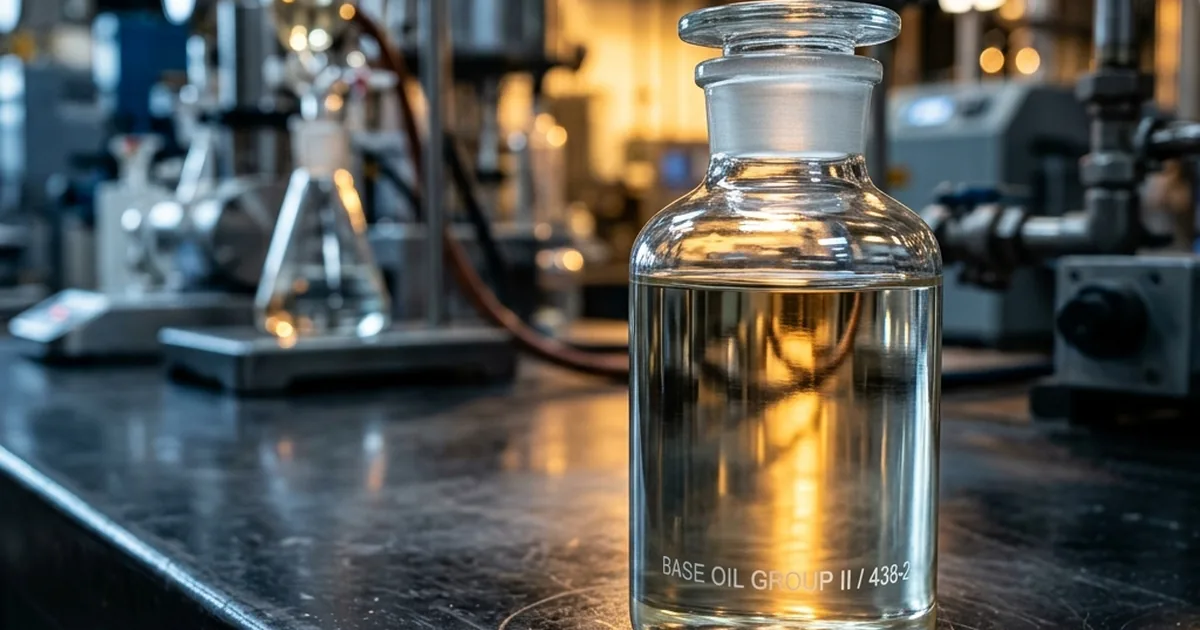
Every year, a vast volume of used lubricating oil is drained from engines, gearboxes, and industrial machinery worldwide — and what happens to that oil next determines whether it becomes a hazardous disposal liability or a genuine raw material stream. Re-refined base oil lubricants sit at the center of that choice: rather than burning used oil as low-grade fuel or, worse, letting it contaminate soil and waterways, re-refining reprocesses it back into base oil that can meet the exact same specifications as base oil made from virgin crude. This guide explains what actually happens inside a modern re-refining plant, why feedstock screening is a non-negotiable safety step, how re-refined stocks earn a genuine API Group II or Group III classification rather than a lesser one, and where the real economic and environmental case for re-refining holds up under scrutiny. It's written for entrepreneurs and engineers evaluating sustainable base oil sourcing within lubricants manufacturing.
Why Used Oil Is a Feedstock, Not Just Waste
Lubricating oil doesn't wear out chemically the way a consumable does — it accumulates contamination and additive depletion faster than its base oil molecules actually break down, which means the base oil fraction inside used oil is frequently still recoverable long after the finished product has failed its service specification. Treating that used oil purely as a waste-disposal problem, rather than as a partially intact raw material, is what left so much of it being burned as low-grade fuel or, in poorly regulated settings, dumped directly onto soil or into waterways.
Improperly disposed used oil is a genuine environmental hazard: a single liter can contaminate a large volume of groundwater, and the wear metals, degraded additive residues, and combustion byproducts it carries don't break down on their own once released into the environment. Re-refining offers a structurally different outcome — it treats collected used oil as the feedstock for a real manufacturing process, recovering the base oil fraction and returning it to the lubricant supply chain instead of removing it from the economy entirely.
Recognizing used oil as a recoverable feedstock rather than pure waste is the conceptual starting point for re-refining — but turning that recognition into a usable base oil requires a specific and fairly demanding industrial process.
The Re-Refining Process
Modern re-refining takes collected used oil through a sequence of separation and finishing steps that mirror, in structure, how virgin crude oil is originally processed into base oil — which is precisely why the end product can match virgin base oil's specification rather than settling for something lesser.
- Dehydration — Water and light fuel-dilution fractions are removed first, since their presence would interfere with the distillation steps that follow
- Vacuum distillation — The dehydrated oil is separated into base oil fractions by boiling point under reduced pressure, leaving heavier residues such as asphaltenes and degraded additive byproducts behind in the still bottoms
- Hydrotreating — The distilled fractions pass over a catalyst under hydrogen and heat, saturating aromatic compounds and stripping remaining sulfur, nitrogen, and trace contaminants
- Finishing and blending — The finished base oil is filtered, tested, and readied for shipment to lubricant blenders as a base stock indistinguishable in specification from virgin material
None of this distillation and hydrotreating chemistry can be trusted to produce a clean, spec-compliant result if the feedstock entering the plant hasn't already been screened for contamination that the process wasn't designed to handle.
Feedstock Screening and Contaminant Management
A re-refinery's output is only as reliable as the used oil feedstock it accepts, and that feedstock arrives from a wide, decentralized network of workshops, quick-lube outlets, and industrial generators with wildly varying handling practices. Screening every incoming load before it enters the plant is what keeps a small number of contaminated batches from compromising an entire production run.
The screening priority that matters most is halogen content: chlorinated solvents or other halogenated compounds occasionally end up mixed into used oil loads, whether through careless disposal practices or cross-contamination at a collection point, and processing that material without catching it first creates real safety and equipment risks inside a re-refinery. Standard practice is to test every incoming load for halogens and reject or divert anything that fails, alongside routine checks for excessive water content, fuel dilution, and sludge that would overload the dehydration and distillation stages.
A collection network with disciplined screening at the point of pickup, not just at the plant gate, produces consistently cleaner feedstock and a more predictable re-refining process — which sets up the real test of whether the finished product can actually stand shoulder to shoulder with virgin base oil on paper, not just in theory.
Meeting API Group II and Group III Specifications
The American Petroleum Institute's base oil group classification system — Groups I through V — defines each group by measurable chemical and physical characteristics: saturates content, sulfur content, and viscosity index, most notably. Nowhere in that classification does the specification reference feedstock origin, which is the technical fact that makes re-refined base oil equivalence a matter of test results rather than opinion.

A re-refined base oil that passes Group II testing — high saturates content, low sulfur, a viscosity index in the required range — is a Group II base oil in every specification that matters to a formulator, full stop. The reputation problem re-refined oil has historically carried traces back to an earlier generation of acid-clay re-refining technology that genuinely struggled to fully remove degraded additive residues and color bodies, producing an inconsistent product that fell short of virgin-equivalent quality far more often than modern hydrotreated re-refined stock does.
| Characteristic | Acid-Clay Re-Refining (Legacy) | Hydrotreating-Based Re-Refining (Modern) |
|---|---|---|
| Contaminant removal | Limited — residual additive byproducts and color bodies common | Deep — catalytic hydrogenation strips sulfur, nitrogen, aromatics |
| Waste generated | Hazardous acid sludge requiring separate disposal | No acid sludge byproduct |
| Typical API group achieved | Often below Group I equivalence | Group II, commonly Group III with further processing |
| Consistency batch to batch | Variable | Comparable to virgin base oil production |
This shift from acid-clay to hydrotreating technology is the real reason re-refined base oil deserves a second look from any formulator still working from an outdated impression of what re-refined actually means today.
The Economic and Environmental Case
Re-refining's environmental argument rests on two distinct benefits that reinforce each other rather than substitute for one another: it recovers a resource that would otherwise be wasted, and it does so using substantially less energy than producing an equivalent volume of base oil from virgin crude.
- Lower energy input — Re-refining used oil is widely cited by industry and environmental sources as requiring roughly one-third the energy of refining virgin crude into an equivalent volume of base oil, since the feedstock has already been through crude distillation once
- Diverted hazardous waste — Every liter of used oil re-refined is a liter that doesn't require hazardous waste disposal or risk improper dumping
- Reduced dependence on virgin crude — A domestic re-refining industry reduces reliance on imported crude oil specifically for lubricant base stock production
The economic case follows a similar logic to any recycled-feedstock manufacturing model: collection, screening, and processing costs have to be weighed against the avoided cost of virgin crude and the value of the recovered base oil, and that balance shifts favorably as crude oil prices rise and used oil collection infrastructure matures in a given market.
None of this economic or environmental advantage means anything to a lubricant blender, though, unless re-refined base oil can actually be dropped into a real formulation without unexpected complications — which is a practical, not theoretical, question.
Formulating With Re-Refined Base Oils
A lubricant blender evaluating re-refined base oil for the first time should approach the decision exactly as they would any new base oil supplier — by qualifying the material against the same specification the current virgin base oil meets, not by treating "re-refined" as a distinct product category requiring a different formulation approach.
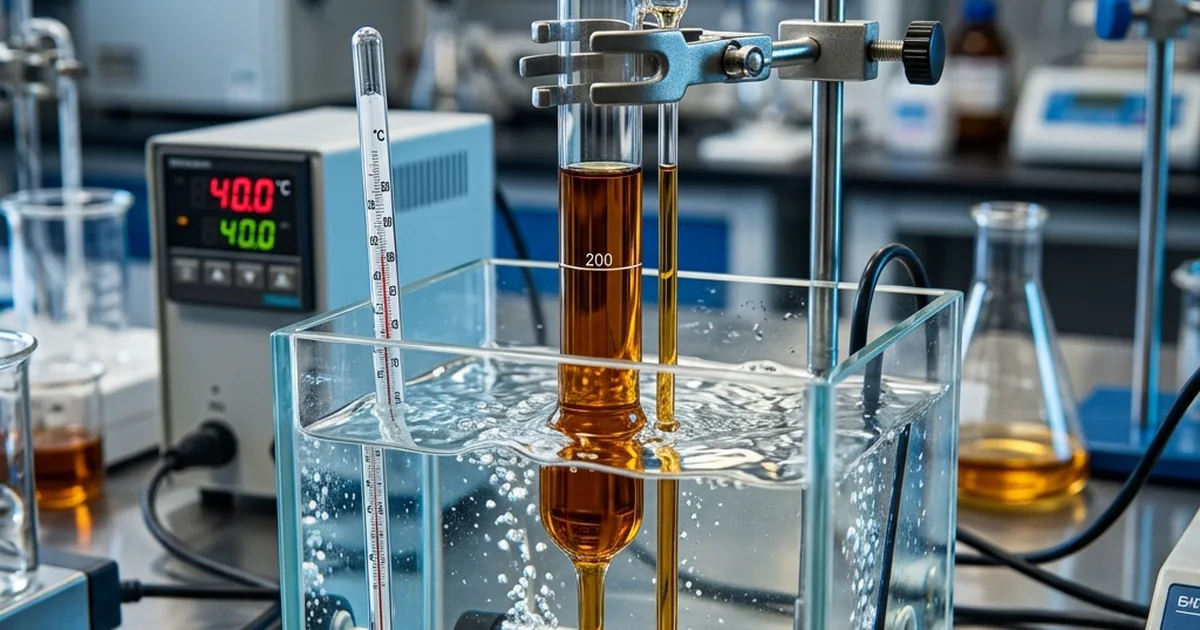
- Qualify against the same spec — Verify viscosity, viscosity index, saturates content, and sulfur content match the API group the current formulation is built around
- Run compatibility validation — Test the finished formulation with the existing additive package before a full-scale supplier switch, standard due diligence for any new base oil source
- Identify your entry point in the value chain — Full-scale re-refining plants are capital-intensive, but collection, feedstock aggregation, and blending with purchased re-refined base oil are far more accessible starting points for a smaller entrepreneur
Base oil selection strategy more broadly — including how re-refined stock fits alongside the full range of base oil types a formulator can choose from, and how it compares to renewable alternatives like the ester-based systems used in biodegradable lubricants — is ultimately a sourcing decision a formulator makes with the same rigor applied to any other raw material, not a special case that demands lowered expectations.
Frequently Asked Questions
Is re-refined base oil actually the same quality as virgin base oil, or is that just marketing?
It is a genuine chemical equivalence, not a marketing claim, provided the re-refined stock meets the same API base oil group specification as the virgin oil it's being compared against. API's base oil classification system defines a group by its saturates content, sulfur content, and viscosity index — not by the origin of the feedstock — so a re-refined Group II base oil that passes those same tests is, by definition, chemically indistinguishable from a virgin Group II base oil made from crude.
The stigma around re-refined oil largely dates back to older acid-clay re-refining processes that couldn't fully remove degraded additive residues; modern hydrotreating-based re-refining doesn't have that limitation.
What actually happens to used motor oil during the re-refining process?
Collected used oil first goes through dehydration to remove water and light fuel-dilution fractions, then vacuum distillation, which separates the oil into base oil fractions by boiling point while leaving heavier residues like asphaltenes and additive degradation products behind in the still bottoms. The distilled fractions then go through hydrotreating, a catalytic process using hydrogen under heat and pressure that saturates aromatic compounds, removes remaining sulfur and nitrogen, and strips out trace contaminants.
This is the same finishing technology refineries use to upgrade virgin base oil, which is exactly why the end product can meet the same specification.
Why does used oil need to be screened for contamination before a re-refinery will accept it?
Used oil collected from workshops and industrial sources can occasionally be contaminated with chlorinated solvents or other halogenated compounds that were improperly mixed in by the generator, and processing that material through a re-refinery without catching it first risks both product quality and worker or equipment safety. Re-refineries routinely test incoming loads for halogen content and other contamination markers before acceptance, rejecting or diverting any load that fails screening.
This is a standard quality-control step in the used oil collection and re-refining industry rather than an occasional precaution.
How much energy does re-refining actually save compared to refining virgin crude oil into base oil?
Re-refining used oil into base oil is widely cited by industry and environmental sources as requiring roughly one-third the energy of producing an equivalent volume of base oil from virgin crude oil, since the used oil feedstock has already been through the energy-intensive crude distillation and initial refining steps once.
This energy advantage, combined with diverting a hazardous waste stream away from improper disposal, is the core of the environmental case for re-refining as a circular economy practice rather than a purely cost-driven one.
Can a lubricant blender just substitute re-refined base oil into an existing formulation without changes?
In most cases yes, provided the re-refined base oil is qualified against the same specification — viscosity, viscosity index, saturates content, sulfur content — as the virgin base oil it's replacing, since additive packages are formulated to interact with a base oil meeting a defined API group specification, not with a specific feedstock origin. A responsible blender should still run compatibility and performance validation on the finished formulation before a full-scale switch, the same due diligence that would apply to any new base oil supplier.
There is no chemical reason a properly hydrotreated, spec-compliant re-refined base oil should behave differently in a formulation than virgin stock of the same group.
What's the difference between older acid-clay re-refining and modern hydrotreating-based re-refining?
Acid-clay re-refining, the dominant technology through much of the twentieth century, used sulfuric acid to strip contaminants followed by clay filtration, a process that generated large volumes of hazardous acid sludge and often left trace additive residues and color bodies in the finished oil, which is where re-refined oil's reputation for inconsistent quality originated. Hydrotreating, the modern standard, uses hydrogen and a catalyst instead of acid, achieving deeper removal of sulfur, nitrogen, and aromatic compounds without generating hazardous acid sludge.
It's this shift in finishing technology that allows contemporary re-refined base oils to reliably meet API Group II and Group III specifications.
Is starting a used oil re-refining business a realistic opportunity for a smaller entrepreneur?
Re-refining at the scale of a full vacuum distillation and hydrotreating plant is capital-intensive and generally suits established industrial investment rather than a small first venture, but the broader circular-economy value chain has entry points at smaller scale, including used oil collection and aggregation, pre-treatment and dehydration services, and blending finished lubricants using re-refined base oil purchased from an established re-refiner.
An entrepreneur evaluating this space should map out which point in the chain matches their available capital and existing relationships — collection and blending require far less upfront investment than building distillation and hydrotreating capacity from scratch.
Sourcing or Formulating With Re-Refined Base Oils?
Global Formulation provides lubricant formulation consultancy — base oil qualification, additive compatibility validation, and sustainable sourcing strategy.
Talk to Our Formulation Team