Retinoid Encapsulation Technology: Stabilizing Vitamin A Derivatives
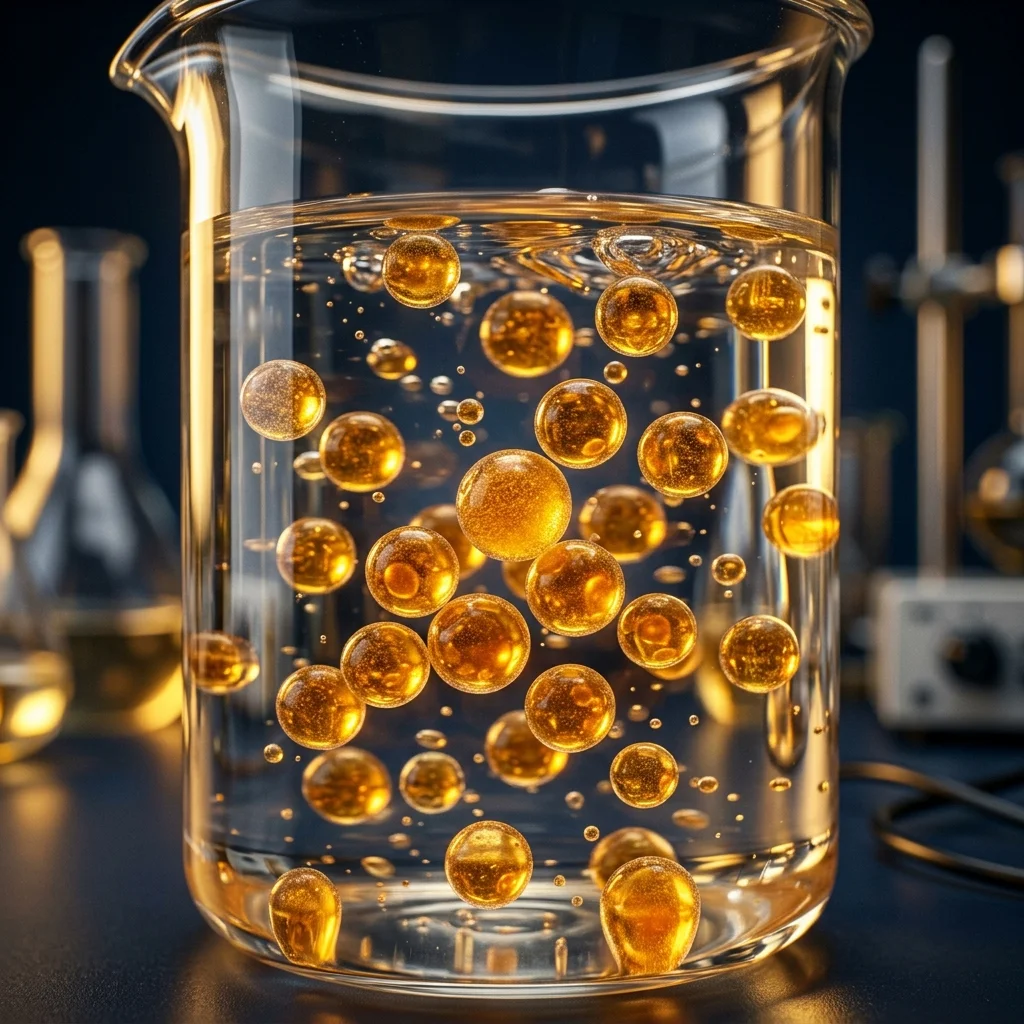
A retinol serum that arrives at a customer's door already stripped of most of its active potency is one of the most common — and most avoidable — failures in cosmetic formulation. Retinoid encapsulation technology exists precisely because retinol, retinaldehyde, and their chemical relatives degrade so quickly under ordinary exposure to oxygen, light, and heat that an unprotected formulation can lose a meaningful share of its labeled activity before it ever reaches the shelf. For a brand, that is not a cosmetic inconvenience — it is a direct threat to product efficacy claims, customer trust, and the substantial cost already invested in raw materials and clinical support. This guide walks through why retinoids are chemically so fragile, how liposomal, polymeric, and cyclodextrin encapsulation systems physically shield the active molecule, and what a rigorous stability and verification program actually looks like before a retinoid product is ready to launch. Understanding these mechanisms gives founders and formulators the vocabulary to evaluate raw material suppliers, contract manufacturers, and stability data with genuine technical confidence.
Why Retinoids Are So Chemically Unstable
Retinol and its derivatives belong to the vitamin A family, a group of molecules defined by an extended conjugated polyene chain — a series of alternating single and double carbon bonds — that gives the molecule its biological activity at retinoic acid receptors in the skin. That same structural feature is the source of retinol's instability: conjugated polyene systems are highly reactive toward molecular oxygen, ultraviolet and even visible light, and trace metal ions that catalyze oxidative cleavage of the chain. Once oxidized or photoisomerized, the resulting breakdown products no longer engage the same biological pathways, meaning degraded retinol is not simply "weaker" — it is functionally inactive.
This instability profile places retinoids among the most demanding actives to formulate in all of cosmetics and personal care product development, considerably more fragile than actives like niacinamide that primarily face a pH-driven hydrolysis risk rather than oxidative collapse. Retinyl esters such as retinyl palmitate are somewhat more chemically stable than free retinol because the ester linkage offers partial protection, but they require enzymatic conversion in the skin to reach an active form, introducing a tradeoff between shelf stability and direct potency that formulators must weigh deliberately.
| Retinoid Form | Relative Stability | Formulation Implication |
|---|---|---|
| Retinoic acid (tretinoin) | Most biologically active, most chemically reactive | Prescription-only in most markets; rarely used in cosmetic OTC products |
| Retinol | Reactive; requires enzymatic conversion in skin | Standard cosmetic active; encapsulation strongly recommended |
| Retinaldehyde | Intermediate stability | One conversion step from active acid form; still oxidation-sensitive |
| Retinyl esters (palmitate, acetate) | More stable than free retinol | Requires further enzymatic conversion; lower direct potency |
Recognizing that retinol's instability is a direct consequence of the same molecular structure responsible for its efficacy reframes the formulation challenge: the goal is never to make retinol chemically inert, since that would strip its biological activity, but to physically shield the reactive molecule from its environment until the point of use.
Encapsulation Technology Approaches Used to Stabilize Retinoids
Encapsulation solves retinol's instability problem by physically separating the reactive molecule from oxygen, light, and pro-oxidant formulation components, rather than relying solely on antioxidants to chemically intercept degradation reactions after they begin. Several distinct encapsulation technologies are used commercially, each with a different balance of protection, cost, and manufacturing complexity.

- Liposomal encapsulation — Retinol is dissolved into the lipid bilayer of a phospholipid vesicle, physically isolating it from the aqueous continuous phase and reducing direct oxygen contact
- Polymeric microencapsulation — A polymer shell (often based on materials like poly(lactic-co-glycolic acid) or similar biocompatible polymers) forms a discrete solid or semi-solid capsule around the retinoid payload
- Cyclodextrin inclusion complexes — Cyclic oligosaccharide molecules form a cavity that hosts the retinoid molecule, improving both stability and water dispersibility of an otherwise lipophilic active
- Solid lipid nanoparticles (SLN) — A solid lipid matrix at room temperature encapsulates the retinoid, offering a rigid barrier that can reduce mobility-driven degradation compared with liquid-phase carriers
Each of these systems trades off differently between protection strength, manufacturing cost, and the sensory experience of the final product, which is why the encapsulation-technology decision should be made early — before base formulation, packaging, and claims strategy are finalized — rather than treated as a drop-in ingredient substitution.
Release Mechanisms and How Encapsulated Retinoids Reach the Skin
Protecting retinol during storage solves only half the formulation problem — the encapsulating system must also release its payload effectively once the product is applied to skin, or stability gains come at the cost of efficacy. Understanding how different carrier systems release their payload clarifies why some products are marketed as "gradual release" while others emphasize immediate bioavailability.
Liposomal carriers generally release their contents through fusion or partial disruption of the phospholipid bilayer on contact with the skin's own lipid matrix, a mechanism that tends to occur relatively quickly after application. Polymeric microcapsules, by contrast, are frequently engineered for a slower, diffusion-controlled release as the polymer shell gradually breaks down or becomes permeable, a property some brands market as reducing the initial irritation associated with a large single dose of free retinol contacting the skin surface. Solid lipid nanoparticles and cyclodextrin complexes each present their own intermediate release kinetics, influenced by particle size, shell thickness, and the specific polymer or lipid chemistry selected.
- Immediate release — Rapid disruption on skin contact; suited to products emphasizing fast onset of visible effects
- Sustained release — Gradual diffusion through an intact shell over hours; associated with reduced-irritation formulation strategies
- Triggered release — Payload release influenced by skin surface pH, temperature, or enzymatic activity at the application site
Because release kinetics directly influence both efficacy perception and tolerability, any specific release-profile or reduced-irritation marketing claim needs to be validated against the finished formulation's actual behavior rather than assumed from the encapsulation technology's general category — a sustained-release claim built on generic polymer chemistry, without formulation-specific testing, is not defensible in a regulatory review.
Formulation and Base Compatibility for Encapsulated Retinoids
Selecting an encapsulation technology is only the first decision — the surrounding base formulation must be engineered so it does not destabilize the encapsulating matrix itself or create conditions that accelerate any retinol that does migrate out of the capsule over time. This is where many otherwise well-intentioned retinol launches run into trouble.
Surfactant systems, high-shear processing steps, and extreme pH or temperature excursions during manufacturing can all physically damage liposomal bilayers or polymer shells, releasing retinol prematurely into the continuous phase where it is exposed to the same oxidative risks encapsulation was meant to prevent. Formulators typically incorporate encapsulated retinoids as a late-stage, low-shear addition after the primary emulsion or gel base has been formed and cooled, specifically to protect capsule integrity through the manufacturing process. A secondary antioxidant system — commonly involving tocopherol, ascorbyl derivatives, or chelating agents such as EDTA — is still included in the continuous phase as a safeguard against the retinol fraction that inevitably escapes the encapsulating matrix during storage.
| Formulation Factor | Risk to Encapsulated Retinoid | Mitigation Strategy |
|---|---|---|
| High-shear mixing | Physical disruption of capsule/liposome shell | Add encapsulated actives as a late-stage, low-shear step |
| Extreme pH | Destabilizes lipid bilayers and some polymer shells | Formulate base to a moderate pH before adding encapsulated actives |
| Trace metal contamination | Catalyzes oxidation of any retinol outside the capsule | Include chelating agent (e.g. EDTA) in the continuous phase |
| Packaging headspace oxygen | Accelerates oxidation of leaked/free retinol fraction | Airless pump or opaque, oxygen-limiting packaging |
Packaging decisions compound directly with these formulation choices: an airless pump or opaque, oxygen-limiting container reduces the cumulative oxidative burden on both the encapsulated and any free retinol fraction, extending real-world shelf life well beyond what the base formulation alone could achieve. Getting these interacting variables right at the design stage is what separates a retinol product that holds its potency claim through its full labeled shelf life from one that fails an accelerated stability test months before launch.
Verifying Stability and Encapsulation Efficiency Before Launch
No formulation strategy is complete without empirical proof that it actually works, and retinoid products carry a higher analytical burden than most cosmetic actives because both the encapsulation system's physical integrity and the retinoid's chemical potency must be verified independently. A testing program built specifically around this dual requirement catches problems that a single pass/fail check would miss entirely.

- HPLC quantification — Direct measurement of remaining retinol/retinoid content at defined real-time and accelerated-aging intervals, the definitive indicator of chemical potency retained
- Encapsulation efficiency analysis — Confirms what percentage of the retinoid payload is actually contained within intact capsules versus free in the continuous phase at time of manufacture
- Particle size and morphology monitoring — Tracks capsule or liposome integrity over shelf life; capsule aggregation or breakdown signals a developing stability problem
- Photostability testing — Controlled light exposure per recognized protocols to quantify degradation specifically attributable to UV/visible light exposure
- Accelerated aging — Samples held at elevated temperature alongside a real-time control, used to forecast long-term degradation without waiting for full real-time shelf-life data
- Organoleptic evaluation — Trained assessment of color and odor drift, which often signals retinoid oxidation before HPLC thresholds are triggered
Running all of these tests together — rather than relying on a single potency reading at the end of a shelf-life study — gives formulators early visibility into whether a degradation problem originates from the encapsulation process itself, the surrounding base formulation, or the packaging system, which is essential for troubleshooting efficiently rather than reformulating blind.
Regulatory and Claims Considerations for Encapsulated Retinoid Products
Retinol and its cosmetic-grade derivatives carry an established regulatory history in most major markets, but encapsulation technology introduces its own layer of claims-substantiation obligations that brands must satisfy before making stability, efficacy, or tolerability statements in marketing.
In the European Union, finished retinoid products are regulated as cosmetic ingredients under the EU Cosmetics Regulation (EC) No. 1223/2009, which requires a Cosmetic Product Safety Report incorporating ingredient-level safety assessment at the concentrations actually used in the finished formula. The EU's Scientific Committee on Consumer Safety (SCCS) has published opinions addressing retinol and retinyl ester safety at cosmetic-use concentrations, and brands should confirm their formulation aligns with current SCCS guidance before finalizing a product. In the United States, cosmetic-grade retinol products fall under FDA cosmetic regulation rather than drug regulation, provided marketing claims remain limited to cosmetic effects on appearance rather than treating or preventing a specific disease condition, which would trigger drug classification.
Brands distributing internationally should confirm labeling and permissible claims language market by market, since acceptable retinoid-related cosmetic claims differ meaningfully between regions even where the underlying ingredient safety profile is well-established. Building the regulatory dossier in parallel with encapsulation-technology selection, rather than as a final administrative step, avoids delays once a formulation is otherwise ready to launch.
Frequently Asked Questions
Why does retinol degrade so much faster than other cosmetic actives?
Retinol's structure contains an extended conjugated polyene chain that gives it biological activity but also makes it highly reactive toward atmospheric oxygen and ultraviolet light. This same chain of alternating double bonds that lets retinol interact with retinoic acid receptors in the skin is the exact structural feature that makes it prone to oxidative cleavage and photoisomerization.
Exposure to oxygen, heat, light, or trace metal ions initiates a degradation cascade that converts retinol into inactive breakdown products within days if the formulation is not protected, which is considerably faster than the degradation timelines seen with more chemically robust actives like niacinamide.
What is the actual difference between encapsulation and simply adding antioxidants to a retinol formula?
Antioxidants like tocopherol or BHT work by scavenging free radicals within the bulk formulation, slowing oxidation but not physically isolating the retinol molecule from oxygen, light, or reactive formulation components. Encapsulation instead creates a physical barrier — a liposome bilayer, a polymer shell, or a cyclodextrin cavity — that separates the retinol from the surrounding aqueous phase and reduces its direct contact with oxygen and pro-oxidant trace metals until the moment of application.
In practice, most commercial-grade stable retinol products combine both strategies: encapsulation to physically shield the majority of the active, plus an antioxidant system in the continuous phase to manage any retinol that migrates out of the encapsulating matrix over time.
Do encapsulated retinoids actually penetrate skin as effectively as unencapsulated retinol?
Encapsulation technology is generally designed to preserve or, in some published delivery-system research, enhance skin penetration relative to unencapsulated retinol, rather than blocking it. Liposomal and nanoparticle carriers can fuse with or associate with the stratum corneum lipid matrix, effectively co-delivering the retinoid alongside the carrier material into the upper skin layers before releasing the active.
The specific release kinetics depend heavily on the encapsulation technology chosen — liposomes tend to release more readily on skin contact, while more robust polymeric microcapsules are engineered for a slower, sustained release profile — so penetration and release behavior should be validated per formulation rather than assumed generically for all encapsulated retinoids.
Which encapsulation technology is best for a retinol serum aimed at a mass-market audience?
There is no universally superior encapsulation technology — the right choice depends on the target formulation format, cost constraints, desired release profile, and manufacturing capability of the brand or contract manufacturer. Liposomal encapsulation is well-established, cosmetically elegant, and works well in lightweight serums, but liposomes can be more expensive to manufacture at scale and may have shorter physical stability than more robust polymer-shell microcapsules.
Polymer microencapsulation and cyclodextrin inclusion complexes are often more cost-effective at scale and can be engineered for controlled release, but may require more specialized processing equipment. A formulation consultant typically evaluates all three against the brand's target price point, claims strategy, and existing manufacturing infrastructure before recommending one.
Is encapsulated retinol equally effective at lower irritation potential, as many brands claim?
Encapsulation can support a gradual or sustained-release profile that reduces the initial burst concentration of free retinol contacting the skin surface, which is the mechanistic basis for reduced-irritation claims made by some brands. However, irritation potential is influenced by multiple variables beyond encapsulation alone, including total retinoid concentration, the specific retinoid form used, the base formulation's barrier-supporting ingredients, and individual skin sensitivity.
Any specific tolerability or reduced-irritation claim needs to be substantiated through in-vivo testing on the finished formulation rather than inferred solely from the presence of an encapsulation technology, since encapsulation quality and release kinetics vary significantly between suppliers and manufacturing processes.
How is the stability of an encapsulated retinoid product actually verified before launch?
Stability verification for encapsulated retinoid products requires quantitative analytical methods, most commonly high-performance liquid chromatography (HPLC), to measure the actual retinol or retinoid content remaining in the finished product at defined intervals under both real-time and accelerated aging conditions. Analytical testing must measure total retinoid content in the finished formulation, not just confirm that encapsulation particles are structurally intact, since a capsule can remain physically present while its retinoid payload has already degraded from micro-leakage or incomplete encapsulation efficiency during manufacturing.
A complete stability package also includes photostability testing under defined light exposure, particle size and encapsulation efficiency analysis, and organoleptic evaluation for color or odor drift that would signal degradation before analytical thresholds are triggered.
When should a skincare brand bring in a formulation consultant for a retinoid product?
A formulation consultant adds the most value at three specific points in retinoid product development. First, at the encapsulation-technology selection stage, where the tradeoffs between liposomal, polymeric, and cyclodextrin systems must be weighed against the brand's cost targets, claims strategy, and manufacturing capability. Second, during base formulation design, where packaging compatibility, pH, and co-ingredient selection must all be reconciled to avoid destabilizing the encapsulated payload.
Third, during stability and claims substantiation, where HPLC-based degradation quantification, photostability protocols, and encapsulation-efficiency testing must be designed and interpreted correctly. Engaging a consultant with cosmetic chemistry experience before a formula is finalized avoids the common and costly scenario of a retinol product failing stability testing after packaging and marketing decisions have already been locked in.
Formulating a Retinoid Product?
Global Formulation provides cosmetic formulation consultancy, encapsulation technology selection, stability protocol design, and regulatory guidance for skincare brands and manufacturers worldwide.
Talk to Our Formulation Team