Retinol Formulation Stability: Solving Skincare Challenges
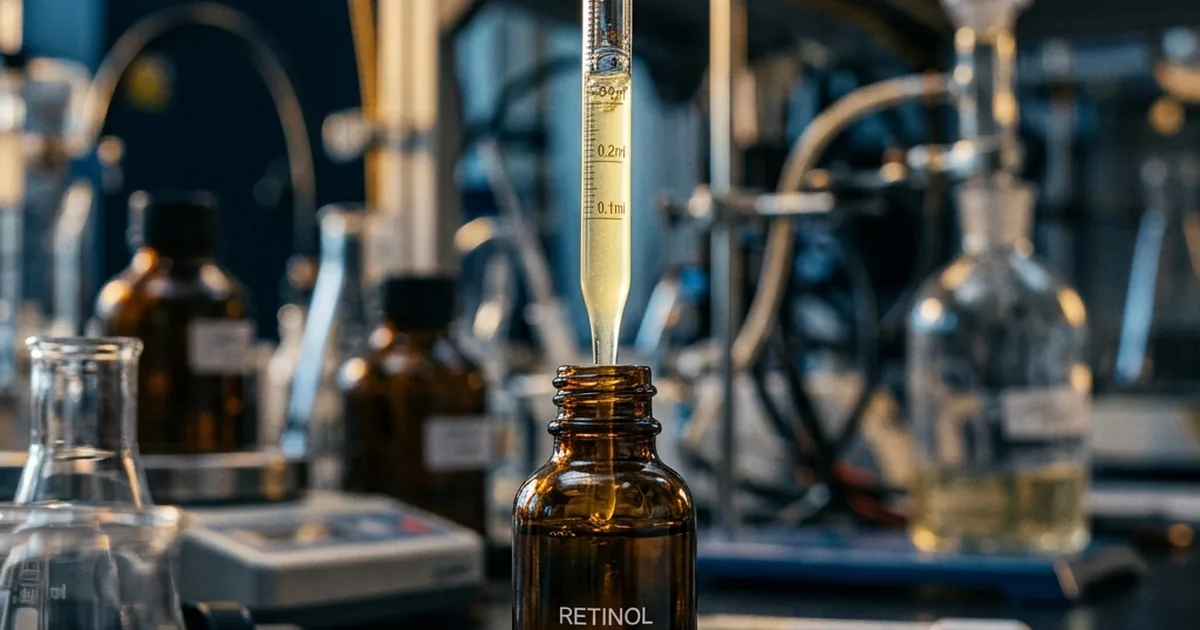
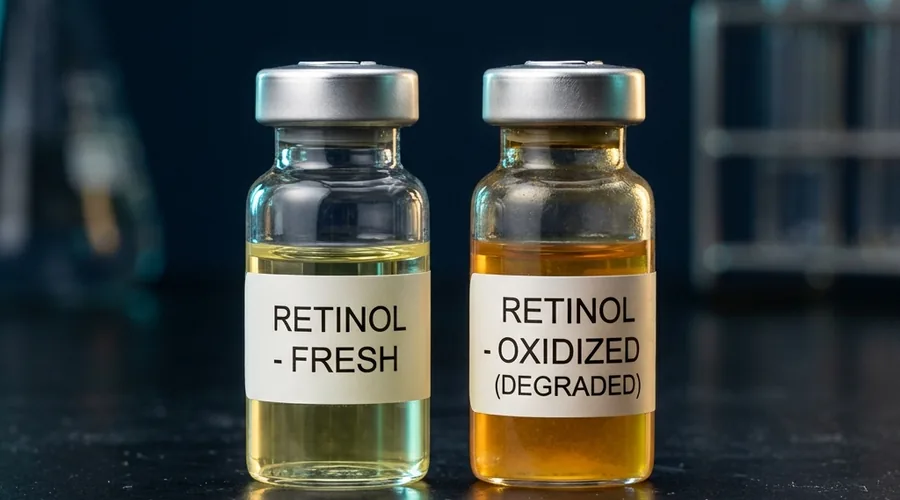
A retinol serum that tests perfectly on the day it's manufactured can lose a substantial share of its active ingredient before it ever reaches a customer's bathroom shelf — and the product will look, smell, and feel completely normal the entire time. That silent failure is the central challenge of retinol formulation stability: retinol is one of the most effective, well-studied actives in skincare, and also one of the most chemically fragile, degrading under exposure to oxygen, light, and heat far faster than most cosmetic ingredients formulators work with. This guide explains exactly why retinol breaks down so readily, how it compares to related retinoids like retinaldehyde and prescription tretinoin, and the encapsulation, antioxidant, and packaging strategies formulators use together to keep a product's labeled concentration intact through its full shelf life. It's written for entrepreneurs and formulators developing active-ingredient skincare within cosmetics and personal care manufacturing.
Why Retinol Is Chemically Unstable
Retinol's instability isn't a formulation oversight — it's a direct consequence of the same molecular structure that makes it biologically active in the first place. Understanding that connection is the starting point for every stabilization decision that follows, because it explains why retinol can't simply be handled like a typical humectant or emollient.
Retinol belongs to a class of molecules called polyenes, built around a chain of conjugated carbon-carbon double bonds. This conjugated system is exactly what allows retinol to bind retinoic acid receptors in skin cells and drive its well-documented effects on collagen synthesis and cell turnover, but conjugated double bonds are also inherently reactive toward oxygen and light. Exposure to atmospheric oxygen drives oxidative degradation, while UV and even visible light can trigger photoisomerization, converting the biologically active form into isomers with reduced or no activity. Heat accelerates both pathways, which is why retinol formulations are also sensitive to storage and shipping temperature, not just light and air.
Because oxidation, photoisomerization, and thermal degradation can all act simultaneously on an unprotected formulation, effective stabilization has to address more than one pathway at once — which is exactly why the retinoid family itself splits into forms with meaningfully different stability and potency profiles.
Retinol vs. Retinaldehyde vs. Tretinoin
Retinol is only one point on a spectrum of related molecules that all funnel toward the same biologically active endpoint inside the skin. Knowing where each sits on that pathway explains both their relative potency and why some are formulated as cosmetic actives while others are only available as prescription drugs.
Retinol requires two separate enzymatic conversion steps within the skin to become retinoic acid, the form that actually binds retinoic acid receptors and drives biological activity. Retinaldehyde sits one step closer, requiring only a single conversion, which generally gives it somewhat greater potency and a different irritation profile than retinol at an equivalent concentration. Tretinoin is retinoic acid itself, requiring no conversion at all, which is precisely why it acts faster and more directly — and also why it's regulated as a prescription drug rather than sold as a cosmetic ingredient in most markets, as documented in FDA guidance on approved topical drug products.
| Form | Conversion Steps to Retinoic Acid | Typical Regulatory Status | Relative Stability |
|---|---|---|---|
| Retinol | Two enzymatic steps | Cosmetic ingredient | Lowest — most reactive form in common cosmetic use |
| Retinaldehyde | One enzymatic step | Cosmetic ingredient | Intermediate |
| Tretinoin | None — is retinoic acid | Prescription drug (most markets) | Formulated under pharmaceutical stability standards |
This conversion-step relationship is why formulators can't treat retinaldehyde as simply "stronger retinol" or dose it the same way — each form carries its own stability profile and its own formulation requirements, which is exactly where encapsulation technology becomes the formulator's primary tool.
Encapsulation and Delivery System Strategies
If retinol degrades primarily through contact with oxygen and light, the most direct formulation response is physically limiting that contact — which is exactly what encapsulation technology is designed to do. Rather than leaving retinol freely dissolved and exposed throughout the formulation, encapsulation isolates it inside a protective structure until the point of application.
- Liposomal encapsulation — Retinol held within a phospholipid bilayer vesicle, physically separating it from the surrounding aqueous or oil phase
- Polymeric microspheres — Retinol embedded in a solid polymer matrix that slowly releases the active upon application, limiting bulk exposure during storage
- Cyclodextrin complexation — Retinol held within a cyclodextrin molecular cavity, reducing direct exposure to oxidative and photolytic degradation pathways
Encapsulation quality varies significantly between suppliers, and a formulator should never accept the marketing claim of "encapsulated retinol" as proof of stability on its own. Requesting actual assay-retention stability data — retinol concentration measured over real storage time — from the raw material supplier is the only way to verify that a given encapsulation technology performs as claimed in the specific base formulation it will be used in.
Encapsulation addresses the physical exposure problem, but chemical protection against the oxidation reaction itself is a separate and equally necessary layer of defense.
Antioxidants and Formulation-Level Protection
Even a well-encapsulated retinol molecule can still be reached by oxygen that diffuses through the delivery system or the product's packaging over time, which is why antioxidants remain a standard component of nearly every commercial retinol formulation. Antioxidants work by intercepting the free radicals that drive oxidative degradation before those radicals can react with retinol itself.
Tocopherol, commonly known as vitamin E, is among the most widely used antioxidants in retinol formulations, often combined with butylated hydroxytoluene or ascorbyl derivatives to cover a broader range of oxidative pathways than any single antioxidant addresses alone. Formulation pH also plays a supporting role, since retinol tends toward greater stability in mildly acidic to neutral formulations compared to strongly alkaline systems, which is a consideration that carries over from related active-ingredient work in moisturiser and serum formulation more broadly.
Antioxidants specifically address oxidative degradation, but they do essentially nothing to prevent photoisomerization from light exposure — a distinct degradation pathway that requires its own dedicated countermeasure, which brings packaging design into the stabilization strategy as a formulation-critical decision rather than an afterthought.
Packaging and Stability Testing
Packaging is arguably the single most cost-effective stabilization lever available to a retinol formulator, because it can address both light and oxygen exposure simultaneously without requiring any change to the internal formulation chemistry. This is exactly why nearly every credible retinol product on the market ships in opaque, airless packaging rather than a clear jar.
- Opaque or dark-tinted containers — Block the UV and visible light responsible for photoisomerization degradation
- Airless pump dispensers — Prevent the repeated air exposure that occurs every time a jar is opened and product is scooped out with a finger or spatula
- Accelerated stability testing — Samples held at elevated temperature, commonly around 40°C, for several months to predict long-term shelf behavior faster than real-time storage allows
- Real-time stability testing — Standard room-temperature storage tracked over the product's full intended shelf life to confirm accelerated predictions
Stability verification itself relies on high-performance liquid chromatography to measure actual retinol concentration over time, since a product can look and smell completely unchanged while having already lost significant active content — visual inspection alone cannot substitute for assay data. A retinol product formulated with excellent internal stabilization but packaged in a clear jar will typically underperform a more modestly stabilized formula sold in properly engineered opaque, airless packaging.
Even the best packaging and antioxidant strategy still has to be proven with real assay data before a shelf-life claim goes on a label, which is where formulation decisions finally translate into a defensible, launchable product.
Building a Stable Retinol Product
None of the individual stabilization strategies above is sufficient in isolation — encapsulation, antioxidants, and packaging each address a different degradation pathway, and a formulator who leans on only one is leaving the others unprotected. Building a genuinely stable retinol product means layering these strategies together deliberately rather than choosing one and hoping it covers everything.

- Source a characterized encapsulated retinol — Request supplier stability data rather than relying on the encapsulation claim alone
- Layer in antioxidant support — Tocopherol and complementary antioxidants to cover oxidative pathways encapsulation doesn't fully block
- Invest in opaque, airless packaging — One of the highest-return stability decisions available, addressing light and repeated air exposure together
- Commission real stability testing — HPLC-verified assay retention data through the full intended shelf life before finalizing any label claim
This barrier is far more manageable today than it once was, since commercially available encapsulated retinol raw materials with supplier stability data have removed much of the formulation risk that historically kept retinol out of reach for smaller brands. As with other sensitive-active categories covered in our guide to cosmetic preservatives, the technical risk in retinol formulation is manageable for any brand willing to invest in proper testing and packaging rather than treating them as optional costs to cut.
Frequently Asked Questions
Why does retinol degrade so much faster than most other cosmetic actives?
Retinol is a polyene molecule with a chain of conjugated carbon-carbon double bonds, and that same structural feature responsible for its biological activity also makes it exceptionally reactive toward oxygen, light, and heat. Conjugated double bond systems readily undergo oxidation and photoisomerization, breaking down into inactive degradation products within hours of exposure to air or UV light if the formulation offers no protection.
Most stable cosmetic actives either lack this kind of reactive unsaturation or are far less sensitive to it, which is why retinol formulation is treated as a distinct technical discipline rather than following the same stability playbook used for a typical humectant or emollient.
What's the practical difference between retinol, retinaldehyde, and prescription retinoids like tretinoin?
All three are part of the same metabolic conversion pathway toward retinoic acid, the biologically active form that binds retinoic acid receptors in skin cells, but they differ in how many conversion steps are required and therefore in both potency and stability. Retinol requires two enzymatic conversion steps in the skin to become retinoic acid, retinaldehyde requires only one, and tretinoin is retinoic acid itself and needs no conversion at all — which is also why tretinoin is a prescription drug with more direct and potentially more irritating activity than the cosmetic-grade precursors.
From a formulation standpoint, retinaldehyde sits between retinol and tretinoin in both reactivity and typical irritation profile, giving formulators a genuine middle option rather than a simple weaker-versus-stronger binary.
Does encapsulation actually solve retinol stability, or is it mostly a marketing claim?
Encapsulation is a genuine and well-documented stability strategy, not just marketing language, because physically isolating retinol inside a liposome, microsphere, or polymeric matrix measurably reduces its direct contact with the oxygen and light that drive degradation. That said, encapsulation quality varies enormously between suppliers and technologies, and a poorly characterized encapsulation system can still allow meaningful retinol leakage and degradation over a product's shelf life.
A formulator evaluating an encapsulation technology should require actual stability data — assay retention over real time at real storage conditions — from the ingredient supplier rather than accepting the marketing claim of encapsulation alone as proof of stability.
Why do so many retinol products come in opaque, airless packaging?
Packaging is one of the most cost-effective levers a formulator has for protecting retinol, because light and oxygen exposure are two of the three primary degradation drivers alongside heat, and both can be dramatically reduced through packaging choice alone regardless of the internal formulation chemistry. Opaque or dark-tinted containers block the UV and visible light that drive photoisomerization, while airless pump dispensers prevent the repeated air exposure that occurs every time a jar is opened and a finger or spatula is dipped inside.
A retinol formulated with excellent internal stabilization but packaged in a clear jar will typically underperform a more modestly stabilized formula in well-designed opaque, airless packaging, which is why packaging engineering is treated as inseparable from the formulation itself in this product category.
How is retinol stability actually tested and verified before a product launches?
Retinol stability is verified through accelerated and real-time stability testing that tracks active retinol concentration over time using high-performance liquid chromatography, rather than relying on visual appearance or odor alone, since a product can look and smell normal while having already lost a significant fraction of its active retinol content. Accelerated testing typically holds samples at elevated temperatures such as 40°C for several months to predict long-term shelf stability more quickly, while real-time testing at standard room-temperature storage conditions provides the ultimate confirmation data before a shelf-life claim is finalized.
A credible retinol product should be able to show HPLC-verified assay retention data supporting its labeled concentration through the end of its stated shelf life, not just at the moment of manufacture.
Can antioxidants alone stabilize a retinol formulation without encapsulation or special packaging?
Antioxidants such as tocopherol, butylated hydroxytoluene, or ascorbyl derivatives can meaningfully slow oxidative degradation by scavenging the free radicals that drive the breakdown reaction, and they are a standard, well-supported component of most retinol formulations. However, antioxidants address only the oxidative degradation pathway and do little to prevent photoisomerization from light exposure, so relying on antioxidants alone while neglecting opaque packaging or encapsulation leaves a formulation vulnerable to a degradation pathway antioxidants simply don't address.
Effective retinol stabilization in practice layers several independent strategies together — antioxidant inclusion, encapsulation or delivery system design, and protective packaging — because each addresses a different mechanism of degradation rather than one strategy substituting fully for another.
Is retinol a realistic active ingredient for a smaller skincare brand to formulate with, given its instability?
Retinol is formulated successfully across every scale of skincare brand today, from major global manufacturers to small independent labels, because encapsulated retinol raw materials with supplier-provided stability data are commercially available and remove much of the formulation risk that existed when brands had to stabilize unencapsulated retinol from scratch. The realistic barrier for a smaller brand is less about formulation chemistry and more about committing to proper stability testing and appropriate packaging investment rather than treating them as optional line items to cut for cost.
A brand that sources a well-characterized encapsulated retinol ingredient, follows supplier formulation guidance, invests in opaque airless packaging, and runs real stability testing before launch faces a very manageable technical risk despite retinol's reputation for instability.
Developing a Retinol or Active-Ingredient Skincare Line?
Global Formulation provides cosmetic formulation consultancy — active stabilization strategy, encapsulation technology selection, and shelf-life testing programme design.
Talk to Our Formulation Team