Rolling Oils & Metal Forming Lubricants for Steel and Aluminium
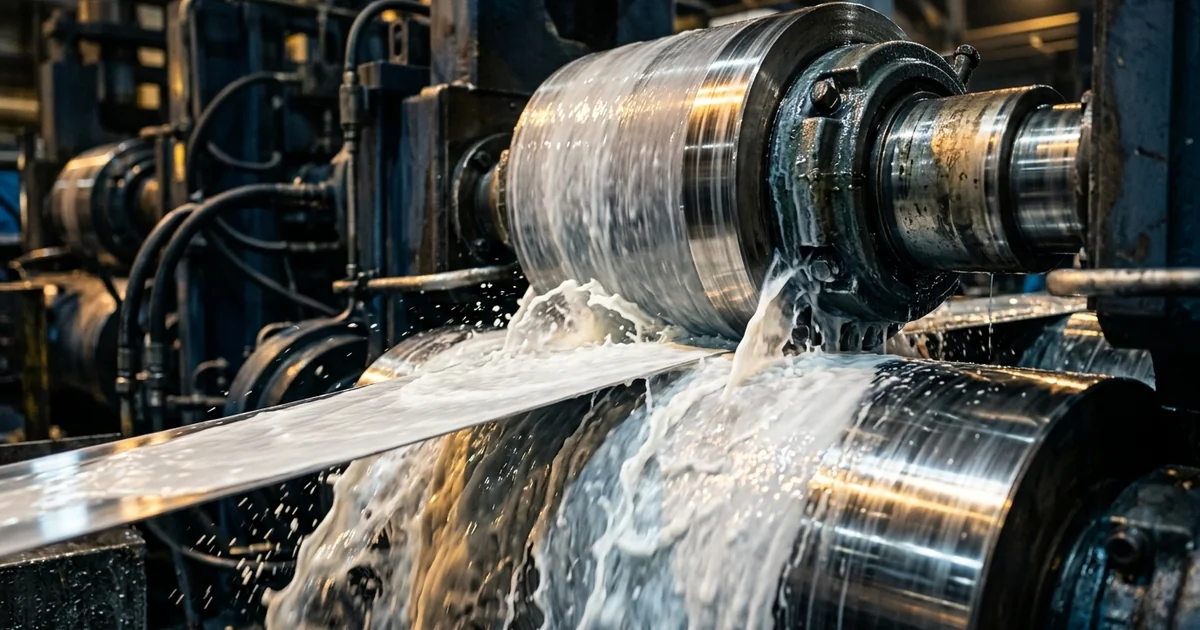
A rolling mill that loses friction control does not fail quietly. Roll force spikes, the strip chatters or picks up, and surface defects run for hundreds of metres of coil. In the worst case the strip breaks in the stand and takes hours to re-thread. The rolling oil metal forming lubricant in the recirculation tank is the control that stands between a stable schedule and that outcome. It has to do four jobs at once: cut friction in the deformation zone, carry away the heat of rolling, protect the mill from corrosion, and leave a surface clean enough for the next process. This guide explains how cold and hot rolling oils, oil-in-water emulsions, and discrete forming lubricants are built for steel and aluminium. It covers why the aluminium formulations look so different from the steel ones, and what plant teams monitor to keep a working fluid in its window. It builds on the base-oil and additive fundamentals we cover across our lubricants consulting work.
What a Rolling Oil or Forming Lubricant Actually Does
The reason metal forming lubrication is its own discipline, rather than a subset of general machine lubrication, is the contact condition. In the roll bite or the die, two metal surfaces are pressed together at pressures near the yield strength of the workpiece. Fresh, chemically active metal is created as the surface stretches. A hydrodynamic oil film cannot fully separate the surfaces under those conditions, so the lubricant works partly in the boundary regime — thin adsorbed layers of polar molecules carry the load and stop the surfaces from welding together.
Every rolling and forming fluid is balancing four functions, and the mix shifts with the process:
- Friction control — reducing the coefficient of friction in the bite lowers roll force and power, allows heavier reductions per pass, and improves strip flatness and gauge control
- Heat removal — plastic deformation and friction dump heat into the rolls and strip; the fluid, especially a water-continuous emulsion, carries that heat to the filtration and cooling plant
- Surface quality — the film has to prevent pickup, scratching, and heat streaks, and it must be thin and clean enough not to stain the metal during downstream annealing or coating
- Corrosion protection — freshly rolled steel flash-rusts in minutes, and the mill, pipework, and tanks are steel the fluid contacts constantly
Because no single fluid maximises all four, the formulation is always a compromise tuned to a specific mill, metal, and product. The clearest way to see how that compromise plays out is to start with the most demanding case: cold rolling steel strip.
Cold Rolling Steel: Emulsions, Neat Oil, and Plate-Out
Cold rolling reduces strip thickness at room temperature, which work-hardens the steel and generates intense heat and pressure in each roll bite. A tandem cold mill has several stands in series, and the lubrication strategy usually changes across them. The early, high-reduction stands need aggressive cooling and can tolerate a slightly higher friction, so they run a relatively dilute oil-in-water emulsion; the final stand, where surface finish is set, may use a richer emulsion or neat oil. This staged approach lets one mill hit both the cooling target and the finish target that a single fluid could not satisfy alone.
The mechanism that makes a dilute emulsion work is plate-out. As the emulsion hits the hot strip and roll ahead of the bite, the oil droplets separate from the water and deposit a continuous oil film on the metal. Surface heat and the affinity of the oil's polar additives for the steel drive that separation. Peer-reviewed work on oil-in-water emulsion lubrication in steel cold rolling analyses it in terms of film thickness, rolling parameters, and droplet size. Dilute emulsions of only a few per cent oil are widely documented to concentrate into an effective oil film in the work zone. The amount that plates out per pass — and therefore the friction in the bite — is governed by:
- Emulsion stability — a highly stable, small-droplet emulsion releases oil slowly; a less stable one plates out more, but if it is too unstable it drops its oil in the tank instead of on the strip
- Droplet size distribution — larger droplets and a broader distribution tend to favour plate-out and lower friction
- Temperature and speed — hotter surfaces and the right strip speed increase the oil film pulled into the bite
- Base oil and boundary additives — typically a mineral or synthetic base (the base oil group affects volatility and residue) with fatty esters, fatty acids, and sometimes mild extreme-pressure chemistry for the hardest grades
Steel cold rolling can lean on chlorine, sulphur, and phosphorus boundary additives when it needs them, because the residue tolerance is higher than for aluminium. That single difference is why aluminium rolling oils are a separate formulating problem.
Aluminium Rolling: Why the Clean-Burn Constraint Rules the Formula
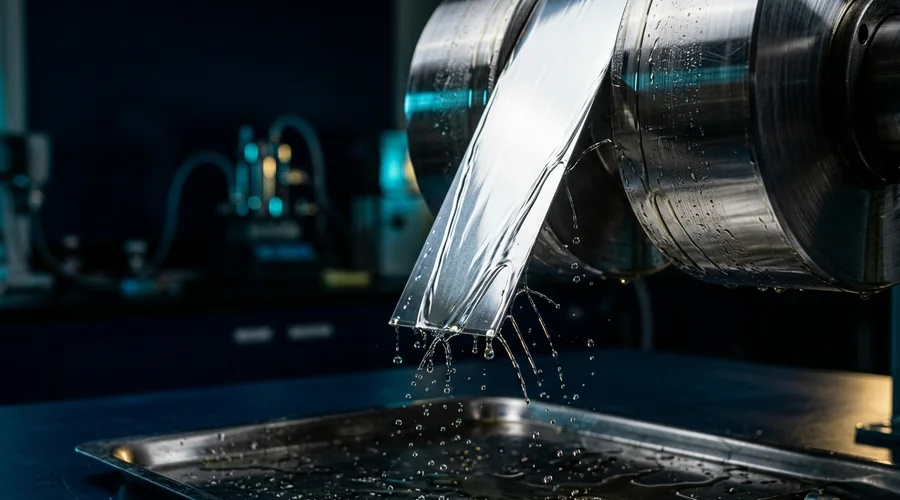
Aluminium sheet and foil are rolled with a fundamentally different fluid from steel, and the reason is what happens after the mill. Thin aluminium strip and foil are annealed to soften them and to volatilise the residual rolling oil. That oil must burn off completely, leaving no stain, varnish, or carbon deposit on the bright surface. A stained foil is scrap for packaging and electronic-grade uses. This clean-burn requirement, more than friction or cooling, sets the whole formulation.
The consequences run through every component of an aluminium rolling lubricant:
- Base fluid — a narrow-cut, low-boiling hydrocarbon (odourless kerosene or a light normal-paraffin cut) chosen for rapid, residue-free evaporation rather than for viscosity or film strength
- Boundary additives — restricted to fatty alcohols, fatty acids, and fatty esters, which adsorb on the aluminium surface to provide boundary lubrication and then oxidise and evaporate to nothing during the anneal
- No S / Cl / P chemistry — sulphur, chlorine, and phosphorus extreme-pressure additives leave inorganic residues and can discolour or corrode the foil, so they are excluded entirely
- Tight contamination control — tramp hydraulic oil or heavy machine oil in the system reduces volatility and raises the staining tendency, so filtration and housekeeping are part of the specification
Industrial guidance on cold and foil rolling lubricant monitoring stresses that oil chemistry and heavy-oil contamination together determine evaporation and stain behaviour, which is why aluminium mills monitor their fluid so closely. The additive palette here overlaps with the boundary chemistry used in metalworking cutting fluids, but the volatility requirement is unique to rolling. Hot rolling, by contrast, is defined not by what happens after the mill but by the temperature inside it.
Hot Rolling: Lubricating a Surface That Is Already Red-Hot
In hot rolling the slab or strip enters the mill above its recrystallisation temperature, often glowing, so the lubricant meets a surface far hotter than the flash point of any oil. The fluid cannot form a conventional film the way a cold mill oil does; instead it flashes. What matters is the thin residue of fatty or synthetic-ester material that survives long enough to reduce roll wear and rolling force. Most hot mills apply an oil-in-water emulsion or a synthetic-ester dispersion at low concentration, relying on the water for cooling and descaling and on the organic phase for the friction benefit.
The lubrication targets in hot rolling are different from cold rolling in a way that surprises people new to the process:
- Roll wear over friction — the primary goal is often to extend work-roll life and cut roll consumption, not to push friction as low as possible
- Controlled bite — too much lubrication causes slip and loss of draft; hot rolling wants just enough film to protect the rolls without losing grip on the strip
- Scale management — the water phase helps break and flush mill scale, and the lubricant must not trap scale against the strip and roll it in
- Thermal shock control — even, well-distributed cooling protects the rolls from thermal fatigue cracking
Hot and cold rolling together cover strip and sheet production, but a large share of finished metal parts is made by pressing, drawing, and bending operations that use a completely different family of lubricants.
Forming and Stamping Lubricants: Built for a Single Severe Operation
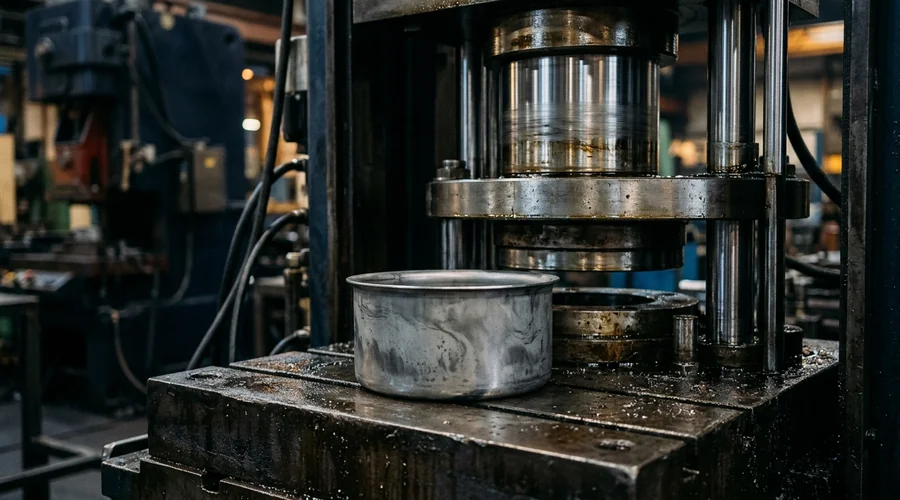
A forming or stamping lubricant is applied to a blank or coil for one discrete operation — a draw, a bend, a coining strike, a press stroke — rather than recirculated for days like a rolling oil. That changes the design priorities entirely. The lubricant is optimised for the severity of that single deformation and for compatibility with the tool material. It also has to suit what happens next: welding, painting, adhesive bonding, or plating all need the lubricant gone or at least benign.
Forming lubricants also come in physical forms a rolling oil never uses, and the form is chosen by deformation severity:
- Straight and soluble oils — for light stamping, blanking, and mild forming, applied by roller coater, drip, or spray and often left on the part
- Emulsions and semi-synthetics — for moderate forming where some cooling and easy aqueous cleaning are wanted
- Drawing pastes and gels — thick soap-and-fat compounds carrying solid lubricants such as graphite, chalk, lime, or borax for severe deep drawing and ironing
- Dry-film lubricants — pre-applied soap or polymer coatings that are genuinely dry when the blank enters the press, giving clean handling and consistent film for the most demanding draws
- Pre-lubed and hot-melt coatings — factory-applied films on the incoming coil that remove the need for a lubrication step at the press
The underlying boundary chemistry — polar molecules adsorbing on fresh metal to prevent galling — is shared with rolling oils, but the duty cycle and removal requirements make forming lubricants a distinct engineering problem. Whichever family a plant runs, the fluid only performs if it is managed properly once it is in service.
Managing the Fluid in Service: The Half of the Job That Happens After Formulation
A perfectly formulated rolling oil still fails if the recirculating system is not controlled, because the fluid changes continuously in use. It picks up iron fines and tramp oil, loses additive to plate-out and drag-out, shifts pH, and grows bacteria and fungi that degrade it and attack the additive package. A cold mill fluid laboratory typically checks the core parameters every shift and adjusts the make-up rate, stabiliser, biocide, or fresh concentrate to hold the system inside its window.
The parameters that get watched, and why each one matters:
| Parameter | What it controls | What drift causes |
|---|---|---|
| Oil concentration | Film thickness and friction in the bite | High: slip, staining; Low: pickup, high roll force |
| Emulsion stability / droplet size | Plate-out rate onto the strip | Too stable: starvation; too unstable: tank separation |
| pH and alkaline reserve | Corrosion protection, emulsion life | Low pH: rust, emulsion breakdown |
| Saponification value | Level of active fatty / ester lubricant | Falling SAP: loss of lubricity |
| Iron fines and tramp oil | Surface cleanliness, filtration load | High fines: surface defects, abrasive wear |
| Microbial contamination | Fluid odour, additive degradation, biofilm | Uncontrolled growth: fluid dump, corrosion |
Letting any one of these drift usually shows up first as a defect on the coil or a change in rolling force, not as a lab number. The monitoring exists to catch the problem before the product does. The practical lesson is that the formulation and the fluid-management plan are one system — a good oil in a poorly controlled loop will still make bad coil. When a mill is fighting recurring surface or friction problems, the fastest route to a fix is usually a joint review of the formulation, the recirculation plant, and the monitoring regime together.
Frequently Asked Questions
Why is a cold rolling oil almost never used neat on every mill stand?
On a tandem cold mill the roll bite generates a large amount of heat from plastic deformation and friction, and neat oil alone cannot carry that heat away fast enough on the early, high-reduction stands. Most steel tandem mills therefore run an oil-in-water emulsion on those stands, where the water phase provides the cooling and the oil that plates onto the strip provides the lubrication.
The final stand, or the whole mill for the hardest grades, may switch to neat oil or a very rich emulsion because surface finish and film control matter more there than raw cooling. The split between emulsion and neat oil across the mill is a deliberate engineering choice, not a preference.
What does plate-out mean in rolling lubrication?
Plate-out is the process by which oil droplets in an oil-in-water emulsion separate from the water and deposit as a continuous oil film on the strip and roll surfaces just before they enter the roll bite. It happens because the metal surfaces are hotter than the bulk emulsion and because the polar additives in the oil are attracted to the metal.
The amount of oil that plates out per pass depends on emulsion stability, droplet size, temperature, and strip speed, and it directly sets the lubricating film thickness in the bite. Formulators tune emulsion stability specifically to control plate-out: an emulsion that is too stable will not release enough oil, and one that is too unstable will drop its oil in the tank instead of on the strip.
Why can't aluminium foil rolling oil contain sulphur, chlorine or phosphorus additives?
Aluminium foil and thin strip are annealed after rolling to soften them and to burn off the residual rolling oil, and the oil has to evaporate cleanly at annealing temperature without leaving a stain or carbon residue on the bright surface. Sulphur, chlorine and phosphorus extreme-pressure additives leave inorganic residues and can discolour or corrode the foil during that anneal, which is unacceptable for packaging and electronic-grade material.
Aluminium rolling oils are therefore built on a narrow-cut, low-boiling hydrocarbon base with boundary additives limited to fatty alcohols, fatty acids, and fatty esters that oxidise and volatilise to nothing. This clean-burn requirement is the single biggest constraint on aluminium rolling oil formulation.
What is the difference between a rolling oil and a forming or stamping lubricant?
A rolling oil works in a continuous process where the same lubricant is recirculated for hours or days and has to control friction, cool the rolls, and protect the mill from corrosion at the same time. A forming or stamping lubricant is applied to a blank or coil for a single discrete operation such as a draw, a bend, or a press stroke, so it is optimised for that one severe deformation and for easy removal or weldability afterward.
Forming lubricants also come in physical forms a rolling oil never uses, including thick drawing pastes, dry-film soap coatings, and pre-applied hot-melt films. The two families share the underlying boundary-lubrication chemistry but are engineered for very different duty cycles.
How does lubrication in hot rolling differ from cold rolling?
In hot rolling the strip enters the mill already red-hot, so the lubricant's first job is to survive contact with a surface well above the flash point of any oil and still leave a friction-reducing film. Hot rolling lubricants are almost always oil-in-water emulsions or synthetic-ester dispersions applied at low concentration, because the water flashes off and takes heat with it while a thin ester or fatty film reduces roll wear and rolling force.
Cold rolling runs much cooler and can use richer emulsions or neat oils, with far more emphasis on final surface finish and on the film being thin and clean enough for downstream annealing or coating. The friction target is also different: hot rolling often wants just enough lubrication to cut roll wear without losing bite, while cold rolling pushes friction as low as the process will tolerate.
What properties are monitored on a working rolling emulsion?
The core parameters are oil concentration, emulsion droplet size or stability, pH, saponification value, iron fines content, and bacterial or fungal contamination. Concentration and stability control how much oil plates onto the strip and therefore the friction in the bite; pH and biocide status control corrosion and the emulsion's working life; iron fines and tramp oil indicate mill condition and filtration performance.
A cold mill lab will typically check several of these every shift and adjust the make-up rate or add stabiliser, biocide, or fresh concentrate to hold the system in its window. Letting any one parameter drift usually shows up first as a surface defect on the coil or a change in rolling force.
Do rolling oils and forming lubricants need corrosion inhibitors?
Yes, because freshly rolled or formed steel is chemically active and will flash-rust within minutes if the residual film does not protect it, and because the mill itself, its pipework, and its storage tanks are steel that the lubricant contacts continuously. Rolling emulsions carry alkaline reserve and specific ferrous corrosion inhibitors so the recirculating fluid does not etch the system, and staging or interstand oils often double as a short-term rust preventive on the coil until the next operation.
Forming lubricants that stay on the part through storage may need a longer-duration inhibitor package similar to a light rust-preventive oil. The corrosion function is not optional in a steel plant; it is designed in from the start.
Formulating or Troubleshooting a Rolling Fluid?
Global Formulation provides lubricant consultancy — cold and hot rolling oil formulation, emulsion stability and plate-out tuning, aluminium clean-burn systems, and recirculation-plant troubleshooting for steel and aluminium mills.
Talk to Our Formulation Team