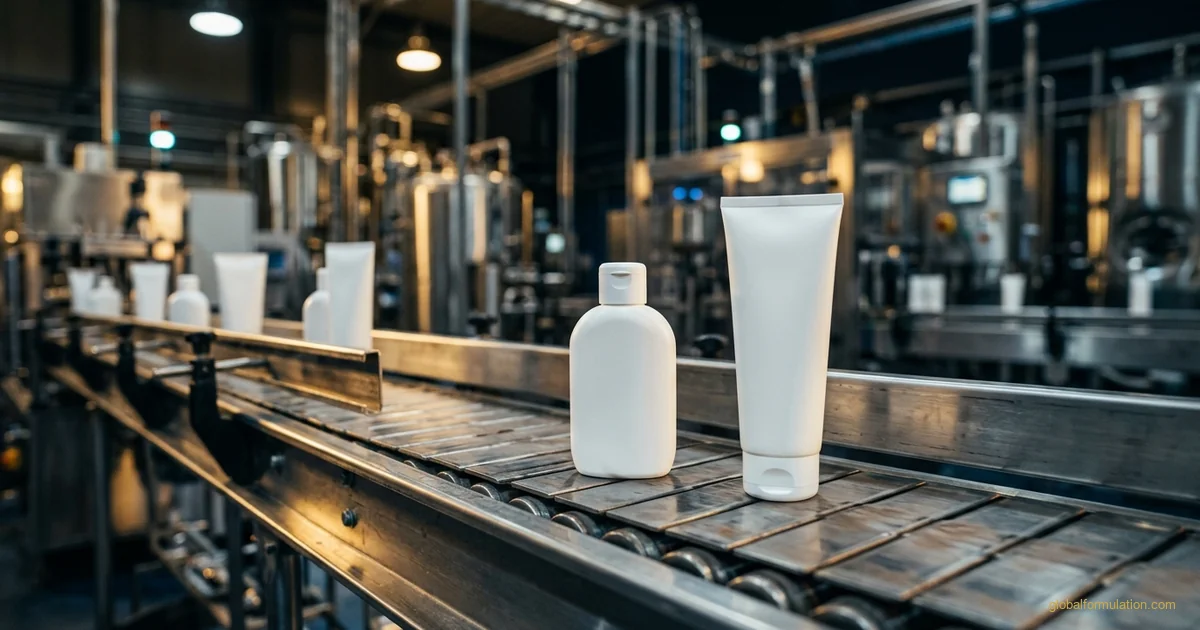
Parents will pay a premium for a baby lotion or wash they trust completely, and that trust gap is exactly the opening a new baby care product manufacturing business can fill. Infant skin is thinner, more permeable, and slower to build its own protective barrier than adult skin, so every ingredient and preservation decision in a baby formulation carries more consequence than the same decision would in an adult personal care line — and parents increasingly know it, driving demand toward smaller, locally accountable brands over anonymous imported product. This guide walks you through the complete roadmap for starting a baby care product manufacturing business: realistic startup capital, the mild-surfactant and pH-balanced chemistry that separates a credible baby line from a relabelled adult formula, the microbiological safety controls regulators and pharmacy buyers both expect, licensing across key markets, and how to land your first retail accounts. You do not need a cosmetic chemistry doctorate to enter this category, but you do need to treat formulation safety and preservative efficacy with more discipline than in almost any other personal care segment, because the margin for error with an infant end user is close to zero.
Market Overview & Opportunity
The global baby care products market sits within the broader personal care and cosmetics industry as one of its most resilient sub-segments, since parents consistently prioritise spending on infant care items even when they cut back elsewhere in a household budget. Demand is dominated by a handful of multinational brands with decades of accumulated category trust, but that concentration leaves real room for local manufacturers who can compete on ingredient transparency, faster reformulation in response to parent feedback, and price.
Primary customer segments include pharmacy and modern-trade retail chains, baby-specialty stores, maternity hospital and paediatric clinic supply contracts, and a fast-growing direct-to-consumer e-commerce channel that lets a new brand reach parents without first winning shelf space from an established retailer. Institutional buyers such as maternity wards are a smaller but disproportionately credibility-building segment, since a product used and recommended in a clinical setting carries outsized trust with parents shopping afterward.
Demand drivers include steady birth rates across South Asia, the Middle East, and parts of Africa, rising disposable income among urban middle-class parents, and a well-documented shift in parental purchasing behaviour toward products marketed as fragrance-free, hypoallergenic, or dermatologically tested. Regional opportunity is strongest in markets with large annual birth cohorts and growing organised retail, where a qualified local manufacturer can undercut imported baby care brands on price while meeting the same safety expectations parents have come to expect.
Competitive landscape at the local level typically features two or three multinational brands controlling the bulk of pharmacy and modern-trade shelf space, alongside a growing number of regional "clean baby" brands built on transparent ingredient lists and local manufacturing. A new entrant differentiates most effectively on faster response to parent-driven ingredient trends, local manufacturing speed, and price — not by trying to out-market an established multinational on brand recognition alone.
Investment Breakdown: Starting on Minimum Capital
A baby care product manufacturing business carries a meaningfully higher capital floor than a standard adult lotion or shampoo line, not because the mixing equipment differs, but because microbiological safety infrastructure — purified process water, preservative efficacy testing, and a controlled filling environment — is not optional the way it can be for adult personal care. Budgeting for this from day one avoids the far costlier mistake of retrofitting microbiological controls after a contamination complaint or product recall.
| Cost Category | Estimated Range (USD) | Notes |
|---|---|---|
| Emulsification & Filling Equipment | $2,500 – $6,000 | Water-phase/oil-phase vessels, homogenizer, filling machine sized for lotions and washes |
| Water Purification System (RO/DI) | $800 – $2,500 | Removes minerals and microbial load from process water; not optional for baby formulations |
| Raw Materials (first batch) | $1,500 – $4,000 | Mild surfactants, emollients, humectants, preservative system |
| In-House QC & Microbiology Setup | $1,200 – $3,000 | pH meter, viscometer, incubator, basic plate-count capability |
| Packaging (tubes, bottles, cartons, labels) | $700 – $1,800 | Tamper-evident closures, printed cartons at small MOQ |
| Third-Party Safety & Preservative Testing | $1,000 – $3,500 | Dermatological/safety assessment plus preservative efficacy challenge test |
| Licensing & Registration | $500 – $1,500 | Business registration, cosmetic manufacturing licence, product notification |
| Facility Rent & Utilities (3 months) | $900 – $2,500 | Small rented unit with a controlled, easily sanitized filling area |
| Total Minimum | $9,100 – $25,000 | Before first sale |
The lean end of this range assumes you launch with a single hero product — most commonly a baby lotion or baby wash — using second-hand emulsification equipment and outsourcing preservative efficacy and dermatological testing to a contract lab rather than building that capability in-house immediately. The water purification system and third-party safety testing are the two line items founders most often try to skip, and they are precisely the two that protect you from the costliest possible outcome in this category: an under-preserved or unsubstantiated product reaching an infant end user.
Minimum Equipment List for a Small-Scale Unit
Baby care production shares its core equipment — water-phase and oil-phase vessels, a homogenizer, and a filling line — with standard lotion and cream manufacturing, but every piece of it needs a cleaning and sanitation regime rigorous enough to prevent microbial carryover between batches, since the finished product's preservative system is formulated to control a defined bioburden, not to compensate for a poorly sanitized vessel.
| Equipment | Minimum Spec | Approx. Cost (USD) |
|---|---|---|
| Water Phase Vessel | 30–80 L, SS304, electric heating, easily sanitized | $300–$700 |
| Oil Phase / Melt Vessel | 15–40 L, SS304, heating element, small agitator | $200–$500 |
| High-Shear Homogenizer | Inline or batch, 1–3 kW; produces a stable, fine-particle emulsion | $500–$1,500 |
| RO/DI Water Purification Unit | Removes minerals and microbial load from process water; sized to daily batch volume | $800–$2,500 |
| Filling & Capping Machine | Manual or semi-auto piston filler for tubes and bottles, 50–500 mL range | $300–$900 |
| Digital pH Meter & Viscometer | Calibrated instruments for per-batch release testing | $200–$500 |

The RO/DI water purification unit is the item first-time founders most often treat as optional, assuming municipal or borewell water is "clean enough." It rarely is: untreated water routinely carries mineral content and a microbial load that a preservative system calibrated for purified water was never designed to control, turning every batch into a preservative-efficacy gamble.
Space, Utilities & Infrastructure Requirements
Baby care manufacturing needs a controlled, easily sanitized environment more than it needs a large facility footprint, since microbial contamination risk during filling — not floor space — is the constraint that actually governs product safety in this category.
A minimum functional unit needs approximately 600 to 1,200 square feet, split between raw material storage, a sealable water-phase and compounding room, a dedicated filling area kept as free of airborne particulate as practical, a small QC bench, and finished goods storage. Power requirements are modest — a homogenizer and heated vessels typically draw a combined 3 to 5 kW, making single-phase power workable at this scale in most locations. Water supply matters more for quality than quantity here: you need a consistent municipal or borewell feed upstream of the RO/DI system, since the purification unit only performs as designed with a stable source to work from. General ventilation and temperature control are usually sufficient for lotion and wash production, though diaper rash and barrier cream lines regulated as OTC drug products in some markets may carry stricter facility expectations.
The facility should be zoned for light commercial or industrial use, since water treatment equipment, bulk raw material storage, and the sanitation standard pharmacy buyers expect are difficult to sustain credibly in a residential setting. Founders exploring a lower-commitment entry point sometimes start through a contract manufacturing arrangement before investing in a dedicated facility of their own.
Best Products to Start With: Low Capital, High Demand
Not every baby care product suits a first-time manufacturer equally, since the category spans simple leave-on emollients through to products carrying meaningfully higher regulatory and safety-testing burden. Sequencing your line by formulation complexity, not by what looks most exciting on a shelf, is what actually gets a new baby care brand to its first profitable month.
Baby Lotion or Moisturising Cream is the natural starting product for most founders. It is a lightweight oil-in-water emulsion built on a process nearly identical to adult lotion manufacturing, differing mainly in its milder surfactant and emulsifier system and its fragrance-free or minimal-fragrance positioning, and it carries the broadest and most predictable demand of any product in this category, as detailed on the Global Formulation Cosmetics & Personal Care page. With an adequately validated preservative system, shelf life typically runs 18 to 24 months.
Baby Wash or No-Tears Shampoo is a strong second product, usually introduced once your lotion line is selling reliably. It demands more careful surfactant blending — balancing amphoteric and nonionic surfactants against a minimal anionic load to keep the formula mild and low-sting near the eyes — and rewards an established brand with real pricing power once parents trust the "no tears" claim.
Diaper Rash or Barrier Cream rounds out a well-sequenced product line but deserves a note of caution: in several major markets, including the United States, a barrier cream built around zinc oxide as an active ingredient is regulated as an over-the-counter drug product rather than a cosmetic, which adds a meaningfully higher regulatory burden. Most founders are better served launching this product after they have licensing experience under their belt with the lotion and wash lines.
Raw Material Sourcing Strategy
The raw material list for baby formulations centres on four categories: mild surfactants, gentle emollients and humectants, a preservative system calibrated for a sensitive end user, and minimal or allergen-screened fragrance. Sourcing decisions here carry more weight than in adult personal care, because raw material purity and consistency directly determine whether your finished product passes preservative efficacy and dermatological safety testing.
Mild surfactant systems typically draw on coco-glucoside, decyl glucoside, sodium cocoyl isethionate, and cocamidopropyl betaine rather than the harsher anionic surfactants common in adult formulations at higher concentration. Emollients and humectants such as glycerin, caprylic/capric triglyceride, and panthenol round out the base, while the preservative package — commonly a phenoxyethanol blend or a potassium sorbate system — must be selected and dosed specifically to pass a recognised challenge test, not simply assumed effective because it is "commonly used."
Standard humectants and basic emollients are usually available from local chemical distributors, while mild surfactant blends and preservative systems more often require sourcing from a specialty personal care ingredient supplier who can guarantee consistent Certificate of Analysis data between lots. Evaluate any supplier on three criteria: minimum order quantity relative to your production scale, batch-to-batch purity consistency, and delivery reliability, since a stockout on your preservative system halts production entirely regardless of how much surfactant or emollient you have in stock.
Cost-saving strategies include forming informal buying groups with other small personal care manufacturers to hit better bulk pricing on shared humectants and packaging, but never compromise on surfactant mildness or preservative grade to save cost given the sensitivity of the end user. Flag any imported specialty surfactant or preservative blend for import duty and shipping lead time early, since these are often sourced internationally even when your bulk raw materials are local.
Manufacturing Process Overview
The manufacturing process for a baby lotion or wash is a controlled emulsification and compounding operation. Water-soluble ingredients — purified water, humectants, and water-soluble polymers — are combined and heated in the water-phase vessel, while emollients and emulsifiers are melted separately in the oil-phase vessel to a matching temperature. The oil phase is then introduced into the water phase under continuous homogenization, which shears the two phases into a stable, fine-particle emulsion that will not separate on the shelf.
The batch is then cooled under continued gentle mixing, and heat-sensitive ingredients — preservative, fragrance, and pH adjusters — are added only once the batch has dropped below a defined temperature threshold, since adding a preservative while the mix is still hot can quietly degrade its antimicrobial activity without changing how the batch looks or smells. pH is adjusted to a target compatible with infant skin, typically in the mildly acidic range, before an in-process check of pH, viscosity, and appearance clears the batch for filling under controlled, sanitized conditions.
Key parameters to control include the temperature at which heat-sensitive additives are introduced, homogenization time and speed, which govern emulsion particle size and long-term stability, and final pH. Batch size for a starting operation typically runs 50 to 150 kilograms per cycle. The most common beginner mistake is exactly the temperature-sequencing error described above — the batch passes every visual and pH check at release, then fails a preservative efficacy challenge test weeks later, by which point the raw materials and labour in that batch are a sunk cost.

Setting up a manufacturing unit involves more than equipment and raw materials — getting the formulation right, scaling production safely, and meeting regulatory requirements are where most startups lose time and money. If you need hands-on guidance at any stage, the Global Formulation team works directly with chemical startups on formulation development, process setup, and compliance — from first batch to commercial scale.
Quality Control & Testing for Small Manufacturers
Quality control in baby care manufacturing carries a different weight than in most other startup categories in this series, because the end user is an infant with a still-developing skin barrier and immune system, and a quality failure here is a health and safety issue, not just a customer complaint. Every batch needs verification against a defined set of release parameters, and — uniquely in this category — every formulation needs periodic preservative efficacy testing, not just per-batch pH and viscosity checks.
| Test | What It Measures | Equipment Needed | Pass/Fail Criterion |
|---|---|---|---|
| pH | Skin compatibility and preservative system performance | Calibrated digital pH meter | Typically within a mildly acidic target range specific to the formulation |
| Viscosity | Product consistency and emulsion stability | Rotational viscometer | Within formulation-specified range |
| Total Aerobic Microbial Count | Bioburden of the finished product | Incubator, compendial plate-count method | Below recognised cosmetic microbiological limits |
| Preservative Efficacy (Challenge Test) | Whether the preservative system controls a deliberate microbial challenge over time | Third-party accredited laboratory | Meets a recognised antimicrobial protection standard such as ISO 11930 |
pH, viscosity, and appearance checks can and should be run in-house on every batch, and a basic total aerobic microbial count is achievable with a simple incubator and a trained technician. Preservative efficacy challenge testing almost always requires an accredited third-party lab, given the specialised microorganism panel and controlled incubation conditions it demands, and is typically run at formulation qualification and then periodically rather than on every single batch. A basic in-house QC bench covering a pH meter, viscometer, and incubator can be established for under $2,000.
Batch records matter even at small scale — log the preservative and surfactant lot numbers, water-phase and preservative-addition temperatures, pH, and viscosity for every batch, since this traceability is what protects you if a formulation is ever challenged. The most common QC failure mode in this category is exactly the heat-degraded preservative scenario described earlier, which is precisely why temperature discipline during compounding and periodic challenge testing are non-negotiable rather than optional refinements.
Packaging & Branding on a Budget
Packaging for a baby formulation has to protect product integrity for the full shelf life while also communicating trust at a glance, since a wary parent is deciding whether to hand your product to their infant based partly on how the packaging looks and reads. Getting the label right is as much a safety requirement as a branding one.
Standard formats are squeeze tubes and pump bottles for lotion and wash, and small jars or tubes for barrier cream, generally sourced from local plastic packaging suppliers at accessible minimum order quantities. Mandatory label information includes the full ingredient list in standard INCI nomenclature, net content, batch code, manufacturer details, a period-after-opening symbol, and any required usage or caution statements such as external use only or avoid contact with eyes — all of which can be laid out affordably using Canva or a local commercial printer.
Private label arrangements with pharmacy or retail chains are common in the early stage of a baby care business, generating revenue and production experience while you build your own brand recognition with parents directly. A Safety Data Sheet is expected for the concentrated raw materials you handle in-house even though the finished consumer product itself is low-hazard, and should be on file before your first commercial shipment rather than treated as an afterthought.
Licensing, Registration & Regulatory Compliance
Regulatory oversight for baby care cosmetics centres on manufacturing licensing plus product-level safety substantiation, and the substantiation requirement is where this category diverges most from general adult personal care — regulators and pharmacy buyers alike expect documented proof that your formulation is safe for an infant end user before it reaches the market.
In Pakistan, the Drug Regulatory Authority (DRAP) and the Pakistan Standards and Quality Control Authority (PSQCA) govern cosmetic manufacturing and product compliance. In the GCC, the Gulf Standardization Organization (GSO) and Saudi Standards, Metrology and Quality Organization (SASO) set relevant cosmetic product requirements, India applies Bureau of Indian Standards (BIS) frameworks under the Cosmetic Rules, and the European Union requires a Cosmetic Product Safety Report prepared by a qualified safety assessor plus notification through the EU's Cosmetic Products Notification Portal before any sale. In the United States, the FDA's cosmetics framework now includes the Modernization of Cosmetics Regulation Act, which requires facility registration and product listing for any manufacturer selling into that market.
Mandatory registrations before legal sale typically include business entity registration, a cosmetic manufacturing or trade licence, and — depending on your target market — a formal product notification or safety assessment. Timeline for core business and manufacturing registration is usually 4 to 8 weeks, while safety assessment and preservative efficacy testing often run in parallel and can take 8 to 12 weeks depending on lab turnaround. Good Manufacturing Practice under ISO 22716 is not always a strict legal requirement for cosmetics the way it is for pharmaceuticals, but it becomes commercially necessary once you pursue larger pharmacy chain or export accounts.
Practical advice: prioritise your business and manufacturing licence first since these are legal prerequisites to operate at all, then commission your dermatological safety assessment and preservative efficacy testing early, since documented safety substantiation is what unlocks distribution through pharmacy chains — the channel with the most reliable, recurring order volume in this category.
Pricing Strategy & Margin Expectations
Cost-plus pricing is the right starting framework: calculate your fully loaded cost per unit — raw materials, packaging, labour, testing amortised across your production run, and a share of fixed overhead — then apply a margin that reflects the trust and safety substantiation your product carries, not just its raw material cost. Baby care is a trust-sold category, not a commodity-priced one, and a properly tested product earns real pricing power on that basis.
Typical gross margin targets in this category range from 35% to 55%, higher than many general personal care lines, because parents and pharmacy buyers are paying for documented safety as much as for the product itself. Multinational brands price at a substantial premium, often built on decades of accumulated trust rather than superior formulation, while local manufacturers typically compete on a combination of price, ingredient transparency, and faster response to parent-driven ingredient trends.
Price your first customers close to your cost-plus floor to build trial volume and pharmacy listings, then increase pricing as you accumulate a track record of safe, well-reviewed batches and, ideally, third-party safety certification. Pharmacy chains will push for volume discounts once you gain traction — hold your margin on smaller orders while offering structured tiered pricing for guaranteed volume commitments, rather than discounting broadly across your customer base.
Finding Your First 20 Customers
B2B sales channels for baby care run through pharmacy chains, baby-specialty retailers, and general modern-trade grocery with a baby aisle, alongside a direct e-commerce channel that lets you reach parents without first winning shelf space. Maternity hospitals and paediatric clinics are a slower but powerful channel, since a product sampled and recommended in a clinical setting builds a level of trust that advertising alone cannot buy.
Online channels including parenting community groups, direct outreach via Instagram and WhatsApp Business, and baby-focused e-commerce marketplaces can generate qualified early demand at low cost. Getting your first three orders without a dedicated sales team usually means running a sampling programme — small trial-size tubes distributed through a maternity clinic or parenting community — paired with your safety testing data to establish credibility immediately, since risk-averse parents rarely buy an unfamiliar baby brand on packaging alone. A founder already selling in an adjacent category, such as the approach covered in our lotion and cream manufacturing guide, often finds baby care a natural extension once their emulsion process is validated.
Samples and trials carry disproportionate weight in this category, since a parent who has personally used your product on their infant without incident becomes both a repeat customer and a credible reference for the next prospect. The most common mistake first-time founders make is pitching a pharmacy buyer before their safety testing is complete — most pharmacy chains will not even review a new infant product line without documented substantiation in hand, so sequence testing ahead of your sales push, not alongside it.
When and How to Scale Up Your Production
The clearest signal that you are ready to scale is consistent order volume that regularly exceeds your current mixing and filling capacity, or a pharmacy chain offering a larger listing than your current output can support — at that point, additional equipment capacity is a better investment than continuing to stretch your original setup. Scaling too early, before demand is proven, ties up capital in idle equipment; scaling too late costs you the listing to a competitor who can deliver at volume.
Next equipment investments typically include a larger-capacity homogenizer and filling line, and expanded in-house microbiology capability so fewer batches wait on third-party lab turnaround. Hiring priorities at this stage usually start with a dedicated QC or microbiology technician, freeing the founder from running every release test personally, followed by a production supervisor once you run more than one shift.
Formalising quality systems — pursuing ISO 22716 cosmetics GMP certification — becomes commercially important once you are bidding for larger pharmacy chain or export accounts, since procurement teams at that scale often require certified quality systems as a condition of doing business. Expanding into diaper rash or barrier cream production is also a natural next step once your lotion and wash lines are running reliably and you have licensing experience to draw on for the added regulatory complexity.
Frequently Asked Questions
How much capital is really needed to start a baby care product manufacturing business?
Do I need a chemistry degree to start this business?
Can I start from home or do I need a factory?
What is the biggest mistake to avoid?
How long before I make my first sale?
Do I need ISO or GMP certification from day one?
How do I get a validated formulation for the product?
What is the first licence I need to get?
Ready to Take the Next Step?
Starting a chemical manufacturing business is one of the most rewarding paths an entrepreneur can take — but it demands the right technical foundation from day one. Whether you need a validated formulation, help setting up your first production unit, guidance on regulatory compliance, or a structured scale-up plan, the Global Formulation team is here to support you.
Reach out to us at globalformulation.com/contact — we work with founders at every stage, from concept to commercial production.