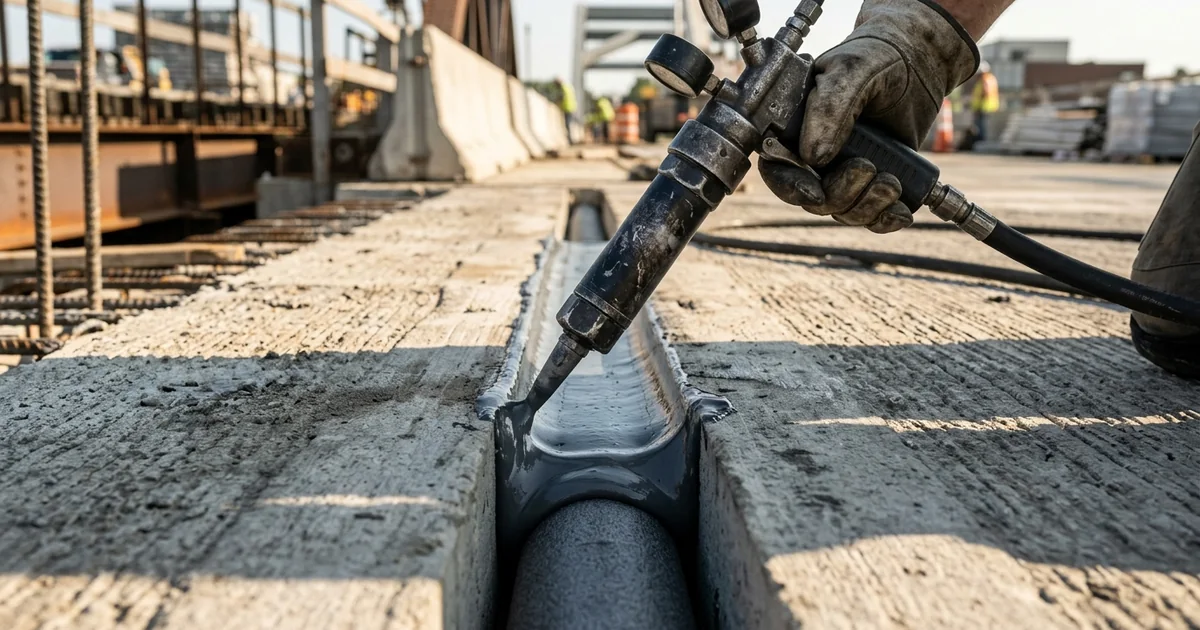
Every building that moves — and every building moves, through thermal expansion, wind sway, seismic drift, and structural settlement — depends on joint sealants engineered to stretch and compress for decades without cracking or losing adhesion. A construction joint sealant manufacturing business supplies exactly that: the polyurethane and silicone elastomeric sealants that keep expansion joints in bridges, parking structures, curtain walls, and precast facades watertight and structurally sound. Demand for this category holds up even through construction slowdowns, because joint sealants are as much a maintenance and retrofit product as a new-build one — every ageing structure eventually needs its joints resealed. This guide walks you through the complete roadmap: realistic startup capital, the equipment list, raw material sourcing for polyurethane and silicone systems, the manufacturing process, quality control against recognised movement-capability standards, licensing, pricing, and how to land your first contractor accounts. You do not need a polymer chemistry doctorate to succeed here — you need disciplined moisture control and a working relationship with a formulation partner who can validate your first products against a documented performance class.
Market Overview & Opportunity
The construction sealants market sits within the broader building envelope and construction chemicals industry, a multi-billion dollar global category that keeps expanding as more of the world's building stock ages into its first or second resealing cycle. Movement joint sealants — the polyurethane and silicone products used in true structural expansion joints, as distinct from general-purpose caulks — occupy a higher-value, higher-margin tier, because they must be classified for cyclic movement performance rather than sold as an undifferentiated commodity.
Primary customer segments include contractors doing structural rehabilitation and waterproofing retrofit, precast concrete panel manufacturers who need joint sealing between panels, glazing and curtain wall installers, and government bridge and infrastructure maintenance departments. Institutional and government buyers are often the most reliable long-term segment, because bridge and public infrastructure resealing is a recurring, budgeted maintenance line item rather than a discretionary purchase, giving a qualified local manufacturer predictable repeat demand.
Demand drivers include the scale of ageing concrete and steel infrastructure built during the mid-to-late twentieth century construction boom, tightening building envelope and waterproofing codes, and the rapid growth of precast and modular construction, which creates joint-sealing demand at every panel interface. Regional opportunity is strongest in South Asia, the Middle East, and parts of Africa, where infrastructure built during the past three decades is now entering its first major resealing cycle, and where local contractors currently rely heavily on imported sealant.
Competitive landscape at the local level typically features two or three international specialty chemical brands commanding premium pricing on the strength of established specification history, alongside limited local manufacturing capacity — leaving real room for a well-tested regional entrant offering faster delivery, direct technical support on the job site, and pricing that undercuts imported product without compromising on documented performance class.
Investment Breakdown: Starting on Minimum Capital
Joint sealant manufacturing carries a somewhat higher capital floor than other construction chemical categories, because isocyanate-based polyurethane chemistry demands a humidity-controlled mixing environment and a vacuum mixer, not just a basic blending tank. The lowest-capital entry route is compounding a purchased, pre-reacted moisture-cure polyurethane prepolymer with filler, plasticizer, and catalyst — avoiding the cost and hazard of synthesising your own prepolymer from raw polyol and isocyanate in-house.
| Cost Category | Estimated Range (USD) | Notes |
|---|---|---|
| Vacuum Planetary Mixer | $8,000 – $18,000 | Sized for 20–40 kg batches; vacuum degassing essential for moisture-sensitive chemistry |
| Dry Room / Dehumidification Fit-Out | $2,500 – $6,000 | Maintains mixing and filling area below ~30% relative humidity |
| Cartridge & Sausage Filling Line | $3,000 – $7,500 | Manual to semi-automatic; nitrogen-flush capability recommended |
| Raw Materials (first production run) | $3,500 – $8,000 | Prepolymer, dried filler, plasticizer, catalyst, packaging film |
| Packaging (cartridges, sausages, labels) | $800 – $2,000 | Foil-lined moisture-barrier packaging, tamper seals, printed labels |
| Licensing & Registration | $500 – $1,200 | Business registration, trade licence, hazardous chemical storage clearance |
| Facility Rent & Utilities (3 months) | $1,500 – $3,500 | Based on 1,000–1,800 sq ft light industrial unit |
| Working Capital Buffer | $1,200 – $3,000 | Covers supplier payments and labour before first sales receipts |
| Total Minimum | $21,000 – $49,200 | Before first sale; lean scenario buys pre-reacted prepolymer |
The lean end of this range is achievable by leasing a small shared industrial space with an existing sealed room you can dehumidify cheaply, buying a second-hand planetary mixer, and launching with a single product — a general-purpose one-part moisture-cure sealant — before expanding into pourable traffic-grade and silicone weatherseal lines. A semi-automatic filling line is not necessary at launch, since cartridges and small sausages can be hand-filled at low volume. Budget for at least 60 to 90 days of working capital, since distributors and contractor accounts commonly settle on 30 to 45 day credit terms.
Want the full financial workup? The Construction & Industrial Sealants Standard Project Report is a complete India-basis feasibility and financial study — three independently costed investment configurations, a five-year projected P&L with IRR, payback and break-even, an itemised plant & machinery schedule, raw materials by functional class, and the full statutory and environmental roadmap. It is a costing and feasibility document; it does not include a formulation.
Minimum Equipment List for a Small-Scale Unit
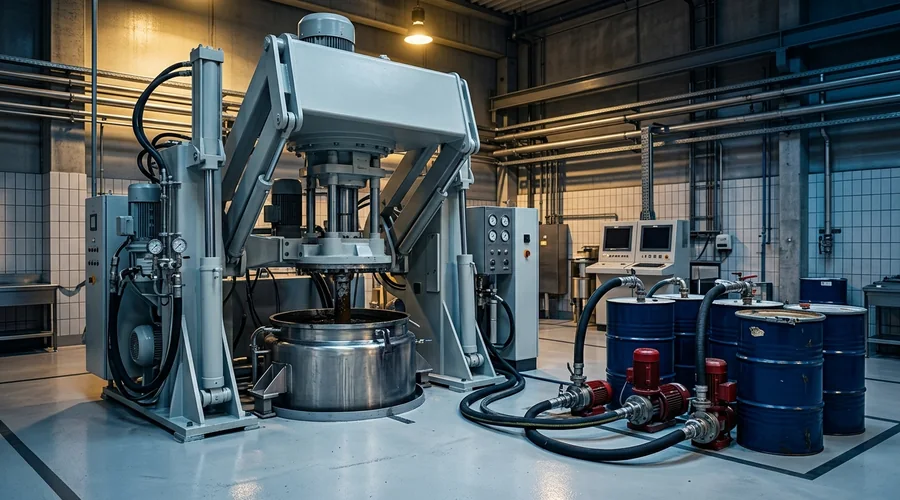
Joint sealant production combines dry filler handling with moisture-sensitive prepolymer compounding, so your equipment list has to protect the mix from ambient humidity at every stage, since even trace moisture reacting with unreacted isocyanate groups generates carbon dioxide gas inside a sealed cartridge. Getting the filler-drying and vacuum-mixing steps right matters more to product reliability than any other single investment.
| Equipment | Minimum Spec | Approx. Cost (USD) |
|---|---|---|
| Vacuum Planetary Mixer | 20–40 kg batch capacity; sealed bowl with vacuum degassing; variable speed | $8,000–$18,000 |
| Dehumidifier & Humidity Monitoring | Industrial dehumidifier holding mixing room below ~30% RH; continuous humidity logging | $1,500–$3,500 |
| Filler Drying Oven | Reduces calcium carbonate filler moisture to below 0.1% before charging | $1,200–$3,000 |
| Digital Scales | 0.1% accuracy for prepolymer, filler, and additive dosing | $400–$1,000 |
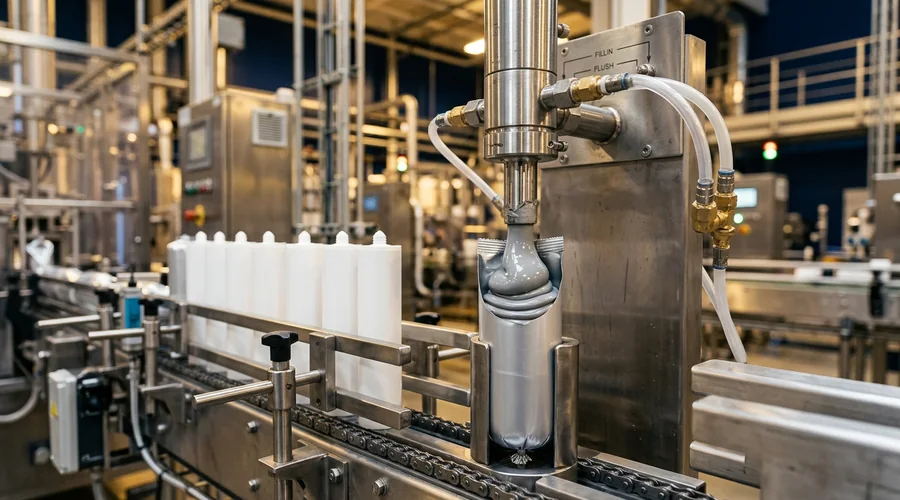
| Cartridge/Sausage Filling & Sealing Station | Manual or semi-automatic, nitrogen-flush capable | $3,000–$7,500 |
| Shore A Durometer & Tensile Tester | For hardness and elongation QC per batch | $1,000–$2,800 |
| Chemical-Resistant PPE & Local Exhaust Ventilation | Nitrile/butyl gloves, respirators rated for isocyanate vapour, exhaust at mixing station | $400–$900 |
The humidity monitoring and dehumidification setup is the item first-time founders most often underbudget, and it is the one investment that protects every batch you produce afterward — a mixing room that drifts above roughly 30% relative humidity on a humid afternoon can quietly compromise an entire day's production before anyone notices. Continuous logging, not spot checks, is what actually catches the problem in time.
Space, Utilities & Infrastructure Requirements
Joint sealant production needs controlled humidity more than it needs large floor area, because ambient moisture is the single variable most likely to ruin a batch of isocyanate-based sealant before it ever reaches a customer. A facility that looks adequate on square footage alone can still produce unreliable product if the mixing zone is not properly sealed and dehumidified.
A minimum functional unit needs approximately 1,000 to 1,800 square feet, split between raw material and filler storage, a sealed mixing and filling room held below roughly 30% relative humidity, a small QC bench, and finished goods storage and dispatch space. Power requirements are modest — a vacuum planetary mixer typically draws 4–7 kW, and total connected load usually stays under 20 kW, making single-phase power workable at small scale in most locations, though a 3-phase supply is preferable if you plan to scale the mixer size later. Ventilation at the mixing station matters for worker safety, since isocyanate vapours are respiratory sensitisers requiring local exhaust extraction, separate from the general dehumidification system that protects product quality.
The facility must be zoned for light industrial or commercial-industrial use, since bulk storage of isocyanate-containing prepolymer, classified as a sensitising and irritant chemical, is not permitted under residential zoning in most jurisdictions. If a suitable building lacks an easily sealed room, budget for basic partitioning and door-sealing work as part of your fit-out, since an open-plan space is very difficult to dehumidify economically. Founders exploring a lower-commitment entry point sometimes start through a contract manufacturing arrangement before investing in a dedicated dry room of their own.
Best Products to Start With: Low Capital, High Demand
Not every joint sealant type suits a first-time manufacturer equally, since the category spans products with meaningfully different formulation complexity, equipment demands, and application skill requirements. A new entrant should start with the product offering the broadest market demand and the most forgiving process window, then expand into more specialised, higher-margin variants as production discipline and cash flow allow.
One-Part Moisture-Cure Polyurethane Sealant is the right starting product for most markets. It suits the widest range of vertical and overhead general building joints, requires no on-site mixing ratio for the applicator, and gives you the most forgiving margin for error while you dial in filler-drying and vacuum-mixing discipline. This is the highest-volume category across most construction sealant markets, with a typical shelf life of 9 to 12 months in properly sealed packaging.
Two-Part Pourable Polyurethane Sealant is a strong second product, typically introduced within 4 to 8 months of launch. It commands a meaningfully higher price point because it is formulated for horizontal traffic-bearing joints — bridge decks, pavement joints, parking structures — that cannot tolerate a soft, slow-curing sealant underfoot or under vehicle load. The formulation and dosing complexity is higher, since mix ratio precision between the two components directly affects cure speed and final hardness, but the premium pricing this application commands makes it a strong margin improver.
Neutral-Cure Silicone Weatherseal rounds out a well-sequenced product line, targeting glazing and curtain wall movement joints, an application segment specifiers rarely trust to a first-year manufacturer without an established track record elsewhere. As detailed on the Global Formulation Construction Chemicals page, building a coherent sealant portfolio around the same waterproofing and structural rehabilitation contractors creates strong repeat business, since a contractor buying your polyurethane sealant for a joint repair is a natural prospect for your silicone weatherseal on a facade project.
Sequencing your line this way — general-purpose one-part sealant first, pourable traffic-grade second, silicone weatherseal third — lets you build technical credibility and cash flow before tackling the distinct raw material chemistry and equipment demands of silicone systems.
Raw Material Sourcing Strategy
The raw material supply chain for polyurethane joint sealants centres on four categories: an isocyanate-terminated polyurethane prepolymer, a plasticizer, a dried mineral filler, and a package of additives — catalyst, adhesion promoter, and thixotropic agent. Understanding how to source and qualify each category is central to product consistency, since supplier variability in prepolymer NCO content directly changes your sealant's cure speed and final hardness.
Prepolymer is best sourced from established specialty polyurethane chemical suppliers rather than general commodity traders, because sealant performance depends on consistent isocyanate content and viscosity between batches — a supplier who can deliver the same prepolymer grade run after run is worth a modest price premium. Regional distributors across South and Southeast Asia, the Middle East, and Europe carry standard moisture-cure polyurethane prepolymers suited to construction sealant applications; importing directly from prepolymer manufacturers only becomes cost-effective once your monthly volume justifies container-load purchasing. Isocyanate raw materials require careful handling throughout transport and storage, since they are classified as respiratory sensitisers.
Dried calcium carbonate filler and plasticizer are almost always available from local suppliers, and sourcing locally is usually both cheaper and more reliable than importing, provided the supplier can guarantee low moisture content or you have adequate in-house drying capacity to condition it yourself. Evaluate any raw material supplier on three criteria: minimum order quantity relative to your production scale, consistency of moisture and viscosity specification between deliveries, and reliability of delivery timing, since a stockout on prepolymer halts your entire production line regardless of how much filler or plasticizer you have on hand.
Cost-saving strategies include negotiating consignment stock arrangements with your primary prepolymer distributor once you have a track record of regular orders, and forming informal buying groups with other small construction chemical manufacturers to hit better bulk pricing tiers on shared filler and plasticizer. Flag isocyanate-containing raw materials for import duty and hazardous goods shipping classification early, since they are frequently classified as irritant or sensitising for transport purposes, which affects both shipping cost and lead time if sourced internationally.
Manufacturing Process Overview
The manufacturing process for a one-part moisture-cure polyurethane sealant is a controlled compounding operation, not a chemical synthesis carried out in-house, since the prepolymer arrives already reacted and remains stable until it meets atmospheric moisture at the point of application. Your job as the manufacturer is to blend, degas, and package it precisely enough that it stays stable in the cartridge until the applicator's gun breaks the seal on the job site.
Production begins with filler preparation: calcium carbonate is oven-dried to below the target moisture threshold, since any residual moisture reacts with the isocyanate-terminated prepolymer and generates carbon dioxide gas inside the finished cartridge. The prepolymer is charged to the vacuum planetary mixer along with plasticizer, and dried filler is then added gradually under continuous vacuum to prevent both air entrainment and moisture pickup during the addition. Pigment, adhesion promoter, thixotropic agent, and catalyst are added next under continued mixing, followed by a final vacuum degassing stage to remove entrapped air, since trapped air pockets weaken the cured sealant and create visible voids at the joint face.
Key process parameters to control include mixing temperature, since excess heat accelerates the isocyanate-moisture reaction prematurely, vacuum level during degassing, and — critically — verified filler moisture content before it ever enters the mixer. Batch size for a starting operation typically runs 20 to 40 kilograms per mix cycle. The most common mistake beginners make is skipping or shortcutting the filler-drying verification step, assuming filler that "looks dry" is dry enough; residual surface moisture invisible to the eye is enough to gas an entire batch of finished cartridges days after they have already shipped.
Basic process safety centres on maintaining the mixing and filling room's humidity control at all times production is running, and on adequate local exhaust ventilation to manage isocyanate vapour exposure for production staff, since these compounds are recognised respiratory sensitisers requiring careful occupational exposure management.
Setting up a manufacturing unit involves more than equipment and raw materials — getting the formulation right, scaling production safely, and meeting regulatory requirements are where most startups lose time and money. If you need hands-on guidance at any stage, the Global Formulation team works directly with chemical startups on formulation development, process setup, and compliance — from first batch to commercial scale.
Quality Control & Testing for Small Manufacturers
Quality control in this business is the entire basis of your product's commercial credibility, because a joint sealant that fails to accommodate the movement it was specified for creates a leak, a bond failure, or worse in a structural application — not just a customer complaint. Every batch needs verification against a small set of key parameters before it ships, and the equipment required to do this is inexpensive relative to the risk it manages.
| Parameter | Test Method | Acceptable Range |
|---|---|---|
| Shore A Hardness | Durometer reading on cured specimen | Typically 20–40 Shore A for gun-grade joint sealants |
| Tack-Free Time | Timed surface-touch test at standard temperature and humidity | Within formulation-specified range (typically 1–6 hours) |
| Movement Capability | Cyclic extension/compression test per a recognised elastomeric sealant standard such as ASTM C920 | Meets declared movement class (commonly ±25% Class 25) |
| Tensile Strength & Elongation at Break | Tensile test on dumbbell specimen | Elongation typically exceeding 300–500% at break |
| Sag/Slump Resistance | Vertical joint application observation | No visible sag for non-sag (gun) grade |
Shore A hardness, tack-free time, and sag resistance can be checked in-house with basic instruments and should be run on every production batch without exception. Movement capability and tensile testing require more specialised equipment and are often sent periodically to a third-party accredited lab for independent certification, which builds credibility with specifying engineers and government buyers who typically require documented movement-class test data before approving a new supplier. A basic in-house QC bench covering a durometer, timing equipment, and a simple tensile pull rig can be established for under $2,500.
Batch records matter even at small scale — log the prepolymer lot number, filler moisture reading before charging, mixing time and vacuum level, and hardness result for every batch, since this traceability is what protects you if a customer ever disputes product performance or reports a gassed cartridge. The most common QC failure mode in this category is a gassed or swollen cartridge caused by inadequately dried filler, which is exactly why moisture verification before every mix and sealed, tested packaging are non-negotiable rather than optional refinements.
Packaging & Branding on a Budget
Packaging for a moisture-cure sealant has to keep atmospheric moisture out for the entire shelf life of the product, since the contractor applying your sealant on-site is depending on your packaging to have kept it stable until the moment they cut the nozzle. Getting this wrong does not just hurt your brand — it can mean an applicator opens a partially cured, unusable cartridge on a job site.
Standard packaging formats are 300–310 ml cartridges for hand-gun application on smaller jobs and 400–600 ml foil sausages for pneumatic bulk-loading guns on larger commercial jobs, both using aluminium or high-barrier foil lining to block moisture ingress through the packaging wall itself. Two-part pourable systems typically ship in matched-ratio pails or kits. Mandatory label information includes product name, batch code, movement class or performance rating, tack-free time, application temperature range, hazard symbols reflecting the isocyanate sensitiser classification, and manufacturer contact details — all of which can be designed affordably using Canva or a local commercial printer at low minimum order quantities.
Private label arrangements with distributors are common in this category during the early stage of a business, giving you revenue and production experience while you build your own brand recognition with contractors and specifiers directly. A Safety Data Sheet (SDS) is mandatory given the isocyanate sensitiser classification, and should be prepared before your first commercial shipment rather than treated as an afterthought, since professional buyers will ask for it before placing an order.
Licensing, Registration & Regulatory Compliance
Regulatory oversight for construction joint sealants centres on hazardous chemical storage and handling compliance rather than product-specific pre-market approval, but professional buyers layer on their own performance certification expectations that function as a de facto market entry requirement. Understanding both tracks — legal compliance and buyer-expected certification — is essential before your first commercial sale.
In Pakistan, the Pakistan Standards and Quality Control Authority (PSQCA) and provincial Environmental Protection Agencies govern chemical manufacturing and storage compliance. In the GCC, the Gulf Standardization Organization (GSO) and Saudi Standards, Metrology and Quality Organization (SASO) set relevant chemical product requirements, while India applies Bureau of Indian Standards (BIS) frameworks, and the EU applies REACH and CLP chemical regulations. Mandatory registrations before legal sale typically include business entity registration, a manufacturing or trade licence, and a hazardous chemical storage clearance covering your isocyanate-containing prepolymer inventory.
Timeline for these core registrations is usually 4 to 8 weeks and costs are modest relative to your total startup budget, but selling without proper hazardous chemical storage clearance exposes you to enforcement action and personal liability in the event of an incident. Good Manufacturing Practice is not typically a legal requirement for construction chemicals the way it is for pharmaceuticals, but a documented quality system becomes commercially necessary once you pursue government tenders or large contractor accounts. If you plan to export into the European Union, note that EU REACH regulation now requires industrial and professional users of products containing more than 0.1% diisocyanate monomer to complete documented safety training, a compliance step distributors and buyers in that market will expect you to be aware of.
Practical advice: prioritise your hazardous storage clearance and basic trade licence first, since these are legal prerequisites to operate at all, then pursue third-party movement-capability testing early, since documented performance data is what unlocks sales to government and large contractor accounts — the segment with the most reliable, recurring order volume in this category.
Pricing Strategy & Margin Expectations
Cost-plus pricing is the right starting framework for joint sealants: calculate your fully loaded cost per unit — prepolymer, filler, plasticizer, additives, packaging, labour, and an amortised share of your fixed overhead — then apply a margin that reflects the technical value your product delivers, not just the raw material cost. Movement-class sealants are a performance-sold category, not a commodity-priced one, which gives a properly tested product real pricing power.
Typical gross margin targets in this category range from 30% to 50%, meaningfully higher than general-purpose caulks, because buyers are purchasing certified movement performance and structural risk mitigation, not just material. Large multinational brands price at a significant premium, often 40% to 60% above a well-formulated local product, largely on the strength of established specification history with consulting engineers rather than superior chemistry. Local manufacturers typically compete on a combination of price, delivery speed, and direct technical support during application.
Price your first customers close to your cost-plus floor to build trial volume and reference projects, then increase pricing as you accumulate a track record of successful applications and, ideally, third-party movement-capability certification. Distributors and large contractors will push for volume discounts once you gain traction — hold your margin on smaller orders while offering structured tiered pricing for guaranteed volume commitments, rather than discounting broadly across your entire customer base.
Finding Your First 20 Customers
B2B sales channels for joint sealants run through waterproofing and structural rehabilitation contractors, glazing and curtain wall installers, precast concrete manufacturers, and building material distributors who already serve the construction repair trade. Direct sales relationships with contractors doing active bridge, parking structure, or facade retrofit work are typically the fastest path to revenue, since these buyers have immediate, recurring need rather than a long specification cycle.
Online channels including construction-industry B2B platforms, material directories, and direct outreach via WhatsApp Business and LinkedIn to procurement contacts at contracting and glazing firms can generate qualified leads at low cost. Government infrastructure maintenance tenders are a valuable but slower channel, often requiring pre-qualification and movement-capability test certification before you can bid, so pursue this in parallel with direct contractor sales rather than as your sole strategy.
Getting your first three orders without a dedicated sales team usually means offering a free or heavily discounted trial batch to a contractor with an active joint-sealing job, paired with your test data to establish credibility immediately rather than asking them to take your word for it. Samples and trial batches carry disproportionate weight in this category, since a contractor who has personally applied your sealant and watched it perform becomes both a repeat customer and a reference for the next prospect. Your first three successful reference projects — documented with photos and, if possible, a customer testimonial — become your most valuable marketing asset for the next twenty sales conversations.
The most common mistake first-time founders make is pitching on price alone to win a first order. Joint sealant buyers, particularly government and large contractor accounts, are more persuaded by test data and reference projects than by being the cheapest bidder, so lead with technical credibility and let price be a secondary factor in the conversation.
When and How to Scale Up Your Production
The clearest signal that you are ready to scale is consistent order volume that regularly exceeds your current mixer and filling-line capacity, forcing you to either turn away orders or run overtime production cycles — at that point, additional mixer capacity and a second shift are a better investment than continuing to stretch your original setup. Scaling too early, before you have stable demand, ties up capital in idle equipment; scaling too late costs you orders to competitors who can deliver faster.
Next equipment investments typically include a larger-capacity vacuum mixer, a semi-automatic cartridge filling line to reduce labour cost per unit, and expanded filler-drying capacity, since throughput is often constrained by how quickly you can prepare moisture-controlled filler rather than by mixing capacity alone. Hiring priorities at this stage usually start with a dedicated QC technician, freeing the founder from running every batch test personally, followed by a production supervisor once you run more than one shift.
Formalising quality systems — moving from informal batch logs to a documented quality management system aligned with ISO 9001 — becomes commercially important once you are bidding for larger government or multinational contractor accounts, since procurement teams at this scale often require certified quality systems as a condition of doing business. Expanding into silicone weatherseal production is also a natural scale-up step once your polyurethane lines are running reliably, since it opens the higher-margin glazing and curtain wall segment.
Frequently Asked Questions
How much capital is really needed to start a construction joint sealant manufacturing business?
Do I need a chemistry degree to start this business?
Can I start from home or do I need a factory?
What is the biggest mistake to avoid?
How long before I make my first sale?
Do I need ISO or GMP certification from day one?
How do I get a validated formulation for the product?
What is the first licence I need to get?
Ready to Take the Next Step?
Starting a chemical manufacturing business is one of the most rewarding paths an entrepreneur can take — but it demands the right technical foundation from day one. Whether you need a validated formulation, help setting up your first production unit, guidance on regulatory compliance, or a structured scale-up plan, the Global Formulation team is here to support you.
Reach out to us at globalformulation.com/contact — we work with founders at every stage, from concept to commercial production.