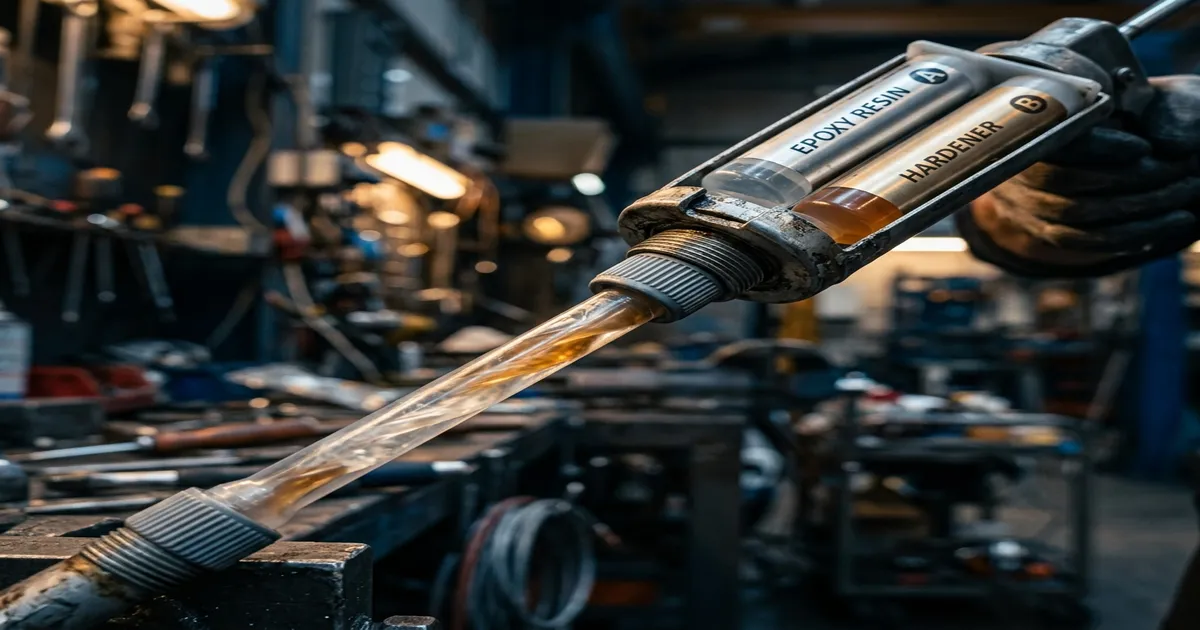
Every fabrication shop, construction site, and repair workshop keeps a dual cartridge of two-part epoxy within reach, because it is the fastest way to make a structural bond between metal, concrete, composite, or masonry without welding or fasteners. That constant, cross-industry demand is exactly why an epoxy adhesive manufacturing business remains one of the more resilient niches inside the broader adhesives and sealants industry — the chemistry is well understood, the equipment is compact compared to a full resin plant, and the real differentiator is consistent mix ratio control and verified bond performance rather than exotic formulation. Multinational brands dominate the premium structural segment, but general-purpose industrial epoxy sold through direct fabricator and contractor relationships is a large, accessible market for a disciplined new manufacturer. This guide walks through the complete startup roadmap — blending and dispensing equipment, raw material sourcing, the production and quality-control process, licensing, pricing, and how to land your first industrial and construction accounts. Everything here reflects real adhesive-industry practice, the operational detail a founder needs before committing capital, not textbook theory.
Market Overview & Opportunity
The global structural and industrial adhesives market is a multi-billion dollar segment of the broader adhesives and sealants industry, and two-part epoxy sits at its technical core because it delivers load-bearing bond strength across dissimilar materials that other adhesive chemistries cannot reliably match. Every industry that fabricates, repairs, or assembles metal, composite, or masonry structures is a potential buyer, which gives this category unusually broad demand compared to adhesives tied to a single end use.
Primary customer segments split three ways: industrial fabricators and MRO (maintenance, repair and operations) buyers who use general-purpose epoxy for assembly and field repair; construction contractors who need structural-grade epoxy for rebar anchoring, crack injection, and concrete repair; and smaller manufacturers who private-label a general-purpose formulation for their own tool or hardware brand. Demand drivers include steady infrastructure and construction activity across South Asia, the Middle East, and Southeast Asia, growing MRO spending as industrial equipment fleets age, and rising adoption of adhesive bonding over welding or mechanical fastening in lightweight fabrication. The underlying chemistry of epoxy resin systems is well documented and worth understanding thoroughly before you formulate your first batch, since resin and hardener selection together determine cure speed, bond strength, and chemical resistance.
Competition comes primarily from established structural adhesive brands with certified construction approvals and strong distributor networks, but general-purpose industrial and MRO-grade epoxy is a much less consolidated segment where price, local availability, and direct technical support from the manufacturer matter more than brand recognition. As detailed on our adhesives and sealants resource page, a new entrant differentiates most effectively by building direct relationships with fabrication shops and contractors and offering responsive technical support that a distant multinational distributor cannot match.
Investment Breakdown: Starting on Minimum Capital
Capital requirements in this category hinge on how much of the process you automate, particularly around vacuum degassing and cartridge filling, since these two steps determine both product quality and how many cartridges you can output per shift. A lean launch built around one general-purpose grade in dual cartridges needs far less capital than a founder trying to cover multiple cure speeds and pack formats from day one.
| Cost Category | Estimated Range (USD) | Notes |
|---|---|---|
| Resin & hardener blending vessels (separate lines) | $2,500 – $6,500 | Two independent vessels required to prevent cross-contamination |
| Vacuum degassing equipment | $1,500 – $4,000 | Removes trapped air that causes bond-line voids |
| Dual-cartridge filling & crimping line | $1,800 – $4,500 | Manual bench filling lowers this substantially at very small scale |
| Initial resin, hardener & filler inventory | $2,000 – $5,000 | Covers first production run of one general-purpose grade |
| Cartridges, static mixers, caps and labels | $1,000 – $2,500 | MOQ-driven; local suppliers reduce minimums |
| Licensing, SDS preparation & lab testing | $700 – $2,000 | Third-party bond-strength testing recommended before launch |
| Working capital (3 months operating expenses) | $1,300 – $2,800 | Utilities, labour, overhead while building first accounts |
| Total Minimum | $11,000 – $28,000 | Before first sale; manual filling at the lower end |
The lower end of this range reflects a founder running manually filled cartridges with bench-scale degassing focused on a single general-purpose grade, while the upper end reflects a founder investing in a semi-automatic filling line and a broader mix ratio and pack-size range from launch. Blending vessels and filling equipment are frequently available second-hand from adhesive manufacturers upgrading capacity, which can meaningfully lower the equipment threshold. Deferring specialty grades — fast-cure, high-temperature, or construction-certified formulations — until your general-purpose sales validate demand is the lower-risk path most successful founders in this category follow.
Want the full financial workup? The Epoxy Adhesives & Compounds Standard Project Report is a complete India-basis feasibility and financial study — three independently costed investment configurations, a five-year projected P&L with IRR, payback and break-even, an itemised plant & machinery schedule, raw materials by functional class, and the full statutory and environmental roadmap. It is a costing and feasibility document; it does not include a formulation.
Minimum Equipment List for a Small-Scale Unit
Two-part epoxy equipment is built around one non-negotiable principle — Part A and Part B must never touch the same vessel, pipework, or tooling — which shapes almost every equipment decision below. Beyond that separation, the core requirement is precise blending and degassing, since air trapped in either component becomes a bond-line defect in the finished adhesive.
| Equipment | Minimum Spec | Approx. Cost |
|---|---|---|
| Resin (Part A) blending vessel | Stainless steel, 100–300 L, variable-speed disperser | $1,500 – $3,500 |
| Hardener (Part B) blending vessel | Dedicated stainless steel vessel, physically separate from Part A line | $1,200 – $3,000 |
| Vacuum degassing chamber | Bench or floor-standing unit sized to batch volume | $1,500 – $4,000 |
| Dual-cartridge filling & crimping machine | Semi-automatic volumetric twin-piston filler | $1,800 – $4,500 |
| Brookfield viscometer | Spindle-type, suitable for Part A and Part B viscosity ranges | $800 – $2,000 |
| Gel time / pot life test kit | Cup test rig with calibrated timer, or basic DSC access via lab partner | $300 – $1,000 |
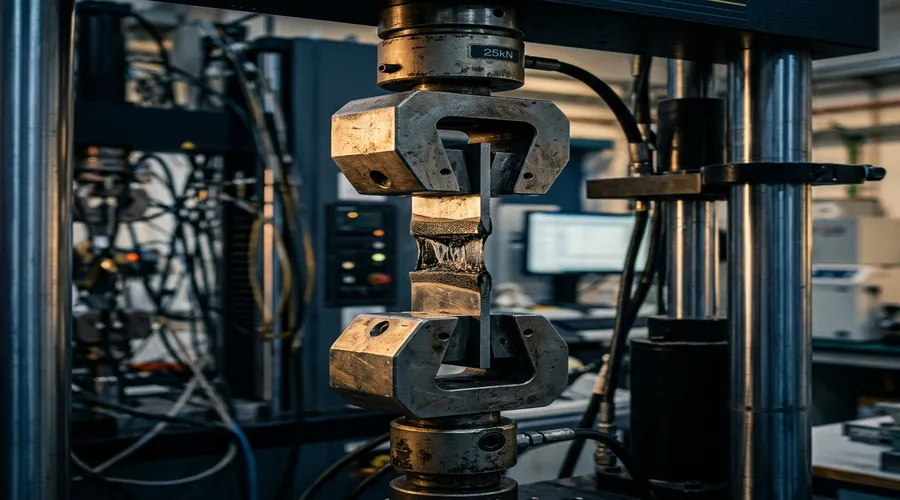
| Lap-shear bond-strength access | In-house basic pull tester or third-party universal testing machine (ASTM D1002) | $0 (outsourced) – $3,000 (in-house) |
| Segregated storage racking | Clearly labelled, physically separated Part A / Part B storage areas | $400 – $1,000 |
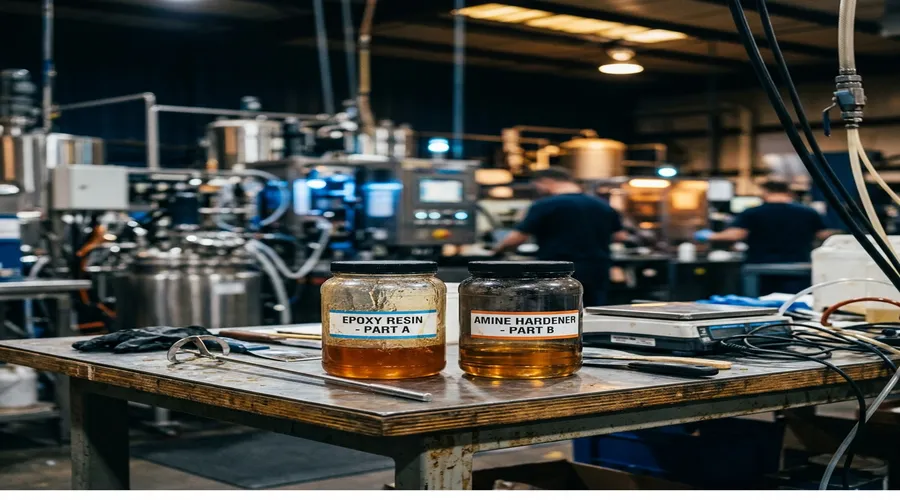
Vacuum degassing deserves outsized budget priority even at the smallest scale, since it is the single piece of equipment most responsible for consistent bond strength batch after batch. Blending vessels and filling hardware can often be fabricated or sourced locally at lower cost, but bond-strength verification — whether in-house or outsourced to a third-party lab — is not an area to economise on when your entire value proposition is structural performance.
Space, Utilities & Infrastructure Requirements
A functional epoxy adhesive unit needs a minimum floor area of roughly 800 to 1,200 square feet, split into two genuinely separated zones — one for resin (Part A) handling and one for hardener (Part B) handling — plus a shared filling and packaging area positioned so finished cartridges never carry residue from one line into the other. This physical separation is not a nice-to-have; it is the single most important layout decision in the entire facility.
Power requirements are modest — blending vessels, degassing pumps, and filling equipment typically run on single-phase or light three-phase power — but ventilation in the hardener handling area is a genuine safety requirement, since amine curing agents release vapours that are respiratory and skin sensitisers with prolonged exposure. Temperature control matters more here than in many other adhesive categories, since both resin viscosity and hardener reactivity shift with ambient temperature, and a facility that swings widely between day and night temperatures will see batch-to-batch viscosity variation. Water supply needs are minimal, limited mainly to equipment cleaning between batches.
Best Products to Start With: Low Capital, High Demand
Not every epoxy adhesive format is equally accessible to a new manufacturer, and the right entry point determines how quickly you reach positive cash flow while you are still building blending consistency and a customer base. The three starter categories below are ranked by formulation simplicity, equipment requirements, and how quickly a founder can build a defensible market position.
- General-purpose industrial two-part epoxy — a room-temperature-cure, dual-cartridge adhesive for metal, composite, and general fabrication bonding, covering the widest range of MRO and workshop repair use cases. This is the most accessible entry point because it uses a straightforward resin-hardener system without specialty accelerators or fillers.
- Fast-cure epoxy (5–10 minute working time) — a higher-margin variant for buyers who need rapid turnaround on a repair or assembly line, requiring tighter control over hardener reactivity and exothermic heat management during blending. This format commands a price premium because faster cure genuinely saves the buyer production time.
- Construction-grade structural epoxy — a higher-viscosity, often thixotropic formulation for rebar anchoring and concrete crack injection, requiring formal technical approval before it can be marketed for structural construction use in most regulated markets. This format is best sequenced last, once your general-purpose sales and cash flow can support the certification investment.
As detailed on our adhesives and sealants formulation resources, sequencing your launch — starting with one general-purpose grade, adding a fast-cure variant once demand is proven, then pursuing construction certification for the structural segment — is the standard path successful founders in this category follow rather than launching a full multi-grade catalogue simultaneously.
Raw Material Sourcing Strategy
Raw material sourcing for two-part epoxy spans four categories — epoxy resin, curing agent, fillers and additives, and packaging — each with distinct supplier types and evaluation criteria. Getting the resin-hardener pairing right matters most, since this combination determines cure chemistry, bond strength, and chemical resistance, while fillers and thixotropic additives shape viscosity, sag resistance, and cost.
Epoxy resin — typically a bisphenol-A or bisphenol-F based liquid resin — is sourced from resin manufacturers or their authorised distributors, while curing agents — polyamide, amidoamine, or aliphatic amine hardeners depending on your target cure speed and flexibility — are sourced from specialty curing agent suppliers who can provide compatibility data against your chosen resin. Fillers such as fumed silica for thixotropy and calcium carbonate or talc for cost reduction and viscosity control are widely available from industrial mineral distributors, while cartridges, static mixer nozzles, and crimping components come from dedicated dispensing-system manufacturers.
Evaluating a curing agent supplier means requesting their technical data sheet and recommended resin-to-hardener ratio range, not just a price quote, since an incompatible or poorly characterised hardener can produce inconsistent gel times batch to batch. Cost-saving strategies include negotiating smaller minimum order quantities on hardener until your grade mix stabilises, and buying resin in shared bulk with other small adhesive manufacturers to reach better distributor pricing tiers.
- Epoxy resin — bisphenol-A/F liquid resin is the standard starting point; confirm viscosity grade matches your intended filling equipment
- Curing agents — always source a hardener with documented compatibility data and a recommended mix ratio for your specific resin
- Fillers & thixotropes — fumed silica controls sag on vertical joints; calcium carbonate reduces cost in non-structural grades
- Packaging — confirm cartridge and static mixer materials are chemically compatible with both resin and hardener over the product's shelf life
Two-Part Blending & Filling Process Overview
The manufacturing process for two-part epoxy is really two parallel single-component processes — one for resin, one for hardener — that never physically converge until the customer dispenses the product through a static mixer nozzle. Process discipline around segregation, degassing, and mix ratio accuracy matters far more than batch size or exotic equipment.
Part A and Part B Blending
Resin is blended with fillers, thixotropic agents, and any pigment in its dedicated vessel under moderate-speed agitation until fully homogeneous, while the hardener is separately blended with any accelerators or fillers specific to Part B in its own vessel. Both components are then vacuum degassed to remove entrained air introduced during high-shear mixing, since trapped air becomes a bond-line void in the cured adhesive.
Verification and Cartridge Filling
Before filling, a sample of each component is checked for viscosity, and a small test batch is combined at the target mix ratio to confirm gel time and, ideally, cured lap-shear bond strength against specification. Only after both components pass do they proceed to the dual-cartridge filling line, where Part A and Part B are metered into their separate cartridge chambers at the validated volume ratio, crimped, and labelled with batch code, mix ratio, and pot life.
The most common mistake beginners make is rushing the vacuum degassing step to save time, which leaves microscopic air pockets in the resin or hardener that surface as visible voids at the bond line and measurably reduce lap-shear strength. Recording the exact resin-hardener ratio, filler loading, and degassing time for every approved grade in a permanent batch log is equally important, since it is what lets you reproduce an identical, specification-compliant batch on every future production run.
Quality Control & Testing for Small Manufacturers
Quality control in epoxy adhesive manufacturing is almost entirely about proving that every batch achieves its declared bond strength and cure behaviour, since a fabricator or contractor's trust in your product depends on structural performance that is invisible until the joint is tested or, worse, until it fails in service. Skipping bond-strength verification in favour of a visual or "feel" check is the fastest way to ship a defective batch.
| Test | What It Measures | Equipment Needed | Pass/Fail Criterion |
|---|---|---|---|
| Mix ratio accuracy | Volumetric or gravimetric check of Part A to Part B dosing | Calibrated scale or metering verification rig | Within ±2–3% of specified ratio |
| Viscosity (Part A & Part B) | Flow behaviour and mixing/dispensing consistency | Brookfield viscometer | Within formulation-specified range for each component |
| Gel time / pot life | Working time available after mixing before cure onset | Cup test with calibrated timer, or DSC via lab partner | Within declared pot life window at reference temperature |
| Lap-shear bond strength | Load-bearing capacity of the cured adhesive joint | Universal testing machine (ASTM D1002), in-house or third-party | Meets formulation-specified minimum shear strength |
Mix ratio and viscosity checks catch dosing and blending errors early, while gel time confirms the batch will behave predictably in the customer's hands, but lap-shear bond strength is the test that actually proves the product does its one job. Retaining a dated batch and test record for every approved grade gives you the documentation distributors and industrial buyers will eventually ask for during vendor onboarding, and it is also the fastest way to trace a field complaint back to a specific production run.
Setting up a manufacturing unit involves more than equipment and raw materials — getting the formulation right, scaling production safely, and meeting regulatory requirements are where most startups lose time and money. If you need hands-on guidance at any stage, the Global Formulation team works directly with chemical startups on formulation development, process setup, and compliance — from first batch to commercial scale.
Packaging & Branding on a Budget
Two-part epoxy is sold predominantly in dual cartridges — commonly 50 mL for small repair jobs and 190–400 mL for industrial and construction use — dispensed through a disposable static mixer nozzle, with bulk pails available for higher-volume fabricators who use dedicated meter-mix-dispense equipment. Container choice should prioritise a reliable, leak-free seal between the two chambers over decorative packaging, since any bleed-through between Part A and Part B inside the cartridge before use ruins the product before the customer even opens it.
Label and container markings are strict because curing agents are commonly classified as skin sensitisers or corrosives. Every container must show: the product name and mix ratio, pot life and full cure time at reference temperature, hazard pictograms and warning statements for the hardener component, batch number and manufacturing date, and manufacturer contact and registration details. A Safety Data Sheet must accompany both the resin and hardener components, since regulators and industrial buyers increasingly require this documentation before a product can be onboarded.
Branding in this sector benefits from a clear, consistent visual distinction between Part A and Part B packaging — different cap colours or clearly contrasting labels are standard industry practice and meaningfully reduce the risk of a customer confusing the two components during storage or dispensing. A simple, legible label format that stays identical across your grade lineup, varying only the grade name and cure-speed callout, helps repeat buyers find the right product quickly.
Licensing, Registration & Regulatory Compliance
Regulatory compliance for epoxy adhesive manufacturing touches standard business and product registration, mandatory hazard classification and labelling for the amine hardener component, and — for any structural construction claim — formal technical approval separate from general product registration. Curing agents are frequently subject to stricter labelling requirements than the resin they pair with, which makes confirming your hardener's hazard classification an early, non-negotiable step rather than an afterthought.
In Pakistan, adhesive products fall under PSQCA product conformity requirements; in the EU, both resin and hardener components require classification and labelling under CLP and registration under REACH; in the GCC, GSO technical regulations govern adhesive product conformity. Structural adhesives marketed for construction anchoring or load-bearing applications typically require a separate technical approval — such as a European Technical Assessment or an equivalent regional certification — before that specific structural use can be legally claimed, a process that is well documented through bodies like ASTM International, whose test methods underpin most bond-strength qualification programmes.
Beyond registration, formal Good Manufacturing Practice certification is not universally mandatory for this category at small scale, but maintaining GMP-aligned batch and bond-strength test documentation from day one significantly strengthens your position with distributors, industrial buyers, and any future export customer who will expect to see this documentation during vendor evaluation.
Pricing Strategy & Margin Expectations
Raw material cost — resin, hardener, fillers, and cartridge packaging combined — typically represents 30–45% of the finished price for general-purpose two-part epoxy, with the ratio shifting lower for certified structural grades where technical validation and brand trust command a larger share of the price. Gross margins for small-scale manufacturers selling through direct industrial and contractor relationships typically range from 40–55% on general-purpose grades, rising further for certified structural or fast-cure specialty formulations.
Cost-plus pricing anchored to per-cartridge economics is standard in this category, and building in a genuine cushion for hardener price volatility matters more here than in many other adhesive categories, since specialty curing agents can see meaningful price swings tied to global supply. Industrial and distributor relationships respond better to consistent quality and reliable lead times than to aggressive discounting, since a fabricator who runs out of a critical adhesive mid-job values supply reliability far more than a marginal per-unit saving.
Resist competing purely on price against established structural adhesive brands when approaching your first industrial accounts, since unusually cheap epoxy can raise legitimate doubts about bond-strength consistency in a category where a failed joint has real safety and liability consequences. Price competitively but credibly, differentiate on responsive technical support and verified bond-strength data, and let repeat reorder behaviour build your distributor relationships over time.
Finding Your First 20 Customers
Two-part epoxy moves primarily through direct relationships with industrial fabricators and MRO buyers, construction contractors seeking repair and anchoring products, and distributor networks for wider geographic reach. Local fabrication shops and maintenance departments are typically the fastest channel to a first paying account, since they can validate bond performance on a real job with a single trial cartridge rather than waiting for a shelf-listing decision.
The fastest path to your first paying accounts is approaching two or three local fabrication shops or contractors directly with free trial cartridges matched to their most common bonding application, since a buyer decides quickly once bond strength and working time are demonstrated on an actual job. Offering flexible minimum order quantities and responsive technical support for your first few industrial relationships removes the biggest objection a cautious buyer has about an unproven new adhesive brand. For guidance on structuring these early technical and supply relationships, our resource on choosing the right product consultant is a useful companion reference as you build out your production credibility.
- Approach local fabrication shops and industrial maintenance departments directly with trial cartridges matched to their common bonding jobs
- Contact construction contractors doing concrete repair or anchoring work about your general-purpose and, later, certified structural grades
- Build simple direct-order relationships with MRO distributors serving your target industrial region
- Offer volume-based pricing to fabricators who commit to your brand for their routine repair and assembly work
- Document bond-strength results and reorder rates by customer and use this reliability record in every subsequent distributor conversation
Your first fabricator who reorders consistently because your adhesive holds up job after job becomes your most valuable reference for every subsequent conversation — proof that your bond strength is real and repeatable, not just a good result in a single test.
When and How to Scale Up Your Production
Scaling in this category is primarily a question of expanding your grade range and upgrading from manual to metered dual-component dispensing, rather than fundamentally changing your process. The right signal to scale is when reorder frequency across your general-purpose grade consistently outpaces your batch throughput, or when a contractor or distributor asks you to cover a certified structural formulation.
The first scale-up step is typically investing in an automated meter-mix-dispense system, which improves mix ratio precision and throughput as your cartridge volume grows. The second step is pursuing formal technical approval for a structural construction grade and expanding into distributor or export relationships, since certified structural products and broader geographic reach increase average order value from existing industrial and contractor relationships without requiring entirely new customer acquisition. Our broader guide on manufacturing without a factory explores capacity models worth considering as you plan this growth phase.
Frequently Asked Questions
How much capital is really needed to start an epoxy adhesive manufacturing business?
Do I need a chemistry degree to start this business?
Can I start from home or do I need a factory?
What is the biggest mistake to avoid when starting this business?
How long before I make my first sale?
Do I need ISO or GMP certification from day one?
How do I get a formulation for the product?
What is the first licence I need to get?
Ready to Take the Next Step?
Starting a chemical manufacturing business is one of the most rewarding paths an entrepreneur can take — but it demands the right technical foundation from day one. Whether you need a validated formulation, help setting up your first production unit, guidance on regulatory compliance, or a structured scale-up plan, the Global Formulation team is here to support you.
Reach out to us at globalformulation.com/contact — we work with founders at every stage, from concept to commercial production.