
Mosquito and fly season never really ends across South Asia, the Middle East, and much of Africa. Every can of household insect spray sold in that market starts with the same opportunity: a proven active ingredient, a pressurized filling line, and a registration pathway most founders underestimate. An insecticide aerosol manufacturing business is unlike a spray paint or air freshener aerosol, because this product carries a genuine public-health function — killing or repelling disease-carrying insects. That means it faces two layers of scrutiny most categories in this series never combine: pesticide registration for the active ingredient, and flammability and pressure testing for the can itself. Get both right and you enter one of the most recession-resistant repeat-purchase categories in household chemicals, since insect spray demand barely dips even when consumer spending pulls back. This guide covers the complete roadmap: startup capital, the filling equipment that differs from an ordinary paint or fragrance aerosol line, and active ingredient sourcing. It also walks through the manufacturing and gassing sequence, quality control, registration and licensing, pricing, and how to land your first retail and distributor accounts.
Market Overview & Opportunity
The household and public-health insecticide market is a large, defensive category within the broader crop-and-pest-control chemicals industry, sustained by disease vectors — mosquitoes, flies, cockroaches — that never fully disappear regardless of season. A handful of multinational consumer brands dominate premium retail shelf space, but the mass-market and value segment remains fragmented and genuinely open to a regional insecticide aerosol manufacturing business that can deliver consistent kill performance at a lower price point.
Primary customer segments include hardware and general retail for household mosquito and fly sprays, commercial pest-control operators who buy in bulk for residential and commercial contracts, and government or NGO public-health programs running vector-control campaigns against malaria and dengue-carrying mosquitoes. Institutional and government procurement can represent meaningful volume in regions with active vector-borne disease programs, though it typically requires product registration and, in many cases, documented efficacy data before you can bid.
Demand drivers include population growth in urban areas with standing water and limited sanitation infrastructure, seasonal monsoon and rainy-season mosquito population spikes, and a public-health awareness of dengue, malaria, and chikungunya that keeps household insect spray a non-discretionary purchase across much of South Asia and Africa. Regional opportunity is strongest across Pakistan, India, and Sub-Saharan Africa, where vector-borne disease burden keeps demand structurally high, as reflected in the broader Global Formulation aerosols category.
Competitive landscape at the regional level includes multinational brands with strong marketing budgets but higher price points, and local generic producers competing on price and availability rather than brand equity. A new entrant differentiates through dependable local supply during peak season — when multinational import lead times often leave shelves empty — and through honest, visible kill-time performance rather than exaggerated marketing claims.
Investment Breakdown: Starting on Minimum Capital
Capital requirements for an insecticide aerosol business split fairly evenly between the aerosol filling line and the registration and compliance costs that come with formulating a pesticide product. Underfunding either side creates a real risk: a weak filling line produces inconsistent spray rate and pressure, while underfunded registration delays your legal launch by months.
| Cost Category | Estimated Range (USD) | Notes |
|---|---|---|
| Facility Fit-Out (ventilation, explosion-proof wiring) | $4,000 – $10,000 | For a 1,500–2,500 sq ft unit handling flammable solvent and propellant |
| Aerosol Filling Line (filler, gasser, crimper) | $8,000 – $20,000 | Semi-automatic line sized for starting production volume |
| Propellant Storage & Handling System | $3,000 – $7,000 | LPG or DME bulk storage, metering, and transfer equipment |
| Raw Materials (first batch) | $3,500 – $8,000 | Technical active ingredient, synergist, solvent carrier, empty cans, valves |
| Registration & Licensing Fees | $3,000 – $8,000 | Pesticide registration data package, manufacturing license, label approval |
| Working Capital Buffer | $3,000 – $7,000 | Covers the registration and inspection timeline before first legal sale |
| Total Minimum | $24,500 – $60,000 | Before first commercial sale |
The lean end of this range assumes a leased facility, a semi-automatic filling line rather than a high-speed rotary system, and a launch built around one active ingredient and can size rather than a full retail assortment. Concentrate mixing tanks and general fabrication can often be sourced from regional equipment fabricators, but the gassing head and crimper — the stations that actually pressurize and seal the can — are precision equipment worth buying new, since inconsistent crimping is the single most common cause of field leaks and returns. Registration costs deserve early budgeting too: unlike a general spray paint aerosol, an insecticide product cannot legally be sold before its formulation and label claims clear your national pesticide authority.
Minimum Equipment List for a Small-Scale Unit
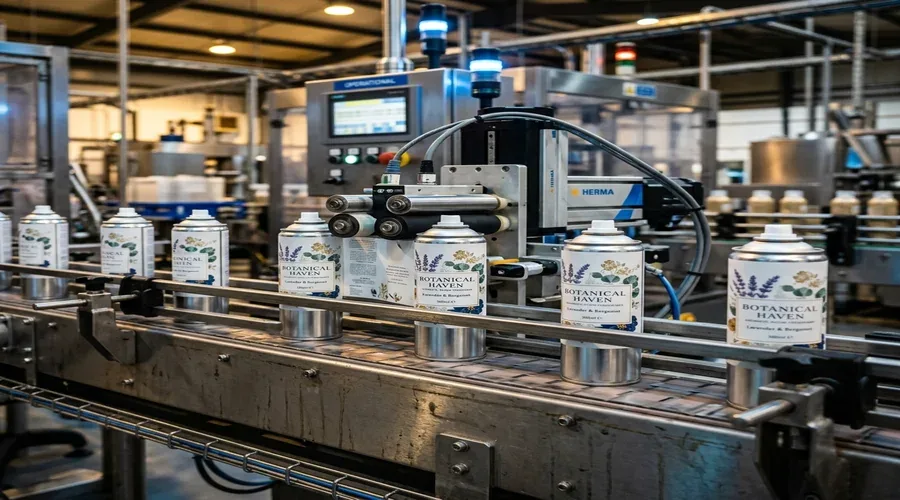
Insecticide aerosol equipment splits into three functional groups: concentrate preparation, can filling and gassing, and quality-control testing, each of which needs to be sized correctly even at small starting volumes. Skipping or under-specifying the gassing and crimping stations is the most expensive mistake a new founder can make in this category.
| Equipment | Purpose | Minimum Spec | New Cost Range | Alternative |
|---|---|---|---|---|
| Concentrate Mixing Tank | Dissolves active ingredient and synergist in solvent carrier | Stainless steel, 200–500 litre, variable-speed agitator | $1,500–$4,000 | Regional fabricator custom build |
| Volumetric Concentrate Filler | Meters precise concentrate volume into each can | Piston or diaphragm filler, adjustable dose | $2,500–$6,000 | Semi-manual filling head for low volume |
| Undercap Gasser / Propellant Injector | Injects LPG or DME propellant under pressure | Explosion-proof gassing head with pressure gauge | $3,000–$8,000 | Not recommended to skip |
| Can Crimping Machine | Seals the valve to the can rim | Bench or rotary crimper, adjustable crimp specification | $1,500–$4,000 | Bench-top manual crimper for early volumes |
| Water-Bath Leak & Pressure Tester | Confirms every can holds pressure without leaking | Heated water bath, timed immersion cycle | $800–$2,000 | Mandatory — cannot be skipped |
| Spray Rate & Pattern Test Rig | Verifies discharge rate and spray pattern consistency | Precision balance with timed spray fixture | $600–$1,500 | Basic balance and stopwatch for early QC |
Concentrate mixing tanks and general stainless fabrication are widely available from regional industrial fabricators, but insist on chemical-resistant wetted surfaces given solvent and technical active contact. The gassing and crimping stations should be sourced from a supplier experienced specifically in aerosol filling equipment rather than general packaging machinery, because pressure consistency here is what separates a can that performs safely in a customer's hand from one that becomes a warranty claim or, worse, a safety incident.
Space, Utilities & Infrastructure Requirements
Facility design in this category is governed by two hazards operating side by side: flammable solvent and propellant handling, and a technical pesticide active ingredient that requires controlled, segregated storage. Both factors shape what your registering and safety authorities will inspect before granting a manufacturing license.
A minimum functional unit runs approximately 1,500 to 2,500 square feet, split between segregated technical active ingredient storage, a concentrate mixing and filling area, propellant storage located away from the main production floor, and a packaging and dispatch space. Power needs are moderate — single-phase is typically adequate for mixing and filling equipment, though propellant transfer pumps may need three-phase depending on capacity. Water supply demands are light, used mainly for equipment cleaning and the water-bath leak-testing station.
Ventilation is the most safety-critical utility in this business: explosion-proof extraction over the mixing and filling area controls solvent vapor buildup, while propellant storage needs its own ventilated, spark-free enclosure isolated from any ignition source. Temperature control matters for propellant storage stability and for keeping the finished product within its rated pressure range, and bunded flooring in the mixing area contains any solvent spill before it reaches drainage. Zoning almost always requires industrial classification given the flammable propellant volumes involved, and proximity to your technical active ingredient supplier reduces both freight cost and the transport risk associated with moving a scheduled pesticide active.
Best Products to Start With: Low Capital, High Demand
Not every insecticide aerosol format suits a first-time manufacturer equally, since active ingredient cost, registration precedent, and can format complexity all vary across the category. Sequencing your product line by complexity lets you validate your filling process and registration pathway before chasing a broader range.
- Household Flying-Insect Spray — built on an established synthetic pyrethroid with broad registration precedent, this is the highest-volume, lowest-friction entry point and the format most retail buyers stock first.
- Crawling-Insect Spray (cockroach/ant) — a slightly higher-residual formulation targeting surface-crawling pests, with strong year-round demand independent of mosquito season and a natural second product once your flying-insect line is validated.
- Outdoor / Garden Insecticide Aerosol — a higher-strength formulation for outdoor use, typically requiring a broader label and additional efficacy data; best sequenced as a phase-two product once your core household line is generating revenue.
Starting with the household flying-insect spray lets you build filling-line experience and registration credibility on the format with the deepest existing regulatory precedent, then extend into crawling-insect and outdoor formats as your production volume and cash flow justify the additional registration work. This mirrors the broader formulation strategy discussed on the Global Formulation aerosols page, where sequencing product complexity is treated as a deliberate startup decision rather than an afterthought.
Raw Material Sourcing Strategy
The raw material supply chain for insecticide aerosols centers on four categories: the technical active ingredient, a synergist, a solvent carrier, and the propellant itself, plus the empty can and valve components that make up your packaging. Getting each right determines both product performance and your ability to clear registration.
Technical active ingredients — commonly natural pyrethrins or synthetic pyrethroids such as cypermethrin, tetramethrin, or d-allethrin — should be sourced only from suppliers who provide a Certificate of Analysis confirming purity, since your registration dossier typically references this documentation directly. Regional chemical distributors across South Asia carry a range of registered pyrethroid technicals suited to formulation-stage manufacturing, and piperonyl butoxide is the most commonly used synergist for boosting knockdown performance without increasing the active ingredient dose. Petroleum distillate or odorless mineral spirit is the typical solvent carrier, though lower-odor and reduced-aromatic grades are increasingly preferred given tightening occupational and consumer exposure expectations, a theme covered further in the Global Formulation guide to pollution caused by VOCs.
Propellant — typically an LPG blend of butane and propane, or dimethyl ether — is generally sourced from industrial gas suppliers and requires its own hazmat-compliant transport and storage arrangement. Evaluate any technical active or propellant supplier on Certificate of Analysis reliability, batch-to-batch consistency, and dangerous-goods shipping competence, since a supplier who mishandles hazardous transport creates liability exposure for you as the receiving party.
Cost-saving strategies include qualifying two suppliers for your primary technical active to avoid single-source risk, and buying empty cans and valves in bulk once your formulation and can size are finalized, since packaging components carry meaningful per-unit cost at low volumes. Flag your technical active ingredient for import permitting early, since most plant protection or pesticide authorities require an import permit for scheduled actives before customs clearance, a step that routinely adds weeks of lead time.
Manufacturing Process Overview
Producing an insecticide aerosol follows two linked stages: preparing the liquid concentrate, then filling and pressurizing the can. Both stages demand tight process control, since an off-spec concentrate or an inconsistent gassing step both produce a can that either underperforms or fails a pressure test.
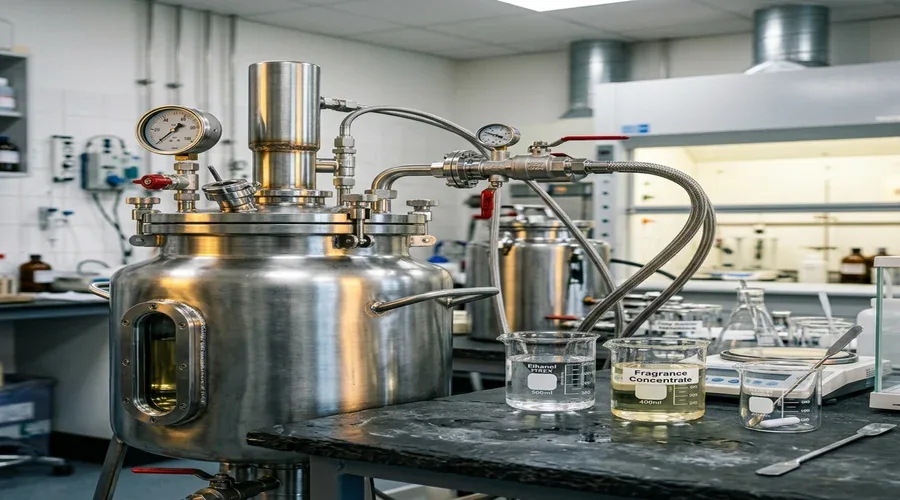
Concentrate preparation begins with dissolving the technical active ingredient and synergist in the solvent carrier under moderate agitation, followed by filtration to remove any undissolved particulate before the concentrate is transferred to the filling line. The concentrate is then metered into each can at a precise volume, since under-filling reduces the number of usable sprays and over-filling risks an unsafe fill ratio once propellant is added. The can then moves to the gassing station, where propellant is injected either through the valve or under the cup, followed immediately by crimping to seal the valve permanently to the can rim.
Key process parameters to control include concentrate-to-propellant fill ratio, which determines both spray duration and internal can pressure, crimp specification, which determines whether the valve seal holds under pressure and temperature variation, and ambient temperature during gassing, since propellant behavior is temperature-sensitive. Batch size for a starting operation typically runs a few thousand cans per production run, scaled to your filling line's throughput. Where most beginners make mistakes is treating the gassing and crimping steps as routine mechanical operations rather than the safety-critical control points they actually are — a slightly under-specified crimp will pass initial inspection but fail in the field weeks later as a slow leak.
Basic process safety centers on explosion-proof equipment and grounding throughout the mixing and filling area, mandatory water-bath leak testing of every finished can before it leaves the line, and respiratory and dermal protection matched to the toxicity classification of the specific active ingredient in use.
Setting up a manufacturing unit involves more than equipment and raw materials — getting the formulation right, scaling production safely, and meeting regulatory requirements are where most startups lose time and money. If you need hands-on guidance at any stage, the Global Formulation team works directly with chemical startups on formulation development, process setup, and compliance — from first batch to commercial scale.
Quality Control & Testing for Small Manufacturers
Quality control in insecticide aerosol production verifies three things: active ingredient content, spray performance, and can integrity under pressure — all three matter equally, since a can can pass one test and still fail in a customer's hand. Testing here follows internationally recognized methods that most pesticide and consumer-safety regulators reference directly.
| Test | What It Measures | Equipment Needed | Pass/Fail Criterion |
|---|---|---|---|
| Active Ingredient Content | Confirms active ingredient assay against label claim | GC or HPLC with reference standard | Within specified tolerance of label claim |
| Spray Rate | Confirms discharge rate matches label and design spec | Precision balance with timed spray fixture | Grams discharged per second within target range |
| Water-Bath Leak & Pressure Test | Confirms can integrity under elevated temperature | Heated water bath, timed immersion cycle | No leakage, bulging, or bursting during test cycle |
| Flammability / Flame Extension | Classifies the product's consumer flammability hazard level | Flame extension test apparatus | Meets applicable consumer aerosol flammability limit |
| Knockdown / Kill Time (efficacy) | Confirms insecticidal performance against target pests | Standardized bioassay chamber | Meets minimum knockdown time for label claim |
Spray rate, water-bath leak testing, and basic visual inspection are all achievable in-house for well under the $2,000 baseline this series uses for small QC labs, since these rely on straightforward fixtures rather than expensive instrumentation. Active ingredient assay by GC or HPLC and formal efficacy bioassay testing typically require either a dedicated instrument or a relationship with a third-party analytical or entomology lab, particularly for a startup not yet ready to invest in chromatography equipment.
Batch records matter enormously here, capturing raw material lot numbers, in-process fill weight and pressure checks, and release test results for every batch, since this documentation is exactly what your registering authority and larger institutional buyers will request during inspection. The most common QC failure mode is inconsistent crimping producing a slow leak that only shows up after weeks on a retail shelf, which is why full water-bath testing of every finished can — not a sample — is standard practice in this category, not an optional step.
Packaging & Branding on a Budget
Packaging in this category carries stricter labeling requirements than most household products, since an insecticide label is itself part of your regulatory approval rather than a purely marketing surface.
- Container formats — standard aerosol cans (150ml–500ml) in tinplate or aluminum, rated for the pressure generated by your specific propellant and fill ratio.
- Label requirements — mandatory information typically includes the active ingredient name and concentration, registration or approval number, GHS or national hazard pictograms matched to toxicity classification, directions for use and target pests, first-aid statements, batch code, and manufacturer details.
- Budget label design — since the label text is part of your registration approval, work with a printer experienced in pesticide or hazardous-product labeling rather than a generic commercial printer, since a hazard pictogram or claim-wording error is a compliance failure, not a cosmetic one.
- Private label vs. own brand — private-label filling for an established retail chain or pest-control operator can generate faster initial cash flow, while building your own brand for direct retail distribution captures higher margin once quality consistency and registration credibility are established.
A Safety Data Sheet is mandatory for every insecticide product without exception, required for commercial sale, dangerous-goods transport, and distributor due diligence alike. Sourcing GHS-compliant cans, valves, and labels locally at accessible minimum order quantities keeps upfront investment manageable while you validate demand across your initial product range.
Licensing, Registration & Regulatory Compliance
Insecticide aerosols sit at the intersection of two regulatory regimes: pesticide registration for the active ingredient and formulation, and consumer product or hazardous-goods regulation for the pressurized can itself. Few categories in this series carry this combined a compliance burden, so plan for it from day one.
Regulatory bodies vary by market — Pakistan's Department of Plant Protection and provincial environmental agencies oversee pesticide registration and hazardous storage, India's Central Insecticides Board and Registration Committee governs registration under the Insecticides Act, and the GCC's GSO and SASO standards apply across Gulf markets. On the consumer-safety side, aerosol flammability classification commonly follows test methods referenced by the U.S. CPSC's flammability test for aerosols (16 CFR 1500.45), a widely used technical reference even outside the United States, while transport classification of pressurized flammable aerosols draws on hazardous-materials frameworks maintained by agencies such as the U.S. PHMSA hazardous materials program. Flammable solvent and propellant storage on-site is generally governed by occupational safety standards similar to those published by OSHA's flammable liquids storage regulation (29 CFR 1910.106), which most regional safety inspectors reference in principle even where a local equivalent standard applies.
Mandatory steps before legal sale include business entity registration, a manufacturing or formulation license contingent on facility inspection, and product registration confirming your specific active ingredient, formulation, and label claims meet composition and efficacy requirements. Timeline for product registration typically runs 6 to 12 months for an established active ingredient with existing regulatory precedent, and considerably longer if you pursue novel efficacy claims requiring fresh bioassay data.
What happens if you sell an unregistered insecticide aerosol ranges from product seizure and facility closure to significant financial and, in some jurisdictions, criminal penalties, since regulators treat unregistered pesticide sale as a direct public-health risk. Good manufacturing discipline — batch records, in-process testing, documented segregated storage — is expected from day one even where formal third-party certification is not separately mandated. Export compliance adds a further layer, since a formulation and can specification registered in one country is not automatically valid for sale in another.
Pricing Strategy & Margin Expectations
Insecticide aerosol pricing is shaped by active ingredient commodity cost, intense competition from both multinational and regional generic brands, and a retail and distribution channel that expects predictable, competitive shelf pricing.
Calculate your cost-plus baseline by summing technical active ingredient and synergist cost, propellant, can and valve packaging, labor, and amortized equipment and registration cost, then apply your target margin on top. Gross margins for small regional formulators typically run in the range of 25 to 40% at the manufacturer level, since active ingredient and can costs are relatively fixed and price competition at retail is intense. Multinational brands price on marketing spend and brand trust, while regional producers win primarily through reliable in-season supply and competitive shelf pricing rather than brand premium.
Price your first retail and distributor accounts with awareness of seasonal demand, since mosquito and fly season concentrates volume tightly around the monsoon or hot-weather months in most markets, and a stockout during that window costs more in lost shelf space than a modest price concession would. As your volume grows, improve margin through better bulk technical active procurement rather than raising unit prices with established distributor accounts. When distributors push for lower pricing, protect your margin by negotiating seasonal volume commitments and off-season order minimums rather than cutting your base price outright.
Finding Your First 20 Customers
Customer acquisition in this category runs through three channels: general retail and hardware distribution, commercial pest-control operators, and, where relevant, institutional or government vector-control programs.
B2B sales channels include hardware and general retail distributors who carry the bulk of household insecticide volume, direct sales to pest-control companies who buy concentrated or bulk-format product for commercial contracts, and government or NGO procurement for public-health vector-control campaigns, which typically requires registration and sometimes efficacy documentation before you can bid. Direct outreach to regional distributors ahead of peak mosquito season works well, since distributors actively look for reliable in-season supply and are often willing to test a new regional brand if a multinational competitor has a history of stockouts. Online channels — trade directories and direct distributor outreach — function mainly as discovery tools rather than primary sales channels in this relationship-driven category, a pattern shared with other formulation-heavy startups covered in the Global Formulation guide to manufacturing without a factory.
Product samples and visible spray-performance demonstrations matter significantly for winning distributor trust, since buyers in this category want to see kill performance and spray consistency before committing shelf space to an unfamiliar brand. Building your first three distributor relationships is especially valuable, since a distributor confident in your supply reliability through a full season tends to generate durable recurring orders rather than one-off purchases. Common mistakes founders make include launching before registration is finalized, which damages credibility when a promised product cannot yet legally ship, and underestimating how far ahead of season raw material and propellant procurement needs to happen to avoid a mid-season stockout.
When and How to Scale Up Your Production
Scaling an insecticide aerosol business involves expanding both filling-line throughput ahead of seasonal demand peaks and your registered product range, since each new active ingredient or can format typically requires its own registration step rather than a simple line extension.
The clearest signal you are ready to scale is distributor order volume that consistently outpaces your filling line's capacity, particularly if you are turning away orders during peak season. At that point, the next equipment investments typically include a higher-throughput or fully automated filling line, additional propellant storage capacity, and continued investment in registering complementary formats such as crawling-insect or outdoor sprays. Hiring usually starts with a dedicated production operator trained in hazardous material handling and a QC technician focused on spray-rate and pressure testing, freeing the founder to focus on distributor relationships and the next registration filing.
Quality systems worth formalizing at this stage include a documented quality management system covering batch traceability and hazardous material handling, a formal seasonal production and propellant procurement plan to avoid peak-season shortages, and, if pursuing export or institutional markets, destination-market product registration and dangerous-goods transport certification. As detailed on the Global Formulation guide to choosing the right product consultant, bringing in outside regulatory and process expertise at the scale-up stage often prevents the registration missteps that are most costly to correct once a facility is already operating at higher volume.
Frequently Asked Questions
How much capital is really needed to start an insecticide aerosol manufacturing business?
Do I need a chemistry degree to start this business?
Can I start an insecticide aerosol business from home or do I need a factory?
What is the biggest mistake to avoid when starting this business?
How long before I make my first sale?
Do I need ISO or GMP certification from day one?
How do I get a formulation for my insecticide aerosol product?
What is the first licence I need to get?
Ready to Take the Next Step?
Starting a chemical manufacturing business is one of the most rewarding paths an entrepreneur can take — but it demands the right technical foundation from day one. Whether you need a validated formulation, help setting up your first production unit, guidance on regulatory compliance, or a structured scale-up plan, the Global Formulation team is here to support you.
Reach out to us at globalformulation.com/contact — we work with founders at every stage, from concept to commercial production.