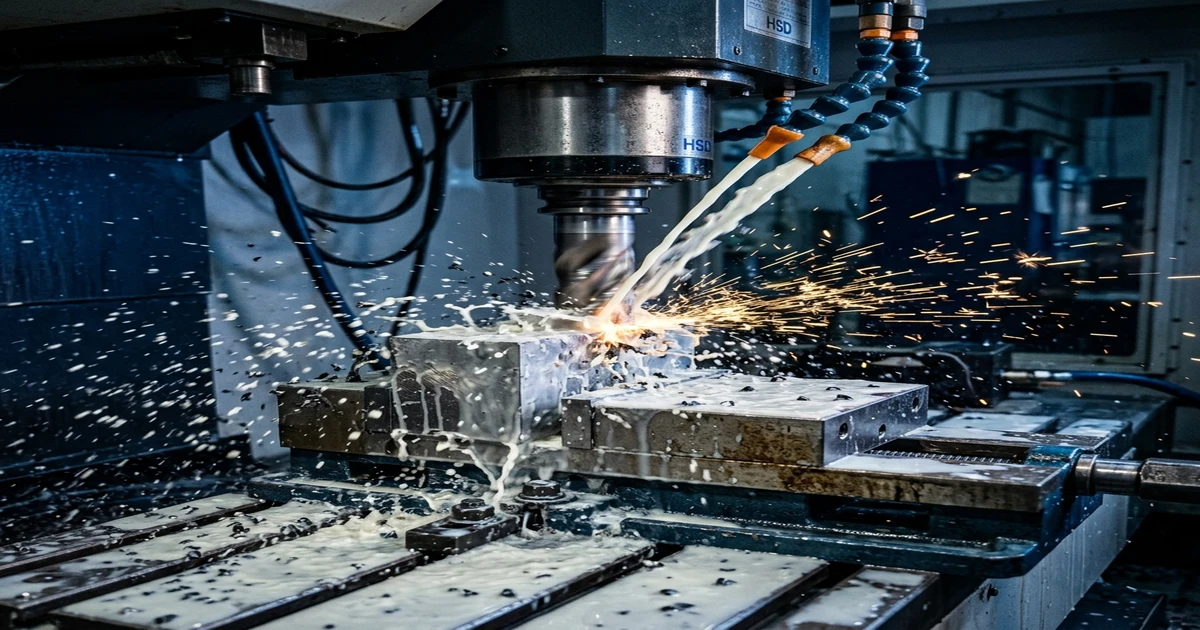
Every CNC shop, gear cutter, and fabrication plant runs its machines on metalworking fluid — and most of them buy it from a distributor who has never once looked inside their sumps. That gap between product and service is exactly where a cutting fluid manufacturing business wins, because coolant is a consumable that gets dumped, recharged, and reordered on a permanent cycle, and machine shops reward the supplier who keeps their sumps stable. The typical founder here comes from a machining background, an industrial lubricant distribution business moving upstream, or an engineering role tired of watching imported coolant sell at three times its blending cost. This guide lays out the complete roadmap: startup capital, the blending and testing equipment a small unit actually needs, base oil and emulsifier sourcing, and the process control that separates a stable soluble oil from one that splits in the drum. It also covers quality testing, licensing, pricing, and how to convert your first sump trials into standing accounts.
Market Overview & Opportunity
Metalworking fluids sit inside the multi-billion dollar global industrial lubricants market, and while a handful of multinational lubricant majors dominate large automotive and aerospace accounts, the general machining segment — thousands of small and mid-size job shops, fastener makers, and fabricators — remains fragmented and genuinely open to a regional cutting fluid manufacturing business.
Primary customer segments include CNC job shops and machining workshops buying soluble oil in pails and drums, automotive and motorcycle component manufacturers running high-volume turning and grinding lines, steel fabricators and re-rollers using neat oils for heavy-duty operations, and industrial supply distributors who stock coolant alongside abrasives and tooling. Demand drivers are structural: every litre of coolant in service degrades through bacterial growth, tramp oil contamination, and drag-out, so consumption tracks machining activity itself rather than any single end market. Regional opportunity is strongest across South Asia, Southeast Asia, and the Gulf, where machining and component-manufacturing clusters are growing while most coolant is still imported or trucked long distances — a dynamic that mirrors the wider Global Formulation lubricants category.
The competitive landscape splits into multinational brands with strong technical credentials but slow, distributor-mediated service, and informal local blenders competing purely on price with inconsistent quality. A new entrant differentiates on the middle ground: dependable batch-to-batch consistency, local stock, and hands-on sump-side service that neither the multinational's distributor nor the informal blender provides.
Investment Breakdown: Starting on Minimum Capital
Capital requirements for a cutting fluid unit are among the lowest in the lubricants sector, because the core process is ambient-to-warm blending rather than reaction chemistry, and mineral oil concentrates are not highly flammable — which keeps both equipment and facility compliance costs down.
| Cost Category | Estimated Range (USD) | Notes |
|---|---|---|
| Facility Fit-Out (bunded storage, washdown containment, flooring) | $2,000 – $5,000 | For a 600–1,200 sq ft light-industrial unit |
| Blending Tank with Agitator (mild or stainless steel, heating coil) | $3,000 – $8,000 | Sized 500–1,000 litres for starting batches |
| High-Shear Mixer / Disperser | $800 – $2,500 | For emulsifier incorporation into soluble oil concentrate |
| Filling & Packaging Equipment | $1,500 – $4,000 | Drum/pail filling with volumetric dosing and pumps |
| Raw Materials (first batches) | $4,000 – $8,000 | Base oil, emulsifier package, inhibitors, biocide, empty pails and drums |
| QC Instruments & Licensing | $1,200 – $3,500 | Refractometer, pH meter, corrosion test kit, SDS preparation, licence fees |
| Working Capital Buffer | $2,500 – $4,000 | Covers operating costs while sump trials convert to orders |
| Total Minimum | $15,000 – $35,000 | Before first commercial sale |
The lean end of this range assumes a leased unit, one blending tank handling both neat oil and soluble oil concentrate in alternating batches, and a launch built on two products rather than a full coolant range. The blending tank, frame, and piping can be fabricated by regional stainless and mild-steel workshops at significant savings over imported equipment, while the high-shear mixer head and metering pumps are worth buying new for reliability. Filling equipment is a strong candidate for second-hand purchase from a lubricant or paint blender scaling up, and heating capability can be deferred if your base oil and package pour readily at ambient temperature in your climate. What cannot be deferred is the QC bench — a refractometer, pH meter, and corrosion test kit are the cheapest items on the list and the ones that protect every account you win.
Want the full financial workup? The Metalworking / Cutting Fluid Standard Project Report is a complete India-basis feasibility and financial study — three independently costed investment configurations, a five-year projected P&L with IRR, payback and break-even, an itemised plant & machinery schedule, raw materials by functional class, and the full statutory and environmental roadmap. It is a costing and feasibility document; it does not include a formulation.
Minimum Equipment List for a Small-Scale Unit
Cutting fluid equipment splits into three functional groups: blending and shear mixing, transfer and filling, and the quality-control bench. Unlike grease or resin production, nothing here involves high pressure or reaction control, so a single well-specified tank plus disciplined testing covers a surprisingly broad product range at startup.
| Equipment | Purpose | Minimum Spec | New Cost Range | Alternative |
|---|---|---|---|---|
| Blending Tank with Agitator | Blends base oil with additive and emulsifier packages | 500–1,000 litre, slow-speed paddle or turbine agitator, optional heating coil | $3,000–$8,000 | Regional fabricator custom build |
| High-Shear Mixer | Incorporates emulsifiers uniformly into soluble oil concentrate | 1–3 HP rotor-stator or high-speed disperser head | $800–$2,500 | Entry-level disperser on a stand, upgraded later |
| Transfer Pumps & Filtration | Moves oil from drums to tank and filters finished product | Gear or diaphragm pump, in-line mesh or bag filter | $500–$1,500 | Manual drum pumps at very low volumes |
| Drum & Pail Filling Station | Fills 20 L pails and 200 L drums at consistent volume | Volumetric or weigh-scale filling with shut-off nozzle | $1,500–$4,000 | Second-hand from a lubricant blender |
| Handheld Refractometer | Checks concentrate consistency and dilution concentration | 0–32% Brix optical or digital unit | $50–$300 | Mandatory — also your field-service tool |
| pH Meter & Corrosion Test Kit | Verifies diluted emulsion pH and rust protection | Digital pH meter; cast iron chip test setup | $200–$700 | Mandatory — cannot be skipped |
The tank and agitator are routine work for any fabricator experienced in lubricant or paint equipment; specify oil-resistant seals and a cone or sloped bottom for complete drainage between dissimilar batches. The refractometer deserves special mention because it is both a production instrument and a sales tool — walking into a prospect's shop and reading their current coolant concentration on the spot demonstrates more competence than any brochure. The equipment list is deliberately short, because in this category your laboratory results, not your hardware, are what customers are actually buying.

Space, Utilities & Infrastructure Requirements
Facility requirements in this category are milder than most chemical startups because mineral oil concentrates carry high flash points and no explosion-proof electrical classification is normally required — but oil handling brings its own non-negotiables around containment and effluent, and those are what your inspecting authority will examine.
A functional starting unit runs approximately 600 to 1,200 square feet, divided between drum storage for base oil and additives, the blending and filling floor, and finished-goods dispatch. Power needs are modest — a starting agitator and high-shear mixer typically run on single-phase supply, with three-phase becoming worthwhile as tank size and pump count grow. Water matters more than power here: you need a reliable supply for equipment washdown and, critically, for dilution testing, including the ability to prepare standard hard water so emulsion stability is verified under realistic conditions rather than ideal ones.
Flooring should be sealed concrete with bunding around oil storage, since spilled base oil creates both a slip hazard and a drainage violation. General ventilation is sufficient for blending mineral oil concentrates; amine-based corrosion inhibitors and biocides warrant good airflow and closed-container handling but no specialised extraction at small blending scale. Zoning is light-industrial, and locating near your machining-cluster customers cuts delivery cost on heavy drums while making same-day sump-service visits practical — a genuine competitive weapon in this trade.
Best Products to Start With: Low Capital, High Demand
Metalworking fluids span a wide complexity range, from straight blending of neat oils to the delicate emulsifier balancing of semi-synthetics, and not every product rewards a new manufacturer equally. Sequencing by chemistry complexity lets you validate your process and win accounts on the products with the broadest demand before tackling the harder formulations.
- Soluble Cutting Oil (emulsifiable concentrate) — the workhorse of general machining, diluted by the customer into a milky coolant emulsion; the largest-volume segment and technically approachable when built on a proven emulsifier package.
- Neat Cutting Oil — straight oil used undiluted for gear cutting, broaching, and heavy-duty operations; the simplest manufacturing process in the category since it involves no emulsion chemistry at all, making it an ideal cash-flow product.
- Semi-Synthetic Coolant — a lower-oil, cleaner-running fluid with longer sump life that modern CNC shops increasingly prefer; best sequenced as a phase-two product because its emulsifier balance is less forgiving of base oil and water variation.
Starting with soluble oil plus a neat oil gives you one product for the broad coolant market and one that exercises only simple blending, sharing the same base oil supply chain and filling equipment. Shelf life for well-made concentrates typically runs 12 months or more in sealed drums, packaging centres on 20-litre pails and 200-litre drums, and minimum order economics favour pail customers early since they turn inventory faster. This start-simple, expand-complexity sequencing is the same portfolio logic that runs through the wider Global Formulation lubricants category, and it works because each product funds the development of the next.
Raw Material Sourcing Strategy
The cutting fluid supply chain centres on five material categories: base oil, the emulsifier system, corrosion inhibitors, biocides, and performance additives, plus the pails and drums that carry meaningful per-unit cost at small volumes. Getting the base oil and emulsifier pairing right determines whether your emulsion stays stable — everything else is refinement.
Base oils are typically naphthenic or paraffinic mineral oils; naphthenic grades are traditionally favoured for soluble oils because their solvency helps keep emulsifier systems dissolved and stable, while paraffinic grades are widely used where naphthenic supply is limited. The emulsifier system — classically sodium petroleum sulfonates paired with non-ionic surfactants and coupling agents — is the heart of a soluble oil, and this is where pre-formulated packages from established additive suppliers earn their price by bundling emulsifiers, corrosion inhibitors, and often biocide into one tested component. Corrosion protection relies on amine-based inhibitors and borate chemistry, and biocides control the bacterial growth that turns a neglected sump rancid.
Evaluate suppliers on Certificate of Analysis reliability, batch-to-batch consistency, and technical support responsiveness above unit price, since an emulsifier package that varies between deliveries will produce field failures you cannot diagnose. Buy base oil locally from national blending-grade distributors, and expect additive packages and specialty biocides to be imported — flag their lead times and import duties early because they routinely run several weeks. Two sourcing cautions deserve attention: short-chain chlorinated paraffins, a legacy extreme-pressure additive, face severe restriction in most markets and are best avoided entirely, and formaldehyde-releasing biocides face tightening limits in several jurisdictions. Both pressures push the industry toward cleaner chemistry, a shift explored further in the Global Formulation guide to eco-friendly chemical products.
Manufacturing Process Overview
Cutting fluid production is a blending process built on addition order and agitation control rather than reaction chemistry, which is precisely why startups can enter it with modest equipment. Neat oils and soluble oil concentrates share the same tank and pumps but follow different disciplines — one is simple dissolution, the other is protecting an emulsifier system that has not yet met water.

A neat oil batch is the simpler sequence: charge the base oil, warm gently if viscosity demands it, add lubricity and extreme-pressure additives under steady agitation until fully homogeneous, then filter and fill. A soluble oil concentrate batch begins the same way — base oil charged first — followed by the emulsifier package incorporated under high-shear mixing until completely uniform, then coupling agents and corrosion inhibitors, with biocide added last once the batch has cooled, since many preservatives degrade at elevated temperature. Every concentrate batch finishes with a bloom test: a small sample poured into standard water should flash instantly into a uniform, milky emulsion with no floating oil ring — the visible signature of a correctly built concentrate.
Key process parameters are addition order, shear intensity during emulsifier incorporation, batch temperature, and above all the absolute exclusion of water from the concentrate, because even small water ingress begins destabilising the emulsifier system inside the drum. Starting batch sizes of 500 to 1,000 litres balance raw material risk against per-batch overhead. Where beginners most often go wrong is testing dilution behaviour only in soft laboratory water — the concentrate then splits or forms scum in a customer's hard water, a failure that was entirely predictable with a standard-hard-water test that costs almost nothing to run.
Process safety in this category is manageable but real: amine-based inhibitor components are corrosive in concentrated form, biocides are skin sensitisers demanding gloves and eye protection at the point of addition, and oil mist and slip hazards are controlled by good housekeeping and closed transfer wherever possible.
Setting up a manufacturing unit involves more than equipment and raw materials — getting the formulation right, scaling production safely, and meeting regulatory requirements are where most startups lose time and money. If you need hands-on guidance at any stage, the Global Formulation team works directly with chemical startups on formulation development, process setup, and compliance — from first batch to commercial scale.
Quality Control & Testing for Small Manufacturers
Quality control in cutting fluids answers three questions for every batch: will the concentrate emulsify correctly in the customer's water, will the diluted fluid protect their machines and parts from rust, and will it stay stable in service. All three are testable in-house with inexpensive equipment, and several methods reference standards published by ASTM International, which lends your Certificates of Analysis credibility with larger accounts.
| Test | What It Measures | Equipment Needed | Pass/Fail Criterion |
|---|---|---|---|
| Emulsion Stability (bloom and 24 h standing) | Concentrate forms and holds a uniform emulsion at working dilution | Graduated cylinders, standard hard water | No free oil ring; creaming within specified limit after 24 h |
| pH of Diluted Emulsion | Alkalinity reserve that suppresses corrosion and bacterial growth | Digital pH meter | Typically 8.5–9.5 at working dilution |
| Corrosion Protection | Rust protection on ferrous parts at recommended dilution | Cast iron chip test per ASTM D4627 / IP 287 | No staining or rust spots on filter paper at working concentration |
| Concentrate Viscosity | Batch-to-batch consistency of the concentrate itself | Flow cup or rotational viscometer | Within specified range for the grade |
| Refractometer Reading | Concentration check for concentrate and field dilutions | Handheld Brix refractometer | Consistent factor batch-to-batch |
| Foam Behaviour | Foam generation and collapse under agitation | Shake or blender foam test | Foam collapses within specified time at working dilution |
Every test in this table runs in-house for well under the $2,000 QC-lab baseline this series uses, since the most important instruments are a refractometer, a pH meter, and glassware. Third-party laboratory support is worth buying for microbiological analysis when developing your biocide system and for any customer demanding certified elemental or flash-point data. Prepare standard hard water for stability testing rather than relying on tap water, because your tap water tells you nothing about the borewell water running through a customer's plant two districts away.
Batch records carry particular weight in this category: log raw material lot numbers, in-process checks, and release results for every batch, because when a shop reports a sump problem months later, your ability to trace exactly what went into their drum is what separates a professional supplier from a blender who guesses. The most common QC failure mode — emulsion instability traced to base oil or emulsifier lot variation — is caught by testing every incoming raw material lot against a retained reference sample before it enters production, not by testing finished batches alone.
Packaging & Branding on a Budget
Cutting fluid packaging is industrial and functional, but it still carries mandatory hazard communication, and trade buyers read packaging consistency as a proxy for batch consistency. A professional pail with a clean label and a legible batch code sells quietly against the informal blender's reused drum every single time.
- Container formats — 20-litre HDPE pails for job shops, 200-litre steel or HDPE drums for volume users, and small 1–5-litre samples for trials; reconditioned drums are acceptable in the trade if clean, dry, and free of prior-contents residue.
- Label requirements — product name and grade, GHS hazard pictograms and statements as classified, recommended dilution range, batch code, net volume, and manufacturer details; the dilution instruction is the line customers actually use daily.
- Budget design — a clean template built in Canva or with a local designer and printed as durable, oil-resistant labels covers the trade's expectations; spend on label material that survives oily handling rather than on elaborate graphics.
- Private label vs. own brand — supplying an industrial distributor under their label builds volume fast; your own brand builds account relationships and service reputation, which is where the durable margin in this category lives.
A GHS-compliant Safety Data Sheet is mandatory for every product before commercial sale — concentrates containing amines and biocides carry real classification obligations even though the diluted working fluid is comparatively benign. Source pails, drums, and labels locally at small minimum order quantities until your product mix stabilises, since packaging ties up more early working capital than most founders expect.
Licensing, Registration & Regulatory Compliance
Cutting fluids sit on the lighter end of the chemical regulatory spectrum — there is typically no product-level registration requirement as there is for a pesticide or drug — but manufacturing licensing, hazard communication, and effluent compliance still apply, and biocide content adds a layer that first-time founders routinely miss.
Regulatory oversight varies by market: Pakistan's provincial industrial licensing and Environmental Protection Agency processes govern facility approval and waste handling, India's Bureau of Indian Standards publishes relevant lubricant and coolant standards, and GSO/SASO standards apply across Gulf markets. Occupational exposure to metalworking fluid mist at your customers' sites is an area regulators watch closely — OSHA's metalworking fluids guidance and NIOSH's recommended exposure limits shape good practice globally, and a supplier who understands mist-exposure and sump-hygiene guidance earns standing with safety-conscious industrial accounts. In the EU and markets that mirror it, REACH registration duties sit mostly with your raw material suppliers, but the Biocidal Products Regulation restricts which preservatives may be used in metalworking fluids — verify that your biocide is approved for this use in every market you sell into.
The mandatory sequence before legal sale runs: business entity registration, manufacturing licence with facility inspection covering oil storage and effluent containment, and GHS-compliant SDS and labels for each product. The manufacturing licence typically takes 1 to 2 months depending on inspection scheduling, and because no product registration follows it, your compliance timeline is meaningfully shorter than in regulated categories. Selling without a licence or without compliant SDS documentation risks fines and facility closure, and — more commercially damaging — instant disqualification from any organised-sector account whose purchasing department audits suppliers.
Pricing Strategy & Margin Expectations
Cutting fluid pricing has a property most chemical products lack: the customer buys concentrate but consumes diluted fluid, so the commercial conversation is really about cost per litre of working coolant in the sump — and the supplier who frames pricing that way controls the comparison.
Build your cost-plus baseline from base oil, additive package, biocide, packaging, labour, and amortised equipment, then price against the working-dilution economics rather than the drum price alone. A concentrate that runs at a leaner recommended dilution or holds a sump stable for longer genuinely costs the customer less per month even at a higher drum price, and demonstrating that with their own refractometer readings is the most persuasive pricing argument in this trade. Gross margins for small regional metalworking fluid manufacturers typically run in the 30 to 45% range at the manufacturer level, with neat oils at the lower end and well-differentiated soluble and semi-synthetic products at the upper end.
Multinational brands price on technical reputation and approvals; informal blenders price on the drum alone. Position between them: modestly below the multinational's landed price, firmly above the informal blender, and justified by testing documentation and sump-side service neither competitor provides. When distributors press for lower pricing, trade discounts against standing order volumes and payment terms rather than cutting your base price, because in a consumable business a price cut given once is a price cut given forever.
Finding Your First 20 Customers
Customer acquisition in metalworking fluids runs on trials, not advertisements: a machine shop changes coolant supplier only after watching your fluid perform in one of their own sumps, which makes the structured sump trial your core sales motion from day one.
The channels that matter are direct outreach to CNC job shops and machining clusters, where owners make switching decisions personally; automotive and engineering component manufacturers, who buy on documented consistency and are worth pursuing once early references exist; and industrial supply distributors, who extend your reach into shops you cannot visit but expect margin and reliable stock. Online channels — industrial directories, WhatsApp Business for reorders, LinkedIn for reaching plant engineers — support discovery and retention rather than replacing shop-floor visits, a pattern common to the lean-startup approaches covered in the Global Formulation guide to manufacturing without a factory.
Run trials with discipline: charge one sump with your fluid at the correct dilution, log refractometer and pH readings weekly alongside the shop's own observations on tool life, finish, and odour, and present the record when the sump comes due for review. Your first three accounts are your marketing department — machining communities are tight, shop owners ask each other what coolant they run, and a documented success at a respected local shop generates referrals no brochure can. The common founder mistakes are impatience with the trial cycle, which reads as salesmanship instead of confidence, and taking on more trial sumps than you can service properly, which turns your best marketing asset into your loudest critic.
When and How to Scale Up Your Production
Scaling a cutting fluid business means expanding blending capacity ahead of demand and broadening the range toward semi-synthetics and application-specific grades, because established accounts increasingly want one supplier across all their machining operations.
The clearest readiness signal is standing refill orders consistently outpacing your tank's weekly output, particularly when trial sumps are converting faster than you can schedule new ones. Next investments follow a predictable order: a larger or second blending tank, a dedicated high-shear line for semi-synthetic production, an upgraded laboratory adding microbiological monitoring and foam testing, and a delivery vehicle that makes drum logistics routine. The first hires are usually a batch operator trained on your addition-order discipline and a field service technician who handles sump checks — the role that directly protects recurring revenue while freeing the founder to open new accounts.
Formalise your quality system as organised-sector accounts grow: ISO 9001 certification, documented supplier qualification, and retained samples from every batch become supplier-approval requirements rather than nice-to-haves once automotive component makers enter your customer list. Expanding into semi-synthetic and synthetic chemistry is also the point where outside formulation expertise pays for itself, as the Global Formulation guide to choosing the right product consultant details, because emulsifier balance mistakes at scale cost real production batches rather than laboratory samples.
Frequently Asked Questions
How much capital is really needed to start a cutting fluid manufacturing business?
Do I need a chemistry degree to start this business?
Can I start a cutting fluid business from home or do I need a factory?
What is the biggest mistake to avoid when starting this business?
How long before I make my first sale?
Do I need ISO or GMP certification from day one?
How do I get a formulation for my cutting fluid products?
What is the first licence I need to get?
Ready to Take the Next Step?
Starting a chemical manufacturing business is one of the most rewarding paths an entrepreneur can take — but it demands the right technical foundation from day one. Whether you need a validated formulation, help setting up your first production unit, guidance on regulatory compliance, or a structured scale-up plan, the Global Formulation team is here to support you.
Reach out to us at globalformulation.com/contact — we work with founders at every stage, from concept to commercial production.