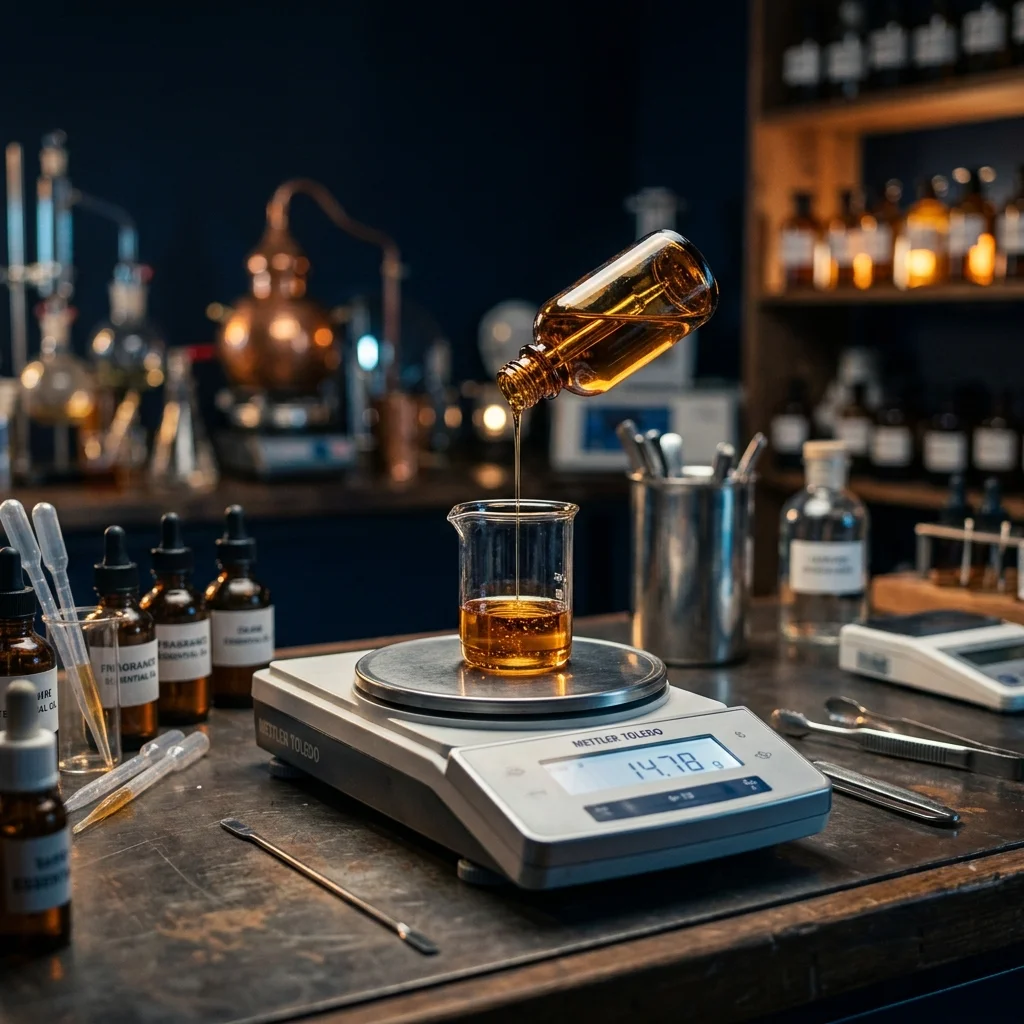
Every bottle of perfume on a store shelf started as someone's decision to bet on their own nose — and starting a perfume and fragrance blending business is one of the few chemical manufacturing ventures where a modest home studio can realistically compete with global brands on scent quality, if not on marketing budget. The global perfume manufacturing business startup opportunity has widened considerably as fragrance houses now sell pre-blended, IFRA-compliant concentrates directly to small manufacturers, removing the traditional barrier of needing an in-house perfumer trained in classical aroma chemistry. Demand keeps expanding as consumers shift toward niche, regional, and personalized scent brands rather than only mass-market names, creating real room for a founder who understands both the chemistry and the customer. This guide walks you through the complete roadmap: startup costs, equipment, raw material sourcing, the blending and maceration process, quality control, licensing, pricing, and how to land your first customers.
Market Overview & Opportunity
The global perfume and fragrance market is a multi-billion dollar category dominated by a small number of large fragrance houses and luxury brands, yet it remains structurally fragmented at the retail level — leaving substantial room for independent and regional manufacturers who can offer distinctive scents, faster turnaround, and direct customer relationships that large brands cannot replicate. Niche and indie perfumery has grown from a hobbyist corner of the market into a genuine commercial category over the past decade, driven by consumers actively seeking scents that do not smell like everyone else's.
Primary customer segments span individual retail buyers purchasing directly from small-batch brands, boutique retailers and concept stores seeking exclusive product lines, gift and hospitality businesses wanting custom-scented amenities, and B2B private label buyers who want a fragrance developed and manufactured under their own brand name. Wholesale and distributor channels matter too, particularly in regions with strong traditional attar and oil-based perfume culture, where local manufacturers supply an established retail network rather than selling direct to consumers.
Demand drivers include rising disposable income in emerging markets, a broader cultural shift toward self-expression through personal scent, growth in the gifting and hospitality sectors, and increasing consumer interest in alcohol-free and oil-based formats popular across South Asia and the Middle East. Regional opportunity is particularly strong in South Asia, the Middle East, and Southeast Asia, where both alcohol-based Western-style perfumery and traditional oil-based attar markets are expanding simultaneously, and where the International Fragrance Association (IFRA) standards are increasingly referenced by retailers as a baseline safety expectation even outside formal regulatory requirement.
Competitive landscape at the small-manufacturer level typically features a handful of established regional players alongside a fast-growing wave of independent brands, meaning differentiation on scent identity, packaging, and story matters more here than in most chemical manufacturing categories — your edge as a startup is the ability to move fast on new scent development and build a direct relationship with your customer base that a multinational fragrance house structurally cannot offer at the individual brand level.
Investment Breakdown: Starting on Minimum Capital
Perfume and fragrance blending has one of the lowest capital floors in chemical manufacturing, because the core technical input — the fragrance concentrate itself — is purchased pre-blended from a fragrance house rather than synthesized in-house. Your primary capital investment goes toward precision measuring equipment, packaging, and enough working capital to carry a maceration cycle before your first batch is ready to sell.
| Cost Category | Estimated Range (USD) | Notes |
|---|---|---|
| Blending Vessels & Precision Scales | $400 – $1,200 | Stainless steel or glass blending vessels, digital scales accurate to 0.01g |
| Filling & Bottling Equipment | $500 – $1,800 | Manual or semi-automatic filling station, funnels, capping tools |
| Fragrance Concentrates & Carrier (first batches) | $1,500 – $4,000 | Concentrate selection, perfumer's alcohol or carrier oil for trial and launch batches |
| Packaging (bottles, caps, boxes, labels) | $800 – $2,200 | Glass bottles, atomizer pumps or roll-on caps, printed labels, secondary boxes |
| Licensing & Registration | $300 – $900 | Business registration, trade licence, cosmetic product notification where required |
| Workspace & Utilities (3 months) | $600 – $1,800 | Home studio to small commercial unit depending on scale and local zoning |
| Working Capital Buffer | $900 – $2,100 | Covers maceration hold period before first batch is sale-ready |
| Total Minimum | $5,000 – $14,000 | Before first sale; lean scenario buys pre-blended concentrates |
The lean end of this range assumes a home-based or shared studio setup, second-hand glassware, and a tightly focused initial line of two or three scents rather than a full collection. Bottling and capping equipment can be deferred from semi-automatic to fully manual at launch, since batch volumes are typically small enough that hand-filling is not a meaningful bottleneck. Budget carefully for the maceration hold period — unlike most chemical products, perfume genuinely needs time to rest before it is ready to sell, and that delay between cash outlay and first revenue is the single most underestimated cost driver for new perfume founders.
Minimum Equipment List for a Small-Scale Unit
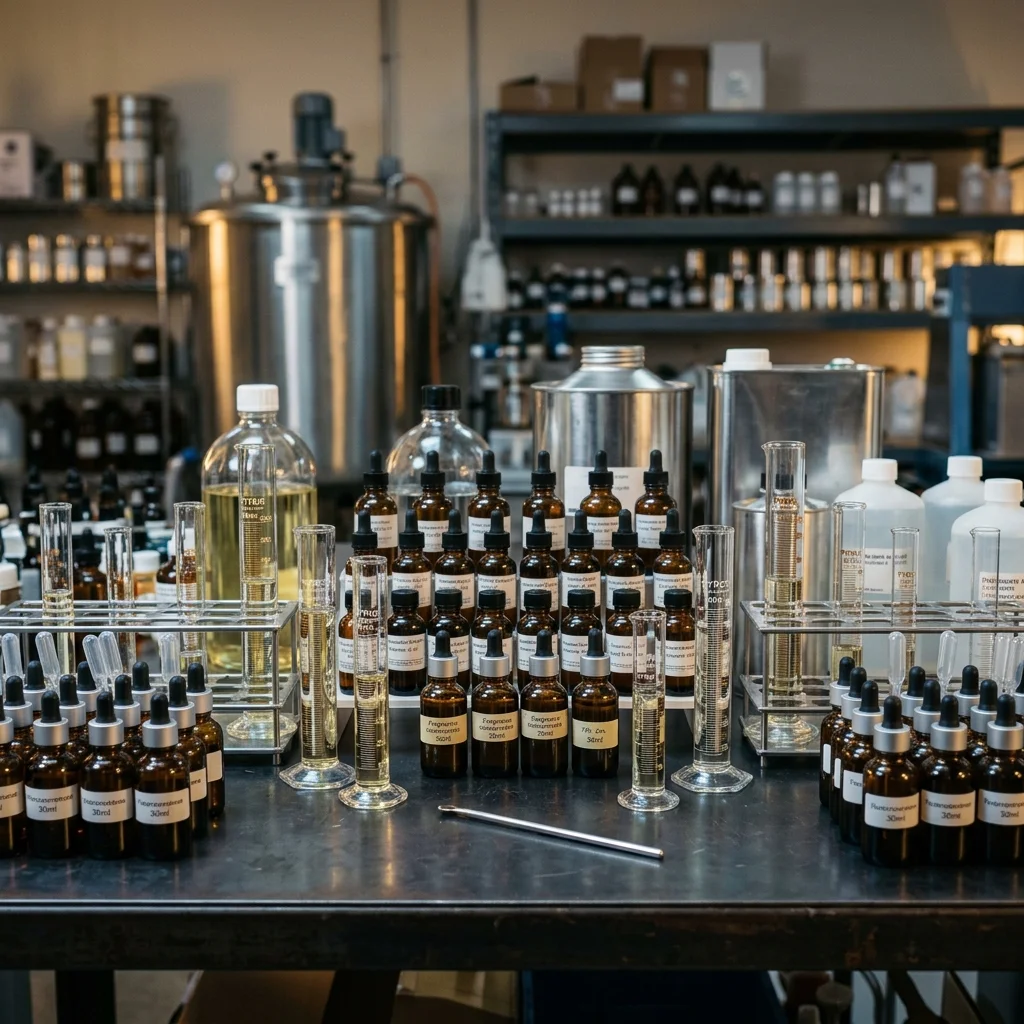
Perfume blending equipment needs are modest compared to most chemical manufacturing categories, since you are combining pre-formulated concentrate with a carrier rather than running a reaction. What matters most is precision measurement and contamination control, since even small dosing errors or cross-contamination between scents can ruin a batch.
| Equipment | Minimum Spec | Approx. Cost (USD) |
|---|---|---|
| Digital Precision Scale | 0.01g accuracy for fragrance concentrate dosing | $80–$250 |
| Stainless Steel or Glass Blending Vessels | 1–10 litre capacity, non-reactive material only | $150–$500 |
| Graduated Cylinders & Pipettes | Glass or chemical-resistant plastic, multiple sizes for dilution accuracy | $60–$180 |
| Manual or Semi-Automatic Filling Station | Bottle filler with adjustable dosing for 30ml–100ml formats | $400–$1,500 |
| Aging/Maceration Storage Racking | Dark, temperature-stable storage away from direct light | $100–$350 |
| Fragrance Evaluation Strips & Sampling Kit | Blotter strips, sample vials for scent development and QC | $50–$150 |
| Ventilation & Fire-Safe Alcohol Storage | Flammable liquid cabinet if using alcohol-based carrier | $200–$600 |
Most of this equipment can be sourced locally or even repurposed from laboratory or food-grade suppliers rather than imported, keeping your equipment budget genuinely minimal. The one item worth buying new and accurate is the digital scale — fragrance concentrate dosing errors of even half a percent are detectable by a trained nose, and inconsistent dosing is the fastest way to lose a repeat customer who expected their favorite scent to smell the same every time.
Space, Utilities & Infrastructure Requirements
Perfume blending has unusually light infrastructure demands compared to most chemical manufacturing categories, but two factors matter disproportionately: odor isolation and flammable liquid storage safety. Get these two things right and a very small footprint is genuinely sufficient to run a real business.
A minimum functional unit needs approximately 150 to 400 square feet, covering a dedicated blending bench, a separate maceration and aging storage area kept away from direct sunlight and temperature swings, and a small packaging and dispatch space. Power requirements are minimal, with most equipment running on standard single-phase household or light commercial supply, so no special electrical infrastructure is needed at this scale. Ventilation matters primarily for worker comfort and to prevent cross-contamination of scent samples during blending — a space with cross-ventilation or a small extraction fan near the blending bench is sufficient at small batch volumes.
Temperature and humidity control matter more than most founders expect, since fragrance compounds are sensitive to heat and light exposure during the maceration period, and a storage area that swings between hot and cool can subtly alter how a fragrance develops. Zoning considerations depend heavily on whether you use alcohol-based or oil-based carriers — alcohol-based perfumery involving bulk denatured alcohol storage typically requires commercial or light industrial zoning with fire code compliance, while oil-based attar-style production can often operate under more flexible home-based or small commercial zoning depending on local rules.
Best Products to Start With: Low Capital, High Demand
Not every fragrance format suits a first-time manufacturer equally, since concentration level, carrier type, and packaging complexity all affect how quickly you can move from formulation to a sellable product. A new entrant should start with the format offering the fastest path to a stable, sellable batch, then expand into higher-complexity formats as scent development skill and cash flow grow.
- Eau de Toilette (EDT) Sprays — the most accessible starting format, with a lower fragrance concentrate load (typically 5–15%) than eau de parfum, meaning lower per-unit raw material cost and a shorter, more forgiving maceration period. EDT also has the broadest retail familiarity, making it easier to explain to first-time customers.
- Oil-Based Attar and Roll-On Perfume — a strong starting product in markets with established oil-based perfume culture, since it avoids flammable alcohol handling entirely, simplifying both storage requirements and shipping logistics. Oil-based formats also tend to have longer shelf stability than alcohol-based perfume.
- Eau de Parfum (EDP) Sprays — a natural second-stage product once your process is dialed in, commanding a higher price point due to its higher concentrate load (typically 15–20%) and longer-lasting scent profile, but requiring tighter dosing precision and a longer maceration period to fully stabilize.
Sequencing your line this way — EDT or oil-based attar first, EDP second, and specialty formats like solid perfume or fragrance oils for diffusers third — lets you build scent development skill and customer trust before tackling higher-concentrate, higher-cost formulations. As detailed on the Global Formulation Cosmetics & Personal Care page, building a coherent personal care portfolio around a signature scent identity creates the strongest foundation for repeat business in this category.
Raw Material Sourcing Strategy
The raw material supply chain for perfume manufacturing centers on three categories: fragrance concentrates (pre-blended aroma compound compositions), a carrier — perfumer's alcohol for sprays or a neutral carrier oil for attar-style products — and packaging components. Understanding how to source and qualify each category directly determines your product's consistency and shelf stability.
Fragrance concentrates are best sourced from established fragrance houses rather than unregulated bulk traders, since reputable suppliers provide IFRA compliance documentation and consistent batch-to-batch scent replication — a critical factor, because even a well-known fragrance house's concentrate can vary slightly between production lots if you are not buying from a supplier with tight quality control. Regional fragrance distributors across South Asia, the Middle East, and Europe all carry a wide range of ready-to-use concentrates suited to both Western-style and traditional attar perfumery; working directly with a fragrance manufacturer only becomes cost-effective once your monthly concentrate volume justifies bulk purchasing.
Carrier alcohol and packaging components are usually available locally, though denatured or specially denatured alcohol carries its own licensing and import considerations depending on your jurisdiction's excise regulations. Evaluate any fragrance concentrate supplier on three criteria: minimum order quantity relative to your production scale, willingness to provide IFRA conformity certificates and safety data sheets, and consistency of scent profile between reorders, since a supplier who cannot guarantee consistent concentrate composition will eventually cost you a customer relationship built on a specific, memorable scent.
Cost-saving strategies include negotiating smaller sample-size concentrate purchases during your development phase to avoid overcommitting capital to an unproven scent, and forming informal buying groups with other small perfume manufacturers to access better packaging pricing on shared glass bottle and cap orders. Flag carrier alcohol for import duty and hazardous goods shipping classification early, since it is frequently classified as a flammable liquid for transport purposes, affecting both shipping cost and lead time.
Manufacturing Process Overview
The manufacturing process for perfume is a precision blending and aging operation rather than a chemical synthesis carried out in-house, since the fragrance concentrate itself is purchased pre-formulated from a fragrance house. Your job as the manufacturer is to combine concentrate and carrier at the correct ratio, allow the blend to mature, and package it consistently batch after batch.
Production begins with precise weighing of the fragrance concentrate against your target concentration category — typically 5–15% for eau de toilette or 15–20% for eau de parfum — followed by combination with perfumer's alcohol or carrier oil in a non-reactive blending vessel under gentle mixing to avoid introducing excess air. The blended mixture then enters the maceration or aging stage, where it rests undisturbed in a dark, temperature-stable environment for a period ranging from a few days for simple oil-based blends to several weeks for complex alcohol-based eau de parfum formulations, allowing the individual aroma components to fully integrate and the harsh top notes of fresh alcohol to mellow.
Key process parameters to control include concentrate-to-carrier ratio accuracy, blending temperature, and maceration duration and storage conditions, since rushing or mishandling the aging stage is the single most common quality failure in small-batch perfumery. Batch size for a starting operation typically runs 1 to 5 litres of finished blend per cycle, scaled up as demand and storage capacity grow. Where most beginners make mistakes in the process is bottling immediately after blending without allowing adequate maceration time — a perfume bottled too early often smells noticeably harsher or less balanced than the same formula given proper rest.
Basic process safety centers on flammable liquid handling if using alcohol-based carriers — no open flame or spark sources near the blending area, proper ventilation, and fire-rated storage for bulk alcohol — along with standard cross-contamination controls between different scent lines to prevent one fragrance from tainting another during blending or bottling.
Setting up a manufacturing unit involves more than equipment and raw materials — getting the formulation right, scaling production safely, and meeting regulatory requirements are where most startups lose time and money. If you need hands-on guidance at any stage, the Global Formulation team works directly with chemical startups on formulation development, process setup, and compliance — from first batch to commercial scale.
Quality Control & Testing for Small Manufacturers
Quality control in perfume manufacturing is fundamentally sensory as well as analytical, since the product's entire value proposition rests on smelling exactly the way the customer expects every single time. Every batch needs both an evaluation against your reference standard and basic physical checks before it ships.
| Test | What It Measures | Equipment Needed | Pass/Fail Criterion |
|---|---|---|---|
| Scent Profile Match | Batch consistency against a retained reference sample | Blotter strips, retained reference bottle, trained evaluator | No detectable deviation from reference on dry-down |
| Concentrate Dosing Verification | Accuracy of fragrance concentrate weight against formulation spec | Digital precision scale | Within ±0.5% of target concentration |
| Clarity & Color Check | Visual inspection for cloudiness, sediment, or unexpected color shift | Clear glass vial, white background light box | Clear, consistent color matching reference batch |
| Maceration Completion Check | Confirms adequate aging time before bottling | Batch log with maceration start/end dates | Minimum aging period met per product specification |
Scent profile matching and dosing verification can and should be performed in-house for every batch, since they require only trained sensory evaluation and an accurate scale rather than specialized lab equipment. More advanced analytical testing — gas chromatography to verify aroma compound composition, for example — is generally only necessary if a retail partner or export market specifically requires documented compositional analysis, and can be outsourced to a third-party fragrance testing lab when needed. A basic in-house QC setup covering a precision scale, blotter strips, and a light box for clarity checks can be established for under $500, comfortably within this category's already low cost baseline.
Batch records matter even at hobbyist-adjacent scale — log the concentrate lot number, carrier lot number, dosing weights, maceration start and end dates, and evaluator sign-off for every batch, since this traceability protects you if a customer ever reports an unexpected reaction or scent inconsistency. The most common QC failure mode in this category is bottling before maceration is complete, which is exactly why a batch log with enforced minimum aging periods is worth building into your process from day one rather than trusting memory.
Packaging & Branding on a Budget
Packaging carries more weight in perfume than in almost any other category on this list, because the bottle and box are often the first thing a customer experiences before they ever smell the product, and packaging quality signals product quality even before the cap comes off. Getting this right on a tight budget is entirely achievable with the right sourcing choices.
- Container formats — glass spray bottles with atomizer pumps (30ml–100ml) for alcohol-based perfumes, and glass roll-on bottles or small screw-cap vials for oil-based attar products, both widely available at low minimum order quantities from regional glass packaging suppliers.
- Label requirements — mandatory information typically includes product name, net volume, full ingredient list per applicable cosmetic labeling regulation, batch or lot code, manufacturer name and address, and any required caution statements for alcohol content or allergen declarations.
- Budget label design — Canva or similar design tools combined with a local small-run printer can produce professional-looking labels at low unit cost; waterproof, alcohol-resistant label stock is worth the small premium since standard paper labels degrade quickly on a spray bottle handled daily.
- Private label vs. own brand — private label perfume manufacturing for other brands can generate faster initial cash flow with lower marketing investment, while building your own brand identity takes longer but captures significantly higher margin once established; many successful founders run both simultaneously.
A Safety Data Sheet becomes necessary once you sell to any B2B buyer, distributor, or export market, and is good practice even for direct-to-consumer sales given that perfume contains flammable alcohol and fragrance allergens that require proper hazard communication. Sourcing packaging locally at small minimum order quantities keeps your upfront packaging investment low while you validate demand for each new scent before committing to larger production runs.
Licensing, Registration & Regulatory Compliance
Perfume is regulated as a cosmetic product in most markets, which means the compliance path is generally more accessible than for pharmaceuticals or industrial chemicals, but it is not optional, and alcohol-based products introduce an additional layer of excise regulation that founders frequently overlook.
Regulatory bodies governing cosmetics vary by market — Pakistan's DRAP oversees cosmetic product safety, the GCC's GSO and SASO standards apply across Gulf markets, India's BIS covers relevant product standards, and the EU's Cosmetics Regulation (EC) No 1223/2009 governs any export into European markets. Mandatory steps before legal sale typically include business entity registration, a trade or manufacturing licence from your local municipal authority, and cosmetic product notification or registration where required by your specific market.
If your formulation uses denatured or specially denatured alcohol as a carrier, separate registration with your local excise or alcohol control authority is typically required, since untaxed industrial alcohol used in cosmetic manufacturing is regulated differently from beverage alcohol — this is a step many first-time perfume founders miss entirely, assuming cosmetic registration alone covers it. Timeline for basic registration and licensing generally runs 4 to 8 weeks depending on jurisdiction, while alcohol-related excise registration can add several additional weeks.
Good Manufacturing Practice discipline — clean equipment, batch records, ingredient traceability — is expected from day one even where formal GMP certification is not mandatory, since perfume safety assessment requirements exist in most cosmetic regulatory frameworks regardless of company size. Export compliance adds requirements like IFRA conformity certificates and, for EU markets, a formal Cosmetic Product Safety Report prepared by a qualified safety assessor.
Pricing Strategy & Margin Expectations
Perfume pricing operates differently from most chemical products, because a meaningful share of the retail price reflects brand, packaging, and scent identity rather than raw material cost alone — which is precisely why this category can support unusually strong margins for a well-differentiated small manufacturer.
Calculate your cost-plus baseline by summing fragrance concentrate cost, carrier cost, packaging, labor, and amortized equipment cost per unit, then apply your target margin on top. Gross margins in independent and niche perfumery typically run considerably higher than in most other categories in this series, often in the range of 60 to 80% at retail once brand and packaging investment are excluded from the raw cost basis, though wholesale and private label pricing compress that margin significantly. Large mass-market brands price primarily on brand recognition and marketing spend, while local and regional manufacturers competing on quality and value typically position below luxury brand pricing but above mass-market drugstore pricing, occupying a accessible-premium tier that resonates with customers seeking something distinctive without luxury-brand cost.
Price your first customers close to your sustainable long-term price point rather than deeply discounting to win initial sales, since perfume customers strongly associate price with quality and scent value — underpricing early can actually slow trust-building rather than accelerate it. As your brand identity strengthens and repeat customers develop loyalty to specific scents, you can introduce premium concentration tiers (extrait de parfum) or limited-edition releases at higher price points without disrupting your core line. When wholesale distributors or retail partners push for lower pricing, protect your margin by adjusting minimum order quantities or packaging tier rather than cutting your base price, since a discounted wholesale price is difficult to reverse once established.
Finding Your First 20 Customers
Perfume is a fundamentally sensory product, which means sales channels that let a prospective customer actually smell your product before buying convert dramatically better than channels relying on description or imagery alone. Prioritize in-person and sample-driven channels early, then layer in digital sales once you have a proven scent line and customer testimonials.
B2B sales channels include boutique retailers, concept stores, spas and hospitality businesses seeking custom-scented amenities, and gift retailers looking for distinctive small-batch products to stock. Direct sales through local markets, pop-up events, and salon or boutique partnerships let customers experience your scent firsthand, which is consistently the fastest path to a first sale in this category. Online channels — Instagram, a simple e-commerce storefront, and WhatsApp Business for direct order-taking — work well once you have built initial credibility through in-person sampling, since cold online sales of an unfamiliar scent brand convert poorly without some form of trust signal first.
Sample vials are not optional marketing spend in this business — they are the core conversion mechanism, since a customer who tries a scent and loves it is dramatically more likely to purchase the full bottle than one who only reads a description. Building your first three reference customers matters enormously here, since word-of-mouth and gifted samples from an early adopter who genuinely loves your scent generate more qualified leads than most paid marketing at this stage. Common mistakes founders make include launching too many scents at once rather than perfecting two or three signature fragrances first, and underinvesting in sample distribution relative to full-bottle production, when the reverse allocation typically converts better in the first six months.
When and How to Scale Up Your Production
Scaling a perfume business is less about adding heavy equipment and more about expanding formulation capacity, packaging automation, and distribution reach, since the core blending process remains fundamentally similar from small batch through mid-scale production.
The clearest signal you are ready to scale is consistent sell-through of your existing scent line combined with a waiting list or reorder pattern that outpaces your current maceration and bottling capacity. At that point, the next equipment investments typically include a larger-capacity blending vessel, a semi-automatic filling and capping line to reduce labor time per unit, and expanded maceration storage to run multiple scent batches in parallel rather than sequentially. Hiring usually starts with a dedicated bottling and packaging assistant, freeing the founder or lead perfumer to focus on scent development and quality evaluation rather than production line tasks.
Quality systems worth formalizing at this stage include a documented standard operating procedure for each scent formulation, a formal retained-sample library for long-term consistency reference, and — if pursuing export or larger retail partnerships — a structured path toward IFRA conformity documentation and a Cosmetic Product Safety Report for key export markets. As detailed on the Global Formulation guide to choosing the right product consultant, bringing in outside formulation and compliance expertise at the scale-up stage often accelerates growth more efficiently than trying to build every capability in-house.
Frequently Asked Questions
How much capital is really needed to start a perfume manufacturing business?
Do I need a chemistry degree to start a perfume business?
Can I start a perfume business from home or do I need a factory?
What is the biggest mistake to avoid when starting a perfume business?
How long before I make my first sale in a perfume business?
Do I need ISO or GMP certification from day one?
How do I get a validated fragrance formulation for my perfume line?
What is the first licence I need to get to start selling perfume?
Ready to Take the Next Step?
Starting a chemical manufacturing business is one of the most rewarding paths an entrepreneur can take — but it demands the right technical foundation from day one. Whether you need a validated formulation, help setting up your first production unit, guidance on regulatory compliance, or a structured scale-up plan, the Global Formulation team is here to support you.
Reach out to us at globalformulation.com/contact — we work with founders at every stage, from concept to commercial production.