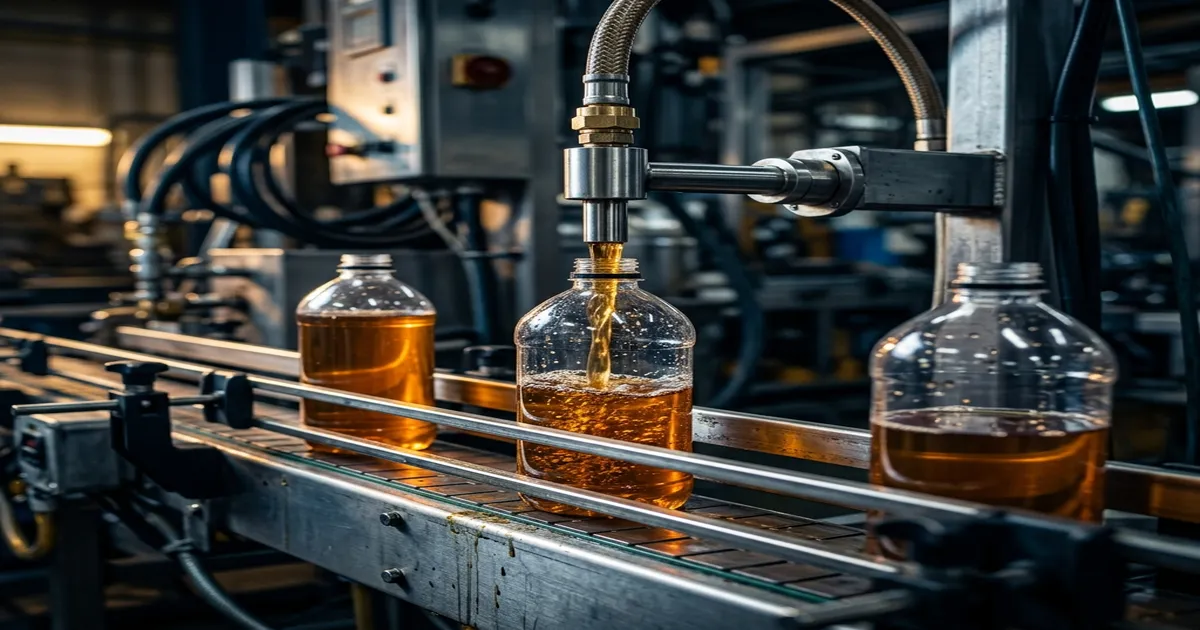
Every motorcycle on the road burns through an oil change every few thousand kilometres, and across South Asia and Southeast Asia alone that adds up to hundreds of millions of two-wheelers cycling oil through neighbourhood mechanic shops every week. That relentless, non-cyclical repeat demand is exactly why a motorcycle oil manufacturing business remains one of the more accessible entry points into the broader lubricants industry — the blending process is simpler than passenger-car multigrade oil, and the dominant sales channel runs through mechanics and workshops rather than expensive retail shelf space. Multinational brands own the premium end of the market, but the loose-oil and budget-branded segment sold through workshop relationships is large, fragmented, and genuinely open to a well-run local manufacturer. This guide walks through the complete startup roadmap — blending equipment, raw material sourcing, the production and quality-control process, licensing, pricing, and how to land your first mechanic and distributor accounts. Everything here reflects real lubricant-industry practice, the operational detail a founder needs before committing capital, not textbook theory.
Market Overview & Opportunity
The global lubricants industry is a multi-billion dollar market, and motorcycle and two-wheeler oil is one of its fastest-turning segments because oil change intervals are short and non-negotiable — skip one and the engine's small oil volume and higher relative thermal load punish it quickly. Unlike passenger-car oil, where consumers increasingly buy at retail, motorcycle oil purchasing in most emerging markets still runs through the mechanic, who recommends or supplies the oil during a routine service, which makes the workshop relationship the real point of sale rather than the shelf.
Primary customer segments split three ways: independent mechanic workshops and roadside service points, which account for the bulk of volume in most developing motorcycle markets; authorised dealership service departments that require a specific grade and certification for warranty compliance; and retail buyers purchasing branded bottles directly from spare parts shops. Demand drivers include a rapidly growing two-wheeler parc across South Asia, Southeast Asia, and parts of Africa, dense urban commuting patterns that shorten real-world oil change intervals, and a gradual premiumisation trend as riders upgrade from mineral to semi-synthetic oil as disposable income rises. The technical distinction between two-stroke and four-stroke motor oil formulation is well documented and worth understanding thoroughly before you blend your first batch, since the two oil types serve fundamentally different engine designs.
Competition comes primarily from multinational brands with strong dealership tie-ups and heavy retail marketing spend, but a large share of real-world volume — especially in the budget and mid-tier segment — still moves as loose or locally branded oil sold on the mechanic's recommendation rather than brand pull. As detailed on our lubricants resource page, a new entrant differentiates most effectively by building direct relationships with high-footfall workshops and offering consistent quality at a price the multinationals structurally cannot match at small local scale.
Investment Breakdown: Starting on Minimum Capital
Capital requirements in this category are driven mainly by how many viscosity grades and oil types — two-stroke versus four-stroke — you launch with. A lean start focused on one popular 4T grade and one 2T grade needs far less inventory and equipment complexity than a founder trying to cover five or six SAE grades from day one, and most successful entrants start narrow and expand as reorder volume proves out demand.
| Cost Category | Estimated Range (USD) | Notes |
|---|---|---|
| Blending kettle & heating system | $2,500 – $6,000 | Larger jacketed vessel needed for multi-grade production |
| Additive dosing & metering equipment | $500 – $1,200 | Manual dosing lowers this substantially at very small scale |
| Bottle filling & capping line | $1,500 – $4,000 | Induction sealing adds cost but improves shelf credibility |
| Initial base oil & additive package inventory | $2,500 – $6,000 | Covers first production run across 1–2 grades |
| Bottles, caps, induction seals and labels | $800 – $2,000 | MOQ-driven; local suppliers reduce minimums |
| Licensing, registration & lab testing | $500 – $1,500 | Varies significantly by country |
| Working capital (3 months operating expenses) | $1,200 – $2,500 | Utilities, labour, overhead while building first accounts |
| Total Minimum | $9,800 – $24,000 | Before first sale; manual dosing at the lower end |
The lower end of this range reflects a founder running a manually dosed blending setup focused on a single high-demand grade, while the upper end reflects a founder investing in metered additive dosing and a broader grade range from launch. Blending kettles and filling equipment are frequently available second-hand from lubricant blenders upgrading capacity, which can meaningfully lower the equipment threshold. Deferring premium semi-synthetic grades until your mineral-oil sales validate demand and cash flow is the lower-risk path most successful founders in this category follow.
Minimum Equipment List for a Small-Scale Unit
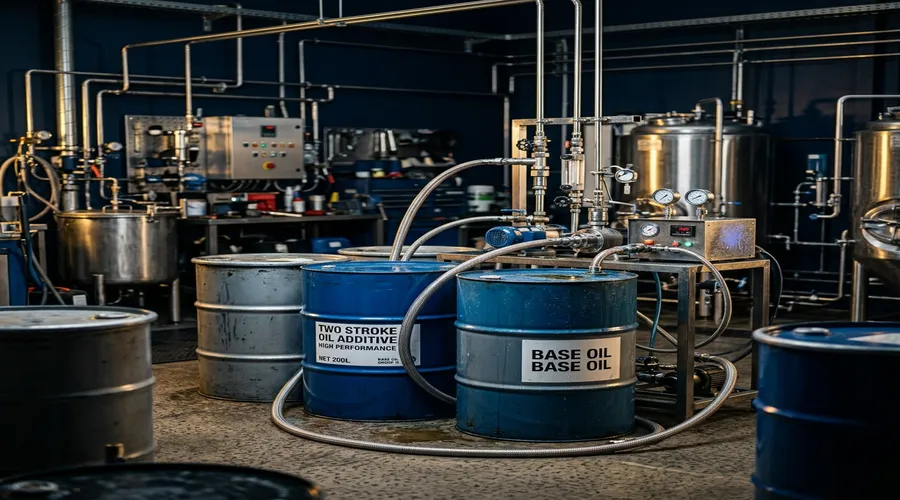
Motorcycle oil blending equipment is fundamentally a heating-and-mixing system paired with basic laboratory verification instruments, which is what keeps the capital requirement well below a conventional refinery-scale lube plant. Every piece below exists to answer one question reliably — does this batch meet its declared viscosity grade and specification — before it reaches a mechanic's shelf.
| Equipment | Minimum Spec | Approx. Cost |
|---|---|---|
| Jacketed blending kettle with slow-speed agitator | 500–1,000 L capacity, electric or steam heating jacket | $2,500 – $6,000 |
| Additive metering / dosing pump | Positive-displacement pump rated for viscous fluids | $500 – $1,200 |
| Base oil & additive storage | 200 L drums or 1,000–2,000 L bulk storage tanks | $600 – $1,800 |
| Semi-automatic bottle filling machine | Volumetric piston filler, 4–6 fill heads | $1,200 – $3,000 |
| Induction cap sealing & capping unit | Bench-top induction sealer with capping head | $400 – $1,000 |
| Kinematic viscosity bath | Dual-tube bath for 40°C and 100°C readings | $1,500 – $3,500 |
| Pensky-Martens flash point tester | Closed-cup, manual or semi-automatic | $1,200 – $2,800 |
| Basic TBN titration kit | Manual potentiometric titrator | $800 – $2,000 |
The viscosity bath and flash point tester deserve real budget priority even at the smallest scale, since they are what let you prove — batch after batch — that your oil actually meets the grade printed on the label. Blending and filling hardware can often be fabricated or sourced locally at lower cost, but testing instruments are not an area to economise on when a single mismatched batch can damage a mechanic relationship permanently.
Space, Utilities & Infrastructure Requirements
A functional motorcycle oil blending unit needs a minimum floor area of roughly 800 to 1,200 square feet, divided into a raw material storage bay with spill containment, a blending and filling area, and a small quality-control corner for viscosity and flash point testing. Keeping raw base oil and additive drums on bunded, sealed flooring matters because a spill on bare concrete is both a safety hazard and, in many jurisdictions, a documented environmental compliance issue.
Power requirements are modest for small batch sizes — the blending kettle's heating element is usually the largest single load — but larger kettles or steam heating systems may need three-phase power, which is worth confirming with your equipment supplier before committing to a site. Ventilation matters less here than in solvent-based coatings, since motor oil blending generates relatively little vapour, but a dedicated used-oil and rinse-water drainage plan is a genuine requirement most first-time founders overlook. Water supply needs are minimal, limited mainly to equipment cleaning between grade changeovers.
Best Products to Start With: Low Capital, High Demand
Not every motorcycle oil format is equally accessible to a new manufacturer, and the right entry point determines how quickly you reach positive cash flow while you are still building blending consistency and mechanic relationships. The three starter categories below are ranked by formulation simplicity, equipment requirements, and how quickly a founder can build a defensible customer base.
- Mineral 4T multigrade oil (20W-40 or 15W-50) — the highest-volume grade across most emerging motorcycle markets, sold heavily through the mechanic channel at oil-change time. This is the most accessible entry point because it uses widely available Group I/II base oil and a standard JASO MA2-compliant additive package, with no premium synthetic base stock required.
- 2T (two-stroke) oil — a simpler formulation than 4T oil since it uses a low-ash additive package designed to burn cleanly with the fuel rather than provide long-term detergency, making it one of the technically easiest products in the entire lubricants category to blend correctly. It remains in steady demand wherever two-stroke scooters and small utility engines are still in active use.
- Semi-synthetic 4T oil (10W-40) — a higher-margin premium grade for riders trading up from mineral oil, requiring a JASO MA2-validated additive package matched to a Group III or blended base stock. This format is best sequenced after your mineral-grade sales and reputation are established, since premium positioning depends on consistent quality proof, not just a higher price tag.
As detailed on our lubricants formulation resources, sequencing your launch — starting with one dominant mineral 4T grade, adding 2T oil for the utility-engine and scooter segment, then introducing semi-synthetic once your customer base is established — is the standard path successful founders in this category follow rather than launching a full multi-grade catalogue simultaneously.
Raw Material Sourcing Strategy
Raw material sourcing for motorcycle oil spans three core categories — base oil, additive packages, and packaging — each with distinct supplier types and evaluation criteria. Getting your additive package right matters most, since it is what determines whether your finished oil actually meets its declared JASO or API classification, while base oil grade determines viscosity behaviour and cost.
Base oils are sourced from refineries or their authorised distributors, with Group I and Group II mineral base stocks covering most budget and mid-tier grades, and Group III synthetic base stocks reserved for semi-synthetic and full-synthetic formulations. Additive packages — pre-blended treatments containing detergents, dispersants, anti-wear agents, antioxidants, and, critically for 4T oil, JASO-compliant friction modifiers — are sourced from specialist lubricant additive suppliers rather than generic chemical distributors, because the package must be validated against the specific JASO or API category you intend to claim on the label.
Evaluating an additive supplier means requesting their technical data sheet and third-party test data confirming the package meets the JASO T903 or API service category you plan to claim, not just a price quote. Cost-saving strategies include negotiating smaller minimum order quantities on additive packages until your grade mix and reorder volume stabilise, and buying base oil in shared bulk with other small blenders to reach better distributor pricing tiers.
- Base oil — Group I/II mineral stock covers most budget and mid-tier grades; Group III is needed only for semi-synthetic and synthetic claims
- Additive packages — always source a package specifically validated for your target JASO T903 (4T) or JASO M345 (2T) classification, never a generic automotive package
- Packaging — bottles, caps, and induction liners should be confirmed compatible with your base oil chemistry over the product's declared shelf life
- Labels and batch coding — source from a printer able to handle small print runs so you can iterate your grade lineup without committing to large runs per SKU
Blending & Compounding Process Overview
The manufacturing process for motorcycle oil is a controlled heating, additive-blending, and verification sequence rather than a complex chemical synthesis, and process discipline around temperature and mixing time matters more than exotic equipment. The key skill is consistency — accurate additive dosing, correct blending temperature, and independently verified test results on every batch, not batch size.
Base Oil Heating & Additive Blending
Production begins with base oil heated in the jacketed kettle to the blending temperature specified by the additive supplier, typically warm enough to reduce viscosity for good mixing without degrading the additive package. The additive package is then dosed into the heated base oil at the specified treat rate under continuous slow-speed agitation, followed by a defined homogenisation period long enough to ensure the additive is fully and evenly dispersed throughout the batch.
Verification, Cooling and Filling
Once blending is complete, the batch is cooled and a sample is drawn for kinematic viscosity, flash point, and TBN testing against the target specification before any product moves to filling. Only after the batch passes these checks does it proceed to bottle filling, capping, induction sealing, labelling, and batch documentation.

The most common mistake beginners make is running 2T and 4T production through the same kettle without a thorough flush and cleaning cycle between batches, allowing cross-contamination that can throw off both the low-ash 2T formulation and the friction characteristics of a 4T batch. Recording the exact additive treat rate and blending temperature for every approved grade in a permanent batch log is equally important, since it is what lets you reproduce an identical, specification-compliant batch on every future production run.
Quality Control & Testing for Small Manufacturers
Quality control in motorcycle oil manufacturing is almost entirely about proving that every batch meets its declared viscosity grade and performance classification, since a mechanic's willingness to keep recommending your oil depends on consistency across every drum, not on any single good batch. Skipping instrumental verification in favour of visual inspection alone is the fastest way to lose a workshop's confidence.
| Test | What It Measures | Equipment Needed | Pass/Fail Criterion |
|---|---|---|---|
| Kinematic viscosity (40°C & 100°C) | Flow resistance at reference and operating temperatures | Kinematic viscosity bath (ASTM D445) | Within declared SAE grade tolerance band |
| Viscosity index | Rate of viscosity change with temperature | Calculated from viscosity readings | Meets formulation target, typically 120+ for multigrade oil |
| Flash point | Lowest temperature at which vapours ignite; safety and volatility check | Pensky-Martens closed-cup tester (ASTM D93) | Meets minimum threshold for grade, typically above 200°C for 4T oils |
| Total Base Number (TBN) | Reserve alkalinity available to neutralise combustion acids | Potentiometric titrator (ASTM D2896/D4739) | Meets formulation target, commonly 6–10 mg KOH/g for motorcycle oils |
The paired viscosity and flash point check is your fastest early warning that an additive dosing or heating error has occurred, and TBN confirms the additive package delivered its intended detergency and acid-neutralising performance. Retaining a dated batch record for every approved grade gives you the documentation distributors and larger workshop chains will eventually ask for during vendor onboarding, and it is also the fastest way to trace a customer complaint back to a specific production run.
Setting up a manufacturing unit involves more than equipment and raw materials — getting the formulation right, scaling production safely, and meeting regulatory requirements are where most startups lose time and money. If you need hands-on guidance at any stage, the Global Formulation team works directly with chemical startups on formulation development, process setup, and compliance — from first batch to commercial scale.
Packaging & Branding on a Budget
Motorcycle oil is sold predominantly in 900 mL to 1 litre bottles for 4T grades and smaller 100–250 mL bottles or pre-mix sachets for 2T oil, and bulk drums for workshops that dispense loose oil directly at the point of service. Container choice should prioritise a secure, tamper-evident cap and induction seal over decorative packaging, since a mechanic's trust in your product depends heavily on visible proof the bottle has not been refilled or diluted.
Label markings are strictly regulated in most markets because lubricants are a quality-mark-controlled product category. Every container must show: the viscosity grade (such as 20W-40), the JASO and/or API service classification claimed, net contents, batch number and manufacturing date, basic handling and disposal guidance, and manufacturer contact and registration details. Claiming a JASO or API classification you have not actually validated through testing is a serious compliance and reputational risk, not a marketing shortcut.
Branding in this sector benefits from a clear, consistent visual identity across your grade lineup, since workshop owners and mechanics reorder by recognising the bottle and grade at a glance far more often than by reading fine print. A simple, legible label format that stays identical across grades — varying only the viscosity callout and colour accent — helps your product stand out quickly on a crowded workshop shelf.
Licensing, Registration & Regulatory Compliance
Regulatory compliance for motorcycle oil manufacturing touches standard business registration, product conformity certification with your national standards body, and — for any JASO or API classification claim — third-party test validation of your formulation against that specification. Lubricants are frequently subject to mandatory quality-mark certification before legal sale, which makes checking your target market's specific requirement an early, non-negotiable step rather than an afterthought.
In Pakistan, lubricants fall under PSQCA product registration requirements; in India, products must meet the relevant IS lubricant specification under BIS certification; in the GCC, GSO conformity marking applies to lubricant products sold across member states. The American Petroleum Institute administers the API service category licensing programme referenced by many national standards, and while API licensing itself is optional and costly for a small manufacturer, understanding the category you are informally aligning with helps you set realistic additive package specifications.
Beyond registration, formal Good Manufacturing Practice certification is not universally mandatory for this category at small scale, but maintaining GMP-aligned batch and test documentation from day one significantly strengthens your position with distributors, dealership accounts, and any future export customer who will expect to see this documentation during vendor evaluation.
Pricing Strategy & Margin Expectations
Raw material cost — base oil, additive package, and packaging combined — typically represents 55–70% of the finished price for mineral-grade motorcycle oil, a notably higher share than in specialty coatings or adhesives, because the product itself is commodity-adjacent and margin comes primarily from volume and channel relationships rather than formulation premium. Gross margins for small-scale manufacturers selling through the mechanic and distributor channel typically range from 20–35% on mineral grades, rising to 30–45% on semi-synthetic formulations where brand and quality perception carry more pricing power.
Cost-plus pricing anchored to per-litre or per-bottle economics is standard in this category, and staying closely aware of prevailing base oil and additive costs matters more here than in most other lubricant categories because raw material cost swings feed through to your margin faster at this thin a spread. Distributor and workshop-chain relationships respond better to consistent supply reliability and volume-based rebates than to aggressive one-time discounting, since a mechanic who runs out of your grade mid-week simply switches to whatever a competitor has on hand.
Resist competing purely on rock-bottom price against established loose-oil suppliers when approaching your first workshop accounts, since unusually cheap motorcycle oil can raise doubts about additive quality in a category where engine damage from a bad batch is expensive and highly visible to the customer. Price competitively but credibly, differentiate on consistent viscosity and specification compliance, and let repeat reorder behaviour build your distributor relationships over time.
Finding Your First 20 Customers
Motorcycle oil moves primarily through direct relationships with independent mechanic workshops, alongside distributor and wholesaler channels for wider geographic reach, and retail sales through spare parts shops. Local workshops are typically the fastest channel to a first paying account, since a mechanic can evaluate your oil's performance immediately across a handful of customer bikes rather than waiting for a shelf-listing decision.
The fastest path to your first paying accounts is approaching two or three high-footfall workshops directly with free trial cans of your dominant grade, since a mechanic decides quickly once they see consistent performance and no comeback complaints over a few weeks of use. Offering flexible minimum order quantities and reliable delivery scheduling for your first few workshop and distributor relationships removes the biggest objection a cautious buyer has about an unproven new brand. For guidance on structuring these early technical and supply relationships, our resource on choosing the right product consultant is a useful companion reference as you build out your production credibility.
- Approach high-footfall independent workshops directly with free trial cans of your dominant grade — they validate quality faster than any retail listing
- Contact regional spare parts distributors about stocking your budget mineral grade alongside their existing lubricant range
- Build simple WhatsApp Business or phone-order relationships with workshop owners for direct reordering without a formal distributor layer
- Offer volume-based rebates to workshops that commit to your brand exclusively for a given grade
- Document reorder rates by workshop and use this reliability record in every subsequent distributor conversation
Your first workshop that reorders consistently because your oil performs reliably batch after batch becomes your most valuable reference for every subsequent conversation — proof that your product holds up in real engines, not just a sample that tested well once.
When and How to Scale Up Your Production
Scaling in this category is primarily a question of expanding your grade range and upgrading from manual to metered additive dosing, rather than fundamentally redesigning your process. The right signal to scale is when reorder frequency across your existing grades consistently outpaces your batch throughput, or when a distributor asks you to cover additional viscosity grades or an export market.
The first scale-up step is typically investing in metered additive dosing and a larger jacketed kettle, which lowers per-batch labour cost and improves dosing consistency as your production volume grows. The second step is expanding into semi-synthetic grades and pursuing formal distributor or export contracts, since a broader grade range and geographic reach increase average order value from existing workshop and distributor relationships without requiring entirely new customer acquisition. Our broader guide on manufacturing without a factory explores capacity models worth considering as you plan this growth phase.
Frequently Asked Questions
How much capital is really needed to start a motorcycle oil manufacturing business?
Do I need a chemistry degree to start this business?
Can I start from home or do I need a factory?
What is the biggest mistake to avoid when starting this business?
How long before I make my first sale?
Do I need ISO or GMP certification from day one?
How do I get a formulation for the product?
What is the first licence I need to get?
Ready to Take the Next Step?
Starting a chemical manufacturing business is one of the most rewarding paths an entrepreneur can take — but it demands the right technical foundation from day one. Whether you need a validated formulation, help setting up your first production unit, guidance on regulatory compliance, or a structured scale-up plan, the Global Formulation team is here to support you.
Reach out to us at globalformulation.com/contact — we work with founders at every stage, from concept to commercial production.