Textile & Fabric Coatings: Waterproof Breathable Chemistry
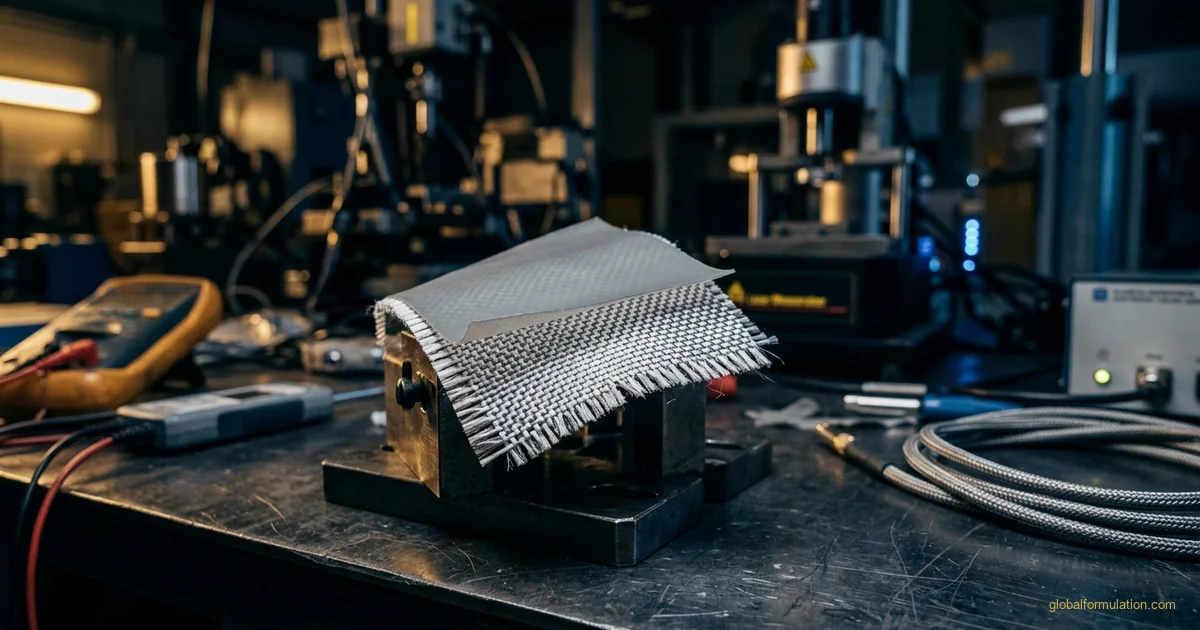
A rain jacket that soaks through at the seams, or an outdoor tarpaulin that turns stiff and cracks within a single season, usually isn't a fabric problem — it's a coating chemistry problem. Manufacturers of tents, workwear, awnings, medical drapes, and technical apparel live or die on getting textile fabric coating chemistry right, because a coating that fails under real weather, UV exposure, or repeated flexing turns a functional product into a warranty claim. The stakes go beyond comfort: an underperforming waterproof-breathable system on protective workwear or a medical barrier fabric is a genuine safety and compliance failure, not just a customer complaint. This guide walks through how PU membranes, acrylic coatings, and durable water repellent finishes each solve the waterproofing-and-breathability problem differently, what actually separates a microporous membrane from a monolithic one, and how the industry is reformulating water-repellency chemistry under mounting PFAS regulation. It draws on the same coating and polymer chemistry we apply across our paints and coatings consulting work.
How Textile Fabric Coating Chemistry Creates a Waterproof Barrier
Turning a permeable woven or knit fabric into a waterproof barrier means adding a continuous polymer somewhere in the fabric structure, and where that polymer sits — on the surface, bonded on as a separate film, or worked into the individual fibers — is the first decision that shapes everything else about the finished textile's performance. Three broad routes exist, and each trades off waterproofness, breathability, hand feel, and durability differently, which is why a tent floor, a rain jacket shell, and an awning fabric rarely share the same coating technology even though all three need to shed water. Whatever route a manufacturer chooses, performance gets judged against the same two industry metrics: hydrostatic head, which measures resistance to liquid water penetration, and moisture vapor transmission rate, which measures breathability.
- Direct coating — a knife-over-roll or similar process applies liquid polymer, commonly PU or acrylic, straight onto the fabric surface
- Lamination — a separately manufactured membrane film, microporous or monolithic, is bonded to the fabric with a dot or continuous adhesive layer
- Impregnation — the fabric is dipped or sprayed with a water-repellent treatment that coats individual fibers without forming a continuous barrier film
| Performance Metric | What It Measures | Common Test Standard |
|---|---|---|
| Hydrostatic head | Liquid water penetration resistance, reported as mm water column before leakage | ISO 811 / AATCC 127 |
| Moisture vapor transmission rate (MVTR) | Breathability — water vapor mass passing through per area per day | ASTM E96 / JIS L1099 |
| Water repellency (spray rating) | Surface wetting resistance under falling water spray | AATCC 22 / ISO 4920 |
Coating route determines what's physically possible on both axes at once — a finished fabric can't out-test its own architecture, which is why the biggest performance gains come from choosing the right coating chemistry and membrane type up front, not from fine-tuning an ill-suited combination after the fact.
PU Coated Fabric: Waterproof Membrane Chemistry
Polyurethane dominates mid-to-premium waterproof-breathable textiles because its chemistry is unusually tunable: the same base polymer family can be formulated hydrophilic or microporous, cast thick or thin, and adjusted for flexibility and abrasion resistance without switching to an entirely different resin system. That tunability is the same underlying reason PU shows up across so much of industrial coating chemistry, from polyurethane sealants to textile membranes — the isocyanate-polyol reaction gives formulators direct control over crosslink density and softness in a way few other polymer classes match.
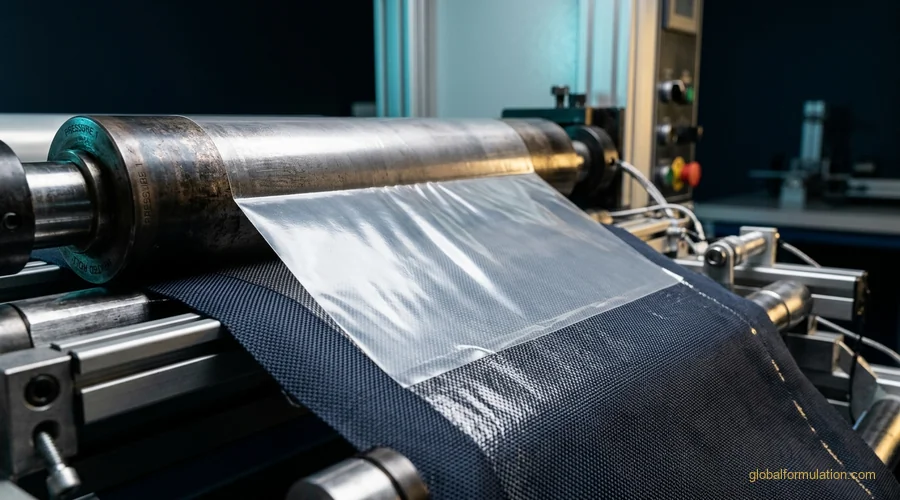
How that PU actually reaches the fabric matters as much as the chemistry itself. Direct-coat PU applies a liquid dispersion or solution straight onto the textile in a single step, which is economical but lets the polymer penetrate into the fiber structure and can stiffen the fabric's hand and drape. Transfer coating instead casts the PU onto a release paper first to form an independent film, then laminates that film onto the fabric — a slightly more involved process, but one that gives far tighter control over film thickness and pore structure, which is why it's the standard route for higher-performance breathable fabrics.
- Solvent-based PU — traditional route, strong film formation and adhesion, but under increasing VOC regulatory pressure
- Waterborne PU dispersions — lower-VOC alternative gaining share as coating regulations tighten worldwide
- Hot-melt PU films — thermoplastic PU applied without solvent, common in transfer-coating and lamination processes
PU's formulation flexibility is exactly why it dominates this category, but tunability alone doesn't explain how a membrane actually lets water vapor escape while blocking liquid water — that comes down to a genuinely different engineering decision covered next.
Breathable Membrane Textile Coating: Microporous vs Monolithic Systems
Two genuinely different membrane architectures both get marketed as "breathable," and confusing them leads to real specification mistakes. Microporous membranes, most famously expanded PTFE but also microporous PU, are riddled with interconnected pores that are far too small for a liquid water droplet to force through under normal pressure, yet still many times larger than an individual water vapor molecule — so vapor passes through by diffusion while liquid water cannot. Monolithic membranes take a completely different, pore-free approach: hydrophilic PU or polyester-ether films absorb water vapor molecules into their polymer chains on the humid inner surface and let them diffuse through the solid film to the drier outside, driven purely by the humidity gradient between the two surfaces.
| Membrane Type | Breathability Mechanism | Contamination Sensitivity |
|---|---|---|
| Microporous (e.g., ePTFE, microporous PU) | Vapor passes through interconnected pores by pressure-driven diffusion | Pores can clog with oils, sunscreen, or detergent residue |
| Monolithic (hydrophilic PU, polyester-ether) | Vapor absorbed and diffused molecule-by-molecule through solid polymer | No pores to clog; less sensitive to surface contamination |
Choosing between microporous and monolithic architecture comes down to end use and the realistic care regime a garment will actually see in the field, and it interacts directly with which base polymer a manufacturer commits to — which is where acrylic's very different performance profile enters the picture.
Acrylic Fabric Coating: Chemistry and Where It Belongs
Waterborne acrylic dispersions solve a different problem than PU membranes do, and understanding that difference prevents a common specification mismatch. Acrylics form a continuous, largely non-porous film that resists UV and weathering unusually well — often outperforming PU, which can yellow and lose flexibility under prolonged sun exposure — while remaining straightforward to pigment for lasting outdoor color. What acrylic coatings generally don't offer is meaningful breathability; the film simply isn't engineered for moisture vapor transmission the way a PU or true membrane system is. That trade-off connects to the same waterborne-versus-solvent and polymer-selection decisions covered in our guides to waterborne vs solvent-borne coating chemistry and polyurethane vs alternative polymer coatings.
| Property | Acrylic Coating | PU Coating |
|---|---|---|
| UV / weathering resistance | Excellent | Moderate — can yellow over time |
| Breathability | Low — not engineered for vapor transmission | Tunable — hydrophilic or microporous grades available |
| Low-temperature flexibility | Moderate | Good |
| Relative cost | Lower | Higher |
| Typical end use | Awnings, tarpaulins, marine canvas, outdoor upholstery | Rainwear, tents, technical apparel |
Acrylic's strength is exactly where breathability isn't required — at lower cost and with better long-term UV stability outdoors — which is why it remains the default for exterior fabric structures rather than wearable rainwear, and why substituting it into a breathability-dependent application is one of the more common textile coating specification errors.
Technical Textile Coating Process: Direct Coat, Transfer Coat & Lamination
The manufacturing line a coater runs is inseparable from the breathability decision made upstream, because how a polymer gets onto the fabric determines whether it can preserve a membrane's pore structure or defeats it entirely. A typical coating line moves through a consistent sequence regardless of which chemistry is being applied, and getting each stage right is what separates a batch that passes hydrostatic head and MVTR testing from one that fails on the production floor.
- Substrate unwind — base fabric feeds continuously off roll stock into the coating line
- Surface activation — corona or plasma treatment increases surface energy so the coating or adhesive actually bonds instead of beading off
- Coating application — knife-over-roll, spray, or transfer lamination deposits the polymer layer at a controlled thickness
- Curing / drying — an oven drives off solvent or water and completes polymer crosslinking
- Wind-up and inspection — the finished roll is quality-checked for coating weight, pinholes, and adhesion before shipping
Lamination adds one critical wrinkle to that sequence: a laminated microporous membrane has to be bonded with a discontinuous dot-adhesive pattern rather than a continuous adhesive film, because a full adhesive layer would seal over the membrane's pores across the entire bonded area and defeat the whole point of using a microporous system in the first place. Getting that adhesive pattern right is a genuine process-engineering detail, not a minor manufacturing choice, since it directly determines whether the finished laminate's real-world MVTR matches what the membrane alone was rated for.
Water Repellent Fabric Finish: DWR Chemistry and the PFAS-Free Shift
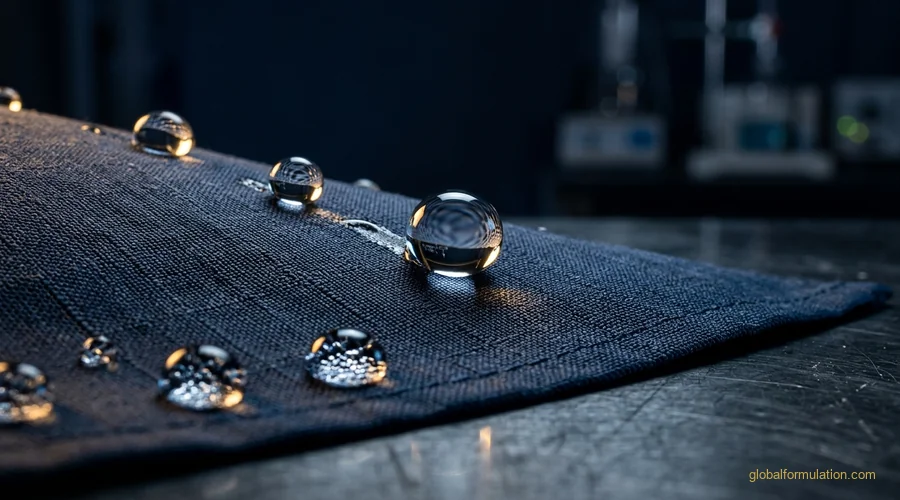
A durable water repellent (DWR) finish solves a different problem than everything covered so far — it's a surface treatment, not a bulk waterproofing layer, and it works by lowering the fabric surface's energy so water beads up and rolls off instead of wetting into and spreading across the outer face. DWR is applied over, not instead of, an underlying waterproof membrane or coating on true rainwear, and the two work together: the membrane stops liquid water from passing through, while DWR keeps the outer fabric from soaking up water in the first place, which matters because a soaked-through outer layer blocks vapor transmission from underneath regardless of how good the membrane is. That surface-energy mechanism is closely related to the hydrophobic surface chemistry covered in our guide to self-cleaning and hydrophobic nano-coatings.
Classic DWR chemistry used long-chain (C8) fluorocarbon treatments, prized for exceptional water and oil repellency, but that chemistry has come under sustained regulatory pressure over its links to persistent PFOA contamination, including restriction under the EU's REACH Annex XVII. The industry has responded in two directions at once:
- Short-chain C6 fluorocarbons — reduced bioaccumulation potential compared to C8, but still a fluorinated PFAS compound
- Non-fluorinated chemistries — hydrocarbon, silicone, or dendrimer-based platforms that avoid PFAS entirely, historically weaker on oil repellency but with a narrowing water-repellency gap
DWR chemistry is the fastest-moving part of this entire coating landscape right now, which means any technical textile brand's product roadmap has to account for where fluorinated chemistry regulation is headed in each of its target markets over the next several years, not just where it stands today.
Frequently Asked Questions
What's the difference between a coated fabric and a laminated fabric?
A coated fabric has liquid polymer applied directly onto the textile surface and cured in place, so the coating and the base fabric become a single integrated layer with no separate film. A laminated fabric instead bonds a pre-manufactured membrane film — made independently and often engineered with a specific pore structure or chemistry — to the fabric using an adhesive layer, so the membrane and the base textile remain physically distinct even after bonding.
Lamination generally gives tighter control over membrane performance and consistency because the film is manufactured and tested on its own before it ever touches the fabric, while direct coating is usually the faster, lower-cost route since it skips a separate film-making step entirely.
How is a textile's waterproofness actually measured?
The standard measurement is hydrostatic head, which reports how many millimeters of water column a fabric can withstand before water begins to penetrate through to the other side, tested under standards such as ISO 811 or AATCC 127. A higher hydrostatic head number means greater resistance to liquid water penetration under pressure, which is why technical specification sheets for rainwear and tent fabrics list this figure prominently.
Separately, spray rating tests measured against standards like AATCC 22 assess surface wetting resistance under falling water rather than penetration under pressure, so a complete waterproofing picture typically references both figures rather than either alone.
Why does a breathable waterproof fabric let water vapor out but keep liquid water out?
Microporous membranes achieve this through pore size alone: the pores running through the membrane are far too small for a liquid water droplet to force through under normal pressure, yet still many times larger than an individual water vapor molecule, so vapor can pass while liquid water cannot. Monolithic membranes achieve the same result through an entirely different, pore-free mechanism — water vapor molecules are absorbed into the hydrophilic polymer chains on the humid inner surface and diffuse molecule by molecule through the solid film to the drier outer surface, driven by the humidity difference between inside and outside.
Both routes solve the same problem, selective transport, but through genuinely different physics, which is why they behave differently in the field, especially around contamination and durability.
What's the difference between a PU coating and a DWR finish?
A PU coating or laminated PU membrane is the bulk waterproof barrier itself — the layer actually responsible for stopping liquid water from passing through the fabric under pressure, and it's a permanent, bonded part of the textile structure. A DWR (durable water repellent) finish is a separate surface treatment applied on top of the fabric's outer face that lowers surface energy so water beads up and rolls off instead of soaking into and spreading across the fabric surface.
DWR does not make a fabric waterproof on its own; it works alongside an underlying membrane or coating, and unlike that membrane, DWR wears off through abrasion, detergent exposure, and body oils, which is why it needs periodic reactivation or reapplication while the membrane underneath keeps working.
Are PFAS-based water repellents being phased out, and what's replacing them?
Yes — long-chain (C8) fluorocarbon DWR chemistry, historically the industry standard for its exceptional water and oil repellency, has been restricted in many jurisdictions because of its links to persistent PFOA contamination, including under the EU's REACH Annex XVII restriction. The industry response has moved in two directions: shorter-chain C6 fluorocarbon chemistry, which reduces bioaccumulation potential while remaining a fluorinated PFAS compound, and non-fluorinated DWR chemistries built on hydrocarbon, silicone, or dendrimer polymer platforms that avoid PFAS entirely.
Non-fluorinated alternatives have historically lagged fluorocarbon chemistry on oil and stain repellency specifically, though water-repellency performance has narrowed considerably, and regulatory pressure across the EU and a growing number of US states is accelerating adoption regardless of the remaining performance gap.
Can acrylic-coated fabric be considered waterproof and breathable in the same way as PU or membrane systems?
Acrylic-coated fabrics can achieve strong water resistance and hold up well outdoors, but they are not engineered for the kind of moisture vapor transmission that defines a true breathable membrane system. Acrylic dispersions form a continuous, largely non-porous film that resists weathering and UV degradation better than many PU systems, which is exactly why acrylic dominates awnings, tarpaulins, truck covers, and outdoor upholstery — applications where UV stability and cost matter more than letting body-generated moisture vapor escape.
For wearable rainwear and other applications where breathability is a genuine performance requirement, PU or true membrane systems remain the standard choice instead.
Why does a rain jacket sometimes feel wet on the inside even though it hasn't actually leaked?
This is almost always "wetting out," not a failure of the waterproof membrane itself. Once the DWR finish on the outer face has worn down through abrasion, dirt, or repeated washing, rainwater stops beading and instead spreads out and soaks into the outer fabric layer, which blocks the membrane's pores or hydrophilic surface from underneath and sharply reduces how much moisture vapor can escape.
The trapped perspiration then condenses on the inside, feeling exactly like a leak even though the membrane underneath is still fully intact. Reactivating or reapplying the DWR finish, sometimes as simple as a hot tumble-dry cycle, typically restores the beading effect and resolves the problem without needing to replace the garment.
Developing a Waterproof or Technical Textile Coating?
Global Formulation provides paints and coatings consultancy — PU and acrylic fabric coating formulation, breathable membrane selection, and PFAS-free DWR finish chemistry for technical textile manufacturers.
Talk to Our Formulation Team