Texture Coatings for Construction: Types and Application
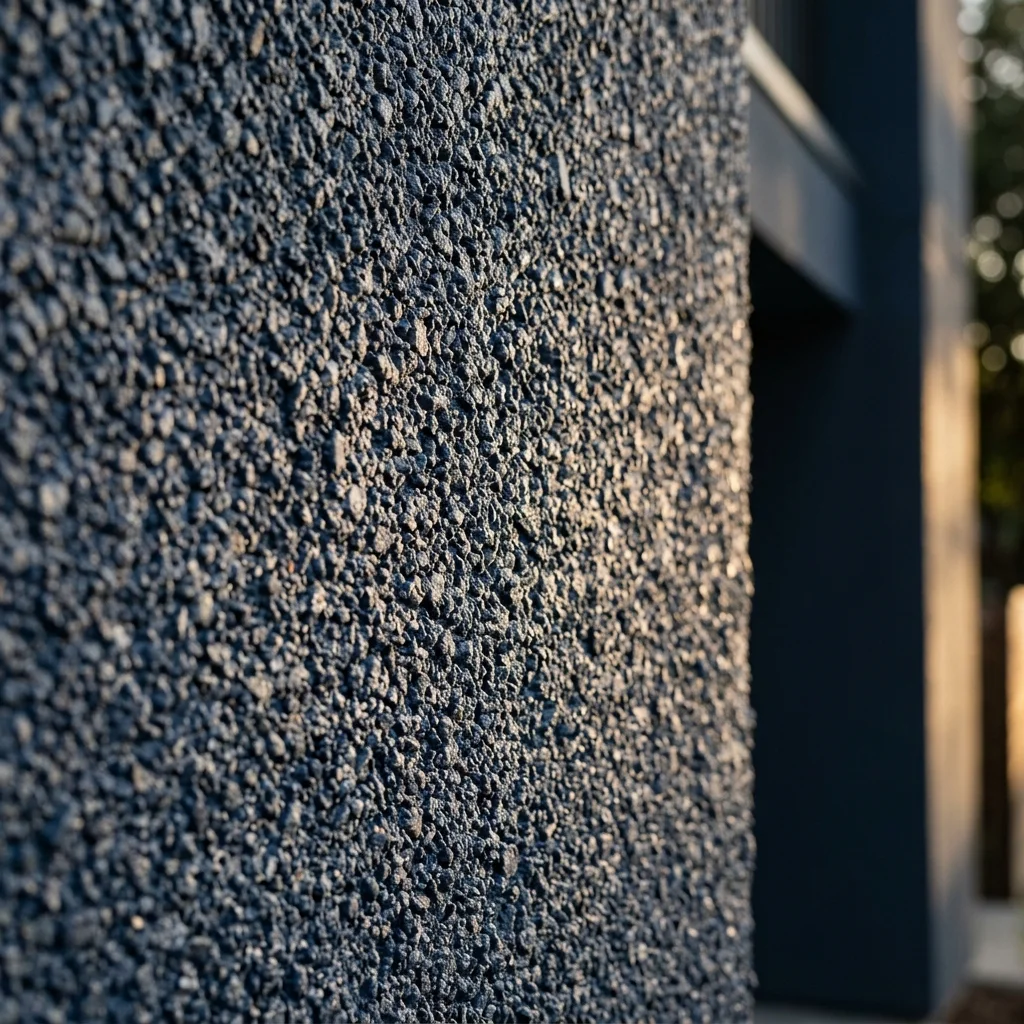
A texture coating that looks impressive on a sample board can still fail within a few years on an actual building facade, and the gap between the two outcomes almost always comes down to formulation and application decisions most buyers never see. Texture coatings for construction carry real technical weight: they are simultaneously a decorative finish, a weatherproofing barrier, and — in EIFS assemblies — a structural component of the building envelope, which means getting the binder chemistry, aggregate selection, and substrate compatibility wrong has consequences far beyond aesthetics. This guide walks through what actually distinguishes a texture coating from ordinary exterior paint, the major coating types used across residential and commercial construction, how EIFS multi-layer systems depend on finish coat performance, and the substrate preparation and testing practices that separate a coating that lasts fifteen years from one that cracks and delaminates within three. Whether you are formulating a texture coating product or specifying one for a construction project, these fundamentals give you a working framework for making sound technical decisions.
What Makes a Texture Coating Different From Standard Exterior Paint
Texture coatings occupy a distinct formulation category from conventional exterior paint because their defining feature — a three-dimensional surface profile — comes from the coating film itself rather than from color or gloss applied over an existing surface. Understanding this structural difference explains why texture coatings are formulated, tested, and applied so differently from the paints most people are familiar with.
Where standard exterior paint is built from binder, pigment, and solvent or water in a formulation designed to level out into a thin, relatively smooth film, texture coatings carry a substantially higher loading of coarse aggregate — commonly silica sand, crushed quartz, or synthetic granules — suspended within a thicker acrylic or cementitious binder matrix. This aggregate loading fundamentally changes the coating's rheology: instead of flowing out to a level film, the formulation must suspend and evenly distribute solid particles across the substrate while resisting sag on vertical surfaces, a very different rheological challenge than a conventional paint film faces. Within paints and coatings formulation more broadly, texture coatings sit closer to a mortar or render in their aggregate-handling requirements than to a typical latex or acrylic house paint.
| Property | Standard Exterior Paint | Texture Coating |
|---|---|---|
| Aggregate content | Minimal or none | High loading of sand, quartz, or synthetic granules |
| Film profile | Thin, relatively smooth | Thick, three-dimensional surface texture |
| Rheology requirement | Level, self-smoothing flow | Sag resistance while carrying suspended solids |
| Typical application tool | Brush, roller, spray | Trowel, texture roller, hopper gun spray |
Recognizing texture coatings as an aggregate-suspension formulation problem, rather than simply a "thicker paint," reframes every downstream decision in this guide — from binder selection to application method — around the coating's ability to carry and hold solid particles in a stable, weather-resistant film.
Types of Texture Coatings and Aggregate Selection
Choosing among the major texture coating categories starts with understanding how aggregate type and particle size determine both the finished surface profile and the coating's practical performance characteristics. Getting this selection right at the design stage prevents the common mistake of specifying a texture that looks right on a sample chip but performs poorly at full building scale.
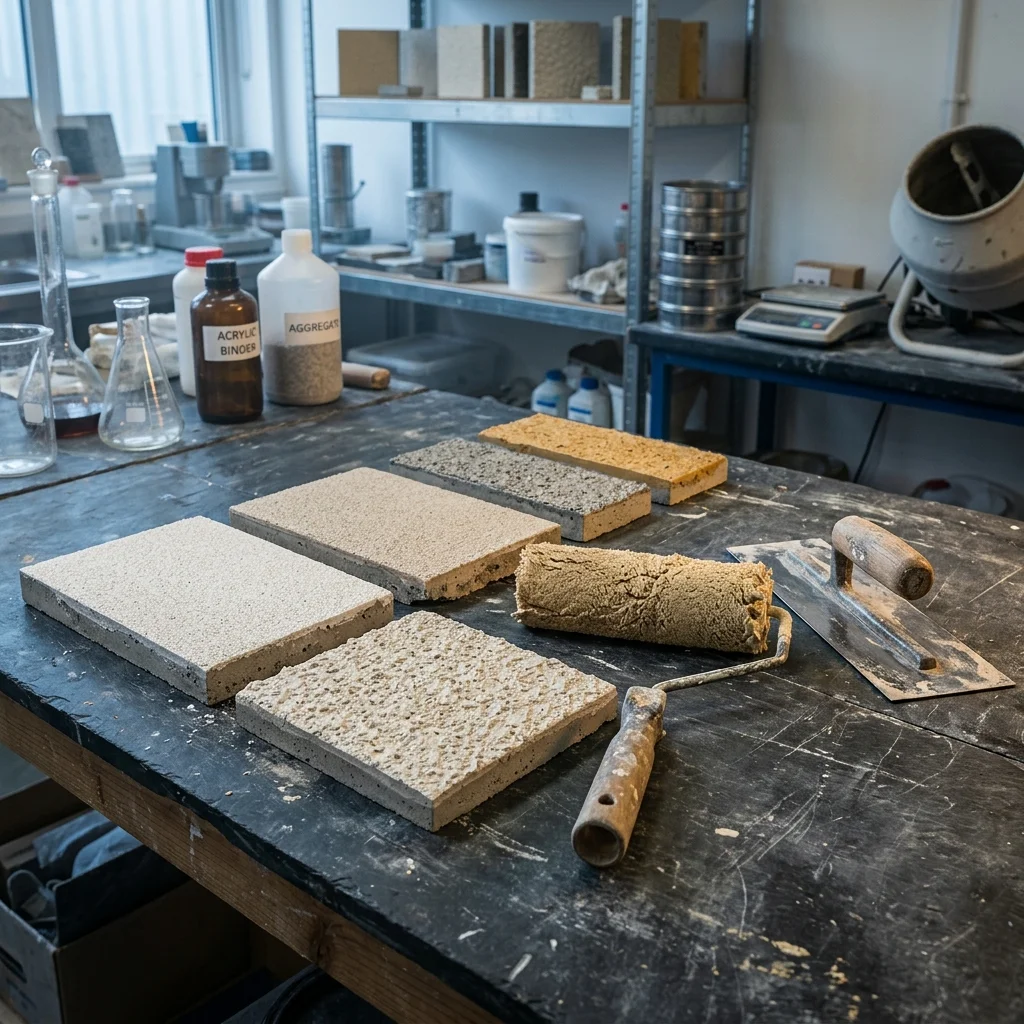
- Sand texture coatings — Fine to medium silica sand aggregate producing a subtle, low-profile texture; common for residential facades and interior accent walls where a smoother finish and easier cleaning are priorities
- Acrylic texture coatings — 100% acrylic or styrene-acrylic binder systems carrying aggregate loading; the dominant commercial category due to flexibility, UV resistance, and broad substrate compatibility
- Rough-cast (dash/pebbledash) coatings — Coarser aggregate, sometimes including small stone chips, producing a pronounced three-dimensional texture historically used for heavy-duty exterior cladding
- Cementitious texture renders — Cement-based rather than polymer-based binder systems, typically used where a mineral, non-acrylic finish is specified or where compatibility with masonry substrates is prioritized over flexibility
With the major coating categories established, the next question most specifiers face is whether the project calls for a standalone texture coating over solid masonry, or a multi-layer assembly like EIFS where the finish coat's performance requirements become considerably more demanding.
EIFS and Multi-Layer Cladding Systems
Exterior Insulation and Finish Systems represent the most technically demanding application for texture coatings, because the finish coat in an EIFS assembly is not a purely decorative layer — it is the primary weatherproofing barrier protecting an insulation board and reinforced base coat that have no independent water resistance of their own. Understanding this dependency is essential for anyone formulating or specifying texture coatings intended for EIFS use.
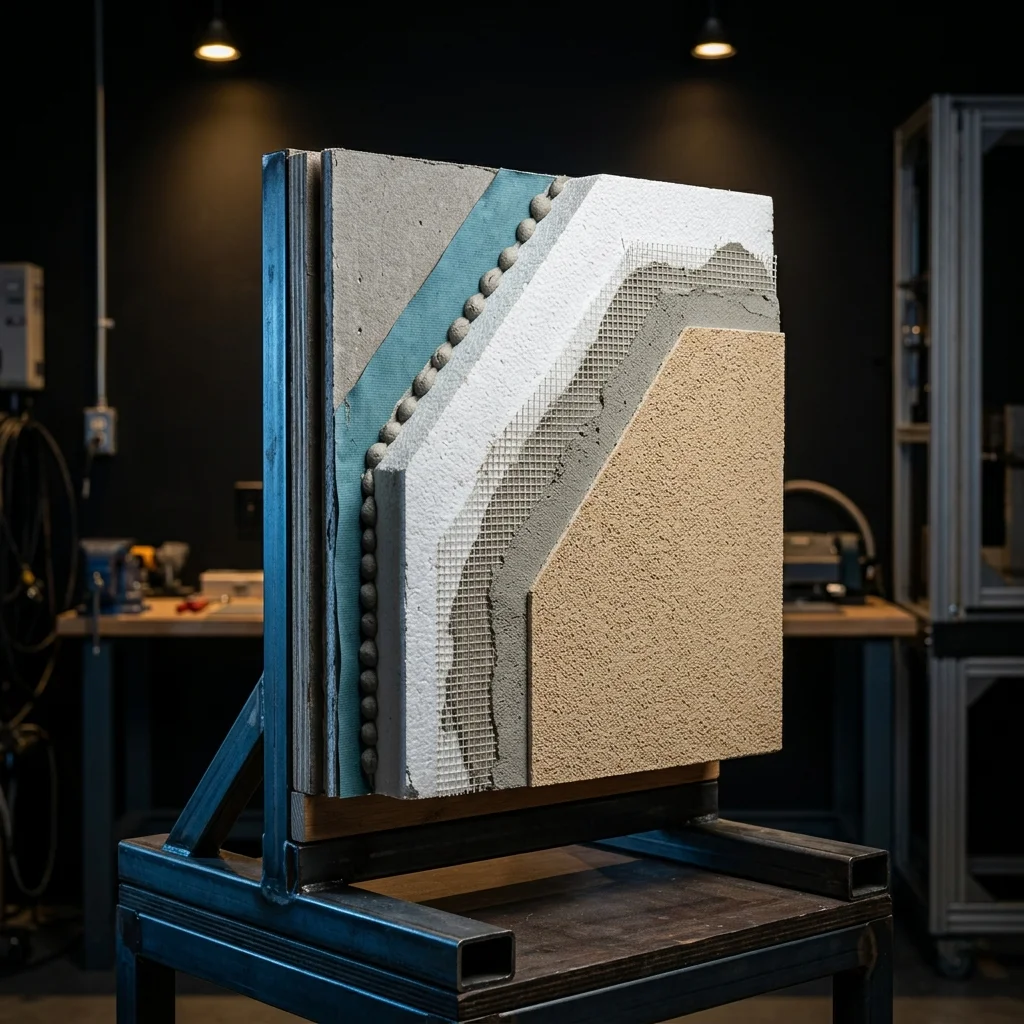
A complete EIFS assembly consists of an insulation board mechanically or adhesively attached to the substrate, a base coat embedded with fiberglass reinforcing mesh to provide impact and crack resistance, and a textured acrylic finish coat applied as the outermost, weather-exposed layer. Because the insulation board and base coat beneath the finish coat have essentially no inherent moisture resistance, any crack or failure in the finish coat can allow water intrusion directly into the wall assembly, where it may go undetected for years while causing substrate damage. This dependency is why EIFS finish coats require elastomeric or high-flexibility acrylic binder chemistry capable of accommodating the thermal expansion and contraction of the insulation board beneath them, rather than the more rigid binder formulations that are acceptable for texture coatings applied directly over solid concrete or masonry. Industry test methods published by the ASTM C1382 standard for EIFS integral water-resistive barriers define the specific performance criteria finish coats must meet in a complete assembly.
Because the finish coat carries this weatherproofing responsibility, EIFS specifications typically require substantially more rigorous flexibility and crack-bridging test data than a texture coating intended for direct masonry application, a distinction that becomes central to the durability and testing considerations covered later in this guide.
Substrate Preparation and Compatibility Requirements
No texture coating formulation, however well-engineered, can compensate for inadequate substrate preparation, which remains one of the most common root causes of premature coating failure in the field. Getting substrate compatibility right before application begins is arguably more consequential to long-term performance than the specific coating product selected.
Concrete and masonry substrates must be fully cured before coating, since residual moisture vapor transmission from an undercured substrate can cause blistering or adhesion failure in the applied finish. Surface contamination — laitance on new concrete, efflorescence salts, or residual form-release agents — must be removed mechanically or chemically before application, because these contaminants sit directly at the bond line and compromise adhesion regardless of the coating's inherent bonding strength. Substrates showing active moisture intrusion or structural cracking should not be coated until the underlying issue is resolved, since a texture coating has no capacity to solve a substrate-level moisture or structural problem and will fail prematurely if applied over one.
- Cure time verification — Confirm substrate has reached adequate cure (commonly 28 days for concrete) before coating application
- Surface contamination removal — Mechanical abrasion or chemical cleaning to remove laitance, efflorescence, and release agents
- Moisture testing — Verify substrate moisture content is within the coating manufacturer's specified limits before application
- Primer selection — Substrate-specific primer matched to both substrate alkalinity and the texture coating's binder chemistry
A texture coating applied over a properly prepared, compatible substrate with the correct primer system starts its service life with the odds of long-term success firmly in its favor, which sets up the application method and film-build decisions that determine how that potential is actually realized.
Application Methods and Film Build Considerations
Texture coatings can be applied by trowel, texture roller, or hopper-gun spray equipment, and the method selected affects not just the finished aesthetic but the coating's actual film thickness and long-term durability. Matching application method to the specific coating formulation and project scale is a practical decision with real performance consequences.
Trowel application, common for heavier rough-cast and cementitious render systems, allows the applicator direct control over film thickness and texture depth but is labor-intensive and less practical for large commercial facade areas. Texture roller application, typically used with acrylic sand and fine texture coatings, offers faster coverage with reasonably consistent film build, though achieving uniform texture across large wall areas requires applicator skill and consistent technique. Hopper-gun spray application is the standard method for large-scale commercial and EIFS projects, delivering high productivity and consistent texture profile across large areas, but it requires proper equipment calibration and applicator training to avoid inconsistent film thickness that can create premature wear points.
| Application Method | Best Suited For | Key Consideration |
|---|---|---|
| Trowel | Heavy rough-cast, cementitious renders | Labor-intensive; high applicator control over texture depth |
| Texture roller | Acrylic sand and fine texture finishes | Faster coverage; consistency depends on applicator technique |
| Hopper-gun spray | Large commercial facades, EIFS projects | High productivity; requires equipment calibration and training |
Whichever method is used, insufficient film thickness is one of the most common and most preventable causes of early coating failure, since an underbuilt film lacks the material reserve needed to accommodate normal thermal movement and weathering over the product's intended service life.
Durability and Weathering Performance Validation
A texture coating's real-world service life cannot be reliably predicted from formulation composition alone, which is why accelerated weathering and durability testing form the evidentiary backbone of any credible product performance claim. A rigorous testing program, built specifically around the failure modes texture coatings are known to exhibit, is what separates an evidence-based durability claim from marketing language.
- Accelerated weathering (QUV/xenon arc) — Controlled UV and moisture cycling per ASTM D4587 forecasts long-term chalking, fading, and film integrity loss without waiting for years of real-time exposure
- Crack-bridging testing — Confirms the finish coat can accommodate substrate movement without cracking, particularly critical for EIFS applications over thermally active insulation
- Water resistance and permeability testing — Validates that the coating maintains its weatherproofing function under sustained moisture exposure
- Adhesion testing — Pull-off or cross-cut adhesion testing across representative substrates confirms bond strength meets the coating's intended service requirements
- Freeze-thaw cycling — Relevant for coatings marketed in climates with significant seasonal temperature swings, confirming film integrity is retained across repeated freeze-thaw cycles
Real-world field performance data collected from installed projects over multiple years remains the ultimate validation of laboratory testing predictions, and manufacturers who track field performance systematically are better positioned to refine formulations and substantiate durability claims with genuine confidence rather than accelerated-test extrapolation alone.
Frequently Asked Questions
What actually makes a texture coating different from standard exterior paint?
Standard exterior paint is formulated as a thin, relatively smooth film primarily built from binder, pigment, and solvent or water, designed to coat a surface without significantly altering its profile. Texture coatings are formulated with a substantially higher loading of coarse aggregate — commonly silica sand, crushed quartz, or synthetic granules — suspended in a thicker acrylic or cementitious binder system, so the finished film itself creates a three-dimensional surface profile rather than simply coloring an existing one.
This aggregate loading changes the coating's rheology, application method, and film-build requirements considerably compared with a conventional paint, since the coating must carry and evenly distribute solid particles across the substrate rather than simply flowing out to a level film.
How do I choose the right aggregate size for a texture coating project?
Aggregate size is typically classified by particle diameter and directly determines the final surface profile, ranging from fine sand textures suited to smooth architectural finishes to coarse or rough-cast textures used for heavy-duty exterior cladding and impact-resistant applications. Finer aggregate produces a subtler, lower-profile texture that is easier to clean and less prone to trapping dirt, making it a common choice for residential facades and interior accent walls.
Coarser aggregate creates a more pronounced three-dimensional texture that better disguises substrate imperfections and adds a degree of physical durability against minor impact, but it also increases material consumption per unit area and can be more difficult to apply evenly without specialized spray or trowel equipment. The right choice ultimately depends on the substrate condition, the desired aesthetic, and the application method available on site.
What is an EIFS system, and how does it relate to texture coatings?
An Exterior Insulation and Finish System (EIFS) is a multi-layer exterior wall cladding assembly consisting of an insulation board attached to the substrate, a base coat embedded with reinforcing mesh for impact and crack resistance, and a textured acrylic finish coat applied as the final, visible layer. The texture coating in an EIFS assembly is not merely decorative — it is the weatherproofing and UV-protective layer that shields the underlying insulation and base coat from moisture intrusion and environmental degradation.
Because EIFS assemblies rely on the finish coat to remain crack-free over the insulation board's thermal movement, texture coatings used in EIFS applications require elastomeric or high-flexibility acrylic binders rather than the more rigid formulations acceptable for texture coatings applied directly over solid masonry or concrete.
Can texture coatings be applied over any exterior substrate?
Texture coatings are compatible with most common exterior substrates — concrete, masonry, stucco, and properly prepared EIFS base coats — but each substrate requires substrate-specific surface preparation before application to achieve acceptable adhesion and long-term performance. Concrete and masonry substrates typically need to be fully cured, free of laitance, and have any efflorescence or surface contamination removed before coating, since residual alkalinity or surface salts can cause adhesion failure or blistering in the finish coat.
Substrates with active moisture intrusion, structural cracking, or inadequate cure time should not be coated until the underlying issue is resolved, because a texture coating cannot compensate for substrate-level moisture or structural problems and will fail prematurely if applied over them. A substrate-specific primer matched to both the substrate type and the texture coating's binder chemistry is standard practice to ensure reliable long-term adhesion.
How long does a properly applied texture coating actually last?
Service life for a well-formulated and correctly applied acrylic texture coating on a properly prepared substrate commonly ranges from ten to twenty years before recoating is needed, though the specific figure depends heavily on formulation quality, film thickness, climate exposure, and UV intensity at the installation site. Premium 100% acrylic binder systems with adequate titanium dioxide loading for UV protection and correctly formulated flexibility generally outperform lower-cost styrene-acrylic or vinyl-acrylic alternatives, particularly in climates with significant thermal cycling or intense UV exposure.
Regular inspection for hairline cracking, chalking, or efflorescence bleed-through allows early intervention before a coating failure progresses to substrate-level water intrusion, which is a considerably more costly repair than routine recoating on schedule.
Why do some texture coatings crack or delaminate prematurely?
Premature cracking or delamination in texture coatings typically traces back to one of a small number of well-understood root causes: inadequate substrate preparation that left contaminants or excess alkalinity at the bond line, application over a substrate that had not fully cured or was still releasing moisture vapor, insufficient film thickness that left the coating unable to accommodate normal thermal movement, or a binder system with inadequate flexibility for the substrate's expansion and contraction behavior.
On EIFS assemblies specifically, cracking often indicates that the finish coat's flexibility was mismatched to the insulation board's thermal movement, or that the reinforcing mesh in the base coat was improperly embedded. Diagnosing the specific cause requires examining the failure pattern — random hairline cracking suggests a substrate or moisture issue, while cracking concentrated at joints or corners often points to inadequate mesh reinforcement or missed expansion joint detailing.
When should a construction coatings brand bring in a formulation consultant for texture coating development?
A formulation consultant adds the most value at three stages of texture coating development. First, during binder and aggregate system design, where acrylic polymer selection, aggregate grading, and rheology modifiers must be balanced to achieve both workability during application and long-term flexibility and UV resistance in service. Second, during substrate compatibility testing, where adhesion, alkali resistance, and moisture vapor transmission must be validated across the specific substrate types the product will be marketed for.
Third, during weathering and durability validation, where accelerated weathering protocols and real-world exposure testing must be designed to substantiate any service-life or performance claims made in marketing materials. Engaging a consultant with construction coatings experience early avoids the common and costly scenario of a texture coating passing initial application trials but failing prematurely in the field due to an overlooked flexibility or substrate-compatibility gap.
Formulating a Texture Coating Product?
Global Formulation provides construction coatings consultancy, binder and aggregate system design, substrate compatibility testing, and durability validation for coatings manufacturers worldwide.
Talk to Our Formulation Team