Ultimate Guide to Pressure Sensitive Adhesives: Labels, Tapes, and Medical
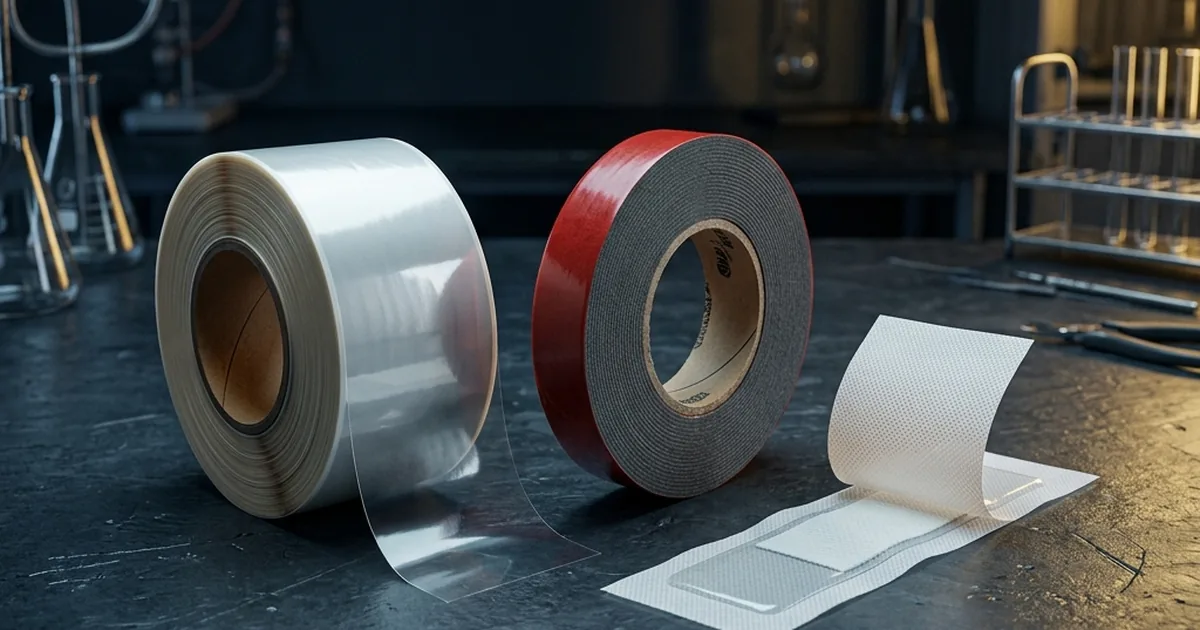
Pressure sensitive adhesives quietly hold together a larger share of modern manufacturing than almost any other bonding technology, from the shipping label on every parcel that moves through global logistics to the skin-contact patch delivering medication through a wearable medical device. A PSA bonds on contact with light hand or roller pressure and needs no solvent evaporation, heat activation, or curing reaction to reach usable strength, which is precisely what makes it indispensable across label converting, tape manufacturing, and medical device assembly — and precisely what makes formulating or specifying one correctly a genuinely difficult balancing act. Getting that balance wrong shows up fast: labels that curl off packaging in cold storage, medical tapes that irritate skin or fail to stay adhered through a shower, or masking tape that leaves adhesive residue baked onto a painted surface. This guide is the complete reference on pressure sensitive adhesive technology: the viscoelastic science behind tack and peel, the major chemistry classes and how they are classified, the performance properties that define a specification, a practical selection framework for labels, tapes, and medical applications, the coating and manufacturing processes that put PSA on a substrate, the testing standards the industry relies on, regulatory and environmental considerations, common failure modes, and where the technology is heading. It draws on the perspective of formulators and process engineers who specify, coat, and troubleshoot PSA systems across converting and medical device manufacturing.
In This Guide
- What Is a Pressure Sensitive Adhesive and Why It Matters in Industry
- The Science Behind PSA: Key Chemistry and Mechanisms
- Types and Classification: A Complete Overview
- Key Performance Properties and Specifications
- Selection Guide: Choosing the Right PSA for Your Application
- Manufacturing and Coating Process
- Testing Methods and Industry Standards
- Regulatory and Environmental Considerations
- Common Problems and How to Address Them
- Industry Trends and Future Outlook
What Is a Pressure Sensitive Adhesive and Why It Matters in Industry
Pressure sensitive adhesives are viscoelastic polymer systems that bond to a substrate through contact and light pressure alone, without a chemical reaction, solvent loss, or added activation energy required to reach handling strength. They sit within the broader discipline of adhesive and sealant chemistry but diverge sharply from structural and hot melt adhesives in that a PSA must remain permanently soft and tacky at room temperature rather than curing to a rigid, cross-linked bond. That permanent softness is what the Dahlquist criterion formalizes: a polymer only behaves as a true pressure sensitive adhesive when its elastic modulus at the application timescale stays low enough — roughly below 3 × 10⁵ pascals — to wet a surface under finger pressure in about one second. For engineers specifying label stock, tape backing, or a skin-contact medical adhesive, understanding how that narrow viscoelastic window is engineered, and where it breaks down, is the difference between a bond that performs for its full service life and one that fails at the worst possible moment.
The Science Behind PSA: Key Chemistry and Mechanisms
Every PSA formulation is an engineered compromise between flow and elasticity, since the polymer must be soft and mobile enough to wet a surface's microscopic texture on contact, yet cohesive enough to resist splitting apart when that bond is later placed under peel or shear stress. Base polymers — acrylics, natural rubber, styrenic block copolymers, and silicones — rarely deliver both properties at the ideal balance on their own, which is why tackifying resins, plasticizers, and crosslinking chemistry are layered on top to shift the viscoelastic window toward the target application. Tackifying resins increase instantaneous wetting and tack by modifying the polymer's low-frequency response, while controlled crosslinking — through radiation, chemical crosslinkers, or metal chelates in acrylics — raises high-frequency cohesive strength so the adhesive resists cold flow and shear creep over time.
These competing requirements collapse into a small set of governing principles that shape every PSA formulation regardless of chemistry class:
- Viscoelastic balance — the polymer must flow like a liquid on the timescale of bond formation and behave like an elastic solid on the timescale of stress removal.
- Tackifier compatibility — resin selection must match the base polymer's polarity or the blend phase-separates, causing hazing, reduced tack, or adhesive migration.
- Crosslink density control — too little crosslinking causes cohesive failure and adhesive transfer; too much stiffens the adhesive and destroys wetting and tack.
- Glass transition tuning — the polymer's Tg is engineered close to but below application temperature so it stays rubbery rather than glassy or fluid.
This viscoelastic balancing act is exactly what separates the major PSA chemistry classes from one another, and understanding it is the foundation for the classification system that follows.
Types and Classification: A Complete Overview
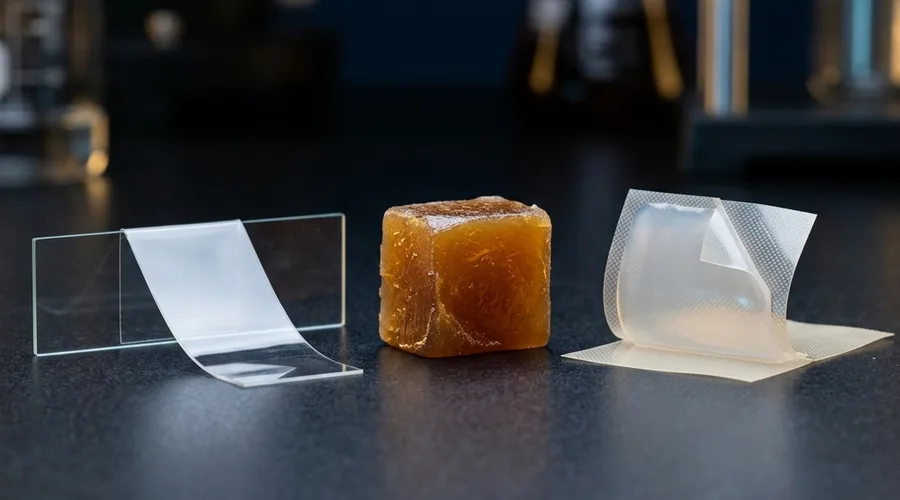
PSA chemistry is classified primarily by base polymer family, and each family occupies a distinct, well-understood position on the cost, performance, and application spectrum rather than existing as an arbitrary marketing category. Acrylic PSAs dominate label and tape markets because of their inherent UV and oxidative stability, clarity, and tunable polarity; rubber-based PSAs — natural rubber and styrenic block copolymer hot melts — deliver the highest instantaneous tack and lowest cost but age poorly under UV and heat; silicone PSAs command a premium for their thermal range and low surface energy substrate performance but cost several times more than acrylics. The table below summarizes the major PSA chemistry classes a specifier is likely to encounter.
Each chemistry class exists because a specific substrate, service temperature, or regulatory requirement demands it — not as an interchangeable commodity choice — which is exactly why the properties section that follows treats PSA performance as application-specific rather than universally rankable.
Key Performance Properties and Specifications
PSA performance is specified against a small set of interdependent properties that predict real-world bonding behavior long before a converting trial or field failure would otherwise reveal a mismatch. Because tack, peel, and shear typically trade off against one another within a single formulation, no property can be optimized in isolation without understanding its effect on the other two corners of what the industry calls the PSA performance triangle. The table below outlines the properties most consistently used to specify and monitor PSA chemistry.
None of these properties tells the full story alone — an adhesive with excellent tack but poor shear will grab instantly and then creep off a vertical surface within days. Carrying this interconnected view directly into the selection process is what prevents a specification that looks correct on a datasheet from failing on the application line.
Selection Guide: Choosing the Right PSA for Your Application
Selecting the right PSA starts with correctly characterizing three things the application actually demands: the substrate's surface energy, the required bond permanence, and the service environment, because a chemistry optimized for permanent bonding to stainless steel will typically fail badly on a removable label for low-density polyethylene film. Treating PSA selection as a single generic "strong adhesive" purchase, without weighing these application-specific factors, is one of the most common and costly mistakes in label and tape specification. The practical decision sequence below reflects how experienced converters and formulators typically approach a new PSA specification.
- Characterize the substrate — surface energy, texture, and flexibility determine whether an acrylic, rubber, or silicone chemistry is even viable.
- Define bond permanence — permanent, removable, or repositionable requirements dictate the peel strength target and crosslink density.
- Establish the service environment — temperature range, UV exposure, humidity, and chemical exposure narrow the chemistry class before cost is even considered.
- Confirm regulatory requirements — food contact, medical biocompatibility, or low-VOC mandates can eliminate entire chemistry classes early.
- Validate with application-specific testing — peel, tack, and shear testing on the actual substrate and under the actual service conditions, not generic reference panels.
This selection logic only pays off if the chosen chemistry can actually be coated onto the substrate at the required thickness and line speed, which is where the manufacturing and coating process becomes the deciding factor in real-world performance.
Manufacturing and Coating Process
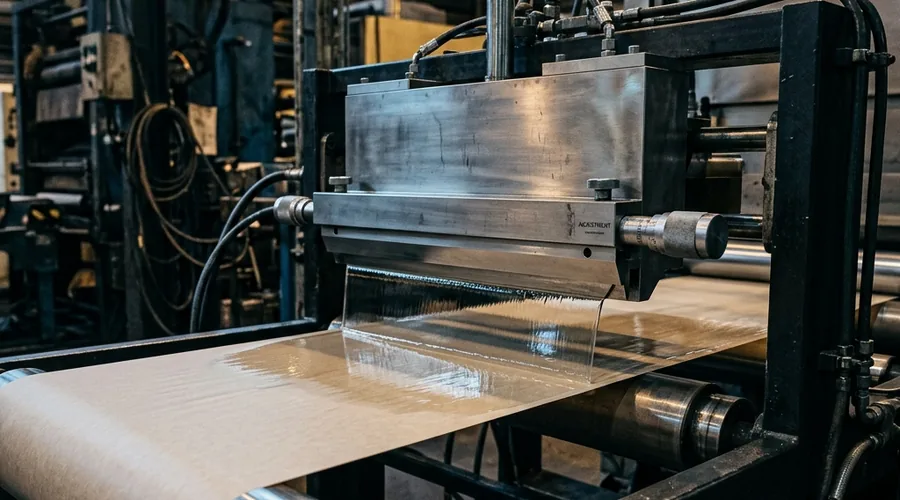
PSA manufacturing hinges on depositing a thin, uniform adhesive film onto a moving web at commercially viable line speeds, and the coating method chosen has a direct effect on achievable thickness control, coat weight uniformity, and maximum production speed. Solvent and emulsion acrylics are typically applied by knife-over-roll, reverse roll, or slot die coating followed by an oven to drive off water or solvent, while hot melt rubber and UV-curable acrylic systems are coated at 100% solids and either cooled or UV-cured in-line, eliminating the drying oven entirely. Coat weight — the mass of adhesive per unit area — is the single most tightly controlled process variable, because even a small deviation shifts the tack-peel-shear balance away from its validated specification.
Testing Methods and Industry Standards
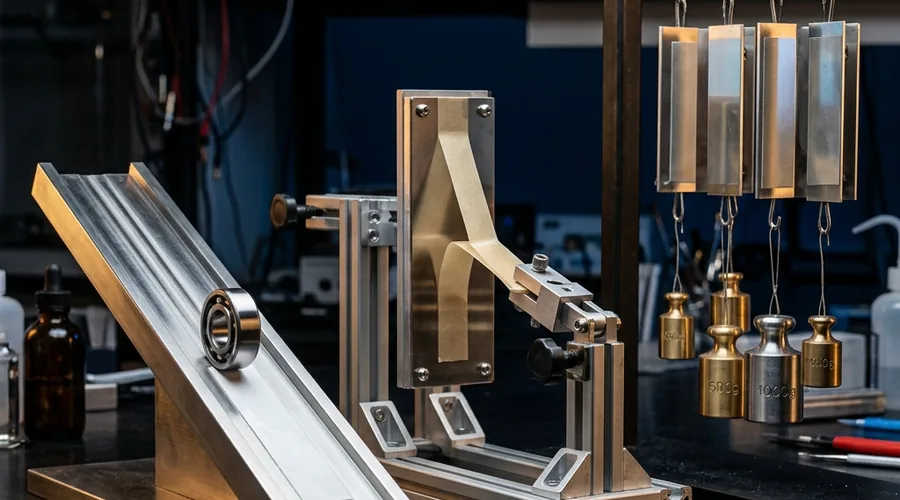
PSA testing has to validate tack, peel, and shear simultaneously because a formulation can pass one test comfortably while failing the application outright on another axis, and the industry has converged on a small set of standardized methods that make results comparable across suppliers and labs. Pressure Sensitive Tape Council (PSTC) and FINAT test methods form the backbone of label and tape specification worldwide, supplemented by ASTM standards for cross-industry comparability.
- PSTC-101 / ASTM D3330 — 180° peel adhesion, the standard method for comparing bond strength to stainless steel or the intended substrate at a fixed peel rate.
- PSTC-107 / ASTM D3654 — static shear (holding power), measuring time to failure under a defined sustained load at a specified temperature.
- ASTM D2979 — probe tack, quantifying instantaneous bond strength on brief, light contact, closely correlated to hand-application "quick stick."
- FINAT FTM 9 — release and unwind force, measuring the force required to unwind label stock from its liner, critical for high-speed label dispensing.
Layering these standardized tests across formulation development, incoming raw material QC, and finished roll release testing is what allows converters to demonstrate consistent, auditable performance to customers rather than relying on formulation intent alone.
Regulatory and Environmental Considerations
Regulatory requirements diverge sharply depending on end use, and treating every PSA application under a single compliance framework is a common specification error that surfaces late in product development. Food-contact label and tape applications must satisfy indirect food-contact adhesive regulations, while skin-contact medical PSAs require biocompatibility testing under ISO 10993 — covering cytotoxicity, sensitization, and irritation — before a device can reach clinical use. Environmental pressure is reshaping chemistry choice industry-wide, with solvent-borne acrylics losing ground to waterborne emulsion and UV-curable 100% solids systems as facilities respond to VOC emission limits and solvent restrictions across Europe and North America. Industry bodies such as the Adhesive and Sealant Council and the Pressure Sensitive Tape Council maintain the technical guidance and test methods that keep formulators aligned with both performance expectations and this shifting regulatory landscape.
Common Problems and How to Address Them
Most PSA field failures trace back to a small set of recurring root causes rather than a genuinely novel chemistry problem, and experienced converters develop a mental checklist of likely culprits before committing to a full reformulation. Recognizing the pattern early is often the difference between a targeted process fix and an expensive requalification cycle.
- Adhesive transfer or residue on removal — usually indicates cohesive failure from insufficient crosslink density or excessive tackifier loading rather than a bonding problem.
- Edge lifting and delamination — often a surface energy mismatch or moisture ingress at the bond line, especially on low-energy plastic substrates.
- Cold flow and adhesive ooze — points to a polymer that is too soft or under-crosslinked for the storage temperature and stacking pressure the product actually experiences.
- Adhesion loss on plasticized substrates — caused by plasticizer migration from the substrate into the adhesive layer, softening it and disrupting the polymer's engineered viscoelastic balance over time.
Reading these failure patterns correctly during a troubleshooting investigation is itself a specialized skill, and it is exactly this diagnostic capability that determines whether a PSA issue gets resolved with a targeted coat weight or crosslinker adjustment or escalates into a full requalification. With these failure mechanisms understood, the natural next question is how the technology itself is evolving to reduce their frequency.
Industry Trends and Future Outlook
The PSA industry is being reshaped by three converging pressures: sustainability targets that are accelerating the shift from solvent-borne to waterborne and UV-curable 100% solids chemistry, growth in wearable and skin-contact medical devices that is driving demand for gentler, biocompatible silicone and hybrid acrylic-silicone chemistries, and recyclable packaging initiatives that are pushing linerless and mono-material label constructions into mainstream converting. Removable and repositionable PSA technology, once a niche category, is expanding rapidly as circular-economy packaging design increasingly requires labels that can be cleanly separated from their substrate during recycling rather than contaminating the plastic or fiber stream. Formulators and process engineers who build technical fluency in low-VOC waterborne acrylic chemistry, UV-curable coating processes, and medical-grade silicone PSA formulation now will be positioned to lead product development as sustainability and medical device growth continue reshaping the pressure sensitive adhesive landscape.
Frequently Asked Questions
1. What is a pressure sensitive adhesive and how does it differ from other adhesive types?
A pressure sensitive adhesive is a viscoelastic polymer system that forms a working bond through simple contact and light applied pressure, without requiring solvent evaporation, heat activation, or a curing chemical reaction to reach handling strength. This distinguishes it fundamentally from structural adhesives like epoxies and polyurethanes, which must cross-link into a rigid thermoset network, and from hot melt adhesives, which need heat to soften before application and then cool to a hardened bond. A true PSA remains permanently soft and tacky at room temperature, governed by what formulators call the Dahlquist criterion — the polymer's elastic modulus must stay low enough at the application timescale for it to flow and wet a surface's microscopic texture within about a second of contact. This permanent viscoelastic softness is exactly what makes PSAs uniquely suited to labels, tapes, and skin-contact medical devices, but it also means PSA performance is far more sensitive to temperature, substrate, and time than a cured structural bond.
2. How do I choose between acrylic, rubber, and silicone PSA chemistry for my application?
Acrylic PSAs are the default choice for the majority of label and tape applications because of their strong UV and oxidative stability, optical clarity, and the ability to tune peel, tack, and shear across a wide range through polymer composition and crosslink density. Rubber-based PSAs — natural rubber and styrenic block copolymer hot melts — deliver the highest instantaneous tack and fastest coating line speeds at the lowest cost, making them well suited to masking tape, packaging tape, and general-purpose labels that will not see extended UV or heat exposure. Silicone PSAs cost significantly more than either alternative but are essentially unmatched for service temperature range, adhesion to low surface energy substrates, and gentleness on skin, which is why they dominate medical wearable devices and high-temperature masking applications despite the cost premium. The right choice ultimately depends on weighing substrate surface energy, service temperature, UV exposure, and budget together rather than defaulting to whichever chemistry a facility already has coating capability for.
3. What is the tack-peel-shear balance and why does it matter in PSA selection?
Tack, peel adhesion, and shear resistance form what the industry calls the PSA performance triangle, because increasing a formulation's tack or peel strength — typically by adding more tackifying resin or reducing crosslink density — almost always reduces shear resistance, and vice versa. Tack measures how quickly and strongly the adhesive bonds under brief, light contact, which matters most for hand-applied labels and quick-stick applications. Peel adhesion measures the force needed to remove the adhesive at a defined angle and speed, predicting both intentional removal behavior and resistance to accidental lifting in service. Shear resistance measures how well the adhesive resists slow cohesive creep under sustained load, which is the property that determines whether a vertically mounted label or a stacked package tape holds its bond for the product's full service life rather than slowly sliding or delaminating.
4. What are the key considerations for selecting a PSA for medical or skin-contact applications?
Medical and skin-contact PSAs must pass biocompatibility testing under ISO 10993, which evaluates cytotoxicity, skin sensitization, and irritation potential before a formulation can be used in a device intended for extended or repeated skin contact. Silicone PSAs are frequently specified for sensitive skin and repeated-wear applications such as wound care dressings and continuous glucose monitors because they bond gently and can be removed with minimal trauma to fragile or compromised skin, while medical-grade acrylics offer higher tack and lower cost for shorter-wear or less sensitive applications. Moisture vapor transmission rate becomes a critical design parameter for any device worn for multiple days, since an adhesive that traps moisture against skin significantly increases irritation and maceration risk. Formulators must also validate wear-time performance under real-world conditions including perspiration, movement, and bathing, since laboratory peel and tack data alone does not reliably predict multi-day skin adhesion performance.
5. Why do some PSAs fail to bond to certain plastics, and how is this addressed?
Low surface energy plastics such as polyethylene and polypropylene resist wetting by standard acrylic PSAs because their surface energy sits below the threshold needed for the adhesive to spread into intimate molecular contact across the substrate's microscopic texture. This shows up as poor initial tack, low peel strength, or bonds that appear to hold initially but fail under any subsequent stress. The most common fix is specifying a chemistry engineered for low surface energy adhesion — typically a rubber-based or specialty acrylic formulation with tackifiers selected for compatibility with nonpolar surfaces — rather than simply applying more adhesive or increasing pressure, neither of which overcomes the underlying surface energy mismatch. Surface treatment of the substrate itself, such as corona or flame treatment to raise its surface energy before lamination, is a complementary approach used widely in converting when the application allows for it.
6. What is the difference between solvent-based, emulsion (waterborne), hot melt, and UV-curable PSA?
Solvent-based acrylic PSAs are dissolved in organic solvent during manufacturing, which allows precise control over molecular weight and crosslink density and produces adhesives with excellent cohesive strength and clarity, but requires solvent recovery or incineration infrastructure to manage VOC emissions during coating and drying. Emulsion, or waterborne, acrylic PSAs disperse the polymer in water rather than solvent, dramatically reducing VOC emissions and regulatory burden, though historically at some cost to water resistance and high-temperature shear performance compared to solvent-based equivalents. Hot melt PSAs, most often rubber-based block copolymer systems, are coated at 100% solids with no solvent or water to remove, enabling very high line speeds and eliminating drying ovens entirely, but they generally age less gracefully under UV and heat exposure than acrylics. UV-curable acrylic PSAs are also coated at 100% solids and then crosslinked in-line by ultraviolet exposure rather than heat, combining the environmental advantage of a solvent-free process with acrylic-level UV and thermal stability, which is why they are gaining share in high-speed label converting facilities under VOC pressure.
7. How are pressure sensitive adhesives tested and what standards govern PSA performance?
PSA performance is validated against three core standardized tests that together characterize the tack-peel-shear triangle: probe tack testing under ASTM D2979, 180-degree peel adhesion testing under ASTM D3330 or PSTC-101, and static shear or holding power testing under ASTM D3654 or PSTC-107. The Pressure Sensitive Tape Council in North America and FINAT in Europe maintain the detailed standardized methods the label and tape industry relies on for supplier comparability, including release and unwind force testing that is critical for high-speed automated label dispensing. Beyond these mechanical tests, service-specific validation such as accelerated UV and heat aging, humidity cycling, and — for medical applications — biocompatibility and wear-time testing round out a complete performance qualification. No single test predicts real-world performance in isolation, which is why converters and formulators typically run a battery of these standardized methods against the actual substrate and service conditions the product will encounter rather than relying on generic reference-panel data alone.
Absar Khan
Absar Khan is a senior industrial consultant with cross-disciplinary expertise spanning pharmaceutical manufacturing, cosmetics and personal care, home and institutional care chemicals, aerosols, lubricants, and advanced process engineering. His work integrates formulation chemistry, GMP facility design, validation science, quality systems, regulatory compliance, and large-scale manufacturing optimization.
LinkedIn Portfolio: Connect with Absar Khan on LinkedIn
Need Expert Guidance on Pressure Sensitive Adhesives?
Our team provides end-to-end technical consultancy — from formulation development and chemistry selection through to scale-up, process engineering, and regulatory strategy.