Vegan Cosmetic Formulation: Ingredient Substitution Guide
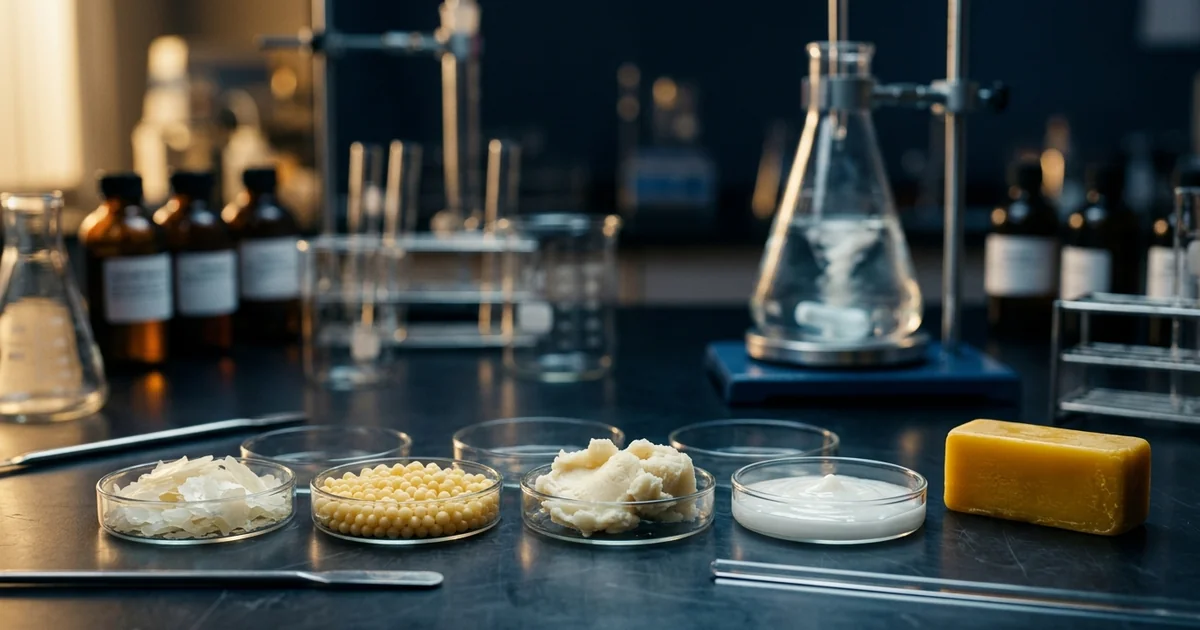
A brand decides to relaunch its skincare line as fully vegan, swaps the beeswax in its lip balm for a plant wax, and discovers at the first stability pull that the sticks have gone soft and the payoff has collapsed. This is the pattern that catches most teams attempting a vegan cosmetic formulation without a substitution plan: one animal-derived ingredient is rarely just one ingredient, and removing it resets part of the formula's structure, stability, or colour. The commercial stakes are real — vegan and cruelty-free positioning now drives purchase decisions across a large share of the personal care market, but a reformulated product that fails stability testing or a certification audit after launch is far more expensive to fix than one designed correctly at the bench. This guide walks through which ingredients actually need substituting, the plant-based alternatives that work for waxes, emulsifiers, emollients, and pigments, and the verification and retesting steps that turn a substitution into a defensible claim. It draws on the same product development approach we apply across our cosmetics and personal care consulting work.
Vegan Cosmetic Formulation vs Cruelty-Free: One Design Constraint
Before any substitution work begins, it helps to be precise about what the two claims mean, because they are frequently conflated and they impose different obligations on the formula and the supply chain. Vegan is a statement about composition — the product contains no animal-derived materials. Cruelty-free is a statement about testing history — neither the finished product nor its ingredients were tested on animals by or for the company. A product can hold one claim without the other, but most brands in this space want both, so formulators generally treat them as a combined constraint that shapes ingredient selection and supplier qualification from the start.
- Vegan — no beeswax, lanolin, carmine, animal collagen, keratin, silk, honey, milk, egg, or tallow derivatives anywhere in the formula, including processing aids
- Cruelty-free — a supply-chain and policy commitment covering animal testing of both the finished product and its raw materials, usually verified through supplier declarations and a fixed cut-off date
- Combined practice — screen the ingredient list for animal origin, then qualify each supplier for testing policy, treating a failure on either axis as a blocker
Recognising that these are separate axes matters because a substitution project can satisfy the vegan requirement at the bench and still stall on the cruelty-free side if a key raw material's supplier cannot provide the testing declaration a certifier expects.
Which Cosmetic Ingredients Are Animal-Derived and Need Substituting
The first practical step in any vegan cosmetic formulation is a line-by-line audit of the existing formula against a list of common animal-derived materials, because several of them hide behind INCI names that give no hint of origin. Ingredients such as glycerin, stearic acid, and squalane can each be animal- or plant-sourced depending on the grade, so origin has to be confirmed per supplier rather than assumed. The audit should also reach past the headline actives into emollients, film formers, structurants, and pigments, where most of the animal-derived materials in modern cosmetics actually sit.
- Beeswax (Cera alba) — structurant and film former in balms, sticks, mascaras and some emulsions
- Lanolin — highly occlusive emollient derived from wool grease, common in lip and hand care
- Carmine / cochineal extract (CI 75470) — a blue-red pigment produced from scale insects, widely used in lip and cheek colour
- Collagen and elastin — film formers and marketing actives, historically bovine or marine in origin
- Keratin and silk (incl. hydrolyzed silk, silk amino acids) — conditioning proteins in hair care and skincare
- Shellac — a film former from lac insect resin, used in nail products and some hair products
- Tallow derivatives — sodium tallowate and tallow-derived fatty acids, glycerin, and surfactant feedstocks
- Honey, beeswax-adjacent bee products (propolis, royal jelly), milk, and egg derivatives — actives and conditioning agents
Completing this audit produces the actual scope of the project — often a much shorter list than expected, since squalane, glycerin, and many surfactants can be resolved at the sourcing level, leaving only a handful of ingredients that need genuine reformulation, starting with the waxes.
Substituting Beeswax and Wax Structurants Without Losing Structure
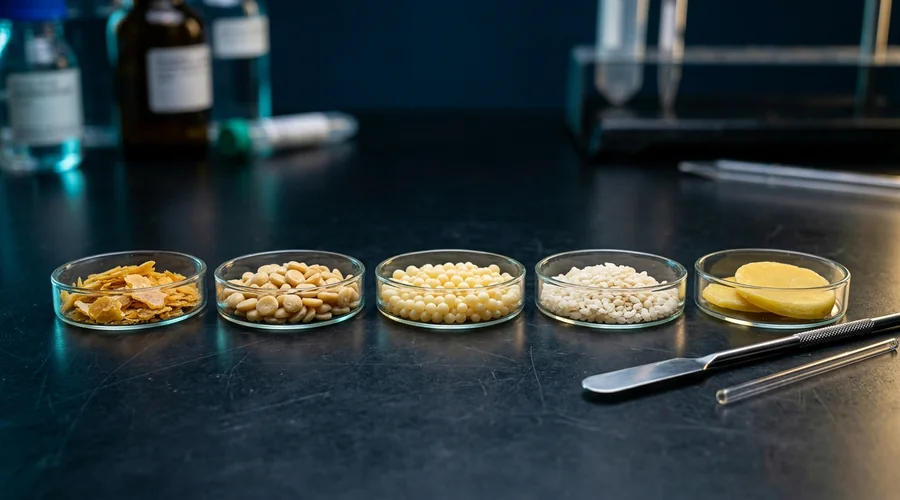
Beeswax is the substitution that causes the most trouble, because it does several jobs at once: it sets hardness, gives sticks their plastic, non-brittle break, controls payoff on skin, and contributes adhesion and a characteristic sensory drag. No single plant wax reproduces that full profile, so replacing it is a blending exercise rather than a swap, and the finished formula almost always needs its liquid oil and butter content rebalanced to rebuild the original texture. This is also true of anhydrous systems more broadly — the same structural logic applies whether the product is a balm, a stick, or a solid cleanser, which is why it overlaps with the design of anhydrous cosmetic formulations.
- Candelilla wax — the closest single substitute for hardness and gloss; more brittle than beeswax, so typically used at a lower level with added flexible oils
- Carnauba wax — very high melting point; used in small amounts to raise heat stability and gloss rather than as a primary structurant
- Sunflower wax and rice bran wax — effective oil gelling and structuring with softer, more flexible films; good for restoring plasticity lost when candelilla is used
- Berry and bran waxes (e.g. bayberry, wheat bran) — niche structurants used to fine-tune melt profile and skin feel
| Property | Beeswax | Candelilla | Sunflower / Rice Bran Wax |
|---|---|---|---|
| Relative hardness contribution | Moderate–high | High (brittle) | Moderate (flexible) |
| Film character | Plastic, adhesive | Glossy, less flexible | Softer, more flexible |
| Melting range | Moderate | Higher | Higher |
| Typical role in substitution | Reference being replaced | Primary hardness | Plasticity and oil structuring |
The practical route is to combine a primary hardness wax with a plasticising wax, rebuild the liquid-to-solid ratio, then confirm hardness, payoff, and melt behaviour with penetrometer or texture-analyser testing across the full temperature range the product will see in transit and use.
Emulsifiers, Emollients, and Protein Actives
Emulsified products are usually easier to make vegan than anhydrous sticks, because the range of plant-derived and plant-plus-synthetic emulsifiers is now broad and covers most oil-in-water applications. The technical work is not finding a vegan emulsifier — it is re-optimising the emulsion around one that will rarely match the original's HLB, gel-network behaviour, or electrolyte tolerance exactly. That re-optimisation intersects directly with cosmetic emulsifier selection and HLB engineering, since a substituted emulsifier changes droplet size, viscosity build, and stability all at once.
- O/W emulsifiers — glyceryl stearate, cetearyl glucoside, sodium stearoyl glutamate, polyglyceryl esters, and sucrose esters cover most plant-derived needs
- Occlusive emollients (lanolin replacement) — no single material matches lanolin; blends of plant butters (shea, cocoa), plant squalane, and heavier esters rebuild occlusivity and cushion
- Conditioning proteins (keratin, silk, collagen replacement) — hydrolysed plant proteins from oat, wheat, soy, pea, or quinoa provide film formation and substantivity; not chemically identical but functionally comparable for most claims
- Film formers — plant-derived polysaccharides and synthetic polymers replace shellac and animal collagen in styling and skincare films
Once the emulsifier and emollient substitutions are settled, the formula is structurally vegan, but the rheology and sensory profile will have shifted, which is why the next iteration usually involves retuning thickeners and texture modifiers before the colour work begins.
Replacing Carmine in Lip and Cheek Colour
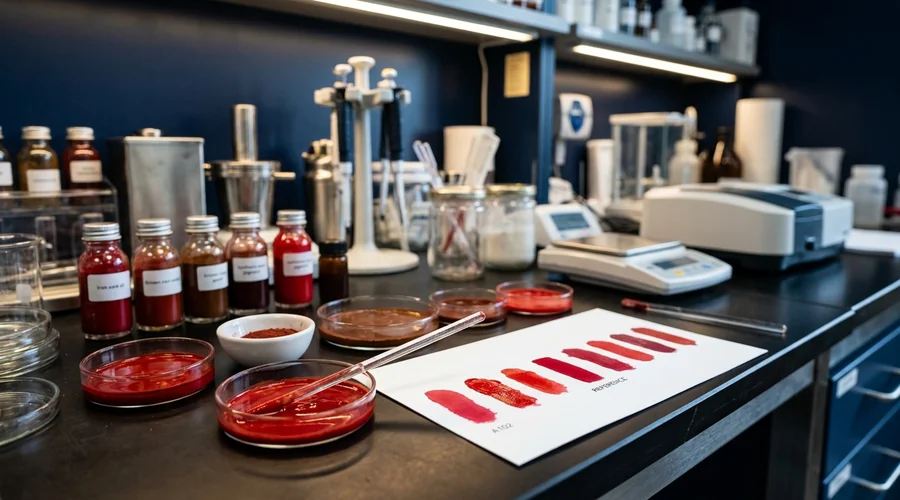
Carmine earns its place in colour cosmetics through a clean blue-red shade, strong light and heat stability, and a long regulatory track record including eye-area approval in many markets. Replacing it is not a single swap but a colour-matching exercise, because the substitute system has to reproduce carmine's exact hue and undertone while holding shade under light and heat and keeping the same skin-safety status. Most formulators rebuild the target shade from permitted synthetic organic pigments and iron oxides, sometimes supported by plant-derived colourants where the application allows, and this connects closely to the mechanics of pigment dispersion, wetting, and milling.
- Iron oxides (CI 77491, 77492, 77499) — the backbone of most carmine replacements for warm reds and browns; excellent stability, broad regulatory acceptance
- Permitted synthetic organic reds — used to reach the clean blue-red tones iron oxides alone cannot deliver; subject to market-specific positive lists and use restrictions
- Plant-derived colourants — usable in some low-stability-demand applications but generally poorer light and pH stability, so treated as accents rather than primary shade builders
- Shade benchmarking — the substitute is developed against a retained carmine standard under controlled lighting, with accelerated light and heat exposure to confirm stability
Colour matching is the most iterative part of a vegan colour reformulation, and it is worth building in several lab rounds and a formal stability comparison against the original standard rather than signing off on a first visual match.
Verification, Certification, and the Retesting Programme
A vegan cosmetic formulation is only as credible as its documentation, and the verification work runs in parallel with the bench substitutions rather than after them. Because many INCI names can be either animal- or plant-derived, each raw material needs an origin confirmation from its supplier — a specification sheet, INCI breakdown, and ideally a signed vegan and animal-testing declaration. Formal certification through schemes such as The Vegan Society's Vegan Trademark then audits that documentation chain, so gaps in traceability of processing aids and carry-over ingredients, not just the main actives, are what tend to hold up approval.
- Supplier documentation — collect origin and animal-testing declarations for every raw material, including colourants, processing aids, and fragrance components
- Certification submission — provide the full ingredient list and supplier declarations to the chosen scheme; expect questions on the least visible ingredients
- Microbiological retest — repeat the preservative challenge test on the final composition following a recognised method such as ISO 11930 or USP <51>, since substitutions change the system's susceptibility
- Stability retest — full stability including freeze-thaw, elevated temperature, and light exposure on the substituted formula, per industry stability testing practice and any applicable regional guidance
- Compatibility and claims — packaging compatibility on the new composition, plus any efficacy retest needed to keep marketing claims defensible
| Substitution Made | Tests That Must Be Repeated |
|---|---|
| Beeswax → plant wax blend | Hardness / penetrometry, melt profile, payoff, elevated-temperature stability |
| Emulsifier change | Droplet size, viscosity, freeze-thaw, full stability, preservative challenge test |
| Carmine → iron oxide / synthetic reds | Shade match vs standard, light and heat stability, regional pigment compliance |
| Protein active swap | Sensory and performance benchmarking, any claim-support retest |
The through-line across every substitution in this guide is that removing an animal-derived ingredient is the start of the work, not the end — the plant-based alternative has to be re-optimised into the formula and then re-validated, and a structured substitution plan with the retesting mapped out in advance is what separates a reformulation that launches on schedule from one that stalls in stability or audit. That planning and validation cycle is precisely the kind of iterative, documentation-heavy development work a dedicated cosmetics formulation partner is built to compress, from maintaining a library of validated vegan alternatives and documented supplier grades through to running the retest programme before a product reaches the shelf.
Frequently Asked Questions
What is the difference between a vegan cosmetic and a cruelty-free cosmetic?
Vegan refers to the formulation itself and means the product contains no animal-derived ingredients — no beeswax, lanolin, carmine, animal-sourced collagen, keratin, silk, honey, or milk derivatives. Cruelty-free refers to the testing history and supply chain and means neither the finished product nor its individual ingredients were tested on animals by or on behalf of the company.
The two claims are independent: a product can be cruelty-free but still contain beeswax, and in principle a product could be fully vegan yet have relied on animal testing somewhere in its ingredient history. Most brands positioning in this space aim to satisfy both at once, which is why formulators typically treat them as a combined design constraint.
Which common cosmetic ingredients are animal-derived and need substituting?
The most frequently encountered ones are beeswax (a structurant in balms, sticks and mascaras), lanolin (an occlusive emollient from wool grease), carmine or cochineal extract (a red pigment from insects), collagen and elastin (film formers and marketing actives, historically bovine or marine), keratin (a hair and nail conditioning protein), silk amino acids and hydrolyzed silk, shellac (a film former from lac insect resin), tallow-derived fatty acids and glycerin, and honey, milk, and egg derivatives.
Squalane is a special case — it was historically sourced from shark liver oil but is now very widely available in an olive- or sugarcane-derived form, so it only needs attention at the sourcing-specification level rather than full substitution.
What are the best plant-based substitutes for beeswax in a balm or stick?
There is no single drop-in replacement, because beeswax contributes a specific combination of melting behaviour, plasticity, and skin adhesion that no one plant wax reproduces exactly. Candelilla wax is the closest single substitute for hardness and gloss but is more brittle, so it is often used at a lower level than the beeswax it replaces. Carnauba wax raises melting point and gloss and is useful in small amounts for heat stability. Sunflower wax and rice bran wax are good structurants with softer, more flexible films.
In practice formulators blend two or three of these and re-balance the liquid oil and butter content to rebuild the original hardness, payoff, and sensory profile, then confirm the result with penetrometer or texture-analyser testing across the intended temperature range.
Can an oil-in-water cream be reformulated as vegan without losing stability?
Yes, and it is usually one of the more straightforward substitutions because a large and growing range of plant-derived and synthetic emulsifiers is available. Emulsifiers such as glyceryl stearate, cetearyl glucoside, sodium stearoyl glutamate, and various polyglyceryl esters are plant-derived or plant-plus-synthetic and cover most O/W applications.
The main technical work is not finding a vegan emulsifier but re-optimising the system, because the replacement will rarely have exactly the same HLB, gel-network behaviour, or electrolyte tolerance as the original. That means re-checking emulsion droplet size, viscosity build, freeze-thaw performance, and preservative efficacy, since changing the emulsifier can shift all of them.
How do brands actually verify that a raw material is vegan?
The starting point is the supplier's technical documentation — the specification sheet, the INCI breakdown, and ideally a signed statement confirming the material contains no animal-derived components and, for cruelty-free claims, no animal testing. Because many INCI names such as glycerin, stearic acid, or squalane can legitimately be either animal- or plant-derived, the origin has to be confirmed per supplier and per grade, not assumed from the name.
Brands seeking formal certification through schemes such as The Vegan Society's Vegan Trademark submit the full ingredient list and supporting supplier declarations for review, and the certifier audits the documentation chain. Traceability of processing aids and carry-over ingredients, not just the headline actives, is the part that most often trips up an otherwise vegan formula.
Is carmine hard to replace in colour cosmetics?
Carmine is valued for its clean blue-red shade, light stability, and long regulatory history, so replacing it does require some formulation work rather than a straight swap. The usual approach is a combination of permitted synthetic organic pigments and iron oxides to rebuild the target shade, sometimes supported by plant-derived colourants where the application and stability requirements allow.
The challenges are matching carmine's exact hue and undertone, maintaining shade stability under light and heat, and keeping the same skin-safety and eye-area approval status, which is why colour matching for lip and cheek products is typically an iterative lab exercise benchmarked against the original standard.
Does removing animal-derived ingredients change the preservative system?
It can, indirectly. Swapping emulsifiers, waxes, or emollients changes the formulation's water activity, pH, partitioning behaviour, and the amount of readily metabolised organic matter available to microbes, all of which influence how well a given preservative performs. A preservative system that passed challenge testing in the original formula cannot be assumed to pass in the substituted one.
Any vegan reformulation therefore needs its microbiological challenge test repeated on the final composition, following a recognised method such as the ISO 11930 or USP <51> protocol, before it can be considered shelf-stable.
Why hire a formulation consultant for a vegan reformulation instead of doing it in-house?
Substituting a single animal-derived ingredient rarely stays contained to that one line of the formula — replacing beeswax changes hardness and melt behaviour, replacing an emulsifier changes stability and preservation, replacing carmine changes the colour-matching and stability work, and every change resets part of the testing programme.
A consultant who has run vegan reformulations before brings a library of validated plant-based alternatives, supplier relationships for documented vegan grades, and a structured retest plan, which compresses what can otherwise be many months of trial-and-error. It also reduces the risk of a launched product failing stability or a certification audit after the fact, which is far more costly to fix than getting the substitution right at the bench.
Planning a Vegan or Cruelty-Free Reformulation?
Global Formulation provides cosmetics and personal care consultancy — ingredient substitution, plant-based alternative sourcing, and the stability and challenge retesting a vegan claim needs.
Talk to Our Formulation Team