DOT 3 vs DOT 4 vs DOT 5 Brake Fluid Chemistry Guide
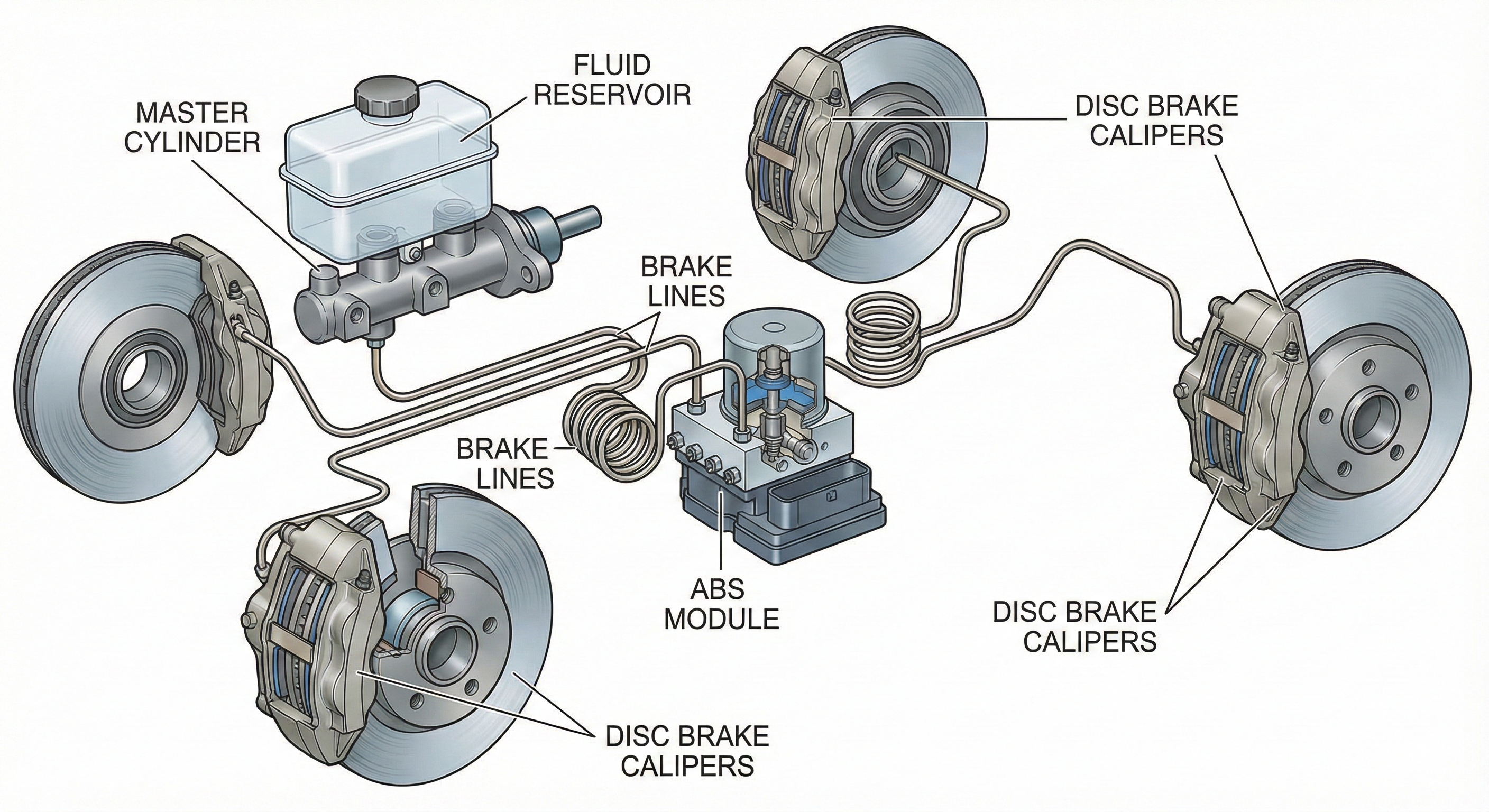
Brake fluid is one of the most safety-critical consumables in any automotive or heavy-industry hydraulic system, yet it remains widely misunderstood by entrepreneurs, formulations chemists, and supply-chain officers entering the chemical blending space. Designed to act as an incompressible medium, brake fluid must transmit massive kinetic forces under extreme heat spikes, sub-zero cold starts, and atmospheric moisture exposure. Choosing, developing, or manufacturing the wrong fluid specification can lead to catastrophic system corrosion, seal degradation, or sudden vapor lock.
Why Brake Fluid Selection Matters in Modern Vehicles
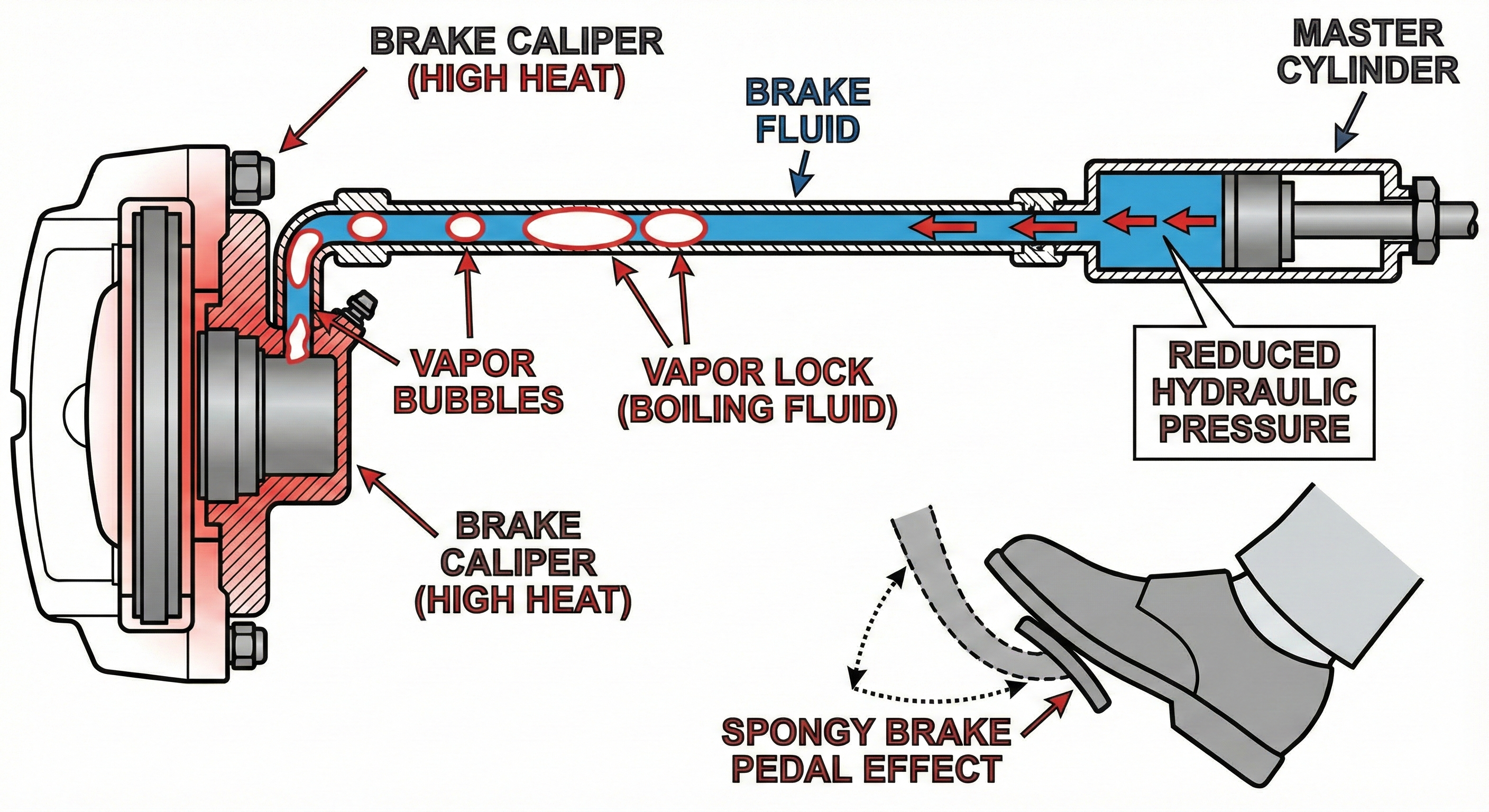
Unlike conventional motor oils or general-purpose hydraulic fluids, brake fluid operates in a highly localized, extreme-temperature environment within brake calipers and master cylinders. During intensive deceleration or prolonged braking down mountain passes, kinetic energy is converted into massive thermal energy at the brake pad-rotor interface, pushing caliper temperatures well above 200°C. If the fluid's boiling point degrades, or if it contains free moisture, it can boil, producing highly compressible gas pockets that lead to dangerous pedal sponginess and total braking system failure.
Modern safety systems, such as Electronic Stability Control (ESC) and Anti-lock Braking Systems (ABS), rely on rapid micro-pulsing valves that actuate dozens of times per second. This high-frequency mechanical response requires the hydraulic medium to maintain a exceptionally precise kinematic viscosity profile across all thermal regimes. Choosing an improper fluid type or a degraded formula introduces several key mechanical risks to the vehicle's hydraulic architecture:
- Vapor Lock due to Localized Boiling: The formation of compressible gas bubbles within the brake line, causing complete loss of hydraulic pressure and a spongy, ineffective brake pedal.
- Elastomer Seal Incompatibility: Chemical swelling, shrinking, or accelerated hardening of the EPDM rubber seals, leading to fluid leaks or pressure loss in the master and wheel cylinders.
- Internal System Corrosion: Accelerated galvanic corrosion of steel, cast iron, copper, brass, and aluminum components due to water absorption and additive depletion.
- ABS Valve Actuation Delays: Sluggish response of high-frequency electronic valves when the fluid's low-temperature viscosity exceeds critical operating limits.
Brake Fluid Classification and DOT Standards
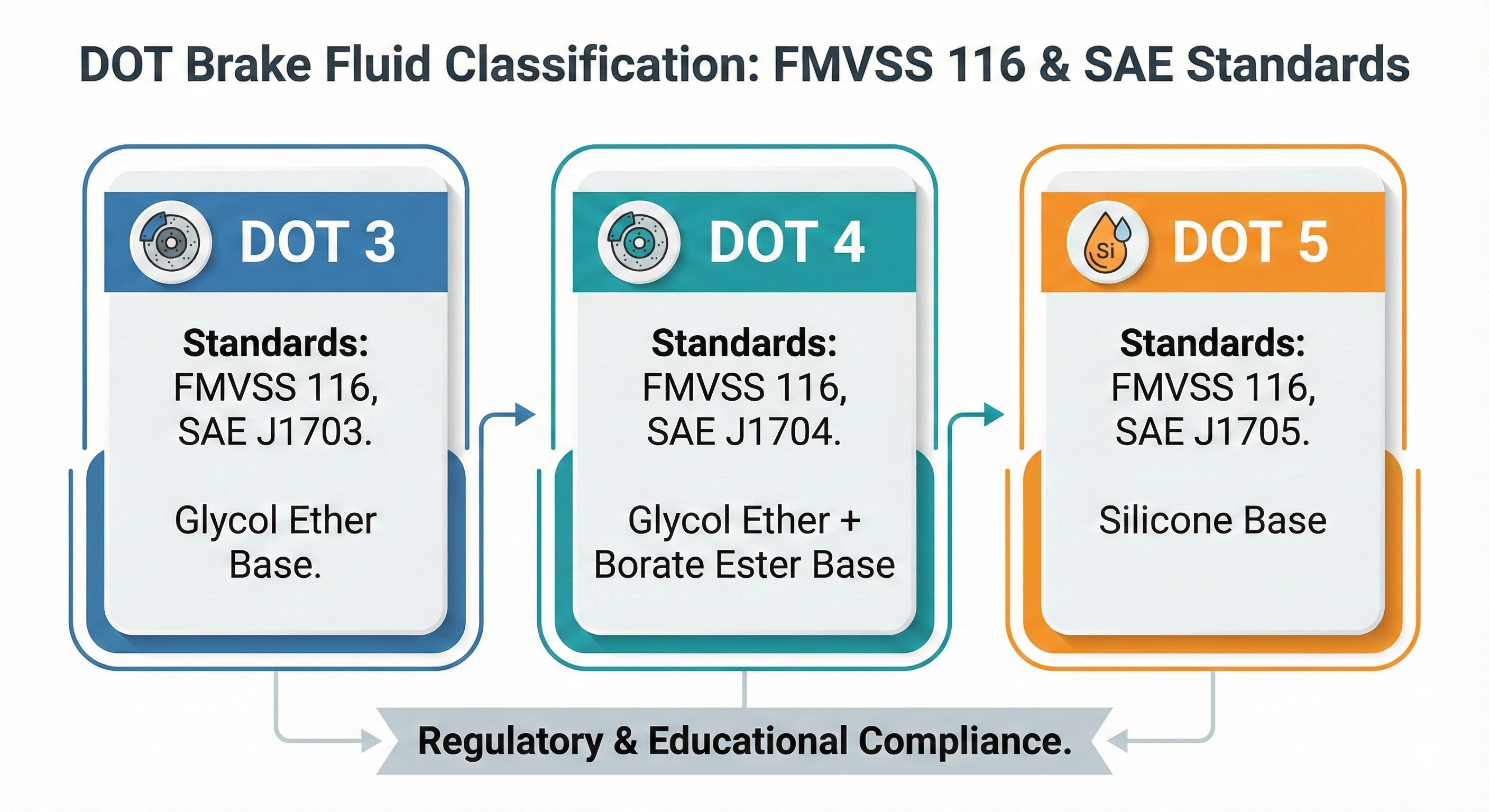
Automotive brake fluids are strictly regulated globally to ensure public safety, classified under the Department of Transportation (DOT) standards in the United States, specifically codified in the Federal Motor Vehicle Safety Standard (FMVSS) No. 116. These regulations define explicit limits for physical properties including dry equilibrium reflux boiling point (ERBP), wet equilibrium reflux boiling point (wet ERBP), kinematic viscosity, pH, and elastomer compatibility. Similar international standards, such as SAE J1703, SAE J1704, SAE J1705, ISO 4925, and India's Bureau of Indian Standards (BIS) IS 8654, align closely with these DOT performance limits.
It is a common misconception that higher DOT ratings indicate a premium quality hierarchy for all applications. In reality, these classes represent completely different chemical formulations tailored to specific mechanical and operational environments. Standard hydraulic braking systems must be matched strictly with their designed fluid class, as mixing incompatible types can result in chemical reactions, precipitate formation, or seal destruction:
To maintain strict compliance and ensure mechanical safety when auditing or formulating hydraulic fluids, developers must adhere to several fundamental compatibility and material safety guidelines:
- Glycol-Ether vs. Silicone Chemistry: DOT 3, DOT 4, and DOT 5.1 are fully compatible, glycol-ether based fluids, whereas DOT 5 is a completely distinct silicone-based fluid that cannot be mixed with any other class.
- Hygroscopic moisture absorption properties: Glycol-based fluids naturally absorb atmospheric moisture over time to keep water fully dissolved, preventing dangerous localized pockets of free water in the lines.
- Backward Compatibility Constraints: While DOT 4 can safely replace and upgrade a DOT 3 system due to similar base chemistry, DOT 5 can never be mixed with glycol fluids, as doing so causes rapid phase separation and seal failures.
For authoritative statutory details on performance limits, reference the official FMVSS 116 Code of Federal Regulations.
DOT 3 Brake Fluid – Chemistry and Development
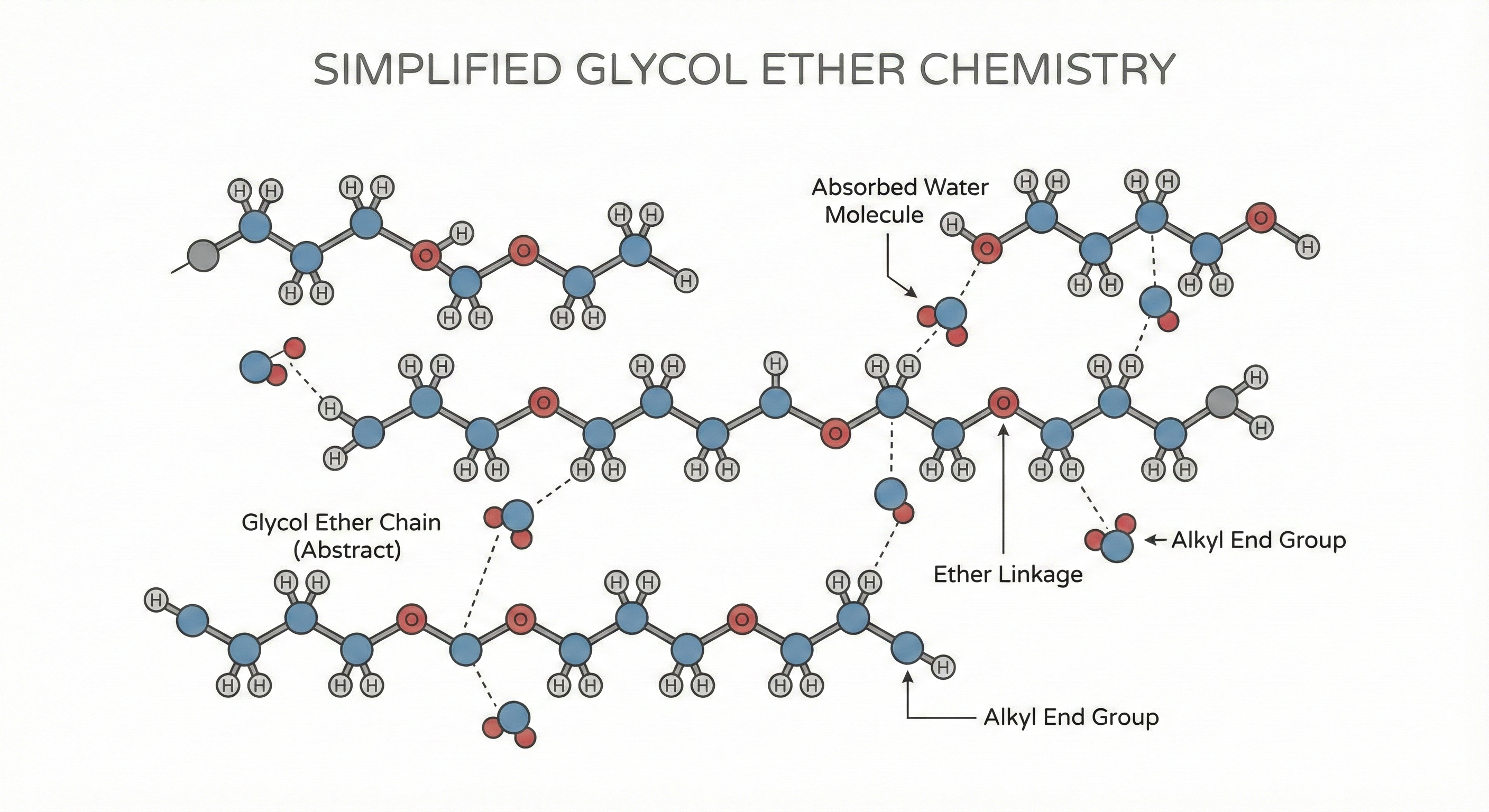
DOT 3 brake fluid is the historic workhorse of the automotive industry, formulated primarily from high-boiling-point glycol ethers — one of several base fluid chemistries used across the hydraulic and lubricant industry. The base chemical composition typically consists of a blend of polyethylene glycol monomethyl ether, triethylene glycol monoethyl ether, and triethylene glycol monobutyl ether. These molecules feature highly polar ether and hydroxyl groups, which provide excellent hydraulic stability, low compressibility, and a stable viscosity index under normal operating conditions.
A defining characteristic of glycol ether chemistry is its hygroscopic nature, meaning it actively attracts and absorbs moisture from the atmosphere through flexible rubber brake hoses and master cylinder reservoir seals. While this water absorption is intentional to prevent corrosive free-water pockets, it slowly lowers the boiling point over time. This degradation requires shorter fluid service intervals to maintain safe operation, especially in humid regions:
From a commercial and formulation standpoint, DOT 3 remains highly popular in mass-market and cost-sensitive segments, though its market share is slowly shifting to newer specifications:
- Dominant in regional aftermarket sales: Highly popular in cost-sensitive markets like India's passenger and commercial vehicle aftermarket due to low raw material costs.
- Low formulation raw material cost: Primarily built using standard glycol ethers, avoiding the expensive borate ester components required for DOT 4 and DOT 5.1.
- Accelerated service replacement cycle: Rapidly degrades in boiling point when exposed to high-humidity climates, requiring replacement every 12 to 24 months.
For detailed testing procedures and regulatory benchmarks of DOT 3 systems, reference the official SAE J1703 Standard Specification.
DOT 4 Brake Fluid – Enhanced Performance Formulation
DOT 4 brake fluid represents a significant evolutionary step in automotive chemistry, designed to handle the higher thermal loads of modern vehicles equipped with compact caliper assemblies and electronic driver aids. The primary chemical upgrade over DOT 3 is the integration of borate ester additives, such as tris[2-[2-(2-methoxyethoxy)ethoxy]ethyl] borate. These borate ester compounds act as highly active chemical moisture scavengers, dramatically improving the fluid's thermal stability.
When atmospheric moisture enters a DOT 4 system, the water molecules chemically react with the borate ester compounds to undergo transesterification, producing boric acid and standard glycol ethers. This chemical reaction effectively binds the water, preventing the rapid drop in boiling point seen in DOT 3 fluids. This chemical moisture control allows DOT 4 to maintain a higher wet boiling point throughout its operating lifecycle:
For manufacturing chemists and blending startups, DOT 4 represents the fastest-growing and most commercially rewarding segment of the automotive chemical market:
- Significantly longer service life: The borate ester moisture scavenging reaction extends the safe operating life of the fluid up to 24 to 36 months.
- Higher formulation and raw material cost: Borate esters are complex chemical compounds, raising production costs compared to basic DOT 3 glycol-ether blends.
- Excellent export and OE supply potential: Highly sought after by modern vehicle manufacturers (OEs) and international export markets with strict safety guidelines.
For further details on performance guidelines and low-viscosity Class 6 standards, reference the official SAE J1704 Standard Specification.
DOT 5 Brake Fluid – Silicone-Based Technology
DOT 5 brake fluid stands completely apart from glycol-based fluids, utilizing a highly synthetic silicone base consisting primarily of polydimethylsiloxane (PDMS) polymers. Unlike hygroscopic glycol ethers, silicone fluid is hydrophobic and entirely non-hygroscopic. It does not absorb atmospheric moisture, ensuring that the boiling point of the fluid in the system remains close to its dry limit throughout its service life, regardless of environmental humidity.
While this non-hygroscopic behavior seems ideal, it introduces major mechanical challenges in daily passenger vehicles. Because silicone fluid does not absorb water, any moisture entering the system remains as free water. Due to gravity and lack of miscibility, this free water pools at the lowest points of the braking system, typically inside the brake calipers. Under high braking temperatures, this free water boils at just 100°C, causing sudden and complete vapor lock. Furthermore, silicone fluids exhibit high compressibility, creating a spongy pedal feel that makes them incompatible with ABS and ESC micro-valves:
Silicone-based DOT 5 fluids are specialized, high-cost formulations restricted to niche applications that require long storage periods without regular maintenance:
- Total chemical incompatibility with glycol: Blending even trace amounts of DOT 5 with glycol-based fluids causes rapid phase separation, sludge formation, and total seal failure.
- Highly unsuitable for ABS/ESP systems: Silicone fluid naturally entrains small air bubbles when agitated, which, combined with high compressibility, interferes with micro-valve calibration.
- Specialized military and museum applications: Primarily used in military tactical vehicles, collector cars, and museum vehicles stored for years without fluid replacement.
For regulatory parameters regarding non-hygroscopic silicone-based hydraulic fluids, reference the official SAE J1705 Standard Specification.
DOT 3 vs DOT 4 vs DOT 5 – Technical Comparison
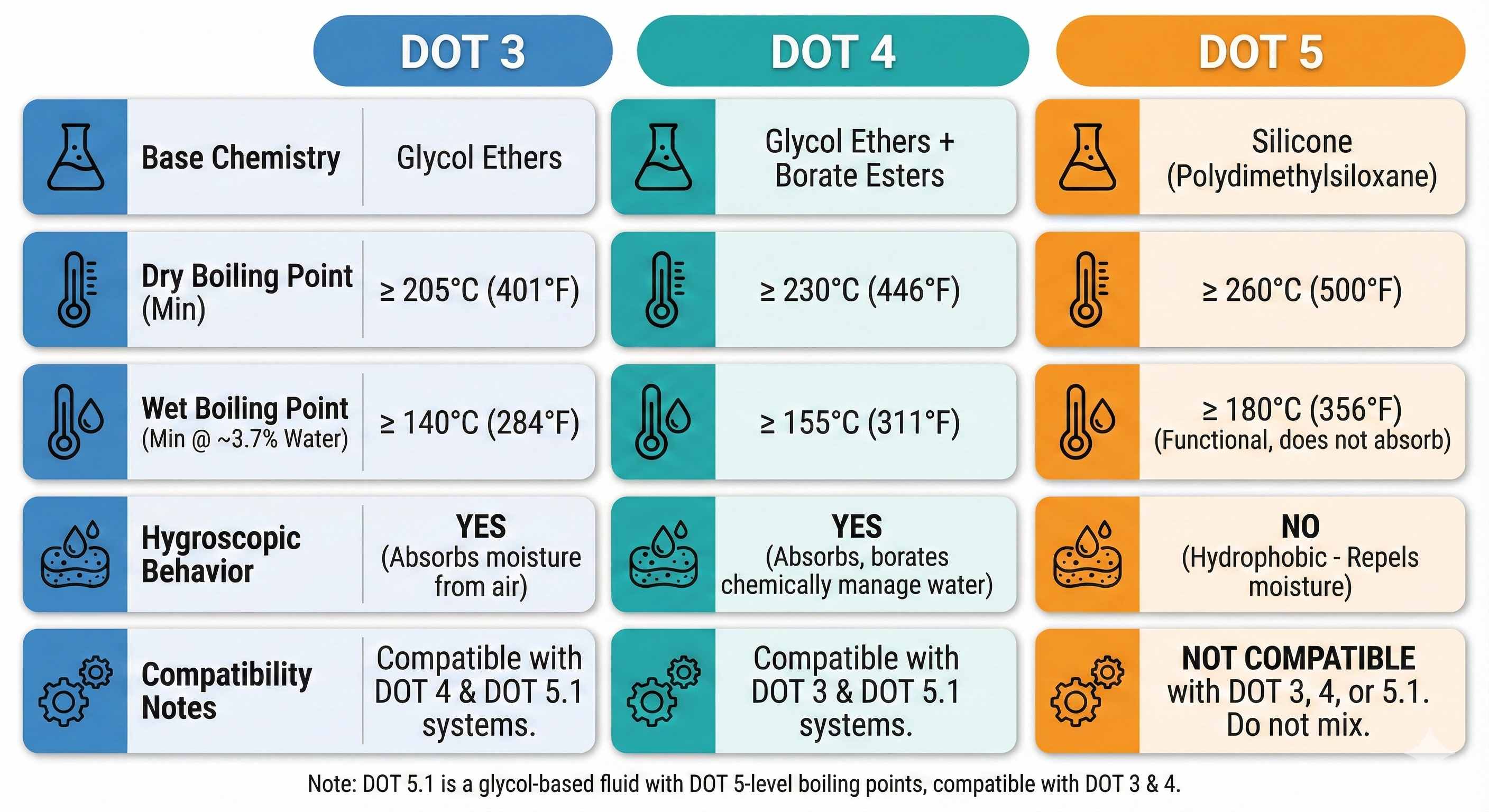
Understanding the differences between these brake fluids requires analyzing their physical chemistry and how they behave inside a pressurized hydraulic system. While dry and wet boiling points are the most publicized specifications, cold kinematic viscosity is equally critical. In freezing climates, highly viscous fluid slow ABS valve actuation, while excessively thin fluid can cause pump bypass and pressure drops.
A comprehensive technical comparison reveals that DOT 3 and DOT 4 represent an evolutionary lineage of glycol chemistry, whereas DOT 5 represents a parallel silicone technology developed for specialized operational demands:
Brake Fluid Manufacturing Process (High-Level)
Brake fluid manufacturing is a highly controlled physical blending process rather than a complex synthesis reaction, but it requires the same strict moisture control and process discipline needed when taking any chemical formulation from lab to market. Because glycol ethers and borate esters are highly hygroscopic, exposure to ambient humidity during manufacturing will immediately compromise the product's dry and wet boiling points. Blending must therefore be carried out under a dry nitrogen blanket in fully sealed stainless steel vessels.
Quality assurance during manufacturing requires careful raw material dehydrated verification, temperature-monitored blending, and multi-stage microfiltration to remove trace particulates that could clog ABS micro-valves. Below is the typical processing flow for an industrial-grade brake fluid blending facility:
- Raw Material Dehydration & Storage: Storing glycol ethers and borate esters in sealed tanks equipped with silica gel breathers or nitrogen gas blankets to prevent moisture absorption.
- Nitrogen-Purged Batch Blending: Blending base fluids, borate ester scavengers, and specialized additives (such as alkyl amines and benzotriazole corrosion inhibitors) under a continuous nitrogen purge.
- Particulate Micro-Filtration: Passing the blended batch through multi-stage cartridge filters (typically rated at 1 to 5 microns) to eliminate microscopic particulates.
- Analytical Batch Testing: Verifying boiling points, cold kinematic viscosity, pH, and water content via Karl Fischer titration before releasing the batch for filling.
- Hermetic Packaging & Sealing: Filling the fluid into dry HDPE or tinplate containers under a nitrogen head space, followed by immediate induction heat sealing to guarantee a moisture barrier.
Regulatory and Compliance Considerations
Brake fluid is a strictly regulated automotive safety product. Selling non-compliant fluid can expose manufacturers to massive legal liabilities, product recalls, and export bans. In India, brake fluids must bear the mandatory ISI mark from the Bureau of Indian Standards (BIS) under standard IS 8654. For export markets, developers must secure independent laboratory validations confirming strict compliance with FMVSS 116, SAE, and ISO standards.
Beyond chemical specs, compliance requires maintaining meticulous batch documentation and safety labeling to meet global GHS (Globally Harmonized System) regulations. Every batch must be backed by a clear testing and traceability trial:
- Rigorous Batch Traceability: Maintaining detailed blending logs, raw material lot numbers, and retaining physical batch samples for at least 3 to 5 years.
- Certificate of Analysis (COA): Issuing formal batch analysis sheets confirming dry/wet ERBP, viscosity index, and trace water percentage.
- Compliant Safety Data Sheet (SDS): Providing detailed GHS-compliant hazard identification sheets, especially highlighting the toxicity of glycol ethers if swallowed.
- Explicit Hazard Labeling: Ensuring packaging displays clear DOT rating markings, safety warnings, and clear instructions to keep containers tightly sealed against moisture.
Business and Startup Perspective
From a commercial and business perspective, the automotive brake fluid market offers high margins and stable volumes, but represents a challenging space for startups due to strict liability and raw material sourcing rules. Entering the market with standard glycol-based DOT 4 fluid is generally the most strategic path, as it commands premium pricing while maintaining massive, broad-market compatibility — an approach that pairs well with an asset-light contract manufacturing model for a first product line.
Startups and new chemical brands frequently run into several avoidable operational and commercial pitfalls during their initial scale-up phase:
- Commoditizing the product: Attempting to compete solely on price rather than establishing technical superiority, compliance certifications, and premium packaging design.
- Neglecting filling line moisture control: Utilizing open gravity-filling machines in high-humidity facilities, which ruins the batch's boiling point before it even reaches retail shelves.
- Mislabeled DOT classifications: Incorrectly labeling or mixing up DOT classes on marketing collateral, causing severe customer liability risks.
- Attempting DOT 5 without specialized systems: Promoting silicone fluid to general passenger vehicle owners without highlighting its ABS incompatibility and glycol mixing risks.
Choosing the Right Brake Fluid for Your Application
Brake fluid selection must always be aligned with the mechanical design of the vehicle's braking system, the expected operating conditions, and OEM specifications, rather than simply selecting the fluid with the highest boiling point.
For optimal safety and performance across different applications, operators and fleet managers should follow these core engineering selection rules:
- DOT 3 Applications: Restricted to older passenger cars, vintage utility vehicles, and budget fleet operations designed specifically for non-borate systems where operating temperatures remain moderate.
- DOT 4 Applications: The absolute standard for modern passenger vehicles, commercial trucks, ABS/ESC systems, and heavy-duty vehicles operating under high-temperature urban and mountainous conditions.
- DOT 5 Applications: Strictly limited to specialized military tactical vehicles, collector cars stored for long periods, and classic vehicles with compatible silicone-safe braking hardware.
Final Thoughts – From Chemistry to Commercial Success
DOT 3, DOT 4, and DOT 5 brake fluids represent three distinct engineering philosophies, each shaped by unique chemical compositions, system designs, and safety requirements. Understanding these physical chemistry principles is essential not only for vehicle maintenance but also for any startup or enterprise looking to formulate, manufacture, or market automotive lubricants and specialty fluids.
For entrepreneurs, success in this highly competitive, safety-critical industry depends on strict compliance, process discipline, and raw material quality, rather than cutting corners in the blending lab. A nearby entry point on the automotive-fluid shelf is coolant: the Engine Coolant & Antifreeze Manufacturing Standard Project Report is an India-basis feasibility and financial study — three costed investment configurations, a five-year projected P&L with IRR and payback, and an itemised plant and machinery schedule.
Frequently Asked Questions (FAQ)
1. Can DOT 3 be replaced with DOT 4?
Yes, glycol-ether based DOT 4 can be used in systems designed for DOT 3, as it offers a higher boiling point and is backward compatible. However, the system should be thoroughly flushed if changing specifications to prevent residual moisture contamination. Because DOT 4 relies on borate ester moisture scavengers not present in DOT 3, mixing rather than fully replacing the fluid can dilute this chemistry and reduce the expected service life gain.
2. Why is DOT 5 not commonly used?
DOT 5 is a silicone-based fluid which is non-hygroscopic and does not mix with glycol-ether fluids. Because it doesn't absorb water, any moisture entering the system remains as free water, which can gather at calipers and boil at 100°C, causing sudden vapor lock. Furthermore, silicone fluids exhibit higher compressibility, giving a spongier pedal feel, and are incompatible with ABS/ESP high-frequency micro-pulsing valves.
3. Is DOT 4 suitable for Indian climate?
Yes, DOT 4 is highly suitable and widely used in India. It offers a higher wet boiling point (155°C) than DOT 3 (140°C), making it far more resistant to vapor lock under the extreme summer ambient temperatures and high thermal loads of congested city driving or mountainous terrains in India. Its borate ester chemistry also gives it a longer service interval than DOT 3 in humid coastal regions, where moisture ingress is more aggressive.
4. How long does brake fluid last in storage?
In its original, unopened, and hermetically sealed container, brake fluid typically has a shelf life of 2 to 5 years, depending on storage conditions. Once the seal is broken, the fluid immediately begins absorbing atmospheric moisture, meaning it must be used promptly or discarded. This is why manufacturers fill containers under a nitrogen head space and heat-seal them immediately after production, rather than relying on the cap alone to preserve the boiling point specification.
5. Why is brake fluid manufactured under a nitrogen atmosphere?
Glycol ethers and borate esters are highly hygroscopic, so even brief exposure to ambient humidity during blending can raise the fluid's water content and lower its dry and wet boiling points before it ever reaches a vehicle. Manufacturing under a dry nitrogen blanket in sealed stainless steel vessels keeps atmospheric moisture out of the batch during blending, filtration, and filling. This same nitrogen-purged approach extends to the packaging stage, where fluid is filled under a nitrogen head space and immediately heat-sealed to preserve the boiling point specification until the container is opened.
6. What happens if DOT 5 silicone fluid is mixed with DOT 3 or DOT 4?
DOT 5 silicone fluid and glycol-ether-based DOT 3 or DOT 4 fluids are chemically incompatible and do not mix into a single phase. Combining them causes rapid phase separation and can produce sludge or precipitate that clogs narrow ABS valve passages and brake line fittings. Because of this, DOT 5 should never be topped up into a system that has run glycol-based fluid without a complete flush and seal replacement appropriate for silicone service.
Need Brake Fluid Formulation & Compliance Engineering Support?
Discuss your physical chemistry formulation parameters, EPDM seal compatibility checks, and moisture-controlled blending facility setup with industrial specialist Absar Khan.
Email: consulting@globalformulation.com
Phone: +91 9819548320 +91 8169102990
About the Specialist
Absar Khan is a senior industrial consultant with cross-disciplinary expertise spanning pharmaceutical manufacturing, cosmetics and personal care, home and institutional care chemicals, aerosols, lubricants, and advanced process engineering. His work integrates multiple scientific and engineering domains, including formulation chemistry, GMP facility design, validation science, quality systems, regulatory compliance, and large-scale manufacturing optimization.
LinkedIn Portfolio: Connect with Absar Khan on LinkedIn