Clinical Efficacy Testing for Cosmetic Claims: Instrumental and Sensory Methods
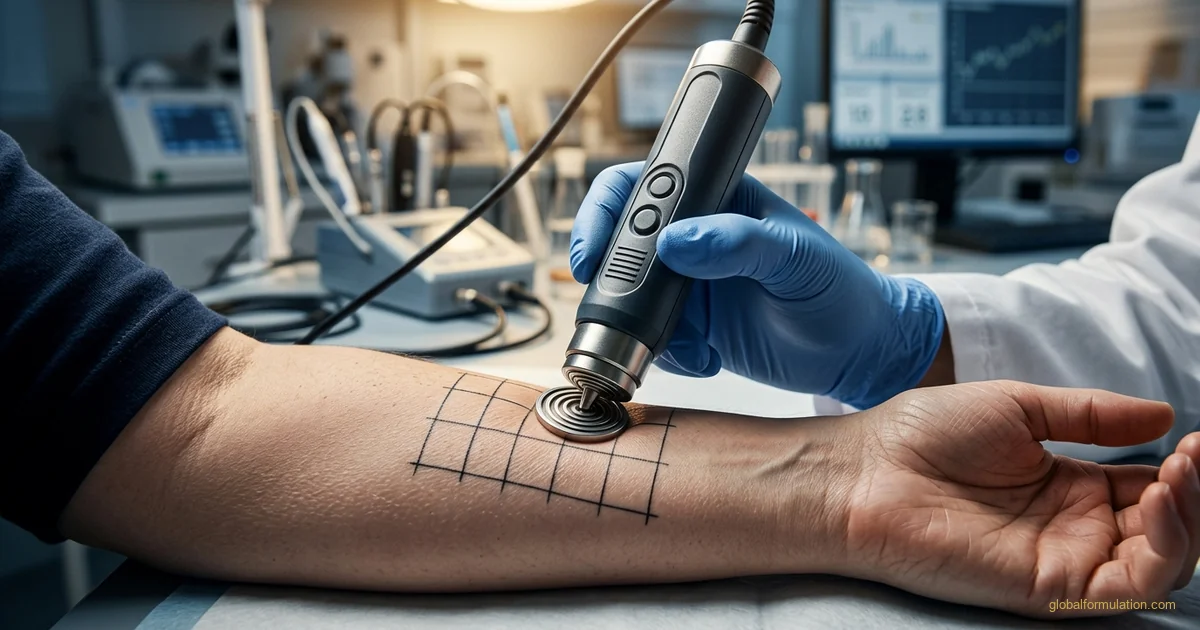
A jar promising it is "clinically proven to reduce the appearance of fine lines in four weeks" is making a specific, testable claim — and under both the EU Cosmetics Regulation and US advertising law, that claim needs evidence able to survive scrutiny before it ever reaches a shelf. Cosmetic claim substantiation testing is the discipline of generating that evidence: instrumental measurements and structured sensory data proving a formulation does what its label says, without ever needing to publish the formula itself. Brands that skip this step, or lean on informal "it felt nicer" feedback from a handful of testers, usually discover the gap only when a regulator, retailer, or competitor challenges the claim and no defensible data exists to answer back. This guide walks through the instrumental devices and sensory panel protocols cosmetic scientists actually use to substantiate efficacy claims, how to match a test method to the specific claim being made, and where study design most often falls apart. Global Formulation works with indie beauty brands and established manufacturers on exactly this kind of testing strategy, building substantiation into product development rather than scrambling for it after launch.
Why Cosmetic Claims Need Documented Evidence, Not Just a Good Formula
A formula performing well in internal testing is not the same thing as a formula with a legally defensible claim attached to it, and that gap catches brands off guard constantly. Under EU Cosmetics Regulation (EC) No 1223/2009, every marketing claim made about a cosmetic product has to satisfy six common criteria set out in the accompanying Commission Regulation: legal compliance, truthfulness, evidential support, honesty, fairness, and enabling informed decisions. In the US, the FTC's advertising substantiation doctrine requires an advertiser to already hold "competent and reliable scientific evidence" supporting a claim at the moment it is published, not to go find that evidence only after being challenged. Neither framework cares how good the formula actually is if the paperwork behind the claim doesn't hold up.
- Regulatory exposure — an EU market surveillance authority or the FTC can require a claim to be withdrawn or reworded if substantiation is inadequate, and repeated violations escalate to formal enforcement
- Retail delisting risk — major retailers and marketplaces increasingly request a substantiation dossier before listing a product, and an incomplete file can mean losing a listing slot outright
- Competitor and watchdog challenges — advertising self-regulatory bodies and rival brands both actively monitor competitor claims looking for unsupported statements to challenge
- Consumer trust erosion — a publicly overturned claim damages brand credibility well beyond the single product line it was made on
None of that risk is theoretical, and none of it requires a claim to have actually been false — only unsupported. That's exactly why the testing methods behind a claim matter as much as the formulation chemistry itself, starting with the instrumental tools that put a number on what skin actually does.
Instrumental Methods: Measuring What Skin Actually Does
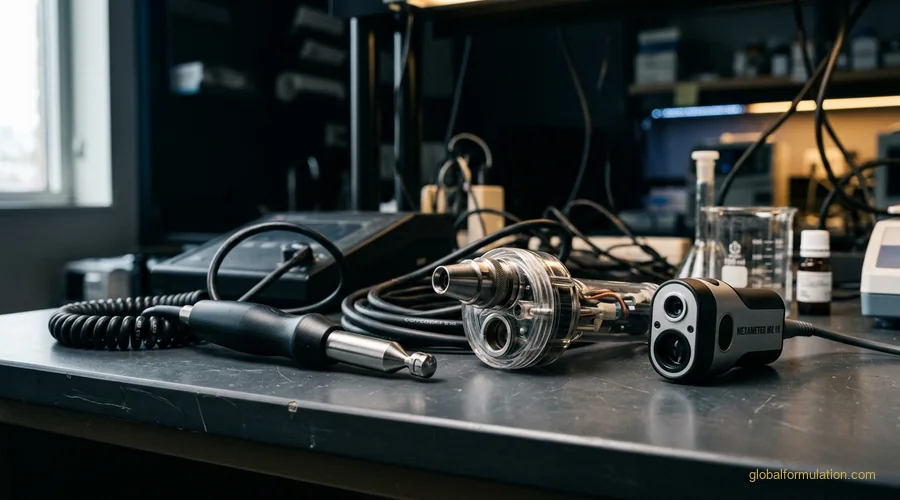
Instrumental testing uses calibrated, non-invasive bioengineering devices to turn a subjective impression like "feels more hydrated" into a reproducible number that doesn't depend on who is doing the assessing. These devices are standard equipment in dermatological and cosmetic research labs, each built to isolate one specific physical property of skin. Choosing the right device is dictated entirely by the claim being made — a hydration claim and a firmness claim need completely different instruments, and using the wrong one produces data that doesn't actually support the statement on the label. The instruments below cover most of the efficacy claims a cosmetic brand is likely to make.
- Corneometer — measures skin surface hydration via capacitance, detecting changes in the stratum corneum's water content; the standard instrument behind moisturizing and hydration claims
- Tewameter / evaporimeter — quantifies transepidermal water loss (TEWL), the rate water escapes through the skin barrier; lower TEWL after treatment supports barrier-repair and barrier-strengthening claims
- Cutometer — applies controlled suction and measures how skin deforms and recovers, producing elasticity and firmness parameters used for firming and anti-aging claims
- Chromameter / colorimeter — records skin color in the CIE L*a*b* color space, supporting brightening, evening-tone, and redness-reduction claims
- Mexameter — derives melanin and erythema indices from reflected light, useful for pigmentation-reduction and skin-calming claims
- Sebumeter — measures surface sebum via a photometric grease-spot method, the standard tool behind oil-control and mattifying claims
- Profilometry / silicone replica imaging — captures skin micro-topography to quantify wrinkle depth and surface texture change over time
Instrumental data is reproducible and device-calibrated, which is exactly why it carries weight with regulators. It's still only half the picture, though — a measurable change on a device means little if the person using the product never actually notices it, which is where structured sensory assessment comes in.
Sensory and Self-Assessment Panels: Structured Subjective Data
Not every meaningful effect shows up cleanly on an instrument, and not every claim is instrumental in nature — "absorbs quickly" or "feels less greasy" describes a perception, not a single measurable physical parameter. Sensory analysis methodology fills that gap using structured, repeatable protocols rather than casual feedback, and it comes in two distinct forms that serve different purposes in a substantiation package. Choosing which type of panel to run, or whether to run both, depends on whether the claim is describing an objective effect or a subjective experience.
- Trained expert panel — graders calibrated against a standardized scoring vocabulary assess specific, defined parameters consistently across every participant and session, producing data with low inter-rater variability
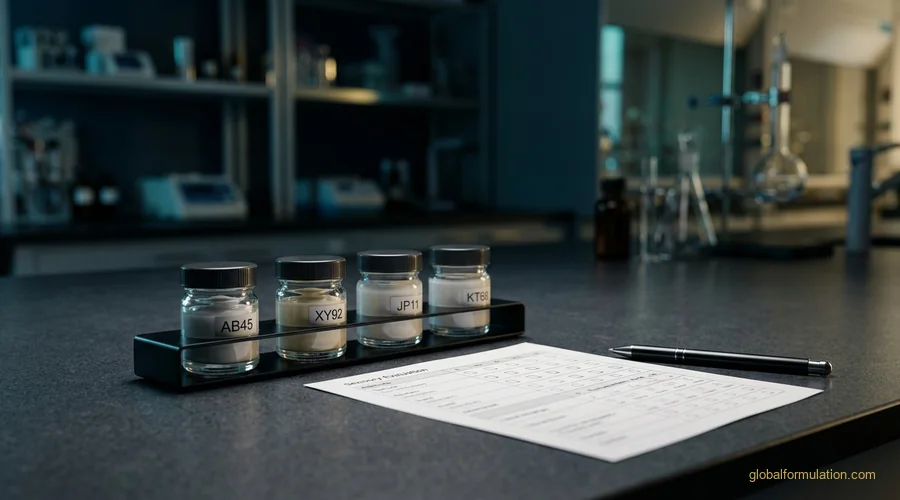
- Consumer self-assessment questionnaire — ordinary product users rate their own experience on a validated Likert-scale instrument, capturing real-world perceived efficacy rather than an expert's technical judgment
- Blinded clinician grading — a dermatologist or trained clinician assesses visible parameters, often from standardized photographs, without knowing which product a given subject used
- Blinding protocol — single- or double-blind study design prevents a participant's or assessor's expectations from inflating a perceived result, which matters enormously for subjective sensory data
A trained-panel score and a consumer questionnaire response are answering two different questions — whether an effect is technically present, and whether it's actually noticeable to the person paying for the product. The strongest substantiation packages report both rather than treating either as sufficient on its own. Getting that combination right, though, depends entirely on how the underlying study is designed.
Building a Defensible Study Design
A well-chosen instrument or panel produces meaningless data if the study around it is poorly structured, and study design is where most substantiation packages actually fail. A defensible protocol isolates the product's effect from every other variable that could plausibly explain a change — the season, the participant's existing skincare routine, or simple regression toward the mean between a bad-skin-day baseline and a better follow-up reading. Getting this structure right up front is far cheaper than discovering a design flaw after the data has already been collected.
- Vehicle-controlled design — comparing the active formulation against a matched placebo or vehicle isolates the ingredient's real effect from packaging, ritual, and expectation effects
- Randomization and blinding — randomly assigning participants and blinding both subjects and assessors to product identity reduces bias on both sides of the study
- Adequate sample size — panel size should be set by a statistical power calculation matched to the claim's specificity and expected effect size, not by convenience or budget alone
- Duration matched to mechanism — a barrier-repair claim can show a measurable TEWL change within days, while a wrinkle-reduction claim needs weeks to months because collagen remodeling is a slow biological process
- Stable baseline measurement — establishing a conditioned baseline before the first application prevents day-to-day skin fluctuation from being mistaken for a genuine treatment effect
A rigorous design is what turns a device reading or panel score into evidence a regulator will actually accept. The next step is making sure the specific method chosen actually matches the specific claim being made — a mismatch here undermines even a well-designed study.
Matching Test Method to Claim Type
The exact wording of a claim dictates the method needed to support it, and this is where many otherwise well-run studies still fall short of what the label actually says. A claim promising an "instant" effect requires same-day, before-and-after measurement, while a claim about a result "over 4 weeks" requires a longitudinal design with defined checkpoints. Picking the method before finalizing the claim wording, rather than the other way around, keeps the label from overstating what the underlying study can actually prove.
| Claim Type | Primary Instrumental Method | Typical Study Duration | Supporting Evidence |
|---|---|---|---|
| Hydration / moisturizing | Corneometer + Tewameter | Single application to 4 weeks | Vehicle-controlled before/after |
| Anti-aging / wrinkle reduction | Profilometry or replica imaging + Cutometer | 8–12 weeks | Blinded clinician grading + instrumental |
| Brightening / evening tone | Chromameter + Mexameter | 4–8 weeks | Standardized photographic documentation |
| Oil control / mattifying | Sebumeter | Single-day to 4 weeks | Self-assessment + instrumental |
| Redness reduction / soothing | Mexameter (erythema index) | 2–4 weeks | Blinded clinical grading |
This table is a screening reference, not a substitute for designing the protocol around the exact wording of the intended claim. Even a correctly matched method still fails to protect a brand if the study itself has a structural flaw, which is where most challenged claims actually trace back to.
Common Pitfalls That Get Claims Challenged
Most substantiation failures aren't caused by bad instruments or dishonest panels — they're caused by a handful of recurring design and interpretation mistakes that are easy to make under launch-date pressure. Recognizing these patterns before a study begins is far less costly than discovering them after a claim has already been published and challenged.
- No control group — testing only the active product without a vehicle comparator makes it impossible to separate the ingredient's effect from placebo response
- In-vitro-only evidence for an in-vivo claim — cell culture or reconstructed skin model data supports formulation development but cannot, by itself, substantiate an on-skin claim made to consumers
- Underpowered panels — too few participants to detect a statistically meaningful difference, often the result of budgeting a panel size before running a power calculation
- Claim wording exceeding the data — labeling a result "clinically proven" when the underlying difference wasn't actually statistically significant
- Unblinded comfort claims treated as objective performance data — self-reported comfort scores collected without blinding are useful context but weak standalone evidence for a specific performance statement
Every pitfall above traces back to the same root cause: testing structured around getting a claim to market quickly, rather than around what the claim's exact wording actually requires to be defensible. Avoiding that trap starts earlier in development than most brands assume.
Building Substantiation Into Development, Not After It
The brands that handle claim substantiation smoothly are the ones that plan for it during formulation, not after a marketing team has already written the label copy. Deciding early which claims a product is meant to support lets a formulator select actives, concentrations, and delivery systems with the eventual test protocol already in mind, rather than trying to retrofit evidence onto a finished formula. This planning has to run in parallel with related documentation, including the stability and shelf-life testing that protects a different but equally important set of claims, and the broader compliance framework laid out in our EU Cosmetics Regulation 1223/2009 guide. Claim substantiation and origin-related labeling questions also frequently intersect, particularly for brands making the kind of natural or non-toxic statements covered in our clean beauty claims guide.
Global Formulation supports brands across exactly this kind of development sequencing within our cosmetics and personal care consulting practice, connecting formulation decisions to the testing partners and study protocols that back the resulting claims. Getting this sequence right the first time is what lets a brand launch with a claim it can actually defend, rather than one it has to walk back after the fact.
Frequently Asked Questions
What's the difference between instrumental and sensory testing for cosmetic claims?
Instrumental testing uses calibrated bioengineering devices — a corneometer, cutometer, or chromameter, for example — to produce objective, numeric measurements of a specific skin parameter before and after product use. Sensory testing captures how a formulation is perceived, either by a trained expert panel scoring standardized descriptors or by consumers rating their own experience on a validated questionnaire.
Regulators and serious retailers generally want to see both: instrumental data proves the effect is real and measurable, while sensory data shows it's also noticeable and meaningful to the person using the product. A claim built on only one type of evidence is weaker than one supported by both working together.
Do I need clinical testing for every cosmetic claim I make?
Every claim that makes a specific, testable statement about performance needs some form of documented substantiation under both EU and US advertising law, though the rigor required scales with how strong and specific the claim is. A soft claim like "leaves skin feeling soft" needs less evidence than a comparative claim about reducing the visible appearance of fine lines over a defined period.
Ingredient-level claims already substantiated in published literature for that specific ingredient at an equivalent use level can sometimes lean on that existing data, but finished-formula testing is still the safer standard. Skipping substantiation entirely on any claim that sounds testable is the single most common way brands end up unable to defend a challenge.
How long does cosmetic claim substantiation testing typically take?
Duration depends entirely on the biological mechanism behind the claim being tested, not on how quickly a lab can be booked. A hydration or barrier-function claim can often be substantiated within one to four weeks, because transepidermal water loss and corneometer readings respond relatively quickly to a working formulation.
A wrinkle-reduction or firming claim needs eight to twelve weeks or longer, because visible changes in skin texture depend on slower biological processes like collagen remodeling that simply cannot be rushed. Planning the testing timeline around the claim's actual mechanism, rather than a marketing launch date, is what keeps a study from being cut short before it can produce a defensible result.
What is a Product Information File and why does it matter for claim substantiation?
A Product Information File, or PIF, is the documentation dossier that EU Cosmetics Regulation (EC) No 1223/2009 requires a Responsible Person to maintain for every cosmetic product placed on the market. It has to include the claim substantiation evidence supporting every marketing statement made about that product, alongside the safety assessment and formulation data, and it must be available to regulators within 72 hours of a request.
Brands selling into the EU without a properly assembled PIF are exposed even if no claim has ever been publicly challenged, because market surveillance authorities can request it at any time as a routine compliance check. Building the file as testing happens, rather than reconstructing it after the fact, is far less costly and far more reliable.
Can in-vitro testing alone substantiate an efficacy claim made to consumers?
Generally, no. In-vitro data from cell culture assays or reconstructed skin models is genuinely useful for understanding an ingredient's mechanism of action and for early-stage formulation screening, but it does not demonstrate what happens when the finished product is actually used on human skin.
Regulators and advertising self-regulatory bodies specifically look for in-vivo evidence, meaning data collected from real study participants using the actual finished formulation, before accepting a consumer-facing efficacy claim as substantiated. A brand that markets a claim on the strength of in-vitro data alone is building on a foundation that a competent challenge can dismantle quickly.
What's the difference between a trained expert panel and a consumer self-assessment panel?
A trained expert panel consists of graders calibrated against a standardized scoring vocabulary, assessing specific, defined parameters like skin firmness or fine-line visibility using consistent criteria across every participant and every session. Because the graders are trained and calibrated, their scores are more consistent and more reproducible than untrained ratings.
A consumer self-assessment panel instead asks ordinary product users to rate their own experience, which captures real-world perception but carries more variability and more risk of expectation bias. Strong substantiation packages typically combine both: expert or instrumental data to prove the effect is real, and consumer data to show it's also noticeable to the people the product is marketed to.
What happens if a cosmetic claim is challenged without adequate substantiation on file?
In the EU, a market surveillance authority that finds a Product Information File lacking adequate substantiation can require the claim to be withdrawn or reworded, and repeated or serious non-compliance can trigger wider enforcement action against the Responsible Person. In the US, the FTC's "reasonable basis" doctrine means an advertiser is expected to already possess competent and reliable scientific evidence before making a claim, not to go generate it defensively after a challenge arrives.
Being unable to produce that evidence on request is treated as proof the claim was unsubstantiated from the outset. Beyond regulatory risk, e-commerce marketplaces and major retailers increasingly ask for substantiation documentation before listing a product, and being unable to supply it fast can mean losing a listing slot to a competitor who can.
Launching a Product With Claims That Need to Hold Up?
Claim strategy, instrumental and sensory test design, and Product Information File preparation. Global Formulation helps cosmetic brands build substantiation into development from the first formulation decision.
Talk to Our Formulation Team