Expansion Joint Filler Materials: Foam, Cork & Elastomeric
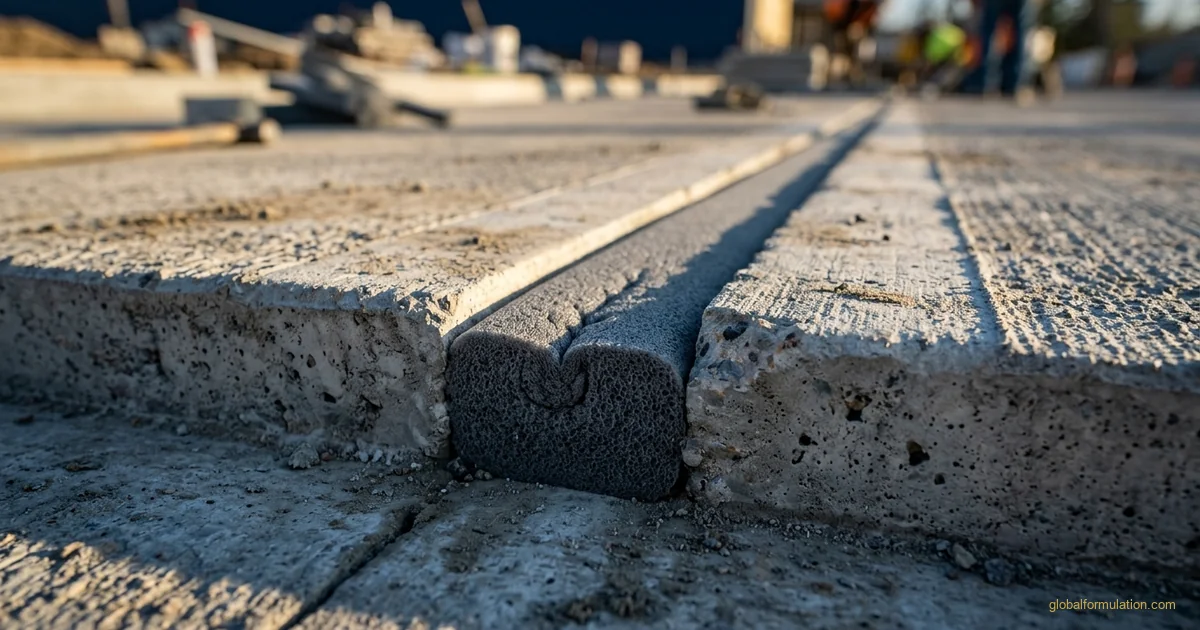
A concrete pavement slab can crack apart within its first winter if the joint between panels was never given room to move. Expansion joint filler material is the compressible strip placed inside that gap during construction. Its job is deceptively simple: absorb the panel's thermal expansion without transmitting stress into the concrete on either side. Get the material wrong — too stiff, too slow to recover, or degraded by water — and the joint stops doing its job. That failure surfaces long before the surrounding concrete shows any visible sign of trouble. This guide compares the three material families specifiers actually choose between: closed-cell foam, cork and fiberboard composites, and preformed elastomeric compression seals. Global Formulation works with construction chemical manufacturers and specifiers on exactly this kind of material selection. The comparisons below reflect what actually holds up in the field, not just what passes a first compression test.
Why Getting Filler Wrong Costs More Than the Material Itself
Concrete expands and contracts with temperature, and an expansion joint exists specifically to give adjacent slabs, panels, or bridge deck segments room to move without pushing against each other. When the filler inside that joint fails, the consequences rarely show up as an obvious material defect. They show up months or years later, as spalling, cracking, or water intrusion that traces back to a joint that stopped absorbing movement the way it was designed to. Catching a filler specification problem before installation is far cheaper than diagnosing joint failure after the concrete around it has already cracked.
- Incompressible debris intrusion — a filler that loses its recovery and stays compressed leaves a gap where grit and debris collect, blocking the joint from closing on the next expansion cycle
- Spalling at the joint edge — when incompressible material blocks a joint from closing, the resulting stress concentrates at the concrete edge and breaks it away in chunks
- Water intrusion and rebar corrosion — a degraded filler that no longer seals the gap lets water reach reinforcement steel, accelerating corrosion inside the slab
- Reduced service life — a joint that fails structurally forces early resurfacing or deck replacement years ahead of the concrete's actual design life
None of these failures start as a filler problem on installation day. They start as a filler specified without matching its compression and recovery behavior to the joint's actual movement demand. That distinction between filler and sealant is worth clarifying before comparing material options.
Joint Filler vs. Joint Sealant: Two Different Jobs
Filler and sealant get confused constantly, even though they solve different problems at different points in a joint's life. Filler is the compressible material placed inside the joint gap during initial construction. Its main job is preventing the fresh concrete on either side from bonding across the joint while giving the slab room to expand. Sealant is a separate, surface-applied material, often installed later. Its job is keeping water and debris out of the joint from above — a distinction covered in more depth in our joint design and movement capability guide. Confusing the two roles is a common specification mistake, because a joint built only with sealant has nothing to stop the slabs from transmitting stress directly into each other.
Most well-designed joints use both: a compressible filler for the structural movement problem and a sealant for the surface water problem. That layered approach is exactly why expansion joint assemblies in bridges and pavements are built from multiple materials rather than a single choice. Closed-cell foam is the material most specifiers reach for first, because it delivers the compressibility a filler needs without absorbing the water that would defeat its purpose.
Closed-Cell Foam Fillers: Compressibility and Recovery
Closed-cell polyethylene and PVC foam fillers dominate general-purpose expansion joint applications because their cell structure resists water absorption almost entirely. Each cell in the foam is sealed off from its neighbors. Water reaching the surface has no interconnected path to soak through, the way it would with an open-cell foam. That water resistance matters because a filler that absorbs moisture can freeze and expand in cold climates, destroying the very compressibility the material was installed to provide. Compression recovery, not just initial softness, is the property that actually determines how long a foam filler keeps doing its job.
- Closed-cell structure — sealed, non-interconnected cells resist water absorption and prevent freeze-thaw damage inside the filler itself
- Compression set resistance — a quality foam filler returns close to its original thickness after repeated compression cycles, rather than staying permanently compressed
- Density selection — higher-density foams resist compression set better but require more force to compress, a tradeoff that has to match the joint's expected movement range
- UV and chemical exposure — foam fillers exposed above the slab surface need UV-stabilized formulations, since unprotected foam degrades and loses recovery under sustained sunlight
Foam fillers work well for the vast majority of general pavement and slab joints. Where movement is larger or more precisely engineered, a bridge deck joint, for example, cork and fiberboard composites, and later elastomeric seals, take over.
Cork and Fiberboard Fillers: Traditional Compressible Backing
Cork was one of the earliest expansion joint filler materials used in concrete construction. Cork and bituminous fiberboard composites still see use today, particularly on cost-sensitive pavement work. Cork's cellular structure, the same closed-cell arrangement that makes it useful as a wine stopper, gives it natural compressibility and a degree of resilience after compression. Fiberboard composites blend wood fiber with a bituminous or resin binder, producing a filler that's cheaper than cork alone but generally less resilient after repeated compression cycles. Both materials absorb more water than closed-cell foam, which limits their use in climates with severe freeze-thaw cycling.
- Cork composition — natural cork granules bound with a resin binder, offering moderate compressibility and a long field-performance track record
- Bituminous fiberboard — wood fiber bound with bitumen or resin, a lower-cost alternative with reduced long-term recovery compared to cork or foam
- Water absorption risk — both materials absorb more moisture than closed-cell foam, making severe freeze-thaw climates a poor fit without added protection
- Cost-sensitive applications — sidewalks, driveways, and low-movement pavement joints remain common uses where cost outweighs the water-absorption tradeoff
Cork and fiberboard remain viable for low-movement, cost-sensitive joints. Neither material was engineered for the precisely controlled, high-movement joints found on bridge decks — that's where preformed elastomeric compression seals take over.
Preformed Elastomeric Compression Seals
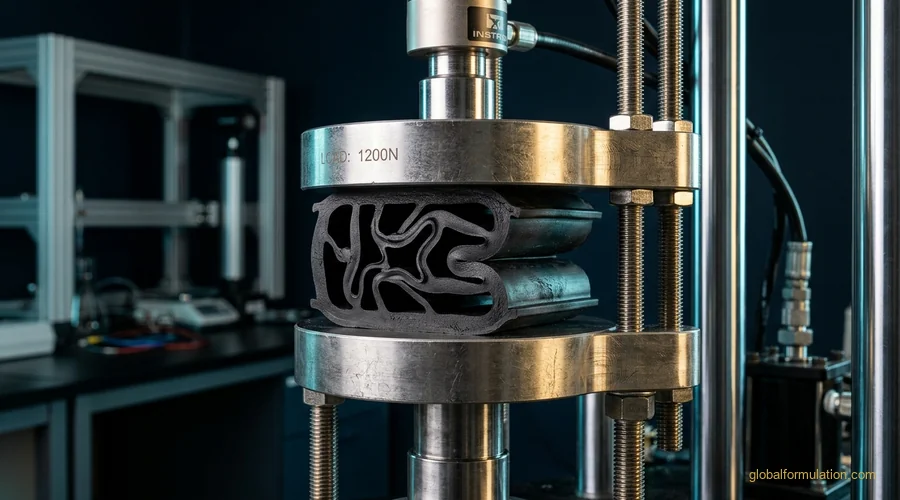
Preformed elastomeric compression seals, most commonly manufactured from polychloroprene (neoprene), are engineered for the higher, more precisely defined movement ranges found on bridge decks and major structural joints. Unlike foam or cork, a compression seal is manufactured with an internal web structure designed to fold inward under load. That structure lets the seal stay continuously compressed against both joint faces across its entire working range. Continuous compression is what actually creates the seal — the material is specified and installed so it's never allowed to reach a fully relaxed state in service. Getting installation width right is critical. A seal installed too loose can walk out of the joint under traffic, while one installed too tight loses its ability to accommodate further movement.
- Multi-web internal structure — internal folding webs let the seal compress further under load while still rejecting water and incompressible debris
- Continuous compression design — the seal is sized and installed so it stays compressed across its full working range, never fully relaxed in service
- Lubricant-assisted installation — seals are typically installed with a bonding lubricant-adhesive that also helps the material slide into place without tearing
- Movement range precision — seal width is selected against the joint's calculated thermal movement range, not simply the gap width measured on installation day
Elastomeric compression seals solve the high-movement, structural-joint problem that foam and cork were never designed for. Choosing between all three material families still comes down to matching movement range, water exposure, and budget to the specific joint.
Choosing the Right Filler Material
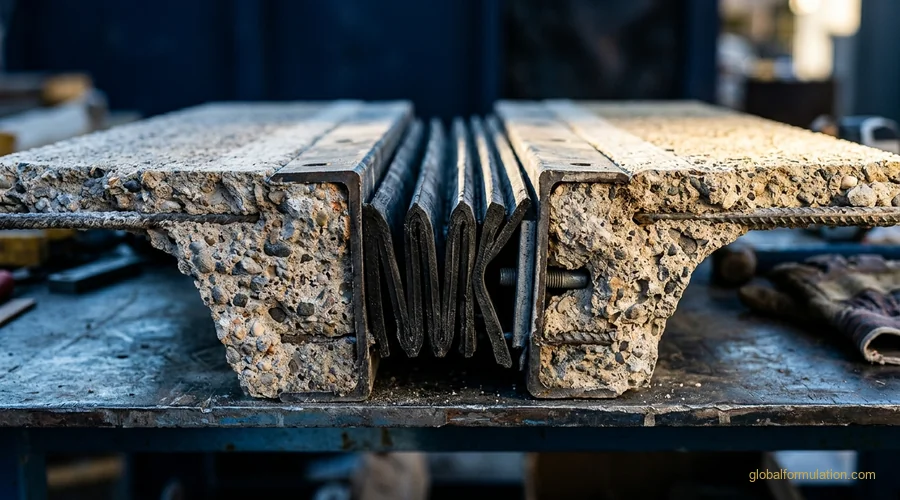
No single filler material is correct for every joint, because pavement joints, building expansion joints, and bridge deck joints all demand different combinations of movement range, water exposure, and budget. Matching material to application starts with calculating the joint's actual expected thermal movement, not just measuring the gap as poured. Skipping that calculation is a common specification mistake, because a filler sized for the wrong movement range fails regardless of how good the material itself is. The comparison below is a starting screening reference, not a substitute for a proper joint movement calculation on the specific structure.
| Material | Typical Movement Range | Water Resistance | Best Fit | Relative Cost |
|---|---|---|---|---|
| Closed-cell foam | Moderate | Excellent | General pavement, slab, and building joints | Low |
| Cork / fiberboard composite | Low to moderate | Fair | Cost-sensitive, low-movement joints | Lowest |
| Preformed elastomeric seal | High, precisely engineered | Excellent | Bridge decks, major structural joints | Highest |
Screening a joint against this framework before ordering material keeps a project on schedule. The alternative is discovering a mismatched filler only after the first seasonal cycle has already opened a gap.
Specifying Joint Filler With the Right Partner
Getting joint filler specification right depends on data most project teams don't generate themselves. That data includes the structure's actual thermal movement range, the local freeze-thaw exposure, and the load conditions the joint will see in service. A construction chemicals formulation partner experienced across foam, cork, and elastomeric material families can help a manufacturer or specifier match material chemistry to the actual movement and exposure conditions. That beats defaulting to whatever was used on the last project. That cross-material comparison is also where choosing between polyurethane and silicone joint sealants becomes relevant, since the surface sealant and the underlying filler need to work as a compatible system. Where a failed joint has already let water reach reinforcement steel, the resulting damage often shows up as the kind of corrosion covered in our reinforcement corrosion protection guide. That repair cost is almost always larger than specifying the joint correctly the first time. This kind of material-selection support falls within Global Formulation's construction chemicals practice.
Every filler material in this guide solves the same underlying problem in a different way: giving concrete room to move without ever letting that movement become the structure's weak point. Getting the material choice right during specification, rather than diagnosing a failed joint years later, is what keeps a structure's actual service life matching its design life.
Frequently Asked Questions
What's the difference between expansion joint filler and expansion joint sealant?
Filler is the compressible material placed inside a joint gap during construction. Its job is structural — absorbing the concrete's thermal movement while preventing the slabs on either side from bonding across the joint.
Sealant is a separate, surface-applied material installed to keep water and debris out of the joint from above. Many joints use both together: a compressible filler below and a flexible sealant at the surface, each doing a different job.
How is closed-cell foam different from open-cell foam for joint filling?
Closed-cell foam has sealed, non-interconnected cells that resist water absorption almost entirely. That's essential for a material that has to survive repeated wetting and freeze-thaw cycling inside a joint.
Open-cell foam has interconnected cells that readily absorb and hold water, making it a poor choice for most expansion joint applications despite sometimes being cheaper. That water-resistance difference is the main reason closed-cell foam dominates general-purpose joint filling.
Why does compression recovery matter more than how easily a filler compresses?
A filler that compresses easily under initial pressure isn't necessarily a good long-term choice. What actually determines field performance is how well the material returns to its original thickness after the joint closes and reopens repeatedly.
A filler with poor recovery can stay flattened after its first cycle, leaving a gap where debris collects and blocks the joint from closing properly next time. Recovery performance under repeated cycling is what predicts whether a filler still works years after installation.
Is cork still a practical expansion joint filler material today?
Yes, cork and cork-fiberboard composites are still used, particularly on cost-sensitive pavement and sidewalk joints with relatively low movement demands. Cork's natural cellular structure gives it useful compressibility and a long field-performance track record.
It absorbs more water than closed-cell foam, though, and generally isn't the first choice in severe freeze-thaw climates. For low-movement joints where budget is the primary constraint, cork remains a reasonable, well-understood option.
Why do bridge decks require elastomeric compression seals instead of foam?
Bridge decks experience larger and more precisely defined thermal movement than typical pavement joints. Preformed elastomeric compression seals are engineered specifically to stay continuously compressed across that entire movement range.
Foam and cork fillers aren't designed to be installed under continuous compression the way an elastomeric seal is. As a result, they can't reliably reject water and debris across a bridge joint's full working range. The higher material and installation cost reflects the more demanding requirements bridge structures place on the joint.
What happens if an expansion joint filler is sized incorrectly?
A filler sized too narrow for the joint's actual movement range can be pushed out of the joint or overcompressed until it loses its ability to recover. That leaves a gap where debris collects.
A filler sized too wide, or installed without accounting for the temperature at which the joint was measured, may not compress fully during peak expansion. That transmits stress directly into the concrete. Either error usually isn't visible at installation — it shows up months or years later as spalling, cracking, or water intrusion.
Why work with a construction chemicals formulation partner on joint filler specification instead of defaulting to a standard material?
Every structure's actual movement range, freeze-thaw exposure, and traffic or structural loading is different. A filler specification copied from a previous project doesn't account for those differences.
An experienced formulation partner can match material chemistry, whether foam, cork, or elastomeric, to the specific joint's movement calculation and exposure conditions. That beats defaulting to whatever was used last time. That upfront matching is typically far cheaper than the spalling repair, resurfacing, or corrosion remediation that follows a mismatched filler failing in service.
Specifying or Manufacturing Joint Filler Materials?
Material selection, foam and elastomeric formulation troubleshooting, and cross-material compatibility with joint sealants. Global Formulation supports construction chemical manufacturers and specifiers from material selection through field-proven joint systems.
Talk to Our Formulation Team