Shotcrete and Sprayed Concrete: Accelerator Chemistry and Application
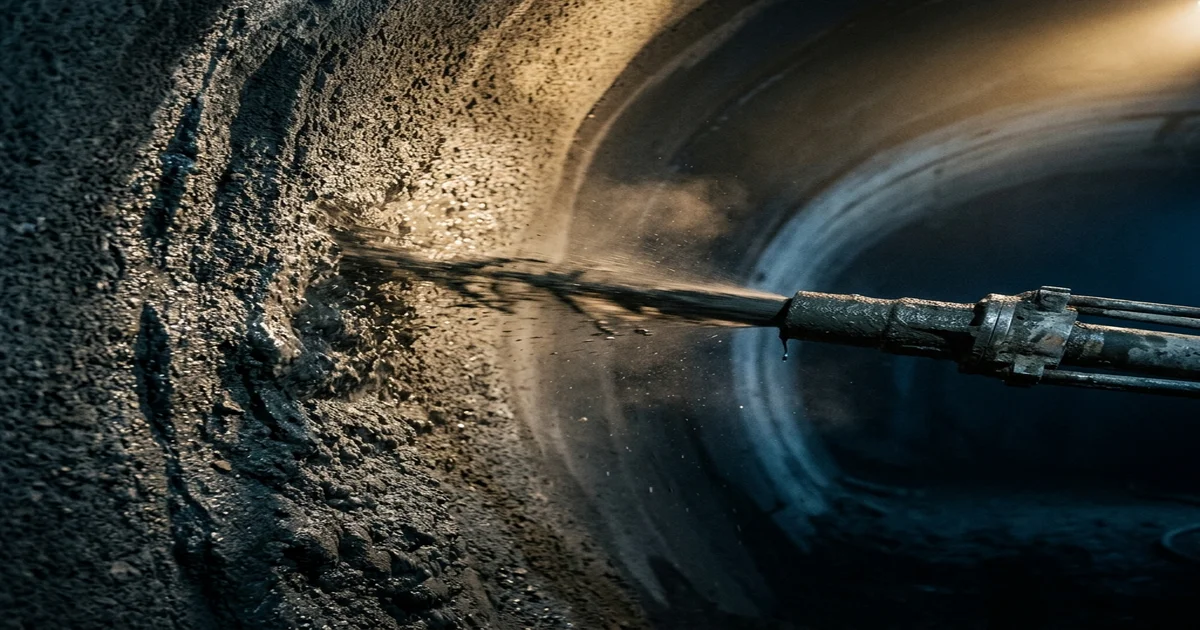
A shotcrete crew spraying an overhead tunnel crown has minutes, sometimes seconds, before an unset layer sags and falls off the surface it was just applied to — and the entire margin for error rests on shotcrete accelerator chemistry. Get the accelerator dosage or chemistry wrong and the consequences aren't cosmetic: sloughing material means rework and wasted crew time, while insufficient early strength on a ground-support application can compromise the very stability the shotcrete was sprayed to provide. Because shotcrete is placed and expected to perform within minutes rather than the hours or days a conventional pour allows, the accelerator system carries more engineering weight, relative to total mix cost, than almost any other admixture in construction chemistry. This guide works through how alkaline and alkali-free accelerator chemistries differ, how wet-mix and dry-mix application change dosing strategy, what governs rebound and thickness build-up, and why tunnel and underground work in particular has driven the industry toward safer, higher-performing accelerator systems. Whether you're specifying a shotcrete mix design or manufacturing accelerator product, understanding these mechanisms is what separates a spray operation that performs predictably from one that generates costly rework.
1. Why Accelerator Chemistry Matters
Shotcrete is unique among concrete placement methods because the material must develop useful strength almost immediately after leaving the nozzle, often while still airborne or within seconds of impact. A conventional cast-in-place pour has hours before formwork removal matters; a sprayed overhead layer has to support its own weight against gravity before the next pass is applied on top of it. This single constraint is why accelerators aren't an optional performance enhancer in shotcrete the way they might be in a standard ready-mix design — they are a core functional component of the mix.
The accelerator's job is to compress the normal multi-hour setting process of portland cement into a window of seconds to minutes, without sacrificing so much long-term strength or durability that the finished structure underperforms its design requirements. That balance — fast enough to build thickness without sagging, but not so aggressive that ultimate strength and bond suffer — is the central engineering tension every accelerator chemistry has to resolve, and different chemical approaches resolve it differently, as detailed further in our overview of concrete admixture chemistry.
Understanding how each accelerator chemistry actually achieves rapid set — rather than treating "accelerator" as a single interchangeable category — is the foundation for every dosing and application decision that follows.
2. Alkaline vs Alkali-Free Accelerators
Shotcrete accelerators fall into two broad chemical families, and the difference between them has reshaped industry practice over the past two decades. Alkaline accelerators were the historical standard; alkali-free accelerators are now the dominant choice on most modern projects, particularly underground, for reasons that go well beyond marketing preference.
| Property | Alkaline Accelerators | Alkali-Free Accelerators |
|---|---|---|
| Typical chemistry | Sodium silicate, sodium aluminate | Modified aluminum sulfate / aluminum salt systems |
| pH | Highly caustic, often >13 | Near-neutral |
| 28-day strength impact | Significant reduction vs. unaccelerated mix | Minimal reduction; closer to reference strength |
| Handling hazard | Severe skin/eye/respiratory hazard | Substantially lower operator risk |
| Dust/fume in confined spaces | Higher exposure concern | Lower exposure concern |
Alkaline accelerators work primarily by rapidly consuming available water and accelerating calcium silicate hydrate formation through strongly basic reaction pathways, which is effective at generating early strength but comes at the cost of a coarser, more porous hydration structure that measurably weakens the long-term matrix. Alkali-free accelerators instead rely on aluminum-based reactions that promote rapid ettringite formation, achieving comparable or faster initial set while preserving a hydration structure much closer to what an unaccelerated mix would develop.
Choosing between these families is rarely just a cost decision — it directly shapes crew safety, ventilation requirements, and the long-term durability profile of the finished structure, all factors that carry into how the mix is actually applied on site.
3. Wet-Mix vs Dry-Mix Application
How shotcrete is delivered to the nozzle changes where and how the accelerator gets introduced, and that difference has real consequences for consistency, rebound, and crew control. Neither method is universally superior; the right choice depends on project scale, access constraints, and the level of quality consistency the application demands.
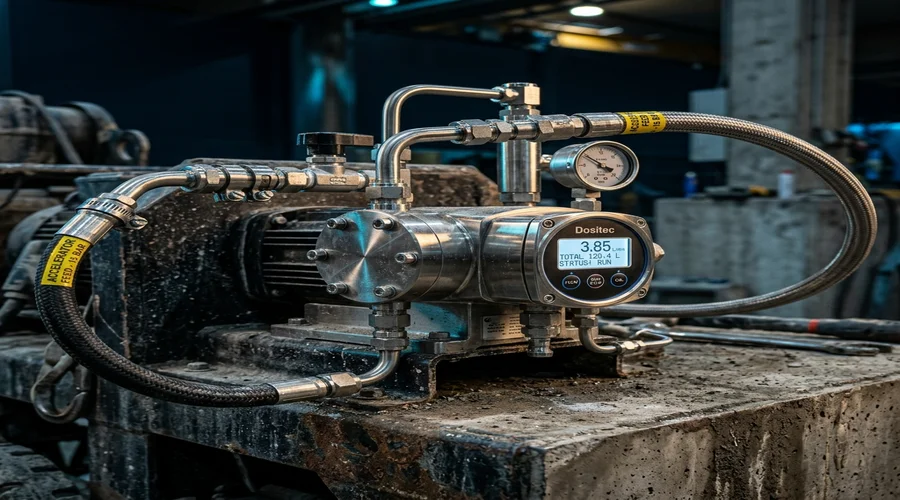
Dry-mix shotcrete conveys dry cementitious material and aggregate through a hose using compressed air, with the nozzleman adding both water and accelerator at the nozzle itself. Wet-mix shotcrete instead pumps a fully batched, water-included concrete mix to the nozzle, with accelerator introduced either at the nozzle or in-line just upstream of the pump.
- Dry-mix advantages — nozzleman has direct real-time control over water content and can adjust spray-by-spray for changing substrate conditions; better suited to smaller, intermittent, or remote applications.
- Wet-mix advantages — more consistent water-cement ratio since it's fixed at the batch plant; typically lower rebound and dust generation; better suited to large-volume, continuous production.
- Dry-mix challenge — water-cement ratio consistency depends heavily on nozzleman skill and can vary considerably within a single shift.
- Wet-mix challenge — accelerator dosing accuracy becomes more critical since the base mix water content can't be adjusted at the point of spraying.
Large tunneling and infrastructure projects have increasingly standardized on wet-mix shotcrete precisely because its more consistent water content pairs well with precise, calibrated accelerator dosing systems — a combination that produces more predictable strength development than dry-mix can reliably achieve at comparable production rates.
4. Dosing Control & Rebound
Accelerator dosage is not a single fixed number for a given product — it's a variable the spray crew actively tunes against the specific geometry and conditions of each application. Underdosing and overdosing both create measurable, costly problems, which is why dosing control deserves the same engineering attention as accelerator chemistry selection itself.
Rebound — the fraction of sprayed material that bounces off the substrate instead of adhering — is the most immediate practical cost of poor dosing. Underdosed material lacks the green strength to resist dislodgement from the impact of subsequent layers, particularly on vertical and overhead surfaces, driving rebound rates up and wasting material. Overdosed material sets so quickly that inter-layer bond and substrate adhesion can actually suffer, since each pass hardens before the next layer can properly key into it.
| Application Geometry | Typical Dosing Tendency | Primary Risk if Misdosed |
|---|---|---|
| Flat, floor-level surfaces | Lower dosage generally sufficient | Minimal — gravity assists adhesion |
| Vertical walls | Moderate dosage required | Sagging if underdosed |
| Overhead / tunnel crown | Higher dosage typically required | Sloughing/falling material if underdosed |
| Thick single-pass layers | Higher dosage to build green strength fast | Sagging or delamination if underdosed |
Because dosing needs shift within a single project — sometimes within a single shift, as the crew moves from a flat invert to an overhead crown — the dosing pump's calibration and the crew's ability to adjust it on the fly directly determines both material efficiency and finished quality, which is exactly why in-line, adjustable dosing systems have become standard on modern shotcrete rigs.
5. Tunnel & Underground Applications
Underground construction is where shotcrete accelerator chemistry carries the highest stakes, because sprayed concrete in tunneling frequently functions as primary ground support rather than just a finishing layer. The accelerator's performance directly determines whether newly excavated ground stays stable long enough for permanent support to follow — which elevates accelerator selection from a productivity question to a life-safety one.
Confined-space ventilation constraints compound this stakes: underground crews are exposed to accelerator dust, fumes, and splash in an environment with far more limited air exchange than surface work, which is one of the strongest practical drivers behind the industry's shift toward alkali-free chemistry. A near-neutral pH accelerator dramatically reduces the skin, eye, and respiratory hazard profile compared to older caustic alkaline systems, in an environment where evacuation and rescue are inherently harder than on open-air surface sites.
Fiber reinforcement is frequently combined with accelerated shotcrete in tunnel applications to improve toughness and crack control in the early-strength window before the concrete fully cures — a combination discussed further in our guide to fiber selection for reinforced concrete. Getting both the fiber system and the accelerator chemistry right simultaneously is what allows modern tunnel linings to achieve the rapid, reliable ground support that underground excavation sequencing depends on.
6. Testing & Quality Verification
A technical data sheet's published performance figures are a starting point, not a guarantee — every shotcrete accelerator system needs project-specific validation through trial spraying and testing before it's relied on for structural work. Standards bodies have developed specific test methods precisely because shotcrete's unusual placement method doesn't lend itself to the strength-testing approaches used for conventional cast concrete.
- Penetration-needle testing — tracks early-age strength development in the critical first hours after spraying, typically under EN 14488-2 or equivalent national standards.
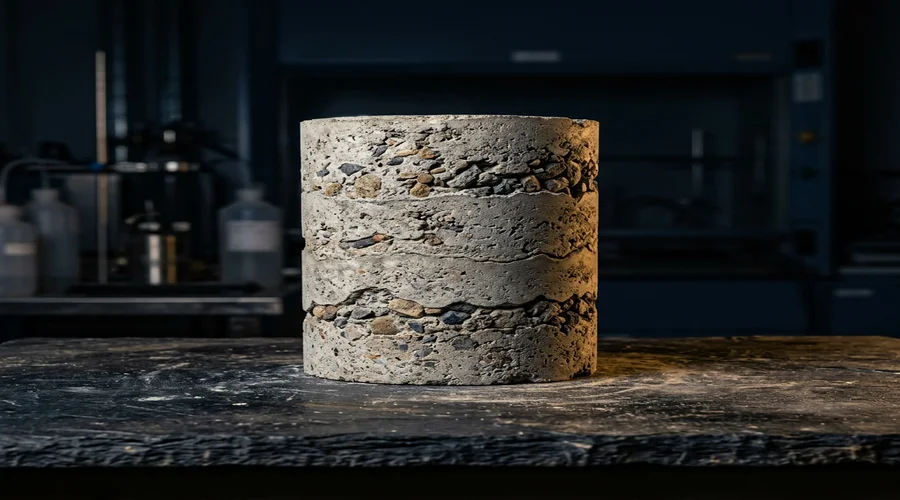
- Core testing — cores extracted from trial panels or actual sprayed sections verify in-place strength, density, and bond quality at 28 days and beyond.
- Rebound quantification — trial spraying against representative geometry measures actual material loss under real dosing conditions before full-scale application begins.
- Compatibility verification — confirming the accelerator performs consistently with the specific cement, admixture package, and aggregate combination in the actual project mix design.
ASTM C1141 and EN 934-5 provide the governing framework for shotcrete admixture performance requirements, and referencing these standards in project specifications gives both the formulator supplying the accelerator and the contractor applying it a shared, objective basis for acceptance testing. A validated accelerator system, dosed correctly and applied by a trained crew, is what ultimately converts shotcrete's engineering promise — rapid, reliable, high-quality sprayed concrete — into consistent field performance project after project.
Getting the mix design, accelerator chemistry, and application method aligned before mobilization — rather than troubleshooting on site — is exactly the kind of upfront construction chemicals product development work that prevents costly rework once spraying is underway.
Frequently Asked Questions
What is the difference between alkali-free and alkaline shotcrete accelerators?
What is the difference between wet-mix and dry-mix shotcrete application?
How does accelerator dosage affect shotcrete rebound and thickness build-up?
Why is accelerator dosage especially critical in tunnel and underground applications?
Do accelerators affect the long-term durability of shotcrete, not just early strength?
What test standards govern shotcrete accelerator and mix performance?
Expert Shotcrete & Construction Chemical Formulation Support
Partner with our team to develop, validate, or scale alkali-free shotcrete accelerator systems for tunneling, ground support, and structural spray applications.
Request Consultation