Bio Fertilizer Formulation: Carriers, Liquids, Shelf Life
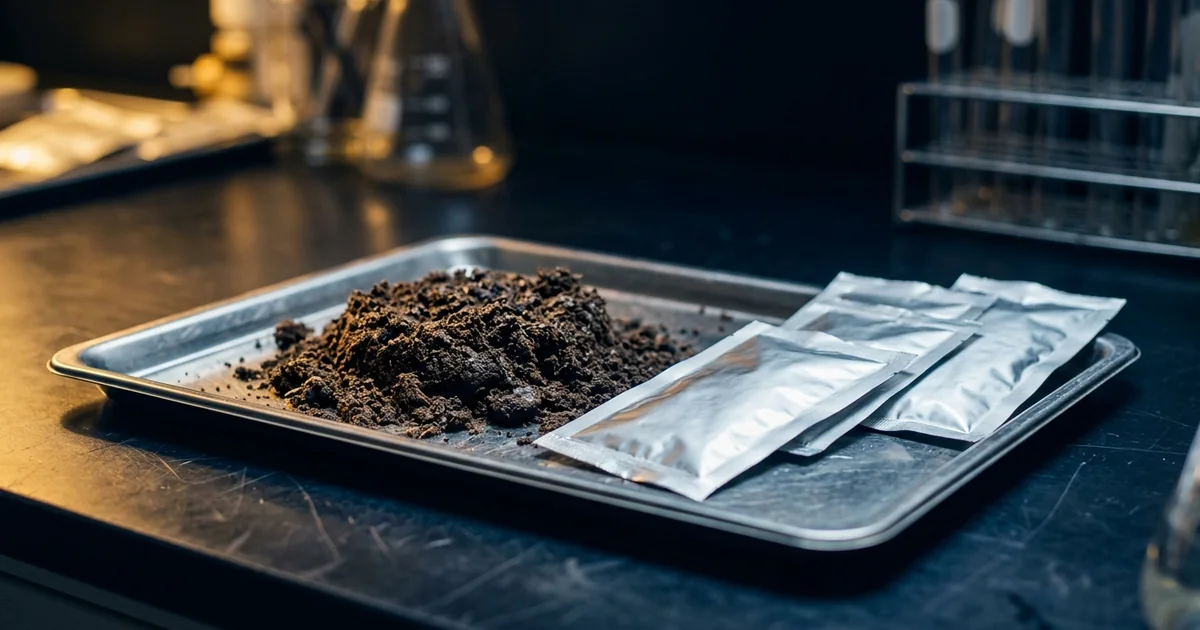
A biofertilizer batch can pass its count on packing day and miss it months later on a dealer's shelf. Living cells die in storage, and an Indian inspector sends sampled packets to a notified laboratory for a count against the Order. Bio fertilizer formulation is therefore the discipline of keeping non-sporulating bacteria alive through drying, storage, seed application and the first weeks in soil. This guide covers Rhizobium, Azotobacter and phosphate solubilizing bacteria, the Schedule III specifications and the EU list, solid carriers, liquid and polymer formats, shelf-life design, counting methods and seed-treatment compatibility. It rests on the Fertiliser (Control) Order, EU Regulation 2019/1009 and open-access reviews, with formulation support from Global Formulation.
Bio Fertilizer Formulation: What It Must Deliver
A biofertilizer is a living product, so its formulation is judged by survival and not by chemistry alone. India's Fertiliser (Control) Order defines it as a carrier-based, solid or liquid product containing living microorganisms that fix nitrogen, solubilize phosphorus or mobilize nutrients. The formulation has to protect those cells at four stress points, and each point has a different failure mode. The list below sets them out in the order a batch meets them.
- Production and drying — desiccation damages non-sporulating bacteria through oxidative injury, phase transition of membrane lipids and browning reactions, according to a 2018 review of inoculant viability.
- Storage — oxygen, high temperature, moisture, contaminating microbes and light all shorten cell life.
- Seed or soil application — the carrier has to stick to the seed, keep cells alive until sowing and release them close to the root.
- The soil — the inoculant competes with native organisms for nutrients and niches and faces grazing protozoa.
Cost adds a further constraint, because Malusá and co-authors note that the price of a biofertilizer cannot exceed that of conventional NPK fertilizers if the market is to hold. The 2018 review adds that inadequate formulations and low inoculant quality remain a major constraint on widespread use. Which organism you formulate decides which of these stresses matters most.
Rhizobium, Azotobacter and PSB: Three Organisms, Three Needs
The workhorse organisms of the Indian biofertilizer market do different jobs and respond differently to formulation. Rhizobium works only in partnership with a legume host, Azotobacter fixes nitrogen on its own, and phosphate solubilizing bacteria release phosphorus that soil chemistry has locked up. Schedule III of the Order also lists Azospirillum, so the table covers it too. The last column gives the efficiency test the Order sets, which is the property a formulation has to preserve.
| Organism | What It Does | Biology That Matters for Formulation | Efficiency Test in Schedule III |
|---|---|---|---|
| Rhizobium | Induces nodules on legume roots, where it fixes nitrogen with the host | Works only with compatible legumes, so the packet names the crops | Effective nodulation on all species listed on the packet |
| Azotobacter | Free-living, non-symbiotic nitrogen fixer | Aerobic and oxygen tolerant while fixing; mesophilic with an optimum of 25 to 30 °C; forms cysts under stress | Strain able to fix at least 10 mg of nitrogen per g of sucrose consumed |
| Azospirillum | Free-living nitrogen fixer that promotes plant growth | Microaerophilic | White pellicle in semi-solid nitrogen-free bromothymol blue medium |
| Phosphate solubilizing bacteria (PSB) | Release phosphorus from insoluble phosphate | Act mainly through organic acids, with gluconic acid prominent, plus chelation and phosphatase enzymes | At least 30 percent solubilization by spectrophotometry and at least a 5 mm zone in the prescribed medium |
The biology column comes from reviews of Azotobacter and of phosphate solubilizing microbes. That second review cautions that a clear halo on agar should not be the sole test of solubilization, and that selected isolates should end with a model plant test. PSB testing in the Order combines a halo zone with a spectrophotometric result. These tests define the minimum, and the rest of the specification follows in Schedule III.
Schedule III and EU Rules for Biofertilizer Quality
In India a biofertilizer cannot be manufactured unless it meets Part A of Schedule III of the Fertiliser (Control) Order. The Order also requires each container to carry the word BIO-FERTILISER and lets inspectors draw samples for analysis. Its consolidated text, as read for this article, sets one list of parameters for Rhizobium, Azotobacter and Azospirillum and a close variant for PSB. The table sets them out.
| Parameter | Rhizobium, Azotobacter, Azospirillum | Phosphate Solubilizing Bacteria |
|---|---|---|
| Base | Carrier-based moist or dry powder or granules, or liquid | Same |
| Viable count, minimum | 5 × 10⁷ cells per g of carrier; 1 × 10⁸ cells per ml of liquid | Same |
| Contamination | None at 105 dilution | Same |
| pH | 6.5 to 7.5 | 6.5 to 7.5 for carrier-based; 5.0 to 7.5 for liquid |
| Particle size, carrier-based | All material passes a 0.15 to 0.212 mm IS sieve | Same |
| Moisture, carrier-based, maximum | 30 to 40 percent by weight | Same |
| Tolerance limit (Part B) | 1 × 10⁷ CFU per g of carrier material; 5 × 10⁷ for liquid | Same |
An inspector takes three packets from the same batch, with four or five for lots above 5,000 packets, and seals them. One goes to a National or Regional Centre of Organic Farming or another notified laboratory. The manufacturer or dealer receives one, and a third is kept in safe custody, so that either can go to referee analysis. The consolidated text states no shelf life or expiry period for biofertilizers, so the count in an unopened packet is the test whenever it is sampled. Check the current Gazette notifications for amendments before filing.
The European Union regulates the same product class differently. Regulation (EU) 2019/1009 treats a microbial plant biostimulant as product category PFC 6(A). In its original text, component category CMC 7 lists only Azotobacter spp., mycorrhizal fungi, Rhizobium spp. and Azospirillum spp. The organisms must have undergone no other processing than drying or freeze-drying. The product must show absence of Salmonella in 25 g and of Escherichia coli in 1 g. A liquid product needs a pH suited to the organisms and to plants. The Commission can add organisms by delegated act, so check the current Annex II, and note that the original list names no phosphate solubilizing genus. The standards fix the targets, and the carrier is the first design choice that serves them.
Rhizobium Carrier Formulation: Solid Carriers
The carrier is the largest part of a solid inoculant by weight, and it decides how the cells live for months. Schedule III names peat, lignite, peat soil, humus, wood charcoal or similar material that favours the organism. Malusá's review adds that availability and cost are the main selection factors. A good carrier does several jobs at once, and the list shows the properties to test.
- Moisture handling — good moisture absorption and a free-flowing material without lump-forming components.
- Sterility — near-sterile, or easy to sterilize by autoclaving or gamma irradiation.
- Buffering — good pH buffering capacity so the cells do not meet acid or alkaline swings.
- Seed adhesion — good adhesion to seeds where the carrier is used for seed coating.
- Consistency — standardized composition with stable chemical and physical properties from batch to batch.
| Carrier | Strengths | Limits |
|---|---|---|
| Peat | Wide availability and a long history of field trials, especially for rhizobia; cells keep metabolic activity and some strains multiply in storage | Quality and acidity vary with the source; peat holds a large microbial load that shortens shelf life; sterilization can release toxic compounds |
| Coal, lignite and clays | Microbial load of about 102 to 103 CFU per g, generally lower than organic carriers | Availability depends on the region |
| Vermiculite, perlite, bentonite | Available in many countries | Hard to turn into a formulation; effect on viability depends on pH, ionic strength and electrolyte |
| Charcoal and biochar | Reported to support survival and to be storable without sterilization because of low water content | The review offers few strain-specific data, so confirm survival for your own strain |
Powder carriers run from 75 µm to 0.25 mm in Malusá's review, which sits alongside the 0.15 to 0.212 mm sieve limit in the Order. A 2020 review of bioinoculant formulations describes drying and sieving the peat and mixing it with the strain. Incubation at a set temperature follows, in a step called curing. The same review reports that peat sterilization can release toxic compounds. The Order's 30 to 40 percent moisture ceiling shows how wet a finished carrier product is, so the packaging has to hold that water in. Solid carriers are cheap and familiar, but the carrier's own microbial load and the water the cells need limit their shelf life. Liquid and polymer formats trade those limits for different ones.
Liquid Biofertilizer and Polymer Formats
Liquid biofertilizer formulations replace the solid carrier with a broth, an oil or a polymer gel that holds the cells. A 2020 review argues that a liquid is easier to sterilize properly than a bulk solid carrier, which helps to control contamination. Liquids also suit fertigation systems, and Schedule III accepts them at 1 × 10⁸ cells per ml. Their weak point is cell survival without refrigeration, so protectants dominate liquid formulation work.
| Format | How Cells Are Held | Strengths | Limits |
|---|---|---|---|
| Broth with protectants | Cells in culture medium with added protective compounds | Simple to make; matches the liquid count in Schedule III | Survival depends on the protectant; reported shelf lives vary widely between studies |
| Water-in-oil emulsion | Water droplets carrying cells inside an oil phase | Oil slows evaporation after application; suits desiccation-sensitive organisms and irrigated crops | Cells sediment during storage; hydrophobic silica nanoparticles in the oil reduced sedimentation in studies |
| Alginate beads and microbeads | Cells entrapped in calcium alginate gel | Protection from stress and gradual release; microbeads of 50 to 200 µm can hold 108 to 109 CFU per g | Multi-step, costly process; storage at 4 °C maintains viability longer |
| Freeze-dried powder | Lyophilized cells, alone or mixed into a carrier | High survival without a carrier | A cryoprotectant is essential; mannitol and microcrystalline cellulose have been used |
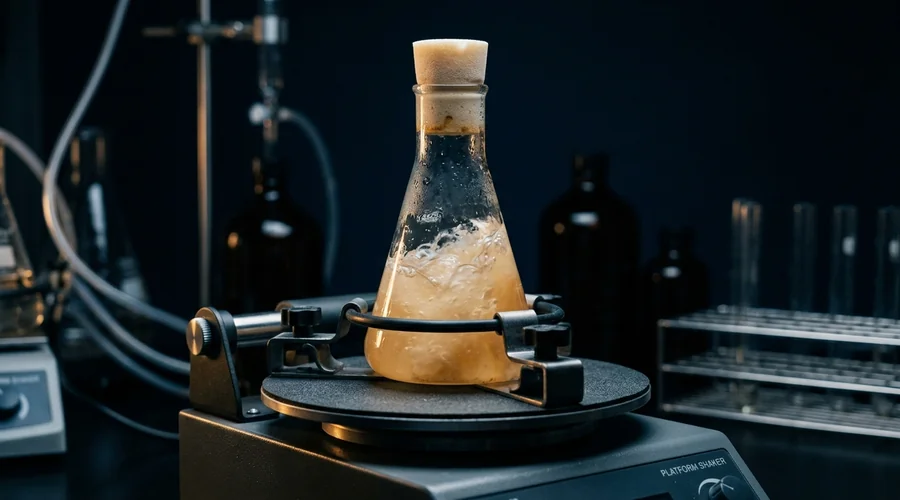
The 2018 review explains why protectants work, and the points below summarize its findings for non-sporulating bacteria. Trehalose is among the most studied desiccation protectants. Its effect is described by the water replacement hypothesis, in which it replaces water around the lipid head groups and keeps the membrane fluid.
- Protectant classes — sugars, polymers and amino acids, including trehalose, sucrose, skimmed milk, glycerol and polyvinylpyrrolidone.
- Osmotic balance — with osmotically active sugars, keep iso-osmotic conditions so that cells do not suffer osmotic shock when they move from broth to drying matrix.
- Timing — in Bradyrhizobium japonicum, trehalose accumulated during growth protected better than trehalose added after growth.
- Pre-conditioning — an aqueous peat extract in the growth medium raised the drying survival of Rhizobium leguminosarum bv. trifolii 18-fold, but did not significantly improve B. japonicum.
- Strain selection — Rhizobium leguminosarum bv. trifolii isolates from dry soils survived rapid drying better than isolates from saturated soils.
The last two items show the central rule of this field: no protectant or pre-treatment transfers automatically from one strain to the next. Shelf-life work therefore has to be organism-specific, which is the subject of the next section.
Biofertilizer Shelf Life: What Kills Cells in Storage
Shelf life is a market requirement before it is a technical result. Reviews quote targets from two to three months at room temperature, through one to one and a half years, to a minimum of one to two years. A product sold through a local channel that turns over in weeks needs a different formulation from one shipped across states. The 2018 review adds that inflating the initial cell count to offset fast deterioration is not economically efficient, because storage conditions are the better lever.
- Detrimental factors — oxygen, high temperature, moisture, microbial contamination and light.
- Packaging barrier — high-barrier plastic bags or glass vials kept Pantoea agglomerans viable better than low-barrier plastic bags, presumably by excluding oxygen and moisture.
- Water activity — seed-coated rhizobia survived best at water activities between 0.47 and 0.38, although survival also depends on the seed species, the coating ingredients and the technique.
- Carrier load — the microbial load of peat reduces the shelf life of the inoculant.
- Cold storage — encapsulated cells keep viability longer at 4 °C than at room temperature.
- Azotobacter cysts — cyst formation gives resistance to stress, and the Azotobacter review sees potential for cyst-based formulations but asks for more study of cysts in soil.
Accelerated testing speeds up the work. The 2018 review describes Arrhenius-based models that use short-term viability data at elevated temperature to predict survival at lower temperatures. It notes that exact prediction is not always possible when moisture also drives the loss. Use accelerated tests to screen packaging and protectants, then confirm the winners in real time, and measure them with a counting method that the next section compares.
Quality Control: Counting Live Cells and Contaminants
Quality control for a living product has to answer three questions: are the right cells present, are they alive, and is anything else growing? Schedule III answers with a viable count, a contamination limit at 105 dilution and strain-specific efficiency tests. The test method matters as much as the limit, because the common methods each miss something. The table compares the options described in the 2018 review.
| Method | What It Shows | Limits |
|---|---|---|
| Plate count on selective medium | Live, culturable cells; the gold standard with the widest dynamic range | Laborious; results take 24 to 48 hours or longer; contaminants interfere unless the medium is selective |
| Optical density | Total turbidity of the suspension | Does not separate live from dead cells; detection threshold about 107 cells per ml |
| PMA-qPCR | Cells with intact membranes, using propidium monoazide before real-time PCR | Needs molecular equipment and method development |
| Isothermal microcalorimetry | Heat from metabolically active cells, even in solid, opaque samples | Detection limit of about 104 cells; data analysis needs training |
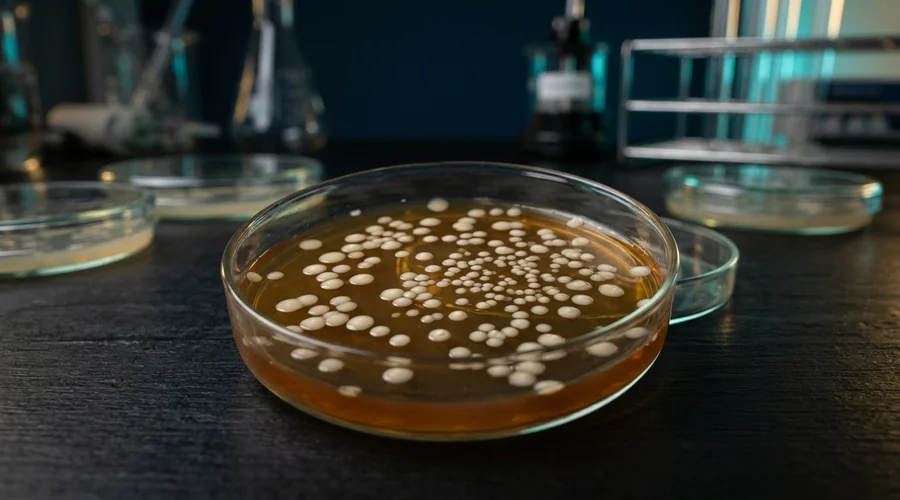
The Order adds product-specific tests: nodulation for Rhizobium, nitrogen fixation per gram of sucrose for Azotobacter, pellicle formation for Azospirillum, and solubilization zones for PSB. Packets must be sampled unopened, and the Order specifies that they are drawn from a protected place not exposed to dampness, air, light, dust or soot. Test retained packets at the end of the labelled shelf life as well as at release. A count that passes only on the day of release says little about the product the farmer receives.
Seed Treatments, Tank Mixes and Application
A biofertilizer meets agrochemicals the moment a farmer treats the seed. Fungicides can reduce the survival of bacteria on the seed, but the effect depends on the product, the strain and the timing. A Brazilian peanut study tested captan, PCNB and thiram applied either together with the inoculation or ten days earlier. Only captan applied simultaneously with inoculation significantly reduced rhizobial survival on the seed.
- Sequence — in that study, fungicide applied ten days before inoculation caused no significant harm to survival.
- Product and strain — one fungicide result does not transfer to another product or strain, so test the combinations sold in your market.
- Delivery method — seed dressing, in-furrow placement and soil application expose cells to different stresses; powder inoculants can be slurried for furrow application.
- Fertigation — liquid formats can be delivered through irrigation systems, which places the cells close to the root system.
- Persistence — in one cited study, recovery of inoculated rhizobacteria from soil or rhizosphere was limited to 30 to 40 days. A single early application cannot be assumed to cover a long crop cycle.
Compatibility data belong in the development file, and the label should carry the result. For chemical tank mixes, the logic in our guide to tank mix compatibility testing applies to liquid biofertilizers as well, with a viable count added to the physical checks. Fertigation-fed products connect to the wider topic of water soluble fertilizer for fertigation. Once the product survives the seed, the work reduces to a sequence that links every decision above.
A Development Sequence for a Biofertilizer Product
A biofertilizer project is easier to defend when the market, the organism and the stability target are fixed before the format is chosen. The sequence below follows that order. It puts the Schedule III tests and the shelf-life target ahead of the carrier choice. Each step produces data that the next step needs.
- Fix the market and crop list — this sets the host range for Rhizobium, the channel and the shelf-life target.
- Select and deposit the strain — confirm the efficiency test the Order requires, such as nodulation, nitrogen fixation per gram of sucrose, pellicle formation or solubilization.
- Choose the format — solid carrier, liquid, polymer or freeze-dried powder, against cost and shelf-life target.
- Screen carriers and protectants — organism by organism, because desiccation tolerance is strain-specific.
- Select the packaging barrier — then run accelerated stability to screen and real-time stability to confirm.
- Set the quality plan — plate counts on selective medium, contamination at 105 dilution, pH, moisture and particle size, tested at the end of shelf life.
- Test compatibility — with the seed treatments and agrochemicals common in the target market.
- Map the regulation — Schedule III and state requirements in India, and the CMC 7 list if you export to the EU.
The sequence produces the file that a regulator, a distributor and a laboratory will ask for. It is easier to build while the product is in development than to reconstruct after a failed sample.
Working With an Agrochemical Formulation Consultant
Biofertilizer projects combine microbiology, formulation, packaging and regulation, so the work spans several disciplines at once. An agrochemical formulation consultant joins those strands into one plan. The aim is a product whose count survives its labelled life, backed by data. Agrochemical product development services then carry the plan into pilot batches and production.
- Format selection — carrier, liquid, polymer or freeze-dried, matched to cost and shelf-life targets.
- Carrier and protectant screening — organism-specific survival tests through drying and storage.
- Stability programme — packaging barrier, accelerated screening and real-time confirmation.
- Quality method transfer — selective-medium counts, contamination checks and efficiency tests set up for routine release.
- Regulatory mapping — Schedule III, state licensing and export requirements such as the EU list.
- Scale-up and transfer — handover to a contract formulation agrochemical manufacturer with defined specifications.
The full range of services sits under agro chemicals, and our guide to starting a bio-pesticide and bio-fertilizer manufacturing business covers equipment and economics. Before approaching a consultant, collect your strain information, target crops and packaging constraints. Those three inputs decide which format is realistic.
Frequently Asked Questions
What is bio fertilizer formulation?
Bio fertilizer formulation is the design of the carrier, protectants, packaging and process that keep living microorganisms alive from production to the field. India's Fertiliser (Control) Order defines a biofertilizer as a carrier-based, solid or liquid product containing living microorganisms that fix nitrogen, solubilize phosphorus or mobilize nutrients.
The formulation has to protect cells during drying, storage, seed application and the first weeks in soil, because non-sporulating bacteria are sensitive to desiccation, oxygen, heat and contamination.
What does Schedule III of the Fertiliser (Control) Order require?
Schedule III sets a minimum viable count of 5 × 10⁷ cells per g of carrier or 1 × 10⁸ per ml of liquid for Rhizobium, Azotobacter and Azospirillum. Contamination must be nil at 10⁵ dilution. The pH must be 6.5 to 7.5, carrier material must pass a 0.15 to 0.212 mm sieve, and carrier moisture is capped at 30 to 40 percent.
Each organism also has an efficiency test, such as nodulation for Rhizobium, nitrogen fixation per gram of sucrose for Azotobacter and a solubilization test for PSB. Check the current Gazette for amendments.
Which carriers are used for Rhizobium carrier formulation?
Schedule III names peat, lignite, peat soil, humus, wood charcoal or similar material that favours the organism. Peat has the longest history for rhizobia, but its quality varies and it carries a large microbial load that shortens shelf life.
Coal, clays and other inorganic carriers have a lower microbial load of about 10² to 10³ CFU per g, and charcoal is reported to be storable without sterilization. Whatever the carrier, it should absorb moisture, buffer pH, be easy to sterilize and stick to seed.
How do phosphate solubilizing bacteria work, and how are they tested?
Phosphate solubilizing bacteria act mainly by releasing organic acids, with gluconic acid prominent, which lower pH and chelate calcium, aluminium and iron bound to phosphate. Some also release phosphatase enzymes that mineralize organic phosphorus.
Schedule III requires at least 30 percent solubilization by spectrophotometry and a solubilization zone of at least 5 mm in the prescribed medium. A halo on agar alone is not sufficient proof, and selected isolates should finish with a plant test.
How long is the shelf life of a biofertilizer?
Published targets range from two to three months at room temperature, through one to one and a half years, to a minimum of one to two years. The right target depends on the market channel and on how long the product sits between packing and use.
The consolidated Fertiliser (Control) Order states no shelf life, so the label date is your own claim. A stability study has to show that the count stays above the Schedule III minimum, or the tolerance limit, until that date.
Is a liquid biofertilizer better than a carrier-based one?
Neither is better in every case. Liquid formats are easier to sterilize, suit fertigation and avoid carrier variability, but they need protectants such as trehalose, glycerol or polyvinylpyrrolidone to keep cells alive without refrigeration.
Carrier-based products are cheap and familiar, but peat varies by source and its own microbial load shortens shelf life. Polymer beads and freeze-dried powders offer strong protection at higher cost and complexity.
Do seed-treatment fungicides kill Rhizobium on the seed?
The effect depends on the fungicide, the strain and the timing. A Brazilian peanut study found that only captan applied at the same time as inoculation significantly reduced rhizobial survival, while fungicide applied ten days earlier caused no significant harm.
Because one result does not transfer to another product or strain, test the seed treatments common in your target market and put the outcome on the label.
How can an agrochemical formulation consultant help with biofertilizer development?
A consultant helps select the format, screen carriers and protectants organism by organism, and design a stability programme with the right packaging barrier. They also set up counting methods and map the regulatory route.
Agrochemical product development services then cover pilot batches and the handover to a contract formulation agrochemical manufacturer.
Developing a Biofertilizer Product or Fixing a Shelf-Life Problem?
Global Formulation supports agrochemical and biofertilizer makers with format selection, carrier and protectant screening, stability programmes and transfer to a contract manufacturing partner.
Talk to Our Formulation Team